Based on monitoring data for the period 2005-2010, we studied the trends in abundance and species richness of common breeding birds in Bulgaria before and after the country joined the EU in 2007. We analysed the trends in birds of farmland, woodland and “other” habitats, and additionally, we tested whether indices of the commonest birds are representative of wider changes in bird populations. At species level (n = 32), significant declines were detected in 11 species (34%), and increases in just two (6%); 19 species (60%) had uncertain trends. There were mean declines of 15% in farmland birds, 5% in woodland birds and 24% in birds of other habitats. Both species richness and total abundance of common birds were higher before the accession of Bulgaria to the EU than after.
Source:
Spasov S et al. Acta zool. bulg., 69 (1), 2017: 95-104
Auteur: Henk Tennekes
-

Bird decline in Bulgaria after the country joined the EU in 2007
-
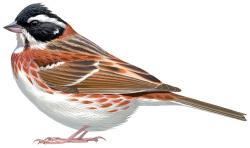
Global population decline in the Rustic Bunting
To assess the Rustic Bunting’s global conservation status we compiled, for the first time, population data across its breeding and wintering ranges. The analysis reveals a 75–87% decline in overall population size over the last 30 years and a 32–91% decline over the last 10 years. The trend estimates indicate that the long-term (30-year) range-wide population decline in the Rustic Bunting (Emberiza rustica) is of similar magnitude to two well-known examples of declining species within the same genus, the Yellow-breasted Bunting Emberiza aureola and the Ortolan Bunting E. hortulana.
Source: Edenius L et al. Bird Conservation International Volume 27, Issue 1 March 2017, pp. 35-44
https://www.cambridge.org/core/journals/bird-conservation-international/article/the-next-common-and-widespread-bunting-to-go-global-population-decline-in-the-rustic-bunting-emberiza-rustica/33DD0A30F5A84E8873388277C07C1BAF -
Verlies biodiversiteit breekt veilige drempel wereldwijd
De biodiversiteit gaat er overal ter wereld zo sterk op achteruit dat het functioneren van ecosystemen en daarmee de stabiliteit van de menselijke samenlevingen in gevaar komen. Dat blijkt uit nieuw Brits onderzoek in samenwerking met het VN-milieuagentschap Unep. Het team analyseerde data van honderden wetenschappers overal ter wereld, goed voor 2,38 miljoen gegevens over 39.123 diersoorten op 18.659 plaatsen. Op basis daarvan reconstrueerden ze per vierkante kilometer hoe de biodiversiteit is veranderd sinds de komst van de mens. “Het is voor het eerst dat we het effect van het verlies aan habitat op de biodiversiteit zo gedetailleerd in kaart hebben kunnen brengen”, zegt Tim Newbold van het University College London, die meewerkte aan de studie. “We hebben ontdekt dat in de meeste gebieden in de wereld het verlies van biodiversiteit boven de veilige drempel is gestegen.” Op 58,1 procent van het aardoppervlak, waar 71,4 procent van de wereldbevolking woont, is het verlies van biodiversiteit groot genoeg om de capaciteit van ecosystemen te ondermijnen om menselijke samenlevingen te ondersteunen. Graslanden, savanne en kreupelhoutgebieden zijn het ergste getroffen door het verlies aan soortenrijkdom, op de voet gevolgd door bossen. “Het is erg zorgwekkend dat het landgebruik de biodiversiteit al onder de veilige drempel heeft geduwd”, zegt hoogleraar Andy Purvis van het Natural History Museum in Londen. “Beleidsmakers maken zich veel zorgen over economische recessies, maar een ecologische recessie kan veel ergere gevolgen hebben. De schade die we vaststellen, verhoogt de kans daarop. Als we de biodiversiteit niet veilig kunnen stellen, spelen we ecologische roulette.”
Bron: De Wereld van Morgen, 18-07-16
http://www.dewereldmorgen.be/artikel/2016/07/18/verlies-biodiversiteit-breekt-veilige-drempel-wereldwijd -
Biodiversity is below safe levels across more than half of world’s land
The variety of animals and plants has fallen to dangerous levels across more than half of the world’s landmass, scientists have estimated. The unchecked loss of biodiversity is akin to playing ecological roulette and will set back efforts to bring people out of poverty in the long term, they warned. Analysing 1.8m records from 39,123 sites across Earth, the international study found that a measure of the intactness of biodiversity at sites has fallen below a safety limit across 58.1% of the world’s land. Under a proposal put forward by experts last year, a site losing more than 10% of its biodiversity is considered to have passed a precautionary threshold, beyond which the ecosystem’s ability to function could be compromised. “It’s worrying that land use has already pushed biodiversity below the level proposed as a safe limit,” said Prof Andy Purvis, of the Natural History Museum, and one of the authors. “Until and unless we can bring biodiversity back up, we’re playing ecological roulette.” Researchers said the study, published in the journal Science on Thursday, was the most comprehensive examination yet of biodiversity loss. The decline is not just bad news for the species but in the long term could spell problems for human health and economies.
“If ecosystem functions don’t continue, then yes it affects the ability of agriculture to sustain human populations and we simply don’t know at which point that will be reached,” said Dr Tim Newbold, lead author of the work and a research associate at University College London. “We are entering the zone of uncertainty.”
Source: The Guardian, 14 July 2016
https://www.theguardian.com/environment/2016/jul/14/biodiversity-below-safe-levels-across-over-half-of-worlds-land-study -
Artenschwund überschreitet planetare Grenze
Ernüchternde Bilanz: Ein Großteil der irdischen Ökosysteme hat seine Belastungsgrenze bereits überschritten. Auf 58 Prozent der Landflächen ist der Artenschwund so groß, dass die planetare Grenze der Biodiversität erreicht ist, wie Forscher berichten. Das bedeutet, dass die betroffenen Ökosysteme für uns wichtige Funktionen und Dienstleistungen kaum noch erbringen können. Die Menschheit spiele “ökologisches Roulette”, so die Forscher im Fachmagazin “Science”.
Das System Erde ist zwar robust, aber seine Belastbarkeit hat Grenzen. Werden diese überschritten, pendelt sich das System in ein neues Gleichgewicht ein. Das jedoch könnte die Umwelt auf unserem Planeten so verändern, dass er für uns Menschen weniger lebensfreundlich wird. Bereits 2015 warnten Forscher, dass durch unsere Eingriffe bereits vier der neun planetaren Grenzen überschritten sein könnten, darunter Klimawandel, Artenvielfalt, Landnutzung und die Stickstoff- und Phosphor-Kreisläufe.
Tim Newbold vom University College London und seine Kollegen haben nun untersucht, in welchem Ausmaß der Artenschwund die planetare Grenze bereits überschritten hat. Gängiger Annahme nach wird die planetare Belastungsgrenze der Biodiversität dort erreicht, wo zehn Prozent der Organismenhäufigkeit und 20 Prozent der Artenzahlen verloren gehen – allerdings sind die Unsicherheitsfaktoren für diese Grenzwerte noch recht hoch.
“Wir haben uns gefragt, wie viel von der Landfläche der Erde bereits biotisch geschädigt ist”, sagen Newbold und seine Kollegen. Ihre Studie sei dabei die bisher erste, die die Auswirkungen des Artenverlusts so detailliert quantifiziere. Ist er zu hoch, können betroffene Ökosysteme für uns wichtige Leistungen wie Biomassewachstum, das Verarbeiten und Recyceln von Nährstoffen und anderes nicht mehr erbringen.
Für ihre Studie werteten die Forscher 2,38 Millionen Datensätze zur Entwicklung und Bedeutung von fast 40.000 Arten an knapp 19.000 Orten auf der Erde aus. Die Daten stammten aus der PREDICTS -Datenbank (Projecting Responses of Ecological Diversity in Changing Terrestrial Systems), einem Projekt, das für verschiedene Biome und Gebiete auf der Erde erfasst, wie sich die Biodiversität und Artenzusammensetzung im Laufe der Zeit verändert.
Das ernüchternde Ergebnis: “Wir stellen fest, dass die Biodiversität in einem Großteil der Welt bereits unter der von Ökologen angesetzten planetaren Grenze liegt”, berichtet Newbold. In 58,1 Prozent der weltweiten Landfläche ist die Artenvielfalt demnach bereits so stark gesunken, dass die Ökosysteme ihre Funktionen kaum noch erfüllen können. Geht man von einem Grenzwert bei 20 Prozent Artenschwund aus, dann sind es immerhin noch gut ein Drittel der Landfläche. Am stärksten betroffen sind dabei Grasland-Biome wie Steppen und Prärien, sowie Savannen und Strauchlandschaften.
Aber auch die Lebensgemeinschaften vieler Wälder und von einzigartigen Hotspots der Artenvielfalt haben mittlerweile so starke Verluste erlitten, dass sie in ihrer Funktion stark beeinträchtigt sind. Wenig überraschend sind die Auswirkungen in den Gebieten am stärksten, in denen die menschliche Besiedlung am dichtesten ist.
Quelle: Scinexx, 15.05.17
http://www.scinexx.de/wissen-aktuell-20394-2016-07-15.html -
Artenschwund: Die Grenze ist überschritten
Viele Tier- und Pflanzenarten sind vom Aussterben bedroht oder sind bereits verloren. Zu viele, meint eine neue britische Studie: Auf 58 Prozent der Erdoberfläche sei die Artenvielfalt gefährlich reduziert. Man geht davon aus, dass die Natur 10 Prozent weniger Tier- und Pflanzenarten gerade noch verkraften könne – das sei eine „sichere Grenze“, sagt der britische Biowissenschaftler Tim Newbold. Doch hat seine Analyse von 2,3 Millionen Datensätzen ergeben, dass in großen Teilen der Erde diese Grenze bereits überschritten ist: „Wir schätzen, dass 14 Prozent der gesamten Artenvielfalt, die wir in der Natur finden würden, bereits verschwunden ist.“ Das ökologische Gleichgewicht ist empfindlich und braucht die verschiedenen Spezies, um intakt zu bleiben – seien es Tierarten wie Bienen, die als Bestäuber für die Landwirtschaft arbeiten oder Pflanzen, die uns als Nahrung dienen und Sauerstoff liefern. Stirbt beispielsweise eine Pflanze aus, von der sich eine bestimmte Insektenart ernährt, ist auch diese in ihrem Bestand gefährdet, sagt Newbold im Gespräch mit science.ORF.at: „Die Artenvielfalt unterstützt viele wichtige Funktionen in unserem Ökosystem, etwa die Blütenbestäubung, die Zersetzung des Abfalls sowie die Regulation des globalen Kohlenstoffkreislaufes“
Quelle: ORF, 17.07.16
http://science.orf.at/stories/2785973/ -
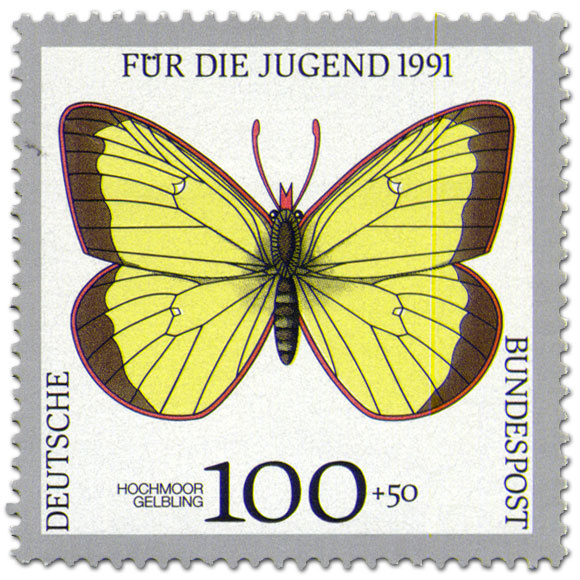
Schmetterlingssterben in Deutschland setzt sich fort
Immer mehr Schmetterlingsarten in Deutschland sterben einer Studie zufolge aus. Aktuell gelten 53 Arten als verloren, 106 sind demnach vom Aussterben gefährdet, wie aus der für die Grünen-Bundestagsfraktion erstellten Untersuchung hervorgeht, die der Nachrichtenagentur AFP am Freitag vorlag. Bundesweit vom Aussterben bedroht ist demnach etwa der Eschen-Scheckenfalter, auch Maivogel oder Kleiner Maivogel genannt. Bei den Tagfaltern sind dem Papier zufolge bundesweit 41,5 Prozent der bekannten 184 Arten bereits ausgestorben oder bestandsgefährdet. In Nordrhein-Westfalen liegt der Tagfalter-Artenschwund sogar bei 69,8 Prozent. Als Ursache nennt die Studie vor allem den Einsatz von Pestiziden.
Quelle: n-tv, 12.05.17
http://www.n-tv.de/ticker/Gruenen-Studie-Schmetterlingssterben-in-Deutschland-setzt-sich-fort-article19837999.html -
Neonicotinoid insecticides can persist in water for a long time and are disrupting the food chain for wildlife
Studies on the risks of neonicotinoids have often focused on bees — pollinators vital to farm production that have been experiencing population declines — but “it’s really not just about bees,” said Christy Morrissey, a professor in the Department of Biology at the University of Saskatchewan.
Morrissey spoke in a May 2 webinar presented by USDA. Neonicotinoids were designed as systemic insecticides that move through a whole plant, but the same traits that make them good systemics also cause them to linger in the environment. They have a long half-life in the soil, potentially lasting for years under the right conditions. Unlike other insecticides, they are highly water soluble and don’t break down in water. Neonicotinoids need exposure to ultraviolet light to break down, Morrissey said.The insecticides are widely used, usually as seed treatments but sometimes as foliar sprays. Though usage is particularly high in corn and soybeans, “there isn’t really a crop that you could list that neonics are not approved for,” Morrissey said. Neonicotinoids are frequently found in surface water and have even been found in groundwater and treated drinking water. In Canada, snow melt brings a dose of neonicotinoids into water bodies before planting in the spring, Morrissey said. In Saskatchewan, 50 to 60 percent of wetland samples exceed the threshold for chronic toxicity to aquatic life. Three-quarters of wetlands in one study contained at least one neonicotinoid. Samples often exceed levels that are safe for aquatic invertebrates. Many wetlands contain more than one neonicotinoid, which amplifies their toxicity.
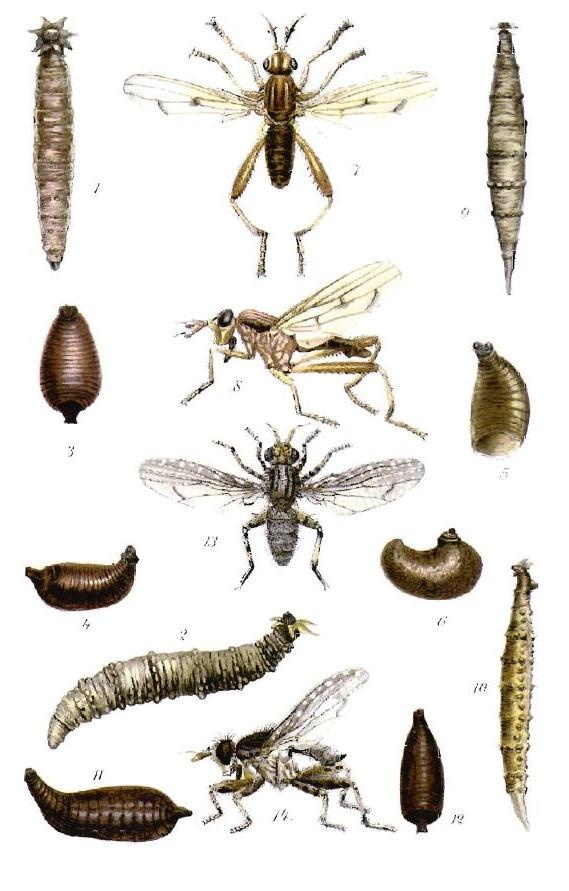
“The organisms would now be exposed to a more toxic, more persistent compound,” Morrissey said. Research conducted in clean bodies of water indicates that insects may be able to recolonize as the neonicotinoids break down, but “if everything in the surrounding region is contaminated, then you may not have the same degree of recovery,” Morrissey said. Neonicotinoids were developed to be less toxic to humans and other vertebrates than organophosphates, but many invertebrates are affected by neonicotinoids at some concentration. In aquatic settings, insects like flies are generally much more sensitive to the insecticides than crustaceans are.
This information may have fallen through the cracks initially, Morrissey said, because a lot of the testing on neonic toxicity in water was done on an organism that turned out to be “exquisitely insensitive” compared with the other organisms her lab has tested.
After years of research, Morrissey believes that most countries’ designated safe levels of neonicotinoids are too high to protect aquatic life. It can be hard to convince people that changes are needed, though. “Why do we care about losing a few bugs? I hear that a lot,” she said.
A decline in bugs could cause problems for birds. A study in the Netherlands found a 3.5 percent decrease in the average number of insect-eating, farmland-dwelling birds in places where imidacloprid exceeded the safe threshold. In Saskatchewan, tree swallows are highly dependent on aquatic insects, and they time their egg laying and hatching to take advantage of peak food availability. Neonicotinoids seem to cause some types of midges to emerge seven to 11 days earlier than normal, which means the insects aren’t appearing exactly when the birds need them. This seems to force the swallows to forage more aggressively, keeping the adults away from the nest longer than normal.
The baby birds end up with a poorer body condition and, because the adults are away from the nest a lot, face greater risks of predation and chilling. The evidence of harm to the broader environment is still circumstantial, but it’s concerning to a biologist, Morrissey said. It’s hard to say what effect neonicotinoids might have on swallows that eat contaminated insects. The bugs usually die before the birds get to them, Morrissey said.
She has done research on the seed-eating birds that frequent farms. “We see very severe effects of imidacloprid on those songbirds,” Morrissey said. Plants are some of the best tools to reduce neonicotinoid runoff. Vegetated buffers seem to reduce the amount of neonicotinoids that make it to a water body.
Some wetland plants take up the insecticides, potentially reducing aquatic insects’ exposure. It’s not clear what happens to the neonics when the plants die, Morrissey said. Soil health strategies, such as cover cropping, and integrated pest management may also mitigate insecticide runoff. Morrissey suggested that neonicotinoids not be used at all around ecologically sensitive areas.
Source: Lancaster Farming, 12 May 2017
http://www.lancasterfarming.com/farming/technology/insecticides-persist-in-water-rattling-food-chain/article_b5228168-4549-5d63-b5e7-96e20d3e9b88.html -

Stichproben in kleinen Gewässern am Bodensee haben eine alarmierende Artenarmut ergeben
Damit hatte niemand gerechnet: Die Artenvielfalt in kleineren Gewässern am Bodensee scheint sehr gering zu sein. Irmtraud Schuster, die Umweltdezernentin des Landratsamtes Bodenseekreis, räumt ein, dass die Ergebnisse erster Prüfungen sie schon alarmiert hätten. Doch habe das Institut für Seenforschung nur Stichproben gezogen und lediglich – den allerdings wichtigen – Bereich der wirbellosen bodenlebenden Tiere untersucht. Ursache könnten Pflanzenschutzmittel sein, die aus dem Obstbau in die Bäche getragen werden.
Quelle: Stuttgarter Nachrichten, 12.05.2017
http://www.stuttgarter-nachrichten.de/inhalt.bodenseeregion-aus-den-baechen-verschwinden-die-tiere.4e5f0228-db5b-4723-967c-d6c5ff5dbf83.html -

Neurobehavioral Effects Found in Children Exposed to Flower Pesticides
Ecuador is the third largest producer of cut flowers in the world, primarily roses, many of which are destined to be sold for Mother’s Day. The industry employs more than 103,000 people, and relies heavily on agricultural pesticides. In a paper published in the May 2017 issue of the journal NeuroToxicology, researchers at the University of California San Diego School of Medicine, with colleagues in Ecuador and Minnesota, have found altered short-term neurological behaviors in children associated with a peak pesticide spraying season linked to the Mother’s Day flower harvest. This study examined children who did not work in agriculture but who lived in agricultural communities in Ecuador.
“Our findings are among the first in non-worker children to suggest that a peak pesticide use period (the Mother’s Day flower production) may transiently affect neurobehavioral performance,” said first author Jose R. Suarez-Lopez, MD, PhD, assistant professor in the Department of Family Medicine and Public Health at UC San Diego School of Medicine.
“Children examined sooner after the flower harvest displayed lower performance on most measures, such as attention, self-control, visuospatial processing (the ability to perceive and interact with our visual world) and sensorimotor (eye-hand coordination) compared to children examined later in a time of lower flower production and pesticide use.”
“This discovery is novel because it shows that pesticide spray seasons can produce short-term alterations in neurobehavioral performance in addition to the long-term alterations that have been previously described. This is troublesome because the altered mental functions observed are essential for children’s learning, and in May-July, students typically take their end-of-year exams. If their learning and performance abilities are affected in this period, they may graduate from high school with lower scores which may hinder their ability to access higher education or obtain a job.”
Early exposure to commonly applied agricultural pesticides is associated with neurobehavioral delays in children, such as attention deficit hyperactivity disorder. Pesticide exposure has been linked to altered development of reflexes and psychomotor and mental function in newborns. Boys appear more susceptible than girls.
Suarez-Lopez, who is principal investigator of the ESPINA study, an on-going, long-term study of environmental pollutants and child development in Ecuador, said past animal research had suggested that fluctuating levels of pesticide exposure might also produce corresponding, short-term neurobehavioral effects.
He and colleagues tested 308 children, ages four to nine, living in floricultural communities in Ecuador (but who did not actually work in agriculture themselves) prior to peak Mother’s Day flower production and within 100 days after harvest. Behavior and blood tests were conducted.
Organophosphate-based insecticides, commonly used to treat flowers for pests before export, inhibit an enzyme called acetylcholinesterase (AChE) that regulates acetylcholine, a neurotransmitter vital to promoting communications between nerve cells in the brain and body. The insecticides are also directly toxic to neurons and supporting cells called glia. In previous research, Suarez-Lopez and colleagues had shown that lower AChE activity is associated with lower attention, inhibitory control and memory scores, again affecting boys more than girls.
The authors note that the study was cross-sectional, collecting and analyzing observational data on a representative population for a specific point in time. “Our findings need to be replicated in studies of children with assessments conducted before, during and after peak exposure periods,” said Suarez-Lopez. “But given the evidence thus far, and the potential for pesticide exposure to alter both short- and long-term learning abilities, cognition, social interactions and overall well-being, taking additional precautions to shield children from exposure is certainly advised.”
Co-authors include: Harvey Checkoway, Wael K. Al-Delaimy, Sheila Gahagan, UC San Diego; and David R. Jacobs, Jr., University of Minnesota.
Source: ScienceBlog, 10 May 2017
https://scienceblog.com/493980/neurobehavioral-effects-found-children-exposed-flower-pesticides/