Auteur: Henk Tennekes

  • Long-term decline in red grouse numbers in British uplands

    Long-term decline in red grouse numbers in British uplands

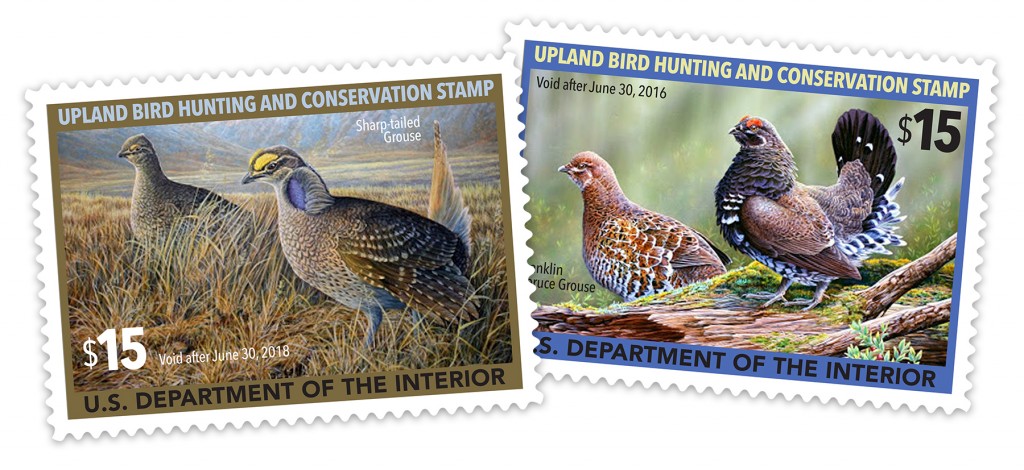
    It is hard to believe now, but red grouse (Lagopus lagopus scotica)- the bird that is synonymous with heather moorland and the Glorious Twelfth of August – were once spotted in Leeds. It was after a severe January snowstorm back in the 1880s when, according Thomas Hudson Nelson’s The Birds of Yorkshire (1907) “large packs of birds came down into the lowlands.” Others were seen around the villages of Arthington and Weeton in Lower Wharfedale. As many as 500 of them were counted in one day, and a decade later similar hard weather forced them to scratch for food in fields around Harrogate. Back then red grouse were far more widespread than they are today and not just found in the uplands. For instance, lowland heaths near Market Weighton once hosted fair-sized populations, but the heather has long since vanished under the plough and in Yorkshire red grouse are now confined to the higher grounds of the North York Moors, Yorkshire Dales, Peak District and South Pennines.

    Read more at: http://www.yorkshirepost.co.uk/news/environment/country-coast-lack-of-reverence-for-our-only-entirely-native-bird-1-8691740

  • Bird deaths linked to imidacloprid

    Bird deaths linked to imidacloprid

    Imidacloprid is being blamed for the deaths of native birds in Victoria. Lab results obtained by the ABC confirm that the chemical, which is used as an insecticide, killed at least 12 birds near Horsham last month. The same chemical has been banned in Europe because of concerns it is behind a dramatic decline in bee populations.

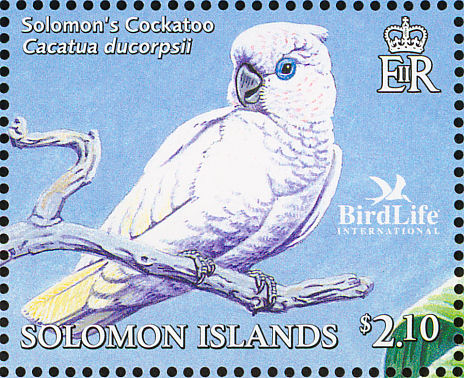
    Cath De Vaus, from Natimuk a small town western Victoria’s cropping region, started making the grisly discoveries, finding dead birds around her house last month. “I found a corella (Cacatua sanguinea) just dead at the bottom of its tree with no obvious injuries.” She said the deaths had not stopped and the numbers were adding up. “It’s lovely watching them in the evenings and every morning when you see new dead ones it’s incredibly sad.” Ms De Vaus, along with other residents, reported the deaths and Agriculture Victoria has been investigating.

    Lab results obtained by the ABC confirm traces of imidacloprid, a chemical commonly used in insecticides. Imidacloprid is used to kill insects and termites, and can often be found in flea control for pets. Farmers also use it to treat barley and wheat seeds. In a statement, Agriculture Victoria has acknowledged that while the initial lab results show traces of chemicals used in crop management, there was not clear evidence that this was the single cause of death of the birds. Associate Professor Vincent Pettigrove, a chemicals expert from the University of Melbourne said imidacloprid affected the nervous system. “It actually mimics nicotine and it’s really quite toxic to insects and it shouldn’t be toxic to mammals and birds, but in certain circumstances we’ve found many reports of bird deaths associated with the use of this insecticide,” he said. “Some work in the European Union showed that a sparrow if it ate just one and half beet seeds would be enough to kill the bird.”

    In 2013 the European Union put a ban on these kinds of insecticides because of concerns they were behind a dramatic decline in bee populations. Associate Professor Pettigrove said research published this year backed up the EU’s concerns. “There was a study in France where they looked at 103 wildlife mortality incidents and they found in 101 cases the birds had some concentrations of imidacloprid in them,” he said. “It seems to be a widespread issue and we need to look at ways of reducing the risk of exposing this chemicals to birds.” The Australian Pesticides and Veterinary Medicines Authority refused to comment on the use of imidacloprid in this country. Associate Professor Pettigrove believes it was time to change that. “I think we need to be much more vigilant about recording these deaths and trying to understand what is the reason for it,” he said. “Once the APVMA get a good body of information they’ll have to consider reviewing how this chemical is used.”

    Associate Professor Pettigrove said the way to do that was for more people to report incidents to the authorities. “That will help us develop a better strategy for trying to use this chemical in a more environmentally safe way.”

    Source: ABC, 9 August 2017
    http://www.abc.net.au/news/rural/2017-08-09/bird-deaths-linked-to-common-insecticide/8788286

  • What happened to the great Texas horny toad?

    What happened to the great Texas horny toad?

    The horned lizard (Phrynosoma cornutum) – more commonly known among Texans as the horny toad – was as common as ants and grasshoppers over most of Texas just decades ago. “Historically, they were all the way into East Texas, and abundant in Central Texas, but they have basically receded back to 50 miles west of the I-35 corridor. They are still common in the Panhandle and West Texas, and there are some in South Texas, but they are down to 50 percent or less of their historic range,” said Nathan Rains, a wildlife diversity biologist with Texas Parks and Wildlife Department. Many culprits are suspected in the population collapse of the Texas state reptile, including loss of habitat, imported fire ants, pesticides and overcollection. “They are a diet specialist, an ant eater. So, no food, no habitat, no lizards,” Rains said.

    Source: Houston Chronicle, August 6, 2017
    http://www.houstonchronicle.com/news/houston-texas/houston/article/Great-Texas-horny-toads-where-have-they-gone-11738179.php

  • Butterfly shows trouble is waiting in the wings – Fewer than 100 Poweshiek skipperlings in Canada

    Butterfly shows trouble is waiting in the wings – Fewer than 100 Poweshiek skipperlings in Canada

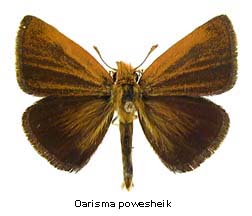
    For the past several winters, conservationist Cary Hamel has held his breath, hoping an endangered species of butterfly will emerge from cocoons in the summer. When the Poweshiek skipperling butterfly (Oarisma poweshiek) emerged again this year near Vita, Hamel was relieved, despite estimates that say there are fewer than 100 left in Canada. The small winged creature is orange and black, but not patterned in the eye-catching way of other butterflies. And that’s why people seem to care less about them, according to Hamel, the conservation science manager for the Nature Conservancy of Canada’s Manitoba region. “It’s not as showy and beautiful as some other endangered species, like monarch butterflies or polar bears,” he said. But the role they play in the ecosystem is the same as other pollinators. The butterflies are essential to flower reproduction. In particular, the Poweshiek skipperling pollinates black-eyed susan flowers. “What we are most concerned about, in any ecosystem when you start to lose species, is what they call a cascading effect…. If you’re losing this species, you’ll probably be losing other species,” said Richard Westwood, chairman of environmental studies and sciences at the University of Winnipeg. Researchers don’t fully understand why the species has declined, and Hamel says more research is needed on the rare insect. “The consequences of a disruption or disappearance of any (ecosystem’s) animals or plants, like the skipperling, can lead to changes that are impossible to fully understand until it’s too late to reverse,” he said.

    Source: Winnipeg Free Press, 07/20/2017
    https://www.winnipegfreepress.com/local/endangered-butterfly-shows-trouble-is-waiting-in-the-wings-435740563.html

  • Insect extinction could be cataclysmic

    Insect extinction could be cataclysmic

    Individually, insects are not incredibly interesting, unless you get down on the ground or view them under a microscope to look at their complexity. But they are the invisible force working throughout the world to keep it running. There are 1.4 billion insects for each one of us. Insects are “the lever pullers of the world,” says David MacNeal, author of Bugged. They do everything from feeding us to cleaning up waste to generating $57 billion for the U.S. economy alone. Almonds in California or watermelons in Florida wouldn’t be available if it were not for bees. Insects also return nutrients to the earth. If they weren’t around, the amount of decay and rot all over the place would be terrible. We don’t notice these services because insects are so small and we often see them as this nuisance. Bug extinction is one of the most extensive extinctions on the planet. It’s scary because you don’t notice it until it’s too late.

    E.O. Wilson has called leafcutter ants, “Earth’s ultimate superorganisms.” Tell us about these amazing creatures—and what social organization in ants can tell us about our own societies. We used to think that there was this class-based structure with ants. You had the worker, the soldier and, sitting above it all, the queen. However, entomologists today are finding that a lot of it is self-governance and that ants are communicating to each other at great speeds. You’ll have ants passing each other along a trail, making antennal taps, like Morse code: Hey, we gotta go this way, or go here for foraging. Today, many species are faced with extinction. When National Geographic caught up with MacNeal in Los Angeles, he explained why this would be catastrophic for life on Earth.

    Source: National Geographic, August 6, 2017
    http://news.nationalgeographic.com/2017/08/insect-bug-medicine-food-macneal/

  • Des millions d’œufs néerlandais contaminés sont retirés du marché

    Des millions d’œufs néerlandais contaminés sont retirés du marché

    Les supermarchés néerlandais et allemands retirent en masse des œufs de leurs rayons. En cause, l’utilisation à tort dans plus de 180 élevages avicoles aux Pays-Bas, d’un pesticide potentiellement toxique pour l’homme.

    Pour éviter une crise sanitaire de grande ampleur en Europe, les supermarchés néerlandais et allemands retirent en masse de leurs rayons des oeufs contaminés par un pesticide présumé “toxique” pour l’homme.

    Albert Heijn, la chaîne de supermarchés la plus importante des Pays-Bas a “stoppé la commercialisation de 14 sortes d’oeufs, suivant les indications” de l’organisme néerlandais chargé de la sécurité alimentaire et sanitaire NVWA, a rapporté Els van Dijk, porte-parole de la chaîne. “Tous ces oeufs sont renvoyés au dépôt et détruits”, a-t-elle poursuivi, décrivant une “situation inédite” dans l’histoire de la chaîne.

    À l’origine de l’affaire, des éleveurs de volailles aux Pays-Bas ont fait appel à Chickfriend, une société spécialisée pour éradiquer la prolifération du pou rouge, un parasite très néfaste pour les poules. Cette entreprise aurait employé du fipronil dans son produit avec pour conséquence quelque 180 élevages de volailles infectés.

    Cette substance phytosanitaire, couramment utilisée dans les produits vétérinaires contre les puces, les acariens et les tiques, est interdite dans le traitement des animaux destinés à la chaîne alimentaire, tels que les poules. C’est aussi la substance active de l’insecticide Régent commercialisé par BASF, notamment pour le traitement des semences. En grande quantité, le fipronil est considéré comme “modérément toxique” pour l’homme par l’Organisation mondiale de la santé (OMS). Il est dangereux pour les reins, le foie et la thyroïde, a indiqué le NVWA.

    Cet organisme est mis sous pression par le syndicat néerlandais des éleveurs de volailles depuis que le numéro 2 de l’organisme a conseillé à la population de “ne pas manger d’oeufs jusqu’à dimanche” sur un plateau de télévision, mardi 1er août.

    Source: BFM TV, 03/08/17
    http://bfmbusiness.bfmtv.com/entreprise/des-millions-d-oeufs-neerlandais-contamines-sont-retires-du-marche-1229875.html

  • Die Fischer schlagen Alarm: Zu wenig Fang haben sie dieses Jahr aus dem Zürichsee ziehen können

    Die Fischer schlagen Alarm: Zu wenig Fang haben sie dieses Jahr aus dem Zürichsee ziehen können

    Um den Fischfang im Zürichsee steht es schlecht. Nebst den Fischern sind davon insbesondere die Restaurants betroffen, die auf den täglich frischen Fisch angewiesen sind. Gegenüber der «Zürichsee-Zeitung» sagten die Besitzer des Restaurants «Bad am See» in Schmerikon, dass sie besonders auf die Felchenfänge angewiesen seien, da ihre Speisekarte auf diesen Fisch ausgerichtet sei. Dieser Bestand habe schon immer geschwankt, aber so schwierig wie dieses Jahr sei es noch nie gewesen. Der Berufsfischer Adrian Gerny schätzt die Lage ebenfalls als dramatisch ein. Auf die Frage hin, wie der Fischfang im Zürichsee dieses Jahr laufe, antwortet er mit einem Wort: «Katastrophal.» Bereits 2016 sei der Fang merklich zurückgegangen – und in diesem Jahr habe er bisher gerade einmal 20 Prozent des jährlichen Durchschnitts eingefangen. «Ein solcher Rückgang kann durch nichts ersetzt und auch nicht mit anderen Fischarten kompensiert werden.»

    Quelle: NZZ, 03.08.17
    https://www.nzz.ch/zuerich/aktuell/zuercher-fischfang-wie-die-restaurants-dem-fische-schwinden-trotzen-ld.1308115

  • Hilsa numbers dwindle in markets

    Hilsa numbers dwindle in markets

    The delectable hilsa (Tenualosa ilisha) seems to be fast dwindling from the markets in the coastal districts of Kendrapada and Jagatsinghpur, putting a strain on the people of Odisha. Following a low catch, the cost of hilsa too has gone up significantly. These days the cost of hilsa ranges from Rs 700 to Rs 800/kg and even the small-sized fish are being sold for not less than Rs 500/kg. “The irony is that the hilsa has now turned into a luxury item, beyond the reach of the common man due to its exorbitantly high price,” said Swadhin Dash, a bank employee from Kendrapada. “A few years back Kendrapada, Jagatasinghpur and its nearby fish markets would be flooded with the hilsa, but now it has become a rare sight in the market. And those that are coming are very small in size,” said Narayan Haldar, president of the Odisha Masyajibi Forum. Industrial pollutants are to blame for poisoning the hilsa breeding ground.

    Source: The Times of India, July 31, 2017
    http://timesofindia.indiatimes.com/city/bhubaneswar/hilsa-numbers-dwindle-in-markets-cost-increases/articleshow/59840968.cms?TOI_browsernotification=true

  • Extinction Possible as Salmon Runs Hit Near-Record Lows

    Extinction Possible as Salmon Runs Hit Near-Record Lows

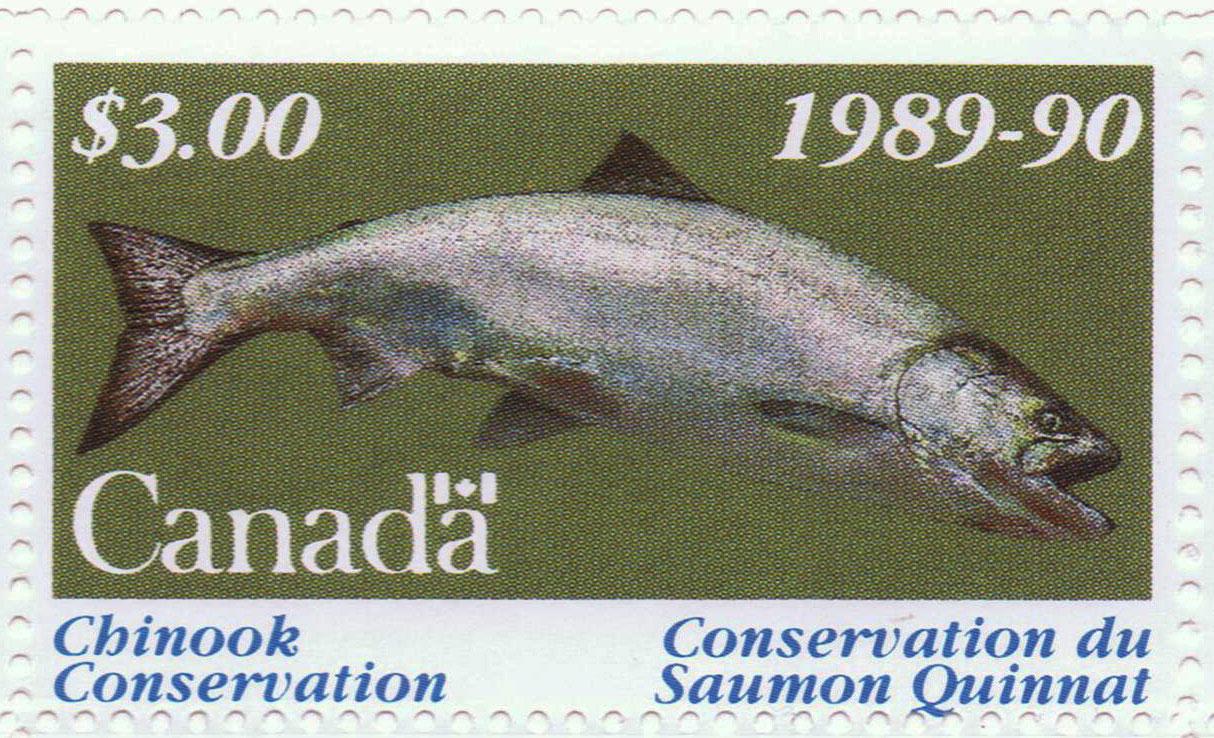
    The population of spring-run Chinook salmon (Oncorhynchus tshawytscha) has ebbed to the point where fish advocates, Native Americans and environmentalists are warning near-term extinction is a real possibility. Last week, divers conducted the annual fish population survey on an 80-mile stretch of the Salmon River that winds its way near the California-Oregon border, and found the number of spring-run Chinook salmon was just 110. That figure represents the second lowest number in the 20 years of data collection. “We knew that fish diseases practically wiped out juvenile populations in recent years,” said Nat Pennington, a board member of the Salmon River Restoration Council and the Klamath Riverkeeper. “Still it’s a shockingly low number of spring salmon.”

    There has only been one time, in 2005, when fewer fish were counted: divers only managed to count 90 fish that year. Historically, hundreds of thousands of fish made the run from the Pacific Ocean upstream into the Salmon River, a 20-mile tributary of the much larger Klamath River that winds through Siskiyou County. In 2011, the same teams of scuba divers managed to count 1,600 fish, but numbers have been on a steady, precipitous decline since.

    Source: Court House News Service, August 2, 2017
    https://www.courthousenews.com/extinction-possible-salmon-runs-hit-near-record-lows/

  • Japan’s saury catches may sink to record low

    Japan’s saury catches may sink to record low

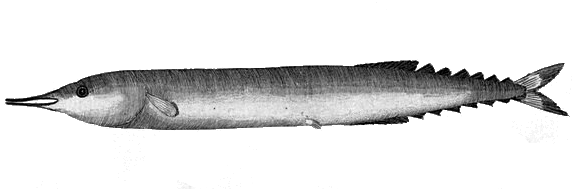
    Japan’s saury catches are expected to hit a record low from this month to December as the population of the fish shrinks, the Fisheries Agency said Friday. The distribution of saury (Cololabis adocetus) is expected to be reduced further this year after a third consecutive year of poor catches, which means prices for fresh saury are likely to rise, pundits said. The agency confirmed a decline in saury resources in a survey of coastal areas and the high seas from June to July. Based on the results, the agency expects catches in the first half of the saury fishing season through early October to rise from the previous year and decline in the second half. In 2016, saury catches totaled some 114,000 tons, the lowest since 1977, when the agency started collecting records, as populations shrank, temperatures rose off Hokkaido and typhoons depressed fishing in the reporting year. In 2015, the figure stood at some 116,000 tons, half of the previous year’s level of some 227,000 tons.

    Source: The Japan Times, 4 August 2017
    http://www.japantimes.co.jp/news/2017/08/04/business/japans-saury-catches-may-sink-record-low-august-december/#.WYb9BfnygdU