Auteur: Henk Tennekes

  • Black tern decline in the Klamath Basin

    Black tern decline in the Klamath Basin

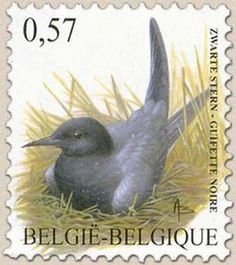
    Results from long-term monitoring efforts show that Black Tern (Chlidonias niger) population declines in the Klamath Basin are higher than declines previously documented for continental and regional populations. Results from a 10 year study conducted by Klamath Bird Observatory show a steady, sharp decline in numbers of Black Terns in the wetlands and open waters of Agency Lake and Upper Klamath Lake. According to a Black Tern conservation plan created in 2006, the desired population objective within the Great Basin — which includes the Klamath Basin — is 10,000 individuals. The current estimate of Black Terns for this area is already some 20% below the objective, making these local declines a red flag.

    Source: Klamath Bird Observatory, 25 July 2017
    http://callnote.klamathbird.org/2017/07/25/black-tern-population-declines-water-use-and-wetland-conservation-in-the-klamath-basin/

  • Kauai’s Colorful Forest Birds On The Brink

    Kauai’s Colorful Forest Birds On The Brink

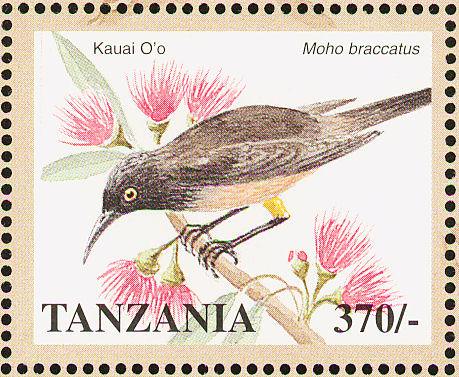
    In Hawaii’s Kauai island, the native forest birds are in peril. Once considered a paradise for the colorful songbirds, the island has lost more than half of those native species. Of the eight forest bird species on the island, three are listed as endangered. Among them is the puaiohi. The small gray and brown bird with pink feet now numbers less than 500. It feeds on the fruits of native plants and plays a vital role in seed dispersal. Native Hawaiian songs tell stories of the islands, including one that was inspired by the last mating call of a now extinct bird, the Kauai O’o (Moho braccatus). “We still sing it with hope in our hearts,” says Sabra Kauka, a Native Hawaiian who is a revered teacher of the island’s culture. “Our seabirds, our mountain birds they are just indicators of the health of the earth,” she says.

    Source: KBIA, 24 July 2017
    http://kbia.org/post/native-forest-birds-kauai-peril#stream/0

  • Millionen mit Insektizid belastete Eier zurückgerufen

    Millionen mit Insektizid belastete Eier zurückgerufen

    Hunderttausende mit einem Insektizid belastete Eier können in den deutschen Handel gekommen sein. Die niederländischen Behörden haben mehrere Millionen mit einem Insektizid belastete Eier aus Supermärkten zurückrufen lassen, diese Eier wurden auch nach Deutschland exportiert. Sie enthalten eine zu hohe Dosis des Läusebekämpfungsmittels Fipronil, der Verzehr der Eier könne daher gesundheitsschädlich sein, warnte die holländische Lebensmittelaufsichtsbehörde. Nach Nordrhein-Westfalen wurden nach Angaben des Landwirtschaftsministeriums etwa drei Millionen Eier aus den betroffenen Beständen geliefert. Davon sollen etwa 875.000 in den Handel gelangt sein. Sie waren bereits am Sonntag zurückgerufen worden. Kontrolleure hatten zuvor in einer Packstelle im Kreis Borken mit Fipronil belastete Eier gefunden. Das niedersächsische Agrarministerium teilte mit, dass auch rund 1,3 Millionen der Eier nach Niedersachsen geschickt worden seien. In den Eiern wurde eine Menge Fipronil von maximal 0,11 mg/kg nachgewiesen.

    Im Skandal um Hunderttausende mit dem Kontaktgift Fipronil verseuchte Hühnereier ist nach SPIEGEL-Informationen ein Chemikalienhändler aus dem belgischen Weelde ins Zentrum der Ermittlungen gerückt. Belgische und niederländische Fahnder gehen Hinweisen nach, wonach Patrick R. um den Jahreswechsel in einer Fabrik in Rumänien große Mengen des Tiermedikaments Fiprocid geordert habe, das den gefährlichen Wirkstoff Fipronil enthält. Ehemalige Geschäftspartner des Unternehmers sagten dem SPIEGEL, dass es sich um Bestellungen im Volumen von mehreren Zehntausend Euro gehandelt habe.

    Quellen:
    Die Zeit, 01.08.17
    http://www.zeit.de/wissen/gesundheit/2017-08/fipronil-eier-niederlande-insektizid-nrw-rueckruf
    Der Spiegel, 04.08.17
    http://www.spiegel.de/wirtschaft/service/fipronil-skandal-um-belastete-eier-spur-fuehrt-zu-rumaenischer-chemie-fabrik-a-1161327.html

  • Pesticide scandal in Dutch poultry farms – eggs contaminated with fipronil

    Pesticide scandal in Dutch poultry farms – eggs contaminated with fipronil

    The Dutch food and product safety board (Nederlandse Voedsel- en Warenautoriteit, or NVWA) has barred 180 poultry farms from sending their eggs to market because they may be contaminated with the pesticide fipronil. Additionally, the NVWA has warned consumers not to eat eggs with the code X-NL-40155XX, as these contain enough fipronil to present “an acute danger to public health.” The pesticide is used to control lice and fleas in poultry. In the Netherlands, it is banned in the poultry sector. The NVWA has said in a statement that it is currently testing eggs, hens and chicken manure at several dozen farms for traces of the pesticide.

    On its website, the NVWA states that although data on fipronil content in eggs, chicken and manure is still lacking, “the first results indicate that fipronil is still evident in eggs, months after it is administered.” The World Health Organization has classed the pesticide as “moderately hazardous.”

    Source: Food Ingredients
    http://www.foodingredientsfirst.com/news/dutch-food-safety-board-shuts-down-180-egg-producers-as-pesticide-scandal-unfurls.html

  • Imidacloprid pollution revisited – Flupyradifurone has high leaching potential

    Imidacloprid pollution revisited – Flupyradifurone has high leaching potential

    Flupyradifurone (PC Code 122304, 2(5H-(furanone), 4-{{(6-chloro-3-pyridinyl)methyl](2,2-difluoroethyl)amino]-, also known as BYI 02960) is a new active ingredient proposed for use as a systemic insecticide. The chemical belongs to the butenolide class of insecticides and the insecticidal activity of flupyradifurone is similar to the neonicotinoids with agonist activity in nicotinic acetylcholine receptors, making it a member of the Insecticide Resistance Action Committee (IRAC) Group 4 insecticide class. The environmental fate assessment indicates that depending on soil conditions and weather, flupyradifurone may persist in soil and it may be transported through a range of dissipation routes (i.e., runoff, erosion, leaching) to surface or groundwater, where the compound may also persist. Given the uses of flupyradifurone and its environmental fate properties, there is a likelihood of exposure to non-target terrestrial and/or aquatic organisms. Flupyradifurone may be transported to surface water and groundwater via runoff, leaching, and spray drift. It may be transported to offsite terrestrial environments via spray drift. When used in accordance with the label, flupyradifurone may result in potential adverse effects upon the survival, growth, and reproduction of non-target terrestrial and aquatic organisms. Based on the reduced risk assessment (USEPA, 2013, D408685), there will be potential direct risks to aquatic invertebrates and birds. On an acute exposure basis, flupyradifurone ranges from being slightly toxic to very highly toxic to aquatic invertebrates depending on the species tested. Based on the most sensitive species, the primary risks of concern in this assessment are for freshwater and estuarine/marine invertebrates inhabiting both the water column and benthic environments.

    Source:
    U.S. EPA. Environmental Fate and Ecological Risk Assessment for Foliar, Soil Drench, and Seed Treatment Uses of the New Insecticide Flupyradifurone (BYI 02960), Memorandum dated June 25, 2014
  • Is de Wester- en Busummerheide het laatste refugium van de veldleeuwerik in Nederland?

    Is de Wester- en Busummerheide het laatste refugium van de veldleeuwerik in Nederland?

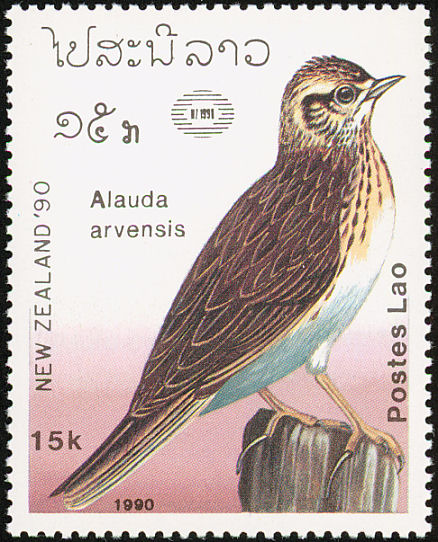
    Het gaat al jarenlang bar slecht met de veldleeuwerik (Alauda arvensis). Viel hij vroeger niet weg te denken uit het boerenland, anno 2017 is hij overal zo goed als uitgestorven. Nou ja, overal? Op één plek valt zijn gezang nog volop te horen: de heidevelden van het Goois Natuurreservaat. Dat blijkt uit het rapport ‘Broedvogels van de Wester- en Busummerheide 2016’ van Vogelwerkgroep Het Gooi en omstreken. Op de heidevelden is die achteruitgang minder snel gegaan en dat is in het Gooi goed te zien. In 2016 noteerde de vogelwerkgroep op de Wester- en Bussummerheide 25 territoria van de veldleeuwerik. In het aangrenzende Eemland zijn de veldleeuweriken aanzienlijk dunner gezaaid.

    Bron: Goois Natuurreservaat, 21-02-2017
    https://gnr.nl/blijf-op-de-hoogte/nieuws/heide-herbergt-laatste-gooise-veldleeuweriken/

  • Thiamethoxam impairs honey bee flight ability

    Thiamethoxam impairs honey bee flight ability

    We tested the effects of acute or chronic exposure to thiamethoxam on the flight ability of foragers in flight mills. Within 1 h of consuming a single sublethal dose (1.34 ng/bee), foragers showed excitation and significantly increased flight duration (+78%) and distance (+72%). Chronic exposure significantly decreased flight duration (−54%), distance (−56%), and average velocity (−7%) after either one or two days of continuous exposure that resulted in bees ingesting field-relevant thiamethoxam doses of 1.96–2.90 ng/bee/day. These results provide the first demonstration that acute or chronic exposure to a neonicotinoid alone can significantly alter bee flight. Such exposure may impair foraging and homing, which are vital to normal colony function and ecosystem services.

    Source:
    Simone Tosi, Giovanni Burgio & James C. Nieh. Scientific Reports 7, Article number: 1201 (2017)
    doi:10.1038/s41598-017-01361-8

  • An academic controversy with practical implications for risk assessment of neonicotinoids

    An academic controversy with practical implications for risk assessment of neonicotinoids

    Neonicotinoids act as neurotoxins. Whether the interactions of imidacloprid with its target site in the nervous system – the nicotinic acetylcholine receptor – is reversible or not is an academic controversy which has practical implications for the risk assessment of neonicotinoids. Some scientists argue that imidacloprid irreversibly blocks the nicotinic acetylcholine receptors. Indeed, the lethality of imidacloprid to insects appears to be dependent on the time of exposure: the longer the exposure time, the less amount of total chemical is needed to kill honeybees. However, imidacloprid and its metabolites are rapidly metabolised by detoxification enzymes in bees and a partial or full recovery from imidacloprid-induced sublethal effects on bees has been observed. In support of the reversibility-hypothesis, our data clearly indicate, that a recovery from the paralysing neurotoxic effects of a high dose of imidacloprid is possible. Strikingly, we found a non-linear dose-response relationship: the lower dose (LD50, 48h 3.7 ng/bee) had a greater impact on bee immobility/death than the higher dose of 41 ng (48 hours after ingestion).

    Source: Schott M, Bischoff G, Eichner G, et al. Temporal dynamics of whole body residues of the neonicotinoid insecticide imidacloprid in live or dead honeybees. Scientific Reports. 2017;7:6288. doi:10.1038/s41598-017-06259-z.

  • Endangered Green Peafowl on Last Legs in China

    Endangered Green Peafowl on Last Legs in China

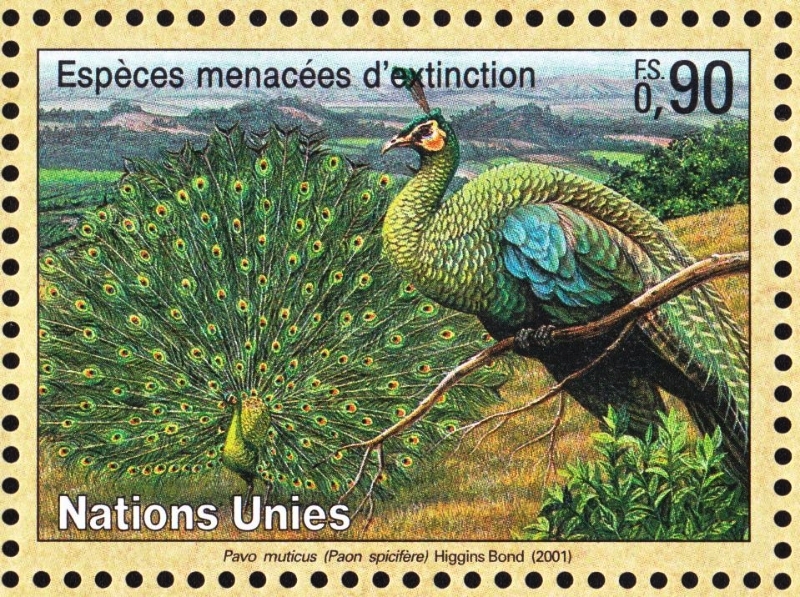
    The extremely rare green peafowl (Pavo muticus) is a close cousin of the more common blue peacock (Pavo cristatus) found across the Indian subcontinent. The green peafowl, too, was once widespread, but less than 20,000 individuals remain in the world today, mostly scattered across Southeast Asia. The green peafowl’s populations are in serious decline and the species is listed as endangered on the IUCN Red List. China is home to about 500 of these birds, all of which are known to occur only in the Yunnan province. Greenpeace and other conservationists have called for an immediate evaluation of green peafowl populations in China and urgent protection of the bird’s habitat. “We do not quite clearly know about the green peafowl’s distribution and activities and further surveys to clarify this are urgently needed,” Han Lianxian, a professor of zoology at Southwest Forestry College in Kunming, said.

    Source: The News Lens, 26 July 2017
    https://international.thenewslens.com/article/74146

  • Scarlet Robin faces high risk of extinction in NSW

    Scarlet Robin faces high risk of extinction in NSW

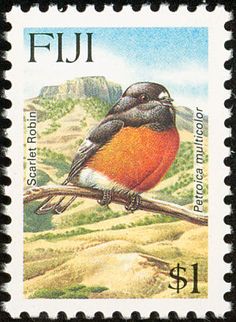
    The Scarlet Robin (Petroica boodang) is a small, insectivorous woodland bird whose male population sports a bright red breast and a white cap. Many are lucky enough to still see them around paddocks and homesteads in the cooler months. However, they are a species in serious decline. It has been determined by the NSW Scientific Committee that the Scarlet Robin is facing a high risk of extinction in NSW in the medium-term future. The ‘Save Our Scarlet Robin’ project is funded by the NSW Government via its Environmental Trust and will run for 10 years (to 2026) in the south east of NSW.
    The involvement of the community is vital to the recovery and long-term security of the threatened woodland birds in our region. By becoming more aware of the needs of the birds, we can work to improve the quality of their habitat, the loss of which is the largest threat they face. We work with land managers by looking at the whole-farm and designing a plan that secures the long-term integration of native flora and fauna values with long-term farm productivity goals, and then take steps to work toward those goals. Revegetating creek-lines and putting in some ‘stepping stone’ native vegetation patches in the paddocks not only provides an important refuge for threatened woodland birds, but also controls erosion, cleans the water, provides shade and shelter to livestock, pollen to the bees and insects, as well as gives an all-round increase in property value and amenity.

    Source: Felicity Sturgiss, South East Local Land Services in Yass Tribune, 27 July 2017
    http://www.yasstribune.com.au/story/4816605/scarlet-robin-is-a-species-in-decline/