Auteur: Henk Tennekes

  • Main-Taunus-Kreis ist Hochburg sterbender Vögel

    Main-Taunus-Kreis ist Hochburg sterbender Vögel

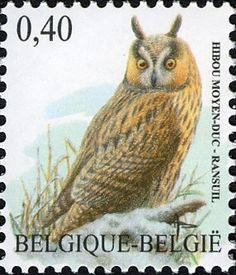
    Bei uns im Vorgarten liegt eine tote Eule“, wandte sich vor ein paar Tagen ein Anwohner der Wilhelm-Dienst-Straße in Flörsheim an Bernd Zürn vom BUND. Der war sich ziemlich sicher: Das tote Tier war eine Waldohreule (Asio otus). Als Todesursache vermutet Zürn eine klaffende frische Wunde neben dem Schnabel. Das Tier lag unter einem hohen und sehr dicht beasteten Nadelbaum, den die Eulen gern als Schlafplatz nutzen. Die ungewöhnlich große Menge an Gewölle, den ausgewürgten Speiseresten, die unter dem Baum lag, überraschte sogar Bernd Zürn. Für ihn ein weiterer Beweis, dass sich dort eine große Anzahl der nachtaktiven Greifvögel aufgehalten haben mussten. „Es ist nicht ungewöhnlich, dass sich mehrere Dutzend Waldohreulen einen Schlafbaum problemlos teilen. Das ändert sich nach der Balz aber völlig. Da sucht jedes Paar ein eigenes Revier, das es auch verteidigt“, sagt Zürn. Es ist also zu vermuten, dass die tote Eule an den Auswirkungen eines Kampfes mit einem Konkurrenten verendet ist. Sicher ist das allerdings nicht.

    So wie vor einem knappen Jahr: Heinz-Günter Ruppert hatte den toten Falken entdeckt: „Tot und ohne Kopf. Der war fast schon chirurgisch sauber abgetrennt“, sagte der Flörsheimer damals. Auch Bernd Zürn schaute sich den Vogel an, konnte aber nicht genau sagen, warum der Falke gestorben ist. Hund, Katze oder Verkehrsunfall hatte der Experte ausgeschlossen. Ob durch natürliche Feinde, Artgenossen, Stromleitungen oder rätselhafte Enthauptungen: Das mysteriöse Sterben von Greif- und Raubvögeln endet im Taunus auch 2017 nicht.

    Quelle: Rhein-Main Extra Tipp, 11.02.17
    https://www.extratipp.com/rhein-main/taunus-mysterioeses-vogelsterben-geht-auch-2017-weiter-7382696.html

  • So dramatisch steht es um unsere Vögel an Rhein und Ruhr

    So dramatisch steht es um unsere Vögel an Rhein und Ruhr

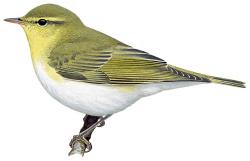
    Anfang dieser Woche hat Holger Sticht eine kleine Exkursion in die Wahner Heide unternommen. Dort ist Sticht häufiger unterwegs, denn der 45-Jährige ist Landesvorsitzender des Bundes für Umwelt und Naturschutz Deutschland (BUND) im Land und Hobby-Ornithologe. Einen alten Bekannten aber, den er in der Vergangenheit in dem zweitgrößten und artenreichsten Naturschutzgebiet Nordrhein-Westfalens, das nahe Köln gelegen ist, hat er diesmal weder gehört noch gesehen: den Waldlaubsänger (Phylloscopus sibilatrix). Auf der Roten Liste der geschützten Arten in NRW hatte der Brutvogel 1999 noch ein „V“, stand somit auf der Vorwarnliste. 2010 hatte er die Kategorie „R“ (geographische Restriktion) übersprungen auf Kategorie 3 (gefährdet). Nach den Kategorien 2 (stark gefährdet) und 1 (vom Aussterben bedroht) gibt es dann nur noch die Kategorie 0: Bestand erloschen.

    Der Bestand des Singvogels mit dem typischen schwirrenden Gesang ist nicht der einzige Vogel, der dem BUND Sorgen bereitet. „Viele ehemalige Bestände sind im Land erschreckend zusammengebrochen: Der Star (Sturnus vulgaris), der Kuckuck (Cuculus canorus) – viele Zugvögel werden immer weniger. Und das gilt nicht nur für NRW.

    Die Zahl der Vögel in ganz Deutschland und Europa geht dramatisch zurück. Vor allem Vögel, die in Agrarlandschaften leben, sind bedroht. In einer Antwort auf eine Kleine Anfrage der Grünen, die der Deutschen Presse-Agentur am Donnerstag vorlag, hat die Bundesregierung die Zahlen zusammengetragen: Insgesamt ist demnach in der EU die Zahl der Brutpaare in den landwirtschaftlichen Gebieten zwischen 1980 und 2010 um 300 Millionen zurückgegangen, ein Minus von 57 Prozent.

    In Deutschland hat der Bestand der Kiebitze (Vanellus vanellus) zwischen 1990 und 2013 um 80 Prozent abgenommen, die Zahl der Braunkehlchen (Saxicola rubetra) um 63 Prozent, die der Uferschnepfen (Limosa limosa) um 61 Prozent und die der Feldlerchen (Alauda arvensis) um 35 Prozent. Die Zahl der Rebhühner (Perdix perdix) hat zwischen 1990 und 2015 sogar um 84 Prozent abgenommen. Ein Drittel aller Vogelarten zeigte seit Ende der 90er-Jahre „signifikante Bestandsabnahmen“.

    Gründe dafür gibt es viele. Holger Sticht vom BUND nennt den Flächenverbrauch, also die Umwandlung von landwirtschaftlichen oder naturbelassenen Flächen in Siedlungs- und Verkehrsflächen. Auch benennt er die „Entwertung der Landschaft“ und die Tatsache, dass Nordrhein-Westfahlen seine Schutzgebiete nicht so pflege, dass sie optimal für Lebewesen und Arten seien. Außerdem fügt er hinzu: „Die Vögel verhungern schlicht“.

    Für den extremen Bestandsrückgang sei zudem der Einsatz von Stickstoffen und Pestiziden in der Landwirtschaft verantwortlich, weil so die Vögel immer weniger Nahrung fänden: Insekten. Sticht nennt das eine „unsichtbare Bugwelle“: Erst sterben die Insekten, dann die Vögel.

    Seit 30 Jahren beobachte der BUND die Tendenz, die jetzt die Regierung in Berlin so in Worte fasst: „Das Fehlen geeigneter Lebensräume und das Insektensterben gehören zu den wichtigen Gründen. Bei manchen Insektenarten ist der Bestand demnach um bis zu 90 Prozent zurückgegangen. Unkraut- und Insektengifte stellten dabei Studien zufolge einen „relevanten Einflussfaktor“ dar.

    Für Verbraucher, die Vögel unterstützen wollen, hat Sticht einige Tipps. Zum Beispiel helfe es, nur Produkte aus ökologischer Landwirtschaft zu kaufen, wenig Fleisch, und wenn, dann ausschließlich bio zu essen. Wer einen eigenen Garten habe, solle bloß keine Pestizide und Dünger verwenden.

    Kann man Vögel auch retten, indem man sie füttert? „Das bringt uns die Tiere sicher näher,“ so Sticht. „Vögel brauchen aber Fleisch. Dann müsste man sinnigerweise schon Mehlwürmer verfüttern.“ Viel sinnvoller sei aber zum Beispiel, eine Wiese nur zwei oder dreimal im Jahr mähen.

    Außerdem gibt er zu bedenken, dass in diesem Jahr noch zweimal gewählt wird. Natürlich wünscht er sich, dass die Ökologie in den Wahlprogrammen der Parteien eine größere Rolle spielen würde. Das passiere aber auch nur, wenn das Wahlverhalten der Menschen der Politik zeige, dass ihnen das Thema wichtig ist.

    Quelle: NRZ, 04.05.17
    https://www.nrz.de/region/so-dramatisch-steht-es-um-unsere-voegel-an-rhein-und-ruhr-id210462381.html
  • Insektizide: Sterben die Hummeln hierzulande demnächst aus?

    Insektizide: Sterben die Hummeln hierzulande demnächst aus?

    Die Bestände an Hummeln brechen dramatisch ein. Schuld daran sind wie auch beim Bienensterben Neonicotinoide, Insektenvernichtungsmittel. Diese wirken auf die Nervenzellen der Hummeln und sorgen dafür, dass diese weniger Eier legen. Ein Experiment ergab jetzt: Neonicotinoide verringern die Zahl eierlegender Hummelköniginnen um ein Viertel. Das kann zum Kollaps der Hummelpopulationen führen. Britische Forscher schätzten in „Nature Ecology & Evolution“ das Risiko der Hummeln auszusterben auf 28 %. Grundlage war eine Modellberechnung.Die Wissenschaftler ließen 319 befruchtete Hummelköniginnen überwintern und veränderten dabei die Länge des Winterschlafs, den Befall mit einem Parasiten und gab drittens Thiamethoxam hinzu, eine Neonicotinoid. Bei einem kurzen Winterschlaf verringerte sich die Wahrscheinlichkeit, dass eine Königin Eier legte, ebenso bei Parasitenbefall. Die Forscher fütterten die Königinnen jetzt mit der Sirup, der Thiamethoxam enthielt und beobachteten sie zehn Wochen. Das Ergebnis war niederschmetternd: Ohne das Gift pflanzten sich 26 % mehr Königinnen fort. Die Königinnen legten ihre Eier zudem früher ab. Das ist ein typisches Zeichen für Stress. Gemma Baron arbeitete an der Studie und sagt: „Wenn Königinnen keine Eier produzieren und neue Völker hervorbringen, ist es möglich, dass Hummeln ganz aussterben“. Dirk Süßenbach vom Umweltbundesamt hält einen Zusammenhang zwischen Pflanzenschutzmitteln und Hummelsterben für offensichtlich: „Es ist schon auffällig, dass der Rückgang von Bienenpopulationen und anderen Insekten in verschiedenen Regionen in etwa mit dem Beginn des Einsatzes von Neonicotinoiden zusammenfällt.”

    Quelle: Heilpraxisnet.de, 16.08.17
    http://www.heilpraxisnet.de/naturheilpraxis/insektizide-sterben-die-hummeln-hierzulande-demnaecht-aus-20170815384635

  • Ruim een derde Belgische vogels in het rood volgens Europees rapport

    Ruim een derde Belgische vogels in het rood volgens Europees rapport

    Meer dan een derde van alle Belgische broedvogels zijn op Europese schaal bedreigd. Vooral weide- en akkervogels zitten in slechte papieren. Dat blijkt uit een uitgebreid rapport van Birdlife International. “Er zijn 184 broedvogelsoorten in België”, verduidelijkt Gerald Driessens van Natuurpunt. “62 daarvan zijn ‘Species of European Conservation Concern’. Dat betekent dat hun populatiegrootte in heel Europa onrustwekkend klein is. Voor 24 van die soorten wordt de laatste jaren ook nog eens een duidelijke achteruitgang gesignaleerd in ons land.”

    Duidelijke verliezers zijn weide- en akkervogels. “Vooral door de intensivering van de landbouw verliezen ze broedgebied en voedsel. In Vlaanderen zijn de populaties van de Kievit en de Patrijs op die manier gekelderd. Ook de Zomertortel, een duivensoort die het moet hebben van houtkanten in landbouwgebied, doet het zo slecht dat hij in België met uitsterven bedreigd is.”

    Bron: De Morgen, 20-05-17
    https://www.demorgen.be/binnenland/ruim-een-derde-belgische-vogels-in-het-rood-volgens-europees-rapport-bb2d596f/

  • Geneva Lake’s zooplankton populations are disappearing in disturbing numbers

    Geneva Lake’s zooplankton populations are disappearing in disturbing numbers

    Analysis of Geneva Lake’s zooplankton populations shows that the numbers of the little animals that populate the bottom of the lake’s food chain are continuing to disappear in disturbing numbers. In a written report to the Geneva Lake Environmental Agency board of directors on Thursday, Ted Peters, GLEA director, said that in an email the analyst doing the zooplankton count for the GLEA has indicated that other species of zooplankton are now also starting to disappear. “The problem is no longer limited to just the rotifers; the decline has now spread to the copepod nauplii, hence to that portion of the crustacean zooplankton and the daphnids are becoming fewer in number, too,” Peters said the analyst wrote. Plankton are microscopic plants (phytoplankton) and animals (zooplankton) that float throughout Geneva Lake, feeding and being fed upon. They are a vital link in the lake’s food chain. They are a primary food source for young fish.

    The problem could be related to contamination of Lake Geneva with triazines. Irgarol 1051 is a recent herbicidal compound, inhibitor of photosynthesis, used in antifouling paints. This toxic is persistent in aquatic environments, with low abiotic and biotic degradation, highly phytotoxic, and has already been detected in estuaries and coastal areas, with suspected negative impacts on non-target organisms (aquatic plants and algae). The compound has previously been detected in water and macrophytes from marinas of Lake Geneva. The concentration of Irgarol 1051 was analysed in the water, and the most polluted site showed a higher level (up to 135 ng/L) than the lowest observed effect concentration for phytoplankton (8–80 ng/L), while the macrophytes appeared to be more tolerant to Irgarol 1051 in short-term tests. A microcosm study showed that phytoplankton structure might be even more sensitive to Irgarol 1051.

    Sources:
    Lake Geneva Regional News, July 26, 2017
    http://www.lakegenevanews.net/news/lake-s-zooplankton-population-continues-mysterious-decline-although-no-effect/article_c8e5d437-40fc-5499-af5a-9fa3b8479843.html

    Bo Nystrom et al. Water Research 36 (2002) 2020–2028

  • Salmon numbers in the River Awe are in “free fall”, fishing groups have warned

    Salmon numbers in the River Awe are in “free fall”, fishing groups have warned

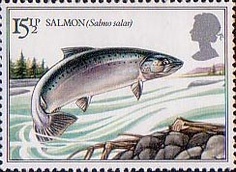
    Salmon fishing groups have called for urgent action over the “unprecedented collapse” of a major run in Argyll. The 2017 count from the River Awe in the south-west Highlands is projected to be the lowest since records began. The group said this year’s count from the Awe has only been running at a third of the 2016 count, which was itself only just above the all-time low since records began in 1965. The 2016 total was 807 fish, but STCS said the 2017 count may “struggle to reach 400”, with 30 weeks of the season already past. They said juvenile salmon migrating from rivers in the south-west Highlands had to “run the gauntlet” close to lice-producing salmon farms the whole way up the west coast before reaching the open ocean. Roger Brook, chairman of the Argyll District Salmon Fishery Board, said rivers like the Awe were facing “a very precarious future”, and called on the government to make changes. He said: “The Scottish government has promoted the continued expansion of the salmon aquaculture industry whilst refusing to implement adequate control on the siting of farms and the levels of sea lice on the farms.

    Source: BBC News, 10 August 2017
    http://www.bbc.com/news/uk-scotland-glasgow-west-40861649

  • Red-headed woodpeckers are on decline

    Red-headed woodpeckers are on decline

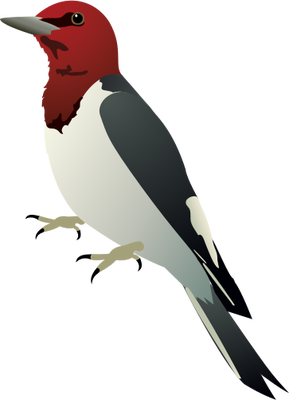
    The red-headed woodpecker (Melanerpes erythocephalus) was once a very common woodpecker. These birds fly to catch insects in the air or on the ground, forage on trees or gather and store nuts. They are omnivorous, eating insects, seeds, fruits, berries, nuts, and occasionally even the eggs of other birds. In the mid-1800s, John James Audubon stated that the red-headed woodpecker was the most common woodpecker in North America. He called them semi-domesticated because they weren’t afraid of people. He stated that they were camp robbers and also a pest. According to Audubon Society, Christmas Bird Count data, between the 1950s and the year 2010, the population of red-headed woodpeckers dropped dramatically. Over 80 percent of the population died out in just over 50 years. Currently we continue to lose approximately 2 percent each year. That means within a couple decades we could see this bird become extinct if the trend continues.

    Sources: Chaska Herald, August 14 2017
    http://www.swnewsmedia.com/chaska_herald/news/opinion/guest_columns/red-headed-woodpeckers-are-on-decline/article_b69d83e1-779c-56b9-be65-8ddc3912052d.html
    Wikipedia
    https://en.wikipedia.org/wiki/Red-headed_woodpecker

  • Assessment of ecological risks of agrochemicals requires a new framework

    Assessment of ecological risks of agrochemicals requires a new framework

    The widespread contamination of a significant proportion of the planet’s land and water with pesticides is undeniable. While this takes place, innumerable species of animals associated with agricultural landscapes are declining at rates that may put them on the brink to extinction in the span of a lifetime. It is evident, therefore, that our current risk assessment of agrochemicals has failed to protect the environment. A new framework is proposed here that combines the mandatory introduction of new toxicity endpoints with a more logical assessment of risks within the existing tiered approach.

    Chronic toxicity tests designed to detect time-cumulative effects should be a requirement for assessing delayed mortality as well as population endpoints that are crucial for the recovery and survival of species, such as fecundity. Exposure assessments should ensure that field monitoring data integrate both the highest and average levels of residues, as the former levels determine the main ecological impacts.

    The first tier of the risk assessment should comprise an evaluation of short-term mortality (as currently done by a hazard quotient on acute toxicity) and of the lethality after chronic exposure to sublethal levels. Chemicals that pass this tier should be assessed in a second tier whereby the crucial population endpoints are evaluated. Unless there is evidence of recovery with no negative effects on reproduction of the species tested, a chemical should not be registered.

    Further tiers of assessment, including sublethal effects, community effects tested in model ecosystems (i.e. microcosms, mesocoms) and field trials can still be used as supporting evidence, as it is currently done.

    Source:
    Sánchez-Bayo F, Tennekes HA. Assessment of ecological risks of agrochemicals requires a new framework. Environ Risk Assess Remediat. 2017;1(3):20-28

  • The tri-colored bat is on the verge of extinction in Georgia

    The tri-colored bat is on the verge of extinction in Georgia

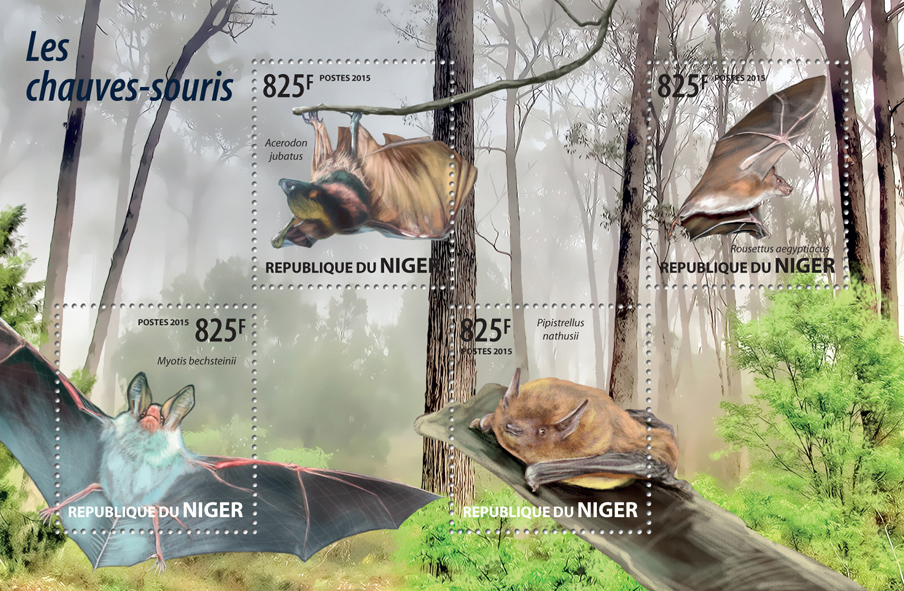
    Just a few years ago, Northeast Georgia was home to thousands of bats. In a relatively short amount of time, however, that number has plummeted. Georgia’s bat population has dropped dramatically due to an emerging disease known as White Nose Syndrome. In the past seven years, the population of affected bat species has fallen by approximately 94 percent, said Trina Morris with the Georgia Department of Natural Resources Wildlife Resources Division. In Rabun County, the decline has been even more pronounced, at roughly 97 percent.

    In Georgia, the most impacted species is the tri-colored bat (Perimyotis subflavus). Historically, tri-colored bats have been the most abundant species in Northeast Georgia. That’s no longer the case. Each year, the Georgia DNR surveys local caves. From 2010-13 — before WNS entered Georgia — the number of tri-colored bats observed in Rabun County hovered right around 5,000, with only slight variance. However, WNS hit the state in 2013, and the next year, the number fell to 3,472. An even steeper decline was seen in 2015, when the number fell from 3,472 to just 554. When Rabun’s caves were surveyed in 2017, only 152 tri-colored bats were alive.

    Source: The NEWNAN Times-Herald, July 29, 2017
    http://times-herald.com/news/2017/07/regional-bats-face-steep-decline

  • Leaf beetles: Even a tiny dose of pesticide will impair reproduction

    Leaf beetles: Even a tiny dose of pesticide will impair reproduction

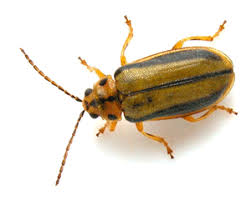
    In a new study, biologists at Bielefeld University show the effects of pesticides and how even slight traces lead to long-term damage to beetles. One finding is that leaf beetles lay roughly 35 per cent fewer eggs after coming into contact with traces of a frequently used pesticide: a pyrethroid. The researchers also showed that female offspring develop malformations through the poison. The biologists have published their study in the journal Environmental Pollution.

    According to the Federal Ministry for the Environment, in some parts of Germany the insect population has declined by 80 per cent since 1982. In North Rhine-Westphalia, the Regional Office for Nature, Environment, and Consumer Protection (LANUV) reports a decline of 75 per cent between 1989 and 2013.

    ‘Recent years have seen a continuous increase in the use of herbicides,’ says Professor Dr. Caroline Müller, head of the Department of Chemical Ecology. One problem is that up to now, little was known about how pesticides affect insects outside the cultivated fields. What are the consequences for organisms randomly exposed to traces of pesticides?’ asks the ecologist. When the chemicals are sprayed, they can spread to neighbouring areas and contaminate adjacent plants. ‘The wind also potentially carries them to ecologically-cultivated fields that are meant to be managed without poisons,’ says Caroline Müller.

    The new study shows that pesticides can interfere with communication between insects. When choosing their mating partners, mustard leaf beetles (Phaedon cochleariae Fabricius) rely on chemical stimuli, which enable them to recognize potential mates. Hydrocarbons on the surface of the beetle body act as a type of scent that serves as an identity mark.

    ‘For the first time, we have been able to show that contact with pesticides changes this chemical signature on the body surface,’ says Dr. Thorben Müller, the main author of the study. ‘As a consequence, beetles may fail to recognize suitable mating partners for reproduction. This alone may already reduce the number of offspring.’

    In addition, when parents come into contact with pesticides, this can have negative effects on the subsequent beetle generation “even when these do not come into direct contact with the substance themselves. ‘The offspring of beetles that have eaten leaves contaminated with pesticides develop more slowly than the offspring of beetles that have fed on untreated leaves,’ says Thorben Müller. However, it is not just the development of offspring that is delayed. ‘Female leaf beetles whose parents had contact with such chemicals develop antennae of different length. This malformation can impair partner choice and the choice of egg laying places.’

    The results of this research may also be transferred to other insects. ‘Bees and wasps communicate in a similar way to beetles by using chemical signals’, says Professor Dr. Caroline Müller. ‘If they incidentally come into contact with traces of pesticides, this could also influence their mate selection and lead to a decline in offspring.’ From the present findings, she concludes that ‘herbicides should be authorized only when it is certain that they will not damage the development and reproduction of untargeted organisms in the long term.’

    Journal Reference:

    Thorben Müller, Alexander Prosche, Caroline Müller. Sublethal insecticide exposure affects reproduction, chemical phenotype as well as offspring development and antennae symmetry of a leaf beetle. Environmental Pollution, 2017; 230: 709 DOI: 10.1016/j.envpol.2017.07.018

    Source:
    Science Daily, July 31, 2017
    https://www.sciencedaily.com/releases/2017/07/170731114632.htm