Auteur: Henk Tennekes

  • Insects and insectivores on the brink of extinction in the Adirondacks

    Insects and insectivores on the brink of extinction in the Adirondacks

    In September, the U.S. Fish and Wildlife Service denied a petition to put the Bicknell’s thrush (Catharus bicknelli) on the federal list of endangered species. The Bicknell’s is a medium-size (6-7.5 inches) thrush—brown on the back with a white, spotted underside—that dwells in dense balsam-fir forests in high elevations in the Adirondacks. Following is a primer on other wildlife in trouble in the Adirondack Park.

    Indiana bat (Myotis sodalis): This small bat (two inches long) hibernates in caves in Essex and Warren counties. The bats hibernate in clusters of three hundred to four hundred per square foot. About 85 percent of the nation’s Indian bats hibernate in seven caves, making them especially vulnerable to threats. In the past decade, white-nose syndrome has decimated populations in the state and across the country.

    Round whitefish (Prosopium cylindraceum): these medium-size fish (eight to twelve inches long) feed on the bottoms of freshwater lakes. They once were found in more than sixty lakes in the Adirondacks. They are now found in only nine.

    Spruce grouse (Falcipennis canadensis): in New York State, spruce grouse dwell primarily in the Adirondack foothills of Franklin and St. Lawrence counties in mid-successional coniferous forest with an understory of berries and with openings in the canopy. The grouse’s habitat has shrunk drastically over the years.

    Short-eared owl (Asio flammeus): of all northeastern owls, these are the most active during the day and often can be observed during the late afternoon. They can be found in Clinton, Essex, and Franklin counties in open wetlands or fields. The owls are at the southern edge of their breeding range in New York. Biologists believe reforestation has contributed to its decline.

    Tomah mayfly (Siphlonisca aerodromia): this is the only carnivorous species of mayfly: it eats larvae of other mayflies. It has been documented only in New York State and Maine. In New York, it is found on the western fringe of the Adirondacks and in the Tug Hill region. It lives in sedge-filled meadows along streams.

    Persius duskywing butterfly (Erynnis persius): this brown butterfly can be found in much of the country, but it is more common out west. It lives in mountain grass habitats and pine barrens and has been seen in Essex County.

    Karner blue butterfly (Plebejus melissa samuelis): this small dark-violet or blue butterfly is found mostly south of Adirondacks, but it has been seen in Warren County. It dwells in open woods and fields with blue lupine. Its decline is attributed to habitat loss. The butterfly was first identified by the novelist Vladimer Nabokov.

    Source: Adirondack Explorer, Nov 20, 2017
    What species in the Adirondacks are endangered?

  • White-nose syndrome is killing bats by the millions in the U.S.

    White-nose syndrome is killing bats by the millions in the U.S.

    Blake Sasse, nongame mammal program coordinator for the Arkansas Game and Fish Commission updated Commissioners at today’s regularly scheduled meeting on the status of white-nose syndrome, a disease that is killing bats by the millions in the U.S. “You hear about CWD with deer, and we’re all concerned with it, but I’m equally concerned about WNS in our bats,” Sasse said. According to Sasse, the disease actually is a fungus that grows on the bats during hibernation and causes them to wake prematurely.

    “Our bats are insect eaters, and they hibernate during winter because of the lack of insects at that time of year,” Sasse said. “Waking up raises their metabolism and causes them to burn fat reserves they have for winter. They essentially starve to death as a result.” Sasse explained that the fungus is widespread in Europe and Asia, but bats in those regions have adapted to it. Much like any non-native species, the fungus has done an extreme amount of damage to bat populations in the U.S. since its arrival.

    “Ninety-nine percent of northern long-eared bat (Myotis septentrionalis) populations have been killed because of this disease,” Sasse said. “They once were about as common as a opossum in New England, now they are listed in the Federal Endangered Species Act.”

    Sasse did say some populations of little brown bats (Myotis lucifugus) have seen a leveling off of the decline from WNS, but the damage to those populations had already been as high as 90 percent mortality before that occurred. “We don’t know if those populations will have enough individuals left to recover,” Sasse said.

    Source: KAIT, November 20, 2017
    http://www.kait8.com/story/36886343/agfc-hears-update-on-white-nose-syndrome-in-arkansas-bats

  • Paul Kirkland: How the plight of the butterfly may hit Scotland’s wild flowers

    Paul Kirkland: How the plight of the butterfly may hit Scotland’s wild flowers

    Much attention has been given to the plight of bees because of their importance as pollinators of major crops. But there is growing evidence that butterflies and moths – many of which have suffered dramatic declines in recent years – play an important role as specialist pollinators of some of our favourite wild flowers. A Swedish study recorded pollen on the bodies of three-quarters of butterfly species examined with some individuals carrying up to 350 grains. And a study in the Algarve, Portugal, found that three-quarters of the 257 moths caught carried pollen, derived from 27 species of plant. So it is clear they do have a significant role in plant pollination.

    However, butterflies that specialise in a particular environmental niche have declined in abundance in Scotland by more than 30 per cent over the last 40 years. And while we know very little about specialist moths in Scotland, we do know total moth abundance seems to have been rather steady in recent years and that generalist species, which feed on a range of different flowers, have been benefitting from climate change and increasing. This implies a decline in the specialists.

    The impact of the loss of specialist pollinators that feed on orchids may not be obvious in the countryside, as orchids themselves are now a rare sight. But nature reserves that are valued for their orchids and other wild flowers should be managed to boost the numbers of butterflies, moths and other pollinators. Otherwise attempts to preserve the orchids may be doomed to failure.

    Pollinating insects and flowering plants have evolved together over millions of years. Wild plants have colourful petals and scents to attract insects to their flowers and most reward pollinators by providing nectar. Many insects have adapted to feed from flowers with scent-detecting cells in their antennae, eyes that can distinguish flower colour, and mouth parts that are elongated tubes for drinking nectar. Insect pollination helps maintain the genetic diversity of plants, as they can fly over considerable distances and transfer pollen between otherwise-isolated plant populations, reducing the chances of inbreeding. Orchids produce sticky bags of pollen, and these are often seen attached to the mouth parts of butterflies and moths.

    Studies have recently been carried out near Stirling on the greater butterfly orchid. This species provides nectar at the bottom of a long spur, and only insects with a 2.5cm ‘tongue’ are able to reach it. The orchid produces two sticky bags of pollen at the entrance to the spur and, as the feeding insect pushes further into the flower, the bags become glued to it. Several species of moth were found to pollinate the orchid, but the star was the gold spangle moth, one of which was caught carrying 11 pollen bags. But plants sometimes renege on the deal.

    A study of pyramidal orchid on the Swedish island of Öland recorded over a quarter of butterflies and moths carrying its pollen. Despite this, the pyramidal orchid is a cheat – it produces a scent and is brightly coloured, but the pollinators go unrewarded as it produces no nectar.

    Source: Paul Kirkland in The Scotsman, 21 November 2017 http://www.scotsman.com/news/opinion/paul-kirkland-how-plight-of-butterfly-may-hit-scotland-s-wild-flowers-1-4618690

    Paul Kirkland is the Scotland director for Butterfly Conservation

  • Hoorzitting Tweede Kamer over de ontwikkeling van de biodiversiteit en de mogelijke oorzaken daarvan

    Hoorzitting Tweede Kamer over de ontwikkeling van de biodiversiteit en de mogelijke oorzaken daarvan

    Voortouwcommissie: vaste commissie voor Landbouw, Natuur en Voedselkwaliteit
    Locatie: Groen van Prinstererzaal, 29-11-2017, 13:00 – 16.15 uur (openbaar)
    Blok 1 (13.00 – 13.45 uur) elke inleider 15 minuten:
    – Prof. dr. Louise Vet, directeur NIOO-KNAW (bodem, gewasbescherming)
    – Prof dr. Hans de Kroon, Radboud (insecten)
    – Prof dr. Jan Willem Erisman, VU / Louis Bok Instituut (stikstof)

    Vragen, discussie kamerleden (13.45 – 14.15 uur)

    Blok 2 (14.15 – 14.55 uur) elke inleider 10 minuten:
    – Prof. dr. Han Olff, Universiteit Groningen (ecologie)
    – Prof dr. Koos Biesmeijer, Naturalis, Leiden (bijen)
    – Prof dr. Michiel Wallis de Vries, WUR (vlinders)

    Vragen, discussie kamerleden (14.55 – 15.25 uur)

    Pauze (15.25 – 15.30 uur)

    Blok 3 (15.30 – 16.00 uur) elke inleider 10 minuten
    – Prof dr. Ruud Foppen, Radboud (vogels en andere gewervelden)
    – Prof. dr.ir Wim de Vries, WUR (stikstof effectmodellering)
    – Prof. dr. Nico van Straalen (VU Amsterdam, bodembiologie)

    Vragen kamerleden en discussie (16.00 – 16.15 uur).

    Bron: Tweede Kamer
    https://www.tweedekamer.nl/debat_en_vergadering/commissievergaderingen/details?id=2017A03091

  • Die Waldameisen verschwinden in der Schweiz

    Die Waldameisen verschwinden in der Schweiz

    Die Waldameisen stehen unter Druck: «In den vergangenen 40 Jahren dürfte die Zahl der Ameisenhaufen in Rheinfelden und Umgebung um rund 60 bis 80 Prozent zurückgegangen sein», erklärt Urs Jost. Der 70-jährige Rheinfelder ist durch einen Dokumentarfilm auf die kleinen Krabbler und ihre grossen Probleme aufmerksam geworden. Bereits 1976 hatte der WWF vor einem «alarmierenden Rückgang der Waldameisen» gewarnt. Seither hat sich die Lage noch verschlechtert. «Die Ameisen verbreiten Pflanzensamen, fördern Insekten, die Honigtau produzieren, und können bei Schädlingsinvasionen sofort regulierend eingreifen», hält Jost fest.

    Quelle: Neue Fricktaler Zeitung, 30.03.17
    http://www.nfz.ch/2017/03/damit-das-grosse-krabbeln-nicht-verschwindet.html

  • Insect decline: the biodiversity of the entire world is at stake

    Insect decline: the biodiversity of the entire world is at stake

    Bees and butterflies are experiencing widespread population decline, creating public concern in recent years. Data collected in Germany suggest that it’s not just bees and butterflies at risk: insect populations overall have plummeted by more than 75 percent since 1989. Scientists have known about the population decline for several years. However, they didn’t know how many species were declining, and they didn’t expect it to be happening so fast.

    Decades ago, when pesticides like DDT were exposed as poisonous, they were replaced by safer alternatives: safer for humans, but with lethal effects for insects. Neonicotinoid pesticides, introduced in the 1980s when the Krefeld Society began their study, are considered safer for humans than many alternatives because they are applied to seeds before planting rather than to growing crops.

    However, they have disastrous effects on insects. When bees are exposed to these insecticides, they become less able to navigate and communicate with other bees. In wasps, neonicotinoid exposure cuts mating rates in half. Neonicotinoids have already been revealed as a major culprit in the declining population of bees and other pollinators. Because neonicotinoids dissolve in water so easily, rainwater can carry them far away from farm fields.

    Researchers have already connected insects’ decreasing numbers to the population declines of starlings in North America. Birds, reptiles, amphibians — any species that depends on insects for food will start to die out, and anything that eats those animals will take losses. The biodiversity of the entire world is at stake.

    The fact that we’ve apparently lost 75 percent of insect biomass in less than 30 years makes that future seem a lot closer than anyone would have guessed. But how accurate is the 75 percent figure? It’s hard to say. This study took place in a single country, and the measurements weren’t as regular as the members would have liked.Because comprehensive data on insect populations is so rare, there aren’t many datasets from other parts of the world to compare it to. However, the studies on bees and butterflies, as well as smaller-scale studies in England and the U.S., seem to tell a similar story.

    Source: The Tartan, Nov 19, 2017
    http://thetartan.org/2017/11/20/scitech/insectfuture

  • Leach’s storm petrel is suffering a serious decline in numbers off the Scottish coast

    Leach’s storm petrel is suffering a serious decline in numbers off the Scottish coast

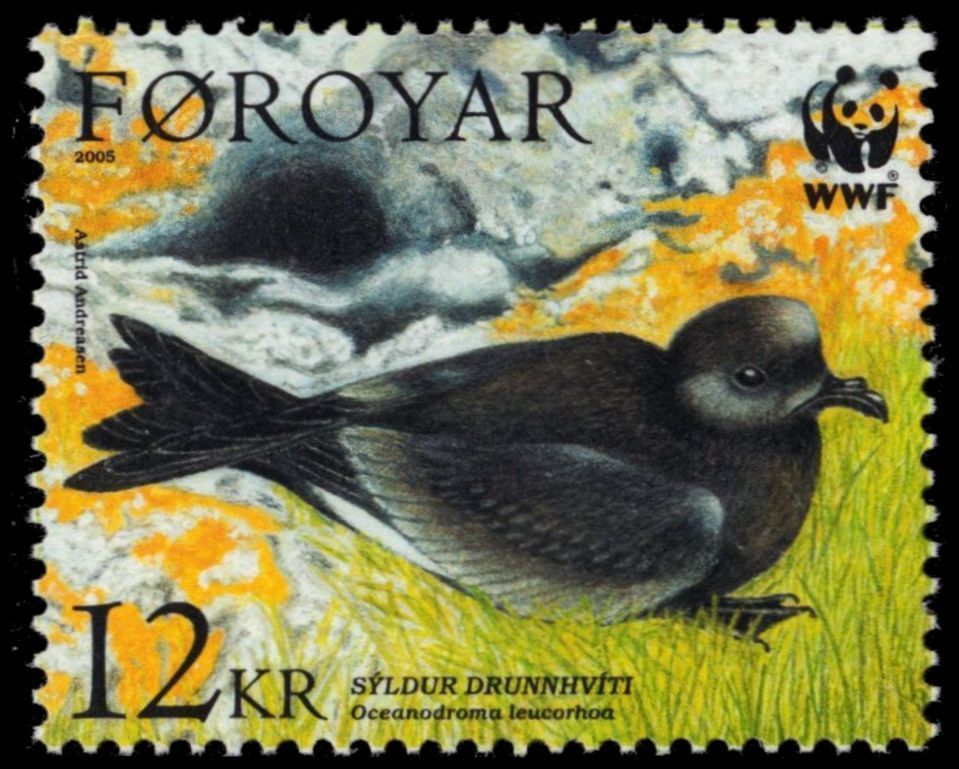
    Concern is growing for the future of the Scottish colony of the small seabird species Leach’s storm petrel (Oceanodroma leucorhoa) which is suffering a serious decline in numbers off the Scottish coast. Though the Leach’s storm petrel is plentiful in numbers on the Atlantic and Pacific Coasts of North America, it is in decline on this side of the Atlantic where St Kilda, under the care of the National Trust for Scotland (NTS), hosts the largest colony for the species. Named after the great English zoologist William Elford Leach (1791-1836), the NTS stated yesterday that there is “serious concern” about the eponymous Petrel, which is now officially classed as a “vulnerable” species.

    Source: The National, 18 Nov 2017
    http://www.thenational.scot/news/15669281.Concern_at_decline_of_bird_colony_off_Scottish_coastline/

  • Study Finds Pesticide Residues Linked to Infertility and Miscarriage

    Study Finds Pesticide Residues Linked to Infertility and Miscarriage

    According to a new study published in the Journal of the American Medical Association (JAMA) there is a connection between pesticide residues and an increased risk of infertility. Even in those who are able to conceive, there is a greater risk of miscarriage due to pesticide exposures. The study examined 325 women undergoing fertility treatments—researchers found a link between those who ate more fruits and vegetables high in pesticide residues and their likelihood of having a baby than those who did not. The researchers found that those who ate the highest amounts of high-pesticide produce were 18 percent less likely to get pregnant and 26 percent less likely to deliver a baby. The scientists concluded that typical daily pesticide exposure through the diet may have adverse reproductive consequences.

    While this particular study explored the link to female reproduction, earlier research published in the medical journal Environmental Toxicology and Pharmacology found that glyphosate-based pesticides like Monsanto’s Roundup increased impairment in sperm structure and reproduction in male animals. Other research in the journal Entropy linked the pesticide to damaged gut health—a factor in many other health conditions. When it comes to health, a damaged gut is the root of (almost) all evil.

    Other studies like the one published in the journal Environmental Health Perspectives have linked pesticide exposures to the incidence or development of autism.

    The fruits and vegetables highest in pesticides are known as the “Dirty Dozen” by many people. According to the Environmental Working Group (EWG), they include: strawberries, spinach, nectarines, apples, peaches, pears, cherries, grapes, tomatoes and celery. Choosing organic fruits and vegetables as much as possible, but especially of the dirty dozen produce items is a good way to reduce your exposure to the pesticides they frequently contain.

    Source: Care2, 12 Nov 2017
    http://www.care2.com/greenliving/study-finds-pesticide-residues-linked-to-infertility-and-miscarriage.html

  • Europa belandt in een “glyfosaat impasse”

    Europa belandt in een “glyfosaat impasse”

    De Europese Commissie pleit al sinds begin 2016 voor de vernieuwing van de vergunning voor glyfosaat binnen de EU. Al zesmaal slaagt het er niet om genoeg steun van Europese parlement en lidstaten, die voor een uitfasering van het gebruik van het pesticide pleiten binnen vijf jaar. Op 9 november stemden negen landen tegen het vijf-jaar vernieuwing van de glyfosaat vergunning, waaronder België, Frankrijk, Italië en Luxemburg. Vijf landen onthielden zich, waaronder Duitsland die 16.06% van de Europese bevolking representeert. Veertien landen stemden voor een hernieuwing, waaronder Nederland, het Verenigd Koninkrijk en Spanje. De stemming leverde opnieuw niet de vereiste meerderheid om het voorstel van de Commissie goed te keuren of weg te stemmen. Met slechts 37% van de lidstaten voor de hernieuwing van het pesticide ontbeert het voorstel duidelijk aanhang, ook al werd de termijn van de vergunning verlaagd van tien naar vijf jaar na een stemming op 24 oktober. Volgens de procedure zal de Commissie haar voorstel op 27 of 28 november opnieuw voorleggen, ditmaal aan het beroepscomité dat zal bijgewoond worden door de experts van de lidstaten.

    Bron: Mondiaal Nieuws, 14-11-17
    https://www.mo.be/analyse/europa-belandt-in-een-glyfosaat-impasse

  • Evaluation of leaching potential of three systemic neonicotinoid insecticides in vineyard soil

    Evaluation of leaching potential of three systemic neonicotinoid insecticides in vineyard soil

    Dinotefuran (DNT), imidacloprid (IMD), and thiamethoxam (THM) are commonly used neonicotinoid insecticides in a variety of agriculture operations. Although these insecticides help growers control pest infestation, the residual environmental occurrence of insecticides may cause unintended adverse ecological consequences to non-target species. In this study, the leaching behavior of DNT, IMD, and THM was investigated in soils collected from an active AgriLife Research Extension Center (AREC) vineyard. A series of column experiments were conducted to evaluate the leaching potential of insecticides under two experimental scenarios: a) individual pulse mode, and b) mixed pulse mode. In both scenarios, the breakthrough pattern of the insecticides in the mostly acidic to neutral vineyard soil clearly demonstrates medium to high leachability. Of the three insecticides studied for leaching, DNT has exhibited high leaching potential and exited the column with fewer pore volumes, whereas IMD was retained for longer, indicating lower leachability. Relative differences in leaching behavior of neonicotinoids could be attributed to their solubility with the leaching pattern IMD < THM < DNT showing strong correlation with increasing aqueous solubility 610 mg/L < 4100 mg/L < 39,830 mg/L. Triplicate column study experiments were conducted to evaluate the consistency of the breakthrough pattern of these insecticides. The repeatability of the breakthrough curves shows that both DNT and IMD are reproducible between runs, whereas, THM shows some inconsistency. Leaching behavior of neonicotinoid insecticides based on the leachability indices such as groundwater ubiquity score, relative leaching potential, and partitioning between different environmental matrices through a fugacity-based equilibrium criterion model clearly indicates that DNT may pose a greater threat to aquatic resources compared to IMD and THM. Source: Sudarshan Kurwadkar et al. Journal of Contaminant Hydrology 170 (2014) 86–94