Auteur: Henk Tennekes

  • Ely and Cambridgeshire farmland bird numbers decline by 9 per cent over 5 years

    Ely and Cambridgeshire farmland bird numbers decline by 9 per cent over 5 years

    Bird numbers in Ely and Cambridgeshire have declined around British farmland by almost a tenth, according to new figures released by Defra. The latest figures released on Thursday (23rd November) by the government’s environmental department reveal that wild bird numbers have dropped 9% from the years between 2010 and 2015, and by almost 70% by 1970. The figures have led the RSPB to call for a shift in how the UK operates its farming policies after it leaves the EU, to a more environmentally and sustainable friendly system.

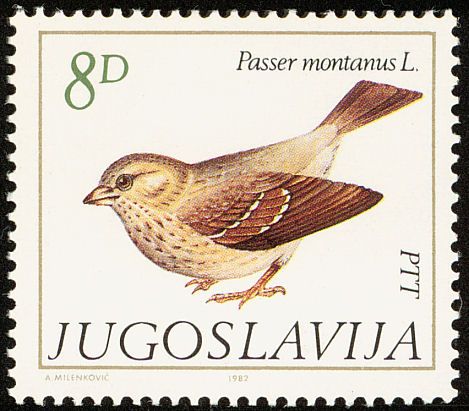
    Tree sparrows (Passer montanus), corn buntings (Emberiza calandra) and grey partridge (Perdix perdix) are just few of the species which have suffered a “severe” drop in numbers, of more than 90% since 1970. The farming industry takes the decline in farmland bird species seriously. Across the country, farmers have been taking part in numerous conservation projects to help restore numbers.

    Source: About My Area, 30 Nov 2017
    http://www.aboutmyarea.co.uk/Cambridgeshire/Ely/CB6/Ely-News/Ely/312464-Ely-and-Cambridgeshire-farmland-bird-numbers-decline-by-9-per-cent-over-5-years
  • Primaire oorzaak van de insectensterfte is het gebruik van neonicotinoïde bestrijdingsmiddelen

    Primaire oorzaak van de insectensterfte is het gebruik van neonicotinoïde bestrijdingsmiddelen

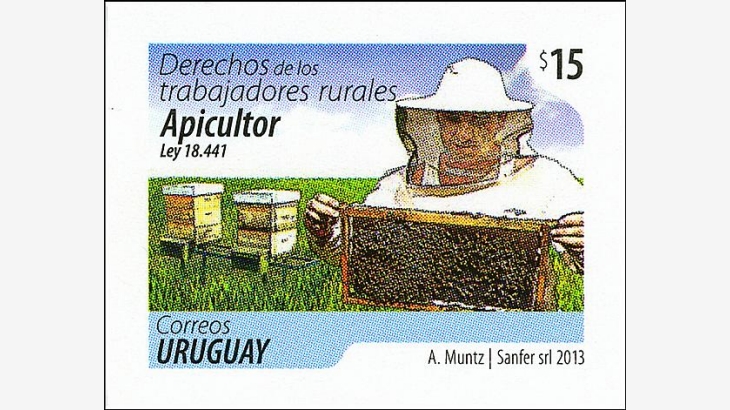
    De oogst van onder meer appels, peren en aardbeien dreigt te halveren als de insectensterfte doorzet. Wetenschappers waarschuwen dat de sector dit honderden miljoenen kan kosten. ‘De dreiging voor de bij en andere insecten is zeer serieus,’ zegt Koos Biesmeijer. Hij is hoogleraar Natuurlijk Kapitaal aan de Universiteit Leiden en wetenschappelijk directeur bij Naturalis. Een van de grote oorzaken van de insectensterfte is het gebruik van bestrijdingsmiddelen. ‘In ons landje willen we heel veel en dat gaat niet altijd goed met de biodiversiteit’, zegt Biesmeijer. Dit is volgens hem zeker op te lossen, maar dan moeten we wel stoppen met wijzen naar één of twee sectoren. ‘Het is onze keuze om dit landbouwsysteem te hebben en om zo voedsel te produceren. Als dit niet de manier is voor de toekomst, zullen we dit met z’n allen moeten oplossen.’

    Bron: BNR, 29-11-2017
    https://www.bnr.nl/nieuws/duurzaamheid/10334554/oogsten-van-fruit-dreigen-te-halveren

  • ‘Insecten snel een handje helpen’

    ‘Insecten snel een handje helpen’

    Het aantal dieren- en plantensoorten en de kwaliteit van de bodem in Nederland is sterk achteruitgegaan, doordat het platteland volledig is ingericht op maximale productie. Volgens Hans de Kroon zijn insecten veerkrachtig, maar hebben ze nu hulp nodig. ‘Anders redden ze het niet.’

    Lees verder het artikel van Petra Noordhuis in het Nederlands Dagblad van 29-11-2017
    https://www.nd.nl/nieuws/politiek/insecten-snel-een-handje-helpen.2864652.lynkx?trxid=180219558&idealtrxid=0030002496756656&ec=190773143472386

  • Eens waren er meer mussen dan inwoners in Spanje, maar nu zijn ze bijna verdwenen

    Eens waren er meer mussen dan inwoners in Spanje, maar nu zijn ze bijna verdwenen

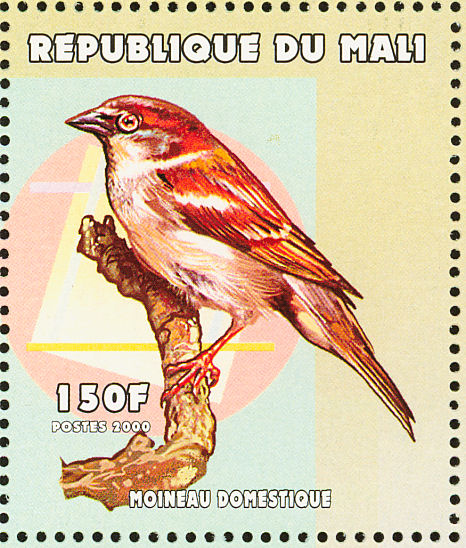
    Het valt veel mensen steeds meer op dat als men door een stad of dorp loopt er steeds minder vogels te zien en horen zijn. Uiteraard ligt het eraan waar je loopt maar over het algemeen is er een flinke afname in verschillende soorten vogels. Bij een vogelsoort is dat, net zoals in andere landen zoals Nederland en België, het meeste te merken. Het gaat hier om de “gorriones” ofwel de “passer domesticus” die beter bekend is onder de naam huismus. Deze kleine zangvogel vormt samen met een dertigtal andere mussensoorten zoals de ringmus het geslacht Passer. De huismus in Spanje was de enige vogelsoort die vele malen meer dan het aantal menselijke inwoners van het land voorkwam met zo’n 160 miljoen exemplaren. Dat aantal is echter schrikbarend teruggenomen met volgens SEO/Birdlife minstens 60% de afgelopen 30 jaar. Deze achteruitgang van het aantal huismussen is met name te merken in de steden.

    Bron: Spanje Vandaag, 14-11-17
    https://www.spanjevandaag.com/14/11/2017/aantal-vogels-waaronder-de-huismussen-wordt-steeds-minder-in-spanje/

  • De populatie grutto’s blijft krimpen

    De populatie grutto’s blijft krimpen

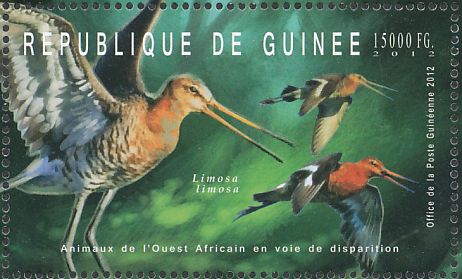
    In 2017 zijn er circa 12.000 grutto’s (Limosa limosa) uitgevlogen. Helaas geen reden voor een feestje. De populatie grutto’s blijft krimpen. Om de huidige populatie (nu circa 34.000 paren) op peil te houden zouden er het afgelopen broedseizoen circa 18.000 jongen groot moeten zijn geworden. De grutto, onze Nationale Vogel, blijft in Nederland met gemiddeld 3,5 procent per jaar achteruit gaan.

    Bron: Nature Today, 28-11-17
    https://www.naturetoday.com/intl/nl/nature-reports/message/?msg=23948

  • Risk assessment’s insensitive toxicity testing may cause it to fail

    Risk assessment’s insensitive toxicity testing may cause it to fail

    Risk assessment of chemicals and other agents must be accurate to protect health. We analyse the determinants of a sensitive chronic toxicity study, risk assessment’s most important test. Manufacturers originally generate data on the properties of a molecule, and if government approval is needed to market it, laws globally require toxicity data to be generated using Test Guidelines (TG), i.e. test methods of the Organisation for Economic Cooperation and Development (OECD), or their equivalent. TGs have advantages, but they test close-to-poisonous doses for chronic exposures and have other insensitivities, such as not testing disease latency. This and the fact that academic investigators will not be constrained by such artificial methods, created a de facto total ban of academia’s diverse and sensitive toxicity tests from most risk assessment. To start and sustain a dialogue between regulatory agencies and academic scientists (secondarily, industry and NGOs) whose goals would be to (1) agree on the determinants of accurate toxicity tests and (2) implement them (via the OECD). We analyse the quality of the data produced by these incompatible paradigms: regulatory and academic toxicology; analyse the criteria used to designate data quality in risk assessment; and discuss accurate chronic toxicity test methods. There are abundant modern experimental methods (and rigorous epidemiology), and an existing systematic review system, to at long last allow academia’s toxicity studies to be used in most risk assessments.

    Source:
    Vito A. Buonsante et al. Environmental Research 135 (2014) 139–147
    https://ac.els-cdn.com/S0013935114002473/1-s2.0-S0013935114002473-main.pdf?_tid=0fe7db66-d062-11e7-b5b7-00000aacb35d&acdnat=1511450705_b60a3dbfa498ebe2c5503fc4a1cb51a5

  • Blue-Footed Boobies are Declining in the Galapagos

    Blue-Footed Boobies are Declining in the Galapagos

    The population of blue-footed boobies (Sula nebouxii) – the seabirds with characteristically colorful feet – has been declining in the Galápagos islands. The birds’ numbers have dropped more than 50 percent in less than 20 years, according to a study published Monday (April 21) in the journal Avian Conservation and Ecology. The researchers speculated that a lack of sardines, a source of food for the boobies, might be to blame for the decline.

    The researchers first noticed the decrease in the booby population in 1997. “Until 1997, there were literally thousands of boobies at these breeding sites, and hundreds of nests full of hatching chicks,” study author Dave Anderson, a professor of biology at Wake Forest University, said in a statement. “Then, suddenly, the boobies just weren’t there,” Anderson said, adding that, in a few cases, the birds had attempted to breed, but most did not produce offspring.

    Recently, a team of seabird biologists monitored the birds’ breeding at four of the largest blue-footed booby breeding colonies in the Galápagos. The researchers discovered that between May 2011 and June 2013, the boobies bred little or didn’t breed at all, and the scientists found only 134 fledgling birds during the study period. The research team also discovered that there were only about 6,423 boobies living in the Galápagos in 2012, which was less than a third of the estimated number in the 1960s.

    Previous research on booby colonies has shown that the seabirds can breed only during periods when their diet consists almost exclusively of sardines. In the new study, the researchers found that sardines constituted less than half of the blue-footed birds’ current diet. This suggests the surviving boobies may be getting enough sardines to live, but not to breed, the researchers said.

    Source: Seeker, 26 April 2014
    https://www.seeker.com/blue-footed-boobies-declining-in-the-galapagos-1768513154.html

  • Latest update of European wild bird indicators confirms continued decline of farmland birds

    Latest update of European wild bird indicators confirms continued decline of farmland birds

    The latest data on European common birds, brought together by the Pan-European Common Bird Monitoring Scheme (PECBMS), shows a continued decline of European farmland birds. While the common forest birds are more or less stable over the last 10-15 years, the farmland birds show a staggering decline of 55% since 1980.

    Among 39 species characteristic for European farmland, 24 have declined, 6 increased, trends of 6 species are stable and in 3 species the trends are uncertain. Many species formerly common, like skylark (Alauda arvensis) and lapwing (Vanellus vanellus), have declined and become less common in farmland nowadays.

    As Iván Ramírez, Head of Conservation of BirdLife Europe & Central Asia, says, the common farmland birds might actually be one of the most threatened bird groups in Europe. Intensification of agriculture is the driving factor behind the downward population trends of the last three decades. The drainage of wetlands, use of agro-chemicals and change from mixed farms to monocultures are just a few examples of how intensified agriculture can negatively affect farmland bird species.

    Among 34 common bird species characteristic for forests in Europe, 12 are in the category of increasing species, 13 are declining and 9 have their long-term trends stable. However, differences in trends among regions suggest that the common forest bird indicator is subject to regional variation. This will be examined in the near future in PECBMS in order to identify datasets which could give better insight into forest bird indicators.

    28 countries provided their bird monitoring data for the 2017 update of the European wild bird indicators, which are calculated by PECBMS, a joint initiative of the European Bird Census Council and BirdLife International. Birds are one of the best indicators for measuring ecosystem health, and the newly published figures can be used to emphasize the need for policy measures to conserve Europe´s biodiversity.

    Source: Bulgarian Society for Protection of Birds, 17 Nov 2017
    http://bspb.org/en/news/Ptitsite-v-zemedelskite-zemi-prodylzhavat-da-izchezvat.html

  • Chronic exposure to neonicotinoids reduces honey bee health near corn crops

    Chronic exposure to neonicotinoids reduces honey bee health near corn crops

    Experiments linking neonicotinoids and declining bee health have been criticized for not simulating realistic exposure. Here we quantified the duration and magnitude of neonicotinoid exposure in Canada’s corn-growing regions and used these data to design realistic experiments to investigate the effect of such insecticides on honey bees. Colonies near corn were naturally exposed to neonicotinoids for up to 4 months—the majority of the honey bee’s active season. Realistic experiments showed that neonicotinoids increased worker mortality and were associated with declines in social immunity and increased queenlessness over time. We also discovered that the acute toxicity of neonicotinoids to honey bees doubles in the presence of a commonly encountered fungicide. Our work demonstrates that field-realistic exposure to neonicotinoids can reduce honey bee health in corn-growing regions.

    Source: Tsvetkov et al., Science 356, 1395–1397 (2017)

  • Dramatischer Rückgang bei Amphibien im Salzburgerland

    Dramatischer Rückgang bei Amphibien im Salzburgerland

    Vor wenigen Wochen erst sorgte eine Untersuchung über das Insektensterben in Deutschland auch über die Wissenschaftsseiten hinaus für einige Aufregung. Wenn es aber weniger Insekten gibt, dann müssen auch ihre Fressfeinde darunter leiden. Und genau das bestätigt nun eine Studie der Salzburger Herpetologen Martin Kyek, Peter Kaufmann und Robert Lindner (Haus der Natur in Salzburg). Grundlage für die im Fachblatt “PLoS ONE” publizierte Untersuchung waren Daten aus einem vom Land Salzburg (Naturschutz und Straßenbau) mitgetragenen Citizen-Science-Projekt, die über einen Zeitraum von über 20 Jahren entlang von Amphibienschutz-Zäunen gesammelt wurden. Das Ergebnis der Studie ist ähnlich dramatisch wie der vor kurzem bekannt gewordene massive Einbruch bei Insektenpopulationen. 83 Prozent Rückgang Zwar sind die Bestände der Erdkröte (Bufo bufo) in den letzten beiden Jahrzehnten stabil geblieben, die des Grasfrosches (Rana temporaria) sind jedoch um 83 Prozent zurückgegangen. Da es sich beim Grasfrosch um die am weitesten verbreitete Amphibienart Österreichs handelt, bedeutet dieser Schwund gleichzeitig einen massiven Verlust an Biomasse für die heimischen Ökosysteme.

    Quelle: Der Standard, 20.03.2017
    https://derstandard.at/2000068167162/Dramatischer-Rueckgang-bei-heimischen-Amphibien

    Studiereferenz:
    Kyek M, Kaufmann PH, Lindner R (2017) Differing long term trends for two common amphibian species (Bufo bufo and Rana temporaria) in alpine landscapes of Salzburg, Austria. PLoS ONE12(11): e0187148. https://doi.org/10.1371/journal.pone.0187148