Auteur: Henk Tennekes

  • Warning sounds for charismatic kea

    Warning sounds for charismatic kea

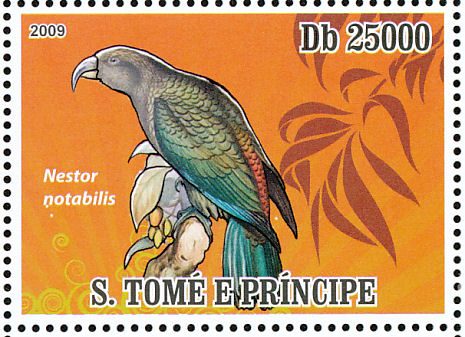
    New Zealand’s charismatic kea (Nestor notabilis) – and 2017‘s Bird of the Year – has just been reclassified to “endangered” by global conservation group BirdLife International. The alpine parrot was upgraded from “vulnerable” to “endangered” in BirdLife International’s reassessment of the threat status of birds for the International Union for the Conservation of Nature (IUCN). With an estimated population of between 3000 and 7000, the kea, found in alpine and forested environments of the South Island, is classified as “threatened-nationally endangered” by the Department of Conservation (DoC).

    The kea is a large species of parrot found in forested and alpine regions of the South Island of New Zealand. An omnivore, the kea feeds on more than 40 plant species, beetle larvae, other birds (including shearwater chicks), and mammals (including sheep and rabbits).

    Sources: Otago Daily Times, 13 Dec 2017
    https://www.odt.co.nz/news/national/warning-sounds-charismatic-kea
    Wikipedia
    https://en.wikipedia.org/wiki/Kea

  • Eight English rivers are polluted with neonicotinoid pesticides

    Eight English rivers are polluted with neonicotinoid pesticides

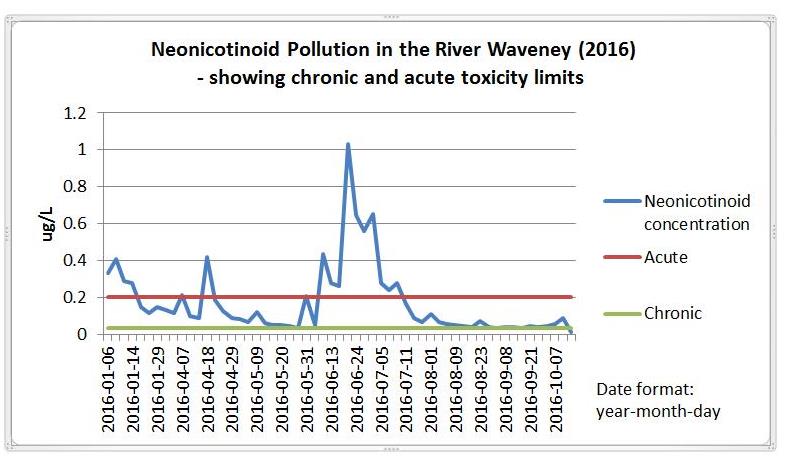
    Rivers in England are contaminated with powerful insecticides, new testing has revealed, increasing concerns over the impact of the toxic chemicals on fish and birds. Eight rivers in England are heavily contaminated with neonicotinoid pesticides. Two of the rivers, the Waveney on the border between Norfolk and Suffolk, and the Tame in the West Midlands, had an “acute level” of pollution, according to tests conducted by the Environment Agency last year. The most polluted river tested was the river Waveney on the Norfolk/Suffolk Border, where the acute harm level was exceeded for a whole month in the summer of 2016. Other rivers which exceeded pollution limits included the Great Ouse in Bedfordshire, the Ancholme in Lincolnshire and the Wensum in Norfolk.

    Neonicotinoids have been in use since the early 1990s and now contaminate landscapes around the world. But very little monitoring of their concentration in soils or water is done, a failing recently condemned by a UK government chief scientific adviser. Like flying insects, aquatic insects are vulnerable to neonicotinoids and provide the main source of food for many fish and birds. Recent research in the Netherlands has shown chronic neonicotinoid pollution in water led to sharp drops in insect numbers and was linked to heavy falls in bird numbers.

    Primarily polluted with Imidacloprid
    River Ouse (Bedfordshire) – Mixed arable/grassland, with waste water treatment plant.
    Somerhill Stream – Urban, with waste water treatment plant.
    Wyke Beck – Urban, with waste water treatment plant.

    Primarily polluted with Clothianidin
    River Ancholme – Arable with small waste water treatment plants.
    River Tame – Urban, with waste water treatment plants.

    Polluted with both Clothianidin and Imidacloprid
    Sincil Dyke – Arable with urban, with waste water treatment plants (River Witham).

    Polluted with both Clothianidin and Thiamethoxam
    River Waveney – Arable, catchment sensitive farming, with waste water treatment plants.
    River Wensum – Arable, catchment sensitive farming, with waste water treatment

    Sources:
    The Times, 13 Dec 2017
    https://www.thetimes.co.uk/edition/news/eight-english-rivers-are-polluted-with-pesticides-that-kill-endangered-wildlife-great-ouse-wensum-ancholme-waveney-tame-smc3z06z5
    The Guardian, 13 Dec 2017
    https://www.theguardian.com/environment/2017/dec/13/english-rivers-polluted-by-powerful-insecticides-first-tests-reveal
    Buglife, 12 Dec 2017
    https://www.buglife.org.uk/news-&-events/news/heavy-neonicotinoid-insecticide-contamination-damaging-british-rivers
  • Minister Schouten vindt Commissie voorstel over de aanscherping van de regels voor drie neonicotinoïden prematuur

    Minister Schouten vindt Commissie voorstel over de aanscherping van de regels voor drie neonicotinoïden prematuur

    Minister Carola Schouten wil meer duidelijkheid over de gevolgen van de aanscherping van regels voor neonicotinoïden. Als die duidelijkheid er niet tijdig is, zal ze geen oordeel geven over het plan van de Europese Commissie om de regels voor het gebruik aan te scherpen. In een brief aan de Tweede Kamer zegt de minister van Landbouw, Natuur en Voedselkwaliteit dat verschillende lidstaten nog vragen hebben over de plannen van de Europese Commissie die er op neerkomen dat imidacloprid, clothianidin en thiamethoxam alleen nog in kassen mogen worden gebruikt. Nederland heeft bij de Europese Commissie gevraagd rekening te houden met de risico’s van het gebruik van alternatieven voor de middelen. Omdat er nog onderzoek in de pijplijn zit, vindt Schouten het nu prematuur om het voorstel over de aanscherping van de regels voor deze neonicotinoïden te bespreken.

    Bron: Boerderij, 12-12-17
    http://www.boerderij.nl/Home/Nieuws/2017/12/Nefyto-meer-herbicide-en-fungicide-minder-insecticide-verkocht-224135E/

  • World’s birds on brink of extinction

    World’s birds on brink of extinction

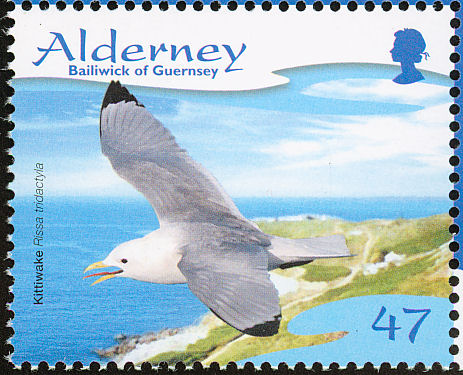
    Birds that are now globally threatened include the kittiwake (Rissa tridactyla) and the Atlantic puffin (Fratercula arctica), which breed on UK sea cliffs. Meanwhile, on land, the Snowy Owl is struggling to find prey as ice melts in the North American Arctic, say conservation groups. The iconic bird is listed as vulnerable to extinction for the first time. Worldwide, over a quarter of more than 200 bird species reassessed by the International Union for the Conservation of Nature have been moved to higher threat categories.

    Seabirds are of particular concern, including Cape gannets (Morus capensis), which are now classified as Endangered, and the Antipodean Albatross (Diomedea antipodensis), which risks being drowned by fishing lines. The kittiwake (Rissa tridactyla), which breeds along northern coasts, has declined globally by about 40% since the 1970s. More than 70% of the British breeding kittiwake population is found in Scotland. However, there has been a dramatic decline, particularly in Orkney and Shetland and on St Kilda in the Western Isles. The other birds found in the UK to be placed on the IUCN Red List are:

    Atlantic Puffin (Fratercula arctica)
    European Turtle Dove (Streptopelia turtur)
    Pochard (Aythya ferina)
    Slavonian Grebe (Podiceps auritus)
    Balearic Shearwater (Puffinus mauretanicus)
    Long-tailed Duck (Clangula hyemalis)
    Velvet Scoter (Melanitta fusca)
    Aquatic Warbler (Acrocephalus paludicola).

    Elsewhere, the Snowy Owl (Bubo scandiacus) has moved up the rankings from Least Concern to Vulnerable. The North American population has declined by 64% since 1970. In Asia, the Yellow-breasted Bunting (Emberiza aureola) has been uplisted from Endangered to Critically Endangered.

    Source: BBC News, 12 Dec 2017
    http://www.bbc.com/news/science-environment-42314289

  • Synergistic mortality between clothianidin and propiconazole in three bee species

    Synergistic mortality between clothianidin and propiconazole in three bee species

    We explore synergistic mortality between a neonicotinoid (clothianidin) and an ergosterol-biosynthesis-inhibitor fungicide (propiconazole) in three bee species (A. mellifera, Bombus terrestris, Osmia bicornis) following oral exposure in the laboratory. We developed a new approach based on the binomial proportion test to analyze synergistic interactions. We estimated uptake of clothianidin per foraging bout in honey bees foraging on seed-coated rapeseed fields. We found significant synergistic mortality in all three bee species exposed to non-lethal doses of propiconazole and their respective LD10 of clothianidin. Significant synergism was only found in the first assessment times in A. mellifera (4 and 24 h) and B. terrestris (4 h), but persisted throughout the experiment (96 h) in O. bicornis. Osmia bicornis was also the most sensitive species to clothianidin. Our results underscore the importance to test pesticide combinations likely to occur in agricultural environments, and to include several bee species in environmental risk assessment schemes.

    Source: Fabio Sgolastra et al. 2017. Pest Management Science 73:1236–1243

  • Kamerbrief van Minister Carola Schouten als reactie op appèl van Henk Tennekes

    Kamerbrief van Minister Carola Schouten als reactie op appèl van Henk Tennekes

    In een kamerbrief van 11 december 2017 geeft minister Carola Schouten een reactie op de brief van Experimental Toxicology Services Nederland BV (ETS) van 22 oktober 2017 inzake het gebruik van neonicotinoïden in relatie tot insectensterfte. In de brief appelleert Henk Tennekes, naar aanleiding van de in Krefeld aangetoonde masssale insectensterfte, om de aangenomen moties van het lid Ouwehand (Kamerstuk 27 858, nr. 125 en nr. 155) voor een algeheel verbod op de neonicotinoïden ten uitvoer te brengen. Minister Schouten wil eerst een goed beeld krijgen van de Nederlandse situatie: teruggang, oorzaken, mogelijke oplossingen, samen met de betrokken organisaties, en daar vervolgens ook samen met andere partijen naar handelen.

    Bron: Tweede Kamer, 11-12-2017

  • Imidacloprid verontreiniging van rivieren kan de wankele zalmpopulatie de nekslag geven

    Imidacloprid verontreiniging van rivieren kan de wankele zalmpopulatie de nekslag geven

    Ooit zwommen er zalmen in alle grote Europese rivieren, van de Seine tot de Maas en Rijn, maar tegenwoordig leven alleen in Ierland, Schotland, IJsland en Noorwegen nog gezonde populaties. Sinds 1990 zit er weer zalm in de Rijn, al is het vergeleken met vroeger nog mondjesmaat. Tot begin 2003 zijn er aanwijsbaar meer dan 1900 volwassen zalmen teruggekeerd in de Rijn en zijn zijrivieren. Omdat niet alle zalmen bij hun terugkeer geteld kunnen worden, zal het werkelijke aantal teruggekeerde zalmen duidelijk hoger liggen. Jonge zalm voedt zich voornamelijk met insecten en andere ongewervelden. In de atlas bestrijdingsmiddelen in oppervlaktewater voert imidacloprid de lijst aan van middelen die de kwaliteitsnorm het meest overschreden in de stroomgebieden van Rijn, Maas, Eems en Schelde. Imidacloprid verontreiniging van deze rivieren kan de zalm voortplanting ernstig verstoren.

    Bronnen:
    https://nl.wikipedia.org/wiki/Watervervuiling
    NRC, 22-07-16
    https://www.nrc.nl/nieuws/2016/07/22/watermolens-gaven-zalm-de-nekslag-3340870-a1512741
    Boerderij, 03-01-17
    http://www.boerderij.nl/Akkerbouw/Achtergrond/2017/1/Toelating-bestrijdingsmiddelen-steeds-vaker-kwestie-van-politiek-76530E/

  • Neonicotinoid insecticides may have depleted essential food sources for salmon

    Neonicotinoid insecticides may have depleted essential food sources for salmon

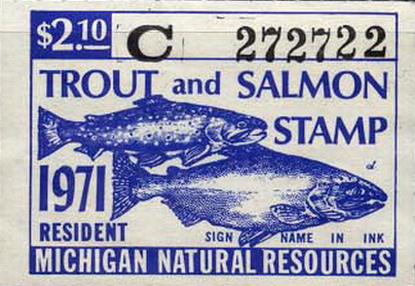
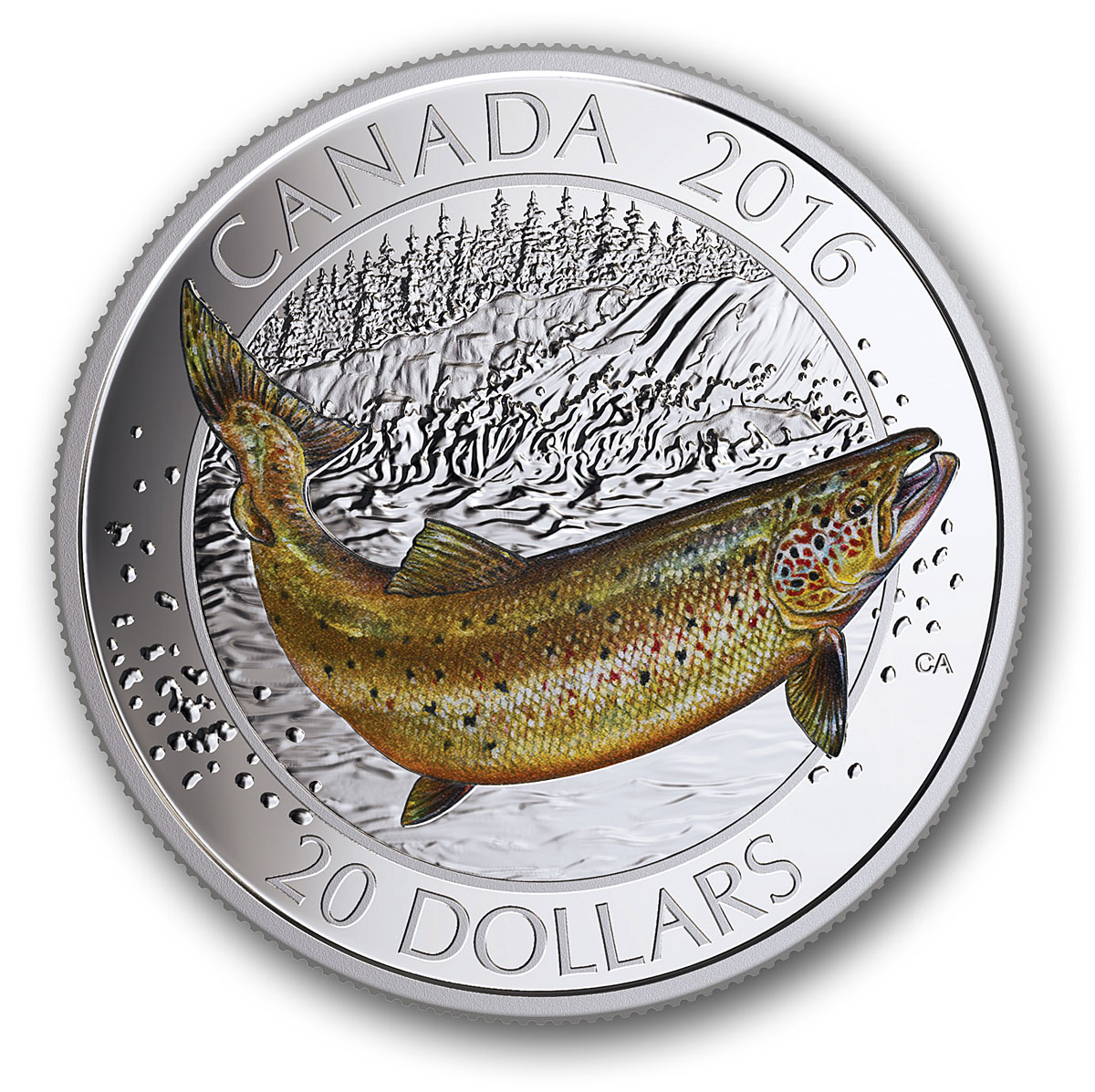
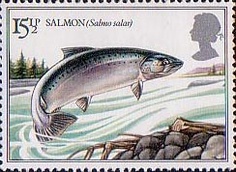
    Salmon is a unique kind anadromous fish that are born in the fresh waters of rivers and streams. They swim to the ocean as they grow older and return to their home stream to lay eggs when the time comes for spawning. Every year, millions of salmon return to their home stream and produce their next generation of fish. Some species of salmon make several trips in their lifetime, while others make just one round trip before they die. Salmon are native to tributaries of the North Atlantic and Pacific Ocean. Many species of salmon have been introduced into non-native environments such as the Great Lakes of North America and Patagonia in South America. The rivers and streams of the Paci­fic Northwest used to be so full of wild salmon that fishermen liked to say they could cross the waterways on the fish’s backs. The population of wild salmon declined markedly in recent decades on a world-wide scale: in Lake Michigan, at the Pacific Coast and western mountain regions of North America, in New Zealand, in England, Wales and Scotland. According to the WWF, there has been a 50% worldwide decline in Atlantic salmon over the last 20 years. In general, young salmon eat insects, invertebrates and plankton; adults eat other fish, squid, eels, and shrimp. The contamination of rivers and streams with neonicotinoid insecticides may have depleted food sources for young salmon.
    Sources:
    This website
    https://adventure.howstuffworks.com/outdoor-activities/fishing/fish-conservation/fish-populations/salmon-population.htm
    https://defenders.org/salmon/basic-facts

    Depleting Salmon Population – Causes & Recovery Process

  • Study provides insights for combating devastating amphibian disease

    Study provides insights for combating devastating amphibian disease

    Amphibian chytridiomycosis, caused by infection with the Batrachochytrium dendrobatidis fungus, is the most devastating vertebrate disease on record. The fungus infects more than 600 species of amphibian and has been implicated as the primary cause of decline in more than 200 species. A new Animal Conservation study indicates that the common eastern froglet, Crinia signifera, can carry infections without experiencing mortality. Therefore, the presence of the froglets at sites where species have become threatened or extinct inhibits efforts to reintroduce these species. “Crinia signifera appears to be an important player in maintaining levels of disease within the ecosystem,” said lead author Dr. Laura Brannelly, of the University of Pittsburgh. “The common eastern froglet has a wide distribution in Australia and can occur in high densities. They co-occur in high numbers at the sites where other frog species have declined and may have played a key role in those declines.”

    Source: EurekAlert, 14 November 2017
    https://www.eurekalert.org/pub_releases/2017-11/w-spi111417.php

  • Catastrophic Drop in Salmon Numbers  in Argyll’s Largest River Awe

    Catastrophic Drop in Salmon Numbers in Argyll’s Largest River Awe

    A “CATASTROPHIC” failure of the salmon run in Argyll’s largest and most closely monitored river has prompted demands for the closure of some fish farms and a review of the expansion of the industry. This year’s run of salmon in the River Awe is by far the lowest since records began in 1964, according to figures released today. The annual salmon count for 2017 has been confirmed as 480, which compares with 807 in 2016 and a five-year average of 1400. The previous lowest total was 781 in 1998. “This year’s salmon count on the River Awe is incontrovertible evidence that the decline in wild fish in salmon farming’s southern heartland has become critical,” said Roger Brook, chair of Argyll District Salmon Fishery Board.

    Source: The National, 11 December 2017
    http://www.thenational.scot/news/15713197.Call_for_closure_of_fish_farms_after__catastrophic__drop_in_salmon_numbers/