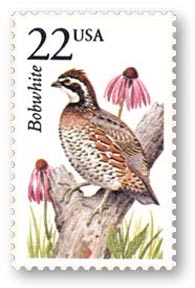
The widespread use of neonicotinoid insecticides in recent years has led to increasing environmental concern, including impacts to avian populations. In Texas and across their range, Northern bobwhite (Colinus virginianus) habitat frequently overlaps cultivated cropland protected by neonicotinoids. To address the effects of neonicotinoid use on bobwhites in Texas, we conducted a historical analysis from 1978–2012 in Texas’ ecological regions using quail count data collected from North American Breeding Bird Survey and Texas Parks and Wildlife Department, and neonicotinoid use data from the U.S. Geological Survey. We considered bobwhite abundance, neonicotinoid use, climate, and land-use variables in our analysis. Neonicotinoid use was significantly (p<0.05) negatively associated with bobwhite abundance in the High Plains, Rolling Plains, Gulf Coast Prairies & Marshes, Edwards Plateau, and South Texas Plains ecological regions in the time periods following neonicotinoid introduction (1994–2003) or after their widespread use (2004–2012). Our analyses suggest that the use of neonicotinoid insecticides may negatively affect bobwhite populations in crop-producing regions of Texas. Source: Ertl HMH, Mora MA, Brightsmith DJ, Navarro-Alberto JA (2018) Potential impact of neonicotinoid use on Northern bobwhite (Colinus virginianus) in Texas: A historical analysis. PLoS ONE 13(1): e0191100. https://doi.org/10.1371/journal.pone.0191100
Auteur: Henk Tennekes
-
Neonicotinoïden veroorzaken bijensterfte op de lange termijn
Voor het eerst is de afname van Engelse wilde bijen gekoppeld aan het gebruik van controversiële neonicotinoïden. Dat zijn pesticiden waarmee boeren hun koolzaadolieplantages beschermen tegen ongedierte. Aan het zaadje van een koolzaadplant voegt de boer neonicotinoïden toe. Als de plant is opgegroeid en opgebloeid, zijn deze stoffen over de volledige koolzaad verspreid, dus ook in de bloemen. Hierdoor krijgen de beestjes die van de nectar snoepen de pesticiden binnen.
De negatieve effecten van zulke pesticiden op de wilde bij zijn eerder beschreven. Dit bewees destijds echter nog niet dat deze middelen op de lange termijn massale bijensterfte veroorzaken. Nu heeft Ben Woodcock, samen met zijn collega’s van het Centre for Ecology and Hydrology (CEH) in Groot-Brittannië, 62 bijensoorten bestudeerd. Hiervoor hebben vrijwilligers in een gebied van 4000 vierkante kilometer gegevens verzameld. Zij voerden tussen 1994 en 2011 31.818 metingen uit.
In 2002 gebruikten koolzaadboeren neonicotinoïden voor het eerst. Uit het onderzoek blijkt dat de volledige bijenpopulatie sindsdien per jaar met 7 procent is afgenomen. Van sommige soorten, zoals de groefbij en de metselbij, legde zelfs meer dan 20 procent het loodje. Soorten die koolzaadplanten als primaire voedselbron gebruiken, zijn het hardst getroffen. Gemiddeld is het effect op hun populaties drie keer groter dan op bijensoorten met een andere plantvoorkeur. ‘Van de zwaarst getroffen soort verdween 30 procent,’ zegt Nicholas Isaac van het CEH. ‘De belangrijkste boodschap is dat deze pesticiden schadelijk zijn en dat ze veel meer soorten treffen dan we alvorens dachten.’
‘Deze studie geeft ons het eerste bewijs van de negatieve invloed van neonicotinoïden op de lange termijn en op deze grote schaal,’ zegt Richard Pywell, eveneens van het CEH.
Dankzij het gebruik van langetermijndata zijn de resultaten veelzeggender en sterker dan die van eerdere onderzoeken, volgens Woodcock. Al toont het toont geen directe oorzaak aan, maar slechts een verband, toch suggereren de resultaten dat neonicotinoïden de biodiversiteit van bijen kan beschadigen.
Bron: New Scientist, 18 augustus 2016
Pesticiden veroorzaken mogelijk massale bijensterfte op lange termijn
-

Low-level toxicity of chemicals: No acceptable levels?
Over the past 3 decades, in a series of studies on some of the most extensively studied toxic chemicals and pollutants, scientists have found that the amount of toxic chemical linked with the development of a disease or death—which is central to determining “safe” or “hazardous” levels—is proportionately greater at the lowest dose or levels of exposure. These results, which are contrary to the way the United States Environmental Protection Agency (EPA) and other regulatory agencies assess the risk of chemicals, indicate that we have underestimated the impact of toxic chemicals on death and disease. If widely disseminated chemicals and pollutants—like radon, lead, airborne particles, asbestos, tobacco, and benzene—do not exhibit a threshold and are proportionately more toxic at the lowest levels of exposure, we will need to achieve near-zero exposures to protect public health.
Source:
Lanphear BP (2017) Low-level toxicity of chemicals: No acceptable levels? PLoS Biol 15(12): e2003066. https://doi.org/10.1371/journal.pbio.2003066 -
Der Insektenrückgang rund um Karlsruhe ist dramatisch
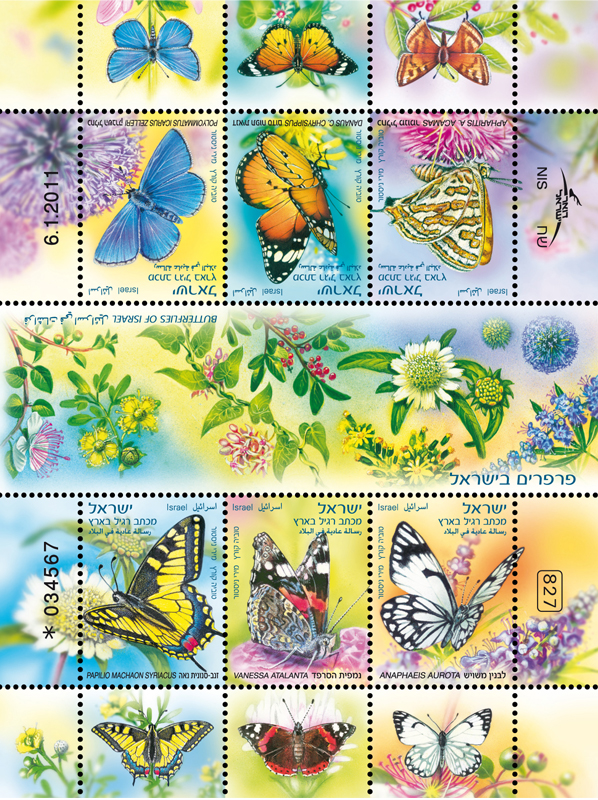
In einer Anfrage an den Gemeinderat will die CDU wissen, wie es um die Insekten bestellt ist und was gegen das Insektensterben in der Fächerstadt getan werden kann. Die Stadt Karlsruhe hat bereits auf die Anfrage der CDU-Fraktion geantwortet. Sie bestätigt einen Rückgang der Insekten als “überregionales Phänomen, zu dem es belastbare Studien gibt”. Das Sterben der Insekten in Karlsruhe lässt sich anhand einer der größten Insektengruppen nachvollziehen: Der Schmetterlinge. Die Landesdatenbank Schmetterlinge Baden-Württembergs zeigt die Verbreitung einzelner Arten über die Fläche für die vergangenen Jahrzehnte. Hier ist der deutliche Rückgang einzelner Arten ersichtlich:
Waren in den Jahren 1970 bis 1990 beispielsweise die Schmetterlingsarten “Trauermantel”, “Großer Eisvogel” oder “Goldene Scheckenfalter” in der Region Karlsruhe vertreten, so sind sie in den Jahren 1990 bis 2010 verschwunden.
Quelle: KA-News, 23.01.28
https://www.ka-news.de/region/karlsruhe/Karlsruhe~/Dramatischer-Rueckgang-Karlsruhe-kaempft-gegen-Insektensterben;art6066,2175031 -

Year-round presence of neonicotinoid insecticides in tributaries to the Great Lakes, USA
To better characterize the transport of neonicotinoid insecticides to the world’s largest freshwater ecosystem, monthly samples (October 2015–September 2016) were collected from 10 major tributaries to the Great Lakes, USA. For the monthly tributary samples, neonicotinoids were detected in every month sampled and five of the six target neonicotinoids were detected. At least one neonicotinoid was detected in 74% of the monthly samples with up to three neonicotinoids detected in an individual sample (10% of all samples). The most frequently detected neonicotinoid was imidacloprid (53%), followed by clothianidin (44%), thiamethoxam (22%), acetamiprid (2%), and dinotefuran (1%). Thiacloprid was not detected in any samples. The maximum concentration for an individual neonicotinoid was 230 ng L−1 and the maximum total neonicotinoids in an individual sample was 400 ng L−1. The median detected individual neonicotinoid concentrations ranged from non-detect to 10 ng L−1. The detections of clothianidin and thiamethoxam significantly increased as the percent of cultivated crops in the basins increased (ρ = 0.73, P = .01; ρ = 0.66, P = .04, respectively). In contrast, imidacloprid detections significantly increased as the percent of the urbanization in the basins increased (ρ = 0.66, P = .03). Neonicotinoid concentrations generally increased in spring through summer coinciding with the planting of neonicotinoid-treated seeds and broadcast applications of neonicotinoids. More spatially intensive samples were collected in an agriculturally dominated basin (8 sites along the Maumee River, Ohio) twice during the spring, 2016 planting season to provide further information on neonicotinoid inputs to the Great Lakes. Three neonicotinoids were ubiquitously detected (clothianidin, imidacloprid, thiamethoxam) in all water samples collected within this basin. Maximum individual neonicotinoid concentrations was 330 ng L−1 and maximum total neonicotinoid concentration was 670 ng L−1; median detected individual neonicotinoid concentrations were 7.0 to 39 ng L−1.
Source: Hladik ML et al. (2018) Environmental Pollution, available online 19 January 2018
https://doi.org/10.1016/j.envpol.2018.01.013 -

An ecological disaster in the Garden of England
In a study of 26 rivers and streams across England, Scotland, Wales and Northern Ireland carried out by the Environment Agency and its regional equivalents, the Somerhill Stream had the third highest concentration of the chemicals, after the River Waveney in Norfolk and the River Tame in the West Midlands. The stream in Tonbridge that flows into the River Medway has emerged as the third worst in the country for neonicotinoid pollution, threatening its insect population. Other Kentish rivers such as The Medway and The Beult were not among those tested.
The Somerhill Stream rises near Longfield Road in High Brooms and flows five miles before joining the River Medway just below Eldrige Lock in Tonbridge. It actually had the highest concentration of one particular type of neonicoinoid known as imidacloprid, though it had no trace of two of the other chemicals in the group and only average amounts of the other two. The findings were published last month, though the readings relate to tests conducted in 2016.
Matt Shardlow, the chief executive of Buglife, said: “It is vital that action is taken to completely ban these toxins, including in greenhouses and on pets, before another year of disgraceful pollution occurs.”
Mark Lloyd, chief executive of the Angling Trust, said: “These results are highly alarming in the context of widespread declines in aquatic insect life and fish populations. We urge the government to act urgently to ban continued use of these chemicals to protect wildlife, fisheries and drinking water supply.”
Neonicotinoids were banned from use on flowering crops in 2013 as a measure to protect the bee population, but there is at present no legal limit on the level of neonicotinoid pollution in freshwater.
Source: Kent Online, 22 Jan 2018
http://www.kentonline.co.uk/malling/news/kent-stream-third-most-polluted-158911/ -

Health Risks of Pesticides
Pesticides are a convenient way to get rid of the pests in our homes and gardens and on the farms that grow the food we eat. Yet, the increased use of pesticides has been linked to a number of serious health risks. Some pesticides are irritating to the skin and eyes. Others, including organophosphates, have been linked to nervous system damage and to the development of Parkinson’s disease. Pesticide exposure has also been associated with a greater risk for some cancers, including non-Hodgkin’s lymphoma.
Some studies have identified pesticides as endocrine disrupters. Certain people may be especially vulnerable to health effects from pesticides, such as kids. Researchers in China have linked pyrethroids with accelerated puberty in boys. Studies in mice show that these chemicals increased testosterone production, which could influence the early onset of puberty.
Hormone disruption from pesticides may also be one of the factors behind a 50% decline in sperm counts among men in Western countries. Women who are exposed are also more likely to have poor fertility and deliver prematurely in pregnancy. A recent study in Nature[Communications] showed that adverse birth outcomes increased by 5% to 9% in women living in an area where large amounts of pesticides are used.
Concerns over the harmful effects of pesticides have led to recent efforts to ban chlorpyrifos, which studies have linked to developmental delays in children. The American Acadamy of Pediatrics has urged the Environmental Protection Agency to reverse its March 2017 decision to allow the continued use of this substance.
Source: Dr Hansa Bhargava in Medscape, January 22, 2018
https://www.medscape.com/viewarticle/891147 -

Insektensterben und industrielle Landwirtschaft nehmen Igel die Lebensgrundlage
Igel stehen in der Neuauflage der Roten Liste für Bayerns Säugetiere erstmals auf der Vorwarnliste. Sie könnten bald zur bedrohten Tierart werden. Eine Zählaktion des Landesbunds für Vogelschutz (LBV) zeigt: In Ostbayern geht die Zahl der Igelmeldungen zurück. Laut Experten nehmen das Insektensterben und die industrielle Landwirtschaft den Tieren die Nahrungsgrundlage und den Lebensraum.
Das Landesamt für Umwelt hat 2017 nach 14 Jahren eine aktualisierte Rote Liste der gefährdeten Säugetiere Bayerns veröffentlicht. Die Vorwarnliste ist Teil dieser Liste. Auf ihr stehen Arten, die noch nicht gefährdet sind, deren Bestand aber durch aktuelle Entwicklungen rückläufig ist.
Quelle: IDOWA, 18.01.18
http://www.idowa.de/inhalt.landshut-igel-in-gefahr.d857580c-4311-48cb-9184-1f1277462984.html -
Insect abundance and reproductive success of barn swallows in two urban habitats
Few studies have quantified the relative reproductive success of passerines in urban habitats. I studied food availability and reproductive success of barn swallows Hirundo rustica in two urban habitats during 2012–2015. Barn swallows breeding in the town center experienced lower insect densities than those in the town periphery. Lower food availability resulted in reduced feeding rates per capita, lower nestling body mass, longer nestling periods, longer inter-clutch intervals, fewer first and second brood fledglings and a lower total number of fledglings produced during the breeding season in comparison to barn swallows breeding in the town periphery.
Source: Peter Györkös Teglhøj (2017) J Avian Biol DOI: 10.1111/jav.01086
http://onlinelibrary.wiley.com/doi/10.1111/jav.01086/full -
Impact of herbicides on insect and spider diversity in eastern Canada
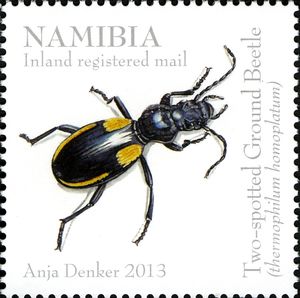
Few groups of insects have been surveyed over a very long period (50 years or more) in an area. Three groups were considered here meeting the long survey condition: ground beetles (Coleoptera: Carabidae), ground Scelionidae (Hymenoptera) and species of Tenthredo (Hymenoptera: Tenthredinidae). The diversity of ground beetles in agricultural sites around Ottawa (Ontario) and Montreal (Quebec) has been markedly reduced during the 1980s and 1990s. During the same period we witnessed the collapse of other insect groups outside agricultural sites. Species of sawflies of the genus Tenthredo and a group of ground scelionid wasps were clearly affected. The decline is correlated with the presence of a new crop, corn, in these regions with a herbicide spray protocol in late May or early June. Herbicides are not killing insects on contact. Contaminated insects are free to disperse away from agricultural sites to a wide range of habitats where they are preyed upon by insects, spiders and birds. The consumption of contaminated insects by predators is probably behind their population collapse of many species or even the extirpation of some species from the study areas.
Source: Goulet, H. & Masner L. (2017) J Biodiversity Volume 18 – Issue 2-3: Food, Agriculture and Biodiversity
http://www.tandfonline.com/doi/full/10.1080/14888386.2017.1351398?scroll=top&needAccess=true