Auteur: Henk Tennekes

  • Ctgb geeft binnen drie maanden uitvoering aan het Europese besluit over neonicotinoïden

    Ctgb geeft binnen drie maanden uitvoering aan het Europese besluit over neonicotinoïden

    Op 27 april 2018 stemden de EU-lidstaten in met het voorstel van de Europese Commissie om voor drie neonicotinoïden het buitengebruik te verbieden. Gewasbeschermingsmiddelen op basis van clothianidin, imidacloprid en thiamethoxam mogen voortaan alleen nog worden gebruikt in gesloten, permanente kassen. Voor het gebruik in kassen golden al strenge eisen. Risico’s voor bijen en andere bestuivers vormden de aanleiding voor dit besluit. Het besluit treedt in werking twintig dagen na publicatie in het officieel orgaan van de Europese Unie.

    Vanaf de inwerkingtreding van het besluit mogen de middelen nog zes maanden worden (op)gebruikt. Voor met deze middelen behandeld zaaizaad geldt dezelfde termijn, tenzij het zaad is bedoeld voor planten die hun hele levenscyclus in de kas staan. Het Ctgb als toelatingsautoriteit heeft na de inwerkingtreding drie maanden de tijd om toelatingen op basis van de drie stoffen aan te passen aan het EU-besluit. Het Ctgb zal de maatregel binnen de genoemde termijn doorvoeren.

    Bron: Nieuwe Oogst, 2 mei 2018
    https://www.nieuweoogst.nu/nieuws/2018/05/02/ctgb-voert-binnen-drie-maand-neonics-besluit-uit

  • HH Delfland juicht veel te vroeg – imidacloprid blijft een probleemstof in de glastuinbouw

    HH Delfland juicht veel te vroeg – imidacloprid blijft een probleemstof in de glastuinbouw

    Volgens het Hoogheemraadschap Delfland laten de metingen van de chemische waterkwaliteit in de glastuinbouwgebieden over het jaar 2017 een duidelijke verbetering zien. De kwaliteit van het water in de Westlandse glastuinbouwgebieden is vorig jaar flink verbeterd. Uit metingen in 2017 kwam naar voren dat er aanzienlijk lagere concentraties stikstof, fosfaat en bestrijdingsmiddelen in het water zitten, zei Delfland op 5 maart 2018. Uit de cijfers die Delfland over 2017 op 17 mei 2018 ter beschikking heeft gesteld valt echter op te maken dat imidacloprid nog steeds tot de bestrijdingsmiddelen met de meeste normoverschrijdingen in het glastuinbouwgebied behoort. In de Westboezem en Polder Berkel komt imidacloprid als normoverschrijdende probleemstof naar voren.

    De hóógste overschrijdingen komen van Dichloorvos, Esfenvaleraat en Spinosad. Esfenvaleraat is zeer giftig voor aquatische insecten. De NOEC (no-observed-effect-concentration) in een chronische 21-dagen test met Daphnia magna was slechts 52 nanogram per liter (bron: Pesticide Properties DataBase https://sitem.herts.ac.uk/aeru/iupac/Reports/269.htm). Dichloorvos behoort sinds 2012 tot de verboden middelen. Ook het sinds 2016 verboden Carbendazim veroorzaakt veel normoverschrijdingen.

    Bronnen: HH Delfland, 2 en 17 mei 2018
    AD, 5 maart 2018
    https://www.ad.nl/westland/waterkwaliteit-flink-verbeterd~a1077bb6/

  • Insectensterfte stopt niet – het landbouwsysteem moet op de schop

    Insectensterfte stopt niet – het landbouwsysteem moet op de schop

    De insectensterfte stopt niet nu drie soorten ‘bijengif’ worden verboden. Het landbouwsysteem dat gericht is op maximale productie moet compleet op de schop. Lees het bericht van Petra Noordhuis in het Nederlands Dagblad van 1 mei 2018 verder in:
    https://www.nd.nl/nieuws/nederland/verbod-op-verbod-redt-insecten-niet.3.3003277.lynkx?s=LD_ga9H4ZGxgwije09ItYw==

  • Minister stuurt rapport insectensterfte naar Tweede Kamer

    Minister stuurt rapport insectensterfte naar Tweede Kamer

    De insectensterfte in Duitse natuurgebieden was veel in het nieuws vorig najaar. In opdracht van Minister Schouten van LNV is er nu een rapport verschenen over de uitkomsten van dat onderzoek, de vergelijkbaarheid met de Nederlandse situatie, de kennis over de trends bij Nederlandse insecten en de mogelijke oorzaken. Vlinder- en libellenmeetnetten vormen een belangrijke bron voor dit rapport.

    In de rapportage worden vier onderzoeksvoorstellen geformuleerd die nodig zijn voor een integrale aanpak van de problemen:

    1. Opstellen van herstelstrategieën op basis van de meest recente inzichten en deze in concrete pilots in verschillende gebieden testen.
    2. Opzetten van een monitoringsprogramma voor belangrijke soortengroepen insecten in het agrarisch gebied.
    3. Kennis genereren over de samenstelling van insectengemeenschappen om beter te kunnen begrijpen wat de trends van de geïnventariseerde soortengroepen betekenen op het niveau van de insectengemeenschappen als geheel.
    4. Verkennen in hoeverre informatie van bestaande datasets gebruikt kan worden om meer inzicht te krijgen in de samenhang tussen trends van insecten en veranderingen in het landgebruik.

    De minister zegt toe de adviezen te betrekken in haar beleid. Ze ziet samenhang met andere ontwikkelingen zoals natuurinclusieve landbouw, de Nationale Bijenstrategie en dergelijke. Ook zegt ze uit te kijken naar het Deltaplan Biodiversiteit dat voor de zomer naar buiten zal worden gebracht. De Vlinderstichting is blij met de aandacht die er nu voor insecten is, en hoopt dat verdere achteruitgang gestopt kan worden.

    Bron: Nature Today, 29-04-18
    https://www.naturetoday.com/intl/nl/nature-reports/message/?msg=24311

  • Bird populations are being decimated worldwide

    Bird populations are being decimated worldwide

    A while back we took note of a study that showed populations of airborne insects have declined by 76 percent in protected areas in Germany over the past 27 years. Part of the picture was that the disappearance of bugs is likely to pose problems for other animals in the food chain. Now a recent study by French scientists revealed that bird populations in France’s farming areas have declined by more than one-third in the past 17 years. Both resident and migrant species have decreased sharply. The population of the meadow pipit (Anthus pratensis), a migratory songbird, has fallen by nearly 70 percent in this century. Meanwhile, a study in 2014 estimated that Europe has 421 million fewer birds than it did 30 years ago.

    The researchers say the principal problem is large-scale agriculture, which is degrading habitat in a variety of ways. One factor is the large-scale use of pesticides that kill insects more or less indiscriminately, reducing the birds’ food supply. “There are hardly any insects left; that’s the No. 1 problem,” Vincent Bretagnolle, an ecologist at the Centre for Biological Studies in Chizé, France, told reporters recently.

    Another factor is the large-scale use of herbicides (principally glyphosate, the main ingredient in Roundup), which more or less indiscriminately wipe out plants where insects and birds live. Yet another factor is the practice of large-scale monocultural crop cultivation: Habitat that used to support the diversity of vegetation, insects, birds and other animals necessary for them all to make a decent living is now dominated by mostly wheat and corn fields.

    It’s hard to understand why this crap keeps happening. The ecological disaster of the 1930s that we call the Dust Bowl was caused by what amounted to wheat monoculture, in tandem with drought.

    Birdlife International’s “State of the World’s Birds” for 2018 reports that at least 40 percent of the world’s bird species have declining populations. One in 8 of all birds is threatened with extinction.

    “The State of North America’s Birds 2016,” a combined summary of bird population studies, says that one-third of all North American bird species are in some kind of trouble. For example, the report indicates that among 54 species of ocean birds, 57 percent are in crisis, meaning the numbers, ranges and/or habitat of 57 percent of ocean bird species are so drastically reduced in recent years that “urgent conservation action” is needed to ensure the birds’ survival. Among 164 species of coastal birds, 37 percent are in crisis.

    Maine falls into the report’s Boreal Forest habitat region, where among 73 species of birds, 19 percent are in crisis. This relatively low percentage is regarded as good news for birds in our range. But if you take a slightly different perspective, it’s not a lot to cheer about: What would we think if the survival of nearly one-fifth of the humans in our range was threatened?

    Maine’s Endangered Species List (last updated in 2009) includes 10 birds: American pipit (Anthus rubescens), black tern (Chlidonias niger), golden eagle (Aquila chrysaetos), grasshopper sparrow (Ammodramus savannarum), least bittern (Ixobrychus exilis), least tern (Sterna antillarum), peregrine falcon (Falco peregrinus), piping plover (Charadrius melodus), roseate tern (Sterna dougallii) and sedge wren (Cistothorus platensis).

    Ten more bird species are on our Threatened Species List: Arctic tern (Sterna paradisaea), Atlantic puffin (Fratercula arctica), Barrow’s goldeneye (Bucephala islandica), black-crowned night heron (Nycticorax nycticorax), common moorhen (Gallinula chloropus), great cormorant (Phalacrocorax carbo), harlequin duck (Histrionicus histrionicus), razorbill (Alca torda), upland sandpiper (Bartramia longicauda) and short-eared owl (Asio flammeus).

    The U.S. Endangered Species List includes 297 birds, two of which, the roseate tern and the piping plover, are also on Maine’s endangered list. The federal list of threatened species includes 39 birds.

    In Maine the bald eagle (Haliaeetus leucocephalus) is listed as a recovered species — which demonstrates there are things humans can do to help.

    One good start is to recognize there is any problem to begin with. Something our so-called political leaders actively subvert. The U.S. Fish and Wildlife Service, an agency of the Department of the Interior, whose boss is Ryan Zinke, whose boss is President Trump, has asked for the removal of the long-standing “blanket 4(d) rule” of the Endangered Species Act, which provides default protection to threatened species. If Trump’s people get their way, USF&W will have to make case-by-case arguments to get protections for endangered species, something it has nowhere near the staff to do.

    “What is required today is not simply a ban on pesticides,” Bretagnolle said of France’s habitat problems, “but rather a paradigm shift.”

    Source: Dana Wilde in Central Maine, April 26, 2018

    Dana Wilde: The decline of the birds

    Dana Wilde lives in Troy. You can contact him at naturalist1@dwildepress.net. His recent book is “Summer to Fall: Notes and Numina from the Maine Woods” available from North Country Press. Backyard Naturalist appears the second and fourth Thursdays each month.

  • De verdwenen wulpen van de Gelderse vallei

    De verdwenen wulpen van de Gelderse vallei

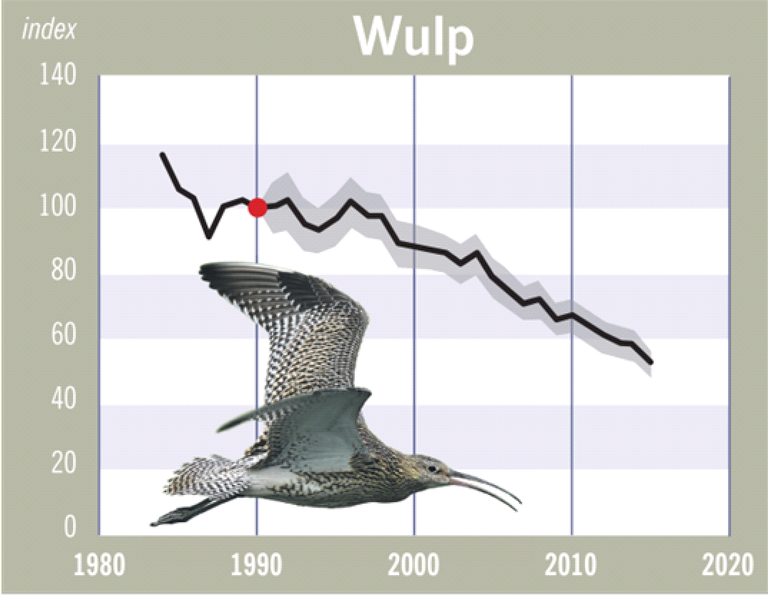
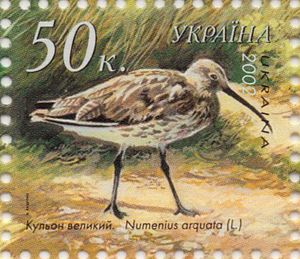
    Op bijna alle heidevelden in de Gelderse Vallei broedde vroeger de wulp. Je hoorde in het vroege voorjaar de welluidende roep zelfs boven de dorpen. Deze keer een herinnering aan deze heidevogel met de naar beneden gebogen snavel. Een jaar of veertig geleden was de wulp (Numenius arquata) nog een algemene broedvogel: op de heide van Klein Bijlaar, de Appelseheide bij Voorthuizen, de Deuverdenseheide bij Nijkerk, de Stroeërheide en de grote heidegebieden op de Veluwe. De wulp was in het voorjaar een lentebode, net als de kievit (Vanellus vanellus) en de grutto (Limosa limosa). ‘Oewlie-oewlie-oewlie’ klonk dan de melodieuze roep van de wulp boven de velden en weiden van de Gelderse Vallei en de Veluwe. In een beschrijvingen van de boswachterij Kootwijk in de jaren zestig wordt de wulp ‘zandtuter’ genoemd. Alle weidevogels zijn in de loop der jaren van de heidevelden op de Veluwe en de Gelderse Vallei verdwenen. De Stroeërheide is met recht ‘de grote, stille heide’ geworden.

    Bron: Gerrit de Graaff in de Veluwenaar, 04-02-15

    Herinnering aan de wulp als broedvogel

  • 1 op 8 vogels wereldwijd met uitsterven bedreigd

    1 op 8 vogels wereldwijd met uitsterven bedreigd

    Bijna 1.500 vogelsoorten of één op acht vogels wereldwijd zijn met uitsterven bedreigd. Daarnaast neemt bij 40 procent van de 11.000 vogelsoorten de populatie af. Dat blijkt uit een nieuw rapport van BirdLife, een internationale koepel van natuurorganisaties. “De gezondheid van de vogelpopulaties is een goede maatstaf voor de staat van de ecosystemen”, zo klinkt het. BirdLife maakt jaarlijks de balans op van het wereldwijde vogelbestand. “De data laten helaas geen ruimte voor twijfel: we worden geconfronteerd met een systematische achteruitgang van de vogelpopulatie wereldwijd”, aldus Tris Allinson van BirdLife. De opvallendste cijfers: één op acht vogels wereldwijd, 1.468 soorten in totaal, is met uitsterven bedreigd. Bij vier op de tien vogelsoorten is de populatie het afgelopen jaar afgenomen.

    “Deze cijfers zijn niet enkel slecht nieuws voor de vogels, maar zijn ook een waarschuwing voor de hele planeet”, zo klinkt het. “De gezondheid van de vogelpopulatie is namelijk een goede maatstaf om de staat van het milieu en onze ecosystemen te meten. De reden daarvoor is simpel: vogels zijn zo wijdverspreid en vind je zowat in elk mogelijk ecosysteem waardoor ze één van de meest bestudeerde diersoorten zijn en dus ook heel representatief voor de staat van onze leefomgeving.”

    Landbouw blijkt één van de grootste bedreigingen voor vogels. De wereldwijde uitbreiding van het landbouwareaal en de intensifiëring van de landbouwpraktijken heeft een impact op 74 procent van de bedreigde vogelsoorten. BirdLife verwijst onder meer naar de neonicotinoïden die in gewasbeschermingsmiddelen gebruikt worden.

    Bron: VILT, 25-04-18
    http://www.vilt.be/1-op-8-vogels-wereldwijd-met-uitsterven-bedreigd

    Link naar het rapport:
    http://www.birdlife.org/sites/default/files/attachments/BL_ReportENG_V11_spreads.pdf

  • Chemical madness that haunts the world

    Chemical madness that haunts the world

    All of humanity currently risks exposure to toxic chemicals all over creation in a similar vein to the Mad Hatter of Alice in Wonderland fame. And, maybe, as a result, goin’ kinda looney and getting horribly, dreadfully sick! As soon as the Spring of 2018, the EPA will decide whether to risk the slaughter of birds and bees and pollinators that serve critical functions in crop production, as well as goosing-up the likelihood of chronic illnesses of citizens. The issue behind this flirtation with disease, sickness, pain, and death is regulation, or lack thereof, of chemical pesticides. Meanwhile on a grand scale, and following decades of superfluity, the planet gurgles, drowning in a massive saturation of chemicals found far and wide, as high as Mt. Everest (arsenic and cadmium) as deep as PCB-infested squid in the Mariana Trench, glowing bright shiny toxicity.

    This article discusses only a tiny smattering of chemical madness that haunts the world yet a subject of thousands of articles of research discussing potential dangers to health of which the public is dreadfully unaware. Thus, the overriding thesis herein: Unwittingly, society is poisoning itself.
    Anecdotal evidence alone is reason enough for alarm, but of more concern, several scientific studies show real, actual, direct links of pesticides to human chronic diseases. Regrettably, chronic disease is already at severe epidemic levels never before witnessed! But, nobody with absolutely certainty has publicly connected the dots of chemicals to chronic diseases. The truth is buried in scientific studies that nobody, other than scientists, reads or understands.

    Consequently, one can only hope that this article you are reading is dead wrong about the connection of chemicals to chronic diseases. But who knows for sure? And, that’s the point to be made: Nobody knows with 100% certainty whether humanity is poisoning itself or not, but it should be noted that the evidence is nearly almost compelling.

    Furthermore, there is evidence that regulatory agencies have likely been looking at the wrong data, thus exposing innocent non-target species with unnecessary toxicity, leading to near extinction of some species that are crucial for crop production/human consumption.

    The unnecessary exposure to causation of chronic diseases is a tragedy of immense proportions. For example: A recent Rand Corporation study says 60% of Americans have one and 40% have multiple chronic conditions: “Nearly 150 million Americans are living with at least one chronic condition; around 100 million of them have more than one.” (Source: Chronic Conditions in America: Price and Prevalence, Rand Review, July 2017).

    This virtual outbreak of chronic diseases throughout America begs the question of why? Is the normal course of human life stricken with chronic diseases, like arthritis, asthma, cancer, cystic fibrosis, diabetes, heart disease, obesity, osteoporosis, Alzheimer’s and Parkinson’s? Is it normal, or is a rogue externality at work?

    Understandably, it does not seem natural that 150,000,000 out of a population of 320,000,000 have chronic disease conditions. What’s up? Chronic diseases, such as cardiovascular disease and type 2 diabetes, are often referred to as lifestyle diseases. This is because lifestyle factors, such as inactivity, diet, and smoking play a significant role in human protoplasm. But, is there something else behind this ongoing tragedy? Probabilities would say the answer is a resounding yes!

    By and large, Americans depend upon the Environmental Protection Agency (EPA) to help shield from dangerous chemicals. In that regard, the EPA is currently contemplating approval of the pesticide thiamethoxam, allowing it to be sprayed directly on 165 million acres of wheat, barley, corn, sorghum, alfalfa, rice, and potatoes. Thiamethoxam, an insecticide, is a neonicotinoid.
    According to a major study: “Neonicotinoids are compounds that affect the nervous system of insects, humans, and other animals.” (Source Jennifer Hopwood, et al, How Neonicotinoids Can Kill Bees, 2nd Ed. The Xerces Society for Invertebrate Conservation, 2016).

    “Twenty-nine (29) independent scientists who conducted a global review of more than 1,000 independent studies on neonicotinoids found overwhelming evidence linking the pesticides to declines in populations of bees, birds, earthworms, butterflies and other wildlife. (Source: EPA Considers Allowing Bee-Killing Pesticide To Be Sprayed on 165 Million Acres of U.S. Farmland, Center for Biological Diversity, EcoWatch, Dec. 19, 2017).

    When using chemicals to kill specific pests, does it also make sense to collaterally kill bees, earthworms, butterflies, and other wildlife that form and create the backbone of ecosystems vital to human food, health, and well being? Or, looked at another way, how did the world’s population grow crops and sustain population growth over the past couple of thousand years without chemical pesticides? For certain, the Roman Empire did not spray chemicals on crops nor did the British Empire of the 19th and early 20th centuries nor did America as it settled the frontier from Pennsylvania to California.

    According to a landmark UN report d/d 2017: “Excessive use of pesticides are very dangerous to human health, to the environment and it is misleading to claim they are vital to ensuring food security… Chronic exposure to pesticides has been linked to cancer, Alzheimer’s and Parkinson’s diseases, hormone disruption, etc….” (Source: UN Human Rights Experts Call for Global Treaty to Regulate Dangerous Pesticides, UN News, March 7, 2017).

    Prior to the year 2000 neonicotinoid chemicals were used but largely unknown. Since then, they have become the most widely used agricultural insecticide on the planet. Despite this universality of use, amazingly, human toxicity issues via ingestion of chemically sprayed fruits and vegetables are not yet fully understood. That’s discomforting.

    Meanwhile, bees and other pollinators are dropping dead like… well, like flies. Thus, pesticides designed to kill pests of crops are, in fact, killing insects that pollinate crops. Consider: 1,000 independent studies found “overwhelming evidence linking pesticides to declines in populations of bees, birds, earthworms, butterflies, and other wildlife.”

    Scandalously, by all appearances, humanity is killing off the base of the food chain, as mentioned in numerous research reports regarding near-total collapse of several insect pollinator species worldwide. It should be noted that the EPA has broadened its stance on pesticides and protection of pollinators as expressed on the EPA web site under the headline: “EPA Actions to Protect Pollinators.” But, it has not banned usage of neonicotinoids. EPA is currently in a “public comment period” until late April 2018 prior to assessment of approval of thiamethoxam.

    Imidacloprid is another insecticide in the class of neoicotinoids but used on sucking insects, termites, soil insects, and fleas on pets. According to a significant study: “In many areas of intensive agriculture, surface water is contaminated with imidacloprid. As a result, non-target insects are exposed to an extremely toxic substance for a long time, which can lead to massive insect mortality and a break in the food chain… The risks of imidacloprid have been completely underestimated, with catastrophic consequences….” (Source: Henk A. Tennekes, The Importance of Dose-Time-Response Relationships for Hazard Identification and Limitation of Animal Experiments, Journal of Toxicology, Vol. 1, Issue 5 – August 2017).

    The Tennekes’ study discusses “a break in the food chain” because of the use of an insecticide. That is a prime example of one of many studies that seldom appear in mainstream publications even though the message is critically important to quality of life and death matters.

    In the final analysis, flirting with too much chemical saturation is not understood 100% for certain, but the literature is filled with tons and tons of research about chemical obsession, usage, and the dangers thereof. However, there is very little astute, careful threading-the-needle-type regulation by governmental regulators, mostly accepting internal studies passed on from chemical manufacturer in-house studies.

    Meantime, the massive amount of chemicals spewing onto ecosystems is a relatively new phenomenon, mostly within the past few decades and few have been properly tested for harmful effects. Here’s the problem: Similar to radioactive isotopes, like those emitted at Fukushima Daiichi Nuclear Power Plant that slowly accumulate in the body with a latency affect, chemicals in the environment do the same. Problem is, once the problem fully manifests, it’s too late. By then, it is totally out of control.

    The studies mentioned herein seem to somehow, someway but not 100% for sure connect to the horrific results of the Rand study showing 150,000,000 Americans with at least one chronic condition.

    Albeit, the life and death question of the century remains: Does excessive chemical exposure cause chronic diseases, or is it something else at work on the human body? Nobody knows the answer with certainty. But, a multitude of studies that unfortunately collect dust on bookshelves or stuck in PC files out of public view do show evidence of direct linkage. Still, nobody has affirmatively, in the mainstream, connected those dots on behalf of the public at large.

    Source: Robert Hunziker in Counterpunch, 23 April 2018
    https://www.counterpunch.org/2018/04/23/chemical-madness/
  • Nederland stemt in met inperking neonicotinoïden

    Nederland stemt in met inperking neonicotinoïden

    Nederland zal vrijdag instemmen met het voorstel van de Europese Commissie om de toepassing van gewasbeschermingsmiddelen met daarin werkzame stoffen uit de groep van neonicotinoïden in te perken. Dit maakt minister Schouten (LNV) vandaag bekend in een brief aan de Tweede Kamer. De belangrijkste reden is dat deze stoffen rechtstreeks schadelijk zijn voor wilde bijen, honingbijen en hommels, die onmisbaar zijn voor de bestuiving van gewassen. Deze middelen vormen daarmee een gevaar voor de biodiversiteit.

    Minister Schouten volgt hiermee het wetenschappelijk advies van de European Food Safety Authorithy (EFSA) en van het Nederlandse College voor de toelating van gewasbeschermingsmiddelen en biociden (Ctgb). Op basis van het advies van de EFSA zullen de lidstaten een besluit nemen. Op 27 april wordt er door de Europese lidstaten gestemd in Brussel.

    Het betreft hier een inperking op een drietal stoffen, namelijk imidacloprid, clothianidin en thiamethoxam. Gewasbeschermingsmiddelen die deze stoffen bevatten kunnen dan alleen nog maar worden toegepast binnen kassen. Voor zaadbehandelingstoepassingen geldt ook dat het behandelde zaad alleen in de kas mag worden uitgeplant. De voorgestelde restricties kunnen gevolgen hebben voor een aantal teelten in Nederland.

    Minister Schouten is zich bewust van de mogelijke impact voor agrarische ondernemers. Daarom zal ze in gesprek gaan met de sector om alternatieven te bespreken.

    Bron: Rijksoverheid, 24-04-18
    https://www.rijksoverheid.nl/ministeries/ministerie-van-landbouw-natuur-en-voedselkwaliteit/nieuws/2018/04/24/nederland-stemt-in-met-inperking-neonicotinoiden

  • The iconic curlew will be extinct as a breeding species in Ireland within a decade

    The iconic curlew will be extinct as a breeding species in Ireland within a decade

    The haunting cry of the curlew (Numenius arquata) has long been embedded in Irish literary culture as well as in individual memory. Yet, with the breeding population dropping by a staggering 96 per cent since the 1980s, we are left to wonder whether Ireland’s future generations will have any more than these tales to rely on when learning about this iconic bird.

    In 2011, BirdWatch Ireland carried out the first survey in Ireland specifically focused on breeding curlew populations. These were conducted in Donegal and Mayo as part of the Halt Environmental Loss Programme (Help), a cross-Border initiative funded through the EU Interreg IVA scheme. Just eight pairs of breeding curlew were found and it was estimated that there were fewer than 200 pairs nationwide compared to an estimation of 5,000 in the early 1990s. The first national survey was commissioned by the National Parks and Wildlife Service in 2015 and 2016. It found numbers to be lower than estimations, with fewer than 150 breeding pairs discovered. Without action, it was predicted that the curlew will be extinct as a breeding species in Ireland within a decade.

    Source: The Irish Times, 23 April 2018
    https://www.irishtimes.com/news/science/curlews-in-crisis-1.3470968