Auteur: Henk Tennekes

  • Ontario turtle population in trouble

    Ontario turtle population in trouble

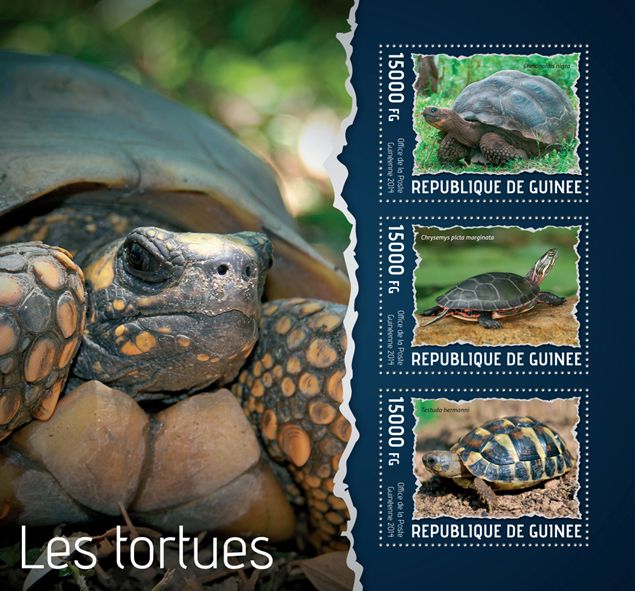
    Conservationists are sounding the alarm about turtles in Ontario, warning all eight species in the province are now in trouble. The Committee on the Status of Endangered Wildlife in Canada (COSEWIC), a body of wildlife agents from governments, Indigenous and non-profit entities, designated the midland painted turtle (Chrysemys picta marginata) as a special concern in April. The designation means these types of turtles may soon become threatened or endangered.

    A midland painted turtle seen in one of the ponds at Evergreen Brickworks in Toronto. All eight turtle types found in southern Ontario are believed to be at risk. .A midland painted turtle seen in one of the ponds at Evergreen Brickworks in Toronto.

    Of all the eight turtle types found in Ontario, it’s the last one to be added to the growing list of species believed to be at risk in southern Ontario.

    “I think it’s very disheartening to see all these species at risk,” said Emma Horrigan, a conservation science co-ordinator at Ontario Nature.

    “These painted turtles are a mainstay of many people’s outdoor experiences especially in the summer, so it’s sad to know that they’re in decline.”

    Midland painted turtles have a yellow or dark tan lower shell with a darker, irregular butterfly marking along the midline. They have an olive to black shell, as well as red and yellow stripes on the head and neck. An adult midland painted turtle can measure up to 19 centimetres, according to Ontario Nature.

    The species takes a long time — up to 10 years — to mature and lay eggs for procreation, according to the endangered wildlife committee. In southern Ontario, there has been “increasing numbers of turtles killed by vehicles and the historical loss of 70 per cent of southern Ontario wetland habitat,” the committee wrote in a statement.

    The committee also noted that, beyond Ontario, every one of the country’s 10 native freshwater turtle species is at risk in some part of the country.

    Last year, Ontario animal rights activists pressured the provincial government to ban the hunting of snapping turtles, which are also at risk of disappearing. Anyone with an Ontario fishing licence is allowed a maximum of two snapping turtles in a day during the summer months.

    Source: The Star, May 23, 2018
    https://www.thestar.com/news/gta/2018/05/23/ontario-turtle-population-in-trouble-conservationists-warn.html

  • Massiver Rückgang bei Wiesenvögeln in Tirol

    Massiver Rückgang bei Wiesenvögeln in Tirol

    Das Zwitschern auf Tirols Äckern und Wiesen wird immer leiser: Und das liegt am massiven Rückgang zahlreicher Vogelarten, schlagen Biologen Alarm. Betroffen seien vor allem jene gefiederten Freunde, die im Kulturland leben. „In diesem Bereich verzeichnen wir einen Rückgang von etwa 40 Prozent in den vergangenen 20 Jahren“, sagt Katharina Bergmüller von der „Tirol-Filiale“ der Vogelschutzorganisation Birdlife.

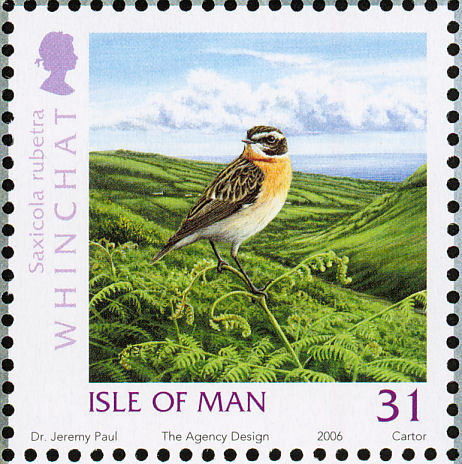
    Sorgenkind Nummer eins ist in Tirol die Feldlerche (Alauda arvensis) : Diese einst weit verbreitete Vogelart sei bereits fast völlig verschwunden, erklärt Bergmüller: „Jetzt gibt es nur noch zwischen 100 und 200 Brutpaare.“ Alles andere als rosig ist auch die Zukunft des Braunkehlchens (Saxicola rubetra), der Nummer zwei auf der Sorgenskala: Diese kleine Vogelart ist im gesamten EU-Raum stark gefährdet, in Luxemburg sogar schon ausgestorben. In Tirol nicht – „bei uns ist eines der letzten Rückzugsgebiete dieser Spezies“, so Bergmüller, die den heimischen Bestand mit etwa 500 Brutpaaren beziffert. Österreichweit wird der Rückgang von Birdlife mit 42 Prozent seit 1998 angegeben.

    Allerdings wird das (Über-)Leben für die Braunkehlchen auch in Tirol immer härter: „Braunkehlchen kommen erst relativ spät aus Afrika zurück und bevorzugen beim Nestbau nährstoffreiche, flache Wiesen.“ Flächen also, die auch die Landwirtschaft bevorzugt. Bis die Jungvögel Ende Juni/Anfang Juli flügge sind, war meist schon die Mähmaschine da. Ein Problem, das viele heimische Zugvogelarten haben, die größtenteils aufgrund des Nahrungsangebots auf das Freiland angewiesen sind. „Dazu kommt, dass der Lebensraum für diese Tiere durch Golfplätze, Parkplätze Gewerbegebiete etc. immer kleiner wird“, erklärt Bergmüller.

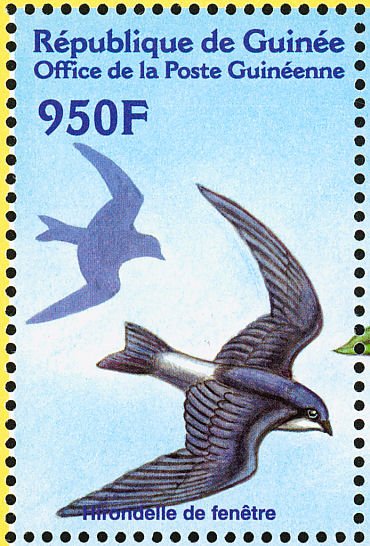
    Auch die Mehlschwalben (Delichon urbicum) tun sich immer schwerer. Österreichweit beträgt der Rückgang seit 1998 etwa 43 Prozent. Und das sei vor allem auch auf den Insektenschwund zurückzuführen, sagt Biologe Timo Kopf von der Innsbrucker Uni: „Seit den 70er-Jahren ist der Insektenbestand um vier Fünftel zurückgegangen.“ Für die Schwalben, die ihre Nahrung ausschließlich im Flug fangen, eine Katastrophe. Dazu kommt, dass die Isolierungen an den Häusern den Nestern kaum noch Halt bieten. Der Lehm als Baumaterial ist ebenfalls selten geworden. Apropos Nester – für den Bau „fehlen vielen Freilandvögeln zunehmend die Strukturen wie Sträucher, alte Bäume etc.“, ergänzt Biologin Yvonne Kiss. Die gute Nachricht: Den Waldbewohnern unter den Vögeln geht es relativ gut – die Bestände sind großteils stabil bzw. nehmen sogar zu.

    Quelle: Tiroler Tageszeitung, 24.05.18
    http://www.tt.com/panorama/natur/14391138-91/massiver-r%C3%BCckgang-bei-wiesenv%C3%B6geln.csp

  • Zahl der Gartenvögel nimmt ab

    Zahl der Gartenvögel nimmt ab

    Seit 14 Jahren ruft der NABU inzwischen Anfang Mai zu Vogelzählaktionen auf. In diesem Jahr waren die Menschen bundesweit von Vater- bis Muttertag dazu aufgerufen, die Vögel im heimischen Garten zu zählen. Bis zum vergangenen Montag konnten die Teilnehmer die Ergebnisse melden. Während sich die Veranstalter über die rege Beteiligung freuen – 53.000 Vogelfreunde haben sich zurückgemeldet – finden sie die Ergebnisse besorgniserregend. Denn unter den Top 15 der Gartenvögel weisen sieben Arten so geringe Zahlen auf wie noch nie. “Insgesamt sind die Zahlen im Vergleich zum Vorjahr um fünf Prozent zurückgegangen”, sagt Hermann Nagel, stellvertretender Vorsitzender vom Lübbecker NABU.

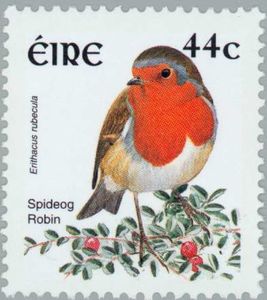
    Im Kreis Minden-Lübbecke wurden von 191 Beobachtern in 136 Gärten 4.765 Vögel gezählt. Besonderer Verlierer mit 42 Prozent ist der Star (Sturnus vulgaris). Er wurde nur 258 Mal beobachtet. Auch Elster (Pica pica, minus 23 Prozent), Kohlmeise (Parus major, sieben Prozent weniger), Buchfink (Fringilla coelebs, ebenfalls minus sieben Prozent) und Rotkehlchen (Erithacus rubecula, sechs Prozent weniger) kamen seltener vor.

    Auf Platz Eins der Liste ist wie in den Vorjahren der Haussperling, auch bekannt als Spatz. Insgesamt kam er 671 Mal und damit pro Garten 4,93 Mal pro Stunde vor.

    “Die Ergebnisse sinken kontinuierlich”, sagt Nagel. “Ich kann mir keinen Garten ohne Vögel vorstellen.” Gründe dafür sieht er unter anderem im Rückgang der Feuchtgebiete, der Nutzung von Pestiziden in der Landwirtschaft und dem Insektensterben.

    Quelle: Neue Westfälische, 28.05.18
    http://www.nw.de/lokal/kreis_minden_luebbecke/luebbecke/22149891_Zahl-der-Gartenvoegel-nimmt-ab.html

  • Lack of insects in the Netherlands is bugging the house martin

    Lack of insects in the Netherlands is bugging the house martin

    Bird protection organisation Vogelbescherming has named 2018 the Year of the House Martin in an effort to call attention to the dramatic decline of this migratory bird in the Netherlands, public broadcaster NOS reports. Together with bird research group Sovon, Vogelbescherming has mobilised a group of volunteers to find the cause of the dwindling numbers of house martins (Delichon urbicum). Since 1970 some 80% fewer house martins have been spotted in this country and it is thought that since 1920 the decline could be as much as 95%. ‘Their absence tells us something about how healthy our landscape is. Much has changed over the years,’ Sovon researcher Loes van den Bremer told NOS. Van den Bremer says the main cause for the house martin’s decline is the disastrous lack of insects in the Netherlands.

    ‘People would complain about hundreds flies stuck to the windshield, now that’s a thing of the past,’ Van den Bremer is quoted as saying. The way to bring back the house martin is to change agricultural practice Vogelbescherming says. ‘What is needed are fewer insecticides and more flowers on the edges of fields. Consumers can help by not opting for cheap products but for sustainably produced ones,’ Van den Bremer told NOS. House martins are expected to start flying in from Africa in the next few weeks. Vogelbescherming says people can help it by making a little mud pool in their garden which the birds can use to build a nest.

    Read more at DutchNews.nl, 23 May 2018:

  • One in 10 Hong Kong bird species is at risk of extinction

    One in 10 Hong Kong bird species is at risk of extinction

    For many people in Hong Kong, talk of endangered species conjures up images of wildlife whose natural habitats are “out there”, somewhere far away – such as giant pandas in the bamboo forests of Sichuan province, polar bears in the Arctic and miniature monkeys in the Brazilian rainforest. If, like me, you are a birdwatcher, however, the list of threatened species feels far closer to home.

    The tally of the world’s endangered birds is growing ever larger, with some populations shrinking at startling rates. “The State of the World’s Birds 2018” report, which was released last month by BirdLife International (the world’s leading authority on avian conservation), notes that 13 per cent of the planet’s 11,000 or so bird species – roughly one in eight – are threatened with extinction.

    In Hong Kong, the endangered proportion of the total is slightly lower, at about 10 per cent of 522 species. This is no reason to feel upbeat, however: Hong Kong was deforested long ago, wiping out “forest specialists” (birds that primarily breed in wooded environments) and largely leaving room only for species adapted to living in areas shaped by humans.

    Indeed, according to the report, human activity is respon­sible for losses worldwide. The main culprit has been farming, which has affected the populations of 74 per cent of globally threatened bird species. Logging and defor­esta­tion have caused declines in 50 per cent of the most endangered species, with invasive species (39 per cent), hunting/trapping (35 per cent), climate change (33 per cent) and residential/commercial development (28 per cent) also having a ruinous impact.

    The report notes, in fact, that people – through the destruction of wildlife habitats and exploitation of natural resources – are now driving the sixth mass extinction event since animals first appeared, more than 500 million years ago. Such behaviour has, in the past, mainly affected bird species that had small populations living in specific environ­ments, but familiar and previously widespread birds are now also under serious threat.

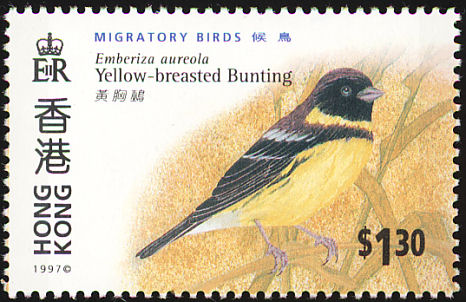
    One is the yellow-breasted bunting (Emberiza aureola), a songbird that was once so abundant in China it was known as the “rice bird”. I first saw yellow-breasted buntings in the mid-1980s, at Beidaihe, in Hebei province. The coastal resort in northeast China has long been a bird migration hot spot, and an orni­tho­logist wrote in the early years of the last century that every September these buntings would “swarm in the crops” before they headed to Southeast Asia to see out winter.

    While num­bers were undoubtedly lower by the 80s, the birds were still common and, to me, always a welcome sight – especially the breeding-plumage males, which are like sparrows but bright yellow below, with black hoods, brown chest collars and white wing patches. In Hong Kong, too, yellow-breasted buntings were abundant in the autumn, with a peak count of about 3,000 spotted near Yuen Long in 1950, according to the book The Avifauna of Hong Kong, published in 2001 by the Hong Kong Bird Watching Society (HKBWS).

    “Yellow-breasted buntings were practically everywhere at the right time of the year,” says Lam Chiu-ying, honorary president of the HKBWS, and former director of the Hong Kong Observatory (2003-09), who began birdwatching in 1976. “To me, it was a common bird.”

    But numbers here and elsewhere began falling and, by 2004, the species was added to the endangered list by the International Union for Conservation of Nature (IUCN), in the category “Near Threatened”. Four years later, BirdLife International assessors for the IUCN’s Red List of Threatened Species ranked the yellow-breasted bunting as “vulnerable” to extinction.

    In 2013, its status was altered to “endangered”, and last year the bird was rated as “critically endangered”, joining 221 other species globally (several are so rare that they have not been seen for decades). The rating was supported by a study published in 2015, in scientific journal Conservation Biology, that stated the global population of yellow-breasted buntings had collapsed by up to 95 per cent between 1980 and 2013.

    Nowadays, perhaps a few dozen of these birds take sanctuary in Hong Kong each year, resting and feeding in places such as the Long Valley wetland, in the northern New Territories. The number is too low to ease fears that the bunting might go the way of the passenger pigeon – a North American bird, once abundant, that was hunted to extinction in the late 19th and early 20th centuries.

    The global population of the spoon-billed sandpiper – another bird that historically passed through Hong Kong – has also plummeted in recent years. The sparrow-sized creature is the world’s only shorebird with a flattened tip to its bill. When away from its tundra breeding grounds in northeast Asia during migration and winter, it frequents tidal flats. It is also something of a “Goldilocks bird”, preferring areas that are not too muddy or too sandy, but with silt that’s just right for bulldozing through to expose shrimp and other morsels.

    Unfortunately, such tidal flats are often reclaimed to create land for farming and building, and the BirdLife International report notes that two-thirds of the intertidal habitat in the Yellow Sea, between China and Korea, has been reclaimed since the 50s, including key sandpiper migration sites. Consequently, the species’ numbers have tumbled from about 1,000 pairs at the turn of the century to 100 or so pairs today, according to the IUCN’s Red List.

    The spoon-billed sandpiper (Calidris pygmaea) was always scarce in the city, with The Avifauna of Hong Kong noting that the record yearly count was just five birds, at the Deep Bay wetland (too muddy, perhaps), which sits between the northwest New Territories and Shenzhen. Sightings of even one spoon-billed sandpiper in Hong Kong today are extremely rare.

    The great knot (Calidris tenuirostris), a chunky type of sandpiper that breeds in the far northeast of Asia and mainly spends winter in Australia) is commonly seen in Hong Kong, but less so than in previous decades. In 2007, the species numbered close to 300,000 worldwide, according to conservation non-profit Wetlands International, and yet it has become endangered after a rapid 80 per cent decline in population. Together with the spoon-billed sandpiper, it is among 15 Hong Kong shore­birds now threatened with extinction, making Deep Bay and the adjoining Mai Po Marshes wetland a crucial migra­tory stop-off between Australia and Siberia.

    Hong Kong’s largest birds – like the bulky Dalmatian pelican (Pelecanus crispus), which can have a wingspan of three metres, and the oriental stork, which stands up to 1.5 metres tall – are also threatened. So is the significantly smaller, insect-eating Styan’s grasshopper warbler (Locustella pleskei) (typical adult length: about 15cm), which breeds on islands in northeast Asia, and can be spotted at Mai Po in winter.

    The Baer’s pochard (Aythya baeri), a type of diving duck, was not on the IUCN’s Red List when I first arrived in Hong Kong, in 1987. Now it is rated “critically endangered”. The decline of these birds reflects the loss of lakes and swamps, along with intensive hunting.

    Source: South China Morning Post, 18 May 2018
    http://www.scmp.com/magazines/post-magazine/long-reads/article/2146543/one-10-hong-kong-bird-species-risk-extinction-can
  • The importance of time-to-effect experiments rather than fixed-duration studies for evaluating chronic toxicity

    The importance of time-to-effect experiments rather than fixed-duration studies for evaluating chronic toxicity

    Synthetic fungicides are pesticides widely used in agriculture to control phytopathogenic fungi. The systemicity, persistency and intense application of some of these fungicides, such as boscalid, leads to long periods of exposure for honeybees via contaminated water, pollen and nectar. We exposed adult honeybees in the lab to food contaminated with boscalid for 33 days instead of the standard 10-day test. Most of the toxic effects were observed after 10 days. The median time to death (LT50) ranged from 24.9 days (lowest concentration) to 7.1 days (highest concentration) and was significantly shorter in all cases than with the control (32.0 days). The concentration and dietary doses of boscalid inducing 50% mortality (LC50 and LDD50, respectively) decreased strongly with the time of exposure: LC50 = 14,729 and 1,174 mg/l and LDD50 = 0.318 and 0.0301 mg bee−1 day−1 at days 8 and 25, respectively. We found evidence of reinforced toxicity when exposure is prolonged, but with an unusual pattern: no cumulative toxicity is observed until 17–18 days, when a point of inflexion appears that suggests a reduced capacity of bees to deal with the toxicant. Our results show the importance of time-to-death experiments rather than fixed-duration studies for evaluating chronic toxicity.

    Source:
    Noa Simon-Delso, Gilles San Martin, Etienne Bruneau & Louis Hautier. Scientific Reports volume 8, Article number: 7241 (2018) doi:10.1038/s41598-018-24746-9

  • The southwestern willow flycatcher is facing serious environmental challenges

    The southwestern willow flycatcher is facing serious environmental challenges

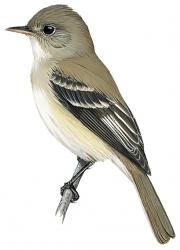
    Of the four subspecies of willow flycatcher (Empidonax traillii), three have breeding grounds in California and are listed as endangered by the state’s Department of Fish and Wildlife. Because the southwestern subspecies, one of those three subspecies, is listed as endangered by the federal Fish and Wildlife Service, ecologists and conservation biologists have studied the birds closely for decades. Scientists have tried to gather information using traditional research methods such as attaching unique identification bands to the birds’ legs, but that provides only limited data because too few of the birds are recaptured for further study.

    In the new paper, researchers from UCLA and partner organizations used genetics to produce a clearer picture of where the birds spend their summers and winters, their migration routes, and the threats they face.

    Recently, a lawsuit filed on behalf of various industry groups encouraged the Fish and Wildlife Service to remove the flycatcher from the U.S. endangered species list; the agency rejected the request and decided to continue its protections for the bird. Judging by the findings of the UCLA research, that was a wise decision.

    Read more at: https://phys.org/news/2018-05-willow-flycatchers-endangered-species-imperiled.html#jCp

  • Dramatic decline of insects in the Netherlands

    Dramatic decline of insects in the Netherlands

    Scientific research commissioned by Natuurmonumenten shows that the number of insects is declining dramatically in the Netherlands. Measurements and analyses in recent decades show a decline of 54 percent (ground beetles) and 72 percent (ground beetles) in nature reserves. This represents a dramatic fall in these groups of insects, which is in line with the results of recent German, French, English and Dutch studies. And this is bad, as it has a huge impact on the cycle of life.

    Two long-term studies on insect populations in nature reserves were eligible for analysis: ‘De Kaaistoep’ and ‘Wijster.’ An analysis of these two studies shows that the number of ground beetles counted in Wijster (nature reserve in Drenthe) has fallen by 72 percent over the past 22 years. The number of moths in De Kaaistoep (nature reserve in North Brabant) has fallen by 54 percent over 20 years. These two insect groups contain a total of 1,100 species, approximately 6 percent of all insect species that occur in the Netherlands.

    Read more at: https://phys.org/news/2018-05-decline-insects-affects-netherlands.html#jCp

  • 90 Prozent der deutschen Gewässer sind durch Schadstoffe belastet

    90 Prozent der deutschen Gewässer sind durch Schadstoffe belastet

    Laut Umweltverband BUND sind mehr als 90 Prozent der deutschen Gewässer durch Schadstoffe und weitere Faktoren belastet. Vor allem Dünger und Pestizide stören die Umweltschützer. Die meisten Flüsse und Seen in Deutschland sind nach Einschätzung von Umweltschützern in einem schlechten Zustand. Insgesamt seien neun von zehn Gewässern durch Schadstoffe und Baumaßnahmen belastet, heißt es in einem Bericht vom Bund für Umwelt und Naturschutz Deutschland (BUND). “Der BUND-Gewässerreport macht klar, dass sich die Politik endlich bewegen muss, damit unser Wasser noch zu retten ist”, sagte der Vorsitzende Hubert Weiger in Berlin.

    Der Report beurteilt lediglich die ökologische Qualität der Gewässer. Dies sagt jedoch nichts über die Badequalität von Seen und Flüssen aus. Bei der Überprüfung von Badegewässern geht es primär um Krankheitserreger, die für Menschen gefährlich sein könnten.

    Ursachen für den schlechten Wasserzustand seien unter anderem zu viel Dünger und Pestizide in der Landwirtschaft, der Ausbau und die Begradigung von Flüssen sowie Schadstoffe aus dem Bergbau. Auch Mikroplastik aus Produkten des täglichen Lebens belasten demnach zunehmend die Gewässer.

    Mit der Kampagne “Rette unser Wasser” will der BUND künftig für einen besseren Gewässerschutz werben. Ziel sei es auch, ein Aufweichen der europäischen Wasserrahmenrichtlinie zu verhindern. Diese schreibt Qualitätsstandards für Seen, Flüsse und das Grundwasser in den EU-Staaten vor. Der überwiegende Teil der Gewässer in Deutschland erfüllt diese Standards derzeit nicht.

    Quelle: NTV, 16.05.18
    https://www.n-tv.de/wissen/Gewaesser-in-alarmierendem-Zustand-article20436796.html

  • The great Indian bustard stands on the brink of extinction

    The great Indian bustard stands on the brink of extinction

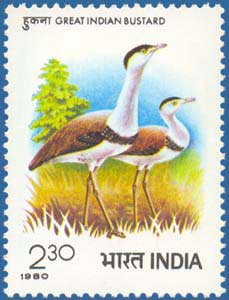
    Once in the running to become India’s national bird, the great Indian bustard (GIB) is now fluttering for survival. Earlier found across several states of India, it is now on the brink of extinction and in absence of a strong political will to reverse the declining population trend, its revival looks near impossible.

    The Indian bustard (Ardeotis nigriceps) is considered among the largest flying birds in the world. In the early 1960s, when India was choosing its national bird, the GIB was a top contender with support from the country’s famous ornithologist Salim Ali. But it lost the race to the glamorous peacock due to its name which had the potential for an embarrassing misspelling.

    However, in 2018, the bird’s future is in peril. Its population has been on a continuous decline from an estimated 1,260 in 1969 to 300 in 2008 recording a decline of about 75 percent. At present, its population is estimated to be of less than 200 across Rajasthan, Gujarat, Maharashtra, Madhya Pradesh, Karnataka and Andhra Pradesh.

    Among these states, Rajasthan has the highest population with estimated 100-150 birds while in Maharashtra and Gujarat, the numbers are significantly low. In April 2018, a survey by the scientists of the Wildlife Institute of India (WII), India’s top wildlife institute, found only eight GIBs in Maharashtra. In February 2018, a report by the International Union for Conservation of Nature (IUCN) pegged their numbers at 20 in Gujarat.

    The fall in the population of the GIBs has been consistent over the decades. The biggest threat to their shrinking habitat has been industrialisation, mining, and intensive agricultural practices. The recent WII report noted that data indicated that the “GIB prefers open grasslands and agricultural fields of sorghum, groundnuts, and pigeon pea.

    Source: Mongabay, 11 May 2018
    https://india.mongabay.com/2018/05/11/the-great-indian-bustard-stands-on-the-brink-of-extinction/