Auteur: Henk Tennekes

  • Canada has been losing species for a long time

    Canada has been losing species for a long time

    Since European settlement, over 100 species have been lost here. These include plants and animals that are extinct and extirpated, and species that are considered historic (no one has seen them in Canada for a long time). The number of lost species varies between different regions of the country. In the Great Lakes region of southern Ontario, there are extinct species (passenger pigeon), extirpated species (paddlefish) and historic species (Eskimo curlew). There are also species that have vanished from this landscape but still exist elsewhere in Canada. This includes large carnivores, such as black bear and cougar, and also plants and smaller wildlife, such as white prairie-clover, spring salamander and Melissa blue butterfly.

    Over a century ago, many of our game and fur-bearing animals, such as pronghorn, beaver and marten, had vanished from huge areas of Canada. Many migratory birds were becoming rare. When I was kid in the late 1970s, I had posters of peregrine falcons and American white pelicans on my wall. Their populations had drastically declined, in part, because of the pesticide DDT. DDT would accumulate in these birds and cause the shells of their eggs to thin and crack. Without new generations of these birds being born, their populations were declining. When DDT was mostly phased out by the mid 1970s, populations of these birds recovered.

    Source: The Hamilton Spectator,,June 4, 2018
    https://www.thespec.com/opinion-story/8645818-world-environment-day/
  • Food shortage for New Zealand‘s godwits

    Food shortage for New Zealand‘s godwits

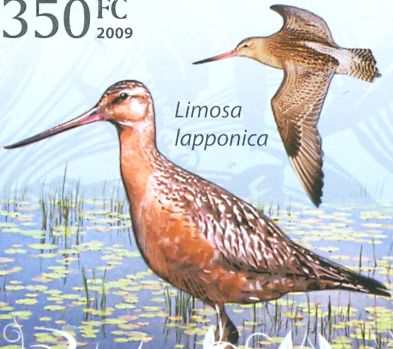
    Food sources for the bar-tailed godwit (Limosa lapponica) on its annual journey to Alaska have been depleted, but researchers have devised a plan to keep them fed. Godwits travel 17,000 km from the southern hemisphere to the north, and back every year. After leaving New Zealand in March, thousands of godwits have made it to China‘s Yalu Jiang National Nature reserve. However, after experiencing the coldest winter in almost half a century, clams at the mudflat have been dying off. They‘re an important food source for the birds, but there‘s only around five percent of their usual abundance.

    Associate Professor Phil Battley, from Massey University‘s Wildlife and Ecology Group, said godwits would spend 40 to 45 days at the spot after a 10,000 kilometre journey. “Even that flight to Alaska is still a 5,000 kilometre flight, they have a three-and-a-half to four day flight they‘re preparing for, while also having to make sure they have enough energy for displaying and as a buffer in case they get there and there‘s still snow of the ground,” he said. He said if they did not get enough food, they might not have enough energy to breed either.

    The godwits food sources have been continuing to decline over recent years, leaving their future unknown, he said. “We don‘t really know whether these birds would simply just go somewhere else and try to find food somewhere else, or if they‘ll stick with what they know and try and deal with the situation because they are very habitual. “An individual godwit will go back to exactly the same site on migration year after year, so that might be all they know,” he said.

    Source: Fisher Business News, June 4, 2018
    https://fisherbusinessnews.com/2018/06/04/food-shortage-for-new-zealands-godwits/

  • Vitens vindt dat de agrarische sector moet ophouden met het gebruik van Roundup

    Vitens vindt dat de agrarische sector moet ophouden met het gebruik van Roundup

    Consumenten betalen meer voor hun kraanwater omdat boeren het giftige bestrijdingsmiddel Roundup blijven gebruiken. Dat meldt waterbedrijf Vitens maandag in de Gelderlander. Vitens – actief in Friesland, Overijssel, Gelderland, Flevoland en Utrecht – maakt jaarlijks 15 miljoen euro kosten om het grondwater schoon te krijgen. Uit het water wordt onder meer Roundup gehaald.

    In het verleden moest Vitens vanwege het bestrijdingsmiddel al waterwinputten verplaatsen, gaat de woordvoerder verder. ,,We moesten bovendien dieper grondwater winnen en waterzuiveringen uitbreiden vanwege de verontreinigingen door deze stoffen.’’

    Boeren gebruiken Roundup om onkruid te verdelgen. Zo hoeven ze niet met grote machines het – vaak natte – land op.

    Vitens lobbyt op landelijk niveau, onder meer via brancheorganisatie Vewin, om het gebruik van bestrijdingsmiddelen zoveel mogelijk te beperken.

    Het waterbedrijf vindt dat de agrarische sector moet ophouden met het gebruik van het middel. ,,Dit soort stoffen heeft invloed op de kwaliteit en de hardheid van het grondwater’’, zegt een Vitens-woordvoerder in de krant.

    Bron: Leeuwarder Courant, 20 juni 2019
    http://www.lc.nl/net-binnen/

  • Neue EU-Agrarpolitik: Rückschritt statt Aufbruch

    Neue EU-Agrarpolitik: Rückschritt statt Aufbruch

    Die Wissenschaftlichen Beiräte für Agrarpolitik, Ernährung und gesundheitlichen Verbraucherschutz (WBAE) sowie für Biodiversität und Genetische Ressourcen übergaben zwei dicke Gutachten an
    Landwirtschaftsministerin Julia Klöckner (CDU). Allein das Papier der 19 Top-Agrarexperten hat 93 Seiten. Doch auf Klöckners Wunsch hin geschieht das hinter verschlossenen Türen und ohne Kameras. Die Gutachten der Beiräte bergen Sprengstoff. Es geht um die Verteilung der 365 Milliarden Euro, mit denen Europas Steuerzahler die Landwirtschaft künftig unterstützen sollen.

    Vergangene Woche hat die EU-Kommission Vorschläge für die Förderperiode bis 2028 vorgelegt. Demnach sollen die sogenannten Direktzahlungen weiterhin den größten Anteil des Budgets verschlingen: Gelder, die Landwirte pro Hektar Boden bekommen – ganz egal, ob darauf mit Glyphosat behandelter Mais angebaut oder Paprika pestizidfrei gezüchtet wird.

    Die Kommission habe “wichtige deutsche Anliegen berücksichtigt”, lobte Klöckner eilfertig. Auch Deutschland sehe die Direktzahlungen “als wesentliches Instrument der Einkommenssicherung” der Landwirte an. Deutschlands Agrarökonomen im WBAE sehen das freilich völlig anders. Sie empfehlen im Gegenteil, die Direktzahlungen sukzessive ganz abzuschaffen. Statt dass weiterhin demjenigen, der hat, gegeben wird, soll künftig der, der etwas für die Allgemeinheit leistet, belohnt werden – das ist die Quintessenz ihres Papiers mit dem Titel “Für eine gemeinwohlorientierte Gemeinsame Agrarpolitik der EU nach 2020”. Die bisherige EU-Politik verfehle dramatisch ihre Ziele, urteilen die
    Experten. Nutztiere leiden unsichtbar im Stall, Insekten und Vögel sterben einen leisen Tod, und der Klimaschutz findet vor allem auf dem Papier statt.

  • Spain’s most endangered birds

    Spain’s most endangered birds

    Recognisable by its black plumage and striking red beak, the Black Stork (Ciconia nigra) is found in low numbers all over the planet. European populations migrate to Sub-Saharan Africa in the winter and during the summer an estimated 470 pairs can be found in Spain, a large proportion of which are found in the north of Extremadura. They are threatened.

    Found in the mountains and forests of northwest Spain, the Cantabrian Capercaillie – Tetrao urogallus cantabricus – is a species of grouse that is threatened by a rapid decline in suitable habitats, illegal hunting and disease – its population is thought to have fallen to around 625.

    Like the Iberian Lynx, the bearded vulture (Gypaetus barbatus) is an endangered species specific to the Iberian Peninsula. It’s a large bird of prey that feeds on the bones of dead animals, and around 200 are distributed among the peaks and caves of the Pyrenees. In addition to poaching and habitat loss, threats to the bearded vulture are compounded by the ingestion of poisons used in bait by hunters and electrocution as a result of power lines in the area.

    The majestic Iberian imperial eagle (Aquila adalberti) has been made vulnerable by dwindling food sources, human interference and, like the bearded vulture, electrocution from power lines. The greatest number of the species can be found in Doñana National Park, where the Spanish NGO BirdLife has recorded an increase in successful reproduction, indicating a cautious optimism for the future of the great bird.

    Source: The Local, June 6, 2018
    https://www.thelocal.es/20180606/in-pics-these-are-spains-most-endangered-species

  • Scientists stunned by decline of birds during epic Southern African roadtrip

    Scientists stunned by decline of birds during epic Southern African roadtrip

    A two year project to repeat a famous bird survey by driving over 20, 000km in a 4×4 across Botswana has confirmed researchers’ fears: many birds of prey are fast disappearing from one of Africa’s last great wilderness areas. Reported sightings of iconic species of eagle and vulture declined by as much as 80% compared with the previous survey, while some migrant species recorded last time have vanished, according to the study published this week in the international scientific journal Biological Conservation.

    The data is based on a return trip to a network of roads criss-crossing most of Northern Botswana, an area first surveyed over twenty years ago by a former Wildlife Biologist with the Department of Wildlife and National Parks Botswana, Dr. Marc Herremans.The resurvey focussed on 29 raptor species and compared their encounter rate with Herremans’s original records.

    “The main motivation for doing the work was to explore whether vultures and other raptor numbers had declined in Botswana like they have in many other areas of Africa” says Associate Professor Arjun Amar from the Fitzpatrick Institute of African Ornithology at the University of Cape Town which conducted the study in collaboration with conservation NGO Raptors Botswana.

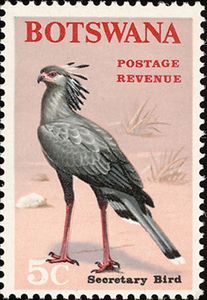
    Some of the species showing the greatest declines are the White-headed vulture (Trigonoceps occipitalis) and Lappet Faced vultures (Torgos tracheliotos), African Hawk Eagle (Aquila spilogaster), Secretary Bird (Sagittarius serpentarius), Bateleur Eagle (Terathopius ecaudatus), and Red-necked Falcon (Falco chicquera).

    Source: Phys Org, June 6, 2018
    https://phys.org/news/2018-06-scientists-stunned-decline-birds-epic.html#jCp

  • Neonicotinoid residues in a long-distance migratory raptor

    Neonicotinoid residues in a long-distance migratory raptor

    We present results on the presence of neonicotinoid residues in blood samples of a long-distant migratory food-specialist raptor, the European honey buzzard (Pernis apivorus). Further, we investigate the spatial relationship between neonicotinoid residue prevalence in honey buzzards with that of crop fields where neonicotinoids are typically used. A majority of all blood samples contained neonicotinoids, thiacloprid accounting for most of the prevalence. While neonicotinoid residues were detected in both adults and nestlings, the methodological limit of quantification was exceeded only in nestlings. Neonicotinoids were present in all sampled nests. Neonicotinoid presence in honey buzzard nestlings’ blood matched spatially with the presence of oilseed plant fields. These are the first observations of neonicotinoids in a diurnal raptor. For better understanding the potential negative sub-lethal of neonicotinoids in wild vertebrates, new (experimental) studies are needed.

    Source: Patrik Byholm et al. Science of The Total Environment, Volume 639, 15 October 2018, Pages 929–933
    https://www.sciencedirect.com/science/article/pii/S0048969718318345

  • Toxicokinetic-toxicodynamic models for three neonicotinoids and some aquatic macroinvertebrates

    Toxicokinetic-toxicodynamic models for three neonicotinoids and some aquatic macroinvertebrates

    Exposure patterns in ecotoxicological experiments often do not match the exposure profiles for which a risk assessment needs to be performed. This limitation can be overcome by using toxicokinetic-toxicodynamic (TKTD) models for the prediction of effects under time-variable exposure. For the use of TKTD models in the environmental risk assessment of chemicals, it is required to calibrate and validate the model for specific compound–species combinations. In this study, the survival of macroinvertebrates after exposure to the neonicotinoid insecticide was modelled using TKTD models from the General Unified Threshold models of Survival (GUTS) framework. The models were calibrated on existing survival data from acute or chronic tests under static exposure regime. Validation experiments were performed for two sets of species-compound combinations: one set focussed on multiple species sensitivity to a single compound: imidacloprid, and the other set on the effects of multiple compounds for a single species, i.e., the three neonicotinoid compounds imidacloprid, thiacloprid and thiamethoxam, on the survival of the mayfly Cloeon dipterum. The calibrated models were used to predict survival over time, including uncertainty ranges, for the different time-variable exposure profiles used in the validation experiments. From the comparison between observed and predicted survival, it appeared that the accuracy of the model predictions was acceptable for four of five tested species in the multiple species data set. For compounds such as neonicotinoids, which are known to have the potential to show increased toxicity under prolonged exposure, the calibration and validation of TKTD models for survival needs to be performed ideally by considering calibration data from both acute and chronic tests.

    Source: Focks, A., Belgers, D., Boerwinkel, MC. et al. Ecotoxicology (2018). https://doi.org/10.1007/s10646-018-1940-6

  • Save the frogs

    Save the frogs

    Frogs are one of the oldest vertebrates on this planet. They have survived four mass extinctions, but currently they face rapid decline mostly due to habitat loss, pollution, pesticide use, over harvesting for food, collection for dissection and experimentation, disease, shrinking water sources, lack of conservation awareness and so forth. This has caused the extinction of hundreds of species worldwide.

    About one-third of the total amphibian population is threatened with serious risks of extinction. According to the IUCN Red List of Threatened Species, the percentage of threatened amphibian species is above 40 percent, and that’s way higher than for mammals (25 percent) and birds (13 percent). Dissection is a major reason behind the disappearance of frogs. In Nepal, four major species, namely the tiger frog which is listed in Appendix II of CITES (Convention on International Trade in Endangered Species of Wild Fauna and Flora), Nepal cricket frog, Tarai cricket frog and skittering frog are highly exploited for dissection.

    Knowingly or unknowingly, the existence of frogs living in close proximity to humans has benefitted us in a multitude of ways. First, tadpoles (the larval stage of amphibians) help in cleaning water resources by consuming organic debris and algae enriching the oxygen content of the water. The adult frog then helps to check vector borne disease carrying insects like mosquitoes and flies. They are also a source of food for many predators like snake, hawk, jackal and wild dog, thus helping to balance the ecosystem. Farmers have always regarded frogs as their friend because they help to control pest infestation that destroys their crops. Scientists know that diminutive animals like amphibians serve as an alarm to humans by playing an exceptional role as bio-indicators. The Newar community has revered frogs from eons as their saviour in the effort to get rid of the mythical demon Ghantakarna.

    Source: Kathmandu Post, June 3, 2018
    http://kathmandupost.ekantipur.com/news/2018-06-03/save-the-frogs.html

  • Earth’s biggest amphibian disappearing

    Earth’s biggest amphibian disappearing

    The Chinese giant salamander (Andrias davidianus) is one of the more prehistoric-looking animals that is still around today. These ancient creatures – dating back 170 million years – are amphibians that can grow up to six feet long and weigh 140 pounds. They’ve been depicted in Chinese culture for thousands of years, but have now become a highly coveted delicacy amongst the country’s wealthy. As a result, they have all but disappeared from their freshwater habitats.

    In order to keep up with growing demand, these amphibians are routinely harvested from the wild in an effort to stock commercial breeding farms. China has officially banned the harvesting of wild giant salamanders, but supports widespread releases of farmed salamanders as a conservation effort. But this conservation measure may actually be harming wild populations by mixing genetic lineages and facilitating the spread of diseases.

    Recently, a research team from the Zoological Society of London (ZSL) conducted a wide survey of river sites where the salamanders are known to live. These field surveys covered 97 sites in 23 Chinese provinces through a period of four years.

    “We cannot confirm survival of wild Chinese giant salamander populations at any survey sites,” the authors say in Current Biology. “And consider the species to be extremely depleted or functionally extinct across the huge surveyed area.”

    The researchers warn that these amphibians are in “catastrophic” decline, with only a handful potentially left in the wild. The species is already categorized as critically endangered in the International Union for Conservation of Nature Red List of Threatened Species.

    Source: Earth, May 25, 2018
    https://www.earth.com/news/endangered-delicacy-disappearing-salamander/