Auteur: Henk Tennekes

  • Sulfoxaflor kan volgende insectenkiller zijn

    Sulfoxaflor kan volgende insectenkiller zijn

    Britse wetenschappers waarschuwen voor de risico’s van een nieuw soort insecticide, sulfoxaflor genaamd. Dat staat in het gerenommeerde vakblad Nature. Volgens de wetenschappers kan sulfoxaflor de opvolger worden van neonicotinoïden, die Europa in april heeft verboden.

    Terwijl het ene controversiële pesticide op weg is naar de uitgang, staat het volgende al klaar. De Europese lidstaten hebben dit jaar een algemeen verbod goedgekeurd op het gebruik van drie van de meest voorkomende neonicotinoïden, met voornaamste reden hun impact op de populatie bestuivers. Eind dit jaar zou het verbod van kracht moeten zijn (al vraagt België om uitstel), en dus zijn landbouwers naarstig op zoek naar alternatieven.

    Sulfoxaflor is nu wereldwijd in opmars, met toelatingen in onder meer China, Canada en Australië. Ook in de Europese Unie hebben al enkele lidstaten het pesticide algemeen goedgekeurd, nadat de Europese Autoriteit voor Voedselveiligheid (EFSA) in 2015 zijn akkoord gaf. In de verordening van het agentschap staat enkel dat lidstaten ‘bijzondere aandacht’ moeten besteden aan het risico voor bijen en aanverwanten. Een verbod in open lucht is er vooralsnog niet.

    Bron: De Morgen, 17-08-18
    https://www.demorgen.be/wetenschap/dit-nieuwe-pesticide-kan-volgende-bijenkiller-zijn-b3bf30d0/

  • Steeds meer bestrijdingsmiddelen in voedsel

    Steeds meer bestrijdingsmiddelen in voedsel

    Op fruit en groente worden vaker meerdere bestrijdingsmiddelen tegelijk aangetroffen. Ongeveer een op de 25 geteste producten kan de wettelijke grenswaarde voor deze chemische stoffen overschrijden en het aantal geconstateerde overtredingen neemt toe. Dat blijkt uit de meest recente rapportage van de Europese Voedselveiligheidsautoriteit EFSA. Bovendien worden er op Europese producten nog regelmatig illegale bestrijdingsmiddelen aangetroffen. Deze extra schadelijke bestrijdingsmiddelen belanden tevens ondanks een Europees verbod via geïmporteerd groente en fruit alsnog op het bord van de Nederlandse consument. Foodwatch is bezorgd over de toename van bestrijdingsmiddelen in ons eten en wil actie van de politiek, boeren, voedselproducenten en supermarkten.

    Nederland staat op de 3de plek in de Europese ranglijst wat wetsovertredingen betreft: 7,5% van het door Nederland geteste voedsel overschrijdt de wettelijke norm. Alleen in Malta en Luxemburg werden nog meer wetsovertredingen gemeten. Ruim 60% van de tests die de NVWA hiervoor uitvoerde betrof geïmporteerde producten, waarin vaak meer bestrijdingsmiddelen worden gevonden.

    Bron: Duurzaam Nieuws, 12-08-18
    https://www.duurzaamnieuws.nl/steeds-meer-bestrijdingsmiddelen-in-voedsel/

  • New Zealand’s national icon, the kiwi bird, is in steep decline

    New Zealand’s national icon, the kiwi bird, is in steep decline

    The kiwi (Apteryx haastii) is in swift decline, disappearing at a rate of 2 per cent per year. Around 200 years ago, millions of kiwi inhabited New Zealand, but in 50 years’ time there may be none left. Old Mout Cider has joined New Zealand-based charity Kiwis for kiwi in the fight to help save this extraordinary species — a nocturnal, colour-blind bird that has survived millions of years against the odds. In fact, its heritage is special: the kiwi shares DNA with the tyrannosaurus rex.

    There are five species of kiwi formerly recognised today, all thought to have evolved from a single ancestor, the proto-kiwi, which lived 50 million years ago. These species all diverged from the original on account of their habitat’s changing landscape. The sudden emergence of such geographical obstacles as mountains, glaciers, seas and rivers saw the flightless kiwi — one of just five flightless birds left on Earth — struggle to stick together; groups became separated and splinter populations gradually developed.

    Source: The Independent, 6 August 2018
    https://www.independent.co.uk/life-style/save-the-kiwi/save-the-kiwi-bird-from-being-wiped-out-forever-a8479171.html

  • The shocking decline in birds worldwide is a disaster of humanity’s making

    The shocking decline in birds worldwide is a disaster of humanity’s making

    Between our paved backyards and potted plants, our drained wetlands and vast areas of monoculture – there is silence. Nearly six decades since Rachel Carson’s book Silent Spring exposed the devastating effects of DDT on humans and wildlife, bird populations around the world are plummeting. Birds of all kinds are vanishing as a result of human impact on the environment:

    Half of New Zealand’s indigenous bird species are in serious trouble. Globally, more than 1300 species of birds – one in eight, reports the International Union for Conservation of Nature (IUCN) – are threatened with extinction. The German Green Party warned last year, “The situation of birds is dramatic. A ‘silent spring’ could be on the horizon.”

    In France, Benoît Fontaine, conservation biologist at the National Museum of Natural History, describes the situation as “catastrophic”, adding, “Our farmland is turning into a real desert.” In June, 232 scientists across the globe signed a petition calling for a ban on a specific family of insecticides called neonicotinoids, citing their devastating effect on beneficial insects and their contribution to “the massive losses of global biodiversity”. The journal Nature found a correlation between declines in some bird populations and the use of pesticides.

    Indeed, the removal of insects from the food chain has seen headlines warning of “ecological Armageddon”. In the UK, where the hedgerows in which birds nest are disappearing, farmland bird numbers have more than halved since 1970. In France, in less than two decades, a third of birds have disappeared from the countryside. Meadow pipit numbers have declined by 68%, skylarks by 50%, grey partridges by 90%. Across Europe, the number of house sparrows, usually quick to adapt to urban environments, has tumbled as a result, it is thought, of air pollution and poor food. In Germany, populations of a third of all bird species declined significantly this century.

    The human impact on bird populations is becoming impossible to ignore. The loss of habitat to agriculture and new roads, the devastation caused by invasive species, the toxic effects of pesticides and the decimation of seabird food supply by longline fishing are all playing their part in the destruction. Meanwhile, almost a third of the world’s parrot species face extinction because of the high demand for them as pets.

    Of the 168 species of native birds in New Zealand, only 20% are in good shape. One in every three, the then Parliamentary Commissioner for the Environment Jan Wright wrote in her 2017 report, “Taonga of an Island Nation”, “is not far off from following the moa and many others into extinction. The situation is desperate.”

    Endemic birds, long adapted to the New Zealand environment before the arrival of humans and predators, are in most difficulty, Wright wrote. Three – pīwakawaka (fantail), tūī and the riroriro (grey warbler) – have increased their ranges over the past few decades. Of the rest, 13% are doing okay, but 45% are “in serious trouble”..

    In her report, Wright identifies the need to increase the genetic diversity of threatened species. Restoring populations of endangered bird species on islands and within fenced sanctuaries protects them from predators, but it also reduces genetic diversity, leaving small populations vulnerable to the impact of disease and habitat degradation. Despite the laudable efforts put into kākāpō and kōkako, for example, isolated bird populations can become inbred and struggle to produce healthy chicks. Bandit, a kōkako on the Tiritiri Matangi island sanctuary in the Hauraki Gulf, she writes, is consorting with his grandmother: “This may be a happy relationship, but it is unlikely to be a healthy one. We must guard against our birds drifting to the shallow end of the gene pool.”

    Source:; Noted, 31 July 2018
    https://www.noted.co.nz/currently/environment/decline-in-birds-worldwide-disaster-humanity-making/

  • The incredible value of insect-eating birds

    The incredible value of insect-eating birds

    A great many birds eat a great many bugs: this is something that, in general, we already know. But just how much do they eat? Empirical figures are hard to come by — but according to a new estimate, published in the journal The Science of Nature, the total figure is truly breathtaking, roughly equivalent to the weight of meat and fish consumed each year by humans. Calculated by researchers led by biologist Martin Nyffeler of Switzerland’s University of Basel, the estimate draws upon earlier studies describing what each bird species eats, how much energy they require, and how many of them there are. Nyffeler’s team concludes that the total biomass of wild bird-consumed insects amounts to some 400 million tons.

    As aforementioned, that’s about as much animal flesh as is eaten by people. Or, to make another comparison, Nyffeler’s team puts the weight of all those insect-eating birds together weigh at 3 million tons: on average, then, individual birds consume more than 100 times their own body weight in bugs.

    The figure underscores the magnitude of ecosystem services provided by insectivorous birds, says Nyffeler; many of those bugs are considered pests, and predation helps regulate their populations and prevent outbreaks. At a more subtle ecological level, predation helps maintain dynamics that promote long-term species richness and abundance.

    Putting a monetary value on this extraodinary labor is difficult — no global estimate exists, though various studies give locale-specific figures, such as $4,000 per hectare of enhanced production in Jamaican coffee plantations or nearly $1,500 per kilometer of worm control in northwestern U.S. commercial forests — but the figure, says Nyffeler, is undoubtedly vast.

    Source: Anthropocene Magazine, August 1, 2018

    The incredible value of insect-eating birds

  • Biodiversity in crisis: How close to the brink is life on Earth?

    Biodiversity in crisis: How close to the brink is life on Earth?

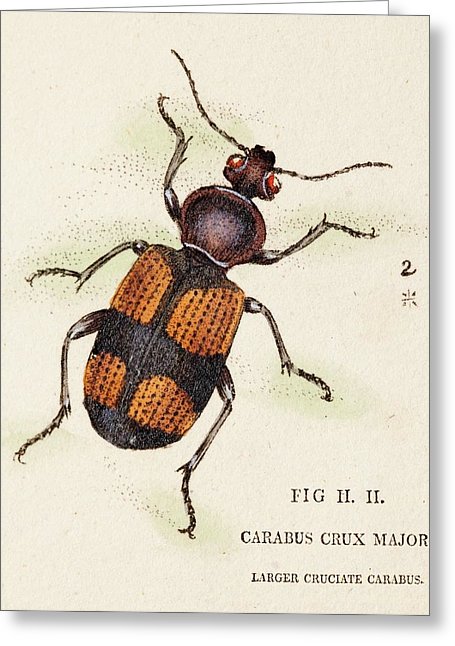
    “SEE those little beetles with a black cross on a red background?” I lean in to take a look. “They’re Panagaeus cruxmajor – the crucifix ground beetle. They were collected by Charles Darwin back in the 1820s.” Ed Turner is curator of insects at the University of Cambridge’s Zoology Museum, where many of Darwin’s beetle collections are held. He is proud to show me specimens collected by the man himself, and I am chuffed to see them. But the thrill doesn’t last. If we were to follow in Darwin’s footsteps and go out hunting crucifix ground beetles on the fens north of Cambridge, Turner says, we would have no chance. “They’re extinct. In this county, anyway.”

    The last time anyone saw a crucifix ground beetle in Cambridgeshire was 1951. Changes in land use and overuse of pesticides haven’t been kind to this dweller of watery fenland.

    You would have to be living under a rock not to have heard about the biodiversity crisis. Since about 1500, expanding human activity has condemned vast numbers of mammals, birds, amphibians and reptiles to an early grave. Now worries have spread to smaller creatures that actually do live under rocks, in leaf litter, in dung heaps and in puddles and ponds.

    Turner is in no doubt. “Insects are in massive decline and have been for some time,” he says. “It’s quite a clear picture and a depressing one. By any measure that you choose, biodiversity of insects is declining.” I ask him what that means. “It means something is very, desperately wrong with our world.”

    So is this it? …

    Source: New Scientist, July 2018
    https://www.newscientist.com/article/mg23931880-200-biodiversity-in-crisis-how-close-to-the-brink-is-life-on-earth/?utm_medium=EMP&utm_source=NSNS&utm_campaign=2018-0727-JulyWK4-GLOBAL-Biodiversity-Q3&utm_content=button

  • Bird population decline accelerated after Czech EU entry

    Bird population decline accelerated after Czech EU entry

    The bird population has been declining in Czech farmland, with the decline accelerating since the country’s EU entry in 2004, experts from Charles University’s Faculty of Sciences write in a study published by the Conservation Letters international journal. The joint European policy and system of agricultural subsidies are unfavourable to birds and wildlife, the study says, cited by the Czech Society for Ornithology (CSO).

    The bird population size is a significant indicator of healthy nature and natural diversity. In Europe, the farmland bird populations have been declining since the 1970s. In the late 20th century, “the decline was sharper in west European countries and was ascribed to their joining the EU’s single agricultural policy, which is based on the subsidising of the highest possible number of farm enterprises,” the ornithologists said. To raise crops, farmers now use more effective fertilisers and pesticides. Natural biotopes for birds have been disappearing together with their offer of bird food and nesting places,” Jiri Reif, the study’s leading author, said.

    Source: Prague Daily Monitor, 23 July 2018
    http://praguemonitor.com/2018/07/24/study-bird-population-decline-accelerates-after-czech-eu-entry

  • Study shows EU pesticide ban failing to protect suburban bees

    Study shows EU pesticide ban failing to protect suburban bees

    Bees living in suburban habitats are still being exposed to significant levels of pesticides despite the EU ban on the use of neonicotinoid pesticides on flowering crops, new research from University of Sussex scientists shows. The study, with colleagues at Stirling University and Rothamsted Research, found that neonicotinoid exposure for rural bumblebees declined after the ban’s implementation in 2015 but the risk to bumblebees in suburban gardens remained largely the same.

    As well as bug sprays, contaminated ornamental plants sold in garden centres play a key role in spreading neonicotinoids through suburban areas. A previous study by the University of Sussex revealed that 70% of bee-friendly plants sold at a range of garden centres had traces of neonicotinoids.

    For nectar samples collected from rural bumblebee colonies, concentrations of the pesticide thiacloprid, an active ingredient in many bug sprays sold in garden centres and not included in the EU restriction, significantly increased between 2013 and 2015, replacing the banned chemicals.

    Researchers were also concerned to find bee food was often contaminated with imidacloprid, a neonicotinoid which is very rarely used against crop pests any more. Its continued presence raises concerns about the persistence of chemicals in agro-environments even after their application has stopped. The researchers believe that the continued contamination could also be due to pet flea treatments, which still often contain this chemical.

    The study found many bee populations are still subject to pesticide levels that previous studies have shown could lead to slower colony growth and the production of fewer new queens, as well as detrimental impacts on foraging and navigation, immunity and worker mortality.

    Read more at: https://phys.org/news/2018-07-bin-bug-eu-pesticide-suburban.html#jCp

  • Zwaluwen gaan ten onder aan het gebrek aan insecten

    Zwaluwen gaan ten onder aan het gebrek aan insecten

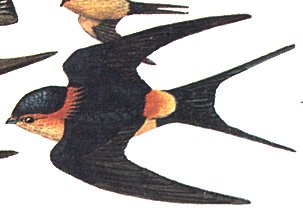
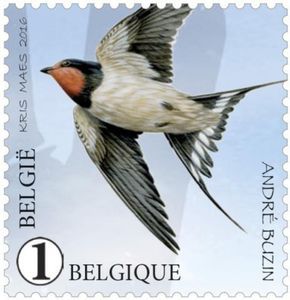
    Het lijkt misschien prettig, minder insecten die van de voorruit gewassen moeten worden of ons lastig vallen in de tuin. Maar de massale insectensterfte is vooral heel zorgelijk en gevaarlijk voor de kringloop van het leven. Al jaren neemt het aantal insecten af, in sommige gebieden is in de afgelopen decennia zelfs een daling tot 75% geregistreerd. Dit blijft niet zonder gevolgen. Ecoloog Jan Doevendans volgt al tientallen jaren de zwaluwpopulaties. Sinds de jaren ’70 heeft hij honderden nestkasten opgehangen, onder meer in Groningen en het Lauwersmeergebied. Hem valt op dat het aantal zwaluwen dramatisch laag is. Nesten zijn leeg, en de broedsels die er wel zijn, verkeren in slechte conditie.

    Zwaluwouders hebben het in deze tijd gewoonlijk heel druk om hun jongen te voeden. Een nest jongen eet maar liefst 3000-4000 insecten per dag. Nu veel nestkasten leeg blijven (van de veertig kasten van Doevendans op één locatie in Groningen waren er dit jaar maar twee gevuld), verwacht de ecoloog dat het gebrek aan voedsel een van de oorzaken is. Hij benoemt de grote insectensterfte.

    Wetenschappers van natuuronderzoeksinstituut Senckenberg Gesellschaft für Naturforschung en de Technische Universiteit van München (TUM) concludeerden dat met name de versnippering van het leefgebied en de intensivering van de landbouw de oorzaak van de insectensterfte zijn. Ook Doevendans zegt dat de oorzaak bij de landbouw ligt en de gifstoffen die worden gebruikt.

    Hoogleraar trekvogelecologie aan de Rijksuniversiteit Groningen Theunis Piersma schrikt van de constateringen van Doevendans en maakt zich grote zorgen.

    “We zijn het hele land aan het vergiftigen met al die bestrijdingsmiddelen. Die nieuwe landbouwgiffen zouden zogenaamd geen consequenties hebben voor de natuur, maar de zwaluwen vertellen het echte verhaal. Hier ben ik al jaren bang voor. Die dramatisch slechte voedselvoorraad voor zwaluwen is een aanwijzing dat er iets helemaal mis is met de insecten. Ook in goed beheerde gebieden zijn steeds minder insecten omdat al die bestrijdingsmiddelen in het oppervlaktewater belanden, ook in het Lauwersmeergebied. Er is iets engs aan het gebeuren. Jan is iets dramatisch op het spoor wat past in mijn nachtmerrie over onze omgeving.”

    Bron: Animals Today, 9 juli 2018
    https://www.animalstoday.nl/te-weinig-insecten-oorzaak-zwaluwsterfte/

  • Long term use of some pesticides is killing off dung beetle populations

    Long term use of some pesticides is killing off dung beetle populations

    New research led by scientists at the University of Bristol has uncovered that long-term use of some pesticides to treat cattle for parasites is having a significantly detrimental effect on the dung beetle population. Researchers studied 24 cattle farms across south west England and found that farms that used certain pesticides had fewer species of dung beetle. Dr Bryony Sands, from the University’s School of Biological Sciences, who led the research, said: “Dung beetles recycle dung pats on pastures, bringing the nutrients back into the soil and ensuring the pastures are fertile. “Damage to dung beetle populations is therefore concerning, and could result in economic loss for farmers.”

    This is the first landscape-scale study to show that long-term use of the pesticides has negative impacts on dung beetle populations on farms. Professor Richard Wall, a co-author on the study, first discovered 30 years ago that pesticide residues in dung could kill these important beetles. Dr Sands added: “It is now clear that long-term use of these pesticides could cause declines in beetle biodiversity on a large scale.”

    The study, published in the journal Agriculture, Ecosystems & Environment, also found that pesticides known as synthetic pyrethroids were less damaging to dung beetles than macrocyclic lactone pesticides. These are generally thought of as a safer alternative for farmers who want to protect biodiversity on their farms.

    Dr Sands said: “Although these chemicals do appear to be less damaging, farms that used them still had a smaller proportion of certain dung beetles, which are very important in removing dung from pastures by burying it. “The conservation of dung beetles is vital for the health and future sustainability of our farmland. Biodiversity losses such as these could result in loss of the services dung beetles provide to our ecosystems: dung decomposition, nutrient cycling, soil fertility and the preventing disease transmission.”

    Dr Sands and her colleagues hope the findings of the study will go some way to inform farmers about the negative impacts of these pesticides – some of which now have specific warnings labels on the bottles.

    Source: EurekAlert, 9 July 2018
    https://www.eurekalert.org/pub_releases/2018-07/uob-ltu070918.php