Auteur: Henk Tennekes

  • Urban birds are in steep decline in the Netherlands since 1990

    Urban birds are in steep decline in the Netherlands since 1990

    In the period from 1990 to 2017, 13 out of 20 breeding bird species typically found in a Dutch city declined in number, precisely in the urban areas. Many breeding birds depending on or commonly found in an urban environment are on the decline. This applies to 13 out of the 20 urban bird species, including the house sparrow (Passer domesticus), the western jackdaw (Coloeus monedula), the common blackbird (Turdus merula) and the common starling (Sturnus vulgaris). The crested lark (Galerida cristata) has even fully disappeared from the city. In 2017, the European serin (Serinus serinus) population was only 1 percent of the total population in 1990.

    In 2015, the urban area in the Netherlands covered 16 percent of the total land area. All bird species with a population share of 32 percent or more breeding in the city are referred to as urban birds. This is the case for 20 bird species. Over the past 27 years, these populations have declined by more than half in urban areas.

    Source; Centraal Bureau voor de Statistiek (NL) -Central Statistics Office (NL), 07/12/2018
    https://www.cbs.nl/en-gb/news/2018/49/decline-in-13-out-of-20-urban-bird-populations

  • Fipronil blamed for historical bee deaths

    Fipronil blamed for historical bee deaths

    Researchers in the UK report new evidence that the pesticide fipronil, not the neonicotinoid imidacloprid, caused a massive die-off of honey bees in France from 1994 to 1998. Both pesticides hit the market in the early 1990s. At the time, beekeepers and environmentalists largely blamed imidacloprid for the bee deaths. Now, Philippa Holder and colleagues at the University of Exeter and Fera Science, a UK public-private venture focused on agricultural science, suggest that fipronil used on sunflowers was more likely the culprit (Proc. Natl. Acad. Sci. U.S.A. 2018, DOI: 10.1073/pnas.1804934115).

    The scientists quantified the toxicity of both pesticides to honey bees and used bioassays to determine the likelihood that they would bioaccumulate in bees. They then incorporated the information into a simulation to predict mass mortality in a honey bee population at environmentally relevant concentrations. The researchers determined that bees rapidly eliminate imidacloprid from their bodies, but they bioaccumulate fipronil. So over time, after prolonged exposure, fipronil becomes more lethal to them. Fipronil is associated with kidney, liver, and thyroid problems in humans.

    Source: C&EN, December 3, 2018
    https://cen.acs.org/environment/pesticides/Fipronil-blamed-historical-bee-deaths/96/web/2018/12

  • Increased use of neonicotinoids elevates prospective risks for U.S. surface waters and biodiversity

    Increased use of neonicotinoids elevates prospective risks for U.S. surface waters and biodiversity

    Agricultural insecticides occur in U.S. surface waters, yet our knowledge of their current and potential future large-scale risks for biodiversity is restricted. Here, we conducted a meta-analysis of measured insecticide concentrations (MICs; n=5817; 1962-2017) in U.S. surface waters and sediments reported in 259 peer-reviewed scientific studies for 32 important insecticide compounds and their degradation products (n=6). To assess overall and substance-specific ecological risks and future implications, MICs were compared with official U.S. EPA regulatory threshold levels (RTLs) and insecticide use trends. Approximately half of the MICs, i.e., 49.4% (at 69.7% of the 644 sites covered), exceeded their RTLs, indicating substantial risks to the integrity of U.S. aquatic ecosystems and potential shortcomings of regulatory risk assessment procedures. Overall, pyrethroids had the highest exceedance rate (80.7%; n=1808), followed by organophosphates and carbamates (42.2%, n=2618), and organochlorines (33.3%, n=468). Pronounced increasing use trends were found for neonicotinoids, which exceeded their chronic RTLs, i.e., those of high relevance due to neonicotinoids` persistence in surface waters, for 56.8% of MICs (22.2% for acute RTLs). A regression analysis of insecticide use trends, although to be interpreted with care, indicated a future increase in applied amounts of several high risk insecticides such as pyrethroids and neonicotinoids, suggesting elevated prospective risks for U.S. surface waters, biodiversity, and endangered species.

    Source: Wolfram J et al. Environ. Sci. Technol., Just Accepted Manuscript
    DOI: 10.1021/acs.est.8b04651
    Publication Date (Web): November 26, 2018
    https://pubs.acs.org/doi/abs/10.1021/acs.est.8b04651#

  • The ruffed grouse is an endangered species

    The ruffed grouse is an endangered species

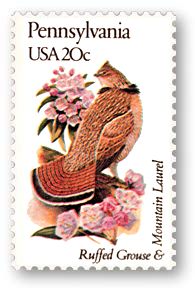
    Indiana’s wildlife authorities report that the number of ruffed grouse (Bonasa umbellus) is less than 1% of the population it was just 40 years ago. The number of breeding birds has declined steadily over the past 25 years. The bird is completely gone from at least 15 of the state’s 92 counties and in the other 77 to numbers are down drastically. Officials in 18 other states across a wide geographic area — New England, the upper Midwest, Mid-Atlantic, the Appalachians – might wind up going the route of the Hoosier State.

    Meanwhile, grouse hunting seasons go on as scheduled. Ohio’s opened back on Oct. 13 and will run through Jan. 31. The bag limit is two a day. Kentucky’s season is in now and will run through the end of February. The daily limit is four. Any hunter putting a daily limit in the game bag is worthy of a big silver and gold trophy.

    Source: Porthmouth Daily Times, 25 November 2018
    https://www.portsmouth-dailytimes.com/opinion/33191/ruffed-grouse-an-endangered-species

  • Pestizide sind Hauptursache des Insektensterbens

    Pestizide sind Hauptursache des Insektensterbens

    Auf Einladung des Bund für Umwelt und Naturschutz Deutschland (BUND) referierte der Insektenforscher Thomas Hörren vom Entomologischen Verein Krefeld (EVK) im Möllner Quellenhof vor 90 Besuchern über deren bahnbrechende Studie zum Thema “Rückgang der Insekten-Biodiversität”. An zahlreichen Standorten ausschließlich in Schutzgebieten hatte der EVK 27 Jahre lang die Insektenfauna untersucht. Aufgrund des enormer Datenbestand und der wissenschaftlichen Methodik waren die Entomologen in der Lage, nicht nur den schleichenden Verlust an Arten, sondern auch an Insekten-Biomasse zu dokumentieren. Danach hat die Insektenbiomasse im Zeitraum von 1990 bis 2017 im Jahresmittel um über 75 Prozent abgenommen, in den Sommermonaten sogar um über 85 Prozent. Da die Forscher keinen Zugang auf die landwirtschaftlich konventionell genutzten Flächen hatten, wird zukünftig wissenschaftlich zu prüfen sein, ob der überwältigend große Ursachenkomplex „unknown“ damit im Zusammenhang steht, was erwartet wird.

    Zum Einfluss der konventionellen Landwirtschaft berichtete Thomas Hörren über Vergleichsuntersuchungen aus dem Jahr 2013 in England, die belegen, dass in weiträumig nicht landwirtschaftlich genutzten Gebieten die Artenzahl und Biomasse der Insekten konstant waren, in landwirtschaftlich konventionell genutzten Gebieten dagegen stark abfallend waren wie in Deutschland. Hörren resümierte, dass ausgebrachte Pestizide in unserer Kulturlandschaft, auf Garten- und Landwirtschaftsflächen, Bahngleisen, in Gewerbe- und Wohngebieten, vermutlich die Hauptursache des Insektensterbens sind. Dazu werden neue Untersuchungen angestellt.

    Quelle: LOZ News, 17. November 2018
    https://www.loz-news.de/moelln/3359-pestizide-sind-hauptursache-des-insektensterbens

  • Aquatic insects linked to migratory bird breeding success

    Aquatic insects linked to migratory bird breeding success

    A sharp decline in migratory bird populations has flummoxed ecologists trying to pinpoint the risks faced by these birds. New Cornell research points to a possible explanation for declines: the connection between aquatic insect prey and bird reproductive performance.

    Cornell ecologists found that aquatic insects, which are much richer in highly unsaturated omega-3 fatty acids (HUFAs) compared with terrestrial insects, strongly influence the fledging success of tree swallows. The research, published Nov. 12 in the journal Ecology Letters, points to the role played by food quality – and the conservation of natural habitats critical to aquatic insect populations – in the preservation of wild bird species.

    Tree swallows, like many other migratory songbirds that rely on a diet of flying insects, have been hit by severe population declines in recent decades.

    “We’ve been studying tree swallows and their food for over 30 years, and the importance of HUFAs has really taken us by surprise,” said David Winkler, professor of ecology and evolutionary biology in the College of Agriculture and Life Sciences.

    HUFAs, which are important nutrients during development for humans as well as wild birds, are abundant in aquatic insects and algae but are scarce in terrestrial insects as well as in most plants and seeds. Using data obtained over 24 years of regular insect sampling at the Cornell Experimental Ponds, the researchers found that variation in aquatic insect biomass while parents were feeding chicks had a very strong effect on the fledging success of the birds.

    This was most strongly felt one week after hatching, when chicks undergo rapid growth as the parents hunt nearby prey and bring meals to their young. The strong effect of HUFA-rich aquatic prey suggests that chicks are gaining the key nutrient that terrestrial prey lack, according to Cornelia Twining, Ph.D. ’18.

    “This work validates what we’ve found about the importance of HUFAs for tree swallows and other aquatic insect-eating birds in previous experimental studies, and shows that seemingly subtle nutritional differences can have real impacts on bird breeding success in nature, Twining said.

    Source: Cornell Chronicle, November 16, 2018
    http://news.cornell.edu/stories/2018/11/aquatic-insects-linked-migratory-bird-breeding-success

  • Chlorpyrifos: Zulassungsstudie verschwieg offenbar potenzielle Gesundheitsgefahren

    Chlorpyrifos: Zulassungsstudie verschwieg offenbar potenzielle Gesundheitsgefahren

    Umstrittenes Pestizid: Bei der Zulassung des umstrittenen Pflanzenschutzmittels Chlorpyrifos sind offenbar gravierende Fehler passiert. Denn wie sich nun herausstellt, haben die Behörden für ihr Bewertungsverfahren eine fragwürdige Studie akzeptiert. Die von der Industrie finanzierte Untersuchung wies bei dem Mittel demnach deutliche Effekte auf die Gehirnentwicklung von ungeborenen Ratten nach – verschwieg dieses Ergebnis jedoch. Dies stellt nach Ansicht der Forscher nun die grundsätzliche Sicherheit des europäischen Zulassungsverfahrens in Frage. Das umstrittene Pestizid steht seit Jahren im Verdacht, die Gehirnentwicklung Ungeborener zu stören – und als Folge später zu verminderter Intelligenz oder Aufmerksamkeitsstörungen bei den betroffenen Kindern zu führen.

    In diesem Zusammenhang haben Wissenschaftler um Axel Mie vom Karolinska-Institut in Stockholm nun eine brisante Entdeckung gemacht: Erste Hinweise auf dieses potenzielle Gesundheitsrisiko könnte es bereits gegeben haben, bevor Chlorpyrifos 2006 in der Europäischen Union zugelassen wurde. Zu diesem Schluss kommen die Forscher, nachdem sie Rohdaten einer Studie des Pestizidherstellers Dow Agro Sciences ausgewertet haben, die damals Teil des europäischen Zulassungsverfahrens war.

    In der von dem Hersteller finanzierten Studie ging es darum, in Tierversuchen mögliche Effekte des Pestizids auf die neuronale Entwicklung zu untersuchen. “Wir haben uns das Untersuchungsdesign und die Rohmaterialien noch einmal genau angesehen und einige Mängel entdeckt”, berichtet Mie. Dem Team zufolge geht aus den Rohdaten unter anderem eindeutig hervor, dass sich das Mittel bei Ratten im Mutterleib auf das Wachstum des Kleinhirns auswirkt – und zwar bereits in niedrigen Dosierungen. Im Fazit der Studie ist von diesem Ergebnis allerdings keine Rede.

    Wie Mie und seine Kollegen berichten, lautet die Schlussfolgerung der Autoren stattdessen: Selbst bei den höchsten getesteten Dosierungen seien keine Effekte auf die Gehirnentwicklung feststellbar gewesen. Sind hier durch mangelnde Sorgfalt Fehler passiert oder wurden Gesundheitsgefahren sogar bewusst heruntergespielt?

    Klar ist: Die zuständigen Behörden haben für das Zulassungsverfahren eine fehlerhafte Studie akzeptiert. Nach Ansicht der Wissenschaftler stellt sich damit nun grundsätzlich die Frage, wie sicher das europäische Zulassungssystem für Pestizide ist. “Es besteht offenbar das Risiko, dass die Ergebnisse Industrie-finanzierter Toxizitätstests nicht korrekt wiedergegeben werden. Dies erschwert es den Behörden, die Sicherheit der Mittel richtig zu bewerten”, konstatiert Mie.

    Quelle: Scinexx, 19.11.18
    http://www.scinexx.de/wissen-aktuell-23378-2018-11-19.html

  • Oorzaken van de achteruitgang van natuur en landschap  in Noordoost Twente

    Oorzaken van de achteruitgang van natuur en landschap in Noordoost Twente

    N.a.v. de gemeenteraadsverkiezingen van 21 maart 2018 informeerde de werkgroep Behoud Twents Landschap de Twentse bevolking over de stand van zaken van natuur en landschap in Noordoost Twente. Hieronder een aantal feiten en constateringen:

    1. Hoogleraar Siepel: ‘Twentse bodemfauna zo dood als een pier’

    De bodemfauna op het platteland in Twente is nagenoeg verdwenen. Dat zegt Henk Siepel, hoogleraar dierecologie aan de Radboud Universiteit. “Het ziet er groen uit, maar het is zo dood als een pier.”

    2. Onze insecten sterven massaal.

    Wetenschappers meten een reductie van 75% van alle insecten: de insecten zijn de basis van de voedselketen in de natuur. Het verdwijnen van de insecten zal grote gevolgen hebben voor het totale ecosysteem

    3. De afgelopen decennia zijn het aantal houtwallen en bosjes in heel Twente dramatisch gedaald.

    Kijk op topotijdreis.nl en vergelijk het landschap in 1945 – 1970 en 2017. Zie bijvoorbeeld: Breembroekshoek noordelijk van Tubbergen, Steenmaten Klein Agelo en Looweide bij Saasveld

    4. De Casco-regeling, van de gemeenten uit Noordoost Twente, bepaalt dat 52% van het totale grondgebied onder het dynamische landschap (schaalvergroting) valt en 32% in beperkte mate.

    Dat betekent dat de hierin aanwezige landschapselementen (niet zijnde casco houtwallen) “verplaatsbaar’ zijn. Dus eeuwenoude eiken worden vervangen door kleine boompjes van 1 m hoog. Het duurt vervolgens 4 generaties voordat deze boompjes weer monumentale eiken zijn. Door deze regeling zullen de komende jaren 1000-den eiken, beuken, essen e.d. verdwijnen in ons Twentse landschap en worden vervangen door sprietjes. Kijk wat er gebeurd is in Fleringen ten westen van de stoplichten. Een totaal on-Twents landschap is daar gecreëerd.

    5. De kapverordening uit 2015 van de gemeenten Tubbergen en Dinkelland heeft als hoofddoel, deregulering en kostenbesparing, waarbij handhaving geen prioriteit heeft.

    Wij als natuurorganisaties en vrijwilligers zijn regelmatig in het veld aanwezig en constateren veel illegale kap/verdwijningen en sluipende vernielingen van landschapselementen. De gemeenten zien vooralsnog geen reden om de kapverordening aan te passen. Dus de achteruitgang van het Twentse Landschap gaat gewoon door.

    6. Toxicoloog Henk Tennekes bevestigt dat het gebruik van het landbouwbestrijdingsmiddel neonicotinoïden een sluipmoordenaar is voor de insectenstand.

    Henk Tennekes voorspelt al sinds 2009 dat de insecten zullen uitsterven door neonicotinoïden. Deze bestrijdingsmiddelen moeten volgens ons NU worden verboden.

    7. Ecologisch bermbeheer in Tubbergen en Dinkelland van alle sloten en bermen van gemeenten, waterschappen en provincie kan ecologisch van zeer groot belang zijn bij het behoud van biodiversiteit en herstel insectenstand:

    Tot op heden hebben de gemeenten Tubbergen en Dinkelland hiervoor geen fundamentele en grootschalige plannen ontwikkeld.

    8. Recreatie en toerisme zijn voor zowel Tubbergen als Dinkelland speerpunt van beleid.

    De slogan van Tubbergen luidt: ‘Wandelgemeente bij uitstek’ en van Dinkelland: ‘Daar beleef je Twente’. Toeristen komen naar Twente voor de oude Twentse cultuur maar vooral voor de beleving van het Twentse Coulisselandschap met haar glooiende landschap, met koeien in de wei, oude Twentse erven, kronkelende beken, fraaie houtwallen, bloeiende bermen etc. Kortom om cultuur en natuur optimaal te ervaren. Toerisme is een grote inkomsten bron voor veel bewoners van beide gemeenten en levert ook veel werkgelegenheid op. In een aangetast coulisselandschap valt Twente niet te beleven.

    9. Waterbedrijven slaan alarm: Meststoffen verontreinigen het grondwater.

    Zuivering wordt steeds duurder en complexer. De Nederlandse waterbedrijven zijn bezorgd en pleiten voor maatregelen. ‘Tientallen grondwaterwinpunten in Oost- en Zuid-Nederland zijn vervuild met meststoffen. Van dat grondwater zuiver drinkwater maken wordt steeds moeilijker en duurder’.

    10. Weidevogels zijn bijna verdwenen in het Twentse landschap.

    Vogelwerkgroep uit Weerselo ‘De Grutto’ schrijft in het rapport van 2016: ‘Niet alleen de broedresultaten van het afgelopen jaar waren slecht, maar ook het alsmaar dalende aantal broedparen van kievit, grutto, wulp, tureluur en scholekster is zorgwekkend.’
    Vogelbescherming Nederland: De patrijs staat op de Rode Lijst. ‘Het toepassen van insecticiden en het verdwijnen van akkeronkruiden, overhoekjes en ruige bermen betekent, naast het verlies van dekking en nestgelegenheid, vooral een gebrek aan dierlijk voedsel voor de jongen. Met name in natte voorjaren sterven talloze jongen aan voedselgebrek.’

    Bron:
    WERKGROEP BEHOUD TWENTS LANDSCHAP
    http://bomenachterhoek.blogspot.com/2018/

  • Neonicotinoids may make young wood frogs more vulnerable to predators

    Neonicotinoids may make young wood frogs more vulnerable to predators

    Neonicotinoids are widely known for their link to declining pollinator populations, but new research finds that the ill effects of these chemicals also extends to amphibian populations. In a study published late last month, scientists from the National Wildlife Research Center in Ottawa, Canada found that chronic exposure to real-world levels of the neonicotinoid imidacloprid limits the ability of juvenile wood frogs to escape a predator attack. This research adds additional evidence that neonicotinoids are harming aquatic food chains.

    Researchers investigated the impact of neonicotinoids on the post-tadpole life stage of wood frogs, which has been identified as critical to sustaining viable populations of the species. Rather than determine acute impacts that assess how lethal a pesticide is, scientists opted to observe how wood frog behavior changes as a result of chronic, real-world exposure scenarios. In particular, scientists sought to figure out whether exposure resulted in an altered behavioral response to the presence of a predator.

    As tadpoles, wood frogs were chronically exposed to real world levels of imidacloprid (1, 10, and 100 micrograms/liter), while others were left unexposed as a control. Three weeks after metamorphosis, these frogs were placed into 10 gallon tanks for observation. The tank was split into three sections, including a small pool, a gravel area, and an area with moss intended to act as shelter. A fabricated heron head and neck was used to mimic a predator attack, and researchers were able to observe the response from a viewer outside of the tank, without disturbing the frogs. Researchers observed whether the frog responded to the presence of the predator, how it responded, how quickly it moved, and whether it used shelter or refuge.

    Wood frogs exposed to imidacloprid at 10 and 100 micrograms/liter are significantly less likely to actively respond to the attack by moving in any way (such as jumping or crouching) compared to unexposed control frogs. Frogs contaminated with imidacloprid are also more likely to remain in the area of the attack. While both control and exposed frogs use refuge in a similar way, researchers concluded that these results indicate neonicotinoids may make young wood frogs more vulnerable to predators. By impacting the ability for the frogs to assess and respond to the presence of a predator, neonicotinoids may be having subtle, but important, effects on frog survival.

    Significantly, the impact of pesticides on animal behavior is not adequately studied, and often not considered by regulatory authorities. However, similar behavioral impacts are likely playing into neonicotinoid-associated declines with pollinator populations as well. In bees, these chemicals have been shown to interfere with foraging, memory, and learning.

    Source: Beyond Pesticides, 15 Nov 18

    Neonicotinoids Found to Change Frog Behavior

  • Bespuitingen op akkers laten sporen na in de bodem

    Bespuitingen op akkers laten sporen na in de bodem

    In meer dan 80 procent van de Europese landbouwbodems worden één of meerdere gewasbeschermingsmiddelen aangetroffen. Dat blijkt uit een onderzoek van Wageningen Universiteit, dat gepubliceerd is in het wetenschappelijk magazine Science of the Total Environment. De wetenschappers onderzochten de aanwezigheid van 76 actieve chemische stoffen in de bodems van landbouwpercelen in elf Europese landen. Zoals je kan verwachten, worden er van de middelen die boeren spuiten op hun percelen sporen teruggevonden in de bodem. Het onderzoeksteam analyseerde stalen van de bovenlaag van 317 Europese landbouwpercelen, waarop verschillende gewassen geteeld worden zoals aardappelen, tarwe, maïs, groenten en wijndruiven. Die kwamen van elf Europese landen: Portugal, het Verenigd Koninkrijk, Denemarken, Italië, Griekenland, Spanje, Hongarije, Polen, Nederland, Frankrijk en Duitsland. Zij werden geselecteerd omdat ze een groot landbouwareaal hebben en een in verhouding hoog gebruik van gewasbeschermingsmiddelen.

    De meest voorkomende sporen van gewasbeschermingsmiddelen die teruggevonden werden, waren glyfosaat en zijn chemische verbinding aminomethylfosfoonzuur (AMPA) en afbraakstoffen van het insecticide DDT – dat al decennia verboden is in Europa – en de breed werkende fungiciden boscalid, epoxiconazool en tebuconazool. Het hoogste aantal pesticiden dat is aangetroffen in de bodem, was op een perceel waar 2,87 milligram per kilogram aarde gemeten werd.

    Bron: VILT, 16-11-18
    http://www.vilt.be/bespuitingen-op-akkers-laten-sporen-na-in-de-bodem