Auteur: Henk Tennekes

  • The EPA is giving the green light to some pesticides without enough data to prove they are safe, a report for Congress warns

    The EPA is giving the green light to some pesticides without enough data to prove they are safe, a report for Congress warns

    In a 52-page report released Monday, the Government Accountability Office raises concerns about EPA’s method of granting conditional approval for new uses of pesticides in advance of receiving full reports from the manufacturers to support the safety of their use. The findings in the report come amid growing concern over the effects of pesticides on humans and the environment, which have been linked to neurological disorders and cancer, among other things.
    EPA officials, in response to recommendations in GAO’s report, “EPA Should Take Steps To Improve Its Oversight Of Conditional Registrations,” have agreed to update their systems to allow for the easier tracking of conditional registrations and better monitor submission of the needed data. However, the agency in a July 18 letter to Alfredo Gomez, GAO’s acting director, also defends its conditional registration program. While EPA has “made mistakes in how it has identified the states of conditionally and unconditionally registered pesticides” and has limitations in tracking the submission of data, “all conditionally registered products meet applicable legal standards, and pesticides have not been allowed in the marketplace without adequate testing to ensure safety.

    In a 52-page report released Monday, the Government Accountability Office raises concerns about EPA’s method of granting conditional approval for new uses of pesticides in advance of receiving full reports from the manufacturers to support the safety of their use. The findings in the report come amid growing concern over the effects of pesticides on humans and the environment, which have been linked to neurological disorders and cancer, among other things.
    EPA officials, in response to recommendations in GAO’s report, “EPA Should Take Steps To Improve Its Oversight Of Conditional Registrations,” have agreed to update their systems to allow for the easier tracking of conditional registrations and better monitor submission of the needed data. However, the agency in a July 18 letter to Alfredo Gomez, GAO’s acting director, also defends its conditional registration program. While EPA has “made mistakes in how it has identified the states of conditionally and unconditionally registered pesticides” and has limitations in tracking the submission of data, “all conditionally registered products meet applicable legal standards, and pesticides have not been allowed in the marketplace without adequate testing to ensure safety.

    Read more: http://www.politico.com/story/2013/09/epa-pesticide-approvals-report-96567.html#ixzz2ealMt5W9

  • UK Government rejects recommendations to save bees from pesticides

    UK Government rejects recommendations to save bees from pesticides

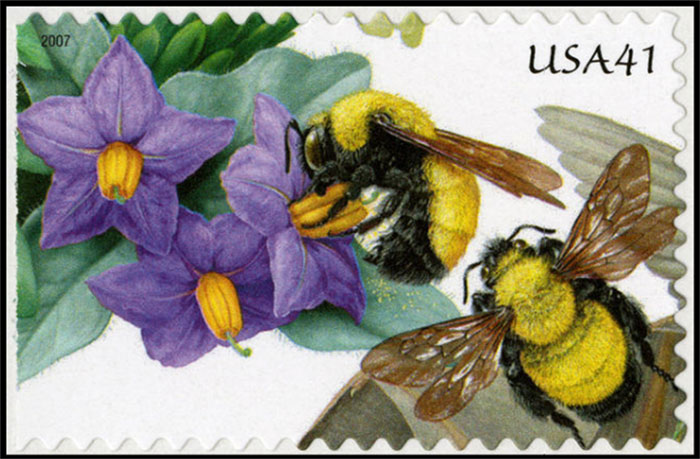
    In its response, published today, the Government misrepresents its own science in deciding not to implement recommendations to save pollinators from neonicotinoid pesticides. In March, following extensive evidence gathering, the Environmental Audit Committee published its ‘Pollinators and Pesticides’ report, concluding that neonicotinoids are having an “especially deleterious impact on insect pollinators”. However, Government has decided that it:-
    • Will not improve the transparency of the regulatory process so that studies done by pesticide companies are in the public domain, stating that “the cost of publishing this information, even on the internet, would be substantial”.
    • Will not raise the UK’s environmental protection standards by including other pollinators in the national risk assessment process.
    • Will not ban all amenity and garden use of neonicotinoids.
    • Will not set up a pollinator monitoring scheme – although this is not ruled out for the future.

    In its response, published today, the Government misrepresents its own science in deciding not to implement recommendations to save pollinators from neonicotinoid pesticides. In March, following extensive evidence gathering, the Environmental Audit Committee published its ‘Pollinators and Pesticides’ report, concluding that neonicotinoids are having an “especially deleterious impact on insect pollinators”. However, Government has decided that it:-
    • Will not improve the transparency of the regulatory process so that studies done by pesticide companies are in the public domain, stating that “the cost of publishing this information, even on the internet, would be substantial”.
    • Will not raise the UK’s environmental protection standards by including other pollinators in the national risk assessment process.
    • Will not ban all amenity and garden use of neonicotinoids.
    • Will not set up a pollinator monitoring scheme – although this is not ruled out for the future.

    Worst of all, in rejecting the many scientific papers that have shown impacts of neonicotinoid pesticides on pollinators, the Government misrepresents its own bumblebee study. The Food and Environment Research Agency (Fera) study published in March has been widely recognised as being deeply flawed. Despite the small number of samples and methodology problems, the study revealed significant effects of neonicotinoids on bumblebees, with residues of clothianidin predicting low queen production, and a relationship between thiamethoxam and colony mass. It is disingenuous for the Government to state that “The Fera study found no relationship between colony growth and neonicotinoid residues within pollen and nectar in the colonies.”
    The Government confirmed that it will reluctantly implement the EU wide partial ban on the three most widely used neonicotinoids after the European Food Standards Agency concluded that they represented a high risk to Honeybees.
    Buglife CEO Matt Shardlow commented “We are again disappointed that Government has rejected the recommendations from another independent body that has urged action to protect the environment from these bee killing pesticides.”
    Given this further evidence of inaction Buglife will be writing to the Government to establish if the current review of neonicotinoid use announced by their Chemicals Regulation Directorate in April, but not mentioned in the Government response to the EAC, is still underway and if it will address a full range of environmental concerns.

    Source: Buglife, 10 September 2013 (press release)

  • Nefyto noemt het voorgenomen verbod van staatssecretaris Mansveld ten aanzien van het gebruik van gewasbeschermingsmiddelen buiten de landbouw onverantwoord

    Nefyto noemt het voorgenomen verbod van staatssecretaris Mansveld ten aanzien van het gebruik van gewasbeschermingsmiddelen buiten de landbouw onverantwoord

    Nefyto, de belangenorganisatie voor de Nederlandse agrochemische industrie, noemt het voorgenomen verbod van staatssecretaris Mansveld van Infrastructuur en Milieu ten aanzien van het gebruik van gewasbeschermingsmiddelen buiten de landbouw onverantwoord en onaanvaardbaar. De organisatie wil samen met andere belanghebbende partijen in gesprek gaan met de staatssecretaris en ook met de partijen in de Tweede Kamer over aanpassing van de voorstellen. Nefyto roept andere belanghebbenden bij het behoud van het gebruik van gewasbeschermingsmiddelen buiten de landbouw op hun stem ook te laten horen. Staatssecretaris Mansveld heeft de Tweede Kamer via een brief laten weten dat zij het gebruik van gewasbeschermingsmiddelen buiten de landbouw wil verbieden. In juli 2013 stelde zij al vergaande maatregelen aan de Tweede Kamer voor. Zonder overleg met partijen die belang hebben bij gebruik en verkoop van deze producten, heeft zij nu besloten tot een vrijwel volledig verbod op het gebruik van bestrijdingsmiddelen buiten de landbouw. Nefyto vindt dit voornemen onverantwoord en onaanvaardbaar. In een reactie schrijft de toxicoloog Henk Tennekes dat de agrochemische industrie halsstarrig vasthoudt aan haar belangen en weigert compromissen te sluiten. Daarmee verspeelt de agrochemische industrie haar geloofwaardigheid en dat kan er toe leiden dat de sector op een bepaald moment ook niet meer serieus genomen wordt, aldus Tennekes.

    Nefyto, de belangenorganisatie voor de Nederlandse agrochemische industrie, noemt het voorgenomen verbod van staatssecretaris Mansveld van Infrastructuur en Milieu ten aanzien van het gebruik van gewasbeschermingsmiddelen buiten de landbouw onverantwoord en onaanvaardbaar. De organisatie wil samen met andere belanghebbende partijen in gesprek gaan met de staatssecretaris en ook met de partijen in de Tweede Kamer over aanpassing van de voorstellen. Nefyto roept andere belanghebbenden bij het behoud van het gebruik van gewasbeschermingsmiddelen buiten de landbouw op hun stem ook te laten horen. Staatssecretaris Mansveld heeft de Tweede Kamer via een brief laten weten dat zij het gebruik van gewasbeschermingsmiddelen buiten de landbouw wil verbieden. In juli 2013 stelde zij al vergaande maatregelen aan de Tweede Kamer voor. Zonder overleg met partijen die belang hebben bij gebruik en verkoop van deze producten, heeft zij nu besloten tot een vrijwel volledig verbod op het gebruik van bestrijdingsmiddelen buiten de landbouw. Nefyto vindt dit voornemen onverantwoord en onaanvaardbaar. In een reactie schrijft de toxicoloog Henk Tennekes dat de agrochemische industrie halsstarrig vasthoudt aan haar belangen en weigert compromissen te sluiten. Daarmee verspeelt de agrochemische industrie haar geloofwaardigheid en dat kan er toe leiden dat de sector op een bepaald moment ook niet meer serieus genomen wordt, aldus Tennekes.

    De particuliere tuinbezitter komt door het plan van Mansveld met lege handen te staan. Een effectieve beheersing van slakken, onkruid, insecten en schimmels is straks niet meer mogelijk. Als alternatief noemt de staatssecretaris het gebruik van kokend water, branders, chloor en schoonmaakazijn. Zij erkent dat hieraan risico’s voor de consument zijn verbonden, maar meent deze met voorlichting te kunnen minimaliseren. De vraag rijst waarom zij dit risico wil lopen als alternatief voor beoordeelde en toegelaten gewasbeschermingsmiddelen, waarover via het etiket en in de tuinvakhandel veel voorlichting wordt gegeven, stelt Nefyto.

    De brancheorganisatie denkt dat het plan van Mansveld zal verder leiden tot een levendig grensverkeer van particulieren die in het buitenland gewasbeschermingsmiddelen zullen aankopen. De voorgenomen verboden zullen eveneens grote gevolgen hebben voor gemeenten, sportclubs, openbaar vervoer en eigenaren van bedrijfsterreinen. Voor deze partijen zijn grote kostenverhogingen aan de orde, bijvoorbeeld voor bestrijding van onkruid of van insecten in sportvelden. Een aantal belanghebbende organisaties heeft zich in de afgelopen maanden hierover al tot de Tweede Kamer gewend.

    Heldere argumenten voor de aanscherping van het beleid – anders dan enkele algemeenheden en de politieke wens van een aantal Kamerleden – zijn niet in de brief terug te lezen, stelt Nefyto. Er zijn geen nieuwe schadelijke nevenwerkingen aan het licht getreden, noch is het beleidsvoornemen anderszins wetenschappelijk onderbouwd. Dit terwijl staatssecretaris Dijksma van Economische Z de Tweede Kamer in de afgelopen periode steeds heeft laten weten dat het gewasbeschermingsbeleid op een wetenschappelijke basis zal worden gevoerd. Blijkens de brief is het ook nog maar de vraag of er een juridische grondslag wordt gevonden voor de voorgenomen verboden.

    Nefyto is geschokt door het feit dat de Staatssecretaris een streep wil halen door het toegestane gebruik van door het College toelating gewasbeschermingsmiddelen en biociden zorgvuldig beoordeelde producten. Hierdoor leidt de sector een enorme economische schade. Met dit beleid komt het vertrouwen om te investeren in toelatingen van gewasbeschermingsmiddelen in Nederland, ook voor de land- en tuinbouwsector, ernstig onder druk te staan.

    bron: Nefyto, 06/09/13 & Groene Ruimte
    http://www.groeneruimte.nl/nieuws/artikel.html?id=151814

  • Tree frogs do not appear to have a future in Australia

    Tree frogs do not appear to have a future in Australia

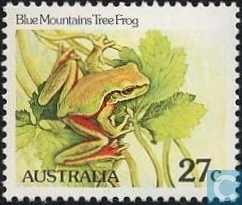
    Litoria is a genus of Hylidae tree frogs native to Australia, the Bismarck Archipelago, the Solomon Islands, New Guinea, the Lesser Sunda Islands, the Moluccan Islands, and Timor. They are sometimes collectively referred to as Australasian treefrogs. In Australia, some of these species are either facing an extremely high risk of extinction, or have numbers which decreased (or will) by 80% within three generations, or may even be extinct. Examples are listed below.

    Litoria is a genus of Hylidae tree frogs native to Australia, the Bismarck Archipelago, the Solomon Islands, New Guinea, the Lesser Sunda Islands, the Moluccan Islands, and Timor. They are sometimes collectively referred to as Australasian treefrogs. In Australia, some of these species are either facing an extremely high risk of extinction, or have numbers which decreased (or will) by 80% within three generations, or may even be extinct. Examples are listed below.

    – Booroolong Frog (Litoria booroolongensis) Found right through New South Wales, this frog is found only in streams of the western Great Dividing Range. This species was once abundant in streams above about 200 m, until drastic declines began to occur in the Northern Tablelands in northern New South Wales. The introduction of fish, such as trout, and the chytrid fungus are believed to be the main causes for decline.

    = Yellow-spotted Tree Frog (Litoria castanea) is a critically endangered species of frog that is endemic to southeastern Australia. Its natural habitats are temperate grassland, rivers, intermittent rivers, swamps, freshwater lakes, intermittent freshwater lakes, freshwater marshes, intermittent freshwater marshes, and ponds.

    – Armoured Frog (Litoria lorica). This wet tropics tree frog was rediscovered in 2008 in a tiny population on the Atherton Tablelands. This species was first discovered in 1976 and is known from four localities: Alexandra Creek, Hilda Creek (Cape Tribulation NP), Roaring Meg Cascades, and Mossman Bluff Creek (Daintree NP), north-eastern Queensland—between 640 and 1,000 m (2,100 and 3,300 ft) in altitude—and the historical extent of the species only was 120 km2 (46 sq mi). Despite once being relatively common, the armoured frog has fallen in to rapid decline, and was not seen from 1991 until 2008, when a small population was rediscovered and confirmed to be of this species.

    – Kuranda Tree Frog (Litoria myola). Another tree frog from the wet tropics, this species is found in patches around Cairns.

    – Mountain Mistfrog (Litoria nyakalensis). This frog from the wet tropics was last recorded in 1990.

    – Peppered Tree Frog (Litoria piperata). This species was formerly known from five streams at elevations of 800-1120 m draining east in the Northern Tablelands of NSW from Gibraltar Range in the north to Armidale in the south. After searches in these streams and adjacent areas, this species has not be located in the wild since the 1970s.

    – Spotted Tree Frog (Litoria spenceri). A frog from the rocky gullies of the southern Great Dividing Range. It is endemic to Australia. Its natural habitats are subtropical or tropical moist lowland forests, subtropical or tropical moist montane forests, and rivers.

    Sources: This website and Wikipedia
    http://en.wikipedia.org/wiki/Litoria

  • Australia is home to some unique critters, but it also has one of the highest extinction rates in the world

    Australia is home to some unique critters, but it also has one of the highest extinction rates in the world

    Built on a fragile balance of predators and prey, Australia’s various ecosystems are highly susceptible to change. When human intervention consistently alters an ecosystem, this balance can be upset, seriously threatening the biodiversity. While all species are important to an ecosystem, ‘keystone’ species are particularly vital. These are often top predators such as crocodiles, because of the role they play in controlling prey. The southern cassowary, however, is also a keystone species as it spreads the seeds of as many as 238 species of plants in northern Queensland. “Importantly, research clearly shows that biodiversity contributes significantly to our survival, well-being and enjoyment of life, so when we lose species at the rates that we’re currently witnessing, we should be gravely concerned,” says Dr Euan Ritchie an ecologist at Deakin University in Melbourne. “Losing any one species is a tragedy, but what is even more concerning is the loss of a species’ ecological role following its extinction,” says Euan. “If we were to lose dingoes, as an example, we also lose their ability to control pest species such as foxes and cats, and overabundant herbivores, [like] pigs, goats and kangaroos, which has widespread and often negative impacts across the whole system.”

    Built on a fragile balance of predators and prey, Australia’s various ecosystems are highly susceptible to change. When human intervention consistently alters an ecosystem, this balance can be upset, seriously threatening the biodiversity. While all species are important to an ecosystem, ‘keystone’ species are particularly vital. These are often top predators such as crocodiles, because of the role they play in controlling prey. The southern cassowary, however, is also a keystone species as it spreads the seeds of as many as 238 species of plants in northern Queensland. “Importantly, research clearly shows that biodiversity contributes significantly to our survival, well-being and enjoyment of life, so when we lose species at the rates that we’re currently witnessing, we should be gravely concerned,” says Dr Euan Ritchie an ecologist at Deakin University in Melbourne. “Losing any one species is a tragedy, but what is even more concerning is the loss of a species’ ecological role following its extinction,” says Euan. “If we were to lose dingoes, as an example, we also lose their ability to control pest species such as foxes and cats, and overabundant herbivores, [like] pigs, goats and kangaroos, which has widespread and often negative impacts across the whole system.”

    Australia’s 10 most critically endangered species:

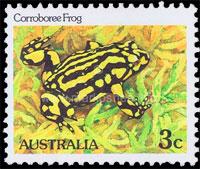
    1. Southern corroboree frog – Pseudophryne corroboree
    IUCN listing: Critically Endangered

    Inhabiting a small corridor on the New South Wales and Victorian border, the tiny southern corroboree frog – which is the size of a fingernail – is running on the edge of extinction. Fewer than 150 breeding males are thought to survive across 23 sites that were surveyed in 2001. The main suspected threat is the chytrid fungi. Although many studies have been undertaken, the success has been limited, as they have not been able to confirm the critical threat to the frogs. A studying conducted between 1997 and 1999 revealed that the frogs were present in 213 sites around the NSW and Victorian border but this number dropped only 79 sites as of 2001, revealing how quickly these animals were disappearing. A captive-breeding program, led by Sydney’s Taronga Zoo, reintroduced 800 eggs into Kosciuszko National Park in 2012.

    2. Margaret River burrowing crayfish – Engaewa pseudoreducta
    IUCN listing: Critically Endangered

    With only two known populations, the Margaret River burrowing crayfish is highly endangered. Even one of these may no longer exist, as there have been no sightings since 1985. The threats are almost all attributed to human activity. Land clearing is the biggest danger, as crayfish habitat can be eroded or contaminated by farming, mining and urban development. Feral pigs also damage habitat. No current population information exists but it is estimated that numbers are very low because of the restricted range of the species.

    3. Lord Howe Island phasmid – Dryococelus australis
    IUCN listing: Critically Endangered

    Once plentiful on Lord Howe Island, the phasmid came under serious threat in 1918 when black rats were introduced. They are now only found in the wild on Balls Pyramid, a rocky outcrop off the coast of the main island. In addition to the threat posed by rodents, the land lobster’s food source is also threatened. Morning glory, an invasive plant, competes with the land lobster’s only known source of food, the Melaleuca howeana. Plans to control these threats and introduce the species back to the mainland are projected to start in the next three years. A program at Melbourne Zoo has bred more than 9,000 of the insects in captivity, some of which have been returned to the wild.

    4. Bornemissza’s stag beetle – Hoplogonus bornemisszai
    EPBC listing: critically endangered

    Playing a key role in decomposing organic material, Bornemissza’s stag beetle is located in a highly specific area in north-eastern Tasmania. Growing to between 1.5 and 2.5cm long, these beetles are thought to numbers from several hundred to several thousand. Their larvae incubate underground and upon hatching, come to the surface and feeds with adults on the decaying organic material in the Tasmanian bushland. The beetle’s diet is the prime threat to existence: they require a thick layer of decomposing leaf matter. With the expansion of farmland and clear-cutting of Tasmanian forests, the beetle is under serious threat.

    5. Derwent River sea star – Marginaster littoralis
    EPBC listing: critically endangered

    Isolated to the chilly waters of the Derwent River estuary near Hobart, Tasmania, this sea star has been reduced to five known populations. While research on the sea star is sparse and the exact population size is not known, it has been reduced to very low levels and may already been wiped out. The greatest threat has been the introduction of the New Zealand sea star. At the beginning of the 20th century, oysters were shucked in the estuary and animals that were previously confined to New Zealand waters were introduced to Tasmania. No recovery plan for this species has been drafted as research on them is too sparse.

    6. Southern bent-wing bat – Miniopterus schreibersii bassanii
    EPBC listing: critically endangered

    The southern bent-wing bat hides in caves between Victoria and South Australia during the daylight hours and hunts after dark. The bat has been in decline for the last two decades, losing 67 per cent of its population in that time and numbering around 40,000 individuals. A recovery plan has been drafted by biologists to further determine causes of decline. The bats are particularly prominent in the Naracoorte caves, a nesting site where females return to give birth. Current threats include habitat loss to grazing land, pesticides, and disruption of roosting habits from humans.

    7. Orange-bellied parrot – Neophema chrysogaster
    IUCN listing: Critically Endangered

    Found predominantly darting through the Victorian and Tasmanian scrub, the orange-bellied parrot is highly endangered. This parrot has been in serious decline since the beginning of the 1900s, with fewer than 90 adults left in the wild. During the 1930s this bird was commonly found on both sides of the Bass Strait. Current threats are human related as its breeding and feeding habits occur almost entirely in small scrub, roughly a metre of the ground. This is the same vegetation that is often cleared for farm land and invaded by foreign plants. Living an average of just over two years, its reproductive cycle further inhibits the parrots ability to rebuild its population.

    8. Short-nosed sea snake – Aipysurus apraefrontalis
    IUCN listing: Critically Endangered

    Slithering through the waters of north-western Western Australia, the short-nosed sea snake has undergone serious population changes in the past several years. Once abundantly found hunting on reefs on the coast near Broome, the snake hasn’t been sighted on its common habitat on the Ashmore reef in any of the recent surveys since 2005. With a six-to-seven month gestation period, the snake is unlikely to breed more than once a year. Studies blame climate change for the decrease in numbers as the snake’s native waters are warming and causing changes to the ecosystem. Second to climate change is the effects of mining chemicals that are bleaching the reef and causing further detriment to the reefs.

    9. Red-finned blue-eye fish – Scaturiginichthys vermeilipinnis
    IUCN listing: Critically Endangered

    Making to the IUCN’s 100 most endangered species list, the red-finned blue-eye has shocked scientists with its ability to survive. Living exclusively around Edgbaston in central western Queensland, this tiny, brightly coloured fish has shown that it can live in some of the most extreme ecosystems over long periods of time. Expanding agricultural projects threatened the species at one point, but in 2008 the fish’s precious habitat was purchased by Bush Heritage Australia and is now protected. The main threat to the blue-eye is an invasive species, gambusia, a fish introduced to control mosquitoes but which spread with flooding. Gambusia’s population has exploded, endangering the blue-eye through competition for resources. The blue-eye’s current population is estimated at 2000-4000 individuals and needs to be intensively managed.

    10. Armoured mist frog – Litoria lorica
    IUCN listing: Critically Endangered

    The elusive and mysterious armoured mist frog is a species that baffled scientists with its decline in population. None of these frogs had been sighted after 1994 – until 2008 when a small population was discovered in northern Queensland living near the waterfall frog. Very little is known about the armoured mist frog and threats facing it. Its habitat has been protected since 1988 and corridors throughout possible migratory routes are still intact. One assumed threat has been chytrid fungal disease, which has killed amphibians around the world.

    Source: Australian Geographic, 4 October 2012
    http://www.australiangeographic.com.au/journal/australias-most-endangered-species.htm

  • A torchbearer for all species under threat

    A torchbearer for all species under threat

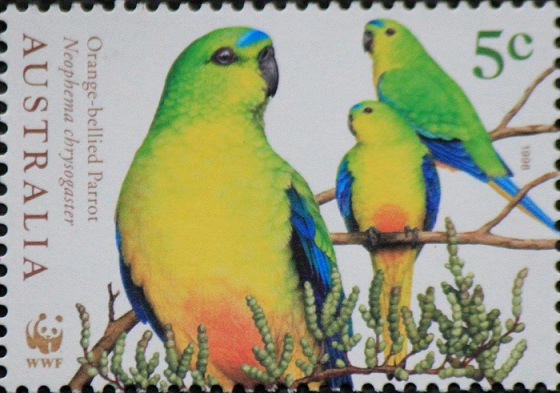
    The orange-bellied parrot (Neophema chrysogaster) has a history as colourful as its feathers. The bird was first described by ornithologist John Latham in 1790. He gave it the specific name, chrysogaster, Ancient Greek for ‘golden belly’. It has previously been known as the Orange-breasted Parrot – a name given to the Orange-bellied Parrot in 1926 by the Royal Australasian Ornithologists Union or RAOU (now Birdlife Australia) when the word ‘belly’ was considered inelegant. The orange-bellied parrot is also one of Australia’s most endangered birds, listed as ”critically endangered” – one step above ”extinct”. There are fewer than 50 in the wild. Every summer the birds breed in south-west Tasmania. There they are met by a recovery team which monitors them, provides feed and maintains nest boxes. In colder months the parrots, one of only two species of parrot which migrate , go to the saltmarshes of Victoria and South Australia. The diet consists of seeds and berries of small coastal grasses and shrubs. Australia has one of the worst extinction records in the world. When a plant or animal is put on the national threatened species list a recovery plan is supposed to be drawn up. Often one is not, nor is there a guarantee funding will exist to enact any plan. Conservation biology expert at the Northern Territory’s Charles Darwin University, professor John Woinarski, says it is almost impossible to work out what is spent on recovering threatened species each year. ”But the likelihood is that it has been decreasing in the last one to two decades, whereas the problem is becoming greater,” he said.

    The orange-bellied parrot (Neophema chrysogaster) has a history as colourful as its feathers. The bird was first described by ornithologist John Latham in 1790. He gave it the specific name, chrysogaster, Ancient Greek for ‘golden belly’. It has previously been known as the Orange-breasted Parrot – a name given to the Orange-bellied Parrot in 1926 by the Royal Australasian Ornithologists Union or RAOU (now Birdlife Australia) when the word ‘belly’ was considered inelegant. The orange-bellied parrot is also one of Australia’s most endangered birds, listed as ”critically endangered” – one step above ”extinct”. There are fewer than 50 in the wild. Every summer the birds breed in south-west Tasmania. There they are met by a recovery team which monitors them, provides feed and maintains nest boxes. In colder months the parrots, one of only two species of parrot which migrate , go to the saltmarshes of Victoria and South Australia. The diet consists of seeds and berries of small coastal grasses and shrubs. Australia has one of the worst extinction records in the world. When a plant or animal is put on the national threatened species list a recovery plan is supposed to be drawn up. Often one is not, nor is there a guarantee funding will exist to enact any plan. Conservation biology expert at the Northern Territory’s Charles Darwin University, professor John Woinarski, says it is almost impossible to work out what is spent on recovering threatened species each year. ”But the likelihood is that it has been decreasing in the last one to two decades, whereas the problem is becoming greater,” he said.

    Read more:
    http://www.theage.com.au/environment/animals/migrating-parrot-a-torchbearer-for-all-species-under-threat-20130906-2taib.html#ixzz2eDogRCPc
    http://en.wikipedia.org/wiki/Orange-bellied_Parrot

  • Invertebrates are the little creatures that run the world – without them, all life would mostly disappear … within a few months

    Invertebrates are the little creatures that run the world – without them, all life would mostly disappear … within a few months

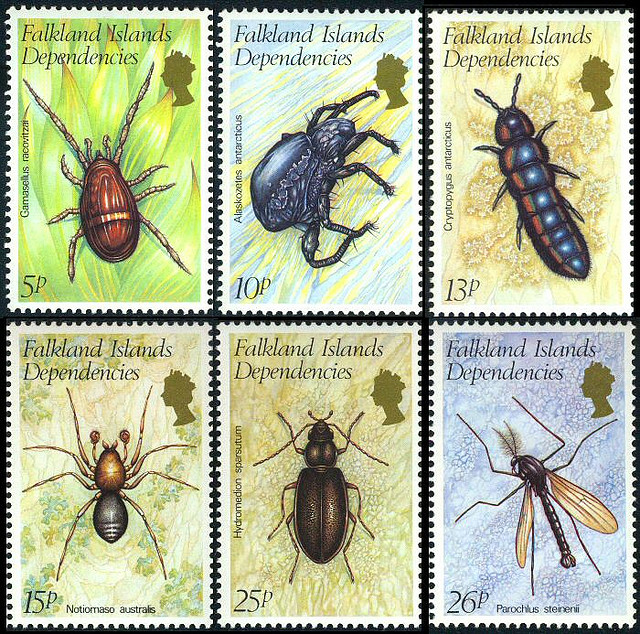
    Mammals, along with birds, reptiles and amphibians, are an extremely small percentage of all biodiversity (~0.4%). Invertebrates on the other hand, make up the vast majority of biodiversity (~80%) but feature such unloved creatures as leeches, parasitic worms, spiders, snails, lice and aphids. The most insidious threat to invertebrates is that we haven’t documented their diversity. For most invertebrate groups, we don’t know what species are out there and therefore struggle to identify those that are threatened. The specific consequences of neglecting invertebrates in land management are largely unknown. But these creatures perform key functions within ecosystems, from pollination to controlling population explosions of other species of plant and animal. Invertebrates recycle waste; without dung beetles for example, we would be hip-deep in manure. Pollination by insects helps plants cross-pollinate and produce viable seeds, resulting in fruit, grains (such as wheat and canola) and honey. Without invertebrate pollination we would lose countless species of plants including the majority of orchids. Invertebrates provide a vast food supply for the survival of other invertebrates (spiders, scorpions, tiger beetles), vertebrates (lizards, frogs, birds, bats, fish, insectivorous mammals) and some plants (carnivorous plants). There has even been talk of edible insects being introduced to the western diet for their health and environmental benefits. As the famous entomologist EO Wilson notes, invertebrates are “the little creatures that run the world”; without them, all life “would mostly disappear … within a few months”.

    Mammals, along with birds, reptiles and amphibians, are an extremely small percentage of all biodiversity (~0.4%). Invertebrates on the other hand, make up the vast majority of biodiversity (~80%) but feature such unloved creatures as leeches, parasitic worms, spiders, snails, lice and aphids. The most insidious threat to invertebrates is that we haven’t documented their diversity. For most invertebrate groups, we don’t know what species are out there and therefore struggle to identify those that are threatened. The specific consequences of neglecting invertebrates in land management are largely unknown. But these creatures perform key functions within ecosystems, from pollination to controlling population explosions of other species of plant and animal. Invertebrates recycle waste; without dung beetles for example, we would be hip-deep in manure. Pollination by insects helps plants cross-pollinate and produce viable seeds, resulting in fruit, grains (such as wheat and canola) and honey. Without invertebrate pollination we would lose countless species of plants including the majority of orchids. Invertebrates provide a vast food supply for the survival of other invertebrates (spiders, scorpions, tiger beetles), vertebrates (lizards, frogs, birds, bats, fish, insectivorous mammals) and some plants (carnivorous plants). There has even been talk of edible insects being introduced to the western diet for their health and environmental benefits. As the famous entomologist EO Wilson notes, invertebrates are “the little creatures that run the world”; without them, all life “would mostly disappear … within a few months”.

    Source: The Conversation, 6 September 2013
    http://theconversation.com/slimy-scaly-and-forgotten-we-need-to-fund-our-invertebrates-15375

  • Silent Springs and Summers

    Silent Springs and Summers

    Rachel Carson described her fears about the use of systemic insecticides like neonicotinoids 50 years ago when she wrote Silent Spring. Now, we are witnessing first-hand as her predictions become a reality: “The world of systemic insecticides is a weird world, surpassing the imaginings of the brothers Grimm… It is a world where the enchanted forest of the fairy tales has become the poisonous forest in which an insect that chews a leaf or sucks the sap of a plant is doomed. It is a world where a flea bites a dog, and dies because the dog’s blood has been made poisonous, where an insect may die from vapors emanating from a plant it has never touched, where a bee may carry poisonous nectar back to its hive and presently produce poisonous honey.” Compounding the problem is a shift away from integrated pest management (IPM) and agroecological practices, systems that, to varying degrees, mitigate the indiscriminate use of toxic chemicals. Industrial agriculture practices rely on pesticides whether they are needed or not, thus putting an unsustainable load of chemicals into the environment and adding weight to Carson’s frightening predictions. As one report notes, “Over the last 20 years or so, the shift in pest management has moved away from reactive to prophylactic. Now many fungicides, pesticides and herbicides are applied to the seeds before sowing. Application of the chemical before pest damage has occurred often involves routine spraying and pre-emptive treatments.”

    Rachel Carson described her fears about the use of systemic insecticides like neonicotinoids 50 years ago when she wrote Silent Spring. Now, we are witnessing first-hand as her predictions become a reality: “The world of systemic insecticides is a weird world, surpassing the imaginings of the brothers Grimm… It is a world where the enchanted forest of the fairy tales has become the poisonous forest in which an insect that chews a leaf or sucks the sap of a plant is doomed. It is a world where a flea bites a dog, and dies because the dog’s blood has been made poisonous, where an insect may die from vapors emanating from a plant it has never touched, where a bee may carry poisonous nectar back to its hive and presently produce poisonous honey.” Compounding the problem is a shift away from integrated pest management (IPM) and agroecological practices, systems that, to varying degrees, mitigate the indiscriminate use of toxic chemicals. Industrial agriculture practices rely on pesticides whether they are needed or not, thus putting an unsustainable load of chemicals into the environment and adding weight to Carson’s frightening predictions. As one report notes, “Over the last 20 years or so, the shift in pest management has moved away from reactive to prophylactic. Now many fungicides, pesticides and herbicides are applied to the seeds before sowing. Application of the chemical before pest damage has occurred often involves routine spraying and pre-emptive treatments.”

    Source:
    REPORT BY CENTER FOR FOOD SAFETY ON POLLINATOR HEALTH, RESEARCH, AND FUTURE EFFORTS FOR POLLINATOR PROTECTION, S E P T E M B E R 2 0 1 3 (ATTACHED)

  • 2012 takes toll on prairie chicken and grouse numbers on the Fort Pierre National Grassland

    2012 takes toll on prairie chicken and grouse numbers on the Fort Pierre National Grassland

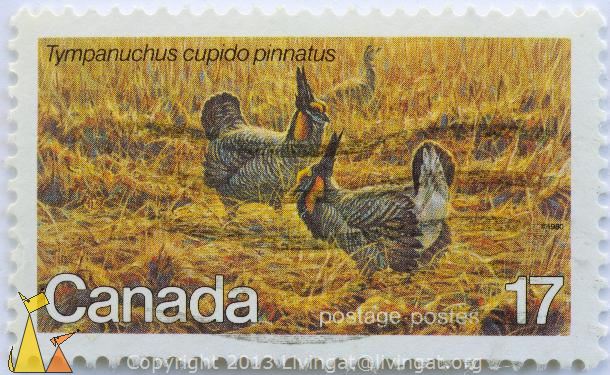
    Prairie chicken and grouse numbers are down sharply from the numbers of 2012, a wildlife biologist who monitors those populations on the Fort Pierre National Grassland says. Wildlife biologist Ruben Mares of the U.S. Forest Service said this year’s survey on the grassland’s Cedar Creek Monitoring Unit from April 29 through May 16 showed that the number of male prairie grouse sighted had declined significantly from the 2012 survey. Greater prairie chicken (Tympanuchus cupido) were down 37 percent, from 393 males in 2012 to 246 in 2013. Sharp-tailed grouse (Tympanuchus phasianellus, previously Tetrao phasianellus), were down by 57 percent, from 82 males in 2012 to 35 in 2013.

    Prairie chicken and grouse numbers are down sharply from the numbers of 2012, a wildlife biologist who monitors those populations on the Fort Pierre National Grassland says. Wildlife biologist Ruben Mares of the U.S. Forest Service said this year’s survey on the grassland’s Cedar Creek Monitoring Unit from April 29 through May 16 showed that the number of male prairie grouse sighted had declined significantly from the 2012 survey. Greater prairie chicken (Tympanuchus cupido) were down 37 percent, from 393 males in 2012 to 246 in 2013. Sharp-tailed grouse (Tympanuchus phasianellus, previously Tetrao phasianellus), were down by 57 percent, from 82 males in 2012 to 35 in 2013.

    Source:
    Capital Journal, 4 September 2013
    http://www.capjournal.com/news/takes-toll-on-prairie-chicken-grouse-numbers/article_1f414086-15e3-11e3-8b0b-0019bb2963f4.html

  • Wildlife biologist Neil Dawe says he wouldn’t be surprised if the generation after him witnesses the extinction of humanity

    Wildlife biologist Neil Dawe says he wouldn’t be surprised if the generation after him witnesses the extinction of humanity

    All around him, even in a place as beautiful as the Little Qualicum River estuary, his office for 30 years as a biologist for the Canadian Wildlife Service, he sees the unravelling of “the web of life.” “It’s happening very quickly,” he says. Registered Professional Biologist Neil Dawe has written over 80 papers on birds, ecology and the environment. He received Environment Canada’s Regional Citation of Excellence Award for his work in co-founding and co-chairing the Brant Wildlife Festival. He received the Outstanding Service Award from the Federation of B.C. Naturalists and the Ian McTaggart-Cowan Award of Excellence in Biology from the Association of Professional Biologists of B.C. In 2006, he retired from the Canadian Wildlife Service, Environment Canada, after 31 years of managing National Wildlife Areas and Migratory Bird Sanctuaries on Vancouver Island. He is President of the Qualicum Institute: www.qualicuminstitute.ca.

    All around him, even in a place as beautiful as the Little Qualicum River estuary, his office for 30 years as a biologist for the Canadian Wildlife Service, he sees the unravelling of “the web of life.” “It’s happening very quickly,” he says. Registered Professional Biologist Neil Dawe has written over 80 papers on birds, ecology and the environment. He received Environment Canada’s Regional Citation of Excellence Award for his work in co-founding and co-chairing the Brant Wildlife Festival. He received the Outstanding Service Award from the Federation of B.C. Naturalists and the Ian McTaggart-Cowan Award of Excellence in Biology from the Association of Professional Biologists of B.C. In 2006, he retired from the Canadian Wildlife Service, Environment Canada, after 31 years of managing National Wildlife Areas and Migratory Bird Sanctuaries on Vancouver Island. He is President of the Qualicum Institute: www.qualicuminstitute.ca.

    A recent news report focussed on the precipitous decline of barn swallows on Vancouver Island. That is certainly true, says Dawe, who starting in 1978 worked on the Royal BC Museum’s four-volume Birds of British Columbia project, but it doesn’t tell the whole story. People will focus on the extinction of a species but not “the overall impact,” he says. When habitat diversity is lost, “it changes the whole dynamic. “The fork-tailed aerobatic wonders mate for life and year after year the couples, migrating from as far as South America, would return to the same nests in the old barn. However, their numbers began to decline as the area was developed. The trees were logged and milled, parts of the estuary were mined for gravel, rock walls were built to stop erosion, and a straight channel, in use to this day, was dug so the river no longer wound through the estuary, shifting course with the seasons. All that meant fewer insects and that meant weak and hungry barn swallows, now susceptible to the larvae of the blowfly. One by one, the nesting pairs slipped away over decades, Dawe says. “When I left there were none.”

    There are still barn swallows in the area but there aren’t as many: between 1966 and 2011, barn swallows in B.C. have declined at a rate of 4.96% a year. They’re among more 30 B.C. birds known to be in decline, including the iconic Great Blue Heron (1.7% per year), the Rufous Hummingbird (1.91%), the beautiful killdeer (3.8%), the American Goldfinch (4.85%) and so on. Forty-five of the 57 coastal waterbirds using the Strait of Georgia were in decline between 1999 and 2011, including the Brant sea goose (4.7% per year), Greater Yellowlegs (10.5%) and Western Grebe (16.4%).

    But it isn’t just birds. The inconspicuous Pacific crabapple, once a mainstay of the estuary, is all but gone. Dawe points to a scrawny metre-high specimen near a road. “I’d guess it’s a hundred years old,” he says. The Douglas fir and Sitka spruce are all but gone. The life-giving grassy carex, as Dawe and fellow biologist Andy Stewart reported in 2010, is being stripped from the estuary by resident Canada geese at a rate of 15-18 metric tonnes a year. “Most of these plants here now are invasive species,” he says.

    Indeed, in his 35 years of studying what is supposed to be a wildlife sanctuary, it has almost all changed, and it no longer supports the life it once did. It looks green and serene but to Dawe, “It’s a veritable desert here.” The loss to the food web is a loss to the web of life, he says, and people are a huge part of that web. Indeed, it’s an overabundance of people, perhaps by five-fold, which is driving resource extraction and consumption beyond a sustainable planet, he says.

    “Economic growth is the biggest destroyer of the ecology,” he says. “Those people who think you can have a growing economy and a healthy environment are wrong. “If we don’t reduce our numbers, nature will do it for us.” He isn’t hopeful humans will rise to the challenge and save themselves. “Everything is worse and we’re still doing the same things,” he says. “Because ecosystems are so resilient, they don’t exact immediate punishment on the stupid.”
    Source:
    http://www.oceansidestar.com/news/web-of-life-unravelling-wildlife-biologist-says-1.605499#sthash.OdE5LH3P.gbpl