Auteur: Henk Tennekes

  • First the Bees, Now the Birds: The Pesticides Silencing America’s Songbird Population

    First the Bees, Now the Birds: The Pesticides Silencing America’s Songbird Population

    The very same pesticides accused of causing massive declines in honeybee populations are just as culpable in the loss of songbirds, finds a new report published by the American Bird Conservancy. The pesticides in question, neonicotinoids, are based on nicotine, a natural insecticide, which causes paralysis and, eventually, death in both insects and non-target animals, such as honeybees and songbirds. Introduced in the early 1990s, neonicotinoids are now the most widely used insecticides in the world. And that popularity carries a heavy burden, the report found. After analyzing more than 200 studies conducted by both independent and industry-funded scientists, the authors called for the Environmental Protection Agency (EPA) to ban these pesticides’ use until a more thorough investigation into their safety is conducted. “A single corn kernel coated with a neonicotinoid can kill a songbird,” said Cynthia Palmer, coauthor of the report and pesticides-program manager for the conservancy, in a statement accompanying the report. “Even a tiny grain of wheat or canola treated with the oldest neonicotinoid—called imidacloprid—can fatally poison a bird. And as little as 1/10th of a neonicotinoid-coated corn seed per day during egg-laying season is all that is needed to affect reproduction.”

    The very same pesticides accused of causing massive declines in honeybee populations are just as culpable in the loss of songbirds, finds a new report published by the American Bird Conservancy. The pesticides in question, neonicotinoids, are based on nicotine, a natural insecticide, which causes paralysis and, eventually, death in both insects and non-target animals, such as honeybees and songbirds. Introduced in the early 1990s, neonicotinoids are now the most widely used insecticides in the world. And that popularity carries a heavy burden, the report found. After analyzing more than 200 studies conducted by both independent and industry-funded scientists, the authors called for the Environmental Protection Agency (EPA) to ban these pesticides’ use until a more thorough investigation into their safety is conducted. “A single corn kernel coated with a neonicotinoid can kill a songbird,” said Cynthia Palmer, coauthor of the report and pesticides-program manager for the conservancy, in a statement accompanying the report. “Even a tiny grain of wheat or canola treated with the oldest neonicotinoid—called imidacloprid—can fatally poison a bird. And as little as 1/10th of a neonicotinoid-coated corn seed per day during egg-laying season is all that is needed to affect reproduction.”

    A 2013 study by prominent wildlife toxicologist, Dr. Pierre Mineau (presented at a Congressional Briefing) identified pesticides as the most likely leading cause of the widespread decline in grassland bird numbers challenging the widely held assumption that loss of habitat is the primary cause of population declines. His study further suggests that we need to rein in the use of lethal pesticides…and that we need to be especially careful about any new pesticide we introduce into these ecosystems such as the neonicotinoid insecticides. Why? “…Neonicotinoids are lethal to birds as well as to the aquatic ecosystems on which they depend”. Neonicotinoids have the potential to adversely affect other natural resources, as described by Dr. Mineau, as follows. “The environmental persistence of the neonicotinoids, their propensity for runoff and for groundwater infiltration, and their cumulative and largely irreversible mode of action in invertebrates raise environmental concerns.” (Mineau and Palmer, p.3, “The Impact of the Nations’Most Widely Used Insecticides on Birds: Neonicotinoid Insecticides and Birds” ABC, March 2013). The group is accusing the EPA and other regulatory agencies around the world of woefully underestimating the damage these pesticides are doing to birds and non-target insects. The problem, the report found, is that the agencies are using birds like mallard ducks, which are more resistant to the pesticides, to determine neonicotinoids’ toxicity, and in doing so, the agencies are exposing more vulnerable species to the pesticides as they continue to grant approvals for new uses for them.
    Sources: Rodale News & Rachel Carson Council (attached)
    http://www.rodalenews.com/pesticides-and-songbirds

  • Neural Systems Governed by Nicotinic Acetylcholine Receptors: Emerging Hypotheses

    Neural Systems Governed by Nicotinic Acetylcholine Receptors: Emerging Hypotheses

    Cholinergic neurons and nicotinic acetylcholine receptors (nAChRs) in the brain participate in diverse functions: reward, learning and memory, mood, sensory processing, pain, and neuroprotection. Nicotinic systems also have well-known roles in drug abuse. Here, we review recent insights into nicotinic function, linking exogenous and endogenous manipulations of nAChRs to alterations in synapses, circuits, and behavior. We also discuss how these contemporary advances can motivate attempts to exploit nicotinic systems therapeutically in Parkinson’s disease, cognitive decline, epilepsy, and schizophrenia.

    Cholinergic neurons and nicotinic acetylcholine receptors (nAChRs) in the brain participate in diverse functions: reward, learning and memory, mood, sensory processing, pain, and neuroprotection. Nicotinic systems also have well-known roles in drug abuse. Here, we review recent insights into nicotinic function, linking exogenous and endogenous manipulations of nAChRs to alterations in synapses, circuits, and behavior. We also discuss how these contemporary advances can motivate attempts to exploit nicotinic systems therapeutically in Parkinson’s disease, cognitive decline, epilepsy, and schizophrenia.

    Source:
    Miwa JM et al. (2011) Neuron 70: 20-23

  • Impact of the neonicotinoid acetamiprid on immature stages of the predator Eriopis connexa

    Impact of the neonicotinoid acetamiprid on immature stages of the predator Eriopis connexa

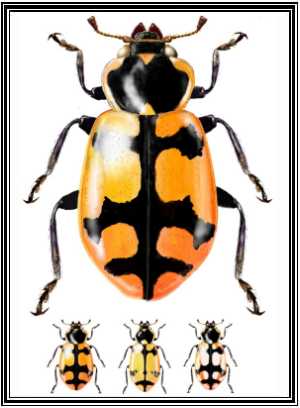
    Eriopis connexa is a native coccinelid predator in the Neotropical Region. In Argentina it is commonly found associated to sucking pests in several crops and among them aphids and whiteflies. These pests are usually controlled with newly developed systemic insecticides, such as the neonicotinoids. However, the compatibility between selective pesticides and natural enemies is required before incorporating them in integrated pest management (IPM) packages. Within this frame, the objective of this study was to evaluate the side effect of various concentrations/doses of one commonly used neonicotinoid in vegetal crops, acetamiprid, on immature stages of E. connexa by dipping or topical exposure for eggs and larvae, respectively. Acetamiprid reduced egg hatching from 34 to 100 %. Moreover, the embryogenesis was disrupted by insecticide at early embryo
    stage at all tested concentrations. Second larval instar was more susceptible to acetamiprid than the fourth one and this susceptibility was positively related with the tested concentrations. On the other hand, the survival reduction at larval stage reached 100 % from 20 mg a.i./L (10 % of maximum field concentration). Besides, the reproduction of the females developed from topical bioassays on fourth instar larvae was strongly affected, with reduction in fecundity and fertility from 22 to 44 % and from 37 to 45 %, respectively. Overall the results showed a high toxicity of acetamiprid on immature stages of E. connexa, demonstrating that this broadly used insecticide could reduce biocontrol services provided by this predator and could also likely disturb IPM programs.

    Eriopis connexa is a native coccinelid predator in the Neotropical Region. In Argentina it is commonly found associated to sucking pests in several crops and among them aphids and whiteflies. These pests are usually controlled with newly developed systemic insecticides, such as the neonicotinoids. However, the compatibility between selective pesticides and natural enemies is required before incorporating them in integrated pest management (IPM) packages. Within this frame, the objective of this study was to evaluate the side effect of various concentrations/doses of one commonly used neonicotinoid in vegetal crops, acetamiprid, on immature stages of E. connexa by dipping or topical exposure for eggs and larvae, respectively. Acetamiprid reduced egg hatching from 34 to 100 %. Moreover, the embryogenesis was disrupted by insecticide at early embryo
    stage at all tested concentrations. Second larval instar was more susceptible to acetamiprid than the fourth one and this susceptibility was positively related with the tested concentrations. On the other hand, the survival reduction at larval stage reached 100 % from 20 mg a.i./L (10 % of maximum field concentration). Besides, the reproduction of the females developed from topical bioassays on fourth instar larvae was strongly affected, with reduction in fecundity and fertility from 22 to 44 % and from 37 to 45 %, respectively. Overall the results showed a high toxicity of acetamiprid on immature stages of E. connexa, demonstrating that this broadly used insecticide could reduce biocontrol services provided by this predator and could also likely disturb IPM programs.

    Source:
    Marilina N. Fogel et al. (2013) Ecotoxicology
    DOI 10.1007/s10646-013-1094-5

  • Biographer Linda Lear says the outspoken environmentalist Rachel Carson was heroic partly for what she didn’t talk about

    Biographer Linda Lear says the outspoken environmentalist Rachel Carson was heroic partly for what she didn’t talk about

    A year and a half ago, with symposia and reverential speeches, the United States and much of the world marked the 50th anniversary of Rachel Carson’s book “Silent Spring” and her courageous warnings about environmental threats. Monday — the 50th anniversary of Carson’s death — is an opportune time to admire her equally courageous silence about matters that could have blunted the book’s impact. Most people are surprised to learn that Carson lived only about 18 months after the publication of “Silent Spring.” On April 14, 1964, a month shy of her 57th birthday, Carson died in the Maryland suburb of Silver Spring of complications of metastasizing breast cancer. Sadly, she had become a polarizing figure in an increasingly vituperative political atmosphere. Carson did not live to see the positive impact of her message — prohibition of the agrichemicals aldrin, dieldrin and heptachlor; passage of the National Environmental Policy Act; establishment of the U.S. Environmental Protection Agency; the banning of DDT in the United States in 1972 and the end of its use by much of the world’s agriculture within the half-century.

    A year and a half ago, with symposia and reverential speeches, the United States and much of the world marked the 50th anniversary of Rachel Carson’s book “Silent Spring” and her courageous warnings about environmental threats. Monday — the 50th anniversary of Carson’s death — is an opportune time to admire her equally courageous silence about matters that could have blunted the book’s impact. Most people are surprised to learn that Carson lived only about 18 months after the publication of “Silent Spring.” On April 14, 1964, a month shy of her 57th birthday, Carson died in the Maryland suburb of Silver Spring of complications of metastasizing breast cancer. Sadly, she had become a polarizing figure in an increasingly vituperative political atmosphere. Carson did not live to see the positive impact of her message — prohibition of the agrichemicals aldrin, dieldrin and heptachlor; passage of the National Environmental Policy Act; establishment of the U.S. Environmental Protection Agency; the banning of DDT in the United States in 1972 and the end of its use by much of the world’s agriculture within the half-century.

    Nor did Carson live long enough to accept the Presidential Medal of Freedom (Jimmy Carter awarded it to her posthumously in 1980) or to be present in 2008 when the post office in her hometown of Springdale was named in her honor. She never celebrated the first Earth Day or rejoiced in the rise of environmental consciousness worldwide that her work inspired.

    But Carson did live long enough to witness the positive impact of her work in three important public events.

    First, she appeared with quiet confidence on the acclaimed TV documentary “CBS Reports,” the forerunner of “60 Minutes,” in April 1963. Although many in the petrochemical industry and medical establishment rudely demanded Carson’s “silence,” her appearance reached millions of people who may not have read her book but were convinced by her evidence that pesticides were being misused. Many also were appalled by the ignorance of government officials who were interviewed on the show.

    Second, she lived long enough to be vindicated by the President’s Science Advisory Committee’s report on “Use of Pesticides.” The report, released May 15, 1963, affirmed her allegations and concluded with astonishing candor that until the publication of “Silent Spring,” the American public did not know that pesticides were toxic.

    Finally, in early June, despite increasingly serious angina attacks, she testified before two Senate subcommittees on the interdependence of the human and natural worlds and the dangers that unregulated pesticide use posed to both.

    The public was shocked by the news of Carson’s death on that warm spring evening 10 months later. Only a few people had known about the desperate state of her health. Jay McMullen, the producer of the “CBS Reports” segment, suspected she was ill when he interviewed her in Maine in September 1962. Two months later, when he and Eric Sevareid, the distinguished host of the show, finished filming at Carson’s home in Silver Spring, Sevareid expressed shock at how ill Carson appeared. He urged McMullen to finish the program quickly, telling him, “You’ve got a dead leading lady.”

    Between the publication of “Silent Spring” and her death, Carson purposely deflected speculation about her health.

    In June 1963, when Carson appeared before California Sen. Abraham Ribicoff’s subcommittee investigating pesticides and other pollutants, she spoke energetically and eloquently for 40 minutes. Few of the mostly male participants noticed that she wore an ill-fitting dark wig and used a cane. After that, Carson rarely appeared in public. Most of her friends, even some of her closest ones in Maryland, simply never knew she had been battling cancer for much of the nearly five years it had taken to research and write “Silent Spring.”

    Why did Rachel Carson so deliberately cut herself off from the support of caring friends? The answer lies only partly in her desire for privacy and her determination to let nothing stand in the way of finishing her book or defending its conclusions.

    She admitted to some friends that she had endured a “catalog of illnesses” while writing the book. Iritis had impaired her vision, and there were weeks when she could not see to read or write. She had undergone a radical mastectomy in 1960 but had no further treatments. A year later, however, it was clear the cancer had spread. As she wrote to a friend, “I suppose it’s a futile effort to keep one’s private affairs private. Somehow I have no wish to read of my ailments in the gossip columns. Too much comfort for the chemical companies.”

    She tried gold treatments for her arthritis and biweekly radiation for the cancer. She rejected chemotherapy because she knew it would make her too weak to continue writing or to defend the book, assuming she even was able to finish it. Desperate to keep going, she submitted to experimental surgery at the Mayo Clinic.

    But another equally compelling reason for her silence was political, not personal. The chemical companies and the pesticide industry trade group, the National Agricultural Chemicals Association, spent well over a quarter of a million dollars to try to persuade the public that Rachel Carson was merely an alarmist. Had they learned of her cancer, they would have used it to undermine her science and question her motives and objectivity. Had her cancer been made public, critics would have said her environmental charges were simply the warped ideas of a dying woman. Financially vulnerable, she also kept silent to protect the welfare of her mother and a young nephew she had adopted.

    Carson also kept quiet about other matters. She wanted to support several controversial causes that she cared about passionately. I consider these her “subversive” activities because had her support been made public, she would have risked even crueler characterizations than that of a “nun of nature,” a sentimental “woman who loved cats,” or a “spinster” overwrought about genetics, as critics all had labeled her. A supporter of such “fringe” groups could not be taken seriously as a scientist whose conclusions might influence government policy.

    As a longtime member of the Animal Welfare Institute, Carson quietly supported the bill that became the basis for the Laboratory Animal Welfare Act of 1966. In letters to congressmen, she also strongly opposed the use of the steel-jaw leg-hold traps and the poisoning of wildlife, particularly wolves and coyotes. She agreed to serve on the board of the Defenders of Wildlife and wrote the foreword to Ruth Harrison’s scathing book “Animal Machines,” in which the British activist exposed the mistreatment of caged farm animals. Any of these activities, if aired publicly, would have opened her to charges of unscientific emotionalism and sentimentalism or worse.

    Most “subversive” of all, Carson supported Jerome Rodale and the farm movement that promoted the benefits of organically grown food. As an expert on the dangers of pesticides in agriculture, she saw the potential public health benefits of organic food. But in the early 1960s, organic farming was considered by many as “quackery.” Had Carson’s support been known to the chemical lobby, it would have further jeopardized her claims in “Silent Spring.”

    In 1963, attacks on Carson became increasingly personal and vituperative as the chemical industry and big agriculture were put on the defensive. In one of her last speeches, Carson observed, “In spite of the truly marvelous inventiveness of the human brain, we are beginning to wonder whether our power to change the face of nature should not have been tempered with wisdom for our own good, and with a greater sense of responsibility for the welfare of generations to come.” These are not the words of a revolutionary, but the thoughtful, prophetic words of someone who cared passionately for the preservation of the Earth and all its creatures.

    When Sen. Ribicoff learned of Rachel Carson’s death, he spoke for many Americans in telling reporters, “Today we mourn a great lady. All mankind is in her debt.” Half a century later, I’d edit his eulogy to add that if future springs are not silent but alive with the twittering of birds and the buzzing of bees, and if today we have a keener appreciation of the importance of preserving the wonder of nature for ourselves and our children’s children, then all of creation is in her debt.

    ■ ■ ■ ■ ■
    Source: Linda Lear in the Pittsburgh Post Gazette, 13 April 2014
    http://www.post-gazette.com/opinion/Op-Ed/2014/04/13/THE-NEXT-PAGE-Rachel-Carsons-silence/stories/201404130058
    Bethesda, Md., resident and Winchester Thurston School graduate Linda Lear (linda@lindalear.com) is the author of “Rachel Carson: Witness for Nature.” Her donation of Carson materials and other historic items created the Linda Lear Center for Special Collections and Archives at Connecticut College. She has a doctorate in U.S. political history from George Washington University.

    Read more: http://www.post-gazette.com/opinion/Op-Ed/2014/04/13/THE-NEXT-PAGE-Rachel-Carsons-silence/stories/201404130058#ixzz2ylSOAvtv

  • Heute lebt die Grauammer in Nordrhein-Westfalen fast nur noch in der Zülpicher Börde

    Heute lebt die Grauammer in Nordrhein-Westfalen fast nur noch in der Zülpicher Börde

    Die Bestände vieler bekannter Feldvogelarten wie Rebhuhn, Feldlerche, Feldsperling, Kiebitz und Grauammer sind in Nordrhein-Westfalen stark zurückgegangen und zum Teil in ihrer Existenz bedroht. Heute lebt die Grauammer in Nordrhein-Westfalen fast nur noch in der Zülpicher Börde. Um das Aussterben dieses Ackervogels zu verhindern, führen die Biologischen Stationen der Region ein Projekt durch. Ziel des dreijährigen Projektes ist es, den Lebensraum der Grauammer in der modernen Agrarlandschaft zu verbessern. Die gewonnenen Erkenntnisse fließen in den Schutz der Feldvögel ein. Die Bereitschaft der Landwirte, die vorgeschlagenen Maßnahmen in der Region umzusetzen, hat in den letzten Jahren zugenommen.

    Die Bestände vieler bekannter Feldvogelarten wie Rebhuhn, Feldlerche, Feldsperling, Kiebitz und Grauammer sind in Nordrhein-Westfalen stark zurückgegangen und zum Teil in ihrer Existenz bedroht. Heute lebt die Grauammer in Nordrhein-Westfalen fast nur noch in der Zülpicher Börde. Um das Aussterben dieses Ackervogels zu verhindern, führen die Biologischen Stationen der Region ein Projekt durch. Ziel des dreijährigen Projektes ist es, den Lebensraum der Grauammer in der modernen Agrarlandschaft zu verbessern. Die gewonnenen Erkenntnisse fließen in den Schutz der Feldvögel ein. Die Bereitschaft der Landwirte, die vorgeschlagenen Maßnahmen in der Region umzusetzen, hat in den letzten Jahren zugenommen.

    Ursachen für den Rückgang des Grauammers sind:
    – Verlust der Strukturvielfalt (Ackerränder, Gräben etc.) durch Vergrößerung der Schläge;
    – Vermehrter Anbau von Wintergetreide;
    – Rückgang von Großinsekten (z.B. Käfer, Heuschrecken, Schmetterlingsraupen durch Pflanzenschutzmittel) als wichtigste Nahrungsgrundlage der Grauammern im Sommer;
    – Zu frühe Erntezeitpunkte, wodurch die Gelege und Nester zerstört werden;
    – Verlust von ganzjährigen Brachen und damit Wegfall von Nahrungsflächen im Winter

    Quelle: siehe Beilage

  • UK adder populations are on the slide

    UK adder populations are on the slide

    The unforgettable sight of dancing adders is an overlooked spring spectacular. Liam Creedon reveals why the UK’s only poisonous snake is the most misunderstood treasure of the countryside. Going in search of the UK’s only venomous snake might, on the face of it, not seem like the sharpest of ideas. But an encounter with dancing adders, as males fight each other for breeding rites, is one of spring’s most thrilling and overlooked spectacles. Despite being small, timid and uncommon, the burden of being our only remotely dangerous reptile means an aura of fear and fascination has attached itself to the adder.

    The unforgettable sight of dancing adders is an overlooked spring spectacular. Liam Creedon reveals why the UK’s only poisonous snake is the most misunderstood treasure of the countryside. Going in search of the UK’s only venomous snake might, on the face of it, not seem like the sharpest of ideas. But an encounter with dancing adders, as males fight each other for breeding rites, is one of spring’s most thrilling and overlooked spectacles. Despite being small, timid and uncommon, the burden of being our only remotely dangerous reptile means an aura of fear and fascination has attached itself to the adder.

    The blame for this may lie with the snake’s appearance. The hypnotic zig-zag back-pattern coupled with burning, beady eyes create a somewhat malevolent impression, an impression that has become easily (but unfairly) entwined into our literature and folklore.

    An adder’s fork (tongue) is one of the witches’ ingredients for their gruesome brew in Shakespeare’s Macbeth, and an adder pops up with deadly results in Thomas Hardy’s The Return of the Native. According to legend, the battle in which King Arthur died was started when the snake put in an unexpected appearance and startled a soldier.

    But if you take a step back from the hype and look afresh at the adder (Vipera berus), a stunningly beautiful slivering success story is revealed.

    Both males and females are exquisitely marked; the males sporting coal-black back zig-zags, the females with markings etched in brown. Rather than being beady, their elliptical eyes are bewitching, amber jewels.

    And rather than lurking, poised to strike behind every bush, most adders flee terrified at the approaching vibrations of human footfall – only biting as a last resort if handled or stepped upon.

    The adder is something of a super snake, too. Its adaptability has enabled it to conquer a huge geographical range, even managing to make a home in the very un-snakelike environs of the freezing Arctic Circle.

    But it’s in the balmier conditions of the British springtime where the most memorable encounters with adders can be enjoyed.

    Late March sees the sluggish males emerge from hibernation; they can be spied in the early mornings heading for basking spots where the heat of the sun will speed up the development of their sperm. Then in April the larger females emerge, a juncture signalling the start of the ‘dancing season’.

    Or perhaps ‘Strictly Come Fighting’ would be a more appropriate term for the slivering equivalent of adders on the dance floor.

    Males painstakingly court their paramours, but if interrupted by a rival a fight – or ‘dance’ will break out. The two males rise up to swing rhythmically against each other, then they attempt to wrestle their opponent to the ground. No biting is involved during these battles with the loser slinking away once overpowered.

    Conservationists are eagerly awaiting the first snake dances of 2014 so they can begin to assess how adders fared in one of the most unusual winters in recent memory.

    Jim Foster, conservation director at Amphibian and Reptile Conservation (ARC) explains: “No one knows for sure yet how adders coped over the winter. It is possible that some have been flooded out during hibernation. Perhaps paradoxically, there is also some indication that hard, cold winters are better for temperate reptiles like adders.

    “At ARC we will be carefully assessing numbers of adders observed this spring, to see if there’s any sign of an effect from the extreme weather.

    “We have had some early reports of adders emerging in the last month, and let’s hope the survey results are encouraging.”

    Adders are found right across the UK with hotspots including south west Scotland, coastal areas of Pembrokeshire, Devon and Cornwall, heathlands in Dorset, Hampshire, Surrey, and the North York Moors.

    They can be seen in a wide variety of habitats; from bogs, downland and grassland to woodland, moorland and brownfield sites. But they prefer undisturbed heathland best – a preference that could ultimately prove their undoing.

    Heathland has been indiscriminately destroyed during the last century, affecting not only adders but also the UK’s most scarce reptile – the Smooth Snake, as well as lizards, heathland birds, plants and insects.

    Despite protection, adder populations are on the slide.

    “Sadly there are indications of a decline in UK adder numbers,” adds Foster. “We have lost populations to habitat destruction, lack of management and persecution. Our last major survey, via our National Amphibian and Reptile Recording Scheme, found adders in only 7% of survey areas.

    Read more: http://www.westernmorningnews.co.uk/UK-s-poisonous-snake-misunderstood-treasure/story-20845671-detail/story.html#ixzz2ye4TUmYg

  • Tragic Deaths of Amphibians – A Deadly Fungus is Attacking Earth’s Amphibian Species

    Tragic Deaths of Amphibians – A Deadly Fungus is Attacking Earth’s Amphibian Species

    Unfortunately, the disease seems to be winning and its price may be the extinction of frogs, toads and salamanders. The disease, called chytridiomycosis, or chytrid for short, has been decimating amphibian populations at least since the late 1980s. Amphibians (class Amphibia) are cold-blooded animals with moist hairless skin that is permeable—water can pass in and out. The word amphibian comes from the ancient Greek words amphi, meaning “both” and bios, meaning “life.” The word refers to an amphibian’s two-stage life. Nearly all amphibians live the first part of their life as water-breathing juveniles and then metamorphose into air-breathing adults. Amphibians were the first animals with backbones to adapt to life on land and they are related to reptiles.

    Unfortunately, the disease seems to be winning and its price may be the extinction of frogs, toads and salamanders. The disease, called chytridiomycosis, or chytrid for short, has been decimating amphibian populations at least since the late 1980s. Amphibians (class Amphibia) are cold-blooded animals with moist hairless skin that is permeable—water can pass in and out. The word amphibian comes from the ancient Greek words amphi, meaning “both” and bios, meaning “life.” The word refers to an amphibian’s two-stage life. Nearly all amphibians live the first part of their life as water-breathing juveniles and then metamorphose into air-breathing adults. Amphibians were the first animals with backbones to adapt to life on land and they are related to reptiles.

    Herpetologists (scientists who study amphibians and reptiles) have cataloged more than 5,000 species of amphibians. They divide amphibians into three main groups: frogs and toads, salamanders, and caecilians. The most prevalent of the amphibians, frogs and toads, account for at least 4,000 of the species.

    The salamander group, which also contains newts and mud puppies, comprises about 400 species. Members of this group normally have slender bodies, short noses and long tails. Unique among vertebrates, salamanders are capable of regenerating lost limbs, as well as other body parts. Caecilians, the rarest of amphibians, only number about 160 species. Having no limbs, they resemble earthworms.

    Amphibians live on every continent except Antarctica. While frogs are found just about everywhere, they are absent from some islands, the polar regions and the driest deserts. Salamanders, too, are widespread. Their range extends from North America to the northern part of South America. They are also found in Asia, Africa and Europe. Caecilians, on the other hand, have a smaller range. They inhabit Central and South America, parts of Southeast Asia and from India and Sri Lanka to the Philippines.

    Amphibians live in many different ecosystems. Most species require freshwater habitats such as ponds, swamps, streams or other wet environments for breeding because they lay their eggs in the water. Amphibians have been on the planet for 300 million years and have survived incredible environmental changes over time. Yet in the past few decades, scientists increasingly have become alarmed by the dramatic decline of amphibian species around the globe.

    Amphibians’ permeable skin and a two-stage life cycle make them particularly sensitive to environmental disturbances such as pollution or drought. They are excellent bio-indicators—plants and animals used to monitor the health of an environment or ecosystem. Frogs are important allies against human disease because they consume insects that carry pathogens. If all the amphibians disappear, scientists say that the earth will face great ecological consequences.

    Reasons for amphibian decline are complex and many are linked to human activities. They include the loss of habitats through wetland destruction and clear-cutting, pollution of water sources from chemicals, changes in climate and increased ultraviolet sunlight resulting from the depletion of the ozone layer. Of these, however, the chytrid fungus is the most ominous threat.

    The chytrid fungus likely originated in South Africa. The disease damages the skin of amphibians and can be highly contagious and lethal in many species. International live animal trade may have facilitated the spread of the fungus from continent to continent.

    In Central America, scientists mapped the spread of chytrid fungus since 1987 as it diffused like a wave along the isthmus. Once introduced, it spread up to 27 miles (43 km) a year. It finally jumped the Panama Canal in 2008 and put Panama’s eastern amphibian populations at risk. The chytrid fungus was reported in the wild in Australia in the mid-1990s.
    According to a 2009 National Geographic article, scientists have reported chytrid on all continents where frogs live, in 43 countries and 36 U.S. states. The fungus can survive at elevations from sea level to 20,000 feet (6,096 m) and has afflicted more than 200 species around the world so far.

    Herpetologists remain only slightly hopeful about the future of amphibians. Studies show that some salamanders and frogs have symbiotic skin bacteria that actually inhibit chytrid infection. If scientists can somehow boost the good bacteria to help lower transmission rates, then perhaps the animals can increase their own immunity. The eventual goal is to stop the epidemic outbreaks of the disease, but chances appear very slim. The disease spreads rapidly and appears impossible to contain geographically.

    Sources: GITN #989, “The Death of Frogs,” Maps.com, May 15, 2009; Holland, Jennifer S., “Vanishing Amphibians,” National Geographic, Vol. 215, No. 4, April 2009, pgs. 138-153; and http://www.upi.com/Science_News/2009/04/02/Amphibians-may-develop-fungus-immunity/UPI-77851238687343/

    Co-authors are Neal Lineback, Appalachian State University Professor Emeritus of Geography, and Geographer Mandy Lineback Gritzner. University News Director Jane Nicholson serves as technical editor. Geography in the NewsTM is solely owned and operated by Neal Lineback for the purpose of providing geographic education to readers worldwide.

  • Amphibian pandemic hits Madagascar

    Amphibian pandemic hits Madagascar

    Madagascar is one of the world’s hotspots for amphibian diversity, home to so many frog species that many of them don’t even have names. But soon the island may also harbor a fungus causing drastic declines – even extinctions – of frogs around the world. Ironically, the wildlife trade that’s often blamed for helping spread the disease may also give scientists a chance to prevent it. In a study recently published in PLoS ONE, researcher Jonathan Kolby, from the James Cook University in Australia, reported the first positive test for the deadly fungus in a shipment of frogs exported from Madagascar. His findings may give conservationists time to ramp up surveillance and create new strategies to keep the fungus at bay. “The global wildlife trade moves millions of animals annually, and I noticed how this created a scientific opportunity to sample a high volume and diversity of amphibians that are commonly exported to the U.S. for the exotic pet trade,” Kolby told mongabay.com.

    Madagascar is one of the world’s hotspots for amphibian diversity, home to so many frog species that many of them don’t even have names. But soon the island may also harbor a fungus causing drastic declines – even extinctions – of frogs around the world. Ironically, the wildlife trade that’s often blamed for helping spread the disease may also give scientists a chance to prevent it. In a study recently published in PLoS ONE, researcher Jonathan Kolby, from the James Cook University in Australia, reported the first positive test for the deadly fungus in a shipment of frogs exported from Madagascar. His findings may give conservationists time to ramp up surveillance and create new strategies to keep the fungus at bay. “The global wildlife trade moves millions of animals annually, and I noticed how this created a scientific opportunity to sample a high volume and diversity of amphibians that are commonly exported to the U.S. for the exotic pet trade,” Kolby told mongabay.com.

    Until now, Madagascar has remained unscathed by Batrachochytrium dendrobatidis, commonly called Bd or chytrid. Originally traced back to worldwide exports of chytrid-carrying African clawed frogs in the first half of the 20th century, the fungus has since leapfrogged around the world. Amphibians have tested positive for Bd in 56 of the 82 countries surveyed so far. Experts estimate that more than 200 species have gone extinct after these fungal outbreaks.

    Amphibians pick up the fungus from contaminated water supplies or skin-to-skin contact with other infected animals. The zoospores – the free-living infectious form of the fungus – attack a frog’s skin, making it thicken and slough off. The thickened skin makes it hard for afflicted amphibians to breathe or keep a healthy balance of fluid in their bodies. The frogs can quickly dehydrate, suffer cardiac arrest, and die. Yet, the disease doesn’t sicken all frogs. Some species don’t show any ill effects, but they can act as reservoirs that allow the infection to persist, as well as carry the fungus to new areas.

    In a way, conservationists have been waiting for bad news like this.

    “We already suspected that this could happen,” said Franco Andreone, chair of the Madagascar Amphibian Specialist Group. “Because the pet trade turned out to be among the easiest channels through which Bd spreads, [Kolby] had the good chance to detect chytrid in exported animals.”

    To find evidence of the disease, Kolby searched for fungal DNA on skin swabs from 565 amphibians, representing nine different frog species that were exported from Madagascar directly to the U.S. He specifically chose ones that came from habitats that would be most hospitable to the fungus.

    “Bd can’t survive extended exposure to elevated temperatures (above 28C/82F), nor exposure to complete drying,” Kolby said. “So habitats such as high elevation, with cool, humid forests are much more likely to allow Bd to thrive than lower elevation, hot, temporary aquatic habitats prone to seasonal drying.”

    Read more at http://news.mongabay.com/2014/0411-devitt-chytrid-madagascar.html#E6ZdkmPcjzCqR7vB.99, April 14, 2014

  • Diversity of Insect Nicotinic Acetylcholine Receptor Subunits

    Diversity of Insect Nicotinic Acetylcholine Receptor Subunits

    Nicotinic acetylcholine receptors (nAChRs) are ligand‑gated ion channels that mediate fast synaptic transmission in the insect nervous system and are targets of a major group of insecticides, the neonicotinoids. They consist of five subunits arranged around a central ion channel. Since the subunit composition determines the functional and pharmacological properties of the receptor the presence of nAChR families comprising several subunit‑encoding genes provides a molecular basis for broad functional diversity. Analyses of genome sequences have shown that nAChR gene families remain compact in diverse insect species, when compared to their nematode and vertebrate counterparts. Thus, the fruit fly (Drosophila melanogaster), malaria mosquito (Anopheles gambiae), honey bee (Apis mellifera), silk worm (Bombyx mori) and the red flour beetle (Tribolium castaneum) possess 10‑12 nAChR genes while human and the nematode Caenorhabditis elegans have 16 and 29 respectively. Although insect nAChR gene families are amongst the smallest known, receptor diversity can be considerably increased by the posttranscriptional processes alternative splicing and mRNA A‑to‑I editing which can potentially generate protein products which far outnumber the nAChR genes. These two processes can also generate species‑specific subunit isoforms. In addition, each insect possesses at least one highly divergent nAChR subunit which may perform species‑specific functions.

    Nicotinic acetylcholine receptors (nAChRs) are ligand‑gated ion channels that mediate fast synaptic transmission in the insect nervous system and are targets of a major group of insecticides, the neonicotinoids. They consist of five subunits arranged around a central ion channel. Since the subunit composition determines the functional and pharmacological properties of the receptor the presence of nAChR families comprising several subunit‑encoding genes provides a molecular basis for broad functional diversity. Analyses of genome sequences have shown that nAChR gene families remain compact in diverse insect species, when compared to their nematode and vertebrate counterparts. Thus, the fruit fly (Drosophila melanogaster), malaria mosquito (Anopheles gambiae), honey bee (Apis mellifera), silk worm (Bombyx mori) and the red flour beetle (Tribolium castaneum) possess 10‑12 nAChR genes while human and the nematode Caenorhabditis elegans have 16 and 29 respectively. Although insect nAChR gene families are amongst the smallest known, receptor diversity can be considerably increased by the posttranscriptional processes alternative splicing and mRNA A‑to‑I editing which can potentially generate protein products which far outnumber the nAChR genes. These two processes can also generate species‑specific subunit isoforms. In addition, each insect possesses at least one highly divergent nAChR subunit which may perform species‑specific functions.

    Corresponding Author: Andrew K. Jones—MRC Functional Genomics Unit, Department
    of Physiology, Anatomy and Genetics, University of Oxford, Oxford, OX1 3QX, UK.
    Email: andrew.jones@dpag.ox.ac.uk
    Source: Insect Nicotinic Acetylcholine Receptors, edited by Steeve Hervé Thany.

  • Dr Reese Halter: What kind of a world are we leaving for our children?

    Dr Reese Halter: What kind of a world are we leaving for our children?

    Since 2009 I’ve been writing about the plight of beleaguered honeybees due to toxic chemicals; over five billion pounds of insecticides — one third of them are lethal neonicotinoids (neonics) thrust into our biosphere each year. Neonics are a neuro-active insecticide fashioned after nicotine, neonics poison nerves and prevent acetylcholine from enabling neurons to communicate with each other. Over 10 million commercial beehives have died since 2008 — this is an epic worldwide problem. My colleague Dr Henk Tennekes reported the deadly effects of neonics on both soil organisms and their ‘knock-on-effects’ causing starvation to meadow birds and their predators Goshawks as well as contaminating waterways for many years thereafter across Western Europe. It seems that his thorough research was blatantly disregarded elsewhere around the globe by feckless government regulatory bodies. An intrepid Dr Christy Morrissey of the University of Saskatchewan set out to investigate just how wide spread the effects of neonics were across the prairies of Western Canada. Eighty to 90 percent of the wetlands she studied were contaminated with these odious poisons, which remain in toxic concentrations within the waterways for years. She too found ‘knock-on-effects’ in soils extending up the food chain, which reduced populations of many animals. Earthlings are knowingly annihilating the exquisite tapestry of life or Earth’s biodiversity. The strength of an ecosystem depends upon the diversity of species. By killing biodiversity, we are killing ourselves; and it’s happening very quickly, globally. Dr Morrissey asked some poignant questions about the food we currently produce on our globe: “Is that the cost, no birds? Or having no butterflies? Or having no bees?”

    Since 2009 I’ve been writing about the plight of beleaguered honeybees due to toxic chemicals; over five billion pounds of insecticides — one third of them are lethal neonicotinoids (neonics) thrust into our biosphere each year. Neonics are a neuro-active insecticide fashioned after nicotine, neonics poison nerves and prevent acetylcholine from enabling neurons to communicate with each other. Over 10 million commercial beehives have died since 2008 — this is an epic worldwide problem. My colleague Dr Henk Tennekes reported the deadly effects of neonics on both soil organisms and their ‘knock-on-effects’ causing starvation to meadow birds and their predators Goshawks as well as contaminating waterways for many years thereafter across Western Europe. It seems that his thorough research was blatantly disregarded elsewhere around the globe by feckless government regulatory bodies. An intrepid Dr Christy Morrissey of the University of Saskatchewan set out to investigate just how wide spread the effects of neonics were across the prairies of Western Canada. Eighty to 90 percent of the wetlands she studied were contaminated with these odious poisons, which remain in toxic concentrations within the waterways for years. She too found ‘knock-on-effects’ in soils extending up the food chain, which reduced populations of many animals. Earthlings are knowingly annihilating the exquisite tapestry of life or Earth’s biodiversity. The strength of an ecosystem depends upon the diversity of species. By killing biodiversity, we are killing ourselves; and it’s happening very quickly, globally. Dr Morrissey asked some poignant questions about the food we currently produce on our globe: “Is that the cost, no birds? Or having no butterflies? Or having no bees?”

    Author: Dr. Reese Halter in the Huff Post. Posted: 01/15/2014 9:08 am EST
    http://www.huffingtonpost.com/dr-reese-halter/bee-killing-poisons-conta_b_4599089.html