Auteur: Henk Tennekes

  • Shanghai’s unique firefly culture could be facing extinction

    Shanghai’s unique firefly culture could be facing extinction

    This is the time of the year when night life has a new meaning. The city’s fireflies, with their alluring, blinking magical displays, offer a fascinating contrast to the city’s techno-colored street and shop lighting, and many Shanghai people are setting out to spend time watching and enjoying this natural spectacle. The hunt for the fireflies has also been given a public push recently by the publication of recommended viewing spots for the tiny nocturnal creatures by the Shanghai Municipal Tourism Administration. The list of six destinations includes the highly recommended Cenbu village, a village beside Shanghai’s largest freshwater lake Dianshan Lake in Qingpu district. Other spots listed are the Shanghai Botanical Garden, the Chenshan Botanical Garden and the Shanghai Zoo.

    This is the time of the year when night life has a new meaning. The city’s fireflies, with their alluring, blinking magical displays, offer a fascinating contrast to the city’s techno-colored street and shop lighting, and many Shanghai people are setting out to spend time watching and enjoying this natural spectacle. The hunt for the fireflies has also been given a public push recently by the publication of recommended viewing spots for the tiny nocturnal creatures by the Shanghai Municipal Tourism Administration. The list of six destinations includes the highly recommended Cenbu village, a village beside Shanghai’s largest freshwater lake Dianshan Lake in Qingpu district. Other spots listed are the Shanghai Botanical Garden, the Chenshan Botanical Garden and the Shanghai Zoo.

    These are some of the last places where fireflies can be easily found in the city. Fireflies can only live where there is good quality air and water, little external lighting, lush undergrowth and little pesticide. They emit a flashing light to attract mates or prey.

    Jiang Long is the founder of the Firefly Environmental Protection Volunteers, and he told the Global Times that there are two species of fireflies chiefly found around Shanghai – one prefers a drier environment while the other thrives near water.
    But experts and activists are warning against an influx of visitors to these places and, in particular, Cenbu village. Unlike the fireflies at the botanical gardens and the zoo, which offer guided tours, the delicate creatures at the village are more vulnerable to unruly and inconsiderate tourists.

    Fu Xinhua is China’s leading firefly expert and a professor with the Huazhong Agricultural University in Wuhan. He told the Metro Express newspaper that some firefly watchers could harm the fireflies with their behavior – for example using flashlights which can disturb their mating.

    It’s a serious point. The Nanjing Daily reported that after a firefly watching area at Zijin Mountain in Nanjing was publicized last year, tourists overwhelmed the place and the species has almost vanished from the mountain.

    In fact, the number of fireflies at Cenbu village has already fallen sharply. On summer nights in 2012, up to about 3,000 fireflies were visible but last year fewer than 1,500 could be seen.

    Though there is no evidence that the visitors are the sole or major cause of the trend, villagers told eastday.com that the area had become quite popular with tourists and some city visitors seemed to enjoy catching frogs and lobsters and other wildlife.

    At the Shanghai Botanical Garden there is a summer night program for firefly watching conducted by ecologists, teachers and trained volunteers. Staff there told the Global Times that although there were no precise figures for firefly populations over the past few years, they had not noticed any decline in numbers.

    Volunteer founder Jiang told the Global Times that the Shanghai Botanical Garden firefly watch tours were the best organized of the firefly outings in the city because of the professionalism of the guides.

    “The big advantage of Shanghai Botanical Garden’s program is that the guides are experts or have completed the training course run by the Shanghai Wild Bird Society, and this has laid a solid foundation for quality firefly watching and sustainable eco-tourism.

    “Because these guides carefully explain and closely monitor the situation, any disturbance to the fireflies or their habitat is kept to a minimum,” Jiang said.

    Garden staff said the rules for going on one of their nocturnal animal programs included making sure that visitors did not use flashlights or take pictures with flash. “Talking loudly and catching fireflies were also forbidden,” a staff member said.

    Jiang agrees with this approach. “It not only satisfies the visitors’ curiosity, but gives them information about the species and might spur some to take part in protecting them.”

    He said that this year Shanghai Zoo would also have guides trained by the Shanghai Wild Bird Society working in its firefly program.

    But for Cenbu village both experts, Jiang and professor Fu, propose more radical solutions than just encouraging tourists to appreciate the natural beauty of fireflies – they want to see protection of the magical little creatures made a priority.

    Source: ECNS, July 3, 2014
    http://www.ecns.cn/2014/07-03/122169.shtml

  • Delayed and time-cumulative toxicity of imidacloprid in bees, ants and termites

    Delayed and time-cumulative toxicity of imidacloprid in bees, ants and termites

    Imidacloprid, one of the most commonly used insecticides, is highly toxic to bees and other beneficial insects. The regulatory challenge to determine safe levels of residual pesticides can benefit from information about the time-dependent toxicity of this chemical. Using published toxicity data for imidacloprid for several insect species, we construct time-to-lethal-effect toxicity plots and fit temporal power-law scaling curves to the data. The level of toxic exposure that results in 50% mortality after time t is found to scale as t1.7 for ants, from t1.6 to t5 for honeybees, and from t1.46 to t2.9 for termites. We present a simple toxicological model that can explain t2 scaling. Extrapolating the toxicity scaling for honeybees to the lifespan of winter bees suggests that imidacloprid in honey at 0.25 μg/kg would be lethal to a large proportion of bees nearing the end of their life.

    Imidacloprid, one of the most commonly used insecticides, is highly toxic to bees and other beneficial insects. The regulatory challenge to determine safe levels of residual pesticides can benefit from information about the time-dependent toxicity of this chemical. Using published toxicity data for imidacloprid for several insect species, we construct time-to-lethal-effect toxicity plots and fit temporal power-law scaling curves to the data. The level of toxic exposure that results in 50% mortality after time t is found to scale as t1.7 for ants, from t1.6 to t5 for honeybees, and from t1.46 to t2.9 for termites. We present a simple toxicological model that can explain t2 scaling. Extrapolating the toxicity scaling for honeybees to the lifespan of winter bees suggests that imidacloprid in honey at 0.25 μg/kg would be lethal to a large proportion of bees nearing the end of their life.

    Source: Rondeau, Gary, Sanchez-Bayo, Francisco, Tennekes, Henk A., Decourtye, Axel, Ramirez-Romero, Ricardo, Desneux, Nicolas (2014) – Delayed and time-cumulative toxicity of imidacloprid in bees, ants and termites. Scientific Reports 4, Article number: 5566 doi:10.1038/srep05566
    Published 04 July 2014
    http://www.nature.com/srep/2014/140704/srep05566/full/srep05566.html

  • Twee van de 36 soorten lieveheersbeestjes die in Vlaanderen voorkomen, zijn uitgestorven en zestien soorten zijn in mindere of meerdere mate bedreigd

    Twee van de 36 soorten lieveheersbeestjes die in Vlaanderen voorkomen, zijn uitgestorven en zestien soorten zijn in mindere of meerdere mate bedreigd

    Dat zegt het Instituut voor Natuur- en Bosonderzoek (INBO) na een analyse van gegevens over de jongste twintig jaar van het “lieveheersbeestjesproject” en van waarnemingen.be.
    “Lieveheersbeestjes hebben een positief imago als bladluizenverdelgers, waardoor tuiniers ze maar al te graag verwelkomen”, verduidelijken Tim Adriaens en Dirk Maes van INBO. “Maar het gaat de laatste jaren duidelijk minder goed met de lieveheersbeestjes in Vlaanderen.” Zo zijn typische heidesoorten, zoals het hïeroglyfenlieveheersbeestje en het zwart lieveheersbeestje, bedreigd, net als het onbestippeld lieveheersbeestje dat een moerassoort is. Het zevenvleklieveheersbeestje, niet te verwarren met het zevenstippelig lieveheersbeestje dat vrij frequent in de tuinen voorkomt, en het twintigvleklieveheersbeestje, komen niet meer in Vlaanderen voor. Ze leefden in zeldzame biotooptypes.

    Dat zegt het Instituut voor Natuur- en Bosonderzoek (INBO) na een analyse van gegevens over de jongste twintig jaar van het “lieveheersbeestjesproject” en van waarnemingen.be.
    “Lieveheersbeestjes hebben een positief imago als bladluizenverdelgers, waardoor tuiniers ze maar al te graag verwelkomen”, verduidelijken Tim Adriaens en Dirk Maes van INBO. “Maar het gaat de laatste jaren duidelijk minder goed met de lieveheersbeestjes in Vlaanderen.” Zo zijn typische heidesoorten, zoals het hïeroglyfenlieveheersbeestje en het zwart lieveheersbeestje, bedreigd, net als het onbestippeld lieveheersbeestje dat een moerassoort is. Het zevenvleklieveheersbeestje, niet te verwarren met het zevenstippelig lieveheersbeestje dat vrij frequent in de tuinen voorkomt, en het twintigvleklieveheersbeestje, komen niet meer in Vlaanderen voor. Ze leefden in zeldzame biotooptypes.

    Om de soort er bovenop te helpen, stellen de wetenschappers een aangepast beheer voor in typische biotopen, aandacht voor deze groep insecten bij de keuze van plantgoed, meer tolerantie voor bladluisplagen in steden, harmonisch park- en groenbeheer, het promoten van ecologisch tuinieren en een geïntegreerde plaagbestrijding in land- en tuinbouwsystemen.

    Bron: De Redactie, 02-07-14
    http://deredactie.be/cm/vrtnieuws/binnenland/belga-140702-lieveheersbeestjes-uitgestorven

  • Forest songbird populations are in decline over much of the eastern United States

    Forest songbird populations are in decline over much of the eastern United States

    Since the end of World War II there has been a decline in forest songbird populations over much of the eastern United States. For example, in Rock Creek Park in the middle of Washington, D.C., populations of Red-eyed Vireos (Vireo olivaceus) have dropped by 79 percent and Ovenbirds (Seiurus aurocapilla) by 94 percent. Acadian Flycatchers, Yellow-throated Vireos (Vireo flavifrons), Black-and-white Warblers (Mniotilta varia), and Hooded Warblers (Setophaga citrina) have disappeared entirely. The decline has not been uniform for all species; the Acadian Flycatcher (Empidonax virescens) and others that migrate long distances to tropical America have suffered more than residents or those like robins and towhees that can overwinter in the southern United States. Nor has the decline been equal in all types of forest; the loss of species from woodlots and small forest tracts exceeds the loss from large stretches of forest such as those of the Great Smoky Mountains National Park.

    Since the end of World War II there has been a decline in forest songbird populations over much of the eastern United States. For example, in Rock Creek Park in the middle of Washington, D.C., populations of Red-eyed Vireos (Vireo olivaceus) have dropped by 79 percent and Ovenbirds (Seiurus aurocapilla) by 94 percent. Acadian Flycatchers, Yellow-throated Vireos (Vireo flavifrons), Black-and-white Warblers (Mniotilta varia), and Hooded Warblers (Setophaga citrina) have disappeared entirely. The decline has not been uniform for all species; the Acadian Flycatcher (Empidonax virescens) and others that migrate long distances to tropical America have suffered more than residents or those like robins and towhees that can overwinter in the southern United States. Nor has the decline been equal in all types of forest; the loss of species from woodlots and small forest tracts exceeds the loss from large stretches of forest such as those of the Great Smoky Mountains National Park.

    One suspected cause is, quite naturally, the rapid destruction of tropical forests where many migrants overwinter. Perhaps deforestation in Mexico, Costa Rica, and Jamaica, for instance, is responsible for the decline of some species, such as the Worm-eating Warbler. But in the last century about half of the forest breeding habitat of that species in eastern North America was destroyed, while there was relatively much less loss of tropical forests in that period. The result may well have been a surplus of wintering habitat. More recent deforestation has wiped out on the order of half of the tropical forests, and perhaps has just about restored the balance between available breeding and wintering habitat.

    Other possible explanations of declines in eastern migratory songbirds have to do with changes within North America. They include increased cowbird parasitism, loss and fragmentation of habitat, and increased nest predation in habitat patches. When Christopher Columbus landed, cowbirds are thought to have been largely confined to open country west of the Mississippi, because the continuous forests of the eastern United States did not provide suitable habitat for their ground feeding or social displays. As the forests were cleared, cowbirds extended their range, occupying most of the East but remaining rare until this century. Then increased winter food supply, especially the rising abundance of waste grain in southern rice fields, created a cowbird population explosion. The forest-dwelling tropical migrants — especially vireos, warblers, tanagers, thrushes, and flycatchers — have proven very vulnerable to cowbird parasitism. And that vulnerability is highest for those birds nesting near the edge of wooded habitat and thus closest to the open country preferred by the cowbirds.

    This provides one explanation for the much sharper decline of songbirds in forest fragments than in large areas of continuous forest: nest sites in a forest fragment are on average closer to open land than those in continuous forest because there is more “edge” per unit area. In addition, there is evidence that fragmentation per se, with both reduction of total habitat area and increased isolation of habitat remnants, has strong negative effects on forest-dwelling long-range migrants that need forest habitat, while often favoring short-range migrants and residents that do not have such strict habitat requirements.

    Ecologist David Wilcove of the Wilderness Society has tested the nest predation hypothesis experimentally by putting quail eggs in straw-colored wicker baskets either on or above the ground, and placing large numbers of such pseudonests in forest patches of various sizes. He also constructed some artificial cavity nests to compare with the artificial cup nests. Wilcove found that predation was heavier in suburban woodlots (70 percent) than in rural woodlots (48 percent), and much lower in large continuous forests than in smaller fragments. In the Great Smoky Mountains, eggs in only 2 percent of the experimental nests were destroyed. Several of the species that are most sensitive to forest fragmentation, such as the Ovenbird and Black-and-white Warbler, nest on or near the ground, and most of the migrants make cup nests rather than nesting in cavities. Predation on cup nests was much higher than on the cavity nests, and more ground nests were destroyed than those placed above ground level.

    The pseudonests were more conspicuous than normal nests, so Wilcove’s experiments cannot be used to determine actual predation rates, but they do strongly indicate that higher levels of nest predation are at least a partial explanation for the decline of migrant songbirds in forest fragments. Again, the increased proportion of forest edge in fragments is implicated; many important nest predators, especially the Blue Jay, American Crow, and Common Grackle, are most common along woodland borders. In addition jays and crows have benefited greatly from other human-induced changes in the landscape, such as increased suburbanization. High losses of songbird eggs in suburban areas are doubtless due to the abundance there not just of nest-robbing birds, but of dogs, cats, rats, raccoons, and gray squirrels as well.

    So it looks as if many factors may be contributing to the decline of songbirds. Thus, sadly, the prognosis is grim. Ornithologists think that cowbirds are likely to continue to increase, and the now-thriving nest predators are unlikely to decline. The loss of songbirds might be halted if conservation depended entirely on temperate zone events, because habitat fragmentation in the United States and Canada could be stopped or its effects controlled. But the inexorable destruction of tropical rain forests shows no sign of abating. If it continues at current rates for another few decades, it seems likely that many of our passerine species will become much rarer or even disappear.

    North American migrants that overwinter in mature tropical forest are listed here (this tabulation is based on the work of Princeton ecologist John Terborgh with additions by David Wilcove). These species are ones that tend to shun disturbance, but may do well in second-growth tropical forest, edges, or woodlots. Unfortunately, however, deforestation in the tropics rarely leads to such habitats, but rather to vast expanses of overgrazed pastures, canefields, and the like. Thus the following should be the North American birds most at risk as the destruction of tropical forests continues. If possible, you might want to do long-term censuses of breeding populations of one or more of these species should they occur in your area. And should your birding take you to the tropics at the right season, watch for our” migrants. We have much to learn about their wintering ecology.

    Source:
    https://web.stanford.edu/group/stanfordbirds/text/essays/Eastern_Songbirds.html

  • Je kon er op wachten: De insectivore grote karekiet komt als broedvogel in Nederland nauwelijks meer voor

    Je kon er op wachten: De insectivore grote karekiet komt als broedvogel in Nederland nauwelijks meer voor

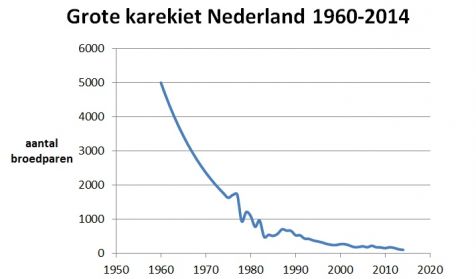
    Het is alarmcode rood voor de grote karekiet (Acrocephalus arundinaceus) in Nederland. De laatste jaren laat de soort een gestage achteruitgang zien. Werd het aantal broedparen vorig jaar nog tussen de 150 en 175 geschat, nu zijn er aanwijzingen dat de soort ternauwernood boven de 100 paar uitkomt. Sovon heeft onlangs de resultaten van verschillende vrijwillige tellers naast elkaar gelegd en kwam tot een verdrietige optelsom. Sinds 2001 is de stand in belangrijke resterende bolwerken in Noordwest-Overijssel met 50% afgenomen (van 100 naar 51 paar). Op de Loosdrechtse Plassen, belangrijk broedgebied, was de soort lange tijd stabiel met tussen de 25 en 30 territoria. In 2013 zakte dat aantal naar elf en ook dit jaar stokt de teller bij dertien grote karekietenterritoria.

    Het is alarmcode rood voor de grote karekiet (Acrocephalus arundinaceus) in Nederland. De laatste jaren laat de soort een gestage achteruitgang zien. Werd het aantal broedparen vorig jaar nog tussen de 150 en 175 geschat, nu zijn er aanwijzingen dat de soort ternauwernood boven de 100 paar uitkomt. Sovon heeft onlangs de resultaten van verschillende vrijwillige tellers naast elkaar gelegd en kwam tot een verdrietige optelsom. Sinds 2001 is de stand in belangrijke resterende bolwerken in Noordwest-Overijssel met 50% afgenomen (van 100 naar 51 paar). Op de Loosdrechtse Plassen, belangrijk broedgebied, was de soort lange tijd stabiel met tussen de 25 en 30 territoria. In 2013 zakte dat aantal naar elf en ook dit jaar stokt de teller bij dertien grote karekietenterritoria.

    Bron: Bericht uitgegeven door Vogelbescherming Nederland en Sovon Vogelonderzoek Nederland op dinsdag 17 juni 2014, Natuurbericht.nl
    http://www.natuurbericht.nl/?id=12578&rss=1
    Tekst: Nadja Jansma, Vogelbescherming Nederland

  • Prairie bird populations are falling in many Midwestern states. Scientists now say insecticides are a primary culprit

    Prairie bird populations are falling in many Midwestern states. Scientists now say insecticides are a primary culprit

    Prairie bird populations are falling in many Midwestern states, from ring-necked pheasants to horned larks to sparrows. Scientists now say insecticides are a primary culprit. Minnesota birds are hardest hit with 12 species in decline, followed by Wisconsin with 11, and Illinois, Michigan, Montana, Nebraska and New York with nine affected species each. The recent study looked at a range of possible causes of the population declines, including habitat loss which has long been considered a key driver of the problem. Bird conservationists are “still concerned” about range management, urban development and loss of habitat, but are now focusing additional attention on the harmful impacts of pesticides.

    Prairie bird populations are falling in many Midwestern states, from ring-necked pheasants to horned larks to sparrows. Scientists now say insecticides are a primary culprit. Minnesota birds are hardest hit with 12 species in decline, followed by Wisconsin with 11, and Illinois, Michigan, Montana, Nebraska and New York with nine affected species each. The recent study looked at a range of possible causes of the population declines, including habitat loss which has long been considered a key driver of the problem. Bird conservationists are “still concerned” about range management, urban development and loss of habitat, but are now focusing additional attention on the harmful impacts of pesticides.

    According to Cynthia Palmer, Manager of the Pesticides Program at American Bird Conservancy:

    “[This study] suggests that we also need to rein in the use of lethal pesticides in agriculture, and that we need to be especially careful about any new pesticides we introduce into these ecosystems such as the neonicotinoid insecticides.”

    Neonicotinoid use has increased dramatically in recent years, and as we’ve reported here before, many studies link this class of systemic pesticides with dramatic honey bee declines. American Bird Conservancy is expected to release a toxicological assessment of neonicotinoid impacts on birds and other organisms soon.

    The current study was conducted by Dr. Pierre Mineau, a scientist recently retired from Environment Canada, along with Mélanie Whiteside of Health Canada. Using pesticide-use data from the 1980s and 1990s, the study focused on organophosphate insecticides such as diazinon and chlorpyrifos, as well as carbamates. According to Dr. Mineau:

    “What this study suggests is that we need to start paying a lot more attention to the use of pesticides if we want to reverse, halt or simply slow the very significant downward trend in grassland bird populations.”

    Source: Pesticide Action Network, June 25, 2014

    First Bees, Now Birds

  • De risico’s van het vak. Het lot van de klokkenluiders over de oorzaken van de bijensterfte

    De risico’s van het vak. Het lot van de klokkenluiders over de oorzaken van de bijensterfte

    Jeroen van der Sluijs is hoofddocent nieuwe risico’s bij de afdeling Milieu-Natuurwetenschappen aan de Universiteit Utrecht. “Zonder vaste aanstelling had ik een aantal dingen niet hardop kunnen zeggen over bijensterfte. Toen ik in een ingezonden brief in de NRC (2 mei 2009) schreef dat men pesticiden moest betrekken bij het onderzoek naar de oorzaken, belde Bayer Crop Science de dag erna mijn baas, heel intimiderend. Henk Tennekes, een zelfstandig toxicoloog met wie ik die NRC-brief had geschreven, raakte al zijn opdrachtgevers kwijt en moest zijn huis verkopen.” Kom je ook ‘merchants of doubt’ tegen, professionele twijfelzaaiers die beleid willen voorkomen? ”We leven in een tijd van wetenschap op bestelling, je kunt elk gewenst antwoord krijgen. Industrieën zaaien twijfel, ngo’s zekerheid. Ze gebruiken het principe: hoe meer twijfel, hoe minder beleid; hoe meer zekerheid, hoe meer beleid.”

    Jeroen van der Sluijs is hoofddocent nieuwe risico’s bij de afdeling Milieu-Natuurwetenschappen aan de Universiteit Utrecht. “Zonder vaste aanstelling had ik een aantal dingen niet hardop kunnen zeggen over bijensterfte. Toen ik in een ingezonden brief in de NRC (2 mei 2009) schreef dat men pesticiden moest betrekken bij het onderzoek naar de oorzaken, belde Bayer Crop Science de dag erna mijn baas, heel intimiderend. Henk Tennekes, een zelfstandig toxicoloog met wie ik die NRC-brief had geschreven, raakte al zijn opdrachtgevers kwijt en moest zijn huis verkopen.” Kom je ook ‘merchants of doubt’ tegen, professionele twijfelzaaiers die beleid willen voorkomen? ”We leven in een tijd van wetenschap op bestelling, je kunt elk gewenst antwoord krijgen. Industrieën zaaien twijfel, ngo’s zekerheid. Ze gebruiken het principe: hoe meer twijfel, hoe minder beleid; hoe meer zekerheid, hoe meer beleid.”

    Bron: Down to Earth, 30-06-2014

    “We leven in een tijd van wetenschap op bestelling”

  • Syngenta-Studie zum Bienensterben ist eine Mogelpackung

    Syngenta-Studie zum Bienensterben ist eine Mogelpackung

    Das Bienensterben bedroht weltweit die Landwirtschaft. Mitverantwortlich dafür sind mutmasslich Pestizide aus der Gruppe der Neonicotinoide. Diese generieren weltweit Milliarden-Umsätze für die Industrie, und sie sind auch im Sortiment des Basler Agrarchemie-Konzerns Syngenta zu finden. Das Produkt von Syngenta heisst Thiamethoxam. Vor einem Jahr kündigte Syngenta die Publikation einer umfassende Studie an: «Wir haben Langzeitstudien gemacht im Mais und im Raps, und damit konnten wir zeigen, dass es bei der Anwendung, wie wir sie empfehlen, zu keinen Bienenschäden kommt», sagte Georg Diriwächter, Leiter Registrierung Pflanzenschutzmittel bei Syngenta.

    Das Bienensterben bedroht weltweit die Landwirtschaft. Mitverantwortlich dafür sind mutmasslich Pestizide aus der Gruppe der Neonicotinoide. Diese generieren weltweit Milliarden-Umsätze für die Industrie, und sie sind auch im Sortiment des Basler Agrarchemie-Konzerns Syngenta zu finden. Das Produkt von Syngenta heisst Thiamethoxam. Vor einem Jahr kündigte Syngenta die Publikation einer umfassende Studie an: «Wir haben Langzeitstudien gemacht im Mais und im Raps, und damit konnten wir zeigen, dass es bei der Anwendung, wie wir sie empfehlen, zu keinen Bienenschäden kommt», sagte Georg Diriwächter, Leiter Registrierung Pflanzenschutzmittel bei Syngenta.

    Inzwischen konnte Syngenta die Studie im Wissenschaftsmagazin Plos One publizieren. Renommierte Bienenforscher wie der Schweizer Boris Baer sind überrascht: «Ich habe diese Studie gelesen, wie viele meiner Kollegen, die Honigbienen-Forschung betreiben, und wir schütteln den Kopf.» Zum einen seien Bienenvölker zu wenig weit voneinander entfernt gewesen. Zum anderen habe Syngenta bei einem der Experimente drei von vier Völkern verloren. «Bei derart grossen Mortalitäten stellt sich die Frage, was man tatsächlich noch aussagen kann», kritisiert Baer.

    Syngenta schreibt: «Im Bewertungsbericht der European Food Safety Authority haben mehrere Bienenexperten gesagt, dass dies die detaillierteste und umfassendste Studie sei, die sie seit langem gesehen haben für eine regulatorische Risikoeinschätzung.»

    Auffällig: Kurz vor Publikation der Studie wechselte eine der Reviewerinnen, die die Studie für Plos One kontrollieren sollte, zu Syngenta. Die Reviewerin hatte zudem schon während der Durchsicht der Studie Kontakt mit Syngenta. Dazu Bienen-Experte Boris Baer: «Das verstösst gegen grundlegende Gepflogenheiten in der Wissenschaft.» Plos One schreibt an «ECO», die Studie sei fachgerecht geprüft worden.

    Die Publikation erstaunt auch, weil eine korrekte statistische Auswertung der Ergebnisse fehlt. ETH-Statistiker Werner Stahel ist deshalb sehr skeptisch: «Es ist eine Mogelpackung. Wenn ein Student bei mir vorbei käme mit einem Projekt einer solchen Diplomarbeit, müsste man sagen: Am Schluss kann man gar nichts aussagen, fang gar nicht erst an.» Syngenta betont, die Studie sei in Zusammenarbeit mit französischen Behörden geplant worden. Zudem arbeite Syngenta «nach höchsten ethischen Massstäben und wissenschaftlichen Standards».

    Dass der Basler Konzern auch hemdsärmlig vorzugehen weiss, zeigt ein Fall aus den USA. Dort ist das Pestizid Atrazin, das in der Schweiz nicht mehr verwendet werden darf, noch immer zugelassen.

    Gemäss Unterlagen, die die Journalisten-Vereinigung «100 Reporters» publizierte, bezahlte Syngenta in den USA Wissenschaftler der Gesundheitsorganisation ACSH dafür, dass sie wohlwollende Artikel über Atrazin in Fachzeitschriften publizierten. Zudem engagierte Syngenta eine Privatdetektei, um Berater der Aufsichtsbehörde zu bespitzeln. Syngenta plante offenbar auch, was der Konzern bestreitet, eine Diffamierungskampagne gegen den kritischen US-Wissenschaftler Tyrone Hayes. In handschriftlichen, syngenta-internen Unterlagen ist zu lesen: «TH paranoid, schizo und narzisstisch».

    Der in Lausanne lehrende Unternehmensethiker Guido Palazzo sagt gegenüber «ECO»: «Wenn Sie innerhalb eines Unternehmens das Gefühl haben, Sie sind in einer Art Kriegszustand mit dem Gegner, der Sie vernichten will, dann haben Sie zwei Möglichkeiten. Sie können entweder den Gegner zum Verbündeten machen, also kaufen. Oder Sie können versuchen, ihn unglaubwürdig zu machen, im Extremfall sogar zu zerstören.»

    Quelle: SRF, 3. Juni 2014
    http://m.srf.ch/news/wirtschaft/gravierende-maengel-in-syngenta-studie-zum-bienensterben

  • Ulster Wildlife has launched an appeal for sightings in Coleraine of one Northern Ireland’s most threatened birds – the barn owl

    Ulster Wildlife has launched an appeal for sightings in Coleraine of one Northern Ireland’s most threatened birds – the barn owl

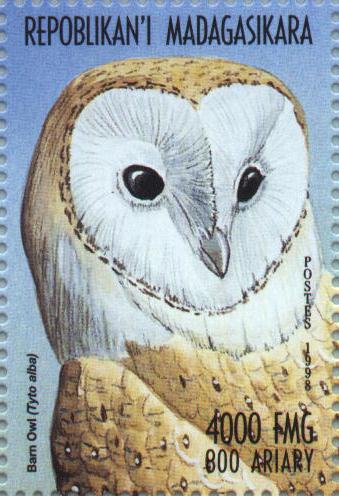
    Last year, the barn owl (Tyto alba) suffered its worst breeding season in over 30 years, and now the charity fears that numbers in Northern Ireland may have plummeted.The barn owl was once a common sight in our countryside, but now there are thought to be less than 30 breeding pairs left here. Extreme weather, loss of suitable feeding and nesting habitat, combined with the build up of toxins from consuming poisoned prey are the main reasons for the bird’s decline. Through its ‘Be there for Barn owls’ project, supported by Heritage Lottery Fund, Ulster Wildlife wants to give this iconic bird a fighting chance for survival, by working with farmers and landowners to ensure there is enough rough grassland for barn owls to hunt and breed, as well space for it to nest. “We are urging everyone in to give our barns owls a helping hand by contacting us with sightings of this beautiful bird or signs of their presence, such as nesting sites or pellets,” said Catherine Fegan, Ulster Wildlife’s Barn Owl Officer.

    Last year, the barn owl (Tyto alba) suffered its worst breeding season in over 30 years, and now the charity fears that numbers in Northern Ireland may have plummeted.The barn owl was once a common sight in our countryside, but now there are thought to be less than 30 breeding pairs left here. Extreme weather, loss of suitable feeding and nesting habitat, combined with the build up of toxins from consuming poisoned prey are the main reasons for the bird’s decline. Through its ‘Be there for Barn owls’ project, supported by Heritage Lottery Fund, Ulster Wildlife wants to give this iconic bird a fighting chance for survival, by working with farmers and landowners to ensure there is enough rough grassland for barn owls to hunt and breed, as well space for it to nest. “We are urging everyone in to give our barns owls a helping hand by contacting us with sightings of this beautiful bird or signs of their presence, such as nesting sites or pellets,” said Catherine Fegan, Ulster Wildlife’s Barn Owl Officer.

    Source: Coleraine Times, 29 June 2014
    http://www.colerainetimes.co.uk/news/features/calling-local-bird-lovers-have-you-seen-a-barn-owl-1-6133487

  • This year marks the 100th anniversary of the passenger pigeon’s extinction

    This year marks the 100th anniversary of the passenger pigeon’s extinction

    When a creature becomes extinct, we are left with whatever essence of its existence can be conveyed through science, art and the written word. In the case of the passenger pigeon (Ectopistes migratorius), a prolific and gregarious migratory bird of North America’s eastern and central forests, we’ve been trying to preserve it in memory for a century now. This year marks the 100th anniversary of the passenger pigeon’s extinction. The species’ four-decade decline from billions upon billions to none concluded when a captive bird named Martha died in her cage at the Cincinnati Zoo on Sept. 1, 1914. Martha’s remains were packed in a 300-pound block of ice and shipped to the Smithsonian National Museum of Natural History, where she was stuffed and mounted. Last week, the Smithsonian opened an exhibit on the passenger pigeon and other extinct North American birds and put Martha on display for the first time since 1999.

    When a creature becomes extinct, we are left with whatever essence of its existence can be conveyed through science, art and the written word. In the case of the passenger pigeon (Ectopistes migratorius), a prolific and gregarious migratory bird of North America’s eastern and central forests, we’ve been trying to preserve it in memory for a century now. This year marks the 100th anniversary of the passenger pigeon’s extinction. The species’ four-decade decline from billions upon billions to none concluded when a captive bird named Martha died in her cage at the Cincinnati Zoo on Sept. 1, 1914. Martha’s remains were packed in a 300-pound block of ice and shipped to the Smithsonian National Museum of Natural History, where she was stuffed and mounted. Last week, the Smithsonian opened an exhibit on the passenger pigeon and other extinct North American birds and put Martha on display for the first time since 1999.

    Skillfully crafted taxidermy mounts of passenger pigeons, such as Martha, continue to convey the bird’s superficial resemblance to the still-plentiful mourning dove, while documenting notable differences in size, plumage and eye color.

    The red-eyed passenger pigeon was 50 percent larger and considerably more colorful than the brown-eyed dove. The bird’s size and abundance made it an important source of food for humans. Male passenger pigeons, following the evolutionary dictum that favors bright plumage to attract females, bore copper-colored breast feathers and enough slate-blue feathers on their heads, backs and wings for the birds to sometimes be called “blue pigeon.”

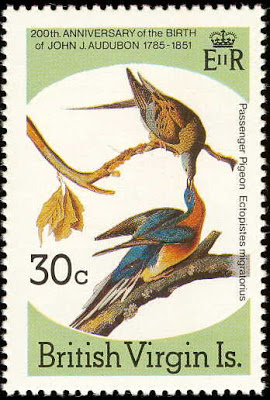
    The bright male vs. the drab female dichotomy is well captured in the portrait of the passenger pigeon that John James Audubon painted in Pittsburgh in 1824. The subjects of this life-sized work appear perched on adjacent bare tree branches, with the female feeding the male.

    Read more: http://www.post-gazette.com/opinion/2014/06/29/The-great-extermination-Passenger-pigeons-once-filled-the-skies-but-we-killed-them-all/stories/201406290023#ixzz361Pf1RvB