Auteur: Henk Tennekes

  • Early exposure to pesticides isn’t healthy for babies

    Early exposure to pesticides isn’t healthy for babies

    The mainstream media inexplicably seems to downplay the links between chronic pesticide exposure and birth defects, but a new study is bringing this topic back into view. Applied pesticides don’t just impact farm-workers. They also take a toll on families who live within 2 miles of a farm that uses toxic pesticides, according to the latest research from the MIND Institute at University of California, Davis Medical Center. From birth defects to other developmental issues, early exposure to pesticides isn’t healthy for babies. What are the chemicals we’re exposing people to, and how do they work? The study cites three of the most commonly used agricultural pesticides in the past 50 years. These three classes of pesticides implicated in the study are: organophosphates, pyrethroids, and carbamates.

    The mainstream media inexplicably seems to downplay the links between chronic pesticide exposure and birth defects, but a new study is bringing this topic back into view. Applied pesticides don’t just impact farm-workers. They also take a toll on families who live within 2 miles of a farm that uses toxic pesticides, according to the latest research from the MIND Institute at University of California, Davis Medical Center. From birth defects to other developmental issues, early exposure to pesticides isn’t healthy for babies. What are the chemicals we’re exposing people to, and how do they work? The study cites three of the most commonly used agricultural pesticides in the past 50 years. These three classes of pesticides implicated in the study are: organophosphates, pyrethroids, and carbamates.

    The organophosphates are an old class of insecticides; first known in the 1930s and traced to the nerve agent, Sarin. Organophosphate insecticides (once metabolized in the liver) affect the Acetyl Cholinesterase enzyme in an irreversible manner, leading to effects that may lead to eventual death. One organo-phosphate cited in the study, chlorpyrifos, has been used widely in U.S. agricultural settings and was used in residential settings prior to 2002. Farmers and homeowners still use this chemical to kill bugs like fire ants.
    The pyrethroids derive from a naturally occurring class of insecticides from flowering perennials. The synthetic pyrethroids gained prominence in the 1980s, but the ancient Romans lauded them for their insecticidal properties. The initial synthetic pyrethroids were fast-acting, but were ineffective within a few short years. That led scientists to develop insecticides that resembled the initial pyrethroid but with better ‘shelf-potential.’ The fact that scientists derive the pyrethroids from plants may be misleading to some – it sounds natural, how can it be harmful? However, the eventual, synthetic cousins of these pyrethroids are potent neuro-toxins. As a neurotoxin, pyrethroids affect musculature contraction in the face and hands in humans. Although similar in toxicity to other pesticides (e.g. carbamates and organo-phosphates to a lesser degree), these insecticides eventually metabolize – your body processes them.
    The carbamates are a seemingly innocent class of organic compounds whose origins are traced in the years following World War II. In a patent filing by the DuPont chemical company in 1954, CARBAMATES CONTAINING THE CYCLOHEPTATRIEN-1-OL-2-ONE RING are listed as a new class of insecticide. The ‘carbamate feature or linkage’ may have been attached to cycloheptatriene ring as an afterthought; the ‘ring’ feature is a component of cedar tree biochemistry—a molecule that is known to repel insects. However, 15 years later in a 1969 paper, University of California,Berkeley Professors Lykken and Casida discovered the real reasons for the carbamate’s importance: Carbamates are slowly metabolized by the body and insects as well.
    Once the molecule can find its way to the brain, it blocks acetyl cholinesterase reversibly—or interferes with the sense of pain.
    Organo-phosphates, pyrethroids, and carbamates have a ‘checkered past;’ without the use of these once lauded chemicals, it is a safe bet that many of us would not have been here to see the 21st century.
    In spite of the toxic nature of pesticides, it is unlikely that the agricultural revolution of the 20th century would occur without them. However, we now deal with the repercussions of birth defects and other problems in a dangerous trade-off.
    Source: Decoded Science, 27 June 2014
    http://www.decodedscience.com/pesticides-pregnancy-birth-defects-mind-study/47030

  • De apocalypse staat voor de deur en bijna niemand heeft het in de gaten, in Den Haag al helemaal niet

    De apocalypse staat voor de deur en bijna niemand heeft het in de gaten, in Den Haag al helemaal niet

    Pesticiden worden te vaak en te overvloedig gebruikt, met nefaste effecten op bijen, vlinders, het milieu in het algemeen en dus ook de mens. “Ze worden te vaak en te overvloedig gebruikt, dit moet stoppen”, aldus wetenschappers. Een klein beetje goed nieuws toch: in de Europese Unie zijn enkele van deze pesticiden al verboden of aan banden gelegd. Pesticiden wordt door landbouwers gebruikt om schadelijke dieren van hun gewassen weg te houden en zo de oogst te redden. Klinkt niet onlogisch, maar in realiteit heeft die gewoonte schadelijke gevolgen. In twee studies op twee dagen worden pesticiden met de vinger gewezen: voor de link met autisme en voor de link met bijensterfte en een bedreiging van de biodiversiteit in het algemeen.

    Pesticiden worden te vaak en te overvloedig gebruikt, met nefaste effecten op bijen, vlinders, het milieu in het algemeen en dus ook de mens. “Ze worden te vaak en te overvloedig gebruikt, dit moet stoppen”, aldus wetenschappers. Een klein beetje goed nieuws toch: in de Europese Unie zijn enkele van deze pesticiden al verboden of aan banden gelegd. Pesticiden wordt door landbouwers gebruikt om schadelijke dieren van hun gewassen weg te houden en zo de oogst te redden. Klinkt niet onlogisch, maar in realiteit heeft die gewoonte schadelijke gevolgen. In twee studies op twee dagen worden pesticiden met de vinger gewezen: voor de link met autisme en voor de link met bijensterfte en een bedreiging van de biodiversiteit in het algemeen.

    In een studie van Irva Hertz-Picciotto werd een link gevonden tussen autisme en pesticiden. Meer bepaald: zwangere vrouwen die maximaal 1,5 kilometer wonen van gebieden waar pesticiden worden gebruikt, hadden 60 procent meer kans op een kind met autisme. Dit risico steeg als de vrouwen werden blootgesteld aan de stoffen in het derde trimester.

    De schuldigen hier zijn chloorpyrifos in het tweede trimester en organofosfaten in het derde trimester. Pyrethroïden waren zowel verantwoordelijk voor autisme als ontwikkelingsachtersstand en dit bij blootstelling voor de conceptie en in het derde trimester van de zwangerschap. Carbamaten tot slot veroorzaakten ook ontwikkelingsachterstand.

    Het is niet de eerste keer dat die link werd gelegd: in 2007 werd al gevonden dat aanstaande moeders die blootgesteld waren aan twee organochlorine pesticiden in het eerste trimester van de zwangerschap zes keer meer kans hadden op een kind met autisme dan moeders die vér van landbouwgebied woonden. De studie was toen te klein om definitieve resultaten te trekken.

    Ook deze studie kent tegenstanders die bekritiseren dat niet bewezen werd dat de vrouwen echt werden blootgesteld aan de stoffen noch dat niet is bewezen dat ze ook autisme veroorzaken. Met andere woorden: blootstelling aan andere stoffen kunnen voor het verhoogde risico op autisme zorgen. Behalve dan dat twee derde van de vrouwen in de studie niet zo dicht bij landbouw gebied woonden en merkelijk minder kans hadden op kinderen met autisme. Een oorzakelijk verband is niet gelegd, maar je kan redelijk zeker zijn van een invloed van de pesticiden op het voorkomen van autisme.

    Een tweede studie was een analyse van 800 wetenschappelijke artikels, uitgevoerd door een groep van onafhankelijke wetenschappers uit verschillende landen. Conclusie? De massale (en zorgwekkende) bijensterfte is te wijten aan het gebruik van twee pesticiden, die zo de volledige biodiversiteit bedreigen.

    De schuldigen hier zijn neonicotinoïden (neonics) en fipronil. Samen zijn ze goed voor 40 procent van de insecticiden, in 2011 bracht de gezamenlijke verkoop van deze stoffen 2,79 miljard dollar op. Het probleem: ze werken niet alleen tegen de schadelijke, maar ook tegen de nuttige dieren.

    Neonics werken in op het zenuwstelsel, met verschillende effecten: soms dodelijk, soms met chronische gevolgen zoals een slechtere geurzin, een falend geheugen, verminderde vruchtbaarheid, slechter eten, moeilijkheden met vliegen en graven en vatbaarder voor ziekten. Ook een kleine maar langdurige blootstelling kan schadelijk zijn.

    De effecten werden vastgesteld bij dieren die leven van de plant of in de grond of het water vlakbij de besproeide planten, zoals bijen, vlinders, regenwormen, slakken en watervlooien. Al deze dieren zijn deel van een biologisch systeem dat essentieel is voor de mens: 75 procent van de dingen die we eten, zijn voor de bestuiving afhankelijk van dieren, meestal bijen.

    “In plaats van de voedselproductie te beschermen, vallen deze stoffen de structuren aan die de voedselproductie mogelijk maken: de dieren die voor de bevruchting zorgen, de dieren die plagen op afstand houden en de dieren die de groeiomgeving mogelijk maken.”

    Voor zoogdieren zijn er te weinig gegevens om effecten te kunnen vaststellen, net als voor reptielen, al lijkt een effect daar wel ‘waarschijnlijk’. Vissen, ongewervelden en zelfs microben zijn wel aangetast

    Niet alleen de stoffen op zich zijn een probleem, ook de manier waarop ze worden gebruikt: overvloedig en preventief. “90 procent van deze pesticiden gaan niet naar de planten, maar naar de omgeving, de bodem en het water.” Ze worden ook niet gebruikt als er een probleem is, maar voor een probleem dat zou kunnen ontstaan.

    Nog slecht nieuws: in aarde is de halveertijd van de pesticide verschillende jaren. Bij herhaaldelijk of jaarlijks gebruik raakt de bodem dus alleen maar meer en meer doordrongen van de stof, en dus ook de dieren die er in leven.

    Neonics worden qua schadelijkheid vergeleken met DDT, een insecticide die in de jaren ’70 in de westerse werd verboden nadat bleek dat mensen ze slecht afbreken (en dus opstapelen) en er schadelijke effecten waren. Volgens de wetenschappers zijn sommige neonics 5.000 tot 10.000 keer schadelijker dan DDT.

    Ook deze studie krijgt critici over zich heen. Zo wordt aangeklaagd dat de link tussen pesticiden en bijensterfte niet eenduidig is. Een soort zandmijt zou er ook iets mee te maken hebben. De critici verwijzen naar Australië, waar de neonics wel worden gebruikt en bijen niet zo massal sterven als elders, en Zwitserland, waar de neonics niet worden gebruikt en de bijen wel sterven.

    De Europese Unie nam al enkele maatregelen. Fipronil is al verboden. Vier soorten neonicotinoïden zijn tijdelijk verboden: voor 2 jaar en vooral bij gewassen die aantrekkelijk zijn voor bijen. In serres mogen ze wel nog worden gebruikt. “De vervuiling van bodem en oppervlaktewater blijft dus bestaan”, aldus Annelore Nys van Natuurpunt.

    Ook Canada beperkte het gebruik van sommige neonics intussen
    Bron: Newsmonkey, 24-06-14
    http://newsmonkey.be/article/14054

  • Bijen, wormen en vogels lijden onder pesticide

    Bijen, wormen en vogels lijden onder pesticide

    De pesticiden neonicotinoïden (neonics) en fipronil vormen een ernstig gevaar voor honingbijen en andere bestuivers zoals vlinders, maar ook regenwormen en vogels lijden eronder. Dat concludeert een groep wetenschappers uit een analyse van alle beschikbare studies, zo’n 800. Hun bevindingen verschijnen weldra in het wetenschappelijk tijdschrift Environmental Science and Pollution Research. Neonicotinoïden zijn stoffen die inwerken op het zenuwstelsel. Blootstelling aan deze stoffen kan onmiddellijk dodelijk zijn maar ook langdurige gevolgen hebben. Een van de hoofdauteurs, Jean-Marc Bonmatin van het Franse Centre National de la Recherche Scientifique noemt de bewijzen ‘zeer duidelijk’. De wetenschappers vinden drastische maatregelen om het gebruik van deze middelen terug te schroeven daarom noodzakelijk.

    De pesticiden neonicotinoïden (neonics) en fipronil vormen een ernstig gevaar voor honingbijen en andere bestuivers zoals vlinders, maar ook regenwormen en vogels lijden eronder. Dat concludeert een groep wetenschappers uit een analyse van alle beschikbare studies, zo’n 800. Hun bevindingen verschijnen weldra in het wetenschappelijk tijdschrift Environmental Science and Pollution Research. Neonicotinoïden zijn stoffen die inwerken op het zenuwstelsel. Blootstelling aan deze stoffen kan onmiddellijk dodelijk zijn maar ook langdurige gevolgen hebben. Een van de hoofdauteurs, Jean-Marc Bonmatin van het Franse Centre National de la Recherche Scientifique noemt de bewijzen ‘zeer duidelijk’. De wetenschappers vinden drastische maatregelen om het gebruik van deze middelen terug te schroeven daarom noodzakelijk.

    Bron: De Standaard, 24-06-14
    http://www.standaard.be/cnt/dmf20140624_01153049

  • Autism Risk Higher Near Pesticide-Treated Fields

    Autism Risk Higher Near Pesticide-Treated Fields

    Babies whose moms lived within a mile of crops treated with widely used pesticides were more likely to develop autism, according to new research. The study of 970 children, born in farm-rich areas of Northern California, is part of the largest project to date that is exploring links between autism and environmental exposures. The University of California, Davis research – which used women’s addresses to determine their proximity to insecticide-treated fields – is the third project to link prenatal pesticide exposures to autism and related disorders. “The weight of evidence is beginning to suggest that mothers’ exposures during pregnancy may play a role in the development of autism spectrum disorders,” said Kim Harley, an environmental health researcher at the University of California, Berkeley who was not involved in the new study. One in every 68 U.S. children has been identified with an autism spectrum disorder—a group of neurodevelopmental disorders characterized by difficulties with social interactions, according to the Centers for Disease Control and Prevention.

    Babies whose moms lived within a mile of crops treated with widely used pesticides were more likely to develop autism, according to new research. The study of 970 children, born in farm-rich areas of Northern California, is part of the largest project to date that is exploring links between autism and environmental exposures. The University of California, Davis research – which used women’s addresses to determine their proximity to insecticide-treated fields – is the third project to link prenatal pesticide exposures to autism and related disorders. “The weight of evidence is beginning to suggest that mothers’ exposures during pregnancy may play a role in the development of autism spectrum disorders,” said Kim Harley, an environmental health researcher at the University of California, Berkeley who was not involved in the new study. One in every 68 U.S. children has been identified with an autism spectrum disorder—a group of neurodevelopmental disorders characterized by difficulties with social interactions, according to the Centers for Disease Control and Prevention.

    “This study does not show that pesticides are likely to cause autism, though it suggests that exposure to farming chemicals during pregnancy is probably not a good thing,” said Dr. Bennett Leventhal, a child psychiatrist at University of California, San Francisco who studies autistic children. He did not participate in the new study.

    The biggest known contributor to autism risk is having a family member with it. Siblings of a child with autism are 35 times more likely to develop it than those without an autistic brother or sister, according to the National Institutes of Health.

    By comparison, in the new study, children with mothers who lived less than one mile from fields treated with organophosphate pesticides during pregnancy were about 60 percent more likely to have autism than children whose mothers did not live close to treated fields. Most of the women lived in the Sacramento Valley.

    When women in the second trimester lived near fields treated with chlorpyrifos – the most commonly applied organophosphate pesticide – their children were 3.3 times more likely to have autism, according to the study, published in the journal Environmental Health Perspectives.

    Chlorpyrifos, once widely used to kill insects in homes and gardens, was banned for residential use in 2001 after it was linked to neurological effects in children. It is still widely used on crops, including nut trees, alfalfa, vegetables and fruits.

    The study also is the first to report a link between pyrethroids and autism. Application of pyrethroids just prior to conception meant an increased risk of 82 percent, and during the third trimester, the risk was 87 percent higher.

    That finding is particularly concerning because “pyrethroids were supposed to be better, safer alternatives to organophosphates,” said the study’s senior author, Irva Hertz-Picciotto, an epidemiologist who leads the UC-Davis project to investigate environmental and genetic links to autism.

    Use of pyrethroids has increased in recent years, both on farms and in the home, due to bans of other pesticides. Some studies now suggest pyrethroids may carry risks for developing fetuses.

    The autism risk that could be attributed to an individual pesticide is likely slight, said Alycia Halladay, senior director for environmental and clinical sciences at Autism Speaks. “We need to understand how multiple exposures interact with each other and with genetics to understand all that is involved in the causes of autism,” she said.

    But while the risks reported in the study pale in comparison to some hereditary factors, Hertz-Picciotto said they are comparable to other risks for autism, such as advanced parental age or not taking prenatal vitamins.

    “In any child who develops autism, a combination of genetic and environmental factors are at work. There’s an accumulation of insults to the system. What we’re seeing is that pesticides may be one more factor that for some kids may push them over the edge,” she said.

    For the study, researchers obtained the women’s addresses and compared them to a state database that provides details about where, when and how often specific commercial pesticides were used. About one-third of the women lived within approximately one mile of pesticide-treated fields.

    The researchers, however, do not know whether the women were exposed to the insecticides.

    In 2012, the U.S. Environmental Protection Agency required buffers around fields near homes and schools to help reduce exposure to chlorpyrifos.

    “Provided that pesticides are applied responsibly and according to federally mandated label instructions, people, including expectant mothers, should not be concerned about exposure to agricultural pesticides,” said Clare Thorpe, senior director of human health policy for CropLife America, which represents pesticide manufacturers.

    More than 1.1 million tons of chlorpyrifos were applied to 22,000 California farms in 2012, down from 2 million pounds on 40,000 farms in 2005, according to the database from the state Department of Pesticide Regulation.

    Most of the mothers lived near fields treated with several different pesticides over their pregnancies, so it’s difficult to tease apart the potential risk of individual chemicals, said epidemiologist Janie Shelton, the lead study author. Shelton is now a consulting scientist to the United Nations.

    The study also reported an increased risk of developmental delays, but not autism, in kids whose moms lived near fields where carbamates, including methomyl and Sevin, were applied.

    The researchers said that pesticides could impair brain development and signaling in a way that affects social interactions, learning and behavior.

    Previous studies have also linked pesticide use in California to autism spectrum disorders.

    In 2007, Harley and her colleagues found a two-fold increase in pervasive developmental disorders (the larger group to which autism belongs) among 531 children in California’s Salinas Valley whose mothers’ urine had higher levels of organophosphate pesticides.

    Another study from 2007 found that mothers who lived near fields with the highest applications of two now-banned pesticides – endosulfan and dicofol – were six times more likely to have kids with autism spectrum disorders.

    In recent years, rates of autism have been on the rise in the United States. Between 2012 and 2014 alone, rates jumped 30 percent. The increase has largely been attributed to changes in diagnostic criteria for autism.

    “Many children that we used to call intellectually disabled and many more with social deficits are now recognized as being on the autism spectrum,” said Kathy Katz, a pediatric psychologist at Georgetown University Medical Center in Washington, DC.

    But some experts suggest that environmental exposures may also be contributing to the climbing rates. In California alone, autism diagnoses were up 600 percent between 1990 and 2001. Yet researchers found that only about one-third of the rise could be explained by changing diagnoses or kids being diagnosed at increasingly younger ages.

    Earlier this year, scientists examining more than two million births in Sweden reported that inherited genes make up about 50 percent of a child’s autism risk, while environmental factors make up the other half.

    It’s tempting to tie the increase in prevalence to environmental factors, said Halladay, but it’s hard to know for sure what’s going on, since some environmental risks have increased over the past few decades while others have decreased.

    “Use of pesticides has gone up, so has autism. But air quality has also improved, and we know that air pollution plays a role in autism spectrum disorder risk,” she said.

    Some studies are starting to look how environmental exposures may act differently in people whose genetics make them more susceptible. Earlier this year, researchers showed that people with a gene variant associated with autism and high exposure to air pollution had an increased risk of autism over people with the same gene variant but lower exposure to air pollution.

    Next, Shelton hopes to look for autism risk from pesticide exposure among mothers with certain genetic variations.

    “We need to know if some moms are at higher risk than others and what that risk is. Knowing who is most vulnerable is key to understanding how to better protect them,” she said.
    Source: Scientific American, June 23, 2014
    http://www.scientificamerican.com/article/autism-risk-higher-near-pesticide-treated-fields/
    This article originally ran at Environmental Health News, a news source published by Environmental Health Sciences, a nonprofit media company.
  • A review of the direct and indirect effects of neonicotinoids and fipronil on vertebrate wildlife

    A review of the direct and indirect effects of neonicotinoids and fipronil on vertebrate wildlife

    Concerns over the role of pesticides affecting vertebrate wildlife populations have recently focussed on systemic products which exert broad-spectrum toxicity. Given that the neonicotinoids have become the fastest-growing class of insecticides globally, we review here 150 studies of their direct (toxic) and indirect (e.g. food chain) effects on vertebrate wildlife—mammals, birds, fish, amphibians and reptiles. We focus on two neonicotinoids, imidacloprid and clothianidin, and a third insecticide, fipronil, which also acts in the same systemic manner. Imidacloprid and fipronil were found to be toxic to many birds and most fish, respectively. All three insecticides exert sub-lethal effects, ranging from genotoxic and cytotoxic effects, and impaired immune function, to reduced growth and reproductive success, often at concentrations well below those associated with mortality. Use of imidacloprid and clothianidin as seed treatments on some crops poses risks to small birds, and ingestion of even a few treated seeds could cause mortality or reproductive impairment to sensitive bird species. In contrast, environmental concentrations of imidacloprid and clothianidin appear to be at levels below those which will cause mortality to freshwater vertebrates, although sub-lethal effects may occur. Some recorded environmental concentrations of fipronil, however, may be sufficiently high to harm fish. Indirect effects are rarely considered in risk assessment processes and there is a paucity of data, despite the potential to exert population-level effects. Our research revealed two field case studies of indirect effects. In one, reductions in invertebrate prey from both
    imidacloprid and fipronil uses led to impaired growth in a fish species, and in another, reductions in populations in two lizard species were linked to effects of fipronil on termite prey. Evidence presented here suggests that the systemic insecticides, neonicotinoids and fipronil, are capable of exerting direct and indirect effects on terrestrial and aquatic vertebrate wildlife, thus warranting further review of their environmental safety.

    Concerns over the role of pesticides affecting vertebrate wildlife populations have recently focussed on systemic products which exert broad-spectrum toxicity. Given that the neonicotinoids have become the fastest-growing class of insecticides globally, we review here 150 studies of their direct (toxic) and indirect (e.g. food chain) effects on vertebrate wildlife—mammals, birds, fish, amphibians and reptiles. We focus on two neonicotinoids, imidacloprid and clothianidin, and a third insecticide, fipronil, which also acts in the same systemic manner. Imidacloprid and fipronil were found to be toxic to many birds and most fish, respectively. All three insecticides exert sub-lethal effects, ranging from genotoxic and cytotoxic effects, and impaired immune function, to reduced growth and reproductive success, often at concentrations well below those associated with mortality. Use of imidacloprid and clothianidin as seed treatments on some crops poses risks to small birds, and ingestion of even a few treated seeds could cause mortality or reproductive impairment to sensitive bird species. In contrast, environmental concentrations of imidacloprid and clothianidin appear to be at levels below those which will cause mortality to freshwater vertebrates, although sub-lethal effects may occur. Some recorded environmental concentrations of fipronil, however, may be sufficiently high to harm fish. Indirect effects are rarely considered in risk assessment processes and there is a paucity of data, despite the potential to exert population-level effects. Our research revealed two field case studies of indirect effects. In one, reductions in invertebrate prey from both
    imidacloprid and fipronil uses led to impaired growth in a fish species, and in another, reductions in populations in two lizard species were linked to effects of fipronil on termite prey. Evidence presented here suggests that the systemic insecticides, neonicotinoids and fipronil, are capable of exerting direct and indirect effects on terrestrial and aquatic vertebrate wildlife, thus warranting further review of their environmental safety.

    Source:
    David Gibbons & Christy Morrissey & Pierre Mineau
    Environ Sci Pollut Res
    DOI 10.1007/s11356-014-3180-5

  • De kievit en scholekster komen in Salland en Twente vrijwel niet meer voor

    De kievit en scholekster komen in Salland en Twente vrijwel niet meer voor

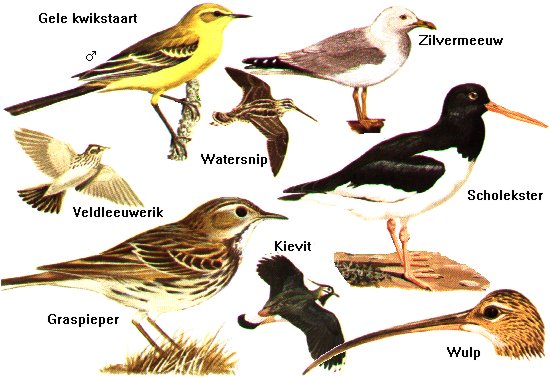
    Het gaat steeds slechter met de meeste Overijsselse weidevogels. Van de aantallen uit 1994 (het eerste jaar van het meetnet) is nog maar 42% over. Eerst waren het vooral de Grutto en de Veldleeuwerik die in aantallen afnamen. Sinds 2000 gaat het echter ook slecht met de Scholekster en de Kievit. In verschillende delen van Salland en Twente zijn ze nu vrijwel verdwenen. Maar ook in sommige polders in West-Overijssel is sprake zijn van een achteruitgang. De situatie is gunstiger in de door agrarische natuurverenigingen ingerichte en beheerde gebieden (bijv. Lierder- en Molenbroek) en delen van de polder Mastenbroek. De Kievit is nog steeds de meeste voorkomende weidevogel, gevolgd door de Grutto. De Scholekster en de Wulp komen duidelijk minder voor. De neerwaartse trend voor de Veldleeuwerik zet door.

    Het gaat steeds slechter met de meeste Overijsselse weidevogels. Van de aantallen uit 1994 (het eerste jaar van het meetnet) is nog maar 42% over. Eerst waren het vooral de Grutto en de Veldleeuwerik die in aantallen afnamen. Sinds 2000 gaat het echter ook slecht met de Scholekster en de Kievit. In verschillende delen van Salland en Twente zijn ze nu vrijwel verdwenen. Maar ook in sommige polders in West-Overijssel is sprake zijn van een achteruitgang. De situatie is gunstiger in de door agrarische natuurverenigingen ingerichte en beheerde gebieden (bijv. Lierder- en Molenbroek) en delen van de polder Mastenbroek. De Kievit is nog steeds de meeste voorkomende weidevogel, gevolgd door de Grutto. De Scholekster en de Wulp komen duidelijk minder voor. De neerwaartse trend voor de Veldleeuwerik zet door.

    Bron: Provincie Overijssel, februari 2014
    http://www.overijssel.nl/overijssel/cijfers-kaarten/overijssels-feit/nieuwsbrief-ov-feit/overijssels-feit-3/2014-02-herstel/

  • The tricolored blackbird species of the Central Valley of California soon will be on the verge of extinction

    The tricolored blackbird species of the Central Valley of California soon will be on the verge of extinction

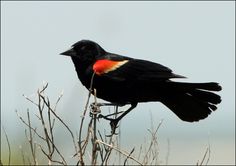
    A recent study by Robert Meese of the University of California states that the tricolored blackbird (Agelaius tricolor) species of the Central Valley of California has witnesses a major decline in its population and soon will be on the verge of extinction, if not checked. A survey conducted by the study along with the U. S. Fish and Wildlife Service, California Department of Fish and Wildlife and Audubon California, was released on Wednesday. It depicted that the tricolored blackbird now numbers about 145,000 in the state, 260,000 birds were counted in 2011. The number has fallen by 64% since 2008. These numbers are a huge blow when we consider that almost a decade ago the population of these birds was around a million. Even worst would be when we consider the fact that way back in 1937, the tricolored blackbirds’ population was 3 million. The reasons for this huge decline can be explained by the drying up of the wetlands that were historically used as nests by these birds. These wetlands dried up because of drought and also because of the establishment of large farms that use pesticides. This pesticide use has declined the type of insects that this bird feeds on, be it caterpillars, beetles or grasshoppers. This reduction in food has caused the birds to reproduce just once instead of the usual two times that it earlier did.

    A recent study by Robert Meese of the University of California states that the tricolored blackbird (Agelaius tricolor) species of the Central Valley of California has witnesses a major decline in its population and soon will be on the verge of extinction, if not checked. A survey conducted by the study along with the U. S. Fish and Wildlife Service, California Department of Fish and Wildlife and Audubon California, was released on Wednesday. It depicted that the tricolored blackbird now numbers about 145,000 in the state, 260,000 birds were counted in 2011. The number has fallen by 64% since 2008. These numbers are a huge blow when we consider that almost a decade ago the population of these birds was around a million. Even worst would be when we consider the fact that way back in 1937, the tricolored blackbirds’ population was 3 million. The reasons for this huge decline can be explained by the drying up of the wetlands that were historically used as nests by these birds. These wetlands dried up because of drought and also because of the establishment of large farms that use pesticides. This pesticide use has declined the type of insects that this bird feeds on, be it caterpillars, beetles or grasshoppers. This reduction in food has caused the birds to reproduce just once instead of the usual two times that it earlier did.

    Now, this bird population moved into fields where a wheat-rye hybrid used as dairy cattle feed is grown but the problem that arises here is that harvesting is done way before the young birds leave the nest.
    To do the needful in this situation is very important so as to prevent the extinction of the tricolored blackbird like the two colonial bird species, the passenger pigeon and the Carolina parakeet. For this, Meese is working with large land owners to encourage them at providing habitat for these birds. Also, talks are on to create a nesting reserve at the Central California campus

    Read more: http://newstonight.co.za/content/blackbird-population-declines-alarmingly#ixzz35Fi8M1Kl

  • De stad Antwerpen voert op 1 januari 2015 een verbod in op het gebruik van pesticiden op openbare plaatsen en rond openbare gebouwen

    De stad Antwerpen voert op 1 januari 2015 een verbod in op het gebruik van pesticiden op openbare plaatsen en rond openbare gebouwen

    Zowel de stadsdiensten als externe partners zullen er vanaf dan geen pesticiden meer mogen inzetten. De hoeveelheid gebruikte pesticiden was de voorbije jaren al sterk gedaald uit milieuoverwegingen, maar nu zal de stad er dus volledig mee stoppen. Het verbod is deels een gevolg van het decreet dat de Vlaamse overheid begin vorig jaar opstelde. Antwerpen had de hoeveelheid gebruikte pesticiden op openbaar terrein al verminderd van meer dan 800 kilogram in 2000 naar nog amper 13 kilogram vorig jaar. “We zullen in de toekomst allerlei milieuvriendelijke alternatieven hanteren om het openbaar domein van onkruid en ongedierte te verlossen”, zegt schepen voor Leefmilieu Nabilla Ait Daoud (N-VA). “Daarnaast zal het groen in de stad ook intensiever beheerd worden.” Op de nieuwe regel blijven voorlopig wel nog twee uitzonderingen mogelijk. Enerzijds voor het bestrijden van een wespenplaag of een bruine rattenplaag en anderzijds voor het terugdringen van agressieve invasieve soorten zoals de Japanse duizendknoop.

    Zowel de stadsdiensten als externe partners zullen er vanaf dan geen pesticiden meer mogen inzetten. De hoeveelheid gebruikte pesticiden was de voorbije jaren al sterk gedaald uit milieuoverwegingen, maar nu zal de stad er dus volledig mee stoppen. Het verbod is deels een gevolg van het decreet dat de Vlaamse overheid begin vorig jaar opstelde. Antwerpen had de hoeveelheid gebruikte pesticiden op openbaar terrein al verminderd van meer dan 800 kilogram in 2000 naar nog amper 13 kilogram vorig jaar. “We zullen in de toekomst allerlei milieuvriendelijke alternatieven hanteren om het openbaar domein van onkruid en ongedierte te verlossen”, zegt schepen voor Leefmilieu Nabilla Ait Daoud (N-VA). “Daarnaast zal het groen in de stad ook intensiever beheerd worden.” Op de nieuwe regel blijven voorlopig wel nog twee uitzonderingen mogelijk. Enerzijds voor het bestrijden van een wespenplaag of een bruine rattenplaag en anderzijds voor het terugdringen van agressieve invasieve soorten zoals de Japanse duizendknoop.

    Bron: De Redactie, 20-06-2014
    http://deredactie.be/cm/vrtnieuws/regio/antwerpen/20140620-Antwerpen-pesticide

  • De ontoelaatbare vervuiling van het Nederlandse cultuurlandschap met imidacloprid werd 10 jaar lang stilzwijgend gedoogd door Ctgb, RIVM en de regering in Den Haag

    De ontoelaatbare vervuiling van het Nederlandse cultuurlandschap met imidacloprid werd 10 jaar lang stilzwijgend gedoogd door Ctgb, RIVM en de regering in Den Haag

    Het RIVM heeft onlangs na analyse van ‘nieuwere’ gegevens geconcludeerd dat de waterkwaliteitsnorm voor lange-termijn blootstelling aan imidacloprid moet worden verlaagd van 67 naar 8,3 nanogram per liter oppervlaktewater. Wordt deze norm gehanteerd zijn er volgens de bestrijdingsmiddelenatlas in 2012 bijna overal in het land normoverschrijdingen met imidacloprid. Deze ontoelaatbare situatie bestaat nu al 10 jaar. Uit onderzoek van de Universiteit Utrecht blijkt dat er een verband is tussen imidacloprid concentraties en de insectenrijkdom in het oppervlaktewater: http://dx.plos.org/10.1371/journal.pone.0062374. De resultaten bevestigen de conclusies van het in 2010 verschenen boek van de toxicoloog Henk Tennekes (The Systemic Insecticides: A Disaster in the Making”): chronische blootstelling van geleedpotigen (arthropoden) aan stoffen die onomkeerbare en zich stapelende beschadigingen in het centrale zenuwstelsel veroorzaken, leiden tot een milieuramp. Pas toen dit niet langer kon worden ontkend, heeft het College voor de toelating van gewasbeschermingsmiddelen en biociden (Ctgb) in januari 2014 besloten tot beperking van de toelating van de imidaclopridhoudende gewasbeschermingsmiddelen Admire, Gaucho Tuinbouw en Kohinor 700 WG.

    Het RIVM heeft onlangs na analyse van ‘nieuwere’ gegevens geconcludeerd dat de waterkwaliteitsnorm voor lange-termijn blootstelling aan imidacloprid moet worden verlaagd van 67 naar 8,3 nanogram per liter oppervlaktewater. Wordt deze norm gehanteerd zijn er volgens de bestrijdingsmiddelenatlas in 2012 bijna overal in het land normoverschrijdingen met imidacloprid. Deze ontoelaatbare situatie bestaat nu al 10 jaar. Uit onderzoek van de Universiteit Utrecht blijkt dat er een verband is tussen imidacloprid concentraties en de insectenrijkdom in het oppervlaktewater: http://dx.plos.org/10.1371/journal.pone.0062374. De resultaten bevestigen de conclusies van het in 2010 verschenen boek van de toxicoloog Henk Tennekes (The Systemic Insecticides: A Disaster in the Making”): chronische blootstelling van geleedpotigen (arthropoden) aan stoffen die onomkeerbare en zich stapelende beschadigingen in het centrale zenuwstelsel veroorzaken, leiden tot een milieuramp. Pas toen dit niet langer kon worden ontkend, heeft het College voor de toelating van gewasbeschermingsmiddelen en biociden (Ctgb) in januari 2014 besloten tot beperking van de toelating van de imidaclopridhoudende gewasbeschermingsmiddelen Admire, Gaucho Tuinbouw en Kohinor 700 WG.

  • Organic chemicals jeopardize the health of freshwater ecosystems on the continental scale

    Organic chemicals jeopardize the health of freshwater ecosystems on the continental scale

    Organic chemicals can contribute to local and regional losses of freshwater biodiversity and ecosystem services. However, their overall relevance regarding larger spatial scales remains unknown. Here, we present, to our knowledge, the first risk assessment of organic chemicals on the continental scale comprising 4,000 European monitoring sites. Organic chemicals were likely to exert acute lethal and chronic long-term effects on sensitive fish, invertebrate, or algae species in 14% and 42% of the sites, respectively. Of the 223 chemicals monitored, pesticides, tributyltin, polycyclic aromatic hydrocarbons, and brominated flame retardants were the major contributors to the chemical risk. Their presence was related to agricultural and urban areas in the upstream catchment. The risk of potential acute lethal and chronic long-term effects increased with the number of ecotoxicologically relevant chemicals analyzed at each site. As most monitoring programs considered in this study only included a subset of these chemicals, our assessment likely underestimates the actual risk. Increasing chemical risk was associated with deterioration in the quality status of fish and invertebrate communities. Our results clearly indicate that chemical pollution is a large-scale environmental problem and requires far-reaching, holistic mitigation measures to preserve and restore ecosystem health.

    Organic chemicals can contribute to local and regional losses of freshwater biodiversity and ecosystem services. However, their overall relevance regarding larger spatial scales remains unknown. Here, we present, to our knowledge, the first risk assessment of organic chemicals on the continental scale comprising 4,000 European monitoring sites. Organic chemicals were likely to exert acute lethal and chronic long-term effects on sensitive fish, invertebrate, or algae species in 14% and 42% of the sites, respectively. Of the 223 chemicals monitored, pesticides, tributyltin, polycyclic aromatic hydrocarbons, and brominated flame retardants were the major contributors to the chemical risk. Their presence was related to agricultural and urban areas in the upstream catchment. The risk of potential acute lethal and chronic long-term effects increased with the number of ecotoxicologically relevant chemicals analyzed at each site. As most monitoring programs considered in this study only included a subset of these chemicals, our assessment likely underestimates the actual risk. Increasing chemical risk was associated with deterioration in the quality status of fish and invertebrate communities. Our results clearly indicate that chemical pollution is a large-scale environmental problem and requires far-reaching, holistic mitigation measures to preserve and restore ecosystem health.

    Source:
    Egina Malaj et al. (2014) PNAS Early Edition 1-6
    www.pnas.org/cgi/doi/10.1073/pnas.1321082111