Auteur: Henk Tennekes

  • Ctgb legt beperkende voorwaarden op aan gebruik metam-natrium

    Ctgb legt beperkende voorwaarden op aan gebruik metam-natrium

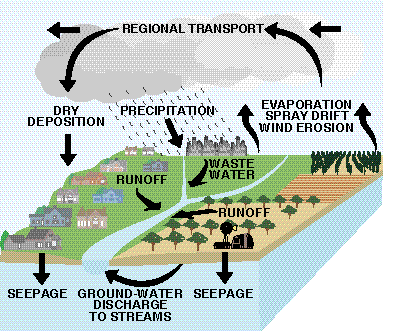
    Het College voor de toelating van gewasbeschermingsmiddelen en biociden (Ctgb) stelt vanaf 25 augustus beperkende voorwaarden aan het gebruik van middelen op basis van metam- natrium. Met deze nieuwe aanvullende voorwaarden wordt voldaan aan het beschermingsniveau voor omwonenden en in het bijzonder die voor kinderen. Naar aanleiding van de schorsing van 28 mei 2014 van de toelating van de metam-natrium houdende gewasbeschermingsmiddelen, heeft de toelatinghouder nieuwe wetenschappelijke informatie aangeleverd. Daarnaast heeft de toelatinghouder, vanwege een herregistratie, dezelfde informatie aangeleverd aan de Belgische toelatingsautoriteit. De beoordeling van de gegevens heeft dan ook in nauwe samenspraak met België plaatsgevonden. Hieruit blijkt dat de betreffende middelen veilig kunnen worden gebruikt met aanvullende, strikte voorwaarden; namelijk: Een onbehandelde bufferzone van 150 meter tussen behandeld perceel en de kadastrale grens van woningen en overige verblijfsplaatsen waar mensen langere tijd verblijven, zoals winkels, scholen, bedrijven en kantoren; Afdekking van het perceel direct na behandeling voor minstens 14 dagen met virtually impermeable film (VIF); Inbrengen op tenminste 20 centimeter diepte; Maximaal te behandelen areaal van 1 hectare, met minimaal 150 meter afstand tussen behandelde velden.

    Het College voor de toelating van gewasbeschermingsmiddelen en biociden (Ctgb) stelt vanaf 25 augustus beperkende voorwaarden aan het gebruik van middelen op basis van metam- natrium. Met deze nieuwe aanvullende voorwaarden wordt voldaan aan het beschermingsniveau voor omwonenden en in het bijzonder die voor kinderen. Naar aanleiding van de schorsing van 28 mei 2014 van de toelating van de metam-natrium houdende gewasbeschermingsmiddelen, heeft de toelatinghouder nieuwe wetenschappelijke informatie aangeleverd. Daarnaast heeft de toelatinghouder, vanwege een herregistratie, dezelfde informatie aangeleverd aan de Belgische toelatingsautoriteit. De beoordeling van de gegevens heeft dan ook in nauwe samenspraak met België plaatsgevonden. Hieruit blijkt dat de betreffende middelen veilig kunnen worden gebruikt met aanvullende, strikte voorwaarden; namelijk: Een onbehandelde bufferzone van 150 meter tussen behandeld perceel en de kadastrale grens van woningen en overige verblijfsplaatsen waar mensen langere tijd verblijven, zoals winkels, scholen, bedrijven en kantoren; Afdekking van het perceel direct na behandeling voor minstens 14 dagen met virtually impermeable film (VIF); Inbrengen op tenminste 20 centimeter diepte; Maximaal te behandelen areaal van 1 hectare, met minimaal 150 meter afstand tussen behandelde velden.

    Met deze beperkende voorwaarden zijn geen risico’s te verwachten voor omwonenden of in het bijzonder voor omwonende kinderen. Bij het bepalen van deze grens is rekening gehouden met het feit dat de verspreiding van metam-natrium afhankelijk is diverse factoren, zoals de weerscondities tijdens en na gebruik.

    Bron: Ctgb, 25/08/14 & AgriHolland Nieuws
    http://www.agriholland.nl/nieuws/artikel.html?id=162072

  • The dramatic decline of amphibians – an alarm call for us that something is drastically wrong with the environment

    The dramatic decline of amphibians – an alarm call for us that something is drastically wrong with the environment

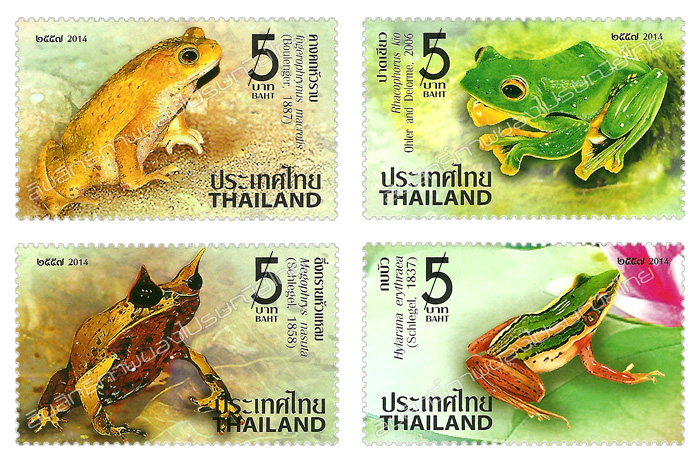
    Since the 1980s, there has been a worldwide decline in the population of amphibians – frogs, toads and salamanders. For a while, biologists were skeptical that these declines were anything more than natural variations. However, study after study has revealed that the amphibian decline is a real and severe threat to biodiversity. Roughly half of amphibian species have decreasing populations, a third are globally threatened, and almost 500 species are critically endangered. The causes for this dramatic die-off appear to be varied. Some studies have concluded that farm pesticides are a major culprit. Other studies have identified a type of chytrid fungus that causes skin infections as a major contributor to the worldwide decline.

    Since the 1980s, there has been a worldwide decline in the population of amphibians – frogs, toads and salamanders. For a while, biologists were skeptical that these declines were anything more than natural variations. However, study after study has revealed that the amphibian decline is a real and severe threat to biodiversity. Roughly half of amphibian species have decreasing populations, a third are globally threatened, and almost 500 species are critically endangered. The causes for this dramatic die-off appear to be varied. Some studies have concluded that farm pesticides are a major culprit. Other studies have identified a type of chytrid fungus that causes skin infections as a major contributor to the worldwide decline.

    The global decline in bee populations has attracted enormous attention in no small part because bees play a critical role in the agricultural economy. Frogs are in fact important in medical research, but nevertheless don’t have the economic impact of bees.

    Still, there are two important reasons that we should all be concerned about the decline in amphibian populations. One is that they play an integral role in many ecosystems around the world keeping them in balance both as predator and as prey. In our own gardens, a single toad eats about 10,000 insects over the course of a summer.

    More critically, amphibians are a key bioindicator. They have been around for 250 million years and have survived everything the Earth has subjected them to. Their sudden precipitous decline should serve as an alarm call for us that something is drastically wrong with the environment.

    Source: Poughkeepsie Journal, 24 August 2014
    http://www.poughkeepsiejournal.com/story/tech/science/environment/2014/08/24/earth-wise-save-amphibians/14396219

  • The pintail is now the fastest declining dabbling duck in the UK

    The pintail is now the fastest declining dabbling duck in the UK

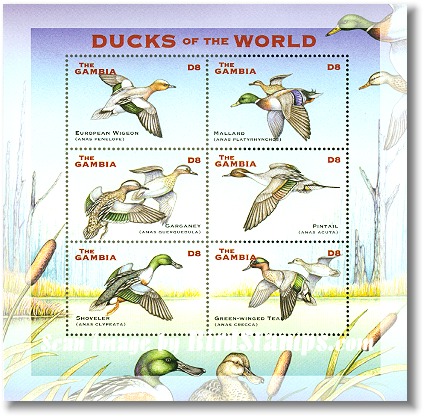
    The pintail (Anas acuta) could be the latest addition to wildfowl conservation priorities after new figures from WWT and others show numbers have fallen by more than half since 2006. The findings are published in Waterbirds in the UK, the annual report of the Wetland Bird Survey, which counts all waterbirds on the UK’s major wetlands. Pintail is an elegant dabbling duck much loved by artists, including WWT founder Sir Peter Scott who named his daughter Dafila after its former scientific name. The recorded decline is especially worrying as up to half of all the pintail in northwest Europe rely on the UK’s estuaries and wetlands during winter. WWT’s Head of Species Monitoring, Richard Hearn, said: “Counts like the Wetland Bird Survey are our ‘canary in the cage’. Without them, we wouldn’t spot the risks till it was too late. The decline we’ve seen in pintail is ringing alarm bells. However, further research across its flyway could yet throw up more hopeful news. The key thing is that there’s still time to act.”

    The pintail (Anas acuta) could be the latest addition to wildfowl conservation priorities after new figures from WWT and others show numbers have fallen by more than half since 2006. The findings are published in Waterbirds in the UK, the annual report of the Wetland Bird Survey, which counts all waterbirds on the UK’s major wetlands. Pintail is an elegant dabbling duck much loved by artists, including WWT founder Sir Peter Scott who named his daughter Dafila after its former scientific name. The recorded decline is especially worrying as up to half of all the pintail in northwest Europe rely on the UK’s estuaries and wetlands during winter. WWT’s Head of Species Monitoring, Richard Hearn, said: “Counts like the Wetland Bird Survey are our ‘canary in the cage’. Without them, we wouldn’t spot the risks till it was too late. The decline we’ve seen in pintail is ringing alarm bells. However, further research across its flyway could yet throw up more hopeful news. The key thing is that there’s still time to act.”

    The Wetland Bird Survey has been carried out annually by a network of volunteers ever since the 1940s. During that time the annual index for pintail has fluctuated year-to-year, possibly because pintail are willing to move to new areas when they become flooded, so in some years they may be undercounted.

    Similar surveys in the Netherlands show pintail numbers have been correspondingly increasing there, raising suspicion that the species is merely shifting eastwards in response to milder winters. However, at the same time the population in Northern Ireland – the most westerly – has been stable or increasing, seeming to contradict any assumption based on changes in the Netherlands.

    Despite the need for caution when drawing conclusions, pintail is now the fastest declining dabbling duck in the UK and as the report’s authors conclude ‘one cannot ignore the marked decline that has taken place since 2005/06’

    Source: Surfbirds.com, 7 August 2014
    http://www.surfbirds.com/community-blogs/blog/2014/08/07/pintail-decline-rings-alarm-bells/

  • The systemic loss of nature in Britain becomes the truth that dare not speak its name

    The systemic loss of nature in Britain becomes the truth that dare not speak its name

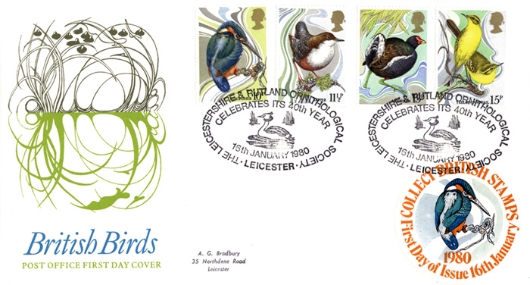
    If you go down to the woods today, you may not be guaranteed to see too many birds but you could well bump into a census-taking birdwatcher. The Biological Records Centre celebrated its 50th anniversary this summer and citizen science flourishes in Britain as never before. If one needs proof, look no further than the proliferation of published bird atlases, in which every single scrap of data has been sourced from the fields and woods by volunteers and then donated freely to the atlas editors. The resulting books are among the most compelling statements of our nation’s amateur fixation with nature. Individual fieldworkers, monitoring their local birds in selected two-kilometre squares (known in atlas parlance as “tetrads”), have been able, because of new data-processing software, to contribute to the national overview and to the finer-grain regional picture. Between them, the tens of thousands of observers have assembled an astonishing 19 million records. In the process, they have made Britain’s birds the most thoroughly documented avifauna on the planet. Yet the story they reveal is deeply troubling. Never before have we known in so much detail how badly some of our birds are faring. The grey partridge, which was once found nationwide and whose overall numbers were calculated in seven figures, has sunk towards national extinction. Today, there may be fewer than 75,000 pairs and the decline continues.

    If you go down to the woods today, you may not be guaranteed to see too many birds but you could well bump into a census-taking birdwatcher. The Biological Records Centre celebrated its 50th anniversary this summer and citizen science flourishes in Britain as never before. If one needs proof, look no further than the proliferation of published bird atlases, in which every single scrap of data has been sourced from the fields and woods by volunteers and then donated freely to the atlas editors. The resulting books are among the most compelling statements of our nation’s amateur fixation with nature. Individual fieldworkers, monitoring their local birds in selected two-kilometre squares (known in atlas parlance as “tetrads”), have been able, because of new data-processing software, to contribute to the national overview and to the finer-grain regional picture. Between them, the tens of thousands of observers have assembled an astonishing 19 million records. In the process, they have made Britain’s birds the most thoroughly documented avifauna on the planet. Yet the story they reveal is deeply troubling. Never before have we known in so much detail how badly some of our birds are faring. The grey partridge, which was once found nationwide and whose overall numbers were calculated in seven figures, has sunk towards national extinction. Today, there may be fewer than 75,000 pairs and the decline continues.

    The BTO’s national atlas may give us the bigger picture but it is in the many new regional works that one truly sees the impact of change on the ground. Andrew Self’s The Birds of London (Bloomsbury, £50), for example, reveals how grey partridges were once all over the capital, including areas such as Dulwich, Kew, Chiswick and Wormwood Scrubs. Then began the bird’s inexorable vanishing act. Self’s last report is of just three pairs in west London and even these are thought to be individuals released from captivity.

    The picture is much the same in The Breeding Birds of North Wales (Liverpool University Press, £45), edited by Anne Brenchley, Geoff Gibbs, Rhion Pritchard and Ian M Spence. Grey partridges once occurred in almost every lowland parish and only the more austere Snowdonian uplands were without them. By 2012, however, the editors could pinpoint the four tetrads where the bird was still proven to breed. Most of the map is blank.

    Even more compelling is the equivalent account of the lapwings of north Wales. These beautiful waders, whose cartwheeling song displays were once a quintessential part of rural life, have a particular association with the grass pastures used for grazing livestock. So the sheep-flecked hills of Cymru were once lapwing heaven. Not now. The atlas editors estimate a breeding total of just 600 pairs in more than 6,000 square kilometres of what was once their primary habitat.

    It is when the regional atlas dials down the focus to look at specific places that you start to unearth the real effects of the developments. In the lapwing account in the hugely detailed and beautifully produced The Birds of Derbyshire (Liverpool University Press, £45), the book’s editors, Roy Frost and Steve Shaw, tell us of a spot called Calton Pastures near Bakewell. This small place may have held lapwings for 2,000 years and in 1976 there were still 39 nesting pairs at Calton. By 1981, numbers were down to eight or nine pairs. Twelve years later, there were none at all.

    I can testify to how such change affects both place and human occupant, because I grew up in Buxton, ten miles from the lapwing pastures near Bakewell. The songs of lapwings were the soundtrack to my childhood. During the 1970s, I recorded all the local birds almost daily. In the intervening 40 years, I have monitored the gradual disappearance of an entire breeding community: grey partridge, lapwing, redshank, snipe, dunlin, woodcock, common sandpiper, cuckoo, ring ouzel, wheatear, whinchat, common redstart, wood warbler, tree pipit and twite. All of these birds once bred near my family house. All have gone.

    The Birds of Derbyshire documents the wider and slow-failing fortunes of this avian suite, which is part of the fabric of the northern uplands, yet the book cannot conjure the sense of personal loss. For me now to revisit Buxton is to encounter a landscape of ghosts.

    There are also positive developments reflected in The Birds of Derbyshire. One of the most heartening is the resurrection of our birds of prey following centuries of human persecution and the subsequent crisis triggered by organochlorine pesticides. In the 1960s, raptors such as the peregrine were thought to be at risk of global extinction. Today, however, there are probably more peregrines in Britain than at any time since the early-modern period.

    In Derbyshire, the birds are now widespread, and a pair routinely nests on Derby Cathedral. Andrew Self notes a similar churchgoing habit in London, with peregrines haunting St Paul’s and Westminster Abbey. This falcon’s return reflects that of other birds of prey: marsh harriers and red kites, common buzzards and hobbies, even rarities such as the white-tailed eagle, goshawk and honey buzzard. All have flourished in an era of greater protection and wider tolerance from game shooters.

    A second good news story is that the numbers of many wetland birds have either remained stable or, in some cases, vastly risen. In recent decades, the human demand for drinking water and construction materials – which has given rise to reservoirs and gravel pits – has supplemented the deliberate creation of aquatic habitats by environmental organisations. Some of the results have been spectacular. The avocet, for instance, the symbol of the Royal Society for the Protection of Birds (RSPB), has increased greatly in numbers and spread to a dozen counties.

    To the traditional British birds of wet areas such as swans, geese and ducks we may soon have to add a species suite from other parts of the continent. They include a range of herons – great and cattle egrets, purple herons, spoonbills – and also European gems such as the hoopoe and bee-eater. More than a dozen southern birds are predicted to arrive in Britain soon but, even though their exotic presence is much anticipated, they are not a signal for hope.

    The northward expansion of Mediterranean inhabitants is clear proof of climate change, which could eventually wreak havoc by shutting down the entire Afro-European migration system. Some of the birds whose loss in the Derbyshire hills I previously lamented – the common sandpiper, cuckoo, ring ouzel, wood warbler, tree pipit and common redstart – will not just decline further. They will cease to come altogether.

    When all the increases and losses are taken into account, the overarching picture is one of devastating reduction. In the last decades of the 20th century, 44 million breeding birds vanished from the British countryside. The total avian population has probably never been lower since the last Ice Age. A highly troubling aspect is the pace of change. The north Wales atlas reports that in 2002, local ecologists classified the region’s entire avifauna according to categories of red (27 species), amber (69 species) and green (125 species). This reflected an assumption that more than 60 per cent of all Welsh birds were in a healthy condition. However, in 2010, the list was revised – red was up to 45, amber was up to 100 and green was down to 68 – to reflect the new reality.

    Birds are metaphors for landscape not just in an imaginative sense but also at an ecological level. Warm-blooded vertebrates that are high in the food chain, they are the most compelling expressions of an underlying bio-luxuriance, which is rooted in the diversity of invertebrate and vegetative communities. The immense decline in the overall numbers of birds foretells a wider and systemic shrinkage in all natural species. Last year, there was confirmation that the entire countryside is in crisis with the publication of the State of Nature report, compiled by 25 wildlife organisations. Of 3,148 species, 60 per cent were found to be declining and 31 per cent declining strongly.

    This presents a challenge in more ways than one. Since the 1980s, successive British governments, following the lead of the Thatcher administration, have withdrawn from the notion of a state-backed policy on nature. Under the present government, the official conservation agency Natural England (along with its counterparts in Wales and Scotland) has been financially emasculated and politically silenced. What became in effect the privatisation of the nature business has left the voluntary sector, represented primarily by the National Trust and the RSPB (with the Wildlife and Woodland Trusts in a secondary role), as the lead players in the wildlife market.

    The Herculean achievements of these institutions have moderated the problems of natural loss but they cannot by themselves be a remedy. The National Trust and the RSPB may own or manage 460,000 hectares of some of our richest habitats but that is only 2 per cent of Britain’s land surface. That the RSPB has more members than all the main political parties combined is probably the most frequently cited statistic about the organisation. But the statement rests on a major fallacy: most of these members are not motivated activists. Very often they are just people who like the birds in their gardens. The RSPB’s magazine, now blandly renamed Nature’s Home, is less a political pamphlet than a source of reassurance and a sales brochure. The RSPB and the National Trust may have a combined membership of five million but this does not embolden them; it makes them nervous about their primary asset.

    In some ways, they are right to be nervous: research shows that bleak messages of wholesale decline wash poorly with the public. Since the 2008 recession, polls have consistently shown that support for nature conservation has declined, while the perceived need to sacrifice land for economic development has gained in popularity. For much of the public, nature is not a topic for political anxiety. It is a green and pleasant comfort blanket, a sort of immersive therapy to help slough off other social woes – food banks, recession, jihad, the EU, and so on.

    The publication of so many detailed bird atlases now leaves the environmental community in a bind. The books’ message about the systemic loss of nature in Britain becomes the truth that dare not speak its name. This much, however, is also certain: if the British are ever going to be able to reverse these losses, then accurate, detailed inventories such as these exemplary works of citizen science will be of central importance
    Source: New Statesman, 14 August 2014
    http://www.newstatesman.com/culture/2014/08/silence-larks-britain-s-mysterious-disappearing-birds

  • Kleine Anfrage der Abgeordneten Harald Ebner et al.  zur Gefährdung von Bestäuberinsekten, Vögeln und weiterer Organismen durch systemische Pestizidwirkstoffe

    Kleine Anfrage der Abgeordneten Harald Ebner et al. zur Gefährdung von Bestäuberinsekten, Vögeln und weiterer Organismen durch systemische Pestizidwirkstoffe

    Neuere Forschungsergebnisse zur Gefährdung von Bestäuberinsekten, Vögeln und weiterer Organismen durch systemische Pestizidwirkstoffe (insbesondere Neonicotinoide) und der sich daraus ergebende Handlungsbedarf für Regulierung und Forschung.

    Neuere Forschungsergebnisse zur Gefährdung von Bestäuberinsekten, Vögeln und weiterer Organismen durch systemische Pestizidwirkstoffe (insbesondere Neonicotinoide) und der sich daraus ergebende Handlungsbedarf für Regulierung und Forschung.

    Quelle: Deutscher Bundestag, 13.08.2014

  • Tussen 2003 en 2010 is het aantal duurzame boeren in de EU vertienvoudigd

    Tussen 2003 en 2010 is het aantal duurzame boeren in de EU vertienvoudigd

    Elk jaar komen er 500.000 hectaren bij aan nieuwe biologische landbouwgrond. Dat blijkt uit de meest recente statistieken van de EU. Zowel het aantal biologische boerenbedrijven als het landbouwareaal groeide met meer dan 50 procent tussen 2003 en 2010. In 2011 had de EU 9,6 miljoen hectaren biologische landbouwgrond. In 2010 waren er 186.000 duurzame boerenbedrijven verdeeld over de 27 EU-landen. Biologische landbouw is gedefinieerd als voedselproductie met een minimale impact op het milieu door zo natuurlijk als mogelijk te opereren. De EU heeft diverse standaarden hiervoor die het gebruik van chemicaliën, pesticiden, kunstmest en medicijnen voor dieren reguleren. Genetisch gemodificeerde organismen mogen niet gebruikt worden in biologische landbouw.

    Elk jaar komen er 500.000 hectaren bij aan nieuwe biologische landbouwgrond. Dat blijkt uit de meest recente statistieken van de EU. Zowel het aantal biologische boerenbedrijven als het landbouwareaal groeide met meer dan 50 procent tussen 2003 en 2010. In 2011 had de EU 9,6 miljoen hectaren biologische landbouwgrond. In 2010 waren er 186.000 duurzame boerenbedrijven verdeeld over de 27 EU-landen. Biologische landbouw is gedefinieerd als voedselproductie met een minimale impact op het milieu door zo natuurlijk als mogelijk te opereren. De EU heeft diverse standaarden hiervoor die het gebruik van chemicaliën, pesticiden, kunstmest en medicijnen voor dieren reguleren. Genetisch gemodificeerde organismen mogen niet gebruikt worden in biologische landbouw.

    De Europese Rekenkamer heeft overigens in het verleden gepleit voor strengere handhaving van de regels. Duurzame voedingsproducten bevatten soms toch pesticiden of antibiotica.

    Jonge boeren

    De Europese statistieken tonen verder aan dat vooral jonge boeren instappen in duurzame landbouw. In 2010 was 61,3 procent van de biologische boeren onder de 55, vergeleken met 44,2 procent in de niet-biologische landbouw.

    Het grootste aantal boerderijen (83 procent) alsmede de grootste hoeveelheid grond (78 procent) ligt in de vijftien oudere EU-staten, waaronder Nederland, Frankrijk en België.

    Van de landbouwgrond is het grootste deel (45 procent) bestemd als grasland, gevolgd door granen en permanente gewassen. Duurzame veeteelt neemt 1 procent van het oppervlak voor zijn rekening.
    Bron: Duurzaam Bedrijfsleven, 28-07-14
    http://www.duurzaambedrijfsleven.nl/67214/aantal-duurzame-boeren-in-eu-vertienvoudigd/

  • Box turtles are in decline in the suburbs and rural areas around Montgomery County

    Box turtles are in decline in the suburbs and rural areas around Montgomery County

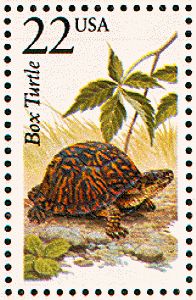
    Box turtles are amazing little animals. The word turtle usually equates to a reptile that primarily lives in water. However, box turtles spend the majority or all of their life on land. Being territorial, box turtles live in a designated area that provides them with food, water, shelter and places to raise young. They feed on a multitude of items, including worms, insects, fruits, berries, mushrooms, plants, fish, small animals and even occasionally carrion. Two or three decades ago, box turtles used to be fairly commonly observed in the suburbs and rural areas around Montgomery County, especially after a heavy spring or summer rain. Seeing three or four box turtles in a day was commonplace. Now, if you observe three or four a year you are lucky.

    Box turtles are amazing little animals. The word turtle usually equates to a reptile that primarily lives in water. However, box turtles spend the majority or all of their life on land. Being territorial, box turtles live in a designated area that provides them with food, water, shelter and places to raise young. They feed on a multitude of items, including worms, insects, fruits, berries, mushrooms, plants, fish, small animals and even occasionally carrion. Two or three decades ago, box turtles used to be fairly commonly observed in the suburbs and rural areas around Montgomery County, especially after a heavy spring or summer rain. Seeing three or four box turtles in a day was commonplace. Now, if you observe three or four a year you are lucky.

    Source: The Courier of Montgomery County, August 12, 2014
    http://www.yourhoustonnews.com/courier/sports/walls-box-turtles-on-the-decline/article_ba84a84e-e3be-522b-8eae-a2cb4e2af444.html

  • Massive tadpole die-off caused by ranavirus infection

    Massive tadpole die-off caused by ranavirus infection

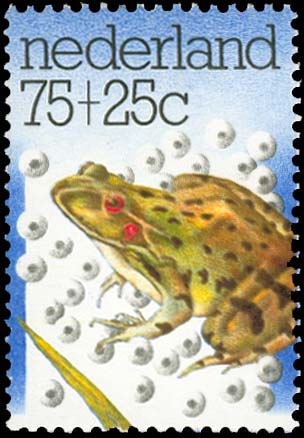
    More than 200,000 wood frog tadpoles died within 21 hours last year at a pond in Nat Wheelwright’s backyard in Brunswick, in what may be the largest and fastest mass death of tadpoles ever reported. The Bowdoin College biology professor is trying to find out why. This year, the wood frogs came back to Nat Wheelwright’s pond, but there were no 1-year-old frogs breeding and the number of tadpoles was lower than previous years. “It was something I had never seen before,” said Wheelwright, who has studied the frogs in his yard for 28 years. “It was like a nuclear bomb went off.” The tadpoles were covered with red hemorrhages and tested positive for ranavirus, which likely caused the die-off, said Wheelwright.

    More than 200,000 wood frog tadpoles died within 21 hours last year at a pond in Nat Wheelwright’s backyard in Brunswick, in what may be the largest and fastest mass death of tadpoles ever reported. The Bowdoin College biology professor is trying to find out why. This year, the wood frogs came back to Nat Wheelwright’s pond, but there were no 1-year-old frogs breeding and the number of tadpoles was lower than previous years. “It was something I had never seen before,” said Wheelwright, who has studied the frogs in his yard for 28 years. “It was like a nuclear bomb went off.” The tadpoles were covered with red hemorrhages and tested positive for ranavirus, which likely caused the die-off, said Wheelwright.

    Ranavirus infects cold-blooded animals and is transmitted through groups, not just individuals. Besides the hemorrhages and slight bloating, the virus causes tadpoles to become lethargic and spend more time on the surface, making them more vulnerable to predators.The infection has been linked to the decline of amphibians worldwide, including in the United Kingdom and Canada. Wheelwright and ranavirus researchers at the University of Tennessee, who helped diagnose the infection, published a report of the case in a recent issue of “Herpetological Review.”

    Wheelwright discovered the dying tadpoles in June 2013 during a morning swim in the pond. His wife had noted the day before that it had more wood frog tadpoles than usual.

    “This happened lightning fast, I don’t think it spread one-by-one,” Wheelwright said. “There must have been a low level of the infection in the tadpoles already.”

    Despite the large die-off, Wheelwright said, the species is not in danger of extinction.

    “It’s an abundant species so it’s not an immediate concern,” he said, while noting that regional populations can be hurt if there are continuous die-offs.

    “The die-off is significant; however, in warm weather, we do see mass mortalities of wood frogs from ranavirus in some years,” Dr. Aram Calhoun, a professor of wetlands ecology at the University of Maine at Orono, said in an email. “We don’t know enough about the synergistic effects of all the stressors in a frog’s environment.”

    Calhoun said that researchers are concerned about these issues and UMaine is using a four-year National Science Foundation research grant to study the effects of urbanizing landscapes on pool-breeding amphibians.

    “Dr. Wheelright is correct in saying we need more vigilance and should encourage our citizen science base to monitor pools,” Calhoun said.

    “However, these events happen quickly and in our experience, the carcasses are scavenged in less than 24 hours so people could easily miss die-off events.”

    In a video, Wheelwright said to think about the significance of the die-off as “200,000 people, the size of Hartford, Connecticut, going belly up overnight.”

    This year, Wheelwright said that the wood frogs came back to the pond, but there were no one-year-old frogs breeding and the number of tadpoles was lower than previous years.

    “It’s definitely something that we should be monitoring,” he said.

    Dr. Phillip deMaynadier, a Maine Department of Inland Fisheries & Wildlife amphibian specialist, could not be reached for comment.

    Source: Portland Press Herald, 31 July 2014

    Bowdoin biologist investigates tadpole die-off

  • Invertebrate numbers have fallen by nearly half over the last 35 years

    Invertebrate numbers have fallen by nearly half over the last 35 years

    The world’s soaring human population has slashed the numbers of creepy crawlies a study has found. However, researchers say the demise of slugs, spiders and worms is not good news for us humans and could spark an explosion in pests. The study, published in the journal Science, revealed that as the human population has doubled over the last 35 years to now stand at more than seven billion, invertebrate numbers have fallen by nearly half over the same period. Experts fear this could have an effect on ecosystems as insects, spiders, crustaceans slug and worms play an important role in pollinating crops, pest control, decomposition and ensuring soil remains packed with nutrients, as well as water filtration. In the UK these two factors caused a massive reduction in the number of beetles, butterflies, bees and wasps, a 30-60 percent fall over 40 years, according to the study.

    The world’s soaring human population has slashed the numbers of creepy crawlies a study has found. However, researchers say the demise of slugs, spiders and worms is not good news for us humans and could spark an explosion in pests. The study, published in the journal Science, revealed that as the human population has doubled over the last 35 years to now stand at more than seven billion, invertebrate numbers have fallen by nearly half over the same period. Experts fear this could have an effect on ecosystems as insects, spiders, crustaceans slug and worms play an important role in pollinating crops, pest control, decomposition and ensuring soil remains packed with nutrients, as well as water filtration. In the UK these two factors caused a massive reduction in the number of beetles, butterflies, bees and wasps, a 30-60 percent fall over 40 years, according to the study.

    Experts warned that fewer insects would have a huge effect on crop production as up to 75 per are pollinated by insects, amounting to around 10 per cent of the world’s food supply.
    And the cost of pest control without natural predators could be more than £2.6 billion pounds in the United States alone.
    Scientists also fear the consequences of a world with fewer birds and insects to recycle and move nutrients, and say it would result in a less reliable food supply.
    With fewer amphibians it is also feared that we could end up with more algae clogging up our water supply.
    Decreasing invertebrate numbers are also known to compromise food production due to reduced pollination, seed dispersal and insect predation but the impact the continuing loss of animals, including invertebrates, has on the spread of human disease needs to be better understood as a priority.
    Dr Ben Collen, from University College London’s Biosciences Department, said: “We were shocked to find similar losses in invertebrates as with larger animals, as we previously thought invertebrates to be more resilient.
    “While we don’t fully understand what the long-term impact of these declining numbers will be, currently we are in the potentially dangerous position of losing integral parts of ecosystems without knowing what roles they play within it.
    “Prevention of further declines will require us to better understand what species are winning and losing in the fight for survival and from studying the winners, apply what we learn to improve conservation projects.
    “We also need to develop predictive tools for modelling the impact of changes to the ecosystem so we can prioritise conservation efforts, working with governments globally to create supportive policy to reverse the worrying trends we are seeing.”
    Lead author Prof Rodolfo Dirzo, of Stanford Woods Institute for the Environment in the US, added: “Where human density is high, you get high rates of defaunation, high incidence of rodents, and thus high levels of pathogens, which increases the risks of disease transmission.
    “Who would have thought that just defaunation would have all these dramatic consequences, but it can be a vicious circle.
    “We tend to think about extinction as loss of a species from the face of Earth, and that’s very important, but there’s a loss of critical ecosystem functioning in which animals play a central role that we need to pay attention to as well.
    “Ironically, we have long considered that defaunation is a cryptic phenomenon, but I think we will end up with a situation that is non-cryptic because of the increasingly obvious consequences to the planet and to human well-being.”

    Source: Telegraph, 25 July 2014
    http://www.telegraph.co.uk/earth/wildlife/10989198/Creepy-crawlies-decline-as-human-population-soars.html

  • Once-common marine birds are disappearing from the coast of Washington and British Columbia

    Once-common marine birds are disappearing from the coast of Washington and British Columbia

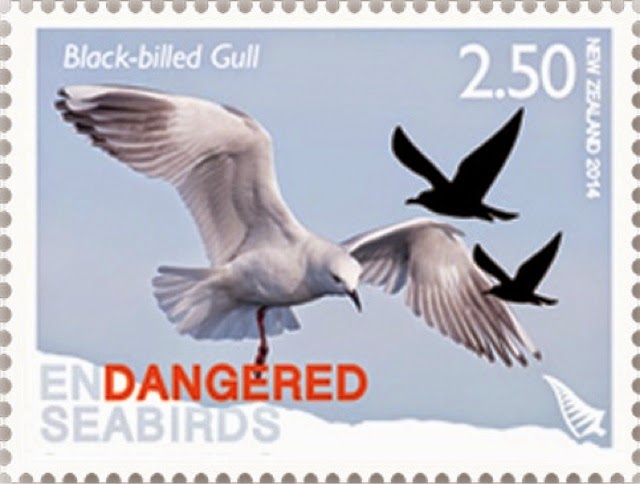
    From white-winged scoters and surf scoters to long-tailed ducks, murres, loons and some seagulls, the number of everyday marine birds here has plummeted dramatically in recent decades. The reasons are often complex, but for many the loss of forage fish like herring might hold a clue. Bird surveys done by plane are tracking a significant ecological shift — a major decline in once-abundant marine birds. Scoters are down more than 75 percent from what they were in the late 1970s. Murres have dropped even more. Western grebes have mostly vanished, falling from several hundred thousand birds to about 20,000. Several new studies link many dwindling marine bird populations to what they eat — especially herring, anchovies, sand lance and surf smelt, the tiny swimmers often dubbed forage fish.

    From white-winged scoters and surf scoters to long-tailed ducks, murres, loons and some seagulls, the number of everyday marine birds here has plummeted dramatically in recent decades. The reasons are often complex, but for many the loss of forage fish like herring might hold a clue. Bird surveys done by plane are tracking a significant ecological shift — a major decline in once-abundant marine birds. Scoters are down more than 75 percent from what they were in the late 1970s. Murres have dropped even more. Western grebes have mostly vanished, falling from several hundred thousand birds to about 20,000. Several new studies link many dwindling marine bird populations to what they eat — especially herring, anchovies, sand lance and surf smelt, the tiny swimmers often dubbed forage fish.

    The relationship between marine birds and slick, fatty forage fish is complex. Some birds are here year-round while others pass through for just a few months. Some birds key in solely on silvery herring while others can just as easily eat flounder.

    Some forage-fish species, such as herring, are a fraction of what they once were. But little information exists about the health of other species.

    But an exhaustive new analysis of bird diets and population trends found that marine birds relying exclusively on fish like herring were up to 16 times more likely to be in trouble than birds that ate nonschooling bottom-dwellers like sculpin.

    “The result was remarkably strong,” said study author Ignacio Vilchis, formerly with the SeaDoc Society at the University of California, Davis. “It showed that it’s the diving birds that go after forage fish which are much more likely to have a declining trend.”

    There’s certainly no shortage of crashes to evaluate. Five years ago one study showed the overall bird numbers in Puget Sound and British Columbia’s Georgia Strait were down 30 percent from the late 1970s. In Puget Sound alone, marine bird numbers have been cut in half.

    Biologists for years have tried to understand why the change hit so many species at once. But only recently have they really started to examine some of the systemic shifts that may cause or exacerbate declines.

    “It’s one thing to have a rare species decline,” said Joe Gaydos, with the SeaDoc Society. “But we’re not talking about a few plovers. We’re talking about big, common species, and a lot of them.”

    Bellwether

    There is no easier way to view this decline than through the once-ubiquitous Western grebe.

    These black and white ducklike birds with their long necks and thin beaks settle in winter in colonies on lakes from southwest Canada to California but gather their food from marine waters.

    While the bulk of that population once centered on Washington and lower British Columbia, sightings of larger flocks of grebes are unusual enough that when it happens “birders will talk about it on the Internet for days,” Gaydos said.

    At first it wasn’t clear whether this was a local or continental-scale problem, said Scott Wilson, a biologist with Environment Canada. It’s both: Up and down the West Coast, the winter breeding population is half what it was in 1975.

    But something else was going on, too.

    While Puget Sound and lower B.C. declines top 95 percent, grebe populations in parts of California have tripled. The center of the bird’s range shifted 550 miles south.

    “Food is one of the key resources species need to survive,” Wilson said. And grebes rely on forage fish.

    In Puget Sound, the biggest stock of herring used to reside at Cherry Point, south of Bellingham. But since 1970 that herring stock has crashed, with more than 90 percent of the population all but gone.

    The loss of herring probably drove grebes away, Wilson hypothesized, but it also did so just as sardine stocks were recovering to the south. Down to a few thousand metric tons in 1985, sardine populations in California have since exploded to more than 2 million metric tons, providing an alternative food for hungry grebes.

    “The grebes were tracking this very large-scale change — the combined change to herring in the north and sardines in the south,” Wilson said. “And Western grebes are quite mobile.”

    Changes in other bird populations, too, could to some degree be related to changes in forage fish.

    Surf scoters, which primarily eat mussels and small crabs, also sometimes turn to herring eggs during spring migration. In 1978, bird surveyors counted 40,000 scoters near where herring were spawning. But in 2004 and 2005, surveyors counted fewer than 1,000 birds in the same location.

    Some researchers suspect that since the herring spawn moves from year to year, bird counters probably missed quite a few scoters. But experts believe the general trend of decline is real.

    “I think the herring absolutely did play a role in the scoter decline, but exactly what that role is, we just don’t know,” said Joe Evenson, of the Washington Department of Fish and Wildlife. “At that time of year, scoters are eating roe because they’re storing up a lot of fat and that can help determine whether they are successful at breeding. But I think there’s not just one thing that contributed to the scoter collapse.”

    Meanwhile, the chief threat to marbled murrelets is still believed to be logging in their breeding grounds high in ancient Douglas fir forests. But some researchers have suggested that along the coast, murrelets are being forced to abandon their fatty fish diets and are eating less-nutritious fish lower in the food chain — especially just before the important period when they mate.

    At the same time, some scientists believe the herring problem itself may be far worse than others acknowledge.

    Key in ecosystem

    Forage fish, particularly herring, are supposed to be so abundant they are eaten by almost everything, including hake, dogfish and sea lions and whales.

    “They are the central node of the marine ecosystem,” said Iain McKechnie, a coastal archaeologist with the University of British Columbia. “They aren’t the base, they aren’t the top, but they are the thing through which everything else flows.”

    Modern humans presume populations of herring and other forage fish naturally swing wildly between booms and busts. But archaeological sites recently analyzed by McKechnie suggest that may be a modern feature because herring populations today are a mere fraction of what they were historically.

    “I count fish bones,” Mc­Kechnie said.

    He examined ancient shell middens from Alaska to Puget Sound and determined that Native Americans centuries ago caught and ate gobs of herring — so many that it clearly was among the most important fish they ate.

    Herring bones were present at almost every single one of 171 sites. In half those sites, herring bones were the single-most common fish species. Its rank was first or second in 80 percent of the sites.

    Most important, over 7,000 years of history, Mc­Kechnie saw no evidence of variability in herring populations.

    “Herring populations in the past were much more stable than they are in the 20th century,” he said.

    McKechnie suspects the most likely reason for the change is intensive industrial herring-fishing pressure in the late 19th and early 20th centuries.

    While Cherry Point herring stock used to be the biggest, 47 percent of the state’s herring are said to be in relatively healthy shape. But Wayne Landis, at Western Washington University, said that is probably an oversimplification.

    In a recent study, he found that while Puget Sound herring used to live eight to 10 years, they now survive only to age 3 or 4. That limits their ability to successfully replace themselves.

    “They don’t get old anymore,” he said.

    That could be the result of disease or toxic contamination or other changes, but the important thing is that it appears to be true across Puget Sound, he said.

    Usually after a bust, herring eventually recolonize, Landis said.

    The question now: Is this bust different from those in the past?

    “If that part of the food web is in decline, there may be a food problem for some birds,” he said.

    Even so, other scientists say these environmental systems remain far too complicated for researchers to know for sure. We often don’t know enough yet to say where things are headed.

    Gaydos put the bird decline picture this way.

    “Something’s happening on a big level,” he said. “But what is it?

    Source: The Seattle Times, July 24, 2014
    http://seattletimes.com/html/localnews/2024155783_birddeclinesxml.html