Auteur: Henk Tennekes

  • Aerial insectivores are victims of widespread pesticide pollution – Canada’s native bird population trends tell the story

    Aerial insectivores are victims of widespread pesticide pollution – Canada’s native bird population trends tell the story

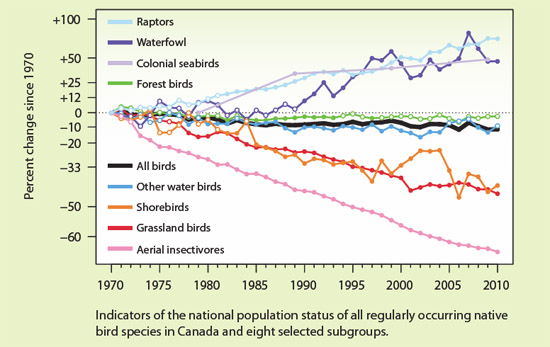
    Canada is home to billions of birds belonging to some 451 regularly occurring native species that raise their young or spend their non-breeding seasons in this vast and varied country. Increasingly, these birds face many threats here and elsewhere. On average, Canadian breeding bird populations have decreased 12% since 1970 when effective monitoring began for most species. Some groups, such as grassland birds, aerial insectivores and shorebirds, are showing major declines. Aerial insectivores—birds that catch insects in flight—are declining more steeply than any other group of birds. Some formerly very common species like the Barn Swallow and Chimney Swift have declined to less than a quarter of their 1970-level populations.

    Canada is home to billions of birds belonging to some 451 regularly occurring native species that raise their young or spend their non-breeding seasons in this vast and varied country. Increasingly, these birds face many threats here and elsewhere. On average, Canadian breeding bird populations have decreased 12% since 1970 when effective monitoring began for most species. Some groups, such as grassland birds, aerial insectivores and shorebirds, are showing major declines. Aerial insectivores—birds that catch insects in flight—are declining more steeply than any other group of birds. Some formerly very common species like the Barn Swallow and Chimney Swift have declined to less than a quarter of their 1970-level populations.

    Source: The State of Canada’s Birds 2012
    http://www.stateofcanadasbirds.org/overview.jsp

  • Farmland birds in Europe fall to lowest ever levels

    Farmland birds in Europe fall to lowest ever levels

    Farmland bird populations both in Ireland and across Europe are at their lowest levels since records began, new figures from BirdWatch Ireland and BirdLife Europe reveal. The Pan-European Common Bird Monitoring Scheme has compiled population figures for 145 common and widespread bird species in 25 European countries between 1980 and 2009. Amongst those species covered, farmland birds are the most threatened group, with 20 out of 36 species in decline, and overall numbers at an all-time low, down by 48% since 1980. Some of the species that have declined the most over the last three decades across Europe include familiar farmland birds like Grey Partridge (–82%), Skylark (–46%), Linnet (–62%) and Corn Bunting (–66%). Ian Burfield, European Science and Data Manager for BirdLife Europe, said: “These shocking new figures confirm that farmland birds have halved in number across Europe since 1980. While the rate of decline may have slowed in recent years, it’s clear that attempts to halt the loss have been insufficient, and that massive efforts are needed to reverse the trend.”

    Farmland bird populations both in Ireland and across Europe are at their lowest levels since records began, new figures from BirdWatch Ireland and BirdLife Europe reveal. The Pan-European Common Bird Monitoring Scheme has compiled population figures for 145 common and widespread bird species in 25 European countries between 1980 and 2009. Amongst those species covered, farmland birds are the most threatened group, with 20 out of 36 species in decline, and overall numbers at an all-time low, down by 48% since 1980. Some of the species that have declined the most over the last three decades across Europe include familiar farmland birds like Grey Partridge (–82%), Skylark (–46%), Linnet (–62%) and Corn Bunting (–66%). Ian Burfield, European Science and Data Manager for BirdLife Europe, said: “These shocking new figures confirm that farmland birds have halved in number across Europe since 1980. While the rate of decline may have slowed in recent years, it’s clear that attempts to halt the loss have been insufficient, and that massive efforts are needed to reverse the trend.”

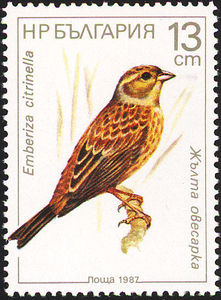
    In Ireland the situation is no better, with many farmland bird populations continuing to decline. The Countryside Bird Survey (data from which feeds into the European scheme) annually monitors the population levels of our common birds throughout the country on an annual basis. The most recent data recorded the lowest ever levels for Yellowhammer in 2009, while iconic farmland birds such as Skylark and Kestrel have shown significant, long-term declines since the survey started in 1998.
    Source: BirdWatch Ireland, 20 August 2015
    http://www.birdwatchireland.ie/News/FarmlandbirdsinEuropefalltolowesteverlevel/tabid/1198/Default.aspx

  • Intensieve landbouw verdrijft de steenuil van het boerenland

    Intensieve landbouw verdrijft de steenuil van het boerenland

    De Steenuil (Athena noctua) is een vogel van het halfopen agrarische landschap met houtwallen en een korte vegetatie. Op plaatsen waar de vegetatie kort is, wordt lopend, huppend en soms rennend gejaagd op insecten en wormen. Regenwormen en insecten vormen met 75% het hoogste aandeel van het voedsel van de Steenuil. Bij de Steenuil lijkt zich dezelfde teruggang in talrijkheid te voltrekken als eerder bij de Kerkuil heeft plaatsgevonden. In de loop van de twintigste eeuw zijn door intensivering van de landbouw veel kleinschalige agrarische cultuurlandschappen aangetast of verdwenen. Het gevolg was een verlies van veel geschikte broedlocaties en een verarming van de prooidieren. Door het verdwijnen van geschikte nestplaatsen, het gebruik van bestrijdingsmiddelen en het verkeer, zijn de leefomstandigheden voor de Steenuil verslechterd. Door de sterke achteruitgang en het geringe aantal broedparen zijn er nog slechts een paar “versnipperde” rest-populaties overgebleven. De toegenomen afstand tussen deze populaties is nadelig voor de voortplantingsmogelijkheden met soortgenoten. De nog overgebleven Steenuilen verkeren in een weinig rooskleurige situatie.

    De Steenuil (Athena noctua) is een vogel van het halfopen agrarische landschap met houtwallen en een korte vegetatie. Op plaatsen waar de vegetatie kort is, wordt lopend, huppend en soms rennend gejaagd op insecten en wormen. Regenwormen en insecten vormen met 75% het hoogste aandeel van het voedsel van de Steenuil. Bij de Steenuil lijkt zich dezelfde teruggang in talrijkheid te voltrekken als eerder bij de Kerkuil heeft plaatsgevonden. In de loop van de twintigste eeuw zijn door intensivering van de landbouw veel kleinschalige agrarische cultuurlandschappen aangetast of verdwenen. Het gevolg was een verlies van veel geschikte broedlocaties en een verarming van de prooidieren. Door het verdwijnen van geschikte nestplaatsen, het gebruik van bestrijdingsmiddelen en het verkeer, zijn de leefomstandigheden voor de Steenuil verslechterd. Door de sterke achteruitgang en het geringe aantal broedparen zijn er nog slechts een paar “versnipperde” rest-populaties overgebleven. De toegenomen afstand tussen deze populaties is nadelig voor de voortplantingsmogelijkheden met soortgenoten. De nog overgebleven Steenuilen verkeren in een weinig rooskleurige situatie.

    Bron: Natúurvereniging Geaflecht
    http://www.geaflecht.nl/de_steenuil_in_friesland_sterk_bedreigd

  • Sinds de invoering van neonicotinoiden verdwijnen de vlinders op het boerenland

    Sinds de invoering van neonicotinoiden verdwijnen de vlinders op het boerenland

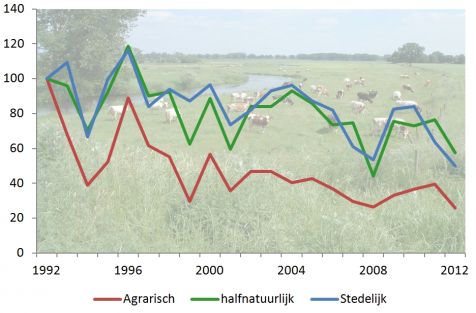
    De boerenlandlandvlinders zijn in Nederland vanaf 1992 sterk achteruit gegaan. Dit blijkt uit de graslandgraadmeter. De achteruitgang is in het agrarisch gebied nog sterker dan in natuurgebieden, maar ook dan in stedelijk gebied. Uit de prachtige plaatjes van het vroegere boerenland kun je bedenken welke vlinders daar hebben rondgevlogen. Uit de beperkte gegevens die van vroeger beschikbaar zijn, en uit verslagen en collecties van vlinderaars, komt een gevarieerd beeld naar voren. De zilveren maan op de graslanden, soms vergezeld van de moerasparelmoervlinder. Drie verschillende soorten vuurvlinders en hele massa’s zandoogjes. Niet alleen veel soorten, maar ook gewoon heel veel vlinders. Dat kom je nu op het boerenland niet meer tegen.

    De boerenlandlandvlinders zijn in Nederland vanaf 1992 sterk achteruit gegaan. Dit blijkt uit de graslandgraadmeter. De achteruitgang is in het agrarisch gebied nog sterker dan in natuurgebieden, maar ook dan in stedelijk gebied. Uit de prachtige plaatjes van het vroegere boerenland kun je bedenken welke vlinders daar hebben rondgevlogen. Uit de beperkte gegevens die van vroeger beschikbaar zijn, en uit verslagen en collecties van vlinderaars, komt een gevarieerd beeld naar voren. De zilveren maan op de graslanden, soms vergezeld van de moerasparelmoervlinder. Drie verschillende soorten vuurvlinders en hele massa’s zandoogjes. Niet alleen veel soorten, maar ook gewoon heel veel vlinders. Dat kom je nu op het boerenland niet meer tegen.

    Bron: Vlinderstichting en Natuurbericht, 8 april 2013
    http://www.natuurbericht.nl/?id=10417

  • National USGS study finds neonics in urban, rural streams

    National USGS study finds neonics in urban, rural streams

    In the first national-scale investigation of neonicotinoids in streams, the U.S. Geological Survey found that in more than half of urban and agricultural streams sampled, the pesticide could be detected. The study, conducted from 2011 to 2014, is published in Environmental Chemistry. It spanned 24 states and Puerto Rico and was completed as part of ongoing USGS stream sampling. “In the study, neonicotinoids occurred throughout the year in urban streams while pulses of neonicotinoids were typical in agricultural streams during crop planting season,” said USGS research chemist Michelle Hladik, the report’s lead author. “The occurrence of low levels in streams throughout the year supports the need for future research on the potential impacts of neonicotinoids on aquatic life and terrestrial animals that rely on aquatic life,” said USGS scientist Kathryn Kuivila, the research team leader. “These results will serve as an important baseline for that future work.” The study is the first step in setting priorities for exposure experiments and identifying adverse effects to animals and wildlife near or in streams. Agriculture groups and others have been monitoring discussion about neonicotinoids’ effects on non-target insects, especially pollinating honey bees and native bees.

    In the first national-scale investigation of neonicotinoids in streams, the U.S. Geological Survey found that in more than half of urban and agricultural streams sampled, the pesticide could be detected. The study, conducted from 2011 to 2014, is published in Environmental Chemistry. It spanned 24 states and Puerto Rico and was completed as part of ongoing USGS stream sampling. “In the study, neonicotinoids occurred throughout the year in urban streams while pulses of neonicotinoids were typical in agricultural streams during crop planting season,” said USGS research chemist Michelle Hladik, the report’s lead author. “The occurrence of low levels in streams throughout the year supports the need for future research on the potential impacts of neonicotinoids on aquatic life and terrestrial animals that rely on aquatic life,” said USGS scientist Kathryn Kuivila, the research team leader. “These results will serve as an important baseline for that future work.” The study is the first step in setting priorities for exposure experiments and identifying adverse effects to animals and wildlife near or in streams. Agriculture groups and others have been monitoring discussion about neonicotinoids’ effects on non-target insects, especially pollinating honey bees and native bees.

    Source: Farm Futures, August 19, 2015
    http://farmfutures.com/story-national-usgs-study-finds-neonics-urban-rural-streams-0-131158
    Reference:
    Michelle L. Hladik, Dana W. Kolpin , Environ. Chem. 2015,

    http://dx.doi.org/10.1071/EN15061
    To better understand the fate and transport of neonicotinoid insecticides, water samples were collected from streams across the United States. In a nationwide study, at least one neonicotinoid was detected in 53 % of the samples collected, with imidacloprid detected most frequently (37 %), followed by clothianidin (24 %), thiamethoxam (21 %), dinotefuran (13 %), acetamiprid (3 %) and thiacloprid (0 %). Clothianidin and thiamethoxam concentrations were positively related to the percentage of the land use in cultivated crop production and imidacloprid concentrations were positively related to the percentage of urban area within the basin. Additional sampling was also conducted in targeted research areas to complement these national-scale results, including determining: (1) neonicotinoid concentrations during elevated flow conditions in an intensely agricultural region; (2) temporal patterns of neonicotinoids in heavily urbanised basins; (3) neonicotinoid concentrations in agricultural basins in a nationally important ecosystem; and (4) in-stream transport of neonicotinoids near a wastewater treatment plant. Across all study areas, at least one neonicotinoid was detected in 63 % of the 48 streams sampled.
  • Die Bestandssituation der Feldvögel in NRW hat sich in den letzten fünf bis sechs Jahren erheblich verschlechtert

    Die Bestandssituation der Feldvögel in NRW hat sich in den letzten fünf bis sechs Jahren erheblich verschlechtert

    Mit dem kürzlich erschienenen Brutvogelatlas für ganz NRW sind wir nun erstmalig in der Lage, den Rückgang der Feldvögel flächendeckend zu dokumentieren. Diesem liegen Erhebungsdaten aus dem Zeitraum 2005 bis 2009 zugrunde, die mit Daten aus den 1990er Jahren verglichen werden können. Dem Brutvogelatlas lässt sich entnehmen, dass unsere Feldvögel, insbesondere die Bodenbrüter, – mit Ausnahme der Wiesenschaftstelze – in den letzten zwei bis drei Jahrzehnten im Bestand z.T. rapide abnehmen, so dass viele heute auf der Roten Liste in einer Gefährdungskategorie eingestuft werden. Der Ortolan ist in den letzten Jahren schon in NRW ausgestorben. Mit der Bestandsabnahme geht ein Schrumpfen der besiedelten Fläche einher, so dass einige Gebiete inzwischen auch von ehemaligen Allerweltsvögeln wie Kiebitz oder Feldlerche geräumt wurden. Ein ähnlicher Verlauf setzte bei den im feuchten Grünland lebenden Limikolen, wie Bekassine, Uferschnepfe und Rotschenkel, schon viel früher ein, so dass diese heute weitgehend auf gemanagte Feuchtwiesengebiete beschränkt sind und sich ihr Bestand hier auf niedrigem Populationsniveau stabilisiert bzw. weiterhin leicht abnimmt. Erfahrungen und Untersuchungen nach Abschluss der Kartierungen für den Brutvogelatlas zeigen, dass sich die Bestandssituation der Feldvögel in den letzten fünf bis sechs Jahren weiter erheblich verschlechtert hat und dieser Prozess nach wie vor anhält. So haben sich die Bestände des Rebhuhns, des Kiebitzes und der Grauammer in diesem kurzen Zeitraum etwa halbiert (Rückgänge von 40 bis über 50 %).

    Mit dem kürzlich erschienenen Brutvogelatlas für ganz NRW sind wir nun erstmalig in der Lage, den Rückgang der Feldvögel flächendeckend zu dokumentieren. Diesem liegen Erhebungsdaten aus dem Zeitraum 2005 bis 2009 zugrunde, die mit Daten aus den 1990er Jahren verglichen werden können. Dem Brutvogelatlas lässt sich entnehmen, dass unsere Feldvögel, insbesondere die Bodenbrüter, – mit Ausnahme der Wiesenschaftstelze – in den letzten zwei bis drei Jahrzehnten im Bestand z.T. rapide abnehmen, so dass viele heute auf der Roten Liste in einer Gefährdungskategorie eingestuft werden. Der Ortolan ist in den letzten Jahren schon in NRW ausgestorben. Mit der Bestandsabnahme geht ein Schrumpfen der besiedelten Fläche einher, so dass einige Gebiete inzwischen auch von ehemaligen Allerweltsvögeln wie Kiebitz oder Feldlerche geräumt wurden. Ein ähnlicher Verlauf setzte bei den im feuchten Grünland lebenden Limikolen, wie Bekassine, Uferschnepfe und Rotschenkel, schon viel früher ein, so dass diese heute weitgehend auf gemanagte Feuchtwiesengebiete beschränkt sind und sich ihr Bestand hier auf niedrigem Populationsniveau stabilisiert bzw. weiterhin leicht abnimmt. Erfahrungen und Untersuchungen nach Abschluss der Kartierungen für den Brutvogelatlas zeigen, dass sich die Bestandssituation der Feldvögel in den letzten fünf bis sechs Jahren weiter erheblich verschlechtert hat und dieser Prozess nach wie vor anhält. So haben sich die Bestände des Rebhuhns, des Kiebitzes und der Grauammer in diesem kurzen Zeitraum etwa halbiert (Rückgänge von 40 bis über 50 %).

    Quelle:
    Feldvögel in Nordrhein-Westfalen, Situation, Gefährdung und notwendige Schutzmaßnahmen. Positionspapier der Nordrhein-Westfälischen Ornithologengesellschaft (NWO), Oktober 2014

  • Bleibt dem Auerhuhn überhaupt noch eine Chance?

    Bleibt dem Auerhuhn überhaupt noch eine Chance?

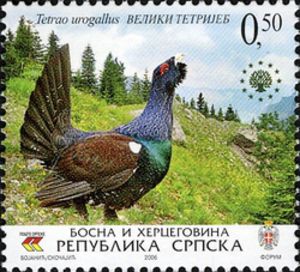
    Es ist traurig, ja gar schmerzhaft, sich die Neuenburger Wälder ohne ihren König vorzustellen. Der Auerhahn (Tetrao urogallus) mit seinem majestätischen Aussehen ist im Schatten der jurassischen Bergkette über Jahrhunderte regelrecht aufgeblüht. Seine bis zu den Füssen gefiederten Beine und seine mit kleinen, abstehenden Hornstiften versehenen Krallen erlauben es ihm, sich leichtfüssig über den frischen Schnee zu bewegen. Wie auch viele andere Tierarten, wurde er während der letzten Eiszeit in dieser Region sesshaft. Eine Bestandsaufnahme im jurassischen Bogen schätzte 1964 die Population auf 1‘500 Tiere. „Heute leben wohl nur noch sechs Auerhähne und vier Auerhennen im Kanton“, bilanziert Jean-Claude Garin, Hilfs-Wildhüter in der Region von La Vraconnaz, an der Grenze des Kantons Waadt, dem es in dieser Hinsicht nicht viel besser geht. Sein Kollege Christian Zbinden spricht von „maximal acht Hühnern“. Mehrere Refugien, Orte wo sich der Auerhahn alljährlich fortpflanzt, wurden ab Mitte des 20. Jahrhunderts im Creux-du-Van beim Jordan (La Brévine) und beim Chasseral unter Schutz gestellt. Leider konnten diese Massnahmen den steten Rückzug dieser Spezies nicht eindämmen. Schlimmer noch: Dieser Rückgang „beschleunigte sich ab den 80er Jahren“, ergänzt Christian Zbinden.

    Es ist traurig, ja gar schmerzhaft, sich die Neuenburger Wälder ohne ihren König vorzustellen. Der Auerhahn (Tetrao urogallus) mit seinem majestätischen Aussehen ist im Schatten der jurassischen Bergkette über Jahrhunderte regelrecht aufgeblüht. Seine bis zu den Füssen gefiederten Beine und seine mit kleinen, abstehenden Hornstiften versehenen Krallen erlauben es ihm, sich leichtfüssig über den frischen Schnee zu bewegen. Wie auch viele andere Tierarten, wurde er während der letzten Eiszeit in dieser Region sesshaft. Eine Bestandsaufnahme im jurassischen Bogen schätzte 1964 die Population auf 1‘500 Tiere. „Heute leben wohl nur noch sechs Auerhähne und vier Auerhennen im Kanton“, bilanziert Jean-Claude Garin, Hilfs-Wildhüter in der Region von La Vraconnaz, an der Grenze des Kantons Waadt, dem es in dieser Hinsicht nicht viel besser geht. Sein Kollege Christian Zbinden spricht von „maximal acht Hühnern“. Mehrere Refugien, Orte wo sich der Auerhahn alljährlich fortpflanzt, wurden ab Mitte des 20. Jahrhunderts im Creux-du-Van beim Jordan (La Brévine) und beim Chasseral unter Schutz gestellt. Leider konnten diese Massnahmen den steten Rückzug dieser Spezies nicht eindämmen. Schlimmer noch: Dieser Rückgang „beschleunigte sich ab den 80er Jahren“, ergänzt Christian Zbinden.

    Quelle: Naturfreunde Schweiz
    http://www.naturfreunde.ch/magazin/rubriken/detail/?tx_ttnews%5Btt_news%5D=343&cHash=818f012d3ee3e73d206ab58a59a2c886

  • Insight into the Binding Mode of Agonists of the Nicotinic Acetylcholine Receptor

    Insight into the Binding Mode of Agonists of the Nicotinic Acetylcholine Receptor

    Starting from a homology model of the active site of the nicotinic acetylcholine receptor (nAChR) of sensitive pest insects, such as aphids (here, Myzus persicae), a hypothesis for the mode of binding was created for five small-molecule agonists of the nAChR, representing all four chemical subclasses of group 4 in the Insecticide Resistance Action Committee (IRAC) mode of action (MoA) classification scheme. Docking poses of these agonists in the active site of the homology model revealed two major interactions that are common across all investigated compounds: 1) a water-mediated hydrogen bridge towards the backbone of the b subunit of the receptor. 2) an interaction with a conserved cluster of aromatic residues from the a subunit. Interactions 1 and 2 result in nice spatial alignment of all five agonists within the active site. 3) The four synthetic agonists carry a head group that forms a hydrogen bridge towards a charged arginine residue from the b subunit, which is known to be crucial for high-affinity binding and pest sensitivity. Interaction 3 is not only absent for the vertebrate toxic plant derived alkaloid nicotine, but is replaced by a weak electrostatic repulsion.

    Starting from a homology model of the active site of the nicotinic acetylcholine receptor (nAChR) of sensitive pest insects, such as aphids (here, Myzus persicae), a hypothesis for the mode of binding was created for five small-molecule agonists of the nAChR, representing all four chemical subclasses of group 4 in the Insecticide Resistance Action Committee (IRAC) mode of action (MoA) classification scheme. Docking poses of these agonists in the active site of the homology model revealed two major interactions that are common across all investigated compounds: 1) a water-mediated hydrogen bridge towards the backbone of the b subunit of the receptor. 2) an interaction with a conserved cluster of aromatic residues from the a subunit. Interactions 1 and 2 result in nice spatial alignment of all five agonists within the active site. 3) The four synthetic agonists carry a head group that forms a hydrogen bridge towards a charged arginine residue from the b subunit, which is known to be crucial for high-affinity binding and pest sensitivity. Interaction 3 is not only absent for the vertebrate toxic plant derived alkaloid nicotine, but is replaced by a weak electrostatic repulsion.

    Source: Beck et al. (2015) ChemPhysChem DOI: 10.1002/cphc.201500341

  • Kamervragen over verhoogde bijensterfte in Nederland

    Kamervragen over verhoogde bijensterfte in Nederland

    Vragen van het lid Smaling (SP) aan de Staatssecretaris van Economische Zaken over het bericht «Weer hoge bijensterfte in Nederland» (ingezonden 12 augustus 2015). Vraag 1: Wat is uw reactie op het verdubbelen van de bijensterfte naar 18% afgelopen winter? Vraag 2: Kunt u reageren op de studie van bijenonderzoeker Van der Zee, die concludeert dat de hoge aantallen dode bijen verband houden met het gebruik van het insecticide Thiacloprid («als we die stof bij de bijenvolken vonden, was de kans op sterfte in de winter significant hoger»)? Vraag 3: Bent u bereid tot een totaalverbod van voor bijen gevaarlijke bestrijdingsmiddelen (Neonicotinoïden, Fipronil) op korte termijn? Vraag 4: Bent u bereid tot een totaalverbod, dan wel herbeoordeling van Thiacloprid? Voor de verdere vragen, zie bijlage.

    Vragen van het lid Smaling (SP) aan de Staatssecretaris van Economische Zaken over het bericht «Weer hoge bijensterfte in Nederland» (ingezonden 12 augustus 2015). Vraag 1: Wat is uw reactie op het verdubbelen van de bijensterfte naar 18% afgelopen winter? Vraag 2: Kunt u reageren op de studie van bijenonderzoeker Van der Zee, die concludeert dat de hoge aantallen dode bijen verband houden met het gebruik van het insecticide Thiacloprid («als we die stof bij de bijenvolken vonden, was de kans op sterfte in de winter significant hoger»)? Vraag 3: Bent u bereid tot een totaalverbod van voor bijen gevaarlijke bestrijdingsmiddelen (Neonicotinoïden, Fipronil) op korte termijn? Vraag 4: Bent u bereid tot een totaalverbod, dan wel herbeoordeling van Thiacloprid? Voor de verdere vragen, zie bijlage.

    Bron: Tweede Kamer der Staten-Generaal, 12-08-15

  • A lovely bird species going going gone in Minnesota

    A lovely bird species going going gone in Minnesota

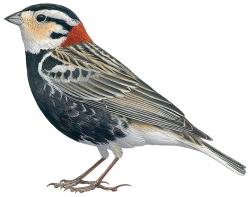
    Chestnut-collared Longspurs (Calcarius ornatus) have for decades been highly marginal nesters in Minnesota, although considered regular. At a time in the past, pre-agriculture, the species undoubtedly was numerous in our native grasslands. In more recent years the number of longspurs has been in steady decline. They have been regularly found in one small part of Clay County in northwestern Minnesota. A summer report said only one pair has been seen this year. We can expect that habitat change (what else?) soon will end the bird’s regular presence here. The nearest locations to see this beautiful bird will be in the western Dakotas.

    Chestnut-collared Longspurs (Calcarius ornatus) have for decades been highly marginal nesters in Minnesota, although considered regular. At a time in the past, pre-agriculture, the species undoubtedly was numerous in our native grasslands. In more recent years the number of longspurs has been in steady decline. They have been regularly found in one small part of Clay County in northwestern Minnesota. A summer report said only one pair has been seen this year. We can expect that habitat change (what else?) soon will end the bird’s regular presence here. The nearest locations to see this beautiful bird will be in the western Dakotas.

    Source: Star Tribune, August 10, 2015
    http://www.startribune.com/a-lovely-bird-species-going-going-gone-in-minnesota/321259811/