Auteur: Henk Tennekes

  • Starker Rückgang der Kreuzkröten auf Sylt

    Starker Rückgang der Kreuzkröten auf Sylt

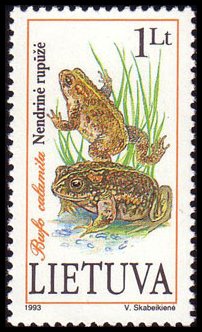
    In den Dünentümpeln von Sylt und Amrum lebte bislang eine der größten Populationen der in Deutschland stark gefährdeten Kreuzkröte (Epidalea calamita, Synonym: Bufo calamita). Nun zeigen Untersuchungen der Sylter Naturschutzverbände und eines biologischen Gutachters, dass die Kreuzkröten kaum noch Nachwuchs und im Bestand stark abgenommen haben. Hierzu der Biologe Rainer Borcherding von der Schutzstation Wattenmeer: “Wir haben in der Balzzeit Anfang Mai noch einige Hundert rufende Krötenmännchen in den Dünentälern festgestellt. Nach dem feuchten Frühjahr müssten dort nun Tausende von Babykröten sein – aber es sind fast keine da.“ Auch auf Amrum sind kaum noch Kreuzkröten zu finden, auf Föhr ist die Art bereits ausgestorben.

    In den Dünentümpeln von Sylt und Amrum lebte bislang eine der größten Populationen der in Deutschland stark gefährdeten Kreuzkröte (Epidalea calamita, Synonym: Bufo calamita). Nun zeigen Untersuchungen der Sylter Naturschutzverbände und eines biologischen Gutachters, dass die Kreuzkröten kaum noch Nachwuchs und im Bestand stark abgenommen haben. Hierzu der Biologe Rainer Borcherding von der Schutzstation Wattenmeer: “Wir haben in der Balzzeit Anfang Mai noch einige Hundert rufende Krötenmännchen in den Dünentälern festgestellt. Nach dem feuchten Frühjahr müssten dort nun Tausende von Babykröten sein – aber es sind fast keine da.“ Auch auf Amrum sind kaum noch Kreuzkröten zu finden, auf Föhr ist die Art bereits ausgestorben.

    Quelle: Schutzstation Wattenmeer, 31.07.2015
    http://www.schutzstation-wattenmeer.de/aktuell/news-beitrag/ansicht/starker-rueckgang-der-kreuzkroeten-auf-sylt/

  • Insect population is down by 45% in just 35 years

    Insect population is down by 45% in just 35 years

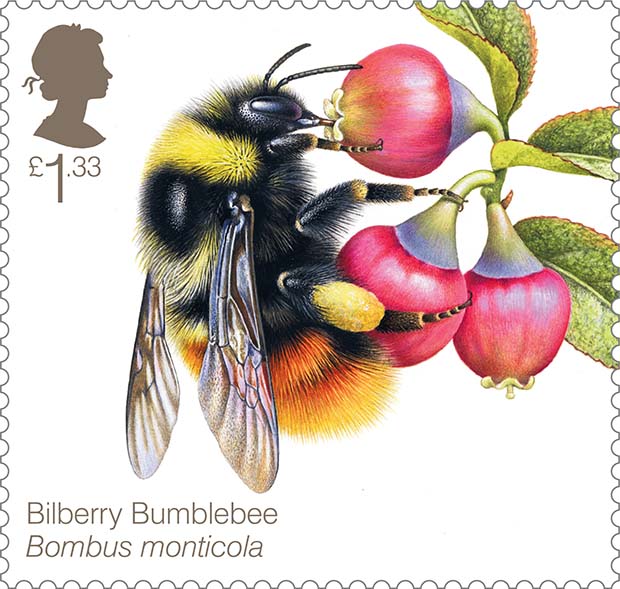
    The world’s population of creepy crawlies has fallen by nearly half – but that is bad news for us, experts warn. A study published in the journal Science, reveals that the number of slugs, spiders, worms and other invertebrates has fallen by 45 per cent over the past 35 years as the human population has doubled. Experts fear this will harm the planet as creepy crawlies play an important role in pollinating crops, pest control, decomposition and ensuring soil remains packed with nutrients, as well as water filtration. In the UK the number of beetles, butterflies, bees and wasps has fallen by up to 60 per cent. Experts warn that fewer insects would have a huge effect on crop production as up to 75 per are pollinated by insects, amounting to around 10 per cent of the world’s food supply. And the cost of pest control without natural predators could be more than £2.6 billion pounds in the United States alone. Scientists fear a drop in the insect population could also spark a decline in birds, which prey on pests that damage crops, and amphibians, which help keep water supplies free from algae. Decreasing invertebrate numbers are also known to compromise food production due to reduced pollination, seed dispersal and insect predation.

    The world’s population of creepy crawlies has fallen by nearly half – but that is bad news for us, experts warn. A study published in the journal Science, reveals that the number of slugs, spiders, worms and other invertebrates has fallen by 45 per cent over the past 35 years as the human population has doubled. Experts fear this will harm the planet as creepy crawlies play an important role in pollinating crops, pest control, decomposition and ensuring soil remains packed with nutrients, as well as water filtration. In the UK the number of beetles, butterflies, bees and wasps has fallen by up to 60 per cent. Experts warn that fewer insects would have a huge effect on crop production as up to 75 per are pollinated by insects, amounting to around 10 per cent of the world’s food supply. And the cost of pest control without natural predators could be more than £2.6 billion pounds in the United States alone. Scientists fear a drop in the insect population could also spark a decline in birds, which prey on pests that damage crops, and amphibians, which help keep water supplies free from algae. Decreasing invertebrate numbers are also known to compromise food production due to reduced pollination, seed dispersal and insect predation.

    Read more: http://www.dailymail.co.uk/news/article-2704973/Insect-population-45-just-35-years-Scientists-fear-drop-harm-planet-vital-role-play.html#ixzz3hfUVuxay
    Follow us: @MailOnline on Twitter | DailyMail on Facebook

  • A depth of just 3 inches of water was enough to shield a neonicotinoid from the sun

    A depth of just 3 inches of water was enough to shield a neonicotinoid from the sun

    New findings published in the journal Environmental Science & Technology investigate the use of insecticides–specifically neonicotinoids–and their effects on the decline of the honey bee population. Although sunlight plays an important role in degrading pollutants, its effects on neonicotinoids may diminish, particularly when exposed to water. In order to protect crops from pests, including whiteflies, beetles and termites, neonicotinoids are often used as a popular protection tool among farmers. However, they end up washing into the surface waters and soil. For the study, researchers looked to investigate the sunlight’s effects on these insecticides in the water. They tested five neonicotinoids in water under simulated sunny conditions and within minutes, three degraded considerably, according to researchers. And while two took a few days to break down, a depth of just 3 inches of water was enough to shield at least one, thiamethoxam, from the sun. The researchers noted that at a persistent rate with shallow depth, this could increase insecticide exposure to both aquatic life and other wildlife exposure.

    New findings published in the journal Environmental Science & Technology investigate the use of insecticides–specifically neonicotinoids–and their effects on the decline of the honey bee population. Although sunlight plays an important role in degrading pollutants, its effects on neonicotinoids may diminish, particularly when exposed to water. In order to protect crops from pests, including whiteflies, beetles and termites, neonicotinoids are often used as a popular protection tool among farmers. However, they end up washing into the surface waters and soil. For the study, researchers looked to investigate the sunlight’s effects on these insecticides in the water. They tested five neonicotinoids in water under simulated sunny conditions and within minutes, three degraded considerably, according to researchers. And while two took a few days to break down, a depth of just 3 inches of water was enough to shield at least one, thiamethoxam, from the sun. The researchers noted that at a persistent rate with shallow depth, this could increase insecticide exposure to both aquatic life and other wildlife exposure.

    Source: Science World Report, July 8, 2015
    http://www.scienceworldreport.com/articles/27588/20150708/insecticides-and-honey-bees-neonicotinoids-threat-to-insect-population.htm

  • Where have all the swallows gone?

    Where have all the swallows gone?

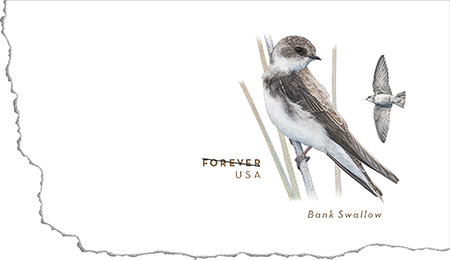
    It is a good question, and many local people are wondering about the answer. Biologists confirm that swallow numbers have dropped precipitously in the past 50 years, by up to 90 per cent. Researchers describe the decline as “shocking.” The numbers of barn swallows, trees swallows and purple martins have collapsed especially rapidly. “Maybe (the time) when insects are abundant is no longer when swallows are breeding,” suggested Tara Imlay of Dalhousie University. It is as if the peak breeding period, and peak food supply, are no longer in sync. In Ontario, the barn swallow population has fallen by close to 70 per cent since 1966. “The decline is especially alarming because swallows used to be so abundant and widespread,” said expert Bridget Stutchbury. Biologists estimate that in North America about 50 per cent of all songbirds have vanished in the past 50 years.

    It is a good question, and many local people are wondering about the answer. Biologists confirm that swallow numbers have dropped precipitously in the past 50 years, by up to 90 per cent. Researchers describe the decline as “shocking.” The numbers of barn swallows, trees swallows and purple martins have collapsed especially rapidly. “Maybe (the time) when insects are abundant is no longer when swallows are breeding,” suggested Tara Imlay of Dalhousie University. It is as if the peak breeding period, and peak food supply, are no longer in sync. In Ontario, the barn swallow population has fallen by close to 70 per cent since 1966. “The decline is especially alarming because swallows used to be so abundant and widespread,” said expert Bridget Stutchbury. Biologists estimate that in North America about 50 per cent of all songbirds have vanished in the past 50 years.

    New data shows that more than one billion have died each year as a result of colliding with high-rise buildings.

    Pesticides destroy countless millions and domestic cats on the prowl claim tens of millions more.

    In North America, swallows are declining faster than any other songbirds, researchers confirm. In Ontario, the barn swallow was listed as threatened in 2012.

    One reason barn swallows are in sharp decline is that old-style wooden barns, with nice beams suitable for swallow nest sites, are being torn down and replaced by metal sheds with no access windows and tight doors.

    The North American Breeding Bird Survey confirms that all populations of swallows and swifts have been in a free-fall since 1966.

    According to Mike Cadman of the Canadian Wildlife Service, there is no clear reason for the observed collapse of swallow numbers.

    “The species that migrate the farthest south, like chimney swifts, barn and bank swallows, are experiencing the biggest declines,” he confirmed.

    He added that any factor that drives down insect numbers will have “unpleasant consequences for the creatures that eat them.”

    Swallows are fast fliers, and barn swallows, measured at 48 mph, are the fastest of the group.

    In general, swallows are not long-lived birds. The oldest barn swallow on record lived eight years, one month.

    The oldest tree swallow lived 12 years, one month, the oldest purple martin 13 years, nine months, and the oldest bank swallow eight years.

    All of the swallow longevity figures are derived from banding studies.
    Source: Simcoe.com, July 24, 2015
    http://www.simcoe.com/opinion-story/5749979-swallow-populations-in-freefall/

  • Declining moth populations in Delaware

    Declining moth populations in Delaware

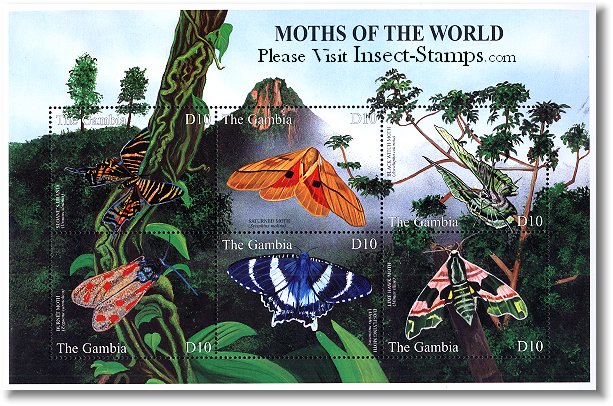
    One of the most vivid memories Jeff Gordon had growing up in Delaware was the sight of moths at night. “When I was just a kid in the mid to late 60s,” said Gordon, “my grandparents bought a place on Rehoboth Bay, at that time, it was really out in the woods. And I remember one of the magical things as a kid, in the evenings, we had a screen porch and the lights there would attract, just this carpet of moths, and not just tiny little brown moths, there were luna moths, and rosy maple moths and prometheus and polyphemus and big, spectacular, intricately colored moths. It’s really one of the things I feel most strongly awakened an interest in nature in me, it set me on a path that I followed to the rest of my life.” Jeff Gordon is now the president of the American Birding Association, a national birdwatching organization that’s headquartered in Delaware City. These days, he doesn’t see as many moths as he used to when he was a kid. “It’s just so radically different now, the numbers and diversity,” said Gordon. “I think most of those species are still present, but it used to be like a blizzard. Now, it’s a few flurries. I hate to say this but unfortunately, one of the recent encounters I had with the silk moths in that area was finding one flopping around under a 24-hour gas station.”

    One of the most vivid memories Jeff Gordon had growing up in Delaware was the sight of moths at night. “When I was just a kid in the mid to late 60s,” said Gordon, “my grandparents bought a place on Rehoboth Bay, at that time, it was really out in the woods. And I remember one of the magical things as a kid, in the evenings, we had a screen porch and the lights there would attract, just this carpet of moths, and not just tiny little brown moths, there were luna moths, and rosy maple moths and prometheus and polyphemus and big, spectacular, intricately colored moths. It’s really one of the things I feel most strongly awakened an interest in nature in me, it set me on a path that I followed to the rest of my life.” Jeff Gordon is now the president of the American Birding Association, a national birdwatching organization that’s headquartered in Delaware City. These days, he doesn’t see as many moths as he used to when he was a kid. “It’s just so radically different now, the numbers and diversity,” said Gordon. “I think most of those species are still present, but it used to be like a blizzard. Now, it’s a few flurries. I hate to say this but unfortunately, one of the recent encounters I had with the silk moths in that area was finding one flopping around under a 24-hour gas station.”

    To Gordon, the factors that could be making the moths disappear seem obvious. Human development has removed forests and added more artificial lighting.

    “My concern is that the number and brightness of light is increasing mortality on these moths. It’s drawing them out to places where they get killed and are unable to reproduce successfully.”

    Here’s what Gordon asked iSeeChange.

    “Do the observation of scientists square with my own memories? Because my memories seem vivid and dramatic,” said Gordon.

    Three years ago, David Wagner, an ecology professor at University of Connecticut, published a paper on this very subject. Wagner notes that moths are already vulnerable animals. While typically only a single pair of moths are required to replace the previous generation, their mortality rates are incredibly high, greater than 95 percent. Wagner writes that “even modest changes to climate, local ecology, natural enemy complexes, etc., could doom a population’s existence.”

    In Connecticut, where Wagner has studied moths for 25 years, many large moth species are in decline and some have even extirpated, or gone extinct in its local area. Among the people who feel it the most are the local cocoon collectors.

    “If we call some of the old timers up, we could talk to them about when they were a boy and used to go out with their shopping bags and collect giant silk moth cocoons with their Dad or their buddies and fill them up in half a day with promethea or cecropia cocoons. That phenomenon just doesn’t occur in the East Coast anymore,” said Wagner.

    The reasons behind the decline of large moths on the East Coast are various and complex. From a distance, we can say that human development has caused habitat loss. Changing climates could create unsuitable conditions.

    But if we just look at one declining species, such as the giant silkmoth, the cause of its decline gets complicated if you look at the data as closely as David Wagner does. The rates of declining silkmoth populations aren’t consistent everywhere and there are places that appear to have plenty of silkmoths.

    “There are places in New Jersey that are still extremely good and seem to be intact.

    and places in southeastern Ohio that have spectacular silkmoth faunas. And in the East, one place that’s really important is Martha’s Vineyard — Martha’s Vineyard has a fantastic and seemingly intact fauna at the present time,” said Wagner.

    Wagner says the likely reason behind this has to do with what biologists call the “natural enemy complex,” which are basically the network of pathogens, predators and parasites that can harm a species.

    “There’s something special about the natural enemy complex in New England, across the Northeast and Delaware, for that matter, that is challenging silk moths in a way they weren’t before,” said Wagner.

    He definitely has some culprits in mind. Species that have been introduced by the government to as a means of pest control, like the ladybug, could be feasting on the moth eggs. There are also animals whose geographic ranges have changed because of climate or other factors, leading them to feed and deplete northeastern moths.

    “The tufted titmouse is a serious cocoon predator,” said Wagner. “They are very, very savvy predators, and they can devastate all the cocoons in the area, particularly cecropia. And that’s one of the species that have had the biggest collapse in our region and that moved north from the south part of the U.S. into New England over the 1950s. So this very collapse in Delaware could be due to differences in bird fauna.”

    In turn, scientists have also seen the decline of birds that were already feeding on moths in the area, songbirds being among them.

    Artificial lighting, as Gordon pointed out, is a major problem for moths. Wagner says there’s no doubt they play a role in their decline. They get drawn to the headlights of cars that hit them. Lights make them easier for insectivorous bats to see and prey on them.

    But it’s not clear how exactly light has dragged down their numbers, and there hasn’t been enough data to suggest that a lower density of artificial light in an area would help revive moth populations.

    “There’s places like Martha’s Vineyard and northern New Jersey where moths are still intact. And I would think there’s a lot of light pollution in those areas,” said Wagner.

    Wagner says that if we want to tease out what’s really bringing down moth populations and why random places like Martha’s Vineyard seem to be doing better than others, we need much more data.

    “This is a case where citizen scientists and people taking notes in their backyard could generate the data we need to solve this conundrum,” said Wagner.

    That’s the underlining message of Wagner’s paper. There’s enough data to suggest that something is happening to moths in the northeastern U.S. But it’s not enough to pinpoint the exact causes, which leaves those like Jeff Gordon, who are wondering about the moths, without a precise answer.

    “It’s scary sometimes to see these large-scale changes going on and say this is what we’re seeing. What’s going on that we’re not immediately seeing?” said Gordon.

    Whether it’s a new predator or a change in climate, being able to explain what’s happening to the moths might start with channeling that curious kid inside of us, who wants to just out by that screen porch and admire the moths, as they dance around the light.
    Source: Delaware Public Media, July 24, 2015
    http://delawarepublic.org/post/iseechange-declining-moth-populations-delaware
  • Study Shows Steep Breeding Decline In Puffin Colony

    Study Shows Steep Breeding Decline In Puffin Colony

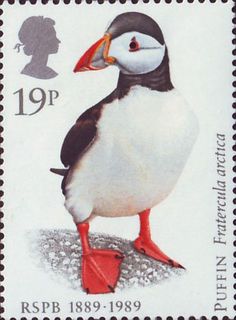
    Wildlife experts in the United Kingdom report that the population of large puffins (Fratercula arctica) living on a Scottish has significantly dropped in the last three decades, from 20,000 individuals birds down to around 10,000 in recent years. In a long-term study featured in the PLOS ONE journal, scientists from the Fair Isle Bird Observatory noted that the dramatic reduction in the number of puffins on the island began during the 1980s. They believe that the failure of young birds to return to the island could likely be the cause of the decline. The researchers said that the puffins could be suffering from the lack of enough fish to feed on in the area.

    Wildlife experts in the United Kingdom report that the population of large puffins (Fratercula arctica) living on a Scottish has significantly dropped in the last three decades, from 20,000 individuals birds down to around 10,000 in recent years. In a long-term study featured in the PLOS ONE journal, scientists from the Fair Isle Bird Observatory noted that the dramatic reduction in the number of puffins on the island began during the 1980s. They believe that the failure of young birds to return to the island could likely be the cause of the decline. The researchers said that the puffins could be suffering from the lack of enough fish to feed on in the area.

    “We don’t know exactly why they would fail to return to Fair Isle and settle to breed,” Dr. Will Miles, a representative from the bird observatory, said.

    “It may be due to declining local fish stocks and poor feeding conditions for seabirds in Shetland waters.”

    Miles pointed out the difficulty in keeping track of immature puffins once they begin to fledge because of the vastness of sea areas they have to cover.

    According to the study, the quantities of fish that adult puffins have brought ashore to feed their young have substantially dropped since the 1980s.

    Miles said that the reduction in puffin populations on the Fair Isle could also have been affected by the number of great skuas found in the region. These large seabirds are known to be the natural predators of puffins.

    While the puffins on the island declined in numbers, the population of great skuas has increased by up to 300 percent during the same period. The predatory birds now have over 400 pairs of skuas for breeding.

    Miles said he was surprised to make this discovery because even though the great skuas are on the rise, the survival rate of adult puffins on Fair Isle has remained stable and high for the past three decades.

    “It seems adult puffins on Fair Isle are pretty good at avoiding skuas and do not get heavily predated by them,” Miles said.

    Dr. Mark Bolton, from the Royal Society for the Protection of Birds (RSPB) and an advisor to the long-term puffin study, said that the United Kingdom provides support for internationally important species of birds such as the puffin.

    Bolton said that the severe population decline mentioned in the Fair Isle research is a cause for great concern.

    The results of the Fair Isle Bird Observatory study are published in the journal PLOS ONE.
    Source: Tech Times, 16 July 2015
    http://www.techtimes.com/articles/69366/20150716/study-shows-steep-breeding-decline-in-puffin-colony.htm

  • More than 70% of pollen and honey samples collected from foraging bees in Massachusetts contain at least one neonicotinoid

    More than 70% of pollen and honey samples collected from foraging bees in Massachusetts contain at least one neonicotinoid

    More than 70% of pollen and honey samples collected from foraging bees in Massachusetts contain at least one neonicotinoid, a class of pesticide that has been implicated in Colony Collapse Disorder (CCD), in which adult bees abandon their hives during winter, according to a new study from Harvard T.H. Chan School of Public Health. The study will be published online July 23, 2015 in the Journal of Environmental Chemistry. “Data from this study clearly demonstrated the ubiquity of neonicotinoids in pollen and honey samples that bees are exposed to during the seasons when they are actively foraging across Massachusetts. Levels of neonicotinoids that we found in this study fall into ranges that could lead to detrimental health effects in bees, including CCD,” said Chensheng (Alex) Lu, associate professor of environmental exposure biology in the Department of Environmental Health at Harvard Chan School and lead author of the study.

    More than 70% of pollen and honey samples collected from foraging bees in Massachusetts contain at least one neonicotinoid, a class of pesticide that has been implicated in Colony Collapse Disorder (CCD), in which adult bees abandon their hives during winter, according to a new study from Harvard T.H. Chan School of Public Health. The study will be published online July 23, 2015 in the Journal of Environmental Chemistry. “Data from this study clearly demonstrated the ubiquity of neonicotinoids in pollen and honey samples that bees are exposed to during the seasons when they are actively foraging across Massachusetts. Levels of neonicotinoids that we found in this study fall into ranges that could lead to detrimental health effects in bees, including CCD,” said Chensheng (Alex) Lu, associate professor of environmental exposure biology in the Department of Environmental Health at Harvard Chan School and lead author of the study.

    Since 2006, there have been significant losses of honey bee colonies. Scientists, policymakers, farmers, and beekeepers are concerned with this problem because bees are prime pollinators of roughly one-third of all crops worldwide.
    Previous studies analyzed either stored pollen collected from hives or pollen samples collected from bees at a single point in time. In this study, the Harvard Chan School researchers looked at pollen samples collected over time—during spring and summer months when bees forage—from the same set of hives across Massachusetts. Collecting pollen samples in this way enabled the researchers to determine variations in the levels of eight neonicotinoids and to identify high-risk locations or months for neonicotinoid exposure for bees. To do so, the researchers worked with 62 Massachusetts beekeepers who volunteered to collect monthly samples of pollen and honey from foraging bees, from April through August 2013, using pollen traps on the landings of beehives. The beekeepers then sent the samples to the researchers.
    The researchers analyzed 219 pollen and 53 honey samples from 62 hives, from 10 out of 14 counties in Massachusetts. They found neonicotinoids in pollen and honey for each month collected, in each location—suggesting that bees are at risk of neonicotinoid exposure any time they are foraging anywhere in Massachusetts.
    The most commonly detected neonicotinoid was imidacloprid, followed by dinotefuran. Particularly high concentrations of neonicotinoids were found in Worcester County in April, in Hampshire County in May, in Suffolk County in July, and in Essex County in June, suggesting that, in these counties, certain months pose significant risks to bees.
    The new findings suggest that neonicotinoids are being used throughout Massachusetts. Not only do these pesticides pose a significant risk for the survival of honey bees, but they also may pose health risks for people inhaling neonicotinoid-contaminated pollen, Lu said. “The data presented in this study should serve as a basis for public policy that aims to reduce neonicotinoid exposure,” he said.

    More information: Journal of Environmental Chemistry, online July 23, 2015, DOI: 10.1071/EN15064
    Provided by: Harvard School of Public Health

    Read more at: http://phys.org/news/2015-07-pesticides-pollen-foraging-bees-massachusetts.html#jCp

  • Drei Neonikotinoide jetzt auch zur Beizung von Wintergetreide verboten. BUND begrüßt Eilverordnung, fordert aber Verbot aller Neonikotinoide

    Drei Neonikotinoide jetzt auch zur Beizung von Wintergetreide verboten. BUND begrüßt Eilverordnung, fordert aber Verbot aller Neonikotinoide

    Der BUND begrüßt das neue Verbot der Neonikotinoide Clothianidin, Thiamethoxam und Imidacloprid zur Saatgutbeizung für Wintergetreide. Bundeslandwirtschaftsminister Christian Schmidt hatte per Eilverordnung ein „vollständiges Verbot der Einfuhr und des Inverkehrbringens“ dieser drei Pestizidwirkstoffe angeordnet. Der BUND-Pestizidexperte Tomas Brückmann sagte zu der Entscheidung: „Neonikotinoide tragen maßgeblich zum weltweiten Bienenvölkersterben bei. Das gesetzliche Verbot zur Beizung von Wintergetreide kann nur ein Schritt auf dem Weg dazu sein, alle Neonikotinoide vom Markt zu nehmen. Neonikotinoide stören das Immunsystem und das Lernvermögen der Bienen erheblich. EU-weit sind die drei jetzt per Eilverordnung eingeschränkten Neonikotinoide zwar seit Dezember 2013 für bienenrelevante Kulturen verboten. Experten kritisieren aber, dass auch die Verwendung in so genannten nicht bienenrelevanten Kulturen große Gefahren für Bienen und Umwelt verursacht. Weitere gefährliche Neonikotinoide sind außerdem noch ohne jegliche Einschränkung zugelassen. Landwirtschaftsminister Schmidt muss jetzt konsequent sein und das zuständige Bundesamt anweisen, die Zulassungen aller neonikotinoidhaltiger Produkte zurückzunehmen. Neonikotinoide sind Nervengifte, die Bienen und andere Lebewesen erheblich schädigen, sie müssen deshalb ausnahmslos verboten werden.“

    Der BUND begrüßt das neue Verbot der Neonikotinoide Clothianidin, Thiamethoxam und Imidacloprid zur Saatgutbeizung für Wintergetreide. Bundeslandwirtschaftsminister Christian Schmidt hatte per Eilverordnung ein „vollständiges Verbot der Einfuhr und des Inverkehrbringens“ dieser drei Pestizidwirkstoffe angeordnet. Der BUND-Pestizidexperte Tomas Brückmann sagte zu der Entscheidung: „Neonikotinoide tragen maßgeblich zum weltweiten Bienenvölkersterben bei. Das gesetzliche Verbot zur Beizung von Wintergetreide kann nur ein Schritt auf dem Weg dazu sein, alle Neonikotinoide vom Markt zu nehmen. Neonikotinoide stören das Immunsystem und das Lernvermögen der Bienen erheblich. EU-weit sind die drei jetzt per Eilverordnung eingeschränkten Neonikotinoide zwar seit Dezember 2013 für bienenrelevante Kulturen verboten. Experten kritisieren aber, dass auch die Verwendung in so genannten nicht bienenrelevanten Kulturen große Gefahren für Bienen und Umwelt verursacht. Weitere gefährliche Neonikotinoide sind außerdem noch ohne jegliche Einschränkung zugelassen. Landwirtschaftsminister Schmidt muss jetzt konsequent sein und das zuständige Bundesamt anweisen, die Zulassungen aller neonikotinoidhaltiger Produkte zurückzunehmen. Neonikotinoide sind Nervengifte, die Bienen und andere Lebewesen erheblich schädigen, sie müssen deshalb ausnahmslos verboten werden.“

    Weitere Infos zu Gefahren durch Neonikotinoide finden Sie unter: http://www.bund.net/index.php?id=17950

    Pressekontakt: Tomas Brückmann, BUND-Pestizidexperte, Tel. 030-27586-420, E-Mail: Tomas.Brueckmann@bund.net bzw. Annika Natus, BUND-Pressereferentin, Tel. 030-27586-464/489, E-Mail: presse@bund.net, www.bund.net