
Auteur: Henk Tennekes

  • Ctgb gaat een nieuw rekenmodel gebruiken om vast te stellen dat de glastuinbouw het oppervlaktewater met pesticiden bezoedelt

    Ctgb gaat een nieuw rekenmodel gebruiken om vast te stellen dat de glastuinbouw het oppervlaktewater met pesticiden bezoedelt

    Met ingang van 1 januari 2016 hanteert het College voor de toelating van gewasbeschermingsmiddelen en biociden (Ctgb) een nieuwe werkwijze bij de beoordeling van emissies uit bedekte teelten. Het huidige model voor emissies uit kassen stelt dat 0,1% van het gewasbeschermingsmiddel dat gebruikt wordt in een kas terechtkomt in het oppervlaktewater. Het is bekend dat dit model de werkelijkheid onderschat. Recent is een nieuwe Europese guidance bedekte teelten aangenomen, waarin het nieuwe rekenmodel is opgenomen. Daar zijn enkele opties voor de zuivering van afvalstromen ingebouwd. Bij gebruik van deze guidance zullen de berekende emissies uit kassen naar verwachting hoger liggen dan bij het huidige model. De guidance bedekte teelten gaat tegelijk voor zowel nieuwe aanvragen van stoffen als middelen gelden. De guidance heeft geen invloed op lopende aanvragen. Op dit moment brengt het Ctgb de impact van deze nieuwe guidance op onder andere de dossiervereisten in kaart. Zodra hier meer details over bekend zijn, zullen de aanvragers via de gebruikelijke kanalen en de website geïnformeerd worden.

    Met ingang van 1 januari 2016 hanteert het College voor de toelating van gewasbeschermingsmiddelen en biociden (Ctgb) een nieuwe werkwijze bij de beoordeling van emissies uit bedekte teelten. Het huidige model voor emissies uit kassen stelt dat 0,1% van het gewasbeschermingsmiddel dat gebruikt wordt in een kas terechtkomt in het oppervlaktewater. Het is bekend dat dit model de werkelijkheid onderschat. Recent is een nieuwe Europese guidance bedekte teelten aangenomen, waarin het nieuwe rekenmodel is opgenomen. Daar zijn enkele opties voor de zuivering van afvalstromen ingebouwd. Bij gebruik van deze guidance zullen de berekende emissies uit kassen naar verwachting hoger liggen dan bij het huidige model. De guidance bedekte teelten gaat tegelijk voor zowel nieuwe aanvragen van stoffen als middelen gelden. De guidance heeft geen invloed op lopende aanvragen. Op dit moment brengt het Ctgb de impact van deze nieuwe guidance op onder andere de dossiervereisten in kaart. Zodra hier meer details over bekend zijn, zullen de aanvragers via de gebruikelijke kanalen en de website geïnformeerd worden.

    Bron: Ctgb en AgriHolland, 21/07/15
    http://www.agriholland.nl/nieuws/artikel.html?id=172015
  • State of Australia’s Birds report finds common birds as well as lesser-known species have suffered surprising drops in numbers

    State of Australia’s Birds report finds common birds as well as lesser-known species have suffered surprising drops in numbers

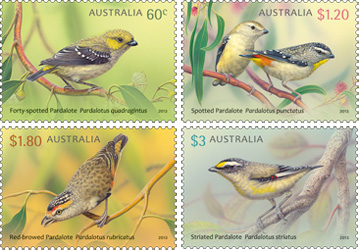
    Some of Australia’s best-known birds, including the magpie, the kookaburra and the willie wagtail, are in decline in parts of the country, a major government-funded survey has found. The State of Australia’s Birds report found common birds, as well as lesser-known species, have suffered surprising drops in their numbers, in what has been described as a “wake-up call” for bird conservation. The data, gathered from sightings by birdwatchers, show that the magpie, a familiar sight to many Australians – and occasional dive bomber of human craniums – has been in a consistent decline on the east coast since 1999. The laughing kookaburra (Dacelo novaeguineae) is in decline in south-eastern Australia, as is the willie wagtail (Rhipidura leucophrys). Meanwhile, birds of prey in Australia’s arid outback – including falcons, owls and eagles – are in “significant decline”, the report finds, while 22 of the 39 species found in the Mallee woodland region, which covers much of southern Australia, are also losing numbers. The rainbow bee-eater (Merops ornatus), an agile insect-devouring bird, is on a downward trajectory on the east coast, while hollow-nesting parrots such as lorikeets are disappearing from areas around Melbourne, Adelaide and Canberra. Some species are in decline almost across the board, with the Boobook owl suffering declines in every region of Australia bar one. Bird Life Australia, which compiled the data with federal government funding, said the results were concerning.

    Some of Australia’s best-known birds, including the magpie (Pica pica), the kookaburra (Dacelo novaeguineae) and the willie wagtail (Rhipidura leucophrys), are in decline in parts of the country, a major government-funded survey has found. The State of Australia’s Birds report found common birds, as well as lesser-known species, have suffered surprising drops in their numbers, in what has been described as a “wake-up call” for bird conservation. The data, gathered from sightings by birdwatchers, show that the magpie, a familiar sight to many Australians – and occasional dive bomber of human craniums – has been in a consistent decline on the east coast since 1999. The laughing kookaburra (Dacelo novaeguineae) is in decline in south-eastern Australia, as is the willie wagtail (Rhipidura leucophrys). Meanwhile, birds of prey in Australia’s arid outback – including falcons, owls and eagles – are in “significant decline”, the report finds, while 22 of the 39 species found in the Mallee woodland region, which covers much of southern Australia, are also losing numbers. The rainbow bee-eater (Merops ornatus), an agile insect-devouring bird, is on a downward trajectory on the east coast, while hollow-nesting parrots such as lorikeets are disappearing from areas around Melbourne, Adelaide and Canberra. Some species are in decline almost across the board, with the Boobook owl suffering declines in every region of Australia bar one. Bird Life Australia, which compiled the data with federal government funding, said the results were concerning.

    Source: The Guardian, 15 July 2015
    http://www.theguardian.com/environment/2015/jul/15/kookaburra-and-magpie-among-australian-birds-in-decline-says-report

  • Effects of decreases of animal pollinators on human nutrition and global health: a modelling analysis

    Effects of decreases of animal pollinators on human nutrition and global health: a modelling analysis

    Anthropogenic declines of animal pollinators and the associated effects on human nutrition are of growing concern. We quantified the nutritional and health outcomes associated with decreased intake of pollinator-dependent foods for populations around the world. We assembled a database of supplies of 224 types of food in 156 countries. We quantified nutrient composition and pollinator dependence of foods to estimate the size of possible reductions in micronutrient and food intakes for different national populations, while keeping calorie intake constant with replacement by staple foods. We estimated pollinator-decline-dependent changes in micronutrient-deficient populations using population-weighted estimated average requirements and the cutpoint method. We estimated disease burdens of non-communicable, communicable, and malnutrition-related diseases with the Global Burden of Disease 2010 comparative risk assessment framework. Assuming complete removal of pollinators, 71 million (95% uncertainty interval 41–262) people in low-income countries could become newly deficient in vitamin A, and an additional 2·2 billion (1·2–2·5) already consuming below the average requirement would have further declines in vitamin A supplies. Corresponding estimates for folate were 173 million (134–225) and 1·23 billion (1·12–1·33). A 100% decline in pollinator services could reduce global fruit supplies by 22·9% (19·5–26·1), vegetables by 16·3% (15·1–17·7), and nuts and seeds by 22·1% (17·7–26·4), with significant heterogeneity by country. In sum, these dietary changes could increase global deaths yearly from non-communicable and malnutrition-related diseases by 1·42 million (1·38–1·48) and disability-adjusted life-years (DALYs) by 27·0 million (25·8–29·1), an increase of 2·7% for deaths and 1·1% for DALYs. A 50% loss of pollination services would be associated with 700 000 additional annual deaths and 13·2 million DALYs. Declines in animal pollinators could cause significant global health burdens from both non-communicable diseases and micronutrient deficiencies.

    Anthropogenic declines of animal pollinators and the associated effects on human nutrition are of growing concern. We quantified the nutritional and health outcomes associated with decreased intake of pollinator-dependent foods for populations around the world. We assembled a database of supplies of 224 types of food in 156 countries. We quantified nutrient composition and pollinator dependence of foods to estimate the size of possible reductions in micronutrient and food intakes for different national populations, while keeping calorie intake constant with replacement by staple foods. We estimated pollinator-decline-dependent changes in micronutrient-deficient populations using population-weighted estimated average requirements and the cutpoint method. We estimated disease burdens of non-communicable, communicable, and malnutrition-related diseases with the Global Burden of Disease 2010 comparative risk assessment framework. Assuming complete removal of pollinators, 71 million (95% uncertainty interval 41–262) people in low-income countries could become newly deficient in vitamin A, and an additional 2·2 billion (1·2–2·5) already consuming below the average requirement would have further declines in vitamin A supplies. Corresponding estimates for folate were 173 million (134–225) and 1·23 billion (1·12–1·33). A 100% decline in pollinator services could reduce global fruit supplies by 22·9% (19·5–26·1), vegetables by 16·3% (15·1–17·7), and nuts and seeds by 22·1% (17·7–26·4), with significant heterogeneity by country. In sum, these dietary changes could increase global deaths yearly from non-communicable and malnutrition-related diseases by 1·42 million (1·38–1·48) and disability-adjusted life-years (DALYs) by 27·0 million (25·8–29·1), an increase of 2·7% for deaths and 1·1% for DALYs. A 50% loss of pollination services would be associated with 700 000 additional annual deaths and 13·2 million DALYs. Declines in animal pollinators could cause significant global health burdens from both non-communicable diseases and micronutrient deficiencies.

    Source:
    Matthew R Smith, Gitanjali M Singh, Dariush Mozaffarian, Samuel S Myers
    www.thelancet.com Published online July 16, 2015 http://dx.doi.org/10.1016/S0140-6736(15)61085-6

  • La TOXICITE DEPENDANTE du TEMPS des NEONICOTINOÏDES et d’AUTRES TOXIQUES IMPLICATIONS pour une NOUVELLE APPROCHE de l’EVALUATION des RISQUES

    La TOXICITE DEPENDANTE du TEMPS des NEONICOTINOÏDES et d’AUTRES TOXIQUES IMPLICATIONS pour une NOUVELLE APPROCHE de l’EVALUATION des RISQUES

    Dans le texte proposé, deux éminents toxicologues, doublés d’excellents mathématiciens, Henk A. TENNEKES hollandais, et Francisco SANCHEZ-BAYO australien, ont mis en commun leur compétence pour démontrer que les “Tests Standards”, aujourd’hui en usage dans le domaine des travaux préalables à l’homologation des substances chimiques -en particulier des pesticides-, ne sont pas en mesure de définir des “niveaux sûrs d’exposition”, tant pour les êtres humains que pour la biodiversité. Cette incapacité relève tant des points de vue “conceptuel que statistique”. S’appuyant sur les travaux, anciens certes, de Haber d’une part, et de Druckrey (pharmacologue) et Küpfmüller (mathématicien) d’autre part, mais pourtant toujours d’une évidente actualité, ils démontrent d’un côté les failles des Tests Standards, de l’autre ils démontrent qu’un test, fondé sur une base conceptuelle et une pratique différentes, le test “Time-To-Event” ou TTE, “Temps-pour-un-Evènement”, permet au contraire de prévoir les effets probables, au cours du temps, des substances sur les espèces non-cibles. Ainsi s’effondre le postulat (idéologique car jamais démontré) de l’innocuité des “faibles doses”. Sous certaines conditions, résultant de l’interaction entre la substance et les récepteurs de l’organisme, plus le temps d’exposition s’allonge plus la dose totale reçue diminue pour produire un même effet. La substance est ainsi plus toxique à faible dose qu’à forte dose, le temps jouant ainsi un rôle majeur dans l’expression de la toxicité. Ce démenti scientifique formel, infligé au postulat “d’un seuil d’innocuité” des faibles doses, ouvrira-t-il les yeux des différentes Agences gouvernementales ? Si l’on souhaite assurer la sécurité des humains et l’avenir de la biodiversité il y a urgence !

    Dans le texte proposé, deux éminents toxicologues, doublés d’excellents mathématiciens, Henk A. TENNEKES hollandais, et Francisco SANCHEZ-BAYO australien, ont mis en commun leur compétence pour démontrer que les “Tests Standards”, aujourd’hui en usage dans le domaine des travaux préalables à l’homologation des substances chimiques -en particulier des pesticides-, ne sont pas en mesure de définir des “niveaux sûrs d’exposition”, tant pour les êtres humains que pour la biodiversité. Cette incapacité relève tant des points de vue “conceptuel que statistique”. S’appuyant sur les travaux, anciens certes, de Haber d’une part, et de Druckrey (pharmacologue) et Küpfmüller (mathématicien) d’autre part, mais pourtant toujours d’une évidente actualité, ils démontrent d’un côté les failles des Tests Standards, de l’autre ils démontrent qu’un test, fondé sur une base conceptuelle et une pratique différentes, le test “Time-To-Event” ou TTE, “Temps-pour-un-Evènement”, permet au contraire de prévoir les effets probables, au cours du temps, des substances sur les espèces non-cibles. Ainsi s’effondre le postulat (idéologique car jamais démontré) de l’innocuité des “faibles doses”. Sous certaines conditions, résultant de l’interaction entre la substance et les récepteurs de l’organisme, plus le temps d’exposition s’allonge plus la dose totale reçue diminue pour produire un même effet. La substance est ainsi plus toxique à faible dose qu’à forte dose, le temps jouant ainsi un rôle majeur dans l’expression de la toxicité. Ce démenti scientifique formel, infligé au postulat “d’un seuil d’innocuité” des faibles doses, ouvrira-t-il les yeux des différentes Agences gouvernementales ? Si l’on souhaite assurer la sécurité des humains et l’avenir de la biodiversité il y a urgence !

  • A Review of Sub-lethal Systemic Neonicotinoid Insecticides Exposure and Effects on Sensitive Receptors: Pollinators

    A Review of Sub-lethal Systemic Neonicotinoid Insecticides Exposure and Effects on Sensitive Receptors: Pollinators

    We have identified 30 papers from a literature search on PubMed and Google Scholar using the following combined key words of “pollinators”, “honeybee”, “bees”, “pesticides”, or “neonicotinoids”, as of September 30, 2014, and from a cross-reference check of a report made available by European Parliament in preparation to fulfill their regulatory mandate on the issue of protecting pollinators among their membership nations. Those paper are relevant to examine the effects of sub-lethal pesticide exposures on the health of honeybees (Apis mellifera), bumblebees (Bombus terrestris), and other bees. The weight-of-evidence of this review clearly demonstrated bees’ susceptibility to insecticides, in particular to neonicotinoids, and the synergistic effects to diseases that are commonly present in bee colonies. One important aspect of assessing and managing the risks posed by neonicotinoids to bees is the chronic effects induced by exposures at the sub-lethal levels. More than 90% of literature published after 2009 directly or indirectly demonstrated the adverse health effects associated with sub-lethal exposure to neonicotinoids,including abnormal foraging activities, impaired brood development, neurological or cognitive effects, and colony collapse disorder.

    We have identified 30 papers from a literature search on PubMed and Google Scholar using the following combined key words of “pollinators”, “honeybee”, “bees”, “pesticides”, or “neonicotinoids”, as of September 30, 2014, and from a cross-reference check of a report made available by European Parliament in preparation to fulfill their regulatory mandate on the issue of protecting pollinators among their membership nations. Those paper are relevant to examine the effects of sub-lethal pesticide exposures on the health of honeybees (Apis mellifera), bumblebees (Bombus terrestris), and other bees. The weight-of-evidence of this review clearly demonstrated bees’ susceptibility to insecticides, in particular to neonicotinoids, and the synergistic effects to diseases that are commonly present in bee colonies. One important aspect of assessing and managing the risks posed by neonicotinoids to bees is the chronic effects induced by exposures at the sub-lethal levels. More than 90% of literature published after 2009 directly or indirectly demonstrated the adverse health effects associated with sub-lethal exposure to neonicotinoids,including abnormal foraging activities, impaired brood development, neurological or cognitive effects, and colony collapse disorder.

    Author:
    Chensheng Lu, PhD
    Department of Environmental Health
    Harvard T.H.Chan School of Public Health
    401 Park Drive, Landmark Center West
    Boston, MA 02215
    email: cslu@hsph.harvard.edu

  • The turtle dove is on the high road to extinction in Britain; it may be gone within a decade

    The turtle dove is on the high road to extinction in Britain; it may be gone within a decade

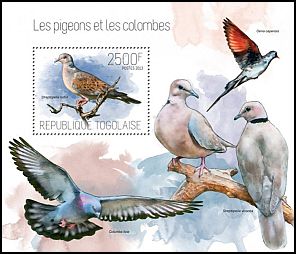
    Extinction is one of the great tragedies of our times. The creature concerned is the turtle dove (Streptopelia turtur), the loveliest member of the pigeon family, and a bird prominent in folklore for thousands of years: its gentle purring call is mentioned in the Bible and its reputation as a symbol of fidelity has been celebrated by everyone from Chaucer to Buddy Holly. But in Britain, it is now our fastest-declining bird: just in the lifetime of one of today’s middle-aged birdwatchers, it has dropped in numbers by a staggering 96 per cent. In 1970 there were probably about 250,000 pairs of turtle doves nesting in Britain every summer (they spend the winter in Africa, like swallows), but now there are only between 8,000 and 9,000 pairs and the bird is halving in numbers every six years. The speed of its decline is unheard of.

    Extinction is one of the great tragedies of our times. The creature concerned is the turtle dove (Streptopelia turtur), the loveliest member of the pigeon family, and a bird prominent in folklore for thousands of years: its gentle purring call is mentioned in the Bible and its reputation as a symbol of fidelity has been celebrated by everyone from Chaucer to Buddy Holly. But in Britain, it is now our fastest-declining bird: just in the lifetime of one of today’s middle-aged birdwatchers, it has dropped in numbers by a staggering 96 per cent. In 1970 there were probably about 250,000 pairs of turtle doves nesting in Britain every summer (they spend the winter in Africa, like swallows), but now there are only between 8,000 and 9,000 pairs and the bird is halving in numbers every six years. The speed of its decline is unheard of.

    Source: Michael McCarthy in The Independent, 13 July 2015
    http://www.independent.co.uk/voices/comment/nature-studies-the-turtle-dove-is-on-the-brink-of-extinction-in-britain-10385965.html

  • Het door Bayer CropScience als ‘veilig voor bijen’ gepropageerde thiacloprid veroorzaakt in werkelijkheid bijensterfte

    Het door Bayer CropScience als ‘veilig voor bijen’ gepropageerde thiacloprid veroorzaakt in werkelijkheid bijensterfte

    Thiacloprid, een breed toegepast landbouwbestrijdingsmiddel uit de familie der neonicotinoïden, heeft wel degelijk een verband met hoge sterfte van bijenvolken. Dat blijkt uit onderzoek van het Nederlands Centrum voor Bijenonderzoek in Tersoal, dat gisteren in het wetenschappelijke tijdschrift Plos One is gepubliceerd. ,,Van thiacloprid werd tot nu toe steeds gezegd dat het de minst gevaarlijke neonicotinoïde is”, zegt Romée van der Zee van het NCB. ,,Misschien is thiacloprid gerelateerd aan bijensterfte op een manier die voorheen niet herkend werd.” Sinds de Europese Commissie in 2013 een moratorium instelde op imidacloprid, thiamethoxam en clothianidin, stappen boeren massaal over op middelen waarin onder meer het toegestane thiacloprid verwerkt is. Calypso is zo’n middel; het toegestane gebruik daarvan werd in 2012 nog verruimd door het College voor Toelating van Gewasbeschermingsmiddelen en Biociden. Het NCB heeft voor het eerst wetenschappelijk met een observatiestudie aangetoond dat neonicotinoïden een relatie hebben met een hoger sterfterisico van bijenvolken. Het NCB deed een observatieonderzoek met 86 bijenvolken op 43 bijenstandplaatsen, in 2011 en 2012.

    Thiacloprid, een breed toegepast landbouwbestrijdingsmiddel uit de familie der neonicotinoïden, heeft wel degelijk een verband met hoge sterfte van bijenvolken. Dat blijkt uit onderzoek van het Nederlands Centrum voor Bijenonderzoek in Tersoal, dat gisteren in het wetenschappelijke tijdschrift Plos One is gepubliceerd. ,,Van thiacloprid werd tot nu toe steeds gezegd dat het de minst gevaarlijke neonicotinoïde is”, zegt Romée van der Zee van het NCB. ,,Misschien is thiacloprid gerelateerd aan bijensterfte op een manier die voorheen niet herkend werd.” Sinds de Europese Commissie in 2013 een moratorium instelde op imidacloprid, thiamethoxam en clothianidin, stappen boeren massaal over op middelen waarin onder meer het toegestane thiacloprid verwerkt is. Calypso is zo’n middel; het toegestane gebruik daarvan werd in 2012 nog verruimd door het College voor Toelating van Gewasbeschermingsmiddelen en Biociden. Het NCB heeft voor het eerst wetenschappelijk met een observatiestudie aangetoond dat neonicotinoïden een relatie hebben met een hoger sterfterisico van bijenvolken. Het NCB deed een observatieonderzoek met 86 bijenvolken op 43 bijenstandplaatsen, in 2011 en 2012.

    Bron: Friesch Dagblad, 9 juli 2015
    http://www.frieschdagblad.nl/index.asp?artID=69790

  • Honey bee losses over the winter of 2011-2012 in the Netherlands were linked to exposure to acetamiprid and thiacloprid

    Honey bee losses over the winter of 2011-2012 in the Netherlands were linked to exposure to acetamiprid and thiacloprid

    This article presents results of an analysis of honey bee losses over the winter of 2011-2012 in the Netherlands, from a sample of 86 colonies, located at 43 apiaries. The apiaries were selected using spatially stratified random sampling. Colony winter loss data were collected and related to various measures of colony strength recorded in summer, as well as data from laboratory analysis of sample material taken from two selected colonies in each of the 43 apiaries. The logistic regression model which best explained the risk of winter loss included, in order of statistical importance, the variables (1) Varroa destructor mite infestation rate in October 2011, (2) presence of the cyano-substituted neonicotinoids acetamiprid or thiacloprid in the first 2 weeks of August 2011 in at least one of the honey bee matrices honey, bees or bee bread (pollen), (3) presence of Brassica napus (oilseed rape) or Sinapis arvensis (wild mustard) pollen in bee bread in early August 2011, and (4) a measure of the unexplained winter losses for the postal code area where the colonies were located, obtained from a different dataset. We consider in the discussion that reduced opportunities for foraging in July and August because of bad weather may have added substantially to the adverse effects of acetamiprid and thiacloprid.

    This article presents results of an analysis of honey bee losses over the winter of 2011-2012 in the Netherlands, from a sample of 86 colonies, located at 43 apiaries. The apiaries were selected using spatially stratified random sampling. Colony winter loss data were collected and related to various measures of colony strength recorded in summer, as well as data from laboratory analysis of sample material taken from two selected colonies in each of the 43 apiaries. The logistic regression model which best explained the risk of winter loss included, in order of statistical importance, the variables (1) Varroa destructor mite infestation rate in October 2011, (2) presence of the cyano-substituted neonicotinoids acetamiprid or thiacloprid in the first 2 weeks of August 2011 in at least one of the honey bee matrices honey, bees or bee bread (pollen), (3) presence of Brassica napus (oilseed rape) or Sinapis arvensis (wild mustard) pollen in bee bread in early August 2011, and (4) a measure of the unexplained winter losses for the postal code area where the colonies were located, obtained from a different dataset. We consider in the discussion that reduced opportunities for foraging in July and August because of bad weather may have added substantially to the adverse effects of acetamiprid and thiacloprid.

    Source: van der Zee R, Gray A, Pisa L, de Rijk T (2015) An Observational Study of Honey Bee Colony Winter Losses and Their Association with Varroa destructor, Neonicotinoids and Other Risk Factors. PLoS ONE 10(7): e0131611. doi:10.1371/journal.pone.0131611
    http://journals.plos.org/plosone/article?id=10.1371/journal.pone.0131611

  • Study found 35% fewer bird species in agricultural habitats

    Study found 35% fewer bird species in agricultural habitats

    Research led by the University of Exeter has found a substantial reduction in bird species living in cultivated mango orchards compared to natural habitats in Southern Africa. The results, which are published today in the journal Landscape Ecology, highlight the value of assessing habitats prior to land use change to predict the impact of agriculture on biodiversity. The researchers monitored bird populations across cultivated mango orchards and natural habitats in the Kruger to Canyons Biosphere region in South Africa. They found that replacing a natural habitat with an agricultural landscape can result in a substantial decline in the richness of species living within the region. The scientists were aiming to ascertain whether agriculture could add novel habitat elements and thereby support additional bird species complementary to those already present in the natural areas – but found that in contrast, there was a loss of 35% of the bird species within the farmed land. During the study, the team conducted 150 counts each at both natural habitat and mango orchard locations and measured aspects of habitat structure. Across all 300 survey points, a total of 14,278 birds representing 151 species were recorded.

    Research led by the University of Exeter has found a substantial reduction in bird species living in cultivated mango orchards compared to natural habitats in Southern Africa. The results, which are published today in the journal Landscape Ecology, highlight the value of assessing habitats prior to land use change to predict the impact of agriculture on biodiversity. The researchers monitored bird populations across cultivated mango orchards and natural habitats in the Kruger to Canyons Biosphere region in South Africa. They found that replacing a natural habitat with an agricultural landscape can result in a substantial decline in the richness of species living within the region. The scientists were aiming to ascertain whether agriculture could add novel habitat elements and thereby support additional bird species complementary to those already present in the natural areas – but found that in contrast, there was a loss of 35% of the bird species within the farmed land. During the study, the team conducted 150 counts each at both natural habitat and mango orchard locations and measured aspects of habitat structure. Across all 300 survey points, a total of 14,278 birds representing 151 species were recorded.

    Source: EurekAlert, 2 July 2015
    http://www.eurekalert.org/pub_releases/2015-07/uoe-swo070215.php