Auteur: Henk Tennekes

  • Lezing van Henk Tennekes over het verdwijnen van weidevogels in de met imidacloprid bezoedelde Hoeksche Waard

    Lezing van Henk Tennekes over het verdwijnen van weidevogels in de met imidacloprid bezoedelde Hoeksche Waard

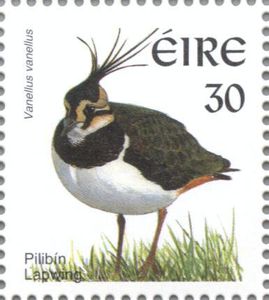
    Het is algemeen bekend dat de populaties kieviten en scholeksters gestaag dalen in Nederland met een gemiddelde van vijf procent per jaar. Uit gegevens van de weidevogelgroep van het Hoeksche Waards Landschap blijkt echter dat deze achteruitgang in de Hoeksche Waard nog sterker is. Al zeventien jaar worden weide- en akkervogels actief beschermd in de Hoeksche Waard. De HWL-werkgroep die zich hiermee bezig houdt bestaat uit ongeveer vijftien personen. Gezamenlijk houden zij op ruim duizend hectare akkerland de broedende vogels in de gaten. Nesten worden gezocht en beschermd bij werkzaamheden die op het land plaats vinden. Dit gebeurt in goede samenwerking met de boeren. Uit de grote hoeveelheid gegevens van de weidevogelgroep blijkt dat de achteruitgang van de kievit en scholekster echter niet te stoppen is. De laatste tien jaar is het aantal broedende kieviten al met negentig procent in aantal gedaald in de Hoeksche Waard. Het oppervlaktewater van de Hoeksche Waard is namelijk sterk verontreinigd met het neonicotinoide insecticide imidacloprid. De teloorgang van de akkervogels op het eiland is het onderwerp van een lezing door dr. Henk Tennekes, op maandagavond 2 november (aanvang 20.00 uur) in het Nationaal Landschap Centrum aan de Veerweg bij Numansdorp.

    Het is algemeen bekend dat de populaties kieviten en scholeksters gestaag dalen in Nederland met een gemiddelde van vijf procent per jaar. Uit gegevens van de weidevogelgroep van het Hoeksche Waards Landschap blijkt echter dat deze achteruitgang in de Hoeksche Waard nog sterker is. Al zeventien jaar worden weide- en akkervogels actief beschermd in de Hoeksche Waard. De HWL-werkgroep die zich hiermee bezig houdt bestaat uit ongeveer vijftien personen. Gezamenlijk houden zij op ruim duizend hectare akkerland de broedende vogels in de gaten. Nesten worden gezocht en beschermd bij werkzaamheden die op het land plaats vinden. Dit gebeurt in goede samenwerking met de boeren. Uit de grote hoeveelheid gegevens van de weidevogelgroep blijkt dat de achteruitgang van de kievit en scholekster echter niet te stoppen is. De laatste tien jaar is het aantal broedende kieviten al met negentig procent in aantal gedaald in de Hoeksche Waard. Het oppervlaktewater van de Hoeksche Waard is namelijk sterk verontreinigd met het neonicotinoide insecticide imidacloprid. De teloorgang van de akkervogels op het eiland is het onderwerp van een lezing door dr. Henk Tennekes, op maandagavond 2 november (aanvang 20.00 uur) in het Nationaal Landschap Centrum aan de Veerweg bij Numansdorp.

    Bron: Dichtbij, 13 oktober 2015
    http://www.dichtbij.nl/hoeksche-waard/regio/artikel/4164822/verdwijning-weidevogels-op-eiland-niet-te-stoppen.aspx
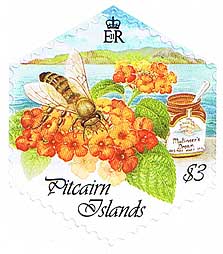
  • Neonicotinoid pesticides severely affect honey bee queens

    Neonicotinoid pesticides severely affect honey bee queens

    Queen health is crucial to colony survival of social bees. Recently, queen failure has been proposed to be a major driver of managed honey bee colony losses, yet few data exist concerning effects of environmental stressors on queens. Here we demonstrate for the first time that exposure to field-realistic concentrations of neonicotinoid pesticides during development can severely affect queens of western honey bees (Apis mellifera). In pesticide-exposed queens, reproductive anatomy (ovaries) and physiology (spermathecal-stored sperm quality and quantity), rather than flight behaviour, were compromised and likely corresponded to reduced queen success (alive and producing worker offspring). This study highlights the detriments of neonicotinoids to queens of environmentally and economically important social bees, and further strengthens the need for stringent risk assessments to safeguard biodiversity and ecosystem services that are vulnerable to these substances.

    Queen health is crucial to colony survival of social bees. Recently, queen failure has been proposed to be a major driver of managed honey bee colony losses, yet few data exist concerning effects of environmental stressors on queens. Here we demonstrate for the first time that exposure to field-realistic concentrations of neonicotinoid pesticides during development can severely affect queens of western honey bees (Apis mellifera). In pesticide-exposed queens, reproductive anatomy (ovaries) and physiology (spermathecal-stored sperm quality and quantity), rather than flight behaviour, were compromised and likely corresponded to reduced queen success (alive and producing worker offspring). This study highlights the detriments of neonicotinoids to queens of environmentally and economically important social bees, and further strengthens the need for stringent risk assessments to safeguard biodiversity and ecosystem services that are vulnerable to these substances.

    Source:
    Geoffrey R. Williams, Aline Troxler, Gina Retschnig, Kaspar Roth, Orlando Yañez, Dave Shutler, Peter Neumann & Laurent Gauthier. Scientific Reports 5, Article number: 14621 (2015) doi:10.1038/srep14621

  • The rarest animals still living in Scotland’s air, sea and land habitats

    The rarest animals still living in Scotland’s air, sea and land habitats

    Whether through adverse changes to their natural environment or hunting and over-persecution, some of Scotland’s best-loved animals may not be around for much longer. Using figures provided by Scottish Natural Heritage, we look at a diverse list of species who are suffering low numbers in Scotland’s wilds.

    Whether through adverse changes to their natural environment or hunting and over-persecution, some of Scotland’s best-loved animals may not be around for much longer. Using figures provided by Scottish Natural Heritage, we look at a diverse list of species who are suffering low numbers in Scotland’s wilds.

    Golden Eagle, Aquila Chrysaetos

    With approximately 440 breeding pairs in Scotland, the Golden Eagle is Britain’s second-largest bird of prey. In Scotland, illegal persecution and the reduction of food availability are the main reasons for their decline. Those that remain are most likely to be found in the Highlands and Islands with some pairs in the Borders.

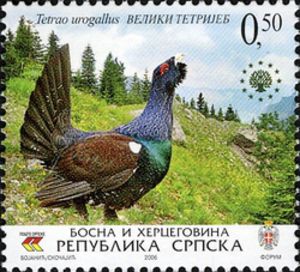
    Capercaillie, Tetrao Urogallus

    Reintroduced to Perthshire in 1837 after a period of extinction during the 18th century, Capercaillie numbers in Scotland have been falling over the last 40 years for a number of reasons. As pine forests have been given over to sheep, the bird’s natural habitat has been greatly reduced. In addition, hunting by foxes and a succession of poorer June weather conditions has made it harder for newborn chicks to survive. Nowadays it is estimated that only 1,200 capercaillies remain in Scotland today.

    Cold-water coral reefs, Lophelia Pertusa

    Submerged deep in the Atlantic Ocean off Scotland’s west coast, the cold water non-tropical coral reefs are breeding grounds and shelters for fish such as pollack and redfish. Their fragile build can be destroyed by fishing equipment, with this problem worsened by their slow growth. Barra and Mingulay feature reefs off their coasts which total approximately 100km squared, dating to over 4,000 years ago. The reef’s popularity with fish makes them a constant target of fishermen.

    Red Squirrel, Sciurus Vulgaris

    One of Britain’s few native mammals, the red squirrel is facing extinction at the hands of the grey squirrel introduced to Britain in the 1800s. As the less-colourful mammal is a better forager and immune to the deadly squirrelpox virus found largely in southern Scotland, grey squirrel numbers are increasing while numbers of their native counterpart decline. Of the approximately 160,000 red squirrels living in Britain, it is estimated that 121,000 live in Scotland.

    Northern Damselfly, Coenagrion Hastulatum

    The lochs of Perthshire, Speyside and Aberdeenshire are the only British habitats of the Northern Damselfly, which are extremely sensitive to temperature changes and pollution to their natural environments. Their long-established habitats all feature a constant water depth of 30cm maintained by a dam with inflow from higher ground. Rare and commonly confused with the Blue Damselfly, there are no concrete figures for the number of this rare animal that remains.

    Tiger Worm, Eisenia Fetida

    The Tiger Worm is a vital feature of Scottish forests as it eats dead plant material that rests on the soil surface. This then helps to replenish the soil with nutrients – a soil which, recently, has been polluted with pesticides thanks to changes in farming methods. In addition, the red-striped worm is under threat from the New Zealand flatworm, who eat their Scottish counterparts. Like the Northern Damselfly, no reliable estimations of Tiger Worm numbers in Scotland are available at present.

    Read more: http://www.scotsman.com/news/environment/scotland-s-most-endangered-wildlife-species-1-3914939#ixzz3oR2Bqlvq
    Follow us: @TheScotsman on Twitter | TheScotsmanNewspaper on Facebook

  • Frogs Are on the Verge of Mass Extinction, Scientists Say

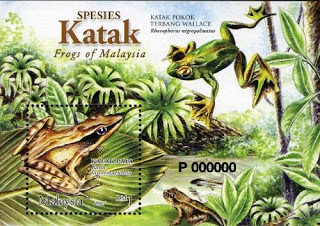
    Frogs Are on the Verge of Mass Extinction, Scientists Say

    Things aren’t looking good for reptiles and amphibians lately, especially frogs. John Alroy at Macquarie University in Australia published a study last month examining recent extinctions for the two groups of animals, and the results are alarming. “About 200 frog extinctions have occurred and hundreds more [frog species] will be lost over the next century, so we are on pace to create a mass extinction,” according to the study. “It is hard to know how many species have gone extinct so far because it is difficult to prove that something not seen recently is really gone forever,” says the paper’s summary. Alroy was inspired to conduct the study because he couldn’t find any research on the total number of species that have gone extinct. But by using what he calls a “new, highly conservative statistical method,” he was able to infer the number of extinct amphibian and reptile species across the world. Alroy chose to study reptiles and amphibians partly because “there was a large amount of global data available for these groups, and partly because of a growing concern in the scientific community over the health of frog populations, which are thought to be in a state of decline in many places,” says the Washington Post. Alroy also looked at salamanders, snakes and lizards, but “he found that frogs seemed to be the most vulnerable to extinction—the results suggested that more than 3 percent of all frog species have disappeared, largely since the 1970s,” according to the Washington Post. The findings are especially alarming because the research method known as a Bayesian approach is “highly conservative,” meaning that the estimated number of past and future frog extinctions could, in fact, be even higher.

    Things aren’t looking good for reptiles and amphibians lately, especially frogs. John Alroy at Macquarie University in Australia published a study last month examining recent extinctions for the two groups of animals, and the results are alarming. “About 200 frog extinctions have occurred and hundreds more [frog species] will be lost over the next century, so we are on pace to create a mass extinction,” according to the study. “It is hard to know how many species have gone extinct so far because it is difficult to prove that something not seen recently is really gone forever,” says the paper’s summary. Alroy was inspired to conduct the study because he couldn’t find any research on the total number of species that have gone extinct. But by using what he calls a “new, highly conservative statistical method,” he was able to infer the number of extinct amphibian and reptile species across the world. Alroy chose to study reptiles and amphibians partly because “there was a large amount of global data available for these groups, and partly because of a growing concern in the scientific community over the health of frog populations, which are thought to be in a state of decline in many places,” says the Washington Post. Alroy also looked at salamanders, snakes and lizards, but “he found that frogs seemed to be the most vulnerable to extinction—the results suggested that more than 3 percent of all frog species have disappeared, largely since the 1970s,” according to the Washington Post. The findings are especially alarming because the research method known as a Bayesian approach is “highly conservative,” meaning that the estimated number of past and future frog extinctions could, in fact, be even higher.

    “Consistent with previous results, frog losses are heavy in Latin America, which has been greatly affected by the pathogenic chytrid fungus Batrachochytrium dendrobatidis,” says the paper. “Extinction rates are now four orders-of-magnitude higher than background, and at least another 6.9 percent of all frog species may be lost within the next century, even if there is no acceleration in the growth of environmental threats.” That means that reptiles and amphibians are going extinct at 10,000 times the rate of other organisms.

    “Thus, the data suggest that a runaway train of extinction is now likely to produce what would be seen as a global mass extinction on the ultimately more important landscape of geological time,” Alroy writes in the paper. It’s not surprising that frogs are especially vulnerable, though. “They’re seen as a ‘canary in the coal mine’ group because they seem to suffer large population losses more easily than other groups,” Alroy said. “What was surprising was the geographic pattern of frog extinctions.”

    Many have documented the frog losses in Central America, but Alroy found large losses in places such as Brazil, Madagascar and New Guinea—“places where there are not well-documented population losses due to anything,” Alroy said. “I think there are mass extinctions happening in the tropics that are largely undocumented.”

    As for what’s causing the mass extinctions, Alroy cautions against pointing the finger solely at climate change. “There’s a tendency in the literature to focus very strongly on the potential future impacts of climate change, specifically,” Alroy said. And while climate change is likely to be an important factor in the coming years, “this paper suggests that in the absence of really severe climate change we’ve already seen the beginning of a major mass extinction.”

    “I’m not saying we should stop looking at climate change,” he added. “I’m saying there should be additional focus on other causal factors like habitat destruction and invasive species in particular. So I’m hoping this paper will encourage more research of that kind.”

    Source: Ecowatch, October 7, 2015
    https://ecowatch.com/2015/10/07/frog-mass-extinction/

  • Firefly populations are dwindling all over the world

    Firefly populations are dwindling all over the world

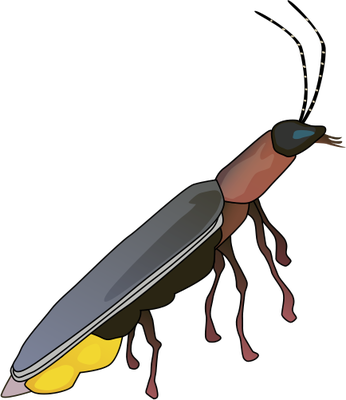
    Lightning bugs flash light to attract the opposite sex using a chemical called luciferase. There are over 136 species of lightning bugs, each with a distinctive rate of flashes per second. Male lightning bugs flash patterns of light to females who then signal in response from perches in or near the ground. When the male sees the female’s flash he continues to signal and moves closer until they finally find each other and mate. Lightning bugs are actually a type of beetle that is very beneficial in our ecosystem. The larvae stage of this beetle is a specialized predator that feeds on other insect larvae, earthworms, snails, and slugs. The tiny larval stage is dark gray with three pairs of legs and tiny spots on their underside that sometimes softly glow. Some adult lightning bug species are also predators, and other species don’t eat at all in the adult stage.Large swarms of lightning bugs are a less frequent occurrence in many areas. I can remember a midnight float down the Illinois River a few years ago when the river bank was alive with millions of flashing fireflies. This summer I saw lightning bugs, but not in large numbers. They are most prevalent away from city lights and in more open areas of vegetation. According to www.firefly.org firefly populations are dwindling all over the country, and the world.

    Lightning bugs flash light to attract the opposite sex using a chemical called luciferase. There are over 136 species of lightning bugs, each with a distinctive rate of flashes per second. Male lightning bugs flash patterns of light to females who then signal in response from perches in or near the ground. When the male sees the female’s flash he continues to signal and moves closer until they finally find each other and mate. Lightning bugs are actually a type of beetle that is very beneficial in our ecosystem. The larvae stage of this beetle is a specialized predator that feeds on other insect larvae, earthworms, snails, and slugs. The tiny larval stage is dark gray with three pairs of legs and tiny spots on their underside that sometimes softly glow. Some adult lightning bug species are also predators, and other species don’t eat at all in the adult stage.Large swarms of lightning bugs are a less frequent occurrence in many areas. I can remember a midnight float down the Illinois River a few years ago when the river bank was alive with millions of flashing fireflies. This summer I saw lightning bugs, but not in large numbers. They are most prevalent away from city lights and in more open areas of vegetation. According to www.firefly.org firefly populations are dwindling all over the country, and the world.

    Source:Rhonda Ferree, September 14, 2015
    http://blogs.pjstar.com/gardening/2015/09/14/lightening-bugs-on-the-decline/#comment-514299

  • Neuartiges Insektensterben – Es summt und brummt nicht mehr

    Neuartiges Insektensterben – Es summt und brummt nicht mehr

    Naturschützer warnen vor einem „neuartigen Insektensterben“. Forscher stellen im Verlauf der Jahre an manchen Standorten bis zu 80% Rückgang fest. Die Falle ist eine Art Luftreuse. Insektenkundler vom Entomologischen Verein Krefeld bauen sie auf, nach einiger Zeit schauen sie nach, was da so drin ist – Mücken, Schwebfliegen, Bienen, Käfer & Co. Seit vielen Jahren schon sind die Krefelder Fachleute mit der immer gleichen Fangmethode im Rheinland und anderswo unterwegs, teils an den gleichen Standorten. „Zugenommen hat die Menge der gefangenen Fluginsekten nirgendwo“, berichtet einer aus dem Verein. Im Gegenteil: Die Fachleute haben in den letzten 10 bis 15 Jahren mitunter dramatische Rückgänge festgestellt, an manchen Standorten wurden 70 – 80% weniger Insekten gefangen.

    Naturschützer warnen vor einem „neuartigen Insektensterben“. Forscher stellen im Verlauf der Jahre an manchen Standorten bis zu 80% Rückgang fest. Die Falle ist eine Art Luftreuse. Insektenkundler vom Entomologischen Verein Krefeld bauen sie auf, nach einiger Zeit schauen sie nach, was da so drin ist – Mücken, Schwebfliegen, Bienen, Käfer & Co. Seit vielen Jahren schon sind die Krefelder Fachleute mit der immer gleichen Fangmethode im Rheinland und anderswo unterwegs, teils an den gleichen Standorten. „Zugenommen hat die Menge der gefangenen Fluginsekten nirgendwo“, berichtet einer aus dem Verein. Im Gegenteil: Die Fachleute haben in den letzten 10 bis 15 Jahren mitunter dramatische Rückgänge festgestellt, an manchen Standorten wurden 70 – 80% weniger Insekten gefangen.

    Gut, man muss Mücken nicht mögen. Käfer sind auch nicht für jeden cool. Umweltschützer aber zeigen sich besorgt, sie sprechen von einem „neuartigen Insektensterben“. „Es ist deshalb so dramatisch, weil Insekten vielfach am Beginn der Nahrungskette stehen“, sagt Josef Tumbrick, der Landesvorsitzende des Naturschutzbundes (Nabu). Für Vögel etwa bildet das Kleingetier eine wichtige, eiweißhaltige Nahrungsquelle, vor allem bei der Jungenaufzucht. Ein Rückgang der Insekten könnte somit möglicherweise den Rückgang von z. B. Feldlerchen (mit-)erklären, er hätte sicher auch Folgen für Schwalben oder Mauersegler.

    Nabu fordert landesweites Monitoring
    Im Schutzgebiet „Orbroicher Bruch“ im Krefelder Norden etwa haben die Entomologen an ihrem Standort einen Rückgang von mehr als 75% bei den Fluginsekten festgestellt. Sehr deutlich sollen die Rückgänge auch an Standorten im Rhein-Sieg-Kreis und im Bergischen Land sein. Am Niederrhein haben die Insektenforscher auch Punkte z. B. auf der Bislicher Insel bei Xanten oder den „Kaninchenbergen bei Friedrichsfeld untersucht. Nabu-Chef Tumbrinck fordert, dass die Landesregierung kurzfristig ein flächendeckendes Monitoring einrichtet. Die Ursachen des Insektensterbens müssten aufgeklärt werden. In Verdacht hat man beim Nabu die Intensiv- Landwirtschaft, aber auch den Verkehr. Ebenfalls ein Problem: die Zersiedlung der Landschaft und die „Insellage“ vieler Naturschutzgebiete. Die Tiere kommen nicht von einem Gebiet zum nächsten.

    Neuartiges Insektensterben – Es summt und brummt nicht mehr | WAZ.de – Lesen Sie mehr auf:
    http://www.derwesten.de/region/es-summt-und-brummt-nicht-mehr-id11151275.html#plx1164016258

  • There is a strong relationship between invertebrate food availability and breeding success and populatIon change of birds

    There is a strong relationship between invertebrate food availability and breeding success and populatIon change of birds

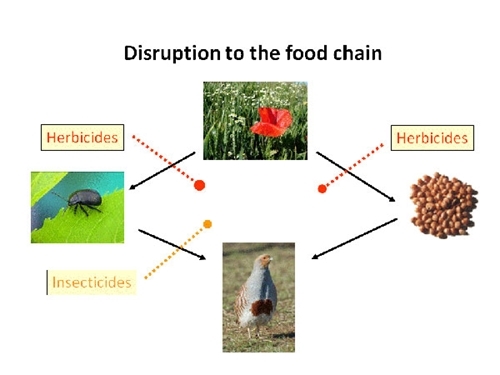
    Farmland is home to hundreds of plant and thousands of animal species, many of which are highly dependent on each other forming a complex food web. This was first revealed by our early work on the grey partridge in Sussex. The population of grey partridge was partially dependent on the survival rate of the chicks, which in turn depended on them sourcing enough protein-rich insects. The insects that were most important to the chicks were largely weed-feeding species, and as a consequence, insect abundance was controlled by the management of the crop, but especially by the levels of herbicide inputs. Thus, herbicides were identified as causing an indirect effect on the number of insects within the crop, but also ultimately on the population of grey partridge. Herbicides also reduce the abundance of vegetation and weed seed that are important food sources for insects, birds and small mammals. The indirect effects of pesticides are now a recognised phenomena and along with direct effects are considered responsible for the decline of many other farmland birds because all of them, with the exception of pigeons and doves, feed their young insects during the first few weeks. Autoecological studies have helped to identify the causes behind the decline of some farmland bird species, such as those conducted on grey partridge, corn bunting and yellowhammer. These revealed a strong relationship between invertebrate food availability during breeding and breeding success and this was consequently linked to population change. The majority of other farmland birds also feed their chicks invertebrates because they provide the necessary protein for growth and the energy to resist chilling.

    Farmland is home to hundreds of plant and thousands of animal species, many of which are highly dependent on each other forming a complex food web. This was first revealed by our early work on the grey partridge in Sussex. The population of grey partridge was partially dependent on the survival rate of the chicks, which in turn depended on them sourcing enough protein-rich insects. The insects that were most important to the chicks were largely weed-feeding species, and as a consequence, insect abundance was controlled by the management of the crop, but especially by the levels of herbicide inputs. Thus, herbicides were identified as causing an indirect effect on the number of insects within the crop, but also ultimately on the population of grey partridge. Herbicides also reduce the abundance of vegetation and weed seed that are important food sources for insects, birds and small mammals. The indirect effects of pesticides are now a recognised phenomena and along with direct effects are considered responsible for the decline of many other farmland birds because all of them, with the exception of pigeons and doves, feed their young insects during the first few weeks. Autoecological studies have helped to identify the causes behind the decline of some farmland bird species, such as those conducted on grey partridge, corn bunting and yellowhammer. These revealed a strong relationship between invertebrate food availability during breeding and breeding success and this was consequently linked to population change. The majority of other farmland birds also feed their chicks invertebrates because they provide the necessary protein for growth and the energy to resist chilling.

    Source: Game and Wildlife Conservation Trust
    http://www.gwct.org.uk/research/habitats/farmland/farmland-food-webs/

  • Wildflowers growing in arable field margins are contaminated with neonicotinoids

    Wildflowers growing in arable field margins are contaminated with neonicotinoids

    In recent years, an intense debate has been generated about the environmental risks posed by neonicotinoids, a group of widely-used, neurotoxic insecticides. When these systemic compounds are applied to seeds, low concentrations are subsequently found in the nectar and pollen of the crop, which are then collected and consumed by bees. Here we demonstrate that current focus on exposure to pesticides via the crop overlooks an important factor – throughout spring and summer, mixtures of neonicotinoids are also found in the pollen and nectar of wildflowers growing in arable field margins, at concentrations that are sometimes even higher than those found in the crop. Indeed the large majority (97%) of neonicotinoids brought back in pollen to honey bee hives in arable landscapes was from wildflowers, not crops. Both previous and ongoing field studies have been based on the premise that exposure to neonicotinoids would only occur during the blooming period of flowering crops and that it may be diluted by bees also foraging on untreated wildflowers. Here, we show that exposure is likely to be higher and more prolonged than currently recognized due to widespread contamination of wild plants growing near treated crops.

    In recent years, an intense debate has been generated about the environmental risks posed by neonicotinoids, a group of widely-used, neurotoxic insecticides. When these systemic compounds are applied to seeds, low concentrations are subsequently found in the nectar and pollen of the crop, which are then collected and consumed by bees. Here we demonstrate that current focus on exposure to pesticides via the crop overlooks an important factor – throughout spring and summer, mixtures of neonicotinoids are also found in the pollen and nectar of wildflowers growing in arable field margins, at concentrations that are sometimes even higher than those found in the crop. Indeed the large majority (97%) of neonicotinoids brought back in pollen to honey bee hives in arable landscapes was from wildflowers, not crops. Both previous and ongoing field studies have been based on the premise that exposure to neonicotinoids would only occur during the blooming period of flowering crops and that it may be diluted by bees also foraging on untreated wildflowers. Here, we show that exposure is likely to be higher and more prolonged than currently recognized due to widespread contamination of wild plants growing near treated crops.

    Bron:
    CRISTINA BOTÍAS, Arthur David, Julia Horwood, Alaa Abdul-Sada, Elizabeth Nicholls, Elizabeth M Hill, and Dave Goulson
    Environ. Sci. Technol., Just Accepted Manuscript
    DOI: 10.1021/acs.est.5b03459
    Publication Date (Web): October 6, 2015

  • De grutto heeft geen schijn van kans in een met pesticiden bezoedeld Hollands landschap

    De grutto heeft geen schijn van kans in een met pesticiden bezoedeld Hollands landschap

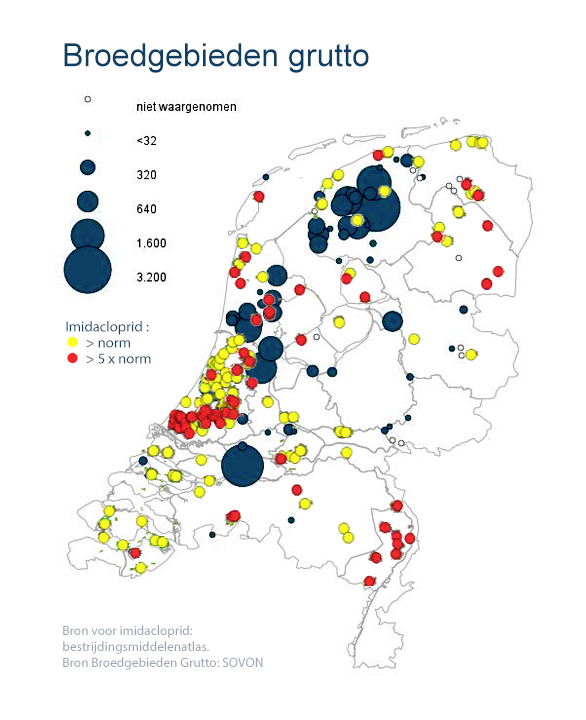
    Het broedseizoen 2015 van de grutto (Limosa limosa) is opnieuw dramatisch verlopen. Er zijn te weinig jongen opgegroeid om het uitsterven van de grutto een halt toe te roepen. Al vanaf de jaren ’60 zijn de grutto’s in ons land aan het verdwijnen. Het slechte broedseizoen van dit jaar én dat van 2014 versnelt deze achteruitgang. Sinds 2011 houdt Sovon Vogelonderzoek Nederland voor Vogelbescherming Nederland bij hoeveel gruttokuikens er tijdens het broedseizoen opgroeien. Om de achteruitgang van de grutto te stoppen, zouden er jaarlijks 10.000 kuikens moeten uitvliegen. Dit jaar kwamen er slechts 4600 jonge grutto’s bij, een zelfde aantal als vorig jaar. Daarmee gaat het aantal grutto’s in ons land nog verder achteruit. Tot de jaren ’60 was de grutto met ruim 125.000 broedpaar een algemene vogel die symbool stond voor het platteland. In 2011 was er nog maar 40.000 paar over en ook dat aantal zal gezien de recente broedsuccessen sterk afgenomen zijn.

    Het broedseizoen 2015 van de grutto (Limosa limosa) is opnieuw dramatisch verlopen. Er zijn te weinig jongen opgegroeid om het uitsterven van de grutto een halt toe te roepen. Al vanaf de jaren ’60 zijn de grutto’s in ons land aan het verdwijnen. Het slechte broedseizoen van dit jaar én dat van 2014 versnelt deze achteruitgang. Sinds 2011 houdt Sovon Vogelonderzoek Nederland voor Vogelbescherming Nederland bij hoeveel gruttokuikens er tijdens het broedseizoen opgroeien. Om de achteruitgang van de grutto te stoppen, zouden er jaarlijks 10.000 kuikens moeten uitvliegen. Dit jaar kwamen er slechts 4600 jonge grutto’s bij, een zelfde aantal als vorig jaar. Daarmee gaat het aantal grutto’s in ons land nog verder achteruit. Tot de jaren ’60 was de grutto met ruim 125.000 broedpaar een algemene vogel die symbool stond voor het platteland. In 2011 was er nog maar 40.000 paar over en ook dat aantal zal gezien de recente broedsuccessen sterk afgenomen zijn.

    Bron: Vogelbescherming, 30-09-15
    http://www.vogelbescherming.nl/actueel/nieuws/nieuwsbericht/q/ne_id/1732

  • The tricolored blackbird does not stand a chance in the Central Valley of California polluted with insecticides

    The tricolored blackbird does not stand a chance in the Central Valley of California polluted with insecticides

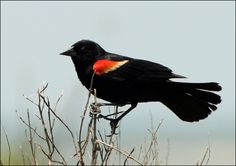
    In response to a petition from the Center for Biological Diversity, the U.S. Fish and Wildlife Service today announced that the tricolored blackbird (Agelaius tricolor) may qualify for federal Endangered Species Act protection. The Center petitioned to protect tricolored blackbirds under both the federal and California Endangered Species Acts after dramatic declines of nesting colonies due to loss of wetlands and native grasslands, shooting, pesticide use and mass destruction of nests through mowing and harvest of crops the birds use for nesting in California. “Tricolored blackbirds once formed massive nesting colonies of millions of birds in California’s Central Valley but are now suffering declines comparable to the extinction trajectory of the passenger pigeon,” said the Center’s Jeff Miller. “Endangered Species Act protection is needed to safeguard their vulnerable breeding colonies, especially since the state of California has inexplicably delayed protection for tricoloreds despite warnings by biologists that we could lose this species entirely.” Comprehensive statewide surveys found only 395,000 tricolored blackbirds in 2008, followed by a decline to 259,000 in 2011 and only 145,000 in 2014 — the smallest population ever recorded.

    In response to a petition from the Center for Biological Diversity, the U.S. Fish and Wildlife Service today announced that the tricolored blackbird (Agelaius tricolor) may qualify for federal Endangered Species Act protection. The Center petitioned to protect tricolored blackbirds under both the federal and California Endangered Species Acts after dramatic declines of nesting colonies due to loss of wetlands and native grasslands, shooting, pesticide use and mass destruction of nests through mowing and harvest of crops the birds use for nesting in California. “Tricolored blackbirds once formed massive nesting colonies of millions of birds in California’s Central Valley but are now suffering declines comparable to the extinction trajectory of the passenger pigeon,” said the Center’s Jeff Miller. “Endangered Species Act protection is needed to safeguard their vulnerable breeding colonies, especially since the state of California has inexplicably delayed protection for tricoloreds despite warnings by biologists that we could lose this species entirely.” Comprehensive statewide surveys found only 395,000 tricolored blackbirds in 2008, followed by a decline to 259,000 in 2011 and only 145,000 in 2014 — the smallest population ever recorded.

    Source: Center for Biological Diversity, September 17, 2015
    http://www.biologicaldiversity.org/news/press_releases/2015/tricolored-blackbird-09-17-2015.html