Auteur: Henk Tennekes

  • Volgens de FAO loopt wereldwijd 17 procent van de gedomesticeerde dierenrassen het risico op uitsterven

    Volgens de FAO loopt wereldwijd 17 procent van de gedomesticeerde dierenrassen het risico op uitsterven

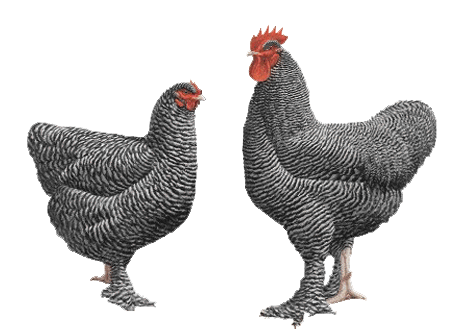
    In totaal zou wereldwijd zo’n 17 procent, of 1.458 rassen, met uitsterven bedreigd zijn. Volgens de Slow Food Foundation for Biodiversity, een organisatie die zich inzet voor biodiversiteit, zijn daar ook vier Belgische rassen bij: de Waalse zwarte, het Belgisch melkschaap, de Mechelse koekoek en het runderras West-Vlaams rood. Belangrijke nuance: van 58 procent is niets geweten door een gebrek aan gegevens, dus potentieel ligt het cijfer bedreigde rassen nog een stuk hoger. Tussen 2000 en 2014 zouden ongeveer 100 rassen uitgestorven zijn. Van het Belgisch melkschaap, bijvoorbeeld, waren er in België honderd jaar geleden nog 200.000, terwijl er in 2011 nog maar 1.200 geteld werden. En hoewel de populatie van het West-Vlaams rood in de laatste 15 jaar een kleine heropleving kent – ze steeg van 300 naar 1.200 – staat dat nog in schril contrast met de ruim 25.000 exemplaren die in de jaren 1970 geteld werden. Ook met de kippenrassen Waalse zwarte en Mechelse koekoek gaat het de verkeerde kant op.

    In totaal zou wereldwijd zo’n 17 procent, of 1.458 rassen, met uitsterven bedreigd zijn. Volgens de Slow Food Foundation for Biodiversity, een organisatie die zich inzet voor biodiversiteit, zijn daar ook vier Belgische rassen bij: de Waalse zwarte, het Belgisch melkschaap, de Mechelse koekoek en het runderras West-Vlaams rood. Belangrijke nuance: van 58 procent is niets geweten door een gebrek aan gegevens, dus potentieel ligt het cijfer bedreigde rassen nog een stuk hoger. Tussen 2000 en 2014 zouden ongeveer 100 rassen uitgestorven zijn. Van het Belgisch melkschaap, bijvoorbeeld, waren er in België honderd jaar geleden nog 200.000, terwijl er in 2011 nog maar 1.200 geteld werden. En hoewel de populatie van het West-Vlaams rood in de laatste 15 jaar een kleine heropleving kent – ze steeg van 300 naar 1.200 – staat dat nog in schril contrast met de ruim 25.000 exemplaren die in de jaren 1970 geteld werden. Ook met de kippenrassen Waalse zwarte en Mechelse koekoek gaat het de verkeerde kant op.

    Bron: VILT, 10-02-16
    http://www.vilt.be/1-op-5-gedomesticeerd-dierenras-met-uitsterven-bedreigd

  • A world without insects would be no world at all; we wouldn’t exist

    A world without insects would be no world at all; we wouldn’t exist

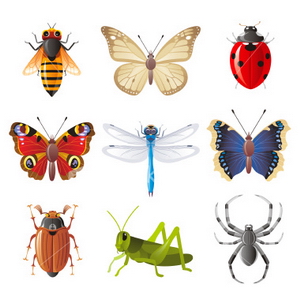
    Even though an insect-free world sounds great to most people, it world would be detrimental to our environment in many ways. First, there we would see the starvation of insect-eating animals such as frogs, moles, birds, lizards, and spiders who feed off insects to stay alive. Next there would be the inability to naturally recycle materials through composting which reintroduces nutrients into the soil. Our world would be buried in waste from all the trash we produce without insects such as beetles and their larvae, worm-like larvae, as well as true worms like night-crawlers. Another disadvantage would be the plummeting of crop yields due to lack of pollination. The honey bee alone is responsible for pollinating almonds, apples, avocados, blueberries, cantaloupes, cherries, cranberries, cucumbers, sunflowers, watermelon and many other crops. Last and most importantly there would be a collapse in the food chain. It has been said, “many plants would disappear without insect pollinators, and entire ecosystems would collapse in the absence of insects in the food chain.” A world without insects would be no world at all; we wouldn’t exist. However, even if our planet could exist, it would lack the wonder and beautiful that nature shows us everyday. People should think about the next they say, “I hate bugs,” for its because of bugs that we are alive.

    Even though an insect-free world sounds great to most people, it world would be detrimental to our environment in many ways. First, there we would see the starvation of insect-eating animals such as frogs, moles, birds, lizards, and spiders who feed off insects to stay alive. Next there would be the inability to naturally recycle materials through composting which reintroduces nutrients into the soil. Our world would be buried in waste from all the trash we produce without insects such as beetles and their larvae, worm-like larvae, as well as true worms like night-crawlers. Another disadvantage would be the plummeting of crop yields due to lack of pollination. The honey bee alone is responsible for pollinating almonds, apples, avocados, blueberries, cantaloupes, cherries, cranberries, cucumbers, sunflowers, watermelon and many other crops. Last and most importantly there would be a collapse in the food chain. It has been said, “many plants would disappear without insect pollinators, and entire ecosystems would collapse in the absence of insects in the food chain.” A world without insects would be no world at all; we wouldn’t exist. However, even if our planet could exist, it would lack the wonder and beautiful that nature shows us everyday. People should think about the next they say, “I hate bugs,” for its because of bugs that we are alive.

    Source:

    Life Without Insects: Heaven or Hell?

  • Hen harriers virtually exterminated in northeast Scotland

    Hen harriers virtually exterminated in northeast Scotland

    Hen harriers (Circus cyaneus) have been virtually wiped out by sporting estates across northeast Scotland, according to a new scientific study. The number of breeding pairs in the Cairngorms National Park, Aberdeenshire and East Moray has plummeted from 28 in the 1990s to just one in 2014 because of “illegal persecution and grouse management practices”, nine experts from the Northeast Scotland Raptor Study Group have concluded. Their conclusions are backed by wildlife campaigners, who are demanding tougher action by Scottish ministers to crack down on offending landowners. But the study has been attacked by a landowning group as a selective attempt “to besmirch grouse moor management.” The study, published in the journal British Birds, identified 118 possible breeding areas for hen harriers in northeast Scotland. “The vast majority were on moorland managed for red grouse sport shooting,” it said. “Peak numbers of at least 28 breeding pairs in the 1990s declined steadily to just three pairs in 2010–12, five in 2013 and one in 2014. Illegal persecution and grouse-management practices are believed to be the main causes of that decline, which occurred despite ample suitable habitat and prey.”

    Hen harriers (Circus cyaneus) have been virtually wiped out by sporting estates across northeast Scotland, according to a new scientific study. The number of breeding pairs in the Cairngorms National Park, Aberdeenshire and East Moray has plummeted from 28 in the 1990s to just one in 2014 because of “illegal persecution and grouse management practices”, nine experts from the Northeast Scotland Raptor Study Group have concluded. Their conclusions are backed by wildlife campaigners, who are demanding tougher action by Scottish ministers to crack down on offending landowners. But the study has been attacked by a landowning group as a selective attempt “to besmirch grouse moor management.” The study, published in the journal British Birds, identified 118 possible breeding areas for hen harriers in northeast Scotland. “The vast majority were on moorland managed for red grouse sport shooting,” it said. “Peak numbers of at least 28 breeding pairs in the 1990s declined steadily to just three pairs in 2010–12, five in 2013 and one in 2014. Illegal persecution and grouse-management practices are believed to be the main causes of that decline, which occurred despite ample suitable habitat and prey.”

    The authors pointed out that two projects to help harriers recover had failed, and a proposed legal protection area had stalled. “Levels of trust and cooperation between most raptor enthusiasts and grouse moor estates in northeast Scotland are at an all-time low,” they said.

    “This is one of the most controversial conservation issues in the UK, and we suggest that Scottish Natural Heritage and Police Scotland are best placed to lead on overseeing a recovery plan for northeast Scotland.”

    The Royal Society for the Protection of Birds in Scotland highlighted five incidents since 2000 in which hen harriers in the northeast had been shot. “It is depressing that in 21st century Scotland, in areas where intensive management for driven grouse shooting is the main land use, there still seems to be a complete disregard for the laws protecting our birds of prey,” said the society’s head of investigations, Ian Thomson.

    “It is disappointing that efforts to tackle raptor persecution are undermined by some representatives of the land management sector, with continued efforts made to downplay the scale of the problem.”

    Thomson argued that self-regulation by landowners had failed. “We are calling for the Scottish Government to introduce a robust system of licensing of game bird hunting, similar to systems in place in other European countries,” he said.

    But according to Tim Baynes, director of Scottish Land and Estates’ moorland group representing landowners, there were “serious problems” with the new study. “There has been very little harrier surveying conducted recently in the area, with only four per cent of harrier breeding areas covered in 2014,” he said.

    Cameras installed at harrier nests on five grouse moors across Scotland in 2015 showed that breeding failures were caused by foxes or bad weather and were “nothing to do with human disturbance”, Baynes said.

    “Sadly, this seems to be another instance where raptor study groups have made little or no attempt to engage with land managers who could have helped their research. Even once data is produced, it is often incomplete or only selectively shared in an attempt to besmirch grouse moor management.”

    The Scottish Government said it was aware of the new study. “Hen harriers are doing well in the west of Scotland and in Orkney but their absence from some areas of Scotland is a cause for concern,” said a government spokeswoman.

    “We have said that we will take further action to regulate game shooting if we judge that to be necessary. We have initiated a study to look at how game bird shooting and management is regulated in other European countries.”

    Source: Herald Scotland, 7 February 2016
    http://www.heraldscotland.com/news/14259143.Hen_harriers_virtually_exterminated_in_northeast_Scotland/
  • Ermittlung der Biomassen flugaktiver Insekten im Naturschutzgebiet Orbroicher Bruch mit Malaise Fallen in den Jahren 1989 und 2013

    Ermittlung der Biomassen flugaktiver Insekten im Naturschutzgebiet Orbroicher Bruch mit Malaise Fallen in den Jahren 1989 und 2013

    Beschrieben werden die Biomassen aus den Ergebnissen von Kartierungen mit Malaise Fallen im Naturschutzgebiet Orbroich, Krefeld. Die Ergebnisse zeigen an zwei Standorten einen hohen Verlust in der vergleichenden Betrachtung der Masse flugaktiver Insekten zwischen den Untersuchungsjahren 1989 und 2013. Über die gleiche Fallentechnik an denselben Standorten wurden jeweils gravierende Rückgänge von > 75% belegt. Diese Daten deuten darauf hin, dass im Gebiet an den untersuchten Teilflächen nur noch weniger als ein Viertel der Masse flugaktiver Insekten in der lokalen Zönose verfügbar ist. Bei der großen Gruppe der Kleininsekten und Spinnen fressenden Vogelarten zeigt sich ein markanter Anstieg der Bestandsrückgänge zwischen dem 25-[1988/90-2009] und dem 12-Jahreszeitraum [1998-2009]: Während bei Betrachtung des Bestandstrends über 25 Jahre etwa ein Drittel (inkl. leichter Abnahmen) der Arten einen Bestandsrückgang zeigt, sind es über den kürzeren Zeitraum fast die Hälfte.

    Beschrieben werden die Biomassen aus den Ergebnissen von Kartierungen mit Malaise Fallen im Naturschutzgebiet Orbroich, Krefeld. Die Ergebnisse zeigen an zwei Standorten einen hohen Verlust in der vergleichenden Betrachtung der Masse flugaktiver Insekten zwischen den Untersuchungsjahren 1989 und 2013. Über die gleiche Fallentechnik an denselben Standorten wurden jeweils gravierende Rückgänge von > 75% belegt. Diese Daten deuten darauf hin, dass im Gebiet an den untersuchten Teilflächen nur noch weniger als ein Viertel der Masse flugaktiver Insekten in der lokalen Zönose verfügbar ist. Bei der großen Gruppe der Kleininsekten und Spinnen fressenden Vogelarten zeigt sich ein markanter Anstieg der Bestandsrückgänge zwischen dem 25-[1988/90-2009] und dem 12-Jahreszeitraum [1998-2009]: Während bei Betrachtung des Bestandstrends über 25 Jahre etwa ein Drittel (inkl. leichter Abnahmen) der Arten einen Bestandsrückgang zeigt, sind es über den kürzeren Zeitraum fast die Hälfte.

    Quellen: Sorg, M.; Schwan, H.; Stenmans, W. & A. Muller. Mitteilungen aus dem Entomologischen Verein Krefeld Vol. 1 (2013), pp. 1-5
    Vögel in Deutschland 2014
    http://www.bfn.de/fileadmin/BfN/monitoring/Dokumente/ViD2014_Internet_barrierefr.pdf

  • New evidence to support the link between plant and pollinator decline

    New evidence to support the link between plant and pollinator decline

    The first ever Britain-wide assessment of the value of wild flowers as food for pollinators, led by the University of Bristol, shows that decreasing resources mirror the decline of pollinating insects, providing new evidence to support the link between plant and pollinator decline. In recent years, there have been considerable concerns over threats to wild bees and other insect pollinators which are vital to the success of important food crops and wild flowers. Amongst the many pressures facing pollinators, a key factor is likely to be decreasing floral resources in Britain. The study, published today in Nature combines vegetation survey data recorded over the last 80 years with modern day measurements of nectar to provide the most comprehensive assessment ever published. In the study, researchers from the University of Bristol and University of Leeds worked with scientists from the Centre for Ecology and Hydrology and Fera Science Ltd, to find substantial losses to nectar resources in England and Wales between the 1930s and 1970s – a period closely linked with agricultural intensification.

    The first ever Britain-wide assessment of the value of wild flowers as food for pollinators, led by the University of Bristol, shows that decreasing resources mirror the decline of pollinating insects, providing new evidence to support the link between plant and pollinator decline. In recent years, there have been considerable concerns over threats to wild bees and other insect pollinators which are vital to the success of important food crops and wild flowers. Amongst the many pressures facing pollinators, a key factor is likely to be decreasing floral resources in Britain. The study, published today in Nature combines vegetation survey data recorded over the last 80 years with modern day measurements of nectar to provide the most comprehensive assessment ever published. In the study, researchers from the University of Bristol and University of Leeds worked with scientists from the Centre for Ecology and Hydrology and Fera Science Ltd, to find substantial losses to nectar resources in England and Wales between the 1930s and 1970s – a period closely linked with agricultural intensification.

    By 1978, the researchers discovered that nectar resources had stabilised, and actually increased from 2000. The findings compliment indications suggesting that declines in pollinator diversity slowed down or partially reversed over that period.

    Professor Jane Memmott from Bristol’s School of Biological Sciences, said: “Over the last few decades despite stabilisation, the diversity of nectar sources has declined – a trend seemingly mirrored in the diversity of pollinator species.”

    The study also focused on the type of habitats most beneficial for pollinators, highlighting arable land as the poorest source of nectar: both in terms of amount and the diversity of sources. Improved grasslands could however contribute the most to national nectar supply if management favoured greater flowering of plants such as white clover.

    Lead author Dr Mathilde Baude, formerly of the University of Bristol and now at the University of Orléans said: “Nationally, a small number of plants contribute massively to nectar provision including clover, heather and thistles. These very common species are very important to ecosystem functioning, yet they are often disregarded.”

    Professor Bill Kunin of the University of Leeds, said: “Farmers on Agri-Environment schemes can plant wild flowers to help improve the value of their land for pollinators, but the areas involved have been small and thus the contribution to floral resources at the national scale is still low. On the other hand, there are vast areas of improved grasslands, and small changes in management to increase wild flowers could make a huge contribution nationally.”

    Source: University of Bristol News, 3 Feb 2016
    http://www.bristol.ac.uk/news/2016/february/loss-of-wild-flowers-matches-pollinator-decline.html

    This study provides new evidence for policy makers to help restore national nectar supplies for our important insect pollinators.

    The Insect Pollinators Initiative is joint-funded by the Biotechnology and Biological Sciences Research Council (BBSRC), Defra, the Natural Environment Research Council (NERC), the Scottish Government and the Wellcome Trust. It is managed under the auspices of the Living with Environmental Change (LWEC) partnership.

  • Paul Nothers warnt vor einer Öko-Katastrophe durch den Einsatz neuer Pestizide in der Landwirtschaft

    Paul Nothers warnt vor einer Öko-Katastrophe durch den Einsatz neuer Pestizide in der Landwirtschaft

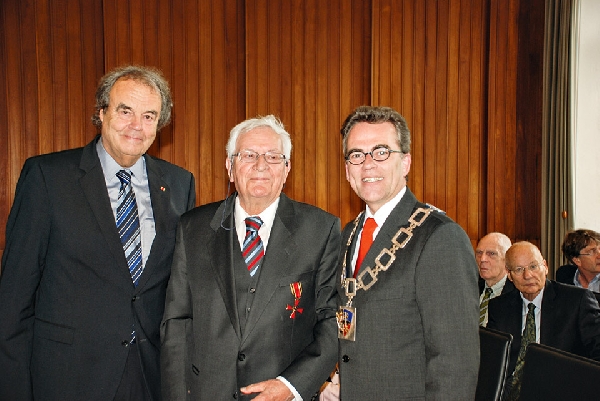
    Paul Nothers ist diplomierter Landwirt, passionierter Jäger – und liebt die Natur. Als er vor mehr als 50 Jahren auf den Hof seiner Familie in Orbroich zog, war die Welt noch in Ordnung. „Insekten überall, Wild, Hasen, Rebhühner und Fasane im Überfluss“, erinnert er sich. Singvögel hörte und sah er ständig. Und wenn er eine längere Fahrt im Auto unternahm, musste er danach seine Windschutzscheibe von Insekten säubern. Das ist lange her. Heutzutage gibt es eine Fülle von heimischen Tierarten, die laut Bericht des Bundesumweltministeriums kurz vor dem Aussterben stehen. Für den 82-Jährigen ein triftiger Grund, in seiner Dankesrede zur Verleihung des Bundesverdienstkreuzes (WZ berichtete) an die Gäste aus Verwaltung, Politik, Natur- und Umweltschutz in Krefeld einen dringenden Appell zu richten. Deutschland stehe vor einer ähnlichen Öko-Katastrophe wie die USA in den 60er Jahren, als neue Pestizide auf DDT-Basis und Herbizide wie Agent Orange auf den Markt kamen. Viele dieser tödlichen Gifte sind in den vergangenen Jahrzehnten verboten worden. Neue dafür nachgerückt. Beispielsweise die Neonikotinoide, eine neue Generation von Insektiziden.

    Paul Nothers ist diplomierter Landwirt, passionierter Jäger – und liebt die Natur. Als er vor mehr als 50 Jahren auf den Hof seiner Familie in Orbroich zog, war die Welt noch in Ordnung. „Insekten überall, Wild, Hasen, Rebhühner und Fasane im Überfluss“, erinnert er sich. Singvögel hörte und sah er ständig. Und wenn er eine längere Fahrt im Auto unternahm, musste er danach seine Windschutzscheibe von Insekten säubern. Das ist lange her. Heutzutage gibt es eine Fülle von heimischen Tierarten, die laut Bericht des Bundesumweltministeriums kurz vor dem Aussterben stehen. Für den 82-Jährigen ein triftiger Grund, in seiner Dankesrede zur Verleihung des Bundesverdienstkreuzes (WZ berichtete) an die Gäste aus Verwaltung, Politik, Natur- und Umweltschutz in Krefeld einen dringenden Appell zu richten. Deutschland stehe vor einer ähnlichen Öko-Katastrophe wie die USA in den 60er Jahren, als neue Pestizide auf DDT-Basis und Herbizide wie Agent Orange auf den Markt kamen. Viele dieser tödlichen Gifte sind in den vergangenen Jahrzehnten verboten worden. Neue dafür nachgerückt. Beispielsweise die Neonikotinoide, eine neue Generation von Insektiziden.

    „Die sich anbahnende Katastrophe ist viel gefährlicher“, warnt Nothers. Man sehe nicht mehr massenweise tote Vögel, weil sie sang- und klanglos verschwinden. Auch die Insekten verschwinden und mit ihnen der Anfang der Nahrungskette. In der Folge sterben die Amphibien. Wespen, Heimchen und Schmetterlinge gehen stark zurück. „Wann haben Sie zuletzt mal ein Glühwürmchen gesehen?“, fragt er suchend in die Runde.
    In Krefeld ist der Rückgang der Insekten schon sichtbar. Laut Nothers weisen die neuesten Untersuchungen der Krefelder Entomologen einen Rückgang der Insekten in den vergangenen 24 Jahren um 80 Prozent im Naturschutzgebiet Orbroich auf. „Und in den Natur- und Landschaftsschutzgebieten sieht es nicht besser aus.“

    Der BUND hat 2010 ein Buch des niederländischen Toxikologen Henk Tennekes veröffentlicht. Es trägt den Titel „Das Ende der Artenvielfalt: Neuartige Pestizide töten Insekten und Vögel.“ Darin beschreibt er die Verwendung von Neonikotinoiden und deren Folgen. Auf Betreiben des EU-Abgeordneten Karl-Heinz Florenz hat die EU reagiert. Sie hat Begrenzungen für den Einsatz bestimmter Mittel erlassen. In Deutschland werden diese Bestimmungen aber erst ab 2015 gültig.

    „Dieses Thema muss weiter wissenschaftlich untersucht werden“, fordert Nothers. Zumal die bisherigen Messtechniken für die neuen Insektizide noch viel zu grob sind. Erste Untersuchungen in Krefeld hat das Umweltamt auf sein Bitten hin aber schon durchgeführt. „Wir sollten uns diese Untersuchungen leisten“, wirbt Nothers um weitere Unterstützung, „ vor allem auch im Sinne unserer Kinder und Enkel.“ Er liebt eben die Natur und mit ihr auch alle Lebewesen.

    Quelle: Westdeutsche Zeitung, 11.04.14
    http://www.wz.de/lokales/krefeld/pestizide-erst-sterben-die-insekten-dann-die-voegel-1.1609835

  • Central thesis of Henk Tennekes book “Disaster in the Making” confirmed by German entomologists

    Central thesis of Henk Tennekes book “Disaster in the Making” confirmed by German entomologists

    Entomologists from Krefeld, Germany performing an inventory of insects have made an alarming discovery: since 1989 the amount of insects in two places in the nature reserve Orbroicher Bruch have fallen by more than three-quarters. The researchers have performed the measurements in exactly the same way as performed in 1989; in the same place, according to the same method and by the same people (reports in German and English attached). “So the data can be reliably compared”, the entomologists emphasize. Two Malaise insect traps were placed in a pasture about 50 meters from each other over a period of many months to catch and weigh insects. Whereas in 1989 1.4 kg of insects were captured in this way, now less than 300 grams were recovered. According to the entomologists, this dramatic decline has serious consequences for the ecosystem: all insect-eating animals are threatened with extinction and eco-system services, including pollination, decomposition processes or soil fertility, will come under serious threat. The data from Krefeld are consistent with the Henk Tennekes thesis of 2010 that the widespread use of neonicotinoid insecticides in agriculture will wipe out insects. Tennekes pointed out in his book that two-thirds of ground beetles had disappeared in less than two decades from the Dutch heathland reserve Dwingelderveld.

    Entomologists from Krefeld, Germany performing an inventory of insects have made an alarming discovery: since 1989 the amount of insects in two places in the nature reserve Orbroicher Bruch have fallen by more than three-quarters. The researchers have performed the measurements in exactly the same way as performed in 1989; in the same place, according to the same method and by the same people (reports in German and English attached). “So the data can be reliably compared”, the entomologists emphasize. Two Malaise insect traps were placed in a pasture about 50 meters from each other over a period of many months to catch and weigh insects. Whereas in 1989 1.4 kg of insects were captured in this way, now less than 300 grams were recovered. According to the entomologists, this dramatic decline has serious consequences for the ecosystem: all insect-eating animals are threatened with extinction and eco-system services, including pollination, decomposition processes or soil fertility, will come under serious threat. The data from Krefeld are consistent with the Henk Tennekes thesis of 2010 that the widespread use of neonicotinoid insecticides in agriculture will wipe out insects. Tennekes pointed out in his book that two-thirds of ground beetles had disappeared in less than two decades from the Dutch heathland reserve Dwingelderveld.

    Source: RP Online, 30 December 2015
    http://www.rp-online.de/nrw/staedte/krefeld/unruhe-ueber-dramatische-insektenverluste-aid-1.3913667

  • De centrale these in het boek “Disaster in the Making” van Henk Tennekes wordt bevestigd door onderzoekers uit Krefeld

    De centrale these in het boek “Disaster in the Making” van Henk Tennekes wordt bevestigd door onderzoekers uit Krefeld

    Entomologen uit Krefeld hebben bij het inventariseren van insecten een onrustbarende ontdekking gedaan: sinds 1989 is de hoeveelheid insecten op twee plaatsen in het natuurgebied Orbroicher Bruch met meer dan drie-kwart gedaald (zie bijgevoegde publicaties in het Duits en Engels). De onderzoekers hebben de metingen op precies dezelfde manier uitgevoerd als in 1989; op dezelfde plaats, volgens dezelfde methode en door dezelfde mensen. “Zo kunnen de cijfers betrouwbaar worden vergeleken” benadrukken de entomologen. Twee zogenaamde malaise insectenvallen werden in een weiland op circa 50 meter afstand geplaatst om over een periode van vele maanden insecten te vangen en te wegen. Terwijl in 1989 op die manier 1,4 kg insecten werden gevangen, waren het er nu nog maar minder dan 300 gram. Volgens de entomologen heeft deze dramatische achteruitgang ernstige consequenties voor het ecosysteem: alle insectenetende dieren worden met uitsterven bedreigd en eco-systemische functies, waaronder bestuiving, ontledingsprocessen of de bodemkwaliteit, komen ernstig onder druk te staan. De gegevens uit Krefeld vormen ook een bevestiging van de in 2010 geformuleerde these van Henk Tennekes dat het grootschalige gebruik van neonicotinoide insecticiden in de landbouw insecten zal uitroeien.

    Entomologen uit Krefeld hebben bij het inventariseren van insecten een onrustbarende ontdekking gedaan: sinds 1989 is de hoeveelheid insecten op twee plaatsen in het natuurgebied Orbroicher Bruch met meer dan drie-kwart gedaald (zie bijgevoegde publicaties in het Duits en Engels). De onderzoekers hebben de metingen op precies dezelfde manier uitgevoerd als in 1989; op dezelfde plaats, volgens dezelfde methode en door dezelfde mensen. “Zo kunnen de cijfers betrouwbaar worden vergeleken” benadrukken de entomologen. Twee zogenaamde malaise insectenvallen werden in een weiland op circa 50 meter afstand geplaatst om over een periode van vele maanden insecten te vangen en te wegen. Terwijl in 1989 op die manier 1,4 kg insecten werden gevangen, waren het er nu nog maar minder dan 300 gram. Volgens de entomologen heeft deze dramatische achteruitgang ernstige consequenties voor het ecosysteem: alle insectenetende dieren worden met uitsterven bedreigd en eco-systemische functies, waaronder bestuiving, ontledingsprocessen of de bodemkwaliteit, komen ernstig onder druk te staan. De gegevens uit Krefeld vormen ook een bevestiging van de in 2010 geformuleerde these van Henk Tennekes dat het grootschalige gebruik van neonicotinoide insecticiden in de landbouw insecten zal uitroeien.

    Bron:
    http://www.rp-online.de/nrw/staedte/krefeld/unruhe-ueber-dramatische-insektenverluste-aid-1.3913667

  • Fachbuch »Das Ende der Artenvielfalt – Neuartige Pestizide töten Insekten und Vögel« von Henk Tennekes –  die Bestätigung seiner Thesen kommt aus Nordrhein-Westfalen

    Fachbuch »Das Ende der Artenvielfalt – Neuartige Pestizide töten Insekten und Vögel« von Henk Tennekes – die Bestätigung seiner Thesen kommt aus Nordrhein-Westfalen

    Der NABU warnt vor einem neuartigen Insektensterben mit bislang unbekannten Folgen in Deutschland. Allein in Nordrhein-Westfalen sei in den vergangenen 15 Jahren die Biomasse der Fluginsekten um bis zu 80 Prozent zurückgegangen (siehe beiliegende Veröffentlichung). Ähnlich alarmierende Entwicklungen befürchten die Naturschützer in weiteren Regionen Deutschlands und fordern, die Ursachen und das Ausmaß des Insektenschwunds bundesweit schnell aufzuklären. „Unsere Beobachtungen in Nordrhein-Westfalen sind beängstigend. Wenn uns die Fluginsekten fehlen, gerät die gesamte Nahrungskette in Gefahr: Blumen und Bäume werden nicht mehr bestäubt und Mauerseglern und Schwalben fehlt die Nahrungsgrundlage“, warnte Josef Tumbrinck, Landesvorsitzender des NABU Nordrhein-Westfalen. Er stellte am heutigen Mittwoch im Umweltausschuss des Bundestages die Untersuchungsergebnisse des Entomologischen Vereins Krefeld vor, mit dem der NABU zusammenarbeitet. Ehrenamtliche hatten zwischen 1989 und 2014 an insgesamt 88 Standorten in Nordrhein-Westfalen fliegende Insekten gesammelt, ihre Arten bestimmt und sie gewogen. „Während wir 1995 noch 1,6 Kilogramm aus den Untersuchungsfallen sammelten, sind wir heute froh, wenn es 300 Gramm sind“, so Tumbrinck. Der Rückgang von bis zu 80 Prozent beträfe unter anderem Schmetterlinge, Bienen und Schwebfliegen.

    Der NABU warnt vor einem neuartigen Insektensterben mit bislang unbekannten Folgen in Deutschland. Allein in Nordrhein-Westfalen sei in den vergangenen 15 Jahren die Biomasse der Fluginsekten um bis zu 80 Prozent zurückgegangen (siehe beiliegende Veröffentlichung). Ähnlich alarmierende Entwicklungen befürchten die Naturschützer in weiteren Regionen Deutschlands und fordern, die Ursachen und das Ausmaß des Insektenschwunds bundesweit schnell aufzuklären. „Unsere Beobachtungen in Nordrhein-Westfalen sind beängstigend. Wenn uns die Fluginsekten fehlen, gerät die gesamte Nahrungskette in Gefahr: Blumen und Bäume werden nicht mehr bestäubt und Mauerseglern und Schwalben fehlt die Nahrungsgrundlage“, warnte Josef Tumbrinck, Landesvorsitzender des NABU Nordrhein-Westfalen. Er stellte am heutigen Mittwoch im Umweltausschuss des Bundestages die Untersuchungsergebnisse des Entomologischen Vereins Krefeld vor, mit dem der NABU zusammenarbeitet. Ehrenamtliche hatten zwischen 1989 und 2014 an insgesamt 88 Standorten in Nordrhein-Westfalen fliegende Insekten gesammelt, ihre Arten bestimmt und sie gewogen. „Während wir 1995 noch 1,6 Kilogramm aus den Untersuchungsfallen sammelten, sind wir heute froh, wenn es 300 Gramm sind“, so Tumbrinck. Der Rückgang von bis zu 80 Prozent beträfe unter anderem Schmetterlinge, Bienen und Schwebfliegen.

    Vieles deutet darauf hin, dass wir es mit einer weit reichenden Vergiftung der Insekten in unserer Umwelt zu tun haben“, sagte NABU-Bundesgeschäftsführer Leif Miller. Besonders Neonicotinoide, die seit Mitte der 1990er Jahre in der Landwirtschaft eingesetzt werden, stehen im Verdacht für das massenhafte Sterben verantwortlich zu sein. Immer mehr Untersuchungen deuten darauf hin, dass diese Mittel weit über ihr Einsatzgebiet hinaus Schäden unter Honigbienen, aber auch in der gesamten Insektenfauna auslösen.

    Der NABU fordert angesichts der alarmierenden Daten aus Nordrhein-Westfalen, bundesweit möglichst schnell ein dauerhaftes Insektenmonitoring aufzubauen. Darüber hinaus fordern die Naturschützer, die kritischen Insektizide endlich intensiv zu überprüfen. Erst wenn nachgewiesen sei, dass diese Stoffe keine schädigenden Auswirkungen auf die Ökosysteme haben, sollten sie zugelassen werden. Außerdem sei es wichtig, den ökologischen Landbau weiter auszubauen und ganz besonders in Schutzgebieten und ihren Pufferbereichen zu fördern, da auf diesen Flächen keine Pestizide eingesetzt werden dürfen.

    Quelle: NABU, 13. Januar 2016
    https://www.nabu.de/news/2016/01/20033.html

  • Concentrations of neonicotinoid insecticides in honey, pollen and honey bees in central Saskatchewan, Canada

    Concentrations of neonicotinoid insecticides in honey, pollen and honey bees in central Saskatchewan, Canada

    Neonicotinoid insecticides (NIs) and their transformation products were detected in honey, pollen and honey bees, (Apis mellifera) from hives located within 30 km of the City of Saskatoon, Saskatchewan, Canada. Clothianidin and thiamethoxam were the most frequently detected NIs, found in 68 and 75% of honey samples at mean concentrations of 8.2 and 17.2 ng g−1 wet mass, (wm), respectively. Clothianidin was also found in >50% of samples of bees and pollen. Concentrations of clothianidin in bees exceed the LD50 in 2 of 28 samples, while for other NIs concentrations were typically 10–100-fold less than the oral LD50.

    Neonicotinoid insecticides (NIs) and their transformation products were detected in honey, pollen and honey bees, (Apis mellifera) from hives located within 30 km of the City of Saskatoon, Saskatchewan, Canada. Clothianidin and thiamethoxam were the most frequently detected NIs, found in 68 and 75% of honey samples at mean concentrations of 8.2 and 17.2 ng g−1 wet mass, (wm), respectively. Clothianidin was also found in >50% of samples of bees and pollen. Concentrations of clothianidin in bees exceed the LD50 in 2 of 28 samples, while for other NIs concentrations were typically 10–100-fold less than the oral LD50.

    Imidacloprid was detected in ∼30% of samples of honey, but only 5% of pollen and concentrations were