Auteur: Henk Tennekes

  • A simple model predicts pesticide concentrations in the environment more reliably

    A simple model predicts pesticide concentrations in the environment more reliably

    For the evaluation of pesticides, a simple model yields more reliable results than the method currently used in the EU. Now, researchers show that a significantly less complex box model for the risk assessment of pesticides can offer greater environmental safety than the FOCUS modelling approach presently employed by the EU within the regulatory risk assessment. Plant protection products can be approved in Europe only when the predicted concentrations in surface waters are below the ecologically critical threshold value. Since the end of the 1990s, the EU has employed so-called FOCUS models for the calculation of the expected discharge of pesticides from agricultural use to surface waters. These are required by law for the approval process, but the knowledge of the Landau environmental researchers indicates that these models are not suitable. Ralf Schulz, one of the authors of the study, explains: “Still more important, though, our study shows that the application of a much simpler model yields far more reliable results and furthermore appears to exhibit better predictive quality when it is adapted to the particular field situation.”
    In their study the researchers compared 466 concentrations of insecticides measured in European surface waters with the concentrations predicted by the models and determined the number of concentrations which the respective model underestimated. In addition to the FOCUS modelling approach, the study also examined a simpler box model, “which ultimately gave the better results”, as Ralf Schulz stated.
    The difference between the two models lies in the nature of the two modelling approaches. The FOCUS approach derives from different mechanistic models, based upon different detailed processes. In other words, the model attempts to exactly describe the whereabouts of a pesticide following its application. On the other hand, the box model examined in the present study provides a very general description of the distribution between the different environmental compartments. It calculates the tendencies of a chemical, in this case a pesticide, to migrate from one compartment to another, for example from the soil to the atmosphere, on the basis of only a few substance properties.
    The new study compares this simple box model, requiring only a few input values, and the relatively complex, non-transparent FOCUS model in respect of two essential modelling properties: first, the level of protection which the model describes in a environmental risk assessment and second, the predictive quality, in other words how well the predicted and actual pesticide contamination of surface waters compare.
    “That FOCUS is still used is probably because the relevant players either see no reason to act or are not aware of a suitable alternative. However, underestimating the actual concentration in the environment can lead to a miscalculation of the environmental risk”, fears Schulz. With this study, the authors would like to give cause for thought and concrete courses of action for a revision of the pesticide risk assessment procedure employed until now in the EU.

    More information: Anja Knäbel et al. Aquatic Exposure Predictions of Insecticide Field Concentrations Using a Multimedia Mass-Balance Model, Environmental Science & Technology (2016). DOI: 10.1021/acs.est.5b05721

    Read more at: http://phys.org/news/2016-05-simple-pesticide-environment-reliably.html#jCp
  • Naturschützer bangen um Vögel am Chiemsee

    Naturschützer bangen um Vögel am Chiemsee

    Am Chiemsee darf laut Regierung von Oberbayern weitere fünf Jahre das Mückenvernichtungsmittel BTI gespritzt werden. Bisher galt das Mittel als ungefährlich, doch Vogelschützer fürchten Konsequenzen. Der Landesbund für Vogelschutz und der Bund Naturschutz kritisieren, dass durch die massenhafte Vernichtung der Mücken massiv in die Nahrungskette eingegriffen wird. Die Larven und die Stechmücken fehlen laut den Naturschützern vielen Vögeln und Fischen als Nahrung. Auch Libellen und gefährdete Fledermäuse sind auf die Mücken als Nahrung angewiesen. Alle betroffenen Jungtiere könnten deshalb deutlich schwächer bleiben, weil sie nicht so gut ernährt werden können. Und so könnte die Reproduktionsrate so mancher Gattung noch stärker absinken. Die Regierung von Oberbayern hat diese Argumente genau geprüft und kommt zu dem Schluss: BTI kann weiterhin eingesetzt werden. Allerdings gelten strenge Auflagen. Das Mückenvernichtungsmittel, das übrigens aus Hubschraubern heraus verteilt wird, darf nur auf den so genannten Stechmückenbrutflächen ausgebracht werden. Es darf nicht direkt aufs Wasser und nur maximal zwei Mal im Jahr verwendet werden, und zwar nur bei Hochwasser am Chiemsee und nur dann, wenn die Anzahl der Larven im Wasser eine gewisse Grenze überschritten hat. Wann BTI heuer also ausgebracht wird, und ob es überhaupt zum Einsatz kommt, das steht noch nicht fest, weil es ja vom Wetter und vom Wasserstand abhängt.
    Quelle: BR, 20.05.16
    http://www.br.de/nachrichten/oberbayern/inhalt/chiemsee-bti-mueckenversichtungsmittel-vogelschutz-100.html

    An anderen bayerischen Seen, wie dem Starnberger-, dem Ammer- oder auch dem Bodensee kommt BTI nicht zum Einsatz.

  • Spritzmittel machen Insekten und Wildkräutern den Garaus und entziehen Brutvögeln damit ihre Nahrungsgrundlage

    Spritzmittel machen Insekten und Wildkräutern den Garaus und entziehen Brutvögeln damit ihre Nahrungsgrundlage

    Alle fünf Jahre wird die Rote Liste für Vögel aktualisiert, die seit 1971 erscheint. 2008 wurde eine neue Kategorie eingeführt, die sogenannte Vorwarnliste. Sie führt Vögel, die noch nicht akut gefährdet sind, deren Rückgang aber zum Teil dramatisch ist. Sie liest sich wie das “Who’s who” unserer bekanntesten Gartenfreunde. Sorgen machen muss man sich unter anderem um das Blaukehlchen und den Kuckuck, den Pirol und die Rauchschwalbe, das Teichhuhn und den Wespenbussard – und den Spatz!`Bisher wenig beachtet, tragen Pestizide aus der Landwirtschaft dazu bei, dass unsere Singvögel bedroht sind. In Deutschland werden Ackerbauflächen hauptsächlich als Monokulturen betrieben. Doch so schön beispielsweise riesige Rapsfelder auch anmuten, sie sind anfällig für Schädlinge. Daher werden im großen Stil Pestizide auf die Felder aufgebracht: Insektizide gegen Fraßschädlinge, Herbizide gegen Unkräuter, Fungizide gegen Pilzbefall der Pflanzen. Diese effektiven Spritzmittel machen Insekten und Wildkräutern den Garaus und entziehen Brutvögeln damit ihre Nahrungsgrundlage. Die Zunahme der intensiven Landwirtschaft und zahlreiche Agrargifte bedrohen vor allem Arten, die das Grünland besiedeln, wie Kiebitz oder Wiesenpieper.

    Durch den Rückgang des Futterangebots kommt es zu einem drastischen Rückgang der Wildvogelpopulationen. Einer Studie britischer Forscher von November 2014 zufolge ist die Zahl der Vögel in Europa in den vergangenen 30 Jahren um rund 421 Millionen zurückgegangen. Zu etwa 90 Prozent betrifft der Rückgang demnach gewöhnliche Arten wie Spatzen, Stare, Lerchen und Rebhühner. Für 16 Arten wie den Gänsegeier, den Schlangenadler oder das Zwergsumpfhuhn kommt jede Hilfe zu spät. Sie sind in Deutschland ausgestorben. Jede achte Vogelart ist akut bedroht.
    Quelle: BR, 03.11.14
    http://www.br.de/themen/wissen/rote-liste-artenschwund-voegel-100.html

  • Prise de bec autour des pesticides

    Prise de bec autour des pesticides

    Une campagne de Pro Natura pour alerter sur l’état des cours d’eau en Suisse exige le retrait de certains pesticides. Les paysans se sentent pris pour cible. Le 9 mai dernier Pro Natura lançait sa campagne «Stop aux pesticides dans nos eaux», dont le but est de dénoncer l’inquiétante quantité de pesticides, herbicides et insecticides dans les cours d’eaux. Ce texte est accompagné d’un plan national en huit points pour que la Confédération applique une nouvelle politique en la matière. Il exige entre autres le retrait du marché des pesticides les plus toxiques et demande que toutes les études importantes pour les homologations de ces produits soient publiées. Pro Natura évoque le fait que ces produits chimiques se retrouvent dans le sol, dans nos eaux, dans nos aliments, dans notre corps et que sur le long terme nous ne savons pas ce que cela peut impliquer pour les être vivants. Et de rappeler que certains pesticides sont soupçonnés d’être cancérigènes (le glyphosate, voir en page 1) et de provoquer des troubles hormonaux.

    Tout est parti d’une étude datant de 2014 de l’institut de recherche sur l’eau de l’EPFZ et l’IFAEPE, qui démontrait une quantité très préoccupante de substances chimiques dans 70% des rivières étudiées dans toute la Suisse. Un gramme de principe actif de pesticide peut polluer 10’000 mètres cubes d’eau, ce qui équivaut à 10 kilomètres de ruisseau, rappelle Pro Natura. L’association écologique explique qu’environ 2000 tonnes d’herbicides, fongicides et insecticides (le plus fréquent d’entre eux étant l’herbicide glyphosate) sont épandues chaque année dans les champs, 80 à 90 % de cette utilisation proviennent de l’agriculture dite intensive. Cette utilisation de pesticides est en augmentation de 10% et de 40% pour les insecticides entre 2006 et 2011, déplore l’association, qui propose l’agriculture biologique, que les consommateurs demandent de plus en plus, comme alternative. Markus Arn, coordinateur de la campagne de Pro Natura explique: «Les grands lobbies de l’agriculture et de la chimie parviennent à vendre une fausse sécurité à la population. Mais on sait maintenant avec certitude que les pesticides sont partout. C’est contre cette pollution que nous luttons avec notre nouvelle campagne.»

    Dans un communiqué de presse, l’Union suisse des paysans (USP) exprime sa colère: «Pro Natura a lancé une campagne d’affichage ‘’Stop aux pesticides dans nos eaux’’, dans laquelle les paysannes et paysans suisses sont accusés de polluer les eaux. L’Union suisse des paysans condamne très sévèrement la campagne. Son contenu est simpliste et tendancieux, elle joue sur l’émotion et ne fait pas la part des choses.» L’association agricole affirme qu’elle «met tout en œuvre pour assurer une utilisation aussi efficace que possible et limitée au strict nécessaire de ces substances. Ainsi, à titre d’exemple, l’agriculture suisse soutient le plan d’action de la Confédération en matière de protection phytosanitaire, dont le but consiste à réduire les risques liés à l’utilisation des produits phytosanitaires.» L’organisation paysanne souligne par ailleurs qu’«entre 40 et 50 % des denrées alimentaires sont importées aujourd’hui parfois en provenance de régions du globe où il n’est guère question de la protection de l’environnement et du dosage des produits phytosanitaires. Il ne suffit donc pas de vouloir faire porter à l’agriculture suisse l’entière responsabilité du problème». Des arguments qui ne convainquent guère Pro Natura. Pour elle, «l’USP s’engage en réalité surtout pour que le plan d’action pesticides ne gêne pas le productivisme». «La plus grande partie des importations qui entrent en Suisse viennent des pays limitrophes de l’UE. Or l’UE a depuis longtemps dépassé la Suisse sur le plan de la réglementation des pesticides. C’est ainsi que tous les pays de l’UE ont leur plan d’action pesticides», ajoute encore l’organisation.

    Source:Gauchebdo, 19-05-16

  • Beslissing over gebruik glyfosaat uitgesteld

    Beslissing over gebruik glyfosaat uitgesteld

    De Europese Commissie heeft de stemming over de vergunning voor de omstreden pesticide glyfosaat opnieuw uitgesteld. Er bleek geen meerderheid te zijn bij de Europese lidstaten om het gebruik van glyfosaat nog negen jaar langer toe te staan. Glyfosaat wordt vooral in de landbouw gebruikt, maar het zou ook de oorzaak zijn van hormoonverstoring en vruchtbaarheidsproblemen bij mens en dier. De Europese Commissie wilde de pesticide oorspronkelijk een goedkeuring voor de volgende vijftien jaar geven. Na protest werd een beslissing in maart een eerste keer uitgesteld, en stelde de Commissie nog een toelating van negen jaar voor. Donderdag werd de beslissing dus opnieuw uitgesteld, omdat de Europese lidstaten niet op dezelfde lijn zitten. Frankrijk en Italië willen tegenstemmen, terwijl Duitsland, Oostenrijk en Frankrijk zich zouden onthouden.

    Federaal minister van Landbouw Willy Borsus (MR) is van plan voor te stemmen, hoewel oppositiepartij Groen hem vraagt zijn mening te herzien. ‘Ook België moet tegen de toelating van glyfosaat stemmen, want het brengt onze gezondheid in gevaar. De uitgestelde Europese stemming geeft Borsus de tijd om eindelijk de enige juiste beslissing te nemen’, aldus Dedry.

    Haar partijgenoot en Europees parlementslid Bart Staes reageerde ook al. ‘Dit is tweede veldslag die we winnen, maar de strijd is nog niet gestreden. Dat gebeurt pas als het middel glyfosaat, en daarnaast vele andere zwaar toxische middelen niet meer in de landbouw en de voedselketen voorkomen.’

    Glyfosaat is vooral bekend doordat het voorkomt in producten als onkruidverdelger RoundUp. Dat product doodt vrijwel alles waarmee het in aanraking komt. Vorig jaar liet een belangrijk kankerinstituut (IARC, International Agency for Research on Cancer) weten dat glyfosaat voor hen een kankerverwekkend effect op mensen heeft.

    In zijn goedkeurde resolutie gaf het Europees parlement al enkele voorzetten, zo verduidelijkt Staes: ‘Daarin roepen we op om glyfosaat niet toe te staan voor niet-professioneel gebruik, dus niet langer in tuincentra te verkopen, geen toelating te verlenen voor gebruik in de buurt van publieke plaatsen zoals speelterreinen en tuinen.’

    Waarschijnlijk zal de Europese Commissie nu met een nieuw voorstel komen waarin ze rekening houdt met deze resolutie, en de vergunningstijd verder wordt beperkt, bijvoorbeeld tot maximaal twee jaar, totdat het Europese chemische agentschap ECHA zijn rapport over glyfosaat heeft gepubliceerd.
    Bron: Standaard, 19-05-16
    http://www.standaard.be/cnt/dmf20160519_02296973

  • In der Region um Krefeld sind 70 Prozent der Hummel-Arten verschwunden

    In der Region um Krefeld sind 70 Prozent der Hummel-Arten verschwunden

    In Krefeld sind in den vergangenen Jahrzehnten von 28 dokumentierten Hummel-Arten 19 ausgestorben; bei den verbleibenden neun Arten geht die Zahl der Individuen beständig zurück. Das ist unterm Strich das Ergebnis von Insektenzählungen, die Fachleute des Krefelder Entomologischen Vereins betreiben. Die Hummeln haben damit Anteil an einem dramatischen Rückgang der Insektenbestände, auf den die Entomologen seit langer Zeit hinweisen – und vor dem sie warnen: “Jede Art hat ihre Funktion im Naturhaushalt; wenn man eine Art verliert, verliert man deren besondere Fähigkeiten”, sagt Andreas Müller, Vorsitzender des Entomologischen Vereins Krefeld, “wir wissen nicht, was mit unseren Ökosystemen und unseren Naturschutzgebieten in der Zukunft passiert, wenn man immer mehr Funktionen herausnimmt.”
    Die Krefelder Entomologen betreiben seit 30 Jahren systematisch Insektenzählungen, auch mit neueren Methoden wie den sogenannten Malaise-Fallen, unter anderem im Orbroicher Bruch und im Latumer Bruch. Die so gefangenen Insekten werden dokumentiert und gezählt. “Das Ergebnis ist ein sehr beunruhigender Rückgang an Arten und auch an Masse”, resümiert Heinz Schwan, Ehrenvorsitzender des Entomologischen Vereins, “die Hummeln haben Anteil an dieser Entwicklung, die man auch anhand der Entomologischen Sammlungen gut nachvollziehen kann”.

    Anfang bis Mitte des 20. Jahrhunderts haben die in Krefeld tätigen Entomologen Hans Höppner (1873 – 1946), Wilhelm Aerts (1885-1964), Albert Ulbricht (1865-1927) und Ernst Puhlmann (1864-1959) in der Region um Krefeld 28 Hummelarten dokumentiert, berichtet Schwan, “davon sind heute nur noch neun bis zehn Arten übrig geblieben”.
    Quelle: RP Online, 15.02.16
    http://www.rp-online.de/nrw/staedte/krefeld/dramatischer-rueckgang-bei-hummeln-aid-1.5767186

  • De spreeuw verdwijnt uit het met imidacloprid vergiftigde landschap

    De spreeuw verdwijnt uit het met imidacloprid vergiftigde landschap

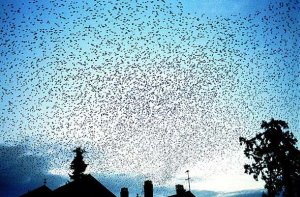
    Spreeuwen zag je altijd wel, vertelt Koos Dijksterhuis in de inleiding van zijn boek De spreeuw (Sturnus vulgaris). Je ging op vogelexcursie, zelfs door een „jong productiebos op een regenachtige novembermiddag”, en dan waren ze er. En nu veel minder. Spreeuwen horen bij de verliezers onder de huis-tuin- en keukenvogels van Nederland. Eind jaren zeventig waren er 750.000 à 1,3 miljoen broedparen, nu nog 170.000 à 300.000, legt Dijksterhuis uit. De natuurjournalist en -schrijver koos die spreeuw-in-de-verdrukking tot onderwerp van zijn boek. Na de melancholieke inleiding wordt De spreeuw vooral een intiem boek over een alledaagse vogel. Een mooie vogel, dat wel, met dat iriserende verenkleed met witte vlekjes. Maar verder: de spreeuw eet insectenlarven en zaden, hij broedt in de holletjes en spleten die hij kan vinden, en als hij ’s winters wegtrekt, gaat-ie gewoon naar Groot-Brittannië. Indrukwekkend zijn spreeuwen alleen als ze ’s avonds in massale vluchten boven het land suizen. Dijksterhuis citeert ook uitgebreid uit een proefschrift uit 1933 waarin hij veenweides beschrijft van zeven soorten zeggen, met gentianen en vol orchideeën: een verdwenen landschap.

    Dat is in het laatste hoofdstuk, waarin de schrijver de harde noten kraakt. Koos Dijksterhuis verfoeit het „weggemeste, uitgedroogde en platgewalste” Nederlandse landschap en twijfelt er niet aan: landbouwgif zorgt voor de achteruitgang van spreeuwen. In Nature publiceerden Nederlandse biologen in 2014 dat er een verband is tussen hoge concentraties insecticiden en de achteruitgang van boerenlandvogels zoals spreeuwen.
    Bron: Hester van Santen in de NRC, 16-05-2016
    http://www.nrc.nl/handelsblad/2016/05/14/hoe-de-spreeuw-verdwijnt-uit-het-vergiftigde-en-pl-2289488
    De toxicoloog Henk Tennekes wees in 2010 in zijn boek “The Systemic Insecticides: A Disaster in the Making” al op het verband tussen de verontreiniging van het oppervlaktewater met het insecticide Imidacloprid en de achteruitgang van insecten-afhankelijke vogelsoorten. Hester van Santen weet dit.

  • Health Concerns Delay EU Vote on Monsanto’s Roundup Weedkiller

    Health Concerns Delay EU Vote on Monsanto’s Roundup Weedkiller

    European Union countries on Thursday again delayed a vote on whether to renew the sales authorization of glyphosate, the active ingredient in Monsanto Co.’s popular weedkiller Roundup, amid conflicting scientific assessments on whether the substance causes cancer in humans. “Since it was obvious that no qualified majority would have been reached, a vote was not held,” said a spokeswoman for the European Commission, the EU’s executive arm. The commission had proposed to reauthorize glyphosate for nine years once its current sales license runs out on June 30.

    The spokeswoman said the commission would now reflect on how to react to the outcome of two-day discussions among experts from EU countries. After a failure to achieve the necessary majority in favor of a renewal at an earlier meeting in March, the commission had already reduced the proposed authorization period to nine from 15 years.

    The French government said earlier this month that it was still opposed to a reauthorization of glyphosate, while Germany said it would abstain from a vote. Italy and several other countries have also come out against a renewal of the sales license in recent months. “If no decision is taken before June 30, glyphosate will be no longer authorized in the EU and member states will have to withdraw authorizations for all glyphosate-based products,” the commission spokeswoman said. That would mean that stores have six months to sell off remaining stocks. After that, users already in possession of glyphosate would have as much as a year to use up or dispose of their remaining products. National governments have the right to shorten these phaseout periods. “Safety first, health first. I am against authorizing this product until these doubts have been entirely ruled out,” Sigmar Gabriel, Germany’s vice chancellor and head of the center-left Social Democratic Party, said Tuesday. The SPD’s center-right coalition partners, which control the agriculture ministry, are backing a reauthorization, which forced Germany to abstain in Thursday’s vote.
    Source: The Wall Street Journal, May 19, 2016
    http://www.wsj.com/articles/health-concerns-delay-eu-vote-on-monsantos-roundup-weedkiller-1463664055

  • Alarming levels of pesticides found in Danish children and mothers

    Alarming levels of pesticides found in Danish children and mothers

    Scientists have sounded the alarm that high concentrations of pesticides are showing up in urine samples of Danish mothers and children. Researchers suspect that the pesticides harm children’s brains. “It is alarming that we have such a high concentration of pesticides in Denmark,” Philippe Grandjean, a professor of environmental medicine and head of research at the University of Southern Denmark (SDU), told Altinget. “I fear that it will hurt the intelligence of the next generation.” The alarming numbers were released on Wednesday as part of a study done by the environmental protection agency Miljøstyrelsen, SDU and the University of Copenhagen. The researchers examined the amount of pesticide residue found in 144 Danish school children and 145 mothers. Specifically, they measured the concentration of pesticides used in agricultural production found in the urine samples from the children and their mothers. “We have measured rather high concentrations in the Danish urine,” said associate professor of environmental medicine at SDU, Helle Raun Andersen, the co-author of the report. “It is worrying because we suspect that these substances damage children’s brains.”

    The EU sets limits on the amount of pesticide residue allowed in food, and Andersen believes that those limits should be reduced.

    Since most of the pesticides found in the tests are illegal in Denmark, researchers assumed that the high levels must be attributed to imported fruit and vegetables.
    Source:

  • Massiver Interessenskonflikt bei Glyphosat-Freispruch

    Massiver Interessenskonflikt bei Glyphosat-Freispruch

    Der Vorsitzende und Ko-Vorsitzende einer Arbeitsgruppe der FAO und WHO zu Pestiziden, die am Montag Glyphosat für unbedenklich erklärt hatte, sind nach Recherchen des britischen Guardian massiv in Interessenskonflikte verstrickt. Professor Alan Boobis, der Vorsitzende des Joint FAO/WHO Meeting on Pesticide Residues (JMPR), ist gleichzeitig Vize-Präsident des International Life Science Institute (ILSI) Europe. Nach Informationen des Guardian erhielt ILSI im Jahr 2012 eine Spende über 500 000 US Dollar von Monsanto sowie eine weitere Spende über 528 500 Dollar von der Pestizidlobby Croplife International, in der unter anderem Monsanto, Dow und Syngenta vertreten sind. Auch ein weiteres Mitglied des JMPR, Angelo Moretto, ist Vorstandsmitglied eines Instituts das zu ILSI gehört. Moretto war Ko-Vorsitzender der entscheidenden Sitzung über Glyphosat. Gerald Neubauer von der Bürgerbewegung Campact zeigt sich empört: “Der Glyphosat-Freispruch von FAO/WHO war anscheinend von Monsanto mitfinanziert. Das grenzt an Korruption.” Die EU müsse jetzt Konsequenzen aus dem Skandal ziehen und Glyphosat die Zulassung versagen. Außerdem fordert Neubauer Konsequenzen bei den betroffenen UN-Organisationen: ” FAO und WHO dürfen nicht zulassen, dass Experten mit Interessenskonflikten über die Risiken von Glyphosat urteilen. Boobis und Moretto dürfen nicht weiter für das JMPR arbeiten. Nur so können die UN-Institutionen ihre Glaubwürdigkeit wieder herstellen.”
    Quelle: Finanzen.Net, 18.05.16
    http://www.finanzen.net/nachricht/aktien/Massiver-Interessenskonflikt-bei-Glyphosat-Freispruch-Vorsitzender-des-Joint-Meeting-on-Pesticide-Residues-der-FAO-WHO-arbeitet-