Auteur: Henk Tennekes

  • Bedrohtes Braunkehlchen: Sturzflug in die Rote Liste

    Bedrohtes Braunkehlchen: Sturzflug in die Rote Liste

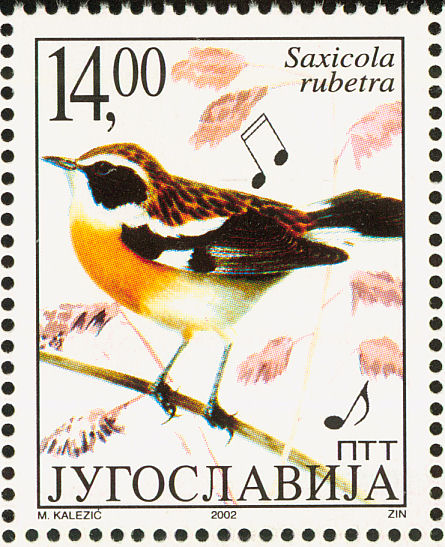
    Etwa von Mitte April bis Mitte Mai kann man in Hessen ziehende Braunkehlchen (Saxicola rubetra) beobachten, die aus ihrem Winterquartier, dem subtropischen Afrika kommen. Auf ihren Zugwegen benötigen die Braunkehlchen energiereiche Insektennahrung, so erklärt Werner von der HGON (Hessische Gesellschaft für Ornithologie und Naturschutz). Intensiv bearbeitetes blütenarmes Grünland, darunter Grassaaten, die schon Anfang Mai gemäht werden, prägen auch die landwirtschaftlichen Nutzflächen in der Fuldaaue, so der HGON Arbeitskreisleiter. Dort suchten die Braunkehlchen meist vergeblich nach Nahrung. Als Ersatzlebensraum, zumindest während der Zugzeit, haben die sperlingsgroßen Braunkehlchen jetzt die blühenden Rapsfelder entdeckt. Summende Bienen, Schwebfliegen, Marienkäfer und Hummeln, die die Blüten besuchen, werden dort gejagt. Ebenso rasten die Vögel noch in den letzten verbliebenen Viehweiden. Dort sind Pfosten und Drähte beliebte Ansitzwarten, um nach Insekten Ausschau zu halten.

    An ihre Brutplätze stellen die seltenen Vögel aber höhere Ansprüche. Sie sind Indikatoren einer vergangenen Kulturlandschaft, die geprägt war von extensiv genutztem Grünland, Viehweiden, Feucht- und Heuwiesen.

    Mit dem rapiden Rückgang dieser Lebensräume begann ein dramatischer Schwund der Population. „Es war ein regelrechter Sturzflug in die Rote Liste in die Kategorie 1: vom Aussterben bedroht“, erklärt Arno Werner. Kaum mehr als 400 Brutpaare gebe es jetzt nur noch in Hessen.

    Weil sich kein Braunkehlchen mehr über längere Zeit in der Fuldaaue an einem Platz ernähren könne, sind Brutpaare ein Relikt der Vergangenheit.
    Quelle: HNA, 16.05.16
    http://www.hna.de/lokales/rotenburg-bebra/bebra-ort46578/sturzflug-rote-liste-6414860.html

  • New research confirms continued, unabated and large-scale amphibian declines

    New research confirms continued, unabated and large-scale amphibian declines

    New U.S. Geological Survey-led research suggests that even though amphibians are severely declining worldwide, there is no smoking gun — and thus no simple solution — to halting or reversing these declines. “Implementing conservation plans at a local level will be key in stopping amphibian population losses, since global efforts to reduce or lessen threats have been elusive,” said Evan Grant, a USGS research wildlife biologist who led the study published in Scientific Reports today. “This research changes the way we need to think about amphibian conservation by showing that local action needs to be part of the global response to amphibian declines, despite remaining questions in what is causing local extinctions.”

    Amphibian declines are a global phenomenon that this new research demonstrates has continued unabated in the United States since at least the 1960’s, and which are occurring even in protected national parks and refuges. Scientists have broadly linked declines to environmental factors like climate, human influence such as land-use change, and contaminants and disease, but have not been able to use actual scientific data on a large scale to discern causes of the ongoing disappearance of amphibian populations.

    The new study is the first to test this linkage at a continental scale, and finds that the presence and intensity of the four main threats — human influence, disease, pesticide application, and climate change varies substantially across the US. The causes of the declines are more variable — and more locally driven — across the United States than had been assumed.

    For example, the research provides evidence that the average decline in overall amphibian populations is 3.79 percent per year, which supports previous USGS-led research findings from 2013 that showed a similar rate of loss, though the new research finds that the decline rate is more severe in some regions, such as the West Coast and the Rocky Mountains. If this rate remains unchanged, these species would disappear from half of the habitats they occupy in about 20 years.

    “Losing 3 or 4 percent of amphibian populations might not sound like a big deal but small losses year in and year out quickly lead to dramatic and consequential declines,” said USGS ecologist Michael Adams, a study coauthor and the lead for the USGS Amphibian Research and Monitoring Initiative, which studies amphibian trends and causes of declines.

    David Miller, a professor at Penn State University and the lead biometrician in the study, summarized the extent of the effort.

    “This study involved a truly comprehensive and collaborative effort to bring together data from researchers across the United States,” Miller said. “We combined nearly half a million actual observations of 84 species across 61 study areas to answer questions about the causes of wide-scale amphibian declines.”

    Story Source: Science Daily, May 23, 2016
    https://www.sciencedaily.com/releases/2016/05/160523125907.htm

    The above post is reprinted from materials provided by US Geological Survey. Note: Materials may be edited for content and length.

    Journal Reference:

    Evan H. Campbell Grant, David A. W. Miller, Benedikt R. Schmidt, Michael J. Adams, Staci M. Amburgey, Thierry Chambert, Sam S. Cruickshank, Robert N. Fisher, David M. Green, Blake R. Hossack, Pieter T. J. Johnson, Maxwell B. Joseph, Tracy A. G. Rittenhouse, Maureen E. Ryan, J. Hardin Waddle, Susan C. Walls, Larissa L. Bailey, Gary M. Fellers, Thomas A. Gorman, Andrew M. Ray, David S. Pilliod, Steven J. Price, Daniel Saenz, Walt Sadinski & Erin Muths. Quantitative evidence for the effects of multiple drivers on continental-scale amphibian declines. Scientific Reports, 2016 DOI: 10.1038/srep25625

  • Western pond turtles in Sequoia National Park tested positive for pesticides

    Western pond turtles in Sequoia National Park tested positive for pesticides

    Western pond turtles in Sequoia National Park and other California remote wildlands have been exposed to an assortment of agricultural and industrial contaminants, according to a study from the National Park Service and the University of California, Davis. In the study, published online in the journal Chemosphere, scientists sampled for 57 compounds, including pesticides, in turtles, invertebrates, and sediments from three sites: Sequoia National Park, Whiskeytown National Recreation Area, and Six Rivers National Forest. Both current pesticides and those used in the past were prominent in sediments and in the insects, snails, and mollusks that turtles eat at Sequoia National Park, which is immediately upwind of Central Valley agriculture. Previous studies have linked pesticide use downwind of Sequoia National Park to the disappearance of a rare frog species, the foothill yellow-legged frog. Also, a 2013 study by this study’s lead author Erik Meyer, a scientist with Sequoia and Kings Canyon National Parks, found that turtles in Sequoia National Park had signs of physiological impairment consistent with pesticide exposure.
    “Pesticides don’t recognize boundaries,” said coauthor Brian Todd, a UC Davis associate professor of Wildlife, Fish and Conservation Biology. “Even though we think of national parks as being protected from conservation threats like development, they’re not immune from pesticides and global contaminants that cross park borders.”
    Source: Kaweah Commonwealth, May 23, 2016
    http://www.kaweahcommonwealth.com/news/western-pond-turtles-sequoia-test-positive-pesticides

  • Report presents effects of pesticide exposure on children

    Report presents effects of pesticide exposure on children

    “Kids are on the frontline in Minnesota,” the Pesticide Action Network warns in a recently released report on the effects of children’s exposure to pesticides. “Kids are more vulnerable to chemical exposure,” Lex Horan of the Pesticide Action Network told a Park Rapids area audience this week. “They haven’t developed the biological defense mechanisms. When kids are exposed at a critical moment of development it can have a lifelong effect.” The report’s review of government health trend data and recent academic research found:

    • Childhood health harms (from 1975 to 2012) have risen significantly. Developmental disabilities in kids ages 3-17 were up 17 percent from 1997 to 2008; ADHD (attention-deficit/ hyperactivity disorder) rose 33 percent in the same period.

    • Autism spectrum disorder rose 123 percent at age 8 from 2002 to 2012. The rate of children diagnosed with ASD is slightly higher than the national average.

    • According to the Centers for Disease Control and Prevention, leukemia and brain tumors are the most common – and fastest rising — types of cancer among children.

    These two childhood cancers have risen 40 to 50 percent since 1975. There are links between pesticide exposure and the increased risk of leukemia and brain tumors, the report states.

    The overall childhood cancer rate in Minnesota is slightly above the national average, and overall incidence of leukemia and non-Hodgkin are higher.

    Minnesota leukemia incidence is 16.0 per 100,000 and non-Hodgkin lymphoma 23.0 per 100,000, compared to the nationwide numbers of 13.2 and 19.2 per 100,000, respectively.

    Children in agricultural communities are exposed to pesticides above and beyond the widely shared exposures from food residues and applications in schools, parks, homes and gardens, the report points out.
    Source: Pioneer Journal, May 23, 2016
    http://www.wadenapj.com/news/4035319-report-presents-effects-pesticide-exposure-children

  • Snotolven worden nauwelijks meer gezien in het spookachtig onderwaterlandschap van het Grevelingenmeer

    Snotolven worden nauwelijks meer gezien in het spookachtig onderwaterlandschap van het Grevelingenmeer

    De Snotolf (Cyclopterus lumpus) is een Noordwest-Europese vissoort die vanaf de Noordzee en Atlantische oceaan in de winter voor de voortplanting naar de ondiepe wateren trekt. Een aantal van deze dieren trekt naar de ondiepe wateren van de Zeeuwse kust. Het aantal waarnemingen van volwassen Snotolven die naar de Zeeuwse Delta trekken is echter de laatste jaren gestaag afgenomen. Ook de afgelopen winter hebben opmerkelijk weinig sportduikers waarnemingen van deze prachtige vis en hun einesten in het Grevelingenmeer gemeld. De neerwaartse trend van de afgelopen jaren lijkt hiermee nog verder doorgezet te zijn. Dit sluit aan bij meldingen dat er niets meer leeft in de diepte van het Grevelingenmeer. Op de bodem van het meer op de grens van Zeeland en Zuid-Holland is een ”gitzwart, spookachtig onderwaterlandschap”, ontstaan. Dat meldde Peter van Bragt van de stichting Anemoon in 2013. Sinds 2001 zijn in het oppervlaktewater van het Deltagebied normoverschrijdingen gemeten van bestrijdingsmiddelen die een dodelijke bedreiging voor ongewervelde dieren, een voedingsbron voor snotolven, vormen. Van Bragt verwacht dat de problemen in het meer de komende jaren alleen maar erger zullen worden. ”Zolang er geen maatregelen genomen worden, zal deze ecologische ramp zich alleen maar uitbreiden en nog extremere vormen aan gaan nemen.”
    Bronnen:
    Nature Today, 10-04-16
    https://www.naturetoday.com/intl/nl/nature-reports/message/?msg=22617
    Nu.nl, 14-08-13
    http://www.nu.nl/binnenland/3542463/bodem-grevelingenmeer-totaal-dood.html

  • Koolmees en pimpelmees leggen sinds 2010 minder eieren

    Koolmees en pimpelmees leggen sinds 2010 minder eieren

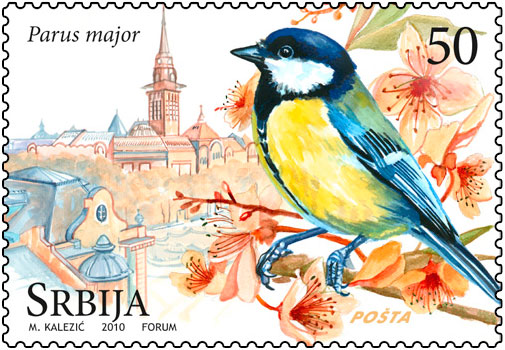
    De legselgrootte van koolmees (Parus major) en pimpelmees (Cyanistes caeruleus, vroeger Parus caeruleus) was in 2015 zeer klein; het ging om de kleinste legsels in de laatste 35 jaar! Beide soorten legden ongeveer één ei minder dan het langjarig gemiddelde: de koolmees gemiddeld 7,3 eieren tegen 8,5 eieren normaal (-14%) en de pimpelmees 9,2 tegen 10,2 eieren (-10%). Deze vermindering van de legselgrootte is al sinds 2010 een opvallend fenomeen. In de broedtijd eten koolmezen en pimpelmezen voornamelijk insecten en insectenlarven, en die zijn schaars geworden door de milieuverontreiniging met neonicotinoïde insecticiden. Het is denkbaar dat de vogels dit met een kleinere legselgrootte proberen op te vangen.
    Bronnen:
    Nature Today, 15-04-16
    https://www.naturetoday.com/intl/nl/nature-reports/message/?msg=22654
    Wikipedia
    https://nl.wikipedia.org/wiki/Koolmees
    https://nl.wikipedia.org/wiki/Pimpelmees

  • Ein einfaches Modell bewertet Pestizide sicherer als bisher

    Ein einfaches Modell bewertet Pestizide sicherer als bisher

    Bei der Bewertung von Pestiziden liefert ein einfaches Modell sicherere Ergebnisse als das aktuell von der EU angewandte. Das belegt eine aktuelle Studie des Instituts für Umweltwissenschaften der Universität Koblenz-Landau und der ETH Zürich. Die Wissenschaftler zeigen, dass zur Risikobewertung von Pestiziden ein weitaus weniger komplexes Box-Modell eine höhere Sicherheit für die Umwelt bieten kann als der von der EU verwendete FOCUS-Modellierungsansatz.

    Ein Pflanzenschutzmittel darf in Europa nur zugelassen werden, wenn die vorhergesagten Konzentrationen unterhalb der ökologisch bedenklichen Wirkschwelle liegen. Um die zu erwartenden Einträge von Pestiziden aus der Landwirtschaft in Gewässer zu berechnen, verwendet die EU seit Ende der 1990er Jahre die sogenannten FOCUS-Modelle. Diese sind für den Zulassungsprozess gesetzlich vorgeschrieben, aber nach Erkenntnissen der Landauer Umweltforscher nicht geeignet. Professor Dr. Ralf Schulz, einer der Autoren der Studie, erklärt hierzu: „Noch wichtiger aber ist, dass unsere Studie zeigt, dass ein sehr viel einfacher anzuwendendes Modell deutlich sicherere Ergebnisse liefert und außerdem eine bessere Voraussagequalität zu besitzen scheint, wenn es an die jeweiligen Feldsituationen angepasst wird.“

    In ihrer Untersuchung haben die Wissenschaftler 466 Konzentrationen von Insektiziden in Oberflächengewässern, die in Europa gemessen wurden, mit im Modell berechneten Konzentrationen verglichen und den Anteil der Konzentrationen bestimmt, die vom jeweiligen Modell unterschätzt wurden. Dabei verwendeten sie neben dem FOCUS-Modellierungsansatz ein einfacheres Box-Modell, „das letztlich aber die besseren Ergebnisse lieferte“, wie Ralf Schulz feststellt.

    Der Unterschied zwischen den beiden Modellen liegt in der Natur der beiden Modellierungsansätze. Bei FOCUS handelt es sich um verschiedene mechanistische Modelle, die auf verschiedenen Prozessen basieren und versuchen, diese bis ins Detail abzubilden. Das heißt, das Modell versucht, den Verbleib eines Pestizids nach der Anwendung genau nachzubilden. Das in der aktuellen Studie verwendete Box-Modell hingegen beschreibt ganz generell die Verteilung zwischen den verschiedenen Umweltkompartimenten. Es berechnet anhand einiger weniger Stoffeigenschaften die Tendenzen einer Chemikalie, in diesem Fall also eines Pestizids, von einem Kompartiment in ein anderes überzugehen, also zum Beispiel vom Boden in die Atmosphäre.

    Die neue Studie vergleicht dieses einfache und mit wenigen Eingangswerten anwendbare Box-Modell und das relativ komplizierte, intransparente, jedoch in der Zulassungspraxis der EU nach wie vor grundsätzlich eingesetzte FOCUS-Modell hinsichtlich zweier wesentlicher Modelleigenschaften: zum einen der Protektivität, die das Modell in einer Risikobewertung für die Umwelt darstellt, zum anderen der Qualität der Vorhersage, das heißt, wie gut vorhergesagte und tatsächliche Gewässerbelastung mit Pestiziden vergleichbar sind.

    „Dass FOCUS immer noch verwendet wird, hat wahrscheinlich damit zu tun, dass die relevanten Akteure entweder immer noch keinen Handlungsbedarf oder keine geeignete Alternative sehen. Aber eine Unterschätzung der tatsächlichen Umweltkonzentration kann zu einer Fehleinschätzung des Umweltrisikos führen“, fürchtet Schulz, der mit der Studie auch Denkanstöße und konkrete Handlungsoptionen für eine Revision der bisherigen Risikobewertung von Pestiziden in der EU geben möchte.

    Originalveröffentlichung:

    Knäbel A, Scheringer M, Stehle S, Schulz R. ; “Aquatic exposure predictions of insecticide field concentrations using a multimedia mass-balance model”; Environmental Science & Technology; 2016, 50: 3721-3728.
    Quelle: CHEMIE.DE, 23.05.16
    http://www.chemie.de/news/158131/ein-einfaches-modell-bewertet-pestizide-sicherer-als-bisher.html

  • ILSI infiltrates and influences regulatory bodies concerned with pesticides, chemicals, food safety and drug safety

    ILSI infiltrates and influences regulatory bodies concerned with pesticides, chemicals, food safety and drug safety

    A disturbing analysis of how the International Life Sciences Institute (ILSI) managed to infiltrate and influence EFSA (European Food Safety Agency) and a wide range of other international regulatory bodies concerned with pesticides, chemicals, food safety and drug safety. ILSI goes to great lengths to present itself as a non-lobbying group, but it is quite clear from its membership, actions and funding sources that it is an extremely focused lobbying group. ILSI is funded by Monsanto, Croplife, Bayer, BASF, Coca Cola, Big Tobacco and a host of other chemical and pesticide corporations.
    The recent European debacle over the relicensing of glyphosate was covered in detail in the Guardian:
    http://www.theguardian.com/environment/2016/may/17/unwho-panel-in-conflict-of-interest-row-over-glyphosates-cancer-risk
    The UN’s panel on pesticide regulation gave Glyphosate the ‘all clear’, intervening just days before the European Union was due to take its final vote. This was a targeted and timed intervention, designed to push the license through and give Monsanto another decade of profits in Europe. It then transpired that two leading members of the UN panel, Professor Alan Boobis and Professor Angelo Moretto were both Board Members of ILSI, which had received around $800,000 from Monsanto and Croplife in the current year. ILSI lobbies on everything from Tobacco policies, food and obesity policies and Pesticide Risk Assessment policies.
    Source: CEO, May 2012

  • A third of birds in North America are threatened with extinction

    A third of birds in North America are threatened with extinction

    A billion birds have disappeared from North America since 1970, and a third of bird species across the continent are threatened with extinction, a new report says. The first State of North America’s Birds report finds that of 1,154 bird species that live in and migrate among Canada, the U.S. and Mexico, 432 are of “high concern” due to low or declining populations, shrinking ranges and threats. Steven Price, president of Bird Studies Canada, a member of the North American Bird Initiative behind the report, says that since 1970, “the estimate is we’ve lost at least a billion birds from North America…. The trend lines are continuing down. They have to be turned around or will fall below a threshold where they can be recovered.”

    Ocean birds like northern gannets are among the most threatened, a new report suggests. Many that nest in Canada migrate to the Gulf of Mexico.

    Most threatened, with more than half the species of “high concern” are ocean birds such as northern gannets, tropical and sub-tropical birds, including many that breed in Canada and the U.S., but winter in Mexico.

    There are also steep declines in coastal shorebirds like semipalmated and western sandpipers and red knots, which have lost 90 per cent of their population; grassland birds such as the greater sage grouse, Sprague’s pipit and chestnut-collared longspur; and aridland birds.

    Once one of the most common forest birds in eastern North America, the wood thrush has decreased by almost 70% in the last 40 years. Wood thrushes and many warblers breed in Canada’s forests, but winter in tropical forests of Mexico that are threatened by logging. ((Isaac Sanchez))

    The North American Bird Conservation Initiative is a collaboration of conservation groups and scientists, in all three countries. The report was released partly to mark the 100th anniversary of the 1916 Migratory Bird Convention between Canada and the U.S. Information in the report is based on data collected by citizen scientists through bird surveys and counts since the 1970s and analyzed over the past 18 months.

    It follows a similar report that focused on Canada in 2012 and found a 12 per cent drop in bird populations since 1970.

    But because many birds make very long migrations, Canada’s birds are “not really Canada’s — they’re shared across three nations,” said Price.

    Many grassland birds rely on habitat that run from Canada’s Prairies down to Mexico’s Chihuahuan grasslands — nearly 70 per cent of birds that migrate between the northern and southern grasslands have disappeared since 1970.

    Source: CBC News, May 18, 2016
    http://www.cbc.ca/news/technology/state-of-north-americas-birds-mckenna-1.3587716

  • De vlinders worden uitgeroeid door systemische insecticiden

    De vlinders worden uitgeroeid door systemische insecticiden

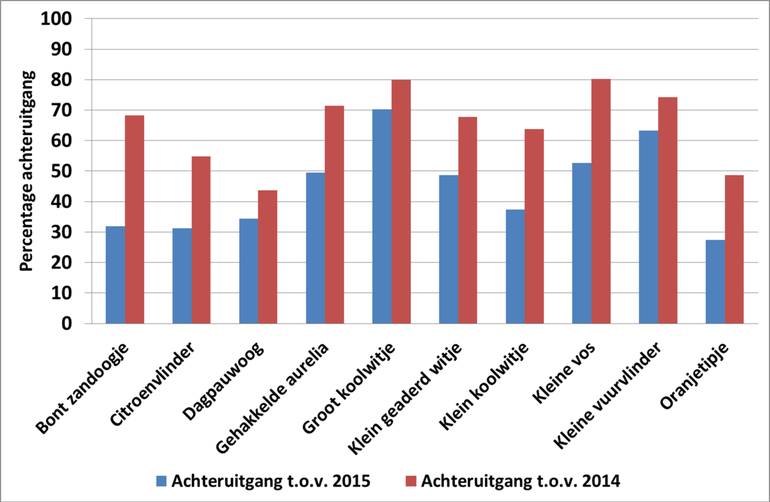
    De toxicoloog Henk Tennekes waarschuwde in 2010 met zijn boek “The Systemic Insecticides: A Disaster in the Making” dat de oppervlaktewaterverontreiniging met het neonicotinoïde insecticide imidacloprid insecten zou uitroeien. Zijn waarschuwing is helaas werkelijkheid geworden. De vlinderstand gaat sinds de invoering van neonicotinoïden in de jaren 1990 dramatisch achteruit. De cijfers zijn catastrofaal. In de eerste maanden van 2016 zijn er 45 procent minder vlinders geteld dan vorig jaar. Ten opzichte van 2014 zijn het er zelfs 65 procent minder. Natuurkenners maken zich zorgen. “Er worden vlinders geteld sinds 1990 en zo slecht als nu is het nog niet geweest”, zegt Arnold van Vliet van de Wageningen University. “We dachten dat we het dieptepunt hadden bereikt en het juist weer beter zou gaan, maar daar lijkt het dus niet op, al is 2016 nog niet voorbij. Achteruitgang per soort: Groot koolwitje: -75 procent; Kleine vuurvlinder: -69 procent; Kleine vos: -66 procent; Oranjetipje: -38 procent; Dagpauwoog: -39 procent; Citroenvlinder -43 procent. De achteruitgang van insecten heeft ook ernstige gevolgen voor vogels. “Vlinders zorgen voor rupsen en rupsen zijn belangrijk voedsel voor vogels. En vlinders zijn één van de best bestudeerde insecten. In totaal zijn er 20.000 verschillende soorten insecten, grote kans dat die hetzelfde lot te wachten staat.”, aldus van Vliet.
    Gebruikte bron: RTL Nieuws, 13-05-16
    http://www.rtlnieuws.nl/nederland/2016-dramatisch-vlinderjaar-aantal-vlinders-bijna-gehalveerd