Auteur: Henk Tennekes

  • L’utilisation des insecticides « tueurs d’abeilles » est toujours en forte augmentation

    L’utilisation des insecticides « tueurs d’abeilles » est toujours en forte augmentation

    Les apiculteurs français en sont tout abasourdis : le moratoire européen sur certains usages des néonicotinoïdes semble jusqu’ici avoir été inopérant. Depuis sa mise en place en 2013, l’utilisation de ces insecticides, mis en cause dans l’effondrement du nombre d’abeilles et de pollinisateurs sauvages (bourdons, papillons, etc.), a même explosé. C’est le principal enseignement des statistiques obtenues, jeudi 26 mai, par l’Union nationale de l’apiculture française (UNAF), qui a saisi la Commission d’accès aux documents administratifs (CADA) contre le ministère de l’agriculture, de l’agroalimentaire et de la forêt. Selon ces données, les tonnages des cinq principaux « tueurs d’abeilles » vendus en France (acétamipride, clothianidine, thiaméthoxame, imidaclopride, thiaclopride) sont passés de 387 tonnes, en 2013, à 508 tonnes, en 2014. Soit une augmentation de 31 % en un an, malgré le moratoire. Quant aux données 2015, elles ne sont pas disponibles. « Nous avons écrit par deux fois à la direction générale de l’alimentation [au ministère de l’agriculture] pour avoir accès à ces informations, dit-on à l’UNAF. Sans réponse, nous avons saisi la CADA en février, qui vient de nous donner raison. »

    Certaines molécules soumises à des restrictions par le moratoire imposé par Bruxelles en 2013 voient bien leur tonnage baisser en 2014, mais d’autres augmentent fortement. L’imidaclopride, l’une des molécules les plus toxiques pour l’abeille domestique, bondit de 36 % malgré le moratoire.
    Au ministère, on relativise cette hausse, expliquant que « sur des molécules dont le tonnage total est faible, une petite augmentation peut conduire à des hausses de pourcentages qui peuvent sembler élevées ». En outre, ajoute-t-on en substance Rue de Varenne, ce n’est pas le tonnage qui permet d’évaluer l’intensité du recours aux pesticides, mais le « nombre de doses unités » (ou NODU), qui tient compte du tonnage des substances, mais aussi de leur activité chimique (certaines sont plus efficaces que d’autres) et de l’étendue des surfaces traitées.
    Le tonnage des néonicotinoïdes aurait-il pu augmenter mais le fameux NODU baisser ? « Le NODU est surtout utile pour comparer l’utilisation de molécules dont l’activité est différente, dit François Veillerette, porte-parole de l’association Génération futures. Lorsqu’on suit une même substance, ou une même famille de substances, pour une même catégorie d’usages, les tonnages ne peuvent pas augmenter sans que le NODU n’augmente lui aussi. » Gilles Lanio, le président de l’UNAF, ne croit guère, lui non plus, que l’augmentation du tonnage des « néonics » puisse être associée à une baisse de leur utilisation : « Il y a des moyens pour contourner les interdictions de certains usages des néonicotinoïdes », dit-il.
    « L’écart entre la réalité et le discours du ministre de l’agriculture [Stéphane Le Foll], qui se pose en défenseur des abeilles, est choquant, ajoute M. Lanio. Quand nous sommes reçus au ministère, on nous dit que les agriculteurs font de grands efforts et que les mortalités d’abeilles proviennent aussi de nos pratiques. Les chiffres montrent que c’est complètement faux. Quant à la transparence, elle n’est pas là, malgré les promesses. »

    Car si l’UNAF a obtenu la transmission des chiffres détaillés de l’évolution du tonnage de chaque molécule, ses autres demandes n’ont pas été satisfaites. L’association a ainsi demandé le détail des traitements de semences par type de culture, et les superficies concernées. En vain. « Toutes nos demandes ont reçu un avis favorable de la CADA, mais celui-ci n’étant que consultatif, nous n’avons pas obtenu ces données », dit-on à l’UNAF. Au ministère, on répond que la publication de ces informations ne peut se faire qu’après un long travail, pour s’assurer que celles-ci ne trahissent aucun secret commercial des acteurs de la filière.
    « Si nous n’obtenons pas l’information, ainsi que toutes celles qui ne nous ont pas été transmises, nous saisirons le tribunal administratif », dit-on à l’UNAF
    Ce n’est pourtant pas tout. L’UNAF demandait aussi au ministère de lui transmettre les documents attestant de la position de la France, au niveau européen, lors des comités techniques des 27 juillet et 18 novembre 2015, au cours desquels deux nouveaux insecticides apparentés aux néonicotinoïdes (le sulfoxaflor et le flupyradifurone) ont été autorisés en Europe. La France a-t-elle voté pour ou contre l’autorisation de ces nouvelles molécules ? L’information est confidentielle. Sa divulgation, ont expliqué sans rire les services du ministère de l’agriculture à la CADA, « porterait atteinte à la conduite de la politique extérieure de la France ». La CADA n’y a cru que moyennement et a donné un avis positif à la publication de cette information. « Si nous ne l’obtenons pas, ainsi que toutes celles qui ne nous ont pas été transmises, nous saisirons le tribunal administratif », dit-on à l’UNAF.
    Une autre dispute sur les néonicotinoïdes est en cours, cette fois entre l’Assemblée nationale et le Sénat. En effet, lors de l’examen en deuxième lecture du projet de loi pour la reconquête de la biodiversité, de la nature et des paysages, la Chambre haute a défait la mesure d’interdiction totale de tous les néonicotinoïdes à partir de 2018, qu’avaient adoptée les députés. « Mercredi [25 mai], la commission mixte paritaire a échoué à concilier les deux positions, explique Delphine Batho, députée (PS) des Deux-Sèvres, coauteure de l’amendement sur les néonicotinoïdes. Le texte va donc revenir les 7 et 8 juin à l’Assemblée, en commission du développement durable. »

    En savoir plus sur http://www.lemonde.fr/planete/article/2016/05/27/les-insecticides-tueurs-d-abeilles-en-forte-augmentation_4927380_3244.html#oiTkhtmGXViJ3A17.99

  • Glyphosate is associated with increased risk of chronic kidney disease in Sri Lanka

    Glyphosate is associated with increased risk of chronic kidney disease in Sri Lanka

    Sri Lanka’s newly elected President Maithripala Sirisena announced last year that the import of the World’s most used herbicide glyphosate will be banned with immediate effect. The release of already imported stocks has also been stopped. Sirisena, a farmer and ex Health Minister, stated that glyphosate is responsible for the increasing number of chronic kidney disease (CKDu) patients in Sri Lanka and added that the move would protect the Sri Lankan farming community. In Sri Lanka alone CKDu now afflicts 15% of people of working age in the Northern part of the country; a total of 400,000 patients with an estimated death toll of around 20,000. Sri Lanka’s ban comes after two scientific studies led by Dr. Jayasumana showed that drinking water from abandoned wells, where the concentrations of glyphosate and metals are higher, as well as spraying glyphosate, increased the risk of the deadly chronic kidney disease (CKDu) by up to 5-fold.
    Source: Sustainable Pulse, 25 May 2015

    Sri Lanka’s New President Puts Immediate Ban on Glyphosate Herbicides

  • Muggenlarven zijn nu schaars in de Kop van Noord-Holland – historisch dieptepunt van de intrek van glasaal bij Den Oever

    Muggenlarven zijn nu schaars in de Kop van Noord-Holland – historisch dieptepunt van de intrek van glasaal bij Den Oever

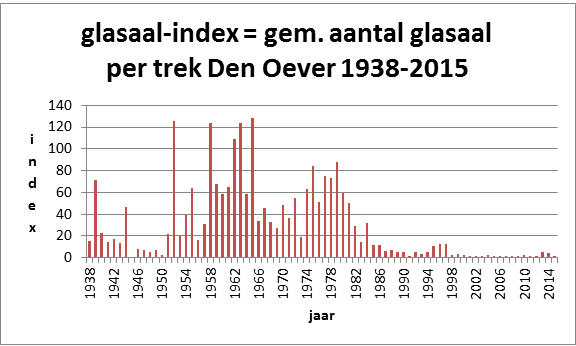
    Het gaat al jaren erg slecht met de palingstand in Nederland. Nieuwe cijfers over de intrek van glasaal, jonge paling, geven redenen tot nog meer zorgen: er is een historisch dieptepunt bereikt. Palinglarven trekken van de Sargassozee (Atlantische Oceaan) naar Europa. Voor de kust veranderen ze in de aaltjes, waarna ze de binnenwateren ingaan om op te groeien. Onderzoeksinstituut Imares voert al sinds 1938 onderzoek uit naar de intrek van glasaal bij Den Oever. Dit jaar is het laagste aantal geteld sinds het begin van de metingen in 1938. Sinds de jaren tachtig is de intrek van glasaal en het palingbestand wereldwijd sterk afgenomen. De typische paling jaagt voornamelijk op muggenlarven, muggenpoppen, tweekleppigen als driehoeksmossel en de exotische korfmossels, vlokreeften en andere kleine ongewervelden.
    Bronnen:
    Sportvissserij Nederland, 20-10-15
    http://www.sportvisserijnederland.nl/actueel/nieuws/16097/historisch-dieptepunt-intrek-glasaal-in-2015.html
    Nu.nl, 09-12-15
    http://www.nu.nl/binnenland/4179451/stand-glasaal-in-nederlandse-wateren-daalt-opnieuw-.html
    Wikipedia
    https://nl.wikipedia.org/wiki/Paling#Voedsel

  • De visstand gaat hard achteruit in het IJsselmeer

    De visstand gaat hard achteruit in het IJsselmeer

    Ondanks een verdere achteruitgang van de schubvisbestanden in het IJsselmeer heeft staatssecretaris Van Dam (Economische Zaken) besloten de geldende beheersmaatregelen dit jaar niet aan te scherpen. Dat blijkt uit een brief die de bewindsman maandag naar de Tweede Kamer heeft gestuurd. Uit metingen van onderzoeks­instituut Imares blijkt dat de situatie in het IJsselmeer „ernstig” is, schrijft Van Dam. In plaats van de verbetering waarop was gehoopt, is het beeld ten opzichte van vorig jaar „eerder verslechterd.” Het brasembestand lijkt zelfs te zijn „ingestort.” Het gaat in het IJsselmeer al jaren slecht met snoekbaars, baars, blankvoorn en brasem. Sinds 2014 is een verzwaard beheerregime van kracht. De visserij met zogeheten staande netten werd met 85 procent ingekrompen. Ook de zogeheten zegenvisserij en het vissen met grote fuiken met ruiven werd drastisch ingeperkt.

    Imares had gesuggereerd de visserij nog eens met 20 procent in te krimpen, maar daar voelt Van Dam niet voor. Het beheersysteem zou dan nog ingewikkelder worden, en lastiger te handhaven, aldus de bewindsman. De naleving door de vissers laat toch al te wensen over: controleorganisatie NVWA heeft sinds 2014 „vele overtredingen van stroperij met beroepsvistuigen” geconstateerd. Van Dam eist intussen dat de sector zelf met een plan komt om „illegale” visserij terug te dringen.

    In oktober neemt de staatssecretaris met organisaties die bij het IJsselmeer betrokken zijn een besluit over een beheersysteem voor de komende jaren. Aanscherping van de vangstbeperkingen moet dan „niet worden uitgesloten.”

    Bron: Reformatorisch Dagblad, 12-04-16
    http://www.refdag.nl/nieuws/economie/visstand_in_ijsselmeer_blijft_achteruitgaan_1_984286

  • Europese Commissie wil nu toelating voor glyfosaat met maximaal 2 jaar verlengen

    Europese Commissie wil nu toelating voor glyfosaat met maximaal 2 jaar verlengen

    De Europese Commissie heeft wederom een voorstel gedaan voor een verlenging van de Europese toelating van glyfosaat, de werkzame stof in het onkruidbestrijdingsmiddel RoundUp. In het nieuwe voorstel wordt de toelating met maximaal 2 jaar verlengd tot het Europese agentschap voor chemie (ECHA) een nieuwe veiligheidsbeoordeling heeft afgerond. Het ECHA is momenteel bezig met een beoordeling van glyfosaat en verwacht die studie in de loop van 2017 af te ronden. Staatssecretaris Van Dam van Economische Zaken heeft in de Tweede Kamer aangegeven dat hij de toelating van glyfosaat graag mede afhankelijk wil maken van het oordeel van ECHA. De huidige Europese toelating van glyfosaat komt op 30 juni te vervallen, hetgeen zou leiden tot een effectief verbod van het gebruik van het middel per 1 januari 2017. Als de 28 lidstaten van de Europese Unie het eens worden over het nieuwe voorstel van de Europese Commissie, zal voor het formaliseren van een besluit waarschijnlijk een extra vergadering worden belegd van het permanent comité voor planten, dieren, voeding en diervoeders (SCOPAFF).

    Bron: Agri-Holland, 25-05-16

  • Tegenovergestelde meningen over het gebruik van glyfosaat van Corné Kempenaar en Henk Tennekes

    Tegenovergestelde meningen over het gebruik van glyfosaat van Corné Kempenaar en Henk Tennekes

    De veiligheid van glyfosaat staat ter discussie. Een eventueel verbod op glyfosaat in de landbouw is slecht voor landbouw en milieu, zegt Corné Kempenaar, senior onderzoeker agrosysteemkunde in Wageningen. Toxicoloog Henk Tennekes wil af van alle chemische bestrijdingsmiddelen. Lees de tegenovergestelde visies van de deskundigen in de bijgevoegde editie van het Chemisch Weekblad.

  • Comprehensive Review of Detrimental Effects of Pesticides on Bees

    Comprehensive Review of Detrimental Effects of Pesticides on Bees

    This chapter focuses on the detrimental effects that pesticides have on managed honey bee colonies and their productivity. We examine first the routes of exposure of bees to agrochemicals used for crop protection and their application to crops, fate and contamination of water and plants around the fields. Most of the time, the exposure of bees to pesticides is through ingestion of residues found in the pollen and nectar of plants and in water. Honey bees are also exposed to pesticides used for the treatment of Varroa and other parasites. The basic concepts about the toxicity of the different kinds of pesticides are explained next. Various degrees of toxicity are found among agrochemicals, and
    emphasis is given to the classic tenet of toxicology, “the dose makes the poison,” and its modern version “the dose and the time of exposure makes the poison.” These two factors, dose and time, help us understand the severity of the impacts that pesticides may have on bees and their risk, which are analysed in the third section. Sublethal effects are also considered. The final section is devoted to some practical advice for avoiding adverse impacts of pesticides in beekeeping.
    Reference: Francisco Sanchez-Bayo and Koichi Goka. Impacts of Pesticides on Honey Bees
    http://dx.doi.org/10.5772/62487

  • Fauna numbers show steady decline across state forests of the Himalayan region and northeastern India

    Fauna numbers show steady decline across state forests of the Himalayan region and northeastern India

    According to revelation made by the Indian Ministry of Environment and Forests (MoEF), the list of endangered fauna species which stood at 648 in 2013, has climbed to 665 in 2015, leaving many conservationists worried. Similarly, the number of endangered plant species too has gone up considerably. Union forest minister Prakash Javadekar had recently submitted a paper to the parliament quoting International Union for Conservation of Nature (IUCN) report card stating that the list of endangered species is on the rise compared to previous years though the government has been working to contain their extinction from state forests. As per the detailed report, as many as 8 bird species have slipped into endangered category, followed by 3 species of mammals and fishes each. The other species include one each from the reptilian, amphibian and molluscan categories.

    Source: Bangalore Mirror, 23 May 2016
    http://www.bangaloremirror.com/bangalore/others/Fauna-numbers-show-steady-decline-across-state-forests/articleshow/52391104.cms
    As per the IUCN report, majority of the fauna that slipped into endangered category belong to the Himalayan region and northeastern India. However, some species like the striated bush frog endemic to Western Ghats and the Indian pangolin found across forests of southern India, have also made it to the list of endangered species.

  • Naturschützer schlagen Alarm: Hochleistungslandwirtschaft bedroht Fauna und Flora

    Naturschützer schlagen Alarm: Hochleistungslandwirtschaft bedroht Fauna und Flora

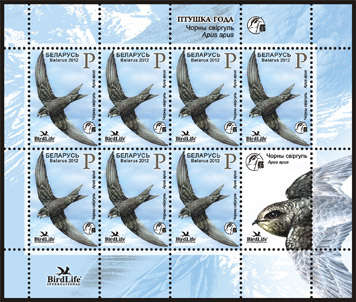
    Mitte Mai hat Walter Wintersberger einen Anruf aus Bad Tölz bekommen. Ein Mauersegler war vom Himmel gefallen. “Der Vogel war völlig entkräftet”, berichtet Sabine Tappertzhofen vom Landesbund für Vogelschutz (LBV). Die eleganten schwarzen Zugvögel leben von Insekten, die sie im Flug erbeuten. Offenbar hatte der Tölzer Vogel zu wenig Beute machen können. Die Beobachtung fügt sich in ein düsteres Bild: Der Naturschutzbund NABU hat schon im Januar Alarm geschlagen und vor einem neuartigen Insektensterben mit bislang unbekannten Folgen in Deutschland gewarnt.

    Allein in Nordrhein-Westfalen sei in den vergangenen 15 Jahren die Biomasse der Fluginsekten um bis zu 80 Prozent zurückgegangen, hieß es. Ehrenamtliche Forscher fangen für den NABU seit den 1980er-Jahren Bienen, Hummeln, Schmetterlinge und andere fliegende Insekten – ihnen fiel der dramatische Schwund auf. Merken kann es aber auch jeder Autofahrer daran, dass er die Windschutzscheibe kaum noch von toten Insekten reinigen muss.

    Der geschwächte Mauersegler ist offenbar kein Einzelfall. In Bayern hat der LBV bei der diesjährigen Stunde der Gartenvögel Auswirkungen auf die Vogelwelt feststellen müssen: Es wurden 20 Prozent weniger Mauersegler gesichtet als im Vorjahr. Noch nie habe es bei der Mitmachaktion ein so schlechtes Ergebnis für den Zugvogel gegeben, schreibt der LBV. Und auch Mehlschwalben gibt es immer weniger: Ihre Anzahl fiel um zehn Prozent. Schwalben ernähren sich ebenfalls von Insekten.

    Insekten sind auch volkswirtschaftlich von immenser Bedeutung: Sie bestäuben alle Obstsorten sowie etwa 80 Prozent aller anderen Blütenpflanzen, darunter wichtige Gemüsesorten. Ohne Bienen gäbe es rasch einen gewaltigen Ausfall zum Beispiel bei Äpfeln und Kirschen, Tomaten, Zucchini oder Paprika.

    Quelle: SZ, 24.05.16
    http://www.sueddeutsche.de/muenchen/wolfratshausen/bad-toelz-wolfratshausen-dramatisches-insektensterben-1.3005681

  • East Coast’s saltmarsh sparrow disappearing, scientists say

    East Coast’s saltmarsh sparrow disappearing, scientists say

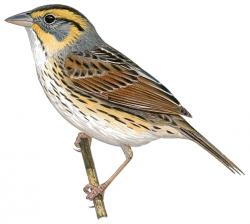
    The saltmarsh sparrow (Ammodramus caudacutus) is disappearing from its home on the East Coast and could be headed for extinction in as little as 50 years, say scientists whose work could help protect the little birds. The sparrows, which weigh about half an ounce, live in coastal areas from Maine to Virginia during the breeding season and migrate farther south in the winter. Researchers with a group of universities have been tracking them for several years and reported this week that eight out of every 10 of the birds has disappeared in the past 15 years. The birds still number in the tens of thousands. But University of Maine professor Brian Olsen, one of the researchers studying the sparrow, said their population has dropped about 9 percent annually since 1998. They mainly eat insects, aquatic invertebrates and seeds.

    Sources:
    Boston.com, May 21, 2016
    https://www.boston.com/news/animals/2016/05/21/east-coasts-saltmarsh-sparrow-extinct-50-years-scientists-say
    Wikipedia
    https://en.wikipedia.org/wiki/Saltmarsh_sparrow