Auteur: Henk Tennekes

  • Disturbing Facts About The Fishing Industry That Threaten Your Health

    Disturbing Facts About The Fishing Industry That Threaten Your Health

    It’s promoted as being a sustainable solution to overfishing, but fish farms actually cause more problems than they solve, with little difference in environmental pollution between land-based feedlots and water-based ones. In the documentary, Kurt Oddekalv, who is a respected Norwegian environmental activist, exposes how salmon farming creates one of the most toxic foods in the world. For instance, underneath the salmon farms across the Norwegian fjords, there’s a layer of waste that reaches 15 meters high—filled with bacteria, drugs, and pesticides. But because the farms are located in open water, the pollution from them isn’t contained. Furthermore, the salmon farms can hold upwards of 2 million salmon in small spaces, and these crowded environments create disease amongst the salmon, including sea lice, Pancreas Disease, and Infectious Salmon Anemia Virus. To keep these diseases from occurring, dangerous pesticides must be used.

    Salmon, typically thought of as a healthy food to consume on a regular basis, may not, after all, be your best choice if you’re opting for the farm-raised varietal.

    Source: Collective Evolution, May 13, 2016
    https://www.collective-evolution.com/2016/05/13/disturbing-facts-about-the-fishing-industry-that-threaten-your-health/

  • White-nose syndrome spreads in Wisconsin

    White-nose syndrome spreads in Wisconsin

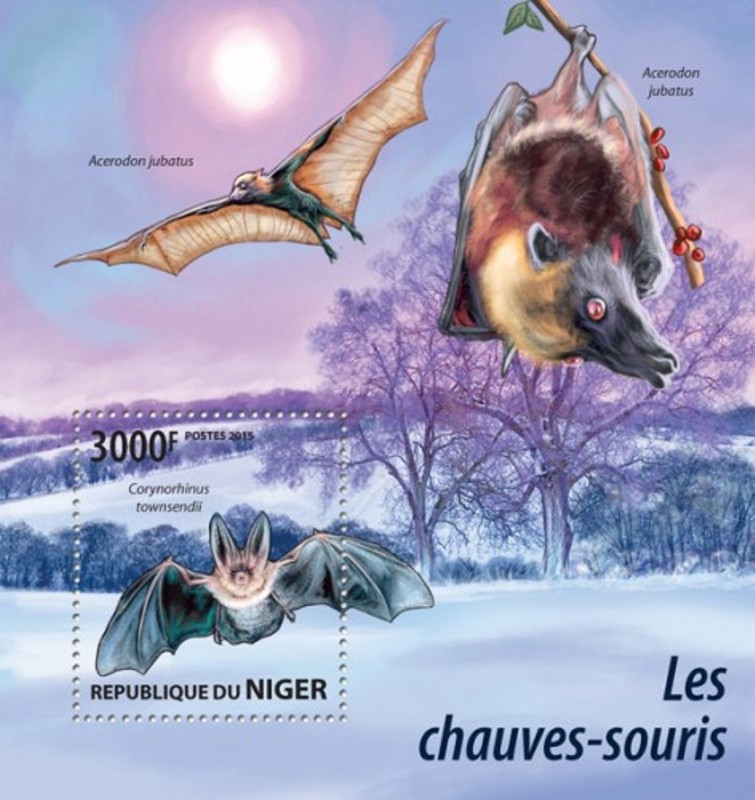
    Winter 2016 bat survey results found that white-nose syndrome has spread to new bat hibernating sites in Wisconsin and is starting to decimate bat populations. “We are finding white-nose syndrome on a widespread basis, and the largest sites are all home to the fungus responsible for this disease,” said Paul White, Department of Natural Resources conservation biologist leading the Wisconsin Bat Program. White-nose syndrome does not affect people or other animal species, but causes hibernating bats to frequently wake, depleting their energy and causing them to die from starvation, dehydration or exposure to the elements. Since the discovery of white-nose syndrome in 2006 in New York, upwards of 6 million bats have died and the disease has spread to 28 states.

    Visual surveys and genetic tests this winter found white-nose syndrome or the fungus that causes it in 42 of 74 sites examined, including in six new counties. Surveys showed a 94 percent drop in bat populations at the Grant County mine where the disease was first detected in Wisconsin in 2014, and one site where the disease was first found in 2015 had zero bats.
    Source: La Crosse Tribune, May 13, 2006
    http://lacrossetribune.com/white-nose-syndrome-spreads-in-wisconsin/article_5ec2726e-3f75-5a6b-80cb-e8728771ae00.html

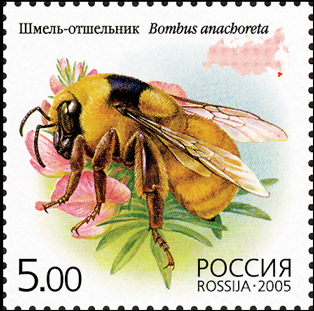
  • Bee Populations Seem To Be Bouncing Back In Canada, But Not in the US

    Bee Populations Seem To Be Bouncing Back In Canada, But Not in the US

    A new study conducted in part by the US Department of Agriculture says that the US lost just over 44 per cent of its bee colonies between April 2015 and March 2016. That’s a lot more than the 34 per cent loss recorded two years ago, and shows a return to the troublesome 45 per cent loss recorded in 2012-13. So, that must mean Canada is in store for a similarly dramatic loss in its bee population, right? Not necessarily, says Mark Winston, a professor in apiculture and social insects at Simon Fraser University in Vancouver, BC. The Canadian Association of Professional Apiculturists conducts its own annual study of how many bees die through the winter. While their report on 2015-16 is still forthcoming, the results of 2014-15 study showed a wintering loss of 16.4 per cent, which is an improvement over numbers we’ve seen in the past. (This is compared to the 28.1 per cent loss seen throughout the 2015-16 winter in the US, according to the new study there.) Winston told me that wintering losses in Canada used to be as much as one-third in a single winter, and that that persisted for many years. But he expects this year’s study to reflect the improvements seen last year. “The situation in the US has degenerated significantly in the last few years, while in Canada it’s actually improved,” he told Motherboard .“Industrial agriculture is the main culprit, due to heavy pesticide use and reduction of bee-friendly forage,” Winston told me. “Stricter regulations around pesticides, government subsidies that favour sustainable agriculture and mixed cropping, and increased attention to planting forage for bees in and around farms—[such as] irrigation ditches, roadways, rights of way, empty spaces—would all assist the survival of honeybees and wild bees.”
    Source: Motherboard, May 13, 2016
    http://motherboard.vice.com/read/bee-populations-seem-to-be-bouncing-back-in-canada-but-not-in-the-us

  • The toxicity of clothianidin to honey bees follows the Druckrey-Küpfmüller equation

    The toxicity of clothianidin to honey bees follows the Druckrey-Küpfmüller equation

    We performed various laboratory bioassays to assess the effects of clothianidin on the survival and behavior of winter bees. Oral lethal and sublethal doses were administered throughout 12-day. The obtained LD50 values at 48, 72, 96 h and 10 days were 26.9, 18.0, 15.1 and 9.5 ng/bee, respectively. Concentrations <20 µg/kg were found to be sublethal. Oral exposure to sublethal doses was carried out for 12-day and, the behavioral functions were tested on the respective 13th day. Although slight reductions in the responses at the concentrations 10 and 15 µg/kg were observed, all tested sublethal concentrations had showed non-significant effects on the sucrose responsiveness, habitation of the proboscis extension reflex and olfactory learning performance. Nevertheless, chronic exposure to 15 µg/kg affected the specificity of the early long-term memory (24 h). Source: Abdulrahim T. Alkassab, Wolfgang H. Kirchner. Impacts of chronic sublethal exposure to clothianidin on winter honeybees. Ecotoxicology pp 1-11. First online: 18 April 2016 There is a very important shift in our understanding of the risk of neonicotinoid insecticides. Their risk may increase exponentially over time, rendering even very small amounts of neonicotinoids much more toxic than previously realized. Dutch researcher Dr. Henk Tennekes, with Dr. Francisco Sanchez-Bayo of Australia, have recently published a review article in the Journal of Environmental & Analytical Toxicology: "Time-Dependent Toxicity of Neonicotinoids and Other Toxicants: Implications for a New Approach to Risk Assessment" (attached). Their starting point is the Druckrey–Küpfmüller equation dt^n = constant (where d = daily dose and t = exposure time-to-effect, with n>1). The Druckrey–Küpfmüller equation established in the early 1960s for genotoxic carcinogens explains why toxicity may occur after prolonged exposure to very low toxicant levels. In essence, this equation states that the total dose required to produce the same effect decreases with decreasing exposure levels, even though the exposure times required to produce the same effect increase with decreasing exposure levels. Druckrey and Küpfmüller inferred in the late 1940s that if both receptor binding and the effect are irreversible, exposure time would reinforce the effect. Recently, similar dose–response characteristics have been established for the toxicity of the neonicotinoid insecticides imidacloprid and thiacloprid to arthropods. The paper reported above confirms that clothianidin has similar dose–response characteristics. Clothianidin follows the same pattern as imidacloprid and thiamethoxam. This is the third neonicotinoid that shows time-cumulative effects on bees.
    The equation for clothianidin is

    lnLT50 = 3.97 – 0.61lnLC50, with r2 = 0.995
    therefore n = 1.63

    Calculations were performed by Francisco Sánchez-Bayo, Ph.D.

  • Fünf Schmetterlingsarten laut Studie in Österreich ausgestorben

    Fünf Schmetterlingsarten laut Studie in Österreich ausgestorben

    Eine neue Studie von Schmetterlingsforscher Peter Huemer zeigt, dass mehr als die Hälfte der Tagfalter erheblich gefährdet sind. Fünf Arten sind in Österreich bereits ausgestorben. Der Bericht, der am Dienstag vorgestellt wurde, zeigt aber auch, dass Österreich mit mehr als 4.000 registrierten Arten noch immer eine große Biodiversität hat. Doch macht vor allem den Tagfaltern die Veränderung ihrer Lebensräume zu schaffen. Verantwortlich dafür ist der Flächenverbrauch, pro Tag werden 19 Hektar verbaut, die Intensivierung der Landwirtschaft durch Düngung und Pestizide, die auch weit weg von jenen Stellen auftreten, wo sie ausgebracht wurden.
    Quelle: Der Standard, 10.05.16
    derstandard.at/2000036630771/Fuenf-Schmetterlingsarten-in-Oesterreich-ausgestorben

  • The British countryside has never had it so bad

    The British countryside has never had it so bad

    The effects on biodiversity are appalling. The State of Nature report published in 2013 by leading conservation NGOs found that populations of 60% of all UK species have declined in recent decades. Since 1995 the turtle dove has declined by 96%; the willow tit by 82%; and the starling by 53%. The wood warbler, yellow wagtail, grey partridge, lapwing, snipe and corn bunting have all decreased noticeably. Bees continue to suffer colony collapse, their numbers plummeting because of the varroa mite and the use of neonicotinoid pesticides, a ban on which was bafflingly lifted by the government last year. Butterflies and wildflowers are in seemingly inexorable decline.

    Any agrarian knows that a rural community includes not just humans but all plant and animal life, and we’re bereft because of the disappearance of so many old companions. The call of the cuckoo, once so commonplace, is now a cause of excitement. Every statistic you can find will point to the troubles afflicting our rural heritage: according to Graham Harvey’s The Killing of the Countryside, 150,000 miles of hedges have been lost in the UK since the introduction of subsidies, and 10,000 miles still disappear every year. In 2008 alone, 400 village shops closed, and between 1997 and 2008 rural schools shut down at a rate of one a month. In 2012 rural pubs closed at a rate of six per week. Bus services continue to be eradicated, libraries closed. Ash trees are dying out because of Chalara dieback. Rural crime is on the increase, with statistics from UK police forces suggesting that, between October 2013 and March 2014, livestock theft increased by 129%. We had 10 piglets stolen a few years ago, and it is surprising how extraordinarily hurtful it is, certainly far worse than 10 favourite bikes being taken.

    Source: Tobias Jones in the Guardian, 10 April 2016
    http://www.theguardian.com/uk-news/2016/apr/10/countryside-has-never-had-it-so-bad

  • Sparrows quickly disappearing from Danish countryside

    Sparrows quickly disappearing from Danish countryside

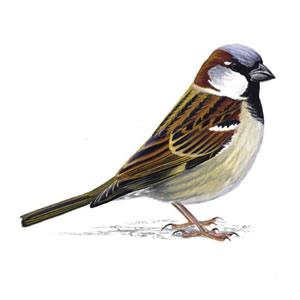
    The population of house sparrows in Denmark is in rapid decline, reports Kristeligt Dagblad. According to the Danish Ornithologist Association, the little birds have been disappearing – particularly from suburbs, small towns and the countryside. Their numbers have nearly halved to about 1.8 million in the last 40 years. The population of lashes and skylarks has also tumbled due to pesticide spraying and the fertilisation of farmland.

    Source: CPH Post, 12 May 2016
    http://cphpost.dk/news/sparrrows-quickly-disappearing-from-danish-countryside.html

  • Paradigmaverschuiving in de risico-analyse: niet alleen kankerverwekkende stoffen hebben geen drempelwaarde

    Paradigmaverschuiving in de risico-analyse: niet alleen kankerverwekkende stoffen hebben geen drempelwaarde

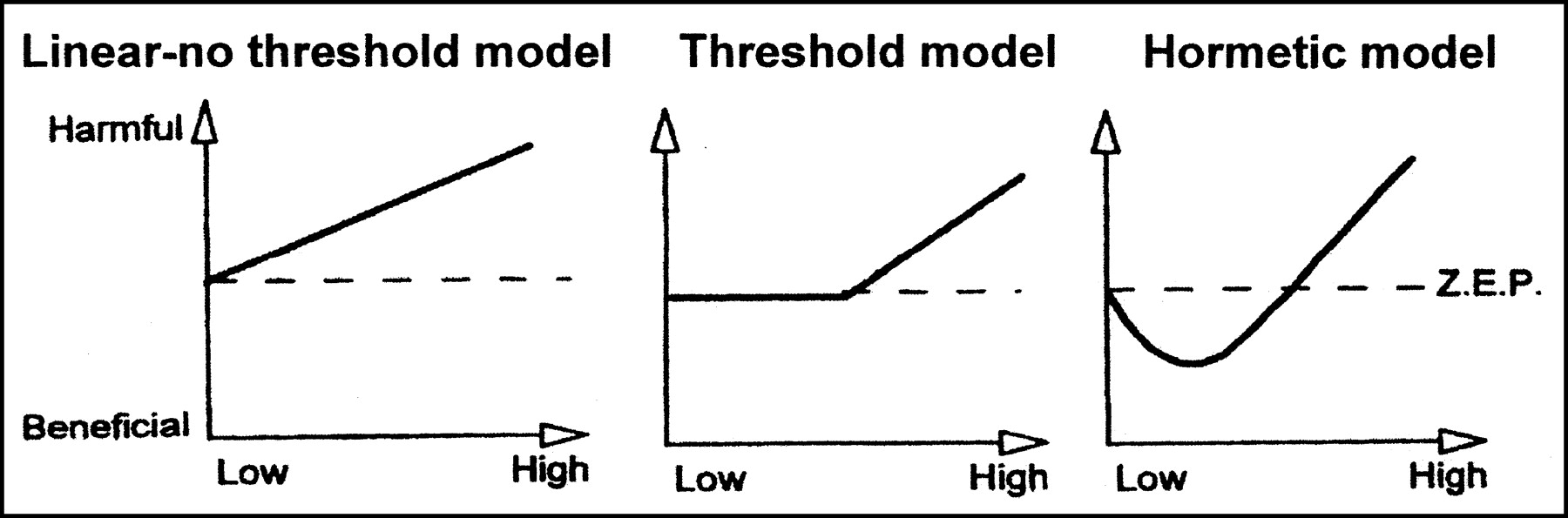
    Twee dosis-werkings-modellen worden van oudsher gebruikt in de risicobeoordeling. De meeste regelgevende instanties gaan ervan uit dat er geen veilig niveau van blootstelling aan kankerverwekkende stoffen is, maar dat een drempelwaarde of ‘veilige’ dosis bestaat voor niet-kankerverwekkende stoffen. Echter, recente ontdekkingen zaaien ernstige twijfel over de geldigheid van dit concept. De dosis-werkingsrelaties van verschillende neurotoxische stoffen onderscheiden zich niet van kankerverwekkende stoffen, en vertonen precies hetzelfde werkingsmechanisme: irreversibele receptor binding met een bijbehorende onomkeerbare werking. Ook is inmiddels duidelijk dat het drempelwaarde model voor niet-kankerverwekkende stoffen de werkelijke risico’s ernstig kan onderschatten. Risicobeoordelingen kunnen niet meer uitgaan van een drempelwaarde als de toxiciteit tot stand komt door irreversibele receptor binding. Een dosis-werkingsmodel voor receptor gerelateerde toxiciteit moet worden ontwikkeld en, als bij lagere concentraties een lineaire relatie bestaat tussen receptor bezetting en biologische werking, kan niet meer worden uitgegaan van een drempelwaarde. Blootstelling aan dergelijke stoffen moet zo ver mogelijk worden vermeden.
    Bron:
    Henk A. Tennekes, Julia Pletz, Francisco Sánchez-Bayo. Internal Medicine Review, May 2016
    http://internalmedicinereview.org/index.php/imr/article/view/28

  • Der Zustand der biologischen Vielfalt in Deutschland ist dramatisch schlecht

    Der Zustand der biologischen Vielfalt in Deutschland ist dramatisch schlecht

    Der aktuelle Zustand der Tier- und Pflanzenarten in Deutschland ist alarmierend. Das geht aus dem ersten umfassenden Artenschutz-Report 2015 hervor, den das Bundesamts für Naturschutz (BfN) jetzt vorgestellt hat. Es sei allerhöchste Zeit zu handeln. Besonders dramatisch ist die Situation bei den wirbellosen Tieren, zu denen Insekten gehören: Knapp 46 Prozent der untersuchten Arten und Unterarten sind bedroht, extrem selten oder ausgestorben. Mit Sorge beobachten Experten dabei auch die negative Entwicklung aller 600 Wildbienenarten in Deutschland. Fast 28 Prozent der Wirbeltierarten (Süßwasserfische, Amphibien, Reptilien, Vögel und Säugetiere) seien in ihrem Bestand gefährdet. Die Situation bei den Brutvögeln hat sich laut Bericht spürbar verschlechtert. Seit 1980 ist die Vogelpopulation in Europa um 421 Millionen Vögel gesunken. Gerade weitverbreitete Arten sind betroffen. Die intensive Landwirtschaft stehe bei den Ursachen an vorderster Stelle. “Früher hat der Bauer auch mal ein paar Halme stehen gelassen. Der Feldhamster hatte was zu knabbern, die Vögel hatten dann auch noch was”, beschrieb BfN-Sprecher Franz August Emde beispielhaft Änderungen in der Bewirtschaftung. Heute werde auch der letzte Halm verwertet, die Fruchtfolge wechsele nicht mehr unbedingt und es gebe riesige Monokulturen.
    Quelle: Die Welt, 20.05.15
    http://www.welt.de/wissenschaft/umwelt/article141211170/In-Deutschland-sind-selbst-Allerweltsarten-bedroht.html

  • Italienische Umweltschützer schlagen Alarm: Pestizide haben in den Gewässern stark zugenommen

    Italienische Umweltschützer schlagen Alarm: Pestizide haben in den Gewässern stark zugenommen

    In 65 Prozent der Wasserproben aus Seen, Flüssen und Bächen wurden massive Rückstände an Pestiziden gefunden. Kopfzerbrechen bereitet der staatlich-italienischen Umweltbehörde Ispra vor allem die gestiegene Belastung im Grundwasser. In sieben Prozent der Fälle sind die Wasserproben wegen der Gesundheitsbelastung als nicht mehr trinkbar einzustufen. Mit diesen Zahlen schlägt der neue Ispra-Untersuchungsbericht Alarm. Besonders groß ist die Verschmutzung in der Po-Ebene im Großraum Venedig – das liegt unter anderem auch daran, dass in dieser Gegend besonders regelmäßig Wasserproben entnommen wurden.

    Umweltexperten fürchten, dass die Situation in Süditalien weit schlimmer ist. Regionen wie Kalabrien und Molise etwa schickten keine einzige Wasserprobe an die staatliche Kontrollbehörde. Kalabrien geriet wiederholt wegen dramatischer Umweltsünden in Verruf. Angefangen vom Atommüll, den die kalabresische Mafia Ndrangheta im Mittelmeer versenkt hat, bis zu radioaktiven Mülldeponien unter der Erde, was zu verseuchten Obst-, Gemüse- und Milchprodukten aus der Gegend führt.

    Auch vermehrte Rückstände von Insektiziden und Fungiziden – Mittel, die in der Landwirtschaft zur Schädlingsbekämpfung eingesetzt werden – wurden im Trinkwasser gefunden. Der Verkauf von Pestiziden ist in den vergangenen 15 Jahren zwar um 12 Prozent gesunken. “Für den Abbau dieser Substanzen ist allerdings ein sehr langer Zeitrahmen notwendig, besonders bei Stoffen, die in das Grundwasser gelangten”, räumt Ispra ein.

    Quelle: Kurier, 10.05.2016
    http://kurier.at/chronik/weltchronik/italien-pestizidrueckstaende-im-trinkwasser/197.950.233