Anlässlich des Welttags des Meeres fordert der WWF Maßnahmen gegen den drastischen Rückgang mariner Populationszahlen und für den Erhalt des ökologischen und ökonomischen Werts der Ozeane. Im Schnitt hat sich der Bestand von über 5.800 untersuchten Tierbeständen über 1.200 verschiedener Arten von Meerssäugern, Seevögeln, Reptilien und Fischen zwischen 1970 und 2012 halbiert. „Die Ozeane sind von unschätzbarem ökologischen und ökonomischen Wert für uns Menschen. Fisch ist Einkommens- und Nahrungsgrundlage für über 800 Millionen Menschen weltweit, vor allem in Entwicklungsländern. Dem drastischen Rückgang der biologischen Artenvielfalt muss Einhalt geboten werden,“ fordert Simone Niedermüller, Fischerei-Expertin des WWF Österreich.
Quelle: OTS Austria, im Juni 2016
http://www.ots.at/presseaussendung/OTS_20160607_OTS0021/tag-des-meeres-halbierung-mariner-populationszahlen-bedroht-lebensgrundlage-von-millionen
Auteur: Henk Tennekes
-
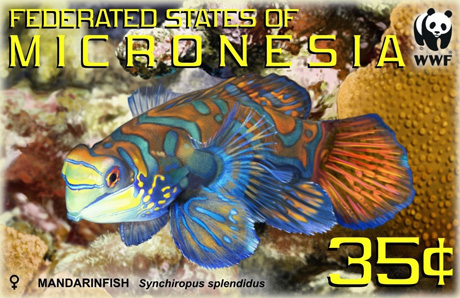
Halbierung mariner Populationszahlen bedroht Lebensgrundlage von Millionen
-
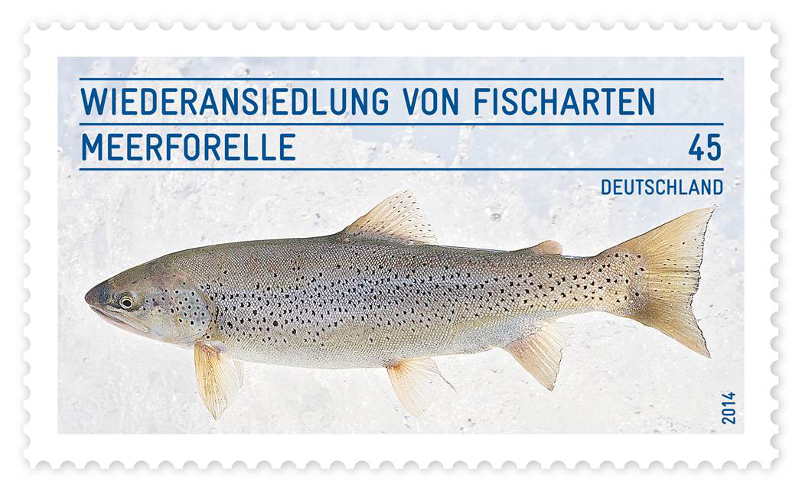
Deutsche Aquakulturbetriebe haben im letzten Jahr markant weniger Fische gezüchtet
Die rund 3‘300 Aquakulturbetriebe in Deutschland haben 2015 circa 19‘000 Tonnen Fisch produziert. Gegenüber dem Vorjahr entspricht dies einem Minus von 9,5 Prozent, wie das Statistische Bundesamt mitteilt. Die produzierte Menge Regenbogenforellen sank um 17,1 Prozent auf rund 7‘000 Tonnen. Vom Gemeinen Karpfen wurden mit rund 4‘900 Tonnen etwa 7 Prozent weniger produziert. Auch der Fisch des Jahres 2016 – der Hecht – war vom Rückgang betroffen. So wurden 2015 knapp 43 Tonnen Hecht in gut 240 Betrieben erzeugt und damit knapp 20 Prozent weniger als 2014.
– See more at: http://www.bauernzeitung.ch/news-archiv/2016/d-deutlich-weniger-fisch-produziert/#sthash.1WEBuNv8.dpuf
-

Engadiner Fischer fangen weniger Fische
Im Zehnjahresschnitt ist die Anzahl der gefangenen Fische im Kanton Graubünden um rund einen Fünftel zurückgegangen. Vor allem auf dem Silsersee sind deutlich weniger Fischer zu beobachten als noch vor ein paar Jahren. Dort sind die Fänge von Seesaiblingen regelrecht eingebrochen. Antonio Walther, Hotelier in Plaun da Lej fordert vom Kanton Massnahmen. Dieser winkt ab. Aus ökologischer Sicht betrachtet sei der Rückgang der Fangzahlen alles andere als alarmierend. Die ganze Geschichte zu den Fischers Fritzen, die immer weniger Fische fangen gibt es in der EP/PL vom 31. Mai. Die Statistik zu den Fangzahlen zurück bis ins Jahr 2002 kann unter www.ajf.gr.ch heruntergeladen werden (Link Fischfangstatistik).
Quelle: Engadiner Post, 30.05.16
http://www.engadinerpost.ch/2016/05/fischer-fangen-weniger-fische.html-0 -

Starker Rückgang bei Fischerträgen im Bodensee
261 Tonnen wurden von den Beruffischern im vergangenen Jahr aus dem Bodesnee geholt – das entspricht einem Rückgang von rund 40 im Vergleich zum ebenfalls niedrigen Fang des Vorjahres. Damit war 2015 das schlechteste Fangjahr am Bodensee seit 1917. Der größte Rückgang wurde bei de Felchenfängen verzeichnet. Mit 152,4 Tonnen lag der Wert rund 68,4 Prozent unter dem Zehnjahresmittel von 482,7 Tonnen. Damit ist der Ertrag im Vergleich zum Vorjahr nocheinmal um 40,8 Prozent eingebrochen. Der Barschertrag ist von 50 auf 23,4 Tonnen zurückgegangen, bei den Bachsaiblingen war eine Abnahme von 71 Prozent zu verzeichnen.
Quelle: Vorarlberg Online, 23.06.16
http://www.vol.at/starker-rueckgang-bei-fischertraegen-im-bodensee/4762853 -
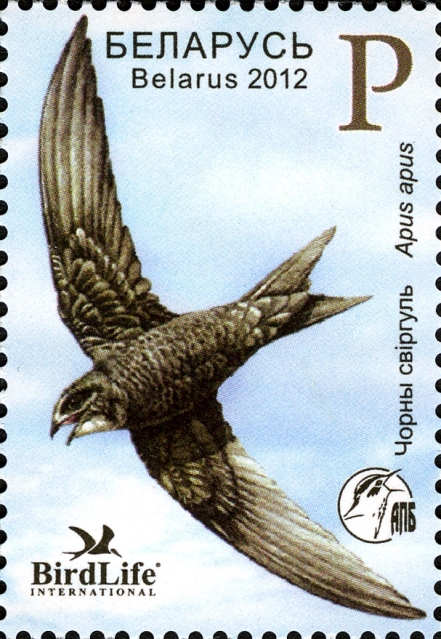
Weniger Mehlschwalben und Mauersegler
Die beiden Flugkünstler Mehlschwalbe und Mauersegler sind die Verlierer der “Stunde der Gartenvögel”. Mit Platz elf bei der Mehlschwalbe und Platz zwölf beim Mauersegler setzt sich der Abwärtstrend der vergangenen Jahre fort. Seit Beginn der Laien-Vogelzählung ist in den vergangenen zehn Jahren ein Rückgang um 41 Prozent bei der Mehlschwalbe, beim Mauersegler sogar um 45 Prozent, zu beobachten. “Mauersegler und Mehlschwalbe sind typische Siedlungsvögel und brüten fast ausschließlich in Städten und Dörfern, so dass die Ergebnisse für den gesamten Bestand in Deutschland sprechen”, sagte NABU-Vogelschutzexperte Lars Lachmann. “Ein Grund ist der Verlust von Brutplätzen an gedankenlos renovierten Häusern, zum Teil sogar mutwillige und illegale Zerstörung von Nestern. Zum anderen aber spielt sicher auch der Rückgang ihrer Fluginsektennahrung eine wichtige Rolle”, so Lachmann weiter. Wissenschaftler beobachten einen alarmierenden Rückgang von Fluginsekten in den vergangenen 15 Jahren, so sei die Abnahme beider Arten nur eine logische Konsequenz. “Sie ernähren sich vom sogenannten Luftplankton, also von durch den Wind aus einem großen Einzugsgebiet in hohe Luftschichten verfrachteten und dort gleichmäßig verteilten Insekten”, so Lachmann. Für die gleiche Menge an Futter müssten sie nun viel weiter fliegen. Sie können nicht wie andere insektenfressende Vögel gezielt Stellen aufsuchen, an denen noch genügend Insekten leben und leiden vermutlich daher besonders am allgemeinen Insektenschwund.
Insekten werden weniger durch die intensive und flächendeckende Verwendung von Insektengiften in der Landwirtschaft, teilweise kommt Gift auch immer noch in Gärten und öffentlichem Grün zum Einsatz. Insbesondere eine neue Generation von Insektengiften, sogenannte Neonikotinoide, stehen im Verdacht, den massiven Rückgang in den vergangenen 15 Jahren beschleunigt zu haben, da deren zunehmende Verwendung mit dem zeitgleich beobachteten Zusammenbruch der Insektenbestände zusammenfällt. Vor diesem Hintergrund fordert der NABU eine echte ökologische Agrarreform und weniger Gift in der Landschaft sowie einen Verzicht auf Gift im Garten.
Quelle: NABU, 10.06.16
http://www.presseportal.de/pm/6347/3349647 -
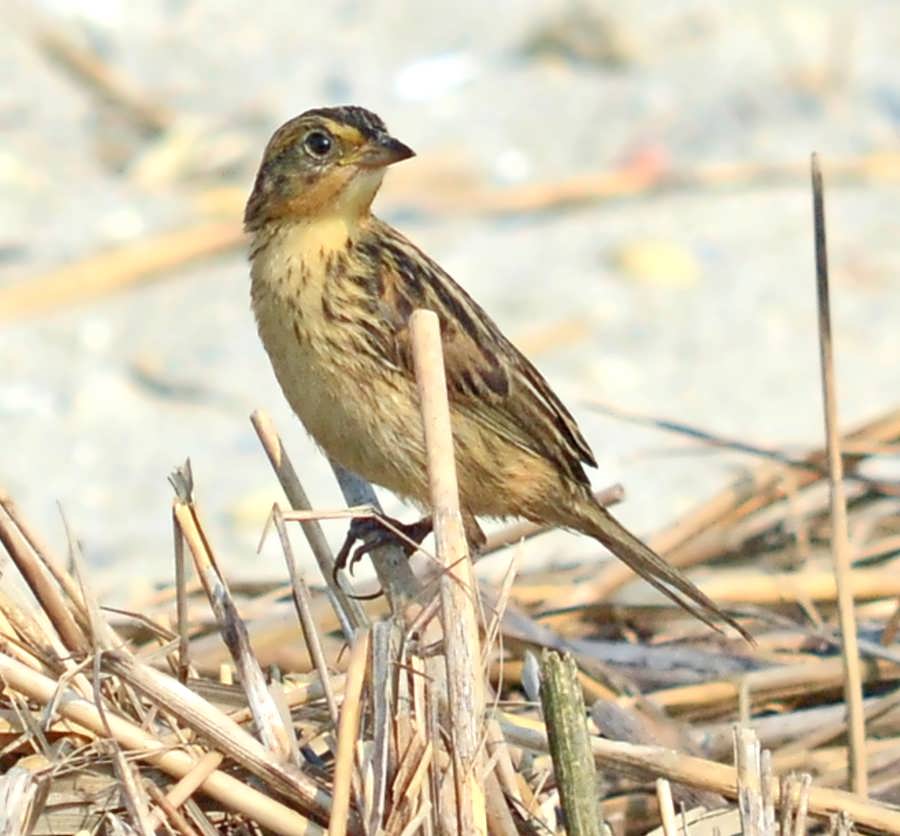
The saltmarsh sparrow is disappearing from its home on the East Coast
The saltmarsh sparrow (Ammodramus caudacutus) is disappearing from its home on the East Coast and could be headed for extinction, say scientists whose work could help protect the little birds. The sparrows, which weigh about half an ounce, live in coastal areas from Maine to Virginia during the breeding season and migrate farther south in the winter. Researchers with a group of universities have been tracking them for several years and reported this month that eight out of every 10 of the birds has disappeared in the past 15 years. University of Maine professor Brian Olsen, one of the researchers studying the sparrow, said their population has dropped about 9 percent annually since 1998. They mainly eat insects, aquatic invertebrates and seeds.
The birds still number in the tens of thousands. Massachusetts Audubon says these sparrows rely on the state’s salt marshes for a considerable portion of their global breeding habitat. The bird’s population is relatively stable in the Great Marsh, which stretches from Gloucester to the New Hampshire, according to MassAudubon’s bredding bird atlases.
There are about 53,000 of the sparrows in the U.S., the only country where they live. Olsen said their decline is the most severe in New England, where they have disappeared at a more extreme rate than any other tidal marsh bird.
Saltmarsh sparrows are not afforded special protections or protective status in the U.S. But the International Union for Conservation of Nature’s Red List of Threatened Species lists the sparrow as “vulnerable.”
The U.S. Fish and Wildlife Service has asked Olsen and the other researchers studying the sparrow to put together information about the bird so it can make a determination about whether it should be considered for protection.
The other researchers are from the universities of Connecticut, New Hampshire and Delaware and the State University of New York College of Environmental Science and Forestry. Their work on the sparrow is part of a project called the Saltmarsh Habitat & Avian Research Program.
Sources:
Gloucester Times, June 19, 2016
http://www.gloucestertimes.com/news/national_world_news/saltmarsh-sparrow-disappearing-scientists-say/article_f6d8a949-a9a6-5cca-af92-46fc5d3a33b9.html
Wikipedia
https://en.wikipedia.org/wiki/Saltmarsh_sparrow -
REMA Unveils Shocking List of Threatened Ecosystems, Species in Rwanda
The state of environment and outlook report 2015 by Rwanda Environment Management Authority (REMA) has unveiled a shocking list of ecosystems and species that are threatened in the country and therefore urgently need protection. Despite Rwanda being one of Africa’s most biologically rich regions, the report says there are 17 threatened terrestrial ecosystems of different categories in the country. Three ecosystems, that are classified as ‘collapsed’ are; Ndoha Natural forests, Sanza natural forest and Mashyuza natural forest. The report unveils that ten ecosystems are classified as critically endangered namely; volcanoes National Park, natural forests of Busaga, Dutake, Gishwati, Karama, Karehe-Gatuntu, Ibanda-Makera, Nyagasenyi, Rujambura and Mukura Natural Forest while the four endangered ecosystems are Kibirizi and Muyira natural forest, Akagera National Park, Nyungwe National Park and Muvumba Gallery Forest.
The list also specifies trees that are in danger of disappearing, trees endemic to the Albertine Rift and rare trees endemic to Rwanda, trees of medicinal value, important trees for the timber industry that take more than 20 years to reach harvesting maturity, trees with cultural significance, and trees that are protected internationally.
The 2015 study also considered five groups of species namely plants, birds, mammals, reptiles and amphibians where 42 plants are threatened of which 7 are critically endangered, 28 are endangered and 7 are vulnerable.
The report says 17 birds are threatened, 9 critically endangered 4 endangered, 4 vulnerable but data was insufficient to assess 46 birds. The survey shows 42 mammals are threatened of which 6 are critically endangered, 32 endangered, 4 Vulnerable while 4 reptiles and amphibians are threatened of which 2 critically endangered and 2 endangered.
The country has 2,250 known plant species, 151 mammal species representing 40 per cent of Africa’s mammal species, 87 species of amphibians and reptiles and 670 bird species.
The report indicates that Rwanda is a home of 30 per cent of global population of mountain gorillas where gorilla tourism for example generated a significant proportion of $293.6m in 2013.
Source: All Africa, 20 June 2016
http://allafrica.com/stories/201606210714.html -

Spain Has Lost 64.5 Million Birds in Two Decades
Spain‘s colorful array of birds have made the country a renowned bird watching spot. But it may no longer be a haven for the birds and the people who love them. A new report from SEO/BirdLife Spain says that Spain has lost 64.5 million birds in the past 20 years. Over 1,000 SACRE scientists came together to collect bird data between 1996 and 2015, reports Andrea Small for Audubon. The scientists would go to a spot two times each spring to record the birds that they saw and heard. In total, the scientists collected data from 20,000 stations. The scientists observed that rural, or “farmland,” birds suffered the most, but city birds were also threatened. “Between 1998 and 2005, common rural birds declined by 23 percent, while common urban birds diminished by 18 percent,” according to Audubon.
Juan Carlos del Moral, the research and monitoring coordinator at SEO/BirdLife Spain, describes the situation to Audubon: “One of our main concerns is that these are the two most human-intervened types of environments for birds. In fact, our data suggests that while farmland and urban birds decline, populations that live in the forests grow. We believe this just simply means they are trying to escape worsening habitat conditions.”
Why are the birds disappearing? Both sets of birds have different problems. City birds have to worry about urbanization. Experts like del Moral explain that cities need urban planners to consider bird nesting areas. Light pollution and glass windows are two other issues that affect urban wildlife. Moral adds that, “If all of this happens to animals we can actually count and see, what could be happening to much smaller species that are just as important, like bees and grasshoppers?”
Country birds have their own issues. The report found that “industrialization of agriculture, substantial increases in monocultures, [and] the use of pesticides for farming” are harming Spain’s rural birds. Sometimes it just boils down to habitat loss: “The Crop Surface Area and Yields Survey revealed that nearly 247,000 acres were lost in Spain in 2015,” reports Audubon.
While the Little Bustard is classified as Near Threatened, the bird’s population has declined 71 percent. According to the IUCN Red List, the leading threats to the birds include habitat loss and degradation, or the “conversion of dry grassland and low-intensity cultivation to intensive arable agriculture, especially where this has included the planting of monocultures or perennial crops, irrigation or afforestation.”
The Least Concern Common Quail is also experiencing a population decline. The IUCN Red List cites that new agricultural practices, like pesticides, are responsible for the bird’s decline. In Spain, the common quail’s population has decreased over 50 percent.
Similar to the common quail, the yellowhammer’s population in Spain has also dropped over 50 percent. The IUCN Red List attributes their population decline to “ongoing habitat destruction and reduction in cultivation of cereal crops.”
Read more: http://www.care2.com/causes/spain-has-lost-64-5-million-birds-in-two-decades.html#ixzz4CJ4S6sC5
-
Pesticide firms use tobacco tactics to sell neonicotinoids, beekeeper says
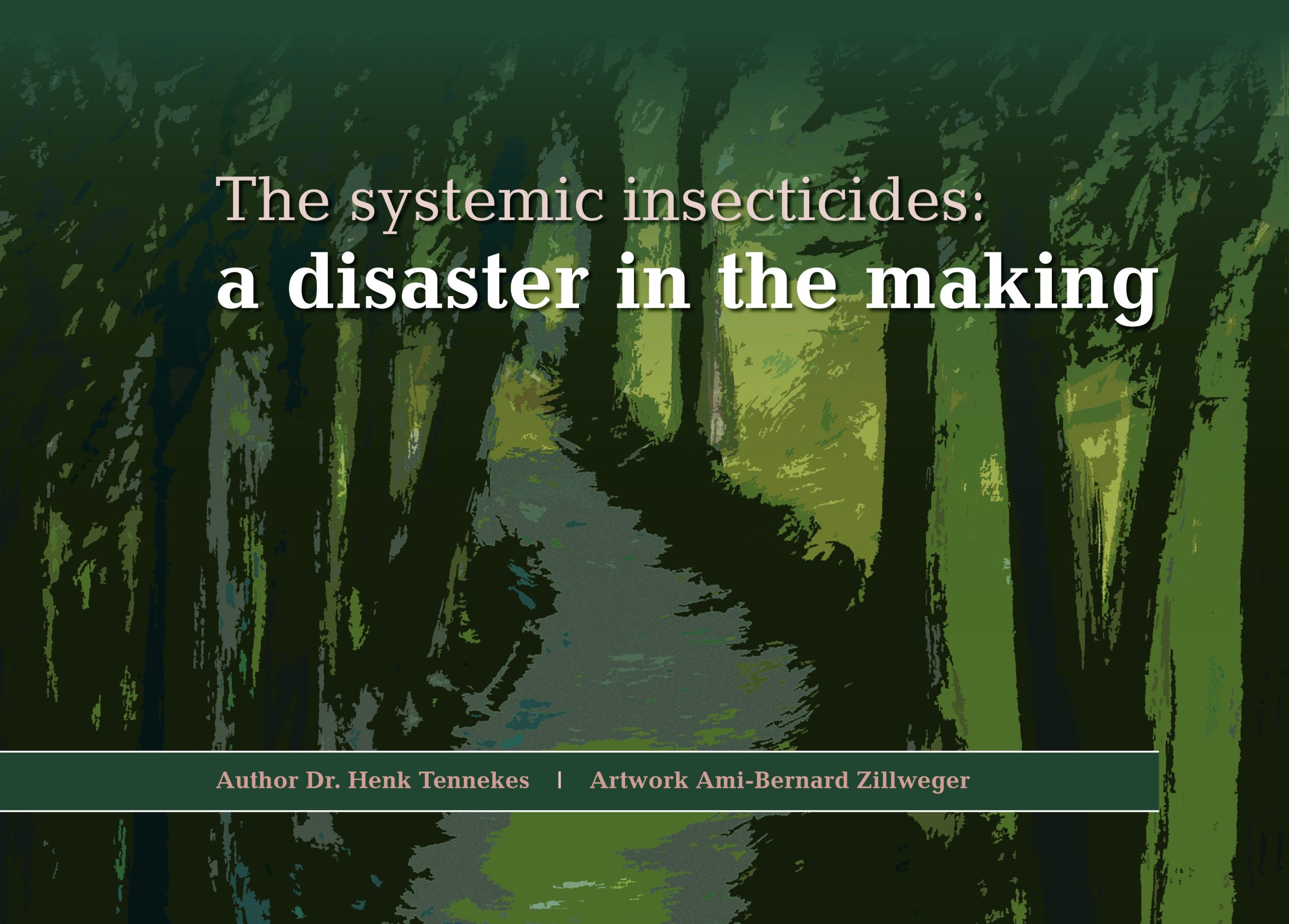
While pesticide companies and some researchers say the tiny Varroa mite is the main culprit in declining honeybee health, new Dutch research concludes that bees are more vulnerable to mites and other stressors because of their constant diet of neonicotinoid insecticides. The debate about what’s killing honeybees and other pollinators has continued for several years, with Varroa mites largely taking the blame for colony collapse disorder. But as more research is conducted, compiled and analyzed, researchers such as Henk Tennekes say there is no longer any doubt that the neurotoxic insecticides are the root cause of pollinator decline. Neonics compromise immune systems of all insects, the Dutch toxicologist says, noting that in the case of honeybees, the pesticides impair cognitive abilities and downgrade innate immunity, leaving them more vulnerable to disease. “When neonics are present, bees neglect to provide food for eggs and larvae, suffer from a breakdown of navigational abilities because of impaired cognition and experience lower immunity, making them more susceptible to infectious diseases and parasitic opportunists such as Varroa mites,” Tennekes wrote in a paper he delivered at Harvard earlier this year. Tennekes is one of several researchers to equate the current environmental issues surrounding neonics with those caused by DDT more than a half century ago. His self-published book, The Systemic Insecticides: A Disaster in the Making, was one of the first to target neonics as the cause of the global pollinator decline. Tennekes, who also attributes songbird die-offs to neonics, recently told CBC News, “Soon the swallows will be gone forever. People don’t see the urgency of the problem,” he says.
Ontario beekeepers tend to agree. Andre Flys, a beekeeper from Nobleton, Ont., just north of Toronto, suggests the pesticide companies have been drawing attention to mites as a smokescreen while continuing to promote the safety and sale of their insecticides to farmers. He compares the pesticide industry’s focus on mites rather than neonicotinoids to the tobacco industry deflecting the health hazards caused by smoking. “I compare it to the tobacco industry standing over a man who’s been a smoker all of his life and has died of lung cancer and we start talking about what a health problem diabetes is,” says Flys. Diabetes, like the Varroa mite, is a symptom of the real cause of death, he says.
Source: CBC, August 7, 2015
http://www.cbc.ca/news/technology/bee-crisis-are-mites-or-neonics-the-real-culprit-1.3116368 -

Gierzwaluw, spreeuw en huismus verdwijnen uit Alkmaar
Alkmaar is een van de weinige steden in Nederland waar een traditie opgebouwd is van het inventariseren van in de stad broedende vogels. De eerste inventarisatie vond reeds in 1984 plaats en daarna is dit elke 10 jaar herhaald. In 2013-2014 is voor de vierde keer een inventarisatie uitgevoerd van alle broedvogels in het stedelijke gebied van Alkmaar. In deze ca. 30 jaar is op deze wijze een unieke serie ontstaan. Tot en met 1994 was de huismus (Passer domesticus) de meest talrijke broedvogel in Alkmaar, maar inmiddels is de vogel uit de top tien verdwenen. Tussen 1994 en 2004 is de Huismus met 78% afgenomen en tussen 2004 en 2014 met nog eens 48,5%. Vergeleken met 1994 zijn ook Gierzwaluw (Apus apus) en Spreeuw (Sturnus vulgaris) uit de Top 10 verdwenen. Vergeleken met 10 jaar geleden zijn er veel soorten in aantal achteruit gegaan dan wel gelijk gebleven.
Bron: Vogelwerkgroep Alkmaar e.o.
http://vwg-alkmaar.nl/