Auteur: Henk Tennekes

  • Pesticide blamed for huge drop in frog numbers along Queensland coast

    Pesticide blamed for huge drop in frog numbers along Queensland coast

    The head of Australia’s only dedicated frog hospital believes powerful insecticides are behind a staggering decline in frog populations along the Queensland coast. But Deborah Pergolotti, of the Cairns Frog Safe project, has struggled to drum up government and academic interest in researching the bizarre malformations she has documented in amphibians. “The first domino in the sequence is chemicals,” she says, specifically neonicotinoids. Introduced in Australia in 1996, neonicotinoids attack the nervous system of insects and have caused controversy overseas for their perceived link to declining bee populations.

    The European Union has restricted their use, but they are used widely in Australia.

    Pergolotti estimates there has been a 95% decline in the Cairns frog population since the hospital opened 17 years ago.

    “The usual comment is: ‘What proof do you have?’ ” she said.

    “If somebody would get around to doing the toxicology for it, then maybe we might get some proof, but nobody’s interested in the toxicology.”

    But her attempts to alert authorities have fallen on deaf ears.

    A 2014 report by the Australian Pesticides and Veterinary Medicines Authority, prompted by concerns for bee populations, found there was a “lack of consensus” on the causes of regional declines.

    Ultimately, “multiple interacting pressures” were to blame, it said.

    Pergolotti called for an overhaul of the way farming chemicals are approved in Australia. She said the process was “barely higher than a rubber stamp”.

    The authority’s Dr Matthew O’Mullane said any impacts on frogs were considered as part of the vertebrate aquatic risk assessment and risks were covered by “more general statements” on product labels.

    “If new information became available to indicate that frogs were specifically affected by neonicotinoids then the [authority] would consider the scientific merits of the new information and whether product labels needed to be changed to mitigate risks,” he said.

    The federal environment department said experts involved in a coming review of the conservation status of frogs had not raised any issues relating to the insecticides.

    Meanwhile, a spokeswoman for Queensland’s Department of Environment and Heritage Protection said it had no direct control over the insecticides and was not aware of any recent studies on their potential harm to frogs, nor declining frog populations.

    Source: The Guardian, 4 July 2016
    https://www.theguardian.com/environment/2016/jul/04/pesticide-blamed-for-huge-drop-in-frog-numbers-along-queensland-coast

  • The sharp decline of the Dakota Skipper may well be related to neonicotinoid insecticides

    The sharp decline of the Dakota Skipper may well be related to neonicotinoid insecticides

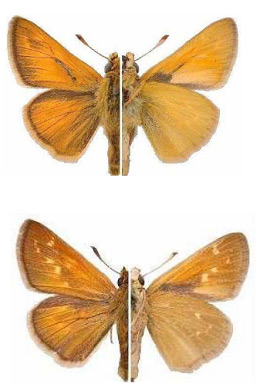
    Once free to flit over millions of acres of unmolested prairie, the humble Dakota skipper’s range has been drastically reduced over time. It was relatively easy in the 1970s for Robert Dana to find the Dakota skipper (Hesperia dacotae), a pollinator that clings to scattered remnants of native prairie that provide its habitat. “It wasn’t difficult to find,” he said. “If you could find the prairies you could find the butterfly.” Dana, an ecologist with the Minnesota Department of Natural Resources, shifted his attention from butterflies to plant species for about 20 years, ending in the mid-2000s. As recently as 2008, when Dana’s studied gaze returned to the Dakota skipper, he still found large numbers of the butterflies.

    But in the years since, for reasons nobody knows for certain, the Dakota skipper has become an elusive grassland insect, considered threatened by the U.S. Fish and Wildlife Service and endangered by the Minnesota Department of Natural Resources. The shrinking size of its natural domain helps explain the butterfly’s population losses, but it’s not the whole story.

    “Is something else going on in addition to this habitat loss?” said Marissa Ahlering, a prairie ecologist for The Nature Conservancy. “That’s kind of the big unknown. What’s happening?” Although the reason for the sharp decline of the Dakota skipper remains a mystery, suspicion falls heavily on pesticides, which drift onto remnants of native prairie from surrounding cropland.

    The Minnesota Zoo, for instance, has tested grasses from several native prairies and found pesticide residue.

    Source: In Forum, June 28, 2016
    http://www.inforum.com/news/4063926-why-dakota-skipper-butterfly-disappearing-regions-prairies

  • Honeybee Colony Losses during 2008~2010 Caused by Pesticide Application in Japan

    Honeybee Colony Losses during 2008~2010 Caused by Pesticide Application in Japan

    Recent declining numbers of honeybees, Apis mellifera, in colonies threatens crop production as well as feral plant community biodiversity. Chemicals applied in agroecosystems are regarded as one of primary causes of the decline. In Japan, the heavy loss of honeybee colonies associated with pesticide use has been reported from beekeepers recently, leading to lessened use of honeybee colonies to facilitate pollination of cultivates. Nevertheless, no study has quantitatively examined the damage to honeybee colonies caused by the pesticide application in Japanese agricultural fields to date. To explore actual honeybee damage caused by the pesticide use, we performed an extensive survey of honeybee colony loss putatively caused by pesticide application by asking Japanese beekeepers to identify bee losses for three years: 2008~2010. The respective numbers of damaged honeybee hives were 11,659, 11,533 and 8,328. The estimated amounts of damage were JPY 201.1 million, JPY 253.8 million, and JPY 178.0 million for 2008, 2009, and 2010. Heavy losses were concentrated in particular prefectures (Hokkaido, Iwate, and Wakayama) although losses occurred throughout Japan. In Hokkaido, the area of damage was concentrated exclusively in central areas. More than 90% of damage occurred in mid-summer. Pesticide-sprayed crops, suspected of causing the loss, amounted to 20 crops, but 75.0~83.3% of damaged hives, and 86.0~92.3% of damage amounts were of only two crops: rice and orange. Overwhelmingly, neonicotinoids were identified as responsible for the losses, accounting for 91.4% in 2009 and 81.7% in 2010 for damaged hives, and 93.2% in 2009, 92.4% in 2010 for damage amounts.
    Source:
    Takaharu Taniguchi et al. Journal of Apiculture 27(1) : 15~27 (2012)

  • COMPARATIVE CHRONIC TOXICITY OF IMIDACLOPRID, CLOTHIANIDIN, AND THIAMETHOXAM TO CHIRONOMUS DILUTUS

    COMPARATIVE CHRONIC TOXICITY OF IMIDACLOPRID, CLOTHIANIDIN, AND THIAMETHOXAM TO CHIRONOMUS DILUTUS

    Non-target aquatic insects are susceptible to chronic neonicotinoid insecticide exposure during the early stages of development from repeated run-off events and prolonged persistence of these chemicals. Investigations on the chronic toxicity of neonicotinoids to aquatic invertebrates have been limited to a few species, under different laboratory conditions that often preclude direct comparisons of the relative toxicity of different compounds. Here, full life-cycle toxicity tests using Chironomus dilutus were performed to compare the toxicity of three commonly used neonicotinoids: imidacloprid, clothianidin, and thiamethoxam. Test conditions followed a static-renewal exposure protocol where lethal and sub-lethal endpoints were assessed on days 14 and 40. Reduced emergence success, advanced emergence timing, and male-biased sex ratios were sensitive responses to low-level neonicotinoid exposure. The 14-day LC50 values for imidacloprid, clothianidin, and thiamethoxam were 1.52 μg/L, 2.41 μg/L, and 23.60 μg/L, respectively. The 40-day EC50 (emergence) values for imidacloprid, clothianidin, and thiamethoxam were 0.39 μg/L, 0.28 μg/L, and 4.13 μg/L, respectively. Toxic equivalence, relative to imidacloprid, was estimated through a three-point response average at L(E)C(20, 50, 90) and plotted concentration-response curves. Relative to imidacloprid (TEF=1.0), chronic (lethality) 14-day TEFs for clothianidin and thiamethoxam were 1.05 and 0.14, respectively, and chronic (emergence inhibition) 40-day TEFs were 1.62 and 0.11, respectively. These population-relevant endpoints and TEFs suggest that imidacloprid and clothianidin exert comparable chronic toxicity to C. dilutus, whereas thiamethoxam induced comparable effects only at concentrations an order of magnitude higher. However, we caution that under field conditions thiamethoxam readily degrades to clothianidin, thereby likely enhancing toxicity.
    Source:
    MICHAEL C. CAVALLARO ET AL. (2016) Environmental Toxicology and Chemistry
    DOI 10.1002/etc.3536

  • Concern over dwindling sardine catch in Kerala’s coastal waters

    Concern over dwindling sardine catch in Kerala’s coastal waters

    Sardines used to form the major catch for traditional fishermen who ventured out to sea during the trawl ban in Kerala’s coastal waters. But the availability of sardines has declined to alarming levels, affecting the livelihood of hundreds of fishermen. Sardines have been caught from coastal waters mainly using seines for about 200 years. Sardines in the 10-14 cm size group, less than one year old, form a major component of sardine population. During the period from October 2012 to February 2013, about 1,17,823 tonnes of this category was harvested, adversely affecting the spawning biomass in the following years, according to the report. “Changes in ecosystems have affected the spawning of various kinds of fish,” says T.D. Jojo, a researcher working for the Ashoka Trust for Research in Ecology and Environment (ATREE), a non-government body which conducts annual survey on fish species in Vembanad. A recent study conducted by the organisation also indicated a decline in the number of fish species existing in the ecosystem.
    Source: The Hindu, June 24, 2016
    http://www.thehindu.com/news/national/kerala/concern-over-dwindling-sardine-catch/article8767354.ece

  • Tanzania: Fishing On Lake Victoria Suspended

    Tanzania: Fishing On Lake Victoria Suspended

    The government has suspended fishing on Lake Victoria amid fresh concerns over dwindling stock. Mara regional commissioner Magesa Mulongo told Murangi villagers the suspension will be in place from July to October this year. He said: “We are left with no other option but to suspend fishing activities on the Lake; anyone caught fishing will be punished,” said Mr Mulongo. The RC said fishermen should find other income-generating activities to support their families over the two month suspension. There have been concerns over the sharp decline in stocks in Lake Victoria.
    Source: All Africa, June 10, 2016
    http://allafrica.com/stories/201606100141.html

  • Canada’s fishery is in severe decline

    Canada’s fishery is in severe decline

    A leading ocean conservation group sounded an alarm over the state of Canada’s fishery in a new report that reveals that less than 25 per cent of the country’s fish stocks are considered healthy and the status of almost half is unknown. The status of a whopping 45 per cent of stocks couldn’t be determined due to an absence of basic or up-to-date information, which the report attributed to a lack of transparency in Canada’s fisheries. The report called the latter a “long-standing problem, exacerbated by the previous federal government’s cuts to Canada’s once world-class fisheries science capacity and by the rigorously enforced policy of discouraging scientists from speaking about their work.

    “This lack of transparency — and therefore public scrutiny — and absence of up-to-date information creates an environment in which it is all too easy for officials to ignore scientific advice and avoid the tough decisions required to rebuild vulnerable stocks.”

    Josh Laughren, executive director of Oceana Canada – the organization that commissioned the research – called the findings extremely concerning.

    “We need public scrutiny and accountability to ensure our fish populations are sustainably managed, and the political will to implement rebuilding plans where they are urgently needed,’ Laughren said in a statement.

    “Fisheries and Oceans Canada has a responsibility to steward this precious resource, and they have to date been unwilling or unable to share basic information on the state our fish populations, and actions needed to bring them back.”

    The depletion of the Canada’s fisheries is a recent phenomenon, the bulk of it occurring within the span of a single lifetime, Laughren notes in his introduction to the report.

    He calls it a story of too many boats chasing too few fish, of destructive gear and enormous waste, with science too often falling by the wayside.

    “It’s not just cod numbers that plummeted. We’ve seen a drop in abundance of all kinds of species.”

    The report titled Here’s the Catch: How to Restore Abundance to Canada’s Oceans, comes nearly 25 years after the collapse of the cod industry in 1992, which led to tens of thousands of people out of work and financial losses of $4 billion.

    Currently, the Canadian seafood industry is concentrated on a few key species, including lobster, crab, shrimp and scallops, but the report says the lack of diversity in catches makes communities and economies vulnerable.

    A lobster fishery collapse would be devastating, for instance, because the value of the shellfish is high and fishers would have no other options to turn to in the event of a collapse, the report said, citing the similar collapse in the early 2000s of Southern New England’s lobster fishery from disease and climate change.

    The report noted that the challenges the researchers faced in compiling their information were “disturbing.”

    The report’s authors, marine scientists Julia Baum and Susanna Fuller, spent months tracking down basic data from Fisheries and Oceans Canada, often from individual scientists. Even so, in some instances the information was unavailable because some scientists refused to share their data.

    “Without this data, Canada cannot manage fish stocks properly or assess the health of our oceans. Nor can we judge the effectiveness.
    Source: National Observer, June 23, 2016
    http://www.nationalobserver.com/2016/06/23/news/canadas-fishery-severe-decline-warns-ocean-watch-group

  • King Salmon Decline in Lake Michigan

    King Salmon Decline in Lake Michigan

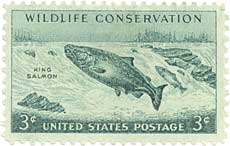
    The Chinook salmon or King salmon (Oncorhynchus tshawytscha) – a favorite of anglers on Lake Michigan – is in decline. That’s because it’s starving. According to a study by Michigan State University, the population of the salmon’s only prey – a small invasive fish called the alewife – has dropped by more than half since 2002. As a result, the Michigan Department of Natural Resources has been stocking fewer King salmon. King salmon is a major draw for tourists and other anglers, says Eric Conder of Big Bird Charters in St. Joseph: “Oh it’s a much bigger fish. Brute strength when they get ahold of your line, they peel that line out and you could be fighting that fish for 15, 20 minutes. Strong fish, clean fish. Powerhouse,” he says. While the salmon themselves don’t hurt the lake, you can’t have King salmon in Lake Michigan without alewives. Because of the decline in alewives, Wesley says the DNR has been forced to stock fewer King Salmon.

    That makes charter captains like Link and Conder nervous. Sport fishing is a multi-billion dollar industry in Michigan. John Matson is a sport fishing guide on the Pere Marquette River – one of the rivers where the salmon spawn.

    Matson says if salmon populations continue to drop, that could have a huge economic impact on the state.

    “You’re talking about affecting small towns like you know our river town is Baldwin. And you’re going to take a big chunk of income away from the whole town. There’s no question,” he says.

    For now, Jay Wesley says the DNR will continue to stock roughly 1.7 million King salmon in Lake Michigan. Though the DNR says it may stop stocking the fish if its numbers get too low.

    As for the fishing industry, it’s probably too early to tell what effect low King salmon numbers will have on business. Fishing guide John Matson says it will be about three to four years – the average lifespan of a King salmon – before we’ll know.

    “We didn’t catch them good last year. I’m still booked solid for this year. So it’ll be next year or the year after that I’ll be able to tell you for sure if these folks are still going to come up here and want to go fishing,” he says.

    Source: Western Michigan University, June 24, 2016

  • Meadowlark numbers decline across North Dakota

    Meadowlark numbers decline across North Dakota

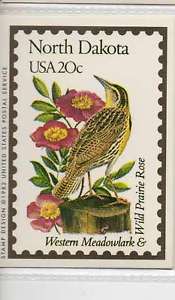
    A few years ago on a Sunday drive near the edge of West Fargo, creeping along with no particular route in mind, one of my kids let out the proverbial, “look.” Instinctively, I took my foot of the gas—not that slowing from 10 mph down to 5 mph would make much of a difference—but it was slow enough to allow enough of a look to positively identify the bird as Western meadowlark (Sturnella neglecta). Years ago, a meadowlark, even near the edge of town, might not have prompted a stop. This grassland native seemed much more common then, but that has changed, and my kids, who appreciate the unique birds of North Dakota, were right to give the signal.

    While perhaps not as highly revered nationwide as our national symbol, the bald eagle, which has recovered from listing as an endangered species, the Western meadowlark does have high status on a more local and regional scale. State lawmakers tabbed it as North Dakota’s state bird in 1947, and it also is the state bird in Kansas, Nebraska, Wyoming, Montana and Oregon.

    This symbol of the prairie is unmistakable in sight and sound from other prairie songbirds, with its bright yellow chest accented by a black V-shaped band. The chippy melody has greeted me many mornings in pastures and grasslands, certainly not as loud as the wild rooster crow, but memorable nonetheless.

    Unfortunately, this historical symbol of North Dakota’s wide open prairie landscape isn’t nearly as numerous as it once was.

    In a recent issue of North Dakota Outdoors magazine, Game and Fish Department conservation biologist Sandra Johnson explains: “While the Western meadowlark is still found statewide, its numbers are certainly not what they once were according to historical records in the eastern third of the state. There just isn’t much grass in that part of the state. Take away the grass and you lose birds.”

    Johnson said the Western meadowlark’s standing in North Dakota is traced through the North American Breeding Bird Survey. The BBS is a long-term, international avian monitoring program initiated in 1966 to track the status and trends of North American bird populations.

    While the number of meadowlarks observed or heard during the annual BBS has declined across the state, the biggest drop since the 1960s is seen in the Red River Valley and drift prairie.

    Source: Grand Forks Herald, June 24, 2016
    http://www.grandforksherald.com/outdoors/wildlife/4061964-meadowlark-numbers-decline-across-north-dakota

  • Neonicotinoid Pesticides Harm Honeybees, Experts Confirm

    Neonicotinoid Pesticides Harm Honeybees, Experts Confirm

    Researchers from Mainz University Medical Center and Goethe University Frankfurt discovered that the use of active systemic insecticides called neonicotinoids causes the alarming bee mortality. The study was published in the journal PLOS ONE. It is led by Professor Ignatz Wessler of the Institute of Pathology at the University Medical Center of Johannes Gutenberg University Mainz and collaborated with Professor Bern Grunewald of the Bee Research Institute at Goethe University Frankfurt and other colleagues. This insecticide lessens the concentration of acetylcholine in the royal jelly/larval food secreted by nurse bees. It can also damage the microchannels of the royal jelly gland in which the acetylcholine is produced. The researchers also found that neonicotinoids impair the development of the honeybee larvae.
    Professor Wessler explained that in 2013, the European Food Safety Authority printed a report determining that the neonicotinoid class of insecticides represented a risk to bees. He further explained that the undesirable effect of neonicotinoids now discovered is an indication that these insecticides represent a clear hazard to bee populations. He added that this factor must be taken into account in the approaching reassessment of the environmental risks of this substance class.
    The researchers were able to demonstrate that neonicotinoids lessen the acetylcholine content of the larval food that was produced by nurse bees. Acetylcholine is a signaling molecule formed in the microchannels of the royal jelly gland of nurse bees.
    Neonicotinoids are also referred to as neonics are neuroactive insecticides that are chemically the same with nicotine. Among the neonicotinoid family are the imidacloprid, which is the most commonly used insecticide in the world, nitenpyram, acetamiprid, thiacloprid, clothianidin, nithiazine and the thiamethoxam. It was linked to adverse ecological effects. The European Union and other EU countries prohibited the use of certain neonicotinoids in 2013.
    Source: Science World Report, 25 June 2016
    http://www.scienceworldreport.com/articles/42753/20160625/honeybees-news-update-neonicotinoids-pesticides-harm.htm