
This study was undertaken to explore relationships between level of imidacloprid in the serum and semen quality among men farmers in addition to investigating histopathological findings in treated mature male rats. Our research entailed two parts; firstly, human part done on farm workers (n=35) with age between (Mean ± SD 34.3±6.4) and healthy volunteers (n=25) their ages were (35.6±8.2) years old asked to provide semen and blood samples. A significant negative correlation between sperm concentration, motility, with serum and seminal Imidacloprid (IMI), its main metabolite 6-chloronicotinic acid (6- CINA) and cotinine , was identified in farmers (r= − 0.489; p<0.05). Second part of research was done on adult male rats that had been divided into a total of five groups 10 each. Two groups served as control one as negative and the other as positive. The other three experimental groups were given 45, 90 and 450 mg/kg body weight Imidacloprid in corn orally by a gavage process for fifteen days respectively. There was a significant difference in luteinizing hormone (LH), follicular stimulating hormone (FSH), testestrone (tes), Estradiol 2 (E2), prolactin and semen quality in IMI treated rats when compared to control groups. Vacuolar degeneration of germinal epithelium and loss of spermatids, seminiferous tubules suggesting inhibition of spermatogenesis was recorded in IMI treated rats. We conclude that toxic effects to male reproductive system can be considered as an outcome of IMI exposure and infertility problems can be expected in chronically exposed subjects. Source: Hafez, et al., Toxicol open access 2016, 2:1 http://dx.doi.org/10.4172/tyoa.1000109
Auteur: Henk Tennekes
-
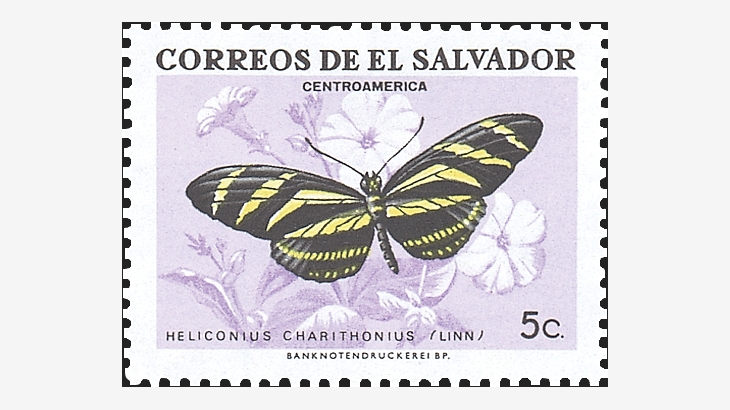
Butterfly sightings decrease in Northern Ireland
Summer is expected to be a flowery, colourful time of year in the garden with butterflies fluttering from one blossom to another. However, if you’re a bit of a butterfly boffin, you may have already noticed that there have not been too many of them around this year. The Wall Brown, which has already been in steep decline in recent years, has not been spotted at all this year. This is also the case for four of the other resident species, Purple Hairstreak, Silver-washed Fritillary, Clouded Yellow and Grayling. The next Big Butterfly Count is coming up and Butterfly Conservation Northern Ireland would like as many people as possible to join in.
Source: BBC, 8 July 2016
http://www.bbc.com/news/uk-northern-ireland-36725852 -
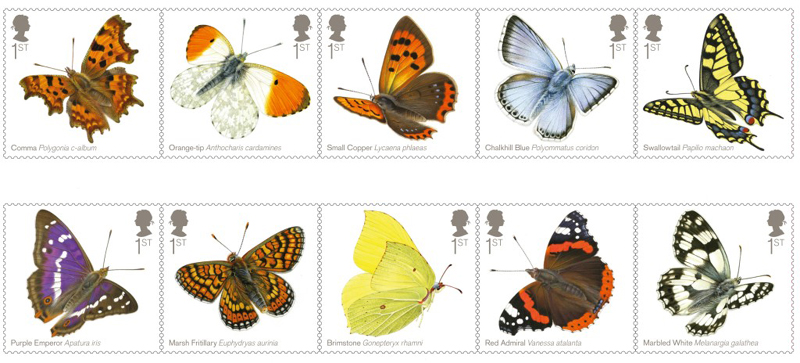
Butterflies that once numbered in the millions have virtually disappeared from Upper Midwest prairies
Erik Runquist saw it for a moment, then it was gone. Walking a tract of Nature Conservancy-owned prairie outside Moorhead, Runquist caught a glimpse of a Dakota skipper, a thumbnail-sized, orange and brown butterfly. It perched atop a coneflower before disappearing into the prairie grass. “Skippers are evasive. You may get only a few seconds to be able to find it before it zips off the coneflower, especially if it’s a windy day,” said Runquist, the Minnesota Zoo’s butterfly conservation biologist. “Once they get in flight, it’s almost impossible to find them again. “Fifteen years ago or so, it wasn’t so hard to spot a Dakota skipper in Minnesota. But something’s changed. Butterflies that once numbered in the millions have virtually disappeared from Upper Midwest prairies.
Another once-abundant butterfly, the Poweshiek skipperling, has also vanished in that time. There hasn’t been a sighting here since 2008. It’s on the federal endangered species list.Runquist and other scientists aren’t sure what’s happening, but they worry the butterflies’ disappearance is an ecological warning shot, a sign of a larger environmental problem on the prairie.
“Butterflies are tremendously sensitive to small changes in environmental conditions,” he said. “They’ve alerted our attention that, yeah, there are probably some pretty significant problems on our prairies that we weren’t necessarily tuned to.”
Prairie butterfly populations naturally declined as Minnesota prairies were turned to farmland over the past century, but their dramatic decline in the past 20 years has scientists puzzled.
“We don’t have a cadaver to do post-mortem on,” said Robert Dana, a Minnesota Department of Natural Resources entomologist who searches for Poweshiek skipperlings and Dakota skippers at sites across the state every year.
Prairie butterflies began to disappear rapidly in the early 2000s, despite efforts to preserve and restore prairies, he said. “It’s very disconcerting to discover that after saving so many prairies, we are not yet on secure ground with the insects.”
Source: MPR News, July 12th, 2016
http://www.mprnews.org/story/2016/07/12/minnesota-prairie-butterflies-disappear-concerns -
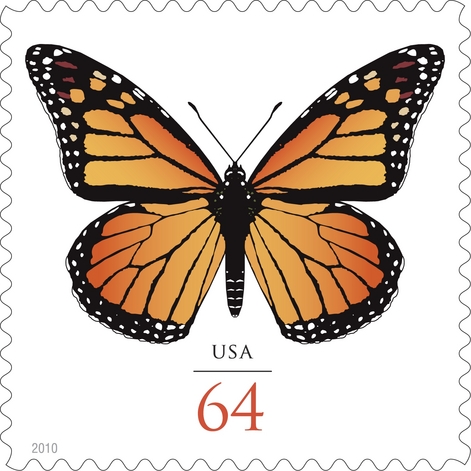
Study shows Monarch butterfly population on Californian coast decreased by 74 percent over last two decades
A new study by the Xerces Society showed a 74 percent decrease in the number of monarch butterflies (Danaus plexippus) over the last two decades. Butterfly conservationists at the Pacific Grove Museum of Natural History monitor the monarch numbers on the Monterey Peninsula and said the study’s results come as no surprise. They are similar to a trend conservationists are seeing locally. Their numbers are going down,” museum representative Patrick Whitehurst said. Whitehurst said that between 2014 and 2015, the monarch population at Pacific Grove’s sanctuary was cut in half. “Historically speaking, their numbers are much lower than they were in the early ’90s,” he said.
According to the study, back in 1990, there were about a million monarch butterflies spending their winter on the California coast and that number is down to a little more than 200,000 butterflies.
A possible reason for the decline is a shortage of milkweed, which is the plant on which the butterflies lay eggs and the plant they eat while in the caterpillar stage. Some conservationists say pesticides and overdevelopment may be to blame for their shrinking habitat.
“Here, locally, it’s got something to do with development and pesticide use and this is an ag area, lots of agriculture, and there’s a lot of pesticides being used so that can definitely hamper their growth and their numbers,” Whitehurst said.
Source: KSBW, July 11th, 2016
http://www.ksbw.com/news/monarch-butterfly-population-declines-on-california-coast/40465332 -
Immer weniger Schwalben in Dormagen
Willi Schmidtsiefen ist Naturliebhaber und engagiert sich als ehrenamtlicher Helfer in der Biologischen Station in Knechtsteden. Schmidtsiefen machte unsere Redaktion auf zwei Schwalbennester unter dem schützenden Dach des Einkaufswagenunterstandes am Rewe-Supermarkt in Delhoven aufmerksam. Mindestens ein Schwalbenpaar habe dort gebrütet, berichtete Schmidtsiefen – und verband seine Beobachtung gleich mit einer Frage: “Ob das wohl ein Hoffnungsschimmer ist?” Denn der Vogelfreund beobachtet einen starken Rückgang der Tiere in Dormagen.
Früher sei das anders gewesen, erinnert sich Schmidtsiefen: “Selbst 2011 gab es allein in Delhoven noch etwa 15 Brutpaare.” In noch früheren Zeiten seien es 100 und mehr gewesen. Diplom-Biologe Michael Stevens, wissenschaftlicher Leiter und Geschäftsführer der Biologischen Station in Knechtsteden, bestätigt, dass Schwalben viel seltener geworden sind. Und der Experte hat dafür auch eine Erklärung. “Das hängt viel mit dem Viehbestand zusammen”, sagt Stevens. Durch Konzentration auf Großbetriebe sinke die Zahl der viehhaltenden Bauernhöfe. Gerade dort aber hätten die Schwalben in Form von dicken Fliegen, Bremsen und anderen besonders in der Viehwirtschaft häufig anzutreffenden Fluginsekten ihre Nahrung gefunden.
Erschreckend aber: Stevens benennt als weiteren Faktor – der nicht nur Schwalben das Überleben schwer macht – dramatische Rückgänge bei den Fluginsekten insgesamt. “Seit Mitte der 1980er Jahre ist die Biomasse in diesem Sektor um 70 bis 80 Prozent gesunken”, berichtet Stevens. Das hätten wissenschaftliche Auswertungen gezeigt. Nicht zuletzt die Folge von Pflanzenschutzmittel-Einsatz, meint der Biologe.
1991 und 2011 hat es in Stürzelberg Erhebungen der Brutbestände von Mehl- und Rauchschwalben gegeben. Die zweite Untersuchung von Frederik Sachser im Rahmen seiner Bachelorarbeit war von Michael Stevens begleitet worden. Schon innerhalb dieses Zeitraums von 20 Jahren war ein Rückgang der Schwalbenbestände um 31,5 Prozent festgestellt worden. In Delhoven zwischen Schule und Feuerwache hatten Naturschützer vor einigen Jahren ein Schwalbenhaus errichtet, um die Vögel zu unterstützen. Es sei von den Tieren aber nicht angenommen worden, erzählt Willi Schmidtsiefen.
Quelle: NGZ online, 11.07.16
http://www.rp-online.de/nrw/staedte/dormagen/immer-weniger-schwalben-in-dormagen-aid-1.6099131 -
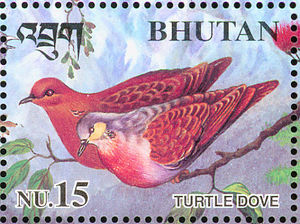
British Turtle Dove population in a tailspin
The latest Breeding Bird Survey (BBS) report, published today, has revealed that Turtle Dove (Streptopelia turtur) numbers have hit a new low, declining by 93% since 1994. This trend is mirrored across Europe, with a decline of 78% between 1980 and 2013. The highest remaining breeding densities occur in eastern and southern England, and they have now disappeared from large areas of the country. Mark Eaton, RSPB Centre for Conservation Science, said: ‘The Turtle Dove is the UK’s fastest declining bird and, given the matching decline across Europe, is now considered at risk of global extinction. If we are to prevent it going the way of the Dodo, we need urgent coordinated conservation action, with farmers and conservationists working together to create the best conditions for them on our farmland.’
Source: British Birds, 7 July 2016
https://britishbirds.co.uk/article/turtle-dove-population-tailspin/ -
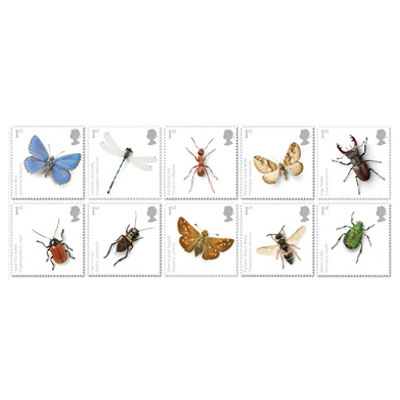
Why Insects Are Declining and Why It Matters
Insect populations are declining dramatically in many parts of the world, recent studies show. Researchers say various factors, from monoculture farming to habitat loss, are to blame for the plight of insects, which are essential to agriculture and ecosystems.
Every spring since 1989, entomologists have set up tents in the meadows and woodlands of the Orbroicher Bruch nature reserve and 87 other areas in the western German state of North Rhine-Westphalia. The tents act as insect traps and enable the scientists to calculate how many bugs live in an area over a full summer period. Recently, researchers presented the results of their work to parliamentarians from the German Bundestag, and the findings were alarming: The average biomass of insects caught between May and October has steadily decreased from 1.6 kilograms (3.5 pounds) per trap in 1989 to just 300 grams (10.6 ounces) in 2014.“The decline is dramatic and depressing and it affects all kinds of insects, including butterflies, wild bees, and hoverflies,” says Martin Sorg, an entomologist from the Krefeld Entomological Association involved in running the monitoring project.
Another recent study has added to this concern. Scientists from the Technical University of Munich and the Senckenberg Natural History Museum in Frankfurt have determined that in a nature reserve near the Bavarian city of Regensburg, the number of recorded butterfly and Burnet moth species has declined from 117 in 1840 to 71 in 2013. “Our study reveals, through one detailed example, that even official protection status can’t really prevent dramatic species loss,” says Thomas Schmitt, director of the Senckenberg Entomological Institute.
Declines in insect populations are hardly limited to Germany. A 2014 study in Science documented a steep drop in insect and invertebrate populations worldwide. By combining data from the few comprehensive studies that exist, lead author Rodolfo Dirzo, an ecologist at Stanford University, developed a global index for invertebrate abundance that showed a 45 percent decline over the last four decades. Dirzo points out that out of 3,623 terrestrial invertebrate species on the International Union for Conservation of Nature [IUCN] Red List, 42 percent are classified as threatened with extinction.
“Although invertebrates are the least well-evaluated faunal groups within the IUCN database, the available information suggests a dire situation in many parts of the world,” says Dirzo.
Scientists have described 1 million species of insects so far, and estimate at least 4 million are still unrecorded. A major survey of threats to insect life by the Zoological Society of London, published in 2012, concluded that many insect populations worldwide are in severe decline, limiting food supplies for larger animals and affecting ecosystem services like pollination. In Europe and the United States, researchers have documented declines in wild and managed bee populations of 30 to 40 percent and more due to so-called colony collapse disorder. Other insect species, such as the monarch butterfly, also have experienced sharp declines.
Jürgen Deckert, insect custodian at the Berlin Natural History Museum, says he is worried that “the decline in insect populations is gradual and that there’s a risk we will only really take notice once it is too late.”
Scientists cite many factors in the fall-off of the world’s insect populations, but chief among them are the ubiquitous use of pesticides, the spread of monoculture crops such as corn and soybeans, urbanization, and habitat destruction.
A significant drop in insect populations could have far-reaching consequences for the natural world and for humans, who depend on bees and other invertebrates to pollinate crops. A study by Canadian biologists, published in 2010, suggests that North American bird species that depend on aerial insects for feeding themselves and their offspring have suffered much more pronounced declines in recent years than other perching birds that largely feed on seeds. The analysis is based on data from the North American Breeding Bird Survey. The decline in birds that feed on flying insects appears to be significantly stronger than in perching birds in general, according to co-author Silke Nebel, now with the Upper Thames River Conservation Authority in Ontario.
Scientists have described 1 million species of insects so far, and estimate that at least 4 million species worldwide are still unrecorded. For people living in areas with ample wilderness and a plethora of biting mosquitoes that carry malaria and other diseases, a decline in insect populations might seem like an outlandish concern. But in areas with intensive industrialized agriculture, the drop in insect populations is worrying.
According to global monitoring data for 452 species, there has been a 45 percent decline in invertebrate populations over the past 40 years.
So far, only the decline of honeybee populations has received widespread public attention, in large measure because of their vital role in pollinating food crops. The rest of the insect world has been widely ignored. Often insects are perceived as a nuisance or merely as potential pests. But while certain insect species, such as the European corn borer, undoubtedly cause enormous damage in agriculture, scientists emphasize the ecological importance of diverse and abundant insect populations.
In Britain, an alliance of 22 publicly funded environmental research institutions has compiled a list of ecosystem services delivered by insects: “Over three-quarters of wild flowering plant species in temperate regions need pollination by animals like insects to develop their fruits and seeds fully,” the group says. The researchers emphasize that pollinating insects improve or stabilize the yield of three-quarters of all crop types globally — one-third of global crop production by volume.
Germany’s Federal Agency for Nature Conservation stresses that insects are a major food source not only for birds, but also for bats and amphibians. Another important role is played by specialized insects such as long-legged flies, dance flies, dagger flies, and balloon flies, which prey upon pest species.
Deckert of the Berlin Natural History Museum has compiled a long list of factors that contribute to insect loss. One factor — the widespread overuse of nitrogen fertilizer — enables a few plant species such as corn to thrive, while the majority of plant species that live in symbiotic relationships with highly specialized insects dwindle.
In large parts of Europe, the U.S., and South America, monocultures cover vast areas of the landscape, creating “biological deserts” devoid of hedges or ponds where insects could reproduce. Attempts to make the European Union’s agricultural system more environmentally friendly have largely failed in recent years.
Of particular concern is the widespread use of pesticides and their impact on non-target species. Many conservationists view a special class of pesticides called neonicotinoids — used over many years in Europe until a partial ban in 2013 — as the prime suspect for insect losses. The European Food Safety Authority is currently reviewing the ban. Other pesticides are widely used worldwide.
“There are many indications that what we see is the result of a widespread poisoning of our landscape,” says Leif Miller, director general of the German chapter of BirdLife International.
A recent increase in insect monitoring efforts stems from the rise of ‘citizen science’ projects. Yet even environmental campaigners like Miller admit that the root causes and the full dimension of the problem aren’t yet fully understood. “I suspect it is a multiplicity of factors, most likely with habitat destruction, deforestation, fragmentation, urbanization, and agricultural conversion being the leading factors,” says Stanford ecologist Dirzo.
To understand the problem better, scientists are now urging increased monitoring efforts. Given the importance of insects for agriculture and biodiversity, one might assume that in rich countries like Germany, insect populations are being closely studied. But this is not the case. “For the 30,000 insect species in Central Europe, only a few specialists exist, and they often carry out monitoring as a side job,” says Deckert.
In-depth monitoring only exists in select regions or for specific species. In Germany, only 37 insect species are closely tracked, according to the Federal Agency for Nature Conservation — a mere 0.12 percent of all species.
A recent increase of monitoring efforts stems from the rise of “citizen science” projects, where lay people with an interest in the outdoors are trained to collect data. One such project is a butterfly monitoring program run in association with Butterfly Conservation Europe. Each year, thousands of volunteers comb through the landscape to compile lists of butterflies they encounter.
Globally, however, comprehensive data for long-term comparisons does not exist. “Unfortunately, information on invertebrates in general, including insects, is very limited, restricted to a few groups and a few localities,” says Dirzo.
That’s why Wolfgang Wägele, director of the Zoological Research Museum in Bonn, is now calling for a large-scale monitoring effort. Wägele and his team have developed a plan for an automated biodiversity surveillance system, which would photograph, videotape, capture, or audio-record animal and insect species and perform automatic analysis of species richness and abundance. “We have weather stations all over the country, so let’s add a dense network of biodiversity stations so we can measure automatically how much life there is in our landscapes,” says Wägele
He plans to use automated identification techniques, either through artificial intelligence image analysis or genetic fingerprinting, or by matching acoustic recordings with data collections. For example, if grasshoppers make their characteristic sounds near the station, the species will be identified and the number of insects recorded. If an aerial insect lands in a trap, its genome will be compared to a database. As they investigate the factors behind the decline of bee populations, scientists are now eyeing a new culprit — soaring levels of carbon dioxide, which alter plant physiology and significantly reduce protein in important sources of pollen.
For larger insects like butterflies, scientists can use photographic image analysis to come up with a precise identification.“Such a system could collect, identify, and record species data 24/7 and gather data we desperately need to assess the decline of insects,” says Wägele.
Recently, a pilot installation for the system already discovered a new mosquito species, now called Ctenosciara alexanderkoenigi, in the museum’s park. The nationwide monitoring scheme is currently under funding review by Germany’s Federal Research Ministry.
Many biologists support more intensive monitoring efforts, but point out that in Europe there’s already enough knowledge about insect decline to start addressing root causes — mainly in agricultural policy. According to conservation organizations like BirdLife International, new attempts are necessary to “green” EU agricultural policy in a substantial way by creating incentives for enriching landscapes with hedgerows, reducing fertilizer and pesticide use, and better rewarding organic agriculture. Previous efforts to do so have largely failed.
“The key question is whether governments view biodiversity as an add-on or as something that is of existential importance for our future,” says Deckert.
Source: Yale, July 6th, 2016
http://e360.yale.edu/content/feature.msp?id=3012 -

Gebruik imidacloprid zonder zuiveringsinstallatie verboden
Het College voor de toelating van gewasbeschermingsmiddelen en biociden (Ctgb) wil gewasbeschermingsmiddelen met imidacloprid in de bedekte teelt tijdelijk verbieden. Het gebruik, aanschaffen of op voorraad hebben van imidacloprid is dan verboden, tenzij het bedrijf kan aantonen dat het een gecertificeerde zuiveringsinstallatie gebruikt. Dit voorlopige besluit van het Ctgb en de onderliggende rapporten zijn woensdag 6 juli 2016 door staatssecretaris Van Dam van Economische Zaken aan de Tweede Kamer gestuurd.
Staatssecretaris Van Dam: “De productie van voedsel en bloemen moet ‘natuurlijker’. Dat is nodig om mens, dier en milieu te beschermen tegen de risico’s van gewasbeschermingsmiddelen. Al jarenlang komt er teveel van de insecticide imidacloprid in de natuur terecht, ingrijpen is dan ook noodzakelijk. Het verbod van het Ctgb is daarom een begrijpelijke stap die ik respecteer.”
Al een paar jaar zijn er zorgen over te hoge concentraties van imidacloprid in het oppervlaktewater. Dit kan de organismen in het water aantasten en daarmee de hele voedselketen in en om het water verstoren. Daarom maakte het Ctgb in 2014 waterzuivering verplicht. Op verzoek van de producent is daar in 2015 de bepaling van gecontroleerde distributie aan toegevoegd. Staatssecretaris Van Dam heeft in 2016 door het Centrum voor Milieuwetenschappen Universiteit Leiden onderzoek laten doen naar imidacloprid in het oppervlaktewater en een nalevingsrapportage laten opstellen door de NVWA. Op basis hiervan concludeert het Ctgb het volgende:
– De toelatingsnorm wordt nog steeds substantieel overschreden;
– Er wordt niet of nauwelijks afvalwater gezuiverd, terwijl er wel wordt geloosd;
– Het systeem van gecontroleerde distributie is onvoldoende robuust.Eerder dit jaar kondigde staatssecretaris Van Dam een gebruiksverbod voor imidacloprid aan voor specifieke gebieden. Het ontwerpbesluit is voor advies voorgelegd aan de Raad van State en aan de EU ter notificatie. Aangezien het Ctgb heeft besloten tot een (voorgenomen) tijdelijke maatregel, zal staatssecretaris Van Dam het gebruiksverbod voor specifieke gebieden op dit moment niet in werking laten treden.
Bron: Rijksoverheid, 6 juli 2016
https://www.rijksoverheid.nl/actueel/nieuws/2016/07/06/gebruik-imidacloprid-zonder-zuiveringsinstallatie-verboden -
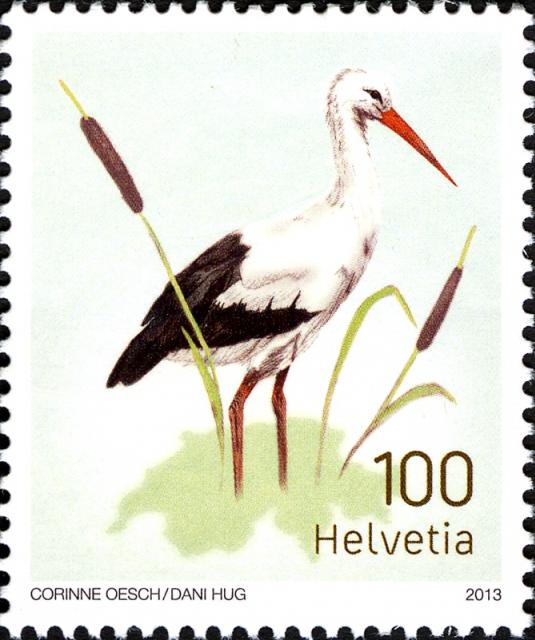
Ook de ooievaar heeft last van voedselgebrek – steeds minder ooievaarsjongen vliegen uit
Het aantal ooievaars (Ciconia ciconia) dat volwassen wordt, loopt achteruit. Normaal vliegen er ongeveer twee jongen per nest uit. Nu is het gemiddelde slechts 1,1, blijkt uit onderzoek van de Adviespraktijk voor Vogels. Deskundigen maken zich zorgen. “Het gaat nu al een aantal jaar achter elkaar slecht. Vorig jaar hadden we zelfs een heel nest dat het niet overleefd heeft, terwijl we daar eerder nooit last van hadden”, vertelt Jeanette Zwiers van ooievaarsboerderij Droonessa in Rhee aan RTV Drenthe.
De achteruitgang komt door een gebrek aan eten. Als carnivoor eet de ooievaar een breed scala aan dierlijk prooien. Zoals de meeste van zijn verwanten, eet een ooievaar vooral regenwormen en grote insecten, maar ook jonge vogels, mollen, hagedissen en knaagdieren staan op het menu. Ook af en toe een kikker, maar in tegenstelling tot wat vaak wordt aangenomen, staat de kikker maar zeer spaarzaam op het menu. Ouderenparen hebben moeite om voldoende voedsel te vinden. Het voedingsgebied is de laatste jaren flink kleiner geworden.
“Boerenbedrijven groeien en verbouwen steeds meer dezelfde gewassen en dat kan slecht zijn,” zegt Frits Koopman van Ooievaarsbuitenstation De Lokkerij. “Ooievaars kunnen bijvoorbeeld geen voedsel vinden op maïsvelden, omdat ze niet tussen de stengels gaan.”
Bronnen:
NOS, 20-6-16
http://nos.nl/artikel/2112330-steeds-minder-ooievaarsjongen-vliegen-uit.html
Wikipedia
https://nl.wikipedia.org/wiki/Ooievaar -
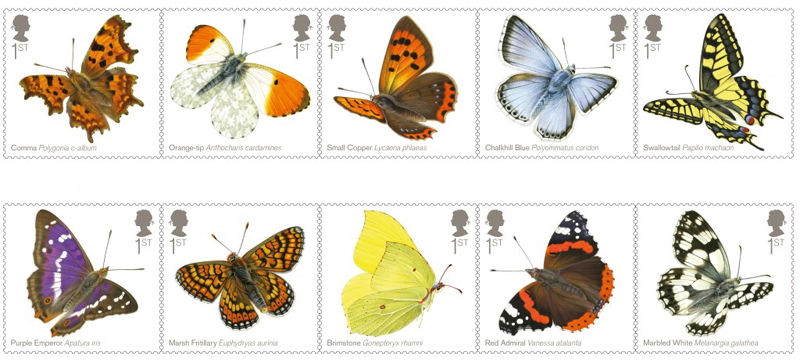
Pesticide may be reason butterfly numbers are falling in UK, says study
Neonicotinoids may be contributing towards the disappearance of butterflies from the countryside, according to the first scientific study to examine the effect of the controversial agricultural pesticides on British butterflies. Researchers found that 15 of 17 species which commonly live on farmland – including the small tortoiseshell, small skipper and wall butterfly – show declines associated with increasing neonic use. Using population data from 1985 to 2012 gathered on more than 1,000 sites across the country, scientists at the universities of Stirling and Sussex, in partnership with Butterfly Conservation and the Centre for Ecology and Hydrology, found that neonicotinoid use better explained steep population declines than other factors. Although the study cannot definitively identify the cause of the population drops, Martin Warren, chief executive of Butterfly Conservation, said that the correlation revealed by the research required urgent further investigation.
“The debate up until now has been focused on bees. If neonicotinoids are affecting a lot of other insects, we should be even more worried,” said Warren. “What we really want is more research. It’s crazy that we’re using a potentially dangerous-to-wildlife chemical and nobody has done those studies. If we’re going to get smart about using chemicals in the countryside we need to test them better before they get out there.”
Dr Andre Gilburn, of the University of Stirling, who led the butterfly study, said: “Our study not only identifies a worrying link between the use of neonicotinoids and declines in butterflies but also suggests that the strength of their impact on many species could be huge.”
Neonics were first introduced in 1994 and usage increased at its fastest rate during the first decade of the 21st century, when farmland butterflies also experienced a precipitous decline, despite a doubling in conservation spending and predictions that climate change would benefit most species.
The Essex skipper declined by 67% between 2000 and 2009 and the small skipper declined by 62% in the same period. Both species’ caterpillars live on grasses found on field margins. Other common farmland butterflies to have suffered steep declines include the small tortoiseshell (64%), the wall brown (37%) and the large skipper (35%).
According to the study, published in the journal PeerJ, these declines have largely occurred in England, where neonic usage is at its highest; in Scotland, where spraying of the pesticide is comparatively low, butterfly numbers are stable.
Source: The Guardian, 24 November 2015
https://www.theguardian.com/environment/2015/nov/24/pesticide-butterflies-declining-uk-study