Auteur: Henk Tennekes

  • Newly identified tadpole disease found across the globe

    Newly identified tadpole disease found across the globe

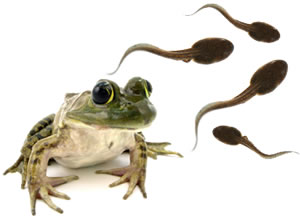
    Scientists have found that a newly identified and highly infectious tadpole disease is found in a diverse range of frog populations across the world. The discovery sheds new light on some of the threats facing fragile frog populations, which are in decline worldwide. The study, published in the Proceedings of the National Academy of Sciences journal, led by the University of Exeter and the Natural History Museum, describes the molecular methods used to test frog tadpoles for a newly identified infectious agent. Tadpoles from six countries across three continents were tested for ‘protists’ — single celled microbes with complex cells which store their DNA in a nucleus, like human cells. The previously unidentified parasite was present in tadpole livers in both tropical and temperate sites, and across all continents tested. The infectious agent was identified as a distant relative of Perkinsea sp., a marine parasites found in animals and algae.

    Professor Thomas Richards from the University of Exeter said: “Global frog populations are suffering serious declines and infectious disease has been shown to be a significant factor. Our work has revealed a previously unidentified microbial group that infects tadpole livers in frog populations across the globe.”

    “We now need to figure out if this novel microbe — a distant relative of oyster parasites — causes significant disease and could be contributing to the frog population declines.”

    It is widely recognised that amphibians are among the most threatened animal groups: for example, in 2008, 32% of species were listed as ’threatened or extinct’ and 42% were listed as in decline. The decline of amphibian populations, particularly frogs, is thought to suggest that Earth is currently undergoing a sixth mass extinction event.
    Reference:
    Aurélie Chambouvet, David J. Gower, Miloslav Jirků, Michael J. Yabsley, Andrew K. Davis, Guy Leonard, Finlay Maguire, Thomas M. Doherty-Bone, Gabriela Bueno Bittencourt-Silva, Mark Wilkinson, and Thomas A. Richards. Cryptic infection of a broad taxonomic and geographic diversity of tadpoles by Perkinsea protists. PNAS, August 2015 DOI: 10.1073/pnas.1500163112
    Source: Science Daily, August 10, 2015
    https://www.sciencedaily.com/releases/2015/08/150810162043.htm

  • Hay meadows are home to a wealth of wildlife – and need to be conserved

    Hay meadows are home to a wealth of wildlife – and need to be conserved

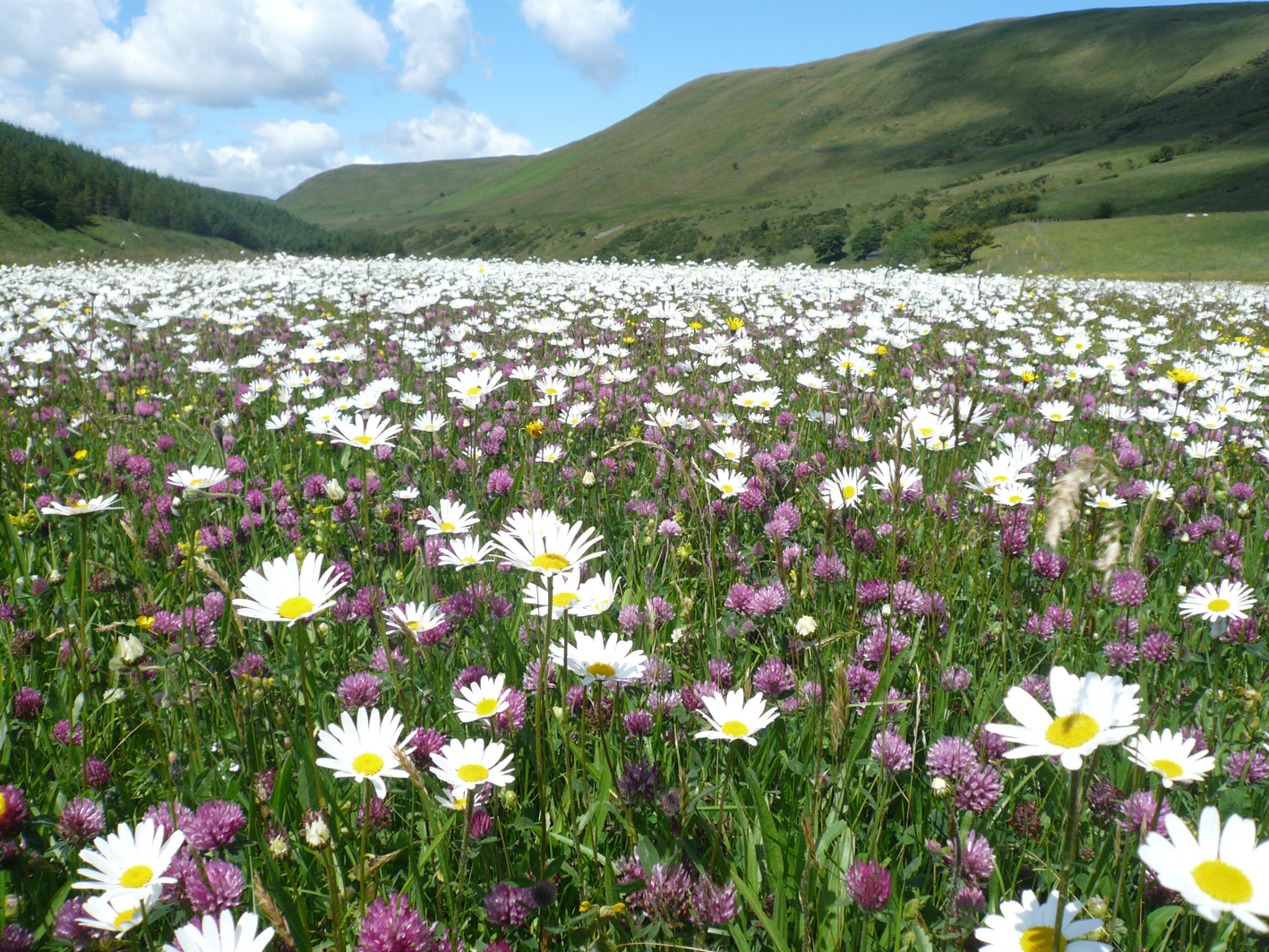
    Nationally hay meadows are in decline, according to a survey carried out in the 1980s, over 97 per cent of flower rich grasslands have been lost since 1930 and those that remain are decreasing in wildlife value. Northern England was once covered in species rich upland flower meadows and even here it is estimated that only a 1000 ha remain. When a meadow is lost it is not just the flowers that disappear but the hundreds of insects including many species of butterfly and bee that rely on them and even the bats that feed on the insects. Fortunately in this area we have several beautiful meadows that have been protected including the meadows at Yockenthwaite, Colt Park (Ingleborough) and the former Grassington Hospital.

    The main reason for decline is changes in farming practice, seeding fields with rye grass, adding fertiliser and producing silage means that grassland becomes more productive and less reliant on the weather allowing farmers to remain profitable. Meadows although beautiful cannot sustain a modern herd. However, the value of meadows in terms of tourism, heritage and as supporters of pollinators and sources of biodiversity has been recognised.
    Source: Craven Herald, 22 July 2016
    http://www.cravenherald.co.uk/daleslife/14635143.Hay_meadows_are_home_to_a_wealth_of_wildlife___and_need_to_be_conserved/

  • Rare moth in severe decline at its last English site

    Rare moth in severe decline at its last English site

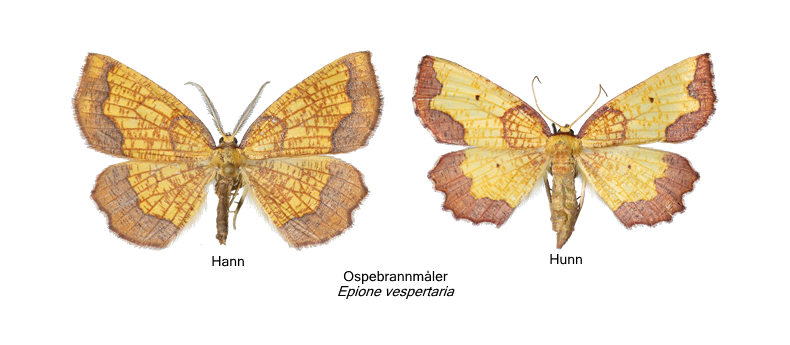
    Numbers of a rare species of moth — found only in York in England — have tumbled in recent years, a team of scientists has discovered. The Dark Bordered Beauty moth is found on Strensall Common, an area of protected lowland heath near York. This is the last known English site for the moth, although there is a handful of populations in Scotland, where the moth is also rare.The Dark Bordered Beauty moth, Epione vespertaria (Formerly known as Epione paralellaria) is similar in appearance to the more common Bordered Beauty moth (Epione repandaria), but the purplish border on the forewing is of even width; in the Bordered Beauty, the outer border tapers sharply towards the tip of the wing. The sexes are different in appearance; males are darker and more orange in colour than the pale yellow female.
    Sources:
    Science Daily, 22 June 2016
    https://www.sciencedaily.com/releases/2016/06/160622144812.htm
    Arkive
    http://www.arkive.org/dark-bordered-beauty-moth/epione-vespertaria/

  • Butterfly species decline dramatically in Germany

    Butterfly species decline dramatically in Germany

    Of the 117 butterfly species recorded in 1840 in the survey site, a protected habitat in the south-German state of Bavaria, just 71 are still found today, said the authors of the study recently published in the journal Conservation Biology. “Species requiring a specific type of habitat or food source, such as the “elegant white and ochre-spotted” hermit butterfly, are threatened with extinction in Germany. Extinction rates over the last 30 years are “particularly alarming,” says the study. A United Nations’ study published February found that in Europe 31 percent of butterfly species were in decline, alongside other pollinators, posing a threat to world food production.
    Source: Deutsche Welle, July 2016
    http://www.dw.com/en/global-ideas-butterflies-decline-germany/a-19151943

  • The populations of 44 of Britain’s 58 butterfly species have dropped dramatically over the last 40 years

    The populations of 44 of Britain’s 58 butterfly species have dropped dramatically over the last 40 years

    According to wildlife charity Butterfly Conservation, 44 out of the country’s 58 butterfly species have seen a drop in their populations, leaving some species at risk of extinction in the U.K. Common butterflies of the general countryside as well as specialist butterflies that require particular habitats have declined.\Richard Fox, head of recording at Butterfly Conservation, tells Newsweek that the dramatic decrease in the number of garden butterflies is “severe and statistically significant.”

    “Butterflies can act as the ‘canary in the coalmine’ for thousands of other insect species that are largely unknown and unloved by the public,” he says. “Butterflies provide vital functions, such as pollination, on which humans rely.”
    Source: Newsweek, 14 March 2016
    http://europe.newsweek.com/british-butterfly-species-severe-decline-436469?rm=eu

  • Minnesota prairies see decline in butterflies

    Minnesota prairies see decline in butterflies

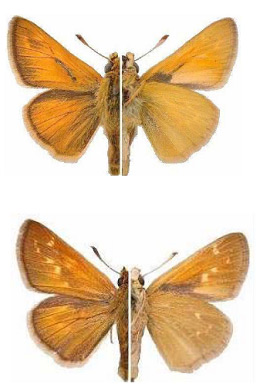
    Erik Runquist saw it for a moment, then it was gone. Walking a tract of Nature Conservancy-owned prairie outside Moorhead, Runquist caught a glimpse of a Dakota skipper (Hesperia dacotae), a thumbnail-sized, orange and brown butterfly. It perched atop a coneflower before disappearing into the prairie grass. “Skippers are evasive. You may get only a few seconds to be able to find it before it zips off the coneflower, especially if it’s a windy day,” said Runquist, the Minnesota Zoo’s butterfly conservation biologist. “Once they get in flight, it’s almost impossible to find them again.” Fifteen years ago or so, it wasn’t so hard to spot a Dakota skipper in Minnesota. But something’s changed. Butterflies that once numbered in the millions have virtually disappeared from Upper Midwest prairies.

    Another once-abundant butterfly, the Poweshiek skipperling (Oarisma poweshiek) , has also vanished in that time. There hasn’t been a sighting here since 2008. It’s on the federal endangered species list.

    Runquist and other scientists aren’t sure what’s happening, but they worry the butterflies’ disappearance is an ecological warning shot, a sign of a larger environmental problem on the prairie.

    “Butterflies are tremendously sensitive to small changes in environmental conditions,” he said. “They’ve alerted our attention that, yeah, there are probably some pretty significant problems on our prairies that we weren’t necessarily tuned to.”

    Prairie butterfly populations naturally declined as Minnesota prairies were turned to farmland over the past century, but their dramatic decline in the past 20 years has scientists puzzled.

    “We don’t have a cadaver to do post-mortem on,” said Robert Dana, a Minnesota Department of Natural Resources entomologist who searches for Poweshiek skipperlings and Dakota skippers at sites across the state every year.

    Prairie butterflies began to disappear rapidly in the early 2000s, despite efforts to preserve and restore prairies, he said. “It’s very disconcerting to discover that after saving so many prairies, we are not yet on secure ground with the insects.”

    It doesn’t help that Poweshiek skipperlings and Dakota skippers spend their lives in an area the size of a Walmart parking lot — bad weather at the wrong time in a the butterfly life cycle can wreak havoc on local populations.

    Dana, though, says there’s a long list of potential reasons the butterflies are in trouble.

    Fragmented prairie habitat, invasive predators like the multicolored Asian lady beetle, climate change, and pesticides are a few of the possibilities.

    Scientists are monitoring several prairie locations for pesticide contamination. They are also trying to get a better idea what prairie habitat gives the butterflies the best chance of survival.

    Runquist has a federal permit to capture female butterflies. He keeps them in paper cups lined with grass for a couple of days while they lay eggs. He then returns them to the prairie.

    Harvesting the eggs is part of an ambitious plan to save these once abundant species.

    “No other organization or agency in the world is rearing and breeding Dakota skippers or Poweshiek skipperlings,” said Runquist.

    The Minnesota Zoo now has about 300 Dakota skippers bred in captivity. Runquist hopes that number will double by next year. The plan is to release some butterflies into the wild next summer to boost breeding populations.

    The zoo plans to do the same with the endangered Poweshiek skipperling, although there’s no guarantee of success. In the wild, only about 3 percent of butterfly eggs survive to adulthood. The zoo has raised the survival rate to nearly 30 percent. But if something on the prairie is killing the butterflies, the captive bred butterflies might not survive.

    The U.S. Fish and Wildlife Service last year designated about 19,900 acres of critical habitat in Minnesota, North Dakota and South Dakota for the threatened Dakota skipper, and about 25,900 acres in Iowa, Michigan, Minnesota, North Dakota, South Dakota and Wisconsin for the endangered Poweshiek skipperling.

    The prairie problems, however, might be bigger than two butterflies.

    The DNR is now monitoring 13 prairie insect species, and it appears nearly all are in decline, as are many bird species that feed on them, Dana said.

    “If we are indeed depopulating these prairies of their insect fauna, that’s going to have consequences for the grassland birds that use these habitats,” he said. “It is a big deal.”

    Source:
    DAN GUNDERSON, Minnesota Public Radio News, July 21, 2016
    http://www.postbulletin.com/news/local/minnesota-prairies-see-decline-in-butterflies/article_2b13da5f-29a4-552b-a086-70d15ab7e436.html
  • De voortplanting van bomen wordt bedreigd door een gebrek aan bestuivers

    De voortplanting van bomen wordt bedreigd door een gebrek aan bestuivers

    Menselijk ingrijpen heeft een negatief effect op de bestuiving en zaad vermeerdering van bomen en andere bosplanten. Verantwoordelijk is vooral de sterke achteruitgang van bestuivende insecten, vogels en zoogdieren. Bestuiving en zaadverspreiding van struiken en bomen worden vrijwel uitsluitend verzorgd door dieren. Dit effect kan worden waargenomen in de bossen van zowel de tropen als ook de gematigde breedtegraden. Dit blijkt uit een vergelijking van 408 studies over de regeneratie van bosplanten in 34 landen over de hele wereld. Deze eerste wereldwijde meta-analyse werd gepubliceerd door onderzoekers van de Senckenberg Natuur Research Society en de Goethe Universiteit in Frankfurt in het tijdschrift ” Scientific Reports ” (bijgevoegd).

    Bron: Science Ticker, 20-07-16

  • Forests of the future at risk

    Forests of the future at risk

    Human disturbance negatively affects the pollination and seed dispersal of forest trees — an effect that can be observed in both tropical and temperate forests. This is the key result of a synthesis of 408 studies from 34 countries around the globe. In the long term, less pollination and seed dispersal is likely to reduce the ability of forests to natural regenerate. The researchers investigated all processes in the plant regeneration cycle and specifically asked how much they are each affected by humans. To assess the effects of humans, they compared near-natural forests with those exposed to intensive human disturbance. The regeneration cycle of plants includes processes that are beneficial to plants, such as pollination, seed dispersal and the recruitment of seedlings, as well as detrimental processes, such as seed predation and herbivory. “We are the first to examine all important ecological processes of forest regeneration in a global meta-analysis of existing case studies,” explains Dr. Eike Lena Neuschulz, the lead author of the study from the Senckenberg Biodiversity and Climate Research Center.

    In the early stages of plant regeneration, plants benefit from the interaction with animals: bees pollinate flowers and maintain gene flow among plant populations, while birds disperse seeds that can establish as seedlings at new locations. However, land use changes, hunting and overexploitation of forests threaten these animals, and thereby also their contribution toward forest regeneration. In contrast, the later processes of plant regeneration such as seed predation, recruitment and herbivory, were found to be less consistently affected by humans. Selective logging, for example, can increase the amount of light reaching the forest floor, but can also dry out the soil, which may facilitate the recruitment of some plants or inhibit that of others.

    According to the research team, the species who are most affected by disturbance are large-seeded trees, whose dispersal depends on large and often endangered animals. “Our study shows that human disturbance negatively affects the early steps of the plant regeneration cycle, while the effects on the later regeneration processes vary greatly,” concludes Neuschulz, and she adds, “Our findings suggest that conservation efforts should prioritize the protection of animal pollinators and seed dispersers to maintain the regeneration potential of forest ecosystems in the future.”

    Source Science Daily, 20 July 2016
    https://www.sciencedaily.com/releases/2016/07/160720094442.htm

  • Bestäubung von Waldbäumen ist weltweit bedroht

    Bestäubung von Waldbäumen ist weltweit bedroht

    Menschliche Eingriffe wirken sich negativ auf die Bestäubung und Samenausbreitung von Bäumen und anderen Waldpflanzen aus. Verantwortlich ist in erster Linie der Rückgang der daran beteiligten Insekten, Vögel und Säugetiere. Damit verringert sich langfristig die Möglichkeit des Waldes, eigenständig nachzuwachsen. Bestäubung und Samenausbreitung von Sträuchern und Bäumen basieren fast ausschliesslich auf Tieren. Dieser Effekt ist sowohl in tropischen Wäldern als auch in Wäldern der gemäßigten Breiten beobachtbar. Das zeigt ein Vergleich von 408 Studien zur Regeneration von Waldpflanzen in 34 Ländern rund um den Globus. Diese erste globale Meta-Analyse über Waldregeneration veröffentlichten Forschende der Senckenberg Gesellschaft für Naturforschung und der Goethe-Universität Frankfurt im Fachjournal „Scientific Reports“ (beigefügt).
    Quelle: Science Ticker, 20.07.16
    http://www.scienceticker.info/2016/07/20/bestaeubung-von-waldbaeumen-ist-weltweit-bedroht/

  • Kommissionsvorschlag zum Pestizid-Verbot abgelehnt

    Kommissionsvorschlag zum Pestizid-Verbot abgelehnt

    Der Rat für Landwirtschaft hat einen Kommissionsvorschlag zum Verbot von Pestiziden abgelehnt. In der Diskussion zeigt sich auch die generelle Debatte um eine Reform der Gemeinsamen Agrarpolitik (GAP). Unter der Gemeinsamen Agrarpolitik müssen Bäuerinnen und Bauern bestimmte ökologische Standards für eine umweltverträgliche Landwirtschaft einhalten. So sollen 5 Prozent der bewirtschaftungsfähigen Flächen als ökologische Vorrangflächen behandelt werden. Der Vorschlag der EU-Kommission sah nun vor, den Einsatz bestimmter Chemikalien wie Pestizide auf den Vorrangflächen zu verbieten. Österreich, Frankreich, Ungarn, Spanien und Großbritannien haben diesen Vorschlag jedoch abgelehnt. Laut dem Umweltnachrichtendienst ENDS gibt es in Großbritannien Bedenken zu den Auswirkungen eines Verbots auf die Planungssicherheit der Landwirte. Es müsse mehr Zeit für Anpassungen gegeben werden. Der für Landwirtschaft und ländliche Entwicklung zuständige EU-Kommissar Phil Hogan merkte an, dass die Regelungen für eine umweltbewusste Landwirtschaft vereinfacht werden müssten. Bürokratische Anforderungen und die Vorgaben zu Umsetzung seien zu kompliziert. Dennoch besteht Hogan auf eine Verbesserung der Biodiversität in der Landwirtschaft. „Wir müssen uns klar werden ob wir eine ehrgeizige, umweltverträgliche Landwirtschaft haben wollen oder nicht“, so Hogan. Derzeit sind sich die Mitgliedstaaten uneinig, ob und inwieweit die Gemeinsame Agrarpolitik überarbeitet werden sollte.

    Quelle: Deutscher Naturschutz Ring, 21.07.2016
    http://www.eu-koordination.de/umweltnews/news/landwirtschaft-gentechnik/3831-vorschlag-zum-pestizid-verbot-abgelehnt