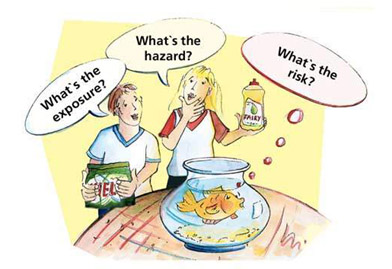
Auteur: Henk Tennekes

  • Study: Michigan rivers among worst for organic pollutants

    Study: Michigan rivers among worst for organic pollutants

    The rivers that serve as the lifeblood of the Great Lakes abound with organic waste compounds, including pollutants from car exhaust, factory smokestacks and tar, insecticides and herbicides and detergent ingredients. And three Michigan rivers are among the worst of the worst for the compounds: the Clinton and Rouge rivers in Southeast Michigan and the St. Joseph in Southwest Michigan, according to a recently published study by the U.S. Geological Survey — the most comprehensive look yet at organic waste compounds in Great Lakes tributaries. The Clinton, Rouge and St. Joseph rivers top the list with the highest number of organic waste compounds found in water sampling USGS conducted throughout the Great Lakes basin in five states over four years, from 2010 to 2013. The amount of the pollutants also was disturbing — both the Clinton and Rouge rivers had five organic waste compounds related to incomplete fossil fuel burning, such as car exhaust and coal-fired power plants, that were 10 times higher than water-quality benchmarks.

    “The Rouge and the Clinton were among the worst sites overall, almost across the board, for what we were looking at,” said Austin Baldwin, a USGS hydrologist who led the tributaries study. The compounds are known to disrupt the endocrine systems — which produce hormones — of fish and other organisms, Baldwin said. They can act like the hormone estrogen and lead to reproductive disruption, including causing male fish to turn into females, he said. And concentrations of the compounds at levels high enough to cause such changes were found not only in the Clinton, Rouge and St. Joseph rivers in Michigan, but also the Au Sable, Saginaw, Raisin and Ontonagon, he said.

    “Some of the samples we collected in the rivers had concentrations of these estrogenic chemicals comparable to concentrations in effluent” from wastewater treatment plants, Baldwin said.

    Even low levels of the compounds, affecting the smallest shrimp-like invertebrate creatures in the water, cause a ripple effect up the aquatic food chain and could ultimately impact Michigan’s prized, multibillion-dollar fishing tourism industry.
    Source: Detroit Free Press, July 30, 2016
    http://www.freep.com/story/news/local/michigan/2016/07/30/study-michigan-rivers-organic-pollutants/87317230/

  • The replacement of Druckrey’s model of dose-time-response by the ‘acceptable daily intake’ concept has invalidated risk assessment

    The replacement of Druckrey’s model of dose-time-response by the ‘acceptable daily intake’ concept has invalidated risk assessment

    In the 1950s the commission on food coloring of the German Research Society (DFG), headed by the biochemist Adolf Butenandt and the pharmacologist Hermann Druckrey, represented a policy of preventive risk management in regard to food additives. Druckrey had conducted animal tests with butter yellow, an azo compound used to give butter an attractive yellow colour. These experiments demonstrated that the production of tumours required a certain total dose, regardless of how this was distributed over 35 to 365 days. The latency period, Druckrey stated, was inversely related to the daily dose. If experiments were extended over the life span of the animals, a smaller dose was necessary to produce an effect. Druckrey concluded that the carcinogenic effect of butter yellow was therefore, even at the smallest doses, irreversible from the beginning of the experiment during the entire life span of the animals, and was additive with further exposure without any modiication, until, after a critical total dose has been exceeded, tumours would develop. It was thereby recapitulating a discourse on “food poisoning” and a critique on an inner nexus being constructed by our civilization between foreign substances and carcinogenesis. Such a connection had already been expressed in the early 1930s. Discourses on purity and contamination were translated into mathematical models (the dose-time-response) and legislative measures (new German food law in 1958). With the organisation EUROTOX and within the scope of JECFA, Druckrey tried to implement this pharmacology of cancer on a global scale. At the end of the 1950s these purist and preventive risk policies were forced back by the primacy of economics. With the replacement of Druckrey’s model of dose-time-response by the much more flexible concept of ‘acceptable daily intake,’ industry- and trade-friendly policy of calculable risk prevailed over the policy of preventive risk management, which in West Germany was represented from then on by a rising consumer movement. However, regulatory decisions based on current risk approaches are flawed simply because the science underpinning the risk of chemicals is inappropriate in many cases. A fundamental problem is to use one methodology for all compounds, irrespective of their toxic mode of action in organisms. According to the theories of Druckrey and Küpfmüller, the character of a poison is primarily determined by the reversibility of critical receptor binding. Chemicals showing irreversible or slowly reversible binding to specific receptors will produce cumulative effects with time of exposure, and whenever the effects are also irreversible (e.g. death) they are reinforced over time; these chemicals have time-cumulative toxicity.This concept was validated by Druckrey and co-workers with genotoxic carcinogens, the action of which is described by what is now known as the Druckrey-Küpfmüller equation: c x t˄n = constant, where c = exposure concentration, t = median time to effect, and n is an exponent > 1, which reflects reinforcement of the effect over time. Using data generated by Sanchez-Bayo, Tennekes demonstrated that the Druckrey-Küpfmüller equation also described the toxicity of (non-genotoxic) neonicotinoid insecticides to arthropods. This discovery showed that the theories of Druckrey and Küpfmüller were generally applicable in toxicology and, perhaps even more importantly, that risk assessment procedures needed to be revised, because the risks of time-cumulative toxins had been seriously underestimated.

    While most toxicants with a generic mode of action can be evaluated by the traditional concentration–effect approaches, a certain number of chemicals, including carcinogens, methylmercury, rodenticides, neonicotinoids and cartap insecticides have toxic effects that are reinforced with time of exposure (time-cumulative effects). Therefore, the traditional risk approach cannot predict the impacts of the latter chemicals in the environment. New assessment procedures are needed to evaluate the risk that the latter chemicals pose on humans and the environment.
    Sources:
    Heiko Stoff, Zur Kritik der Chemisierung und Technisierung der Umwelt. Risiko- und Präventionspolitik von Lebensmittelzusatzstoffen in den 1950er Jahren in: TG Technikgeschichte, Seite 229 – 250 TG, Jahrgang 81 (2014), Heft 3, ISSN print: 0040-117X, ISSN online: 0040-117X, DOI: 10.5771/0040-117X-2014-3-229 (in German)
    Heiko Stoff, Oestrogens and Butter Yellow: Gendered Policies of Contamination in Germany, 1930-1970. In: Gendered Drugs and Medicine, Historical and Socio-Cultural Perspectives, Eds. Teresa Ortiz-Gómez & María Jesús Santesmases, Ashgate Publishing Limited, Farnham, Surrey GU9 7PT, UK.
    H. A. Tennekes and F. Sánchez-Bayo (2013) The molecular basis of simple relationships between exposure concentration and toxic effects with time. Toxicology 309, 39– 51

  • Die Ersetzung von Druckreys Dosis-Zeit-Wirkungsgesetz durch den flexibleren Acceptable Daily Intake ist eine historische Fehlentwicklung

    Die Ersetzung von Druckreys Dosis-Zeit-Wirkungsgesetz durch den flexibleren Acceptable Daily Intake ist eine historische Fehlentwicklung

    In den 1950er Jahren vertrat die Farbstoffkommission der DFG unter der Leitung des Biochemikers Adolf Butenandt und des Pharmakologen Hermann Druckrey eine Politik der Risikovermeidung in Bezug auf Lebensmittelzusatzstoffe. Sie rekapitulierte damit einen Diskurs über „Gift in der Nahrung“ und eine zivilisationskritische Deutung eines inneren Zusammenhangs zwischen Fremdstoffen und Krebsentstehung, der bereits zu Beginn der 1930er Jahre ausformuliert worden war. Narrative der Reinheit und Kontamination wurden dabei in mathematische Modelle (Dosis-Zeit-Wirkungs-Gesetz) und legislative Maßnahmen (Novelle des Lebensmittelgesetzes 1958) übersetzt. Mit der Organisation EUROTOX und im Rahmen des JECFA versuchte Druckrey eine Pharmakologie des Krebses auch auf globaler Ebene zu installieren. Ende der 1950er Jahre wurde jedoch diese puristisch-präventive Risikopolitik durch das Primat des Ökonomischen zurückgedrängt. Mit der Ersetzung von Druckreys
    Dosis-Zeit-Wirkungsgesetz durch den flexibleren Acceptable Daily Intake setzte sich eine industrie- und handelsfreundliche Politik der Risikokalkulation gegen die Politik der Risikovermeidung durch, die seitdem vor allem von der in diesem Kontext erst entstehenden Verbraucherbewegung vertreten wurde.

    Die Gefährdung des Menschen in einer chemisierten und technisierten Umwelt fand ihren formalisierten Ausdruck im Dosis-Zeit-Wirkungs-Gesetz, das Hermann Druckrey Ende der 1940er Jahre verkündet hatte. Der 1904 geborene Druckrey, der 1931 der SA beigetreten war sowie 1942 das Pharmakologische Institut der Friedrich-Wilhelms-Universität verlassen hatte, um daraufhin als Stabsarzt eines SS-Polizeibataillons an die Front zu gehen und seit Juni 1944 ein direkt mit SS-Institutionen verbundenes Pharmakologisches Institut der Polizei in Wien aufzubauen, verdankte es Butenandt, dass er überhaupt noch wissenschaftlich tätig sein konnte. Nach Kriegsende versorgte Butenandt, der selbst während des Nationalsozialismus aktiv in wissenschaftlich-industriell-politische Netzwerke eingebunden war, Druckrey unermüdlich mit Gutachten und adelte ihn als „führenden Forscher(n) im Gebiet der allgemeinen Pharmakologie, insbesondere der experimentellen Krebsforschung“. Druckrey gelang zwar keine großartige universitäre Karriere mehr – er war Leiter der Forschergruppe „Präventivmedizin“ am Freiburger Max-Planck-Institut für Immunbiologie –, dafür renommierte er jedoch als international bekannter und einflussreicher Experte für kanzerogene Stoffe. Die erstaunliche Zusammenarbeit Druckreys mit dem Elektrophysiker Karl Küpfmüller im Internierungslager Hammelburg führte zu einer neuen onkologischen Theorie irreversibler Summationsgifte, nach der die Krebswirkung einer Substanz wie Buttergelb (p-Dimethylaminoazobenzol) von der summierten Gesamtmenge abhänge und nicht von der Größe der Einzeldosen. Entscheidend für die kanzerogene Wirkung sei das Zusammenwirken von Konzentration und Zeitdauer. Krebsentstehung sei ein chronischer pharmakologischer Prozess, der mathematischen Gesetzmäßigkeiten folge. Die kanzerogene Wirkung des Buttergelbs bleibe auch bei kleinsten Einzeldosen auf Lebenszeit irreversibel bestehen und summiere sich mit der Wirkung späterer Gaben, bis sich nach Überschreiten der kritischen Gesamtdosis Geschwülste entwickelten. Druckrey und Küpfmüller resümierten schließlich, dass die Auslösung von Mutationen und Tumoren auf irreversiblen Wirkungen physikalischer oder chemischer Agentien beruhe. Die Teilwirkungen der einzelnen Tagesdosen vererbten sich zudem ungeschmälert auf die Tochterzellen. Kanzerogene Substanzen, so lautete Druckreys radikale Botschaft, sind „‚Erbänderungsstoffe‘ mit irreversibler Wirkung“. Die Topoi der Krebsdebatte der 1930er und 1940er Jahre waren auf elegante Weise zusammengeführt und in ein ambitioniertes mathematisches Modell überführt. Druckrey konnte sich dabei auf eine bald 30 Jahre laufende Debatte stützen, die schon in den Texten zum „Gift in der Nahrung“ zusammengefasst worden war. Der toxikologischen Repräsentation entsprach eine gesundheitspolitische Intervention, die keinen Spielraum für Risikokalkulationen ließ und in Bezug auf Summationsgifte nur Risikovermeidung gestattete. Während die Ermittlung von Grenzwerten komplexe technowissenschaftliche und soziale Konfigurationen in Praktiken des Risikomanagements und der Gefahrenregulierung übersetzte, funktionierte die Summationsthese der Krebsentstehung ausdrücklich im Sinne einer Politik der Risikovermeidung.
    Aus der Summationsthese ergaben sich drei gravierende risikopolitische Folgerungen: Bei krebserregenden Substanzen können keine Sicherheitsgrenzen festgelegt werden; jede Substanz muss eingehend, ausdauernd und mehrfach geprüft werden; Krebsprävention ist erfolgreicher als Krebstherapie. Für Druckrey stellten irreversible Giftwirkungen die eigentliche Gefahr dar, während reversible Wirkungen nur von untergeordneter Bedeutung waren, da sie von der Konzentration der Substanz bestimmt seien und erst oberhalb einer ,,Schwellendosis“ in Erscheinung träten. Damit ließen sie sich aber auch durch eine genügende Sicherheitsspanne ausschließen. Mit der Differenzierung von reversibler und irreversibler Wirkung konstituierte Druckrey um 1950 eine
    neue Risikopolitik prekärer Stoffe. Gemeinhin wurde im Anschluss an Paracelsus’ berühmtes Diktum, dass die Dosis das Gift mache, davon ausgegangen, dass geringe Mengen von Farbstoffen, die in Lebensmitteln verwendet werden, prinzipiell als toxikologisch „unterschwellig“ und daher bedeutungslos angesehen werden könnten. Dies, so Druckrey, treffe aber nur für solche Substanzen zu, deren pharmakologische Wirkungen reversibel seien. Irreversible Giftwirkungen beständen hingegen über die ganze Lebenszeit fort. Neben das Risikomanagement und die Risikokalkulation bei reversiblen Giften trat die Risikovorbeugung und -vermeidung bei irreversiblen Noxen. Es entstand
    ein neues Risikoepistem. Die Summationsthese war in den 1950er Jahren bei den bundesdeutschen gesundheitspolitischen und lebensmittelrechtlichen Verfahren, namentlich der Novelle des Lebensmittelgesetzes im Jahr 1958, der entscheidende Referenzpunkt. Druckrey selbst trug seine Position am 6. Februar 1957 auf einer Sitzung des Gesundheitsausschusses persönlich vor. Die SPD-Abgeordnete Käte Strobel verwendete im Bundestag Druckreys These als Hauptargument für eine scharf gefasste Gesetzesnovelle.

    In den 1950er Jahren initiierten der Biochemiker Adolf Butenandt und der Pharmakologe Hermann Druckrey als Vorsitzende einer „Kommission zur Bearbeitung des Problems der krebsfördernden Wirkung von Farbstoffen in Lebensmitteln“ der DFG eine onkologische Politik, die das „Gift in der Nahrung“ durch präventive Maßnahmen, Aufklärung der Verbraucher, Positivlisten und langfristige toxikologische Studien zu verhüten suchte. Im Rahmen der Organisation EUROTOX arbeiteten sie daran, die Pharmakologie krebserregender Stoffe europaweit durchzusetzen. Die maßgeblich von Druckrey verfassten „Godesberger Beschlüsse“, welche diese Programmatik zusammenfassten, wurden zu einer Grundlage des 1955 eingerichteten Joint FAO/WHO Expert Committee on Food Additives (JECFA). Um 1960 wurde der ernährungsreformerisch und zivilisationskritisch ausgerichtete Standpunkt zur Krebsvorsorge im Rahmen der Weltgesundheits- sowie der Ernährungs- und Landwirtschaftsorganisation allerdings durch das wirtschaftlichen Interessen entsprechende flexible Grenzwertkonzept des Acceptable Daily Intake ersetzt.
    In den 1960er Jahren geriet die Unterscheidung zwischen reversiblen und irreversiblen Stoffen jenseits toxikologischer Fachdiskurse in Vergessenheit. Druckreys Summationslehre hat zwar bis heute den Status einer wissenschaftlichen Tatsache inne, aber seine im historischen Kontext von
    Technik- und Zivilisationskritik entstandene Theorie hat ihre risikopolitische Relevanz verloren. Das komplexe Gefüge der frühen 1950er Jahre, das in der Bundesrepublik durch eine Politik der Risikovermeidung gekennzeichnet war, wurde spätestens seit den 1960er Jahren in die präventionistisch-puristische Position der Verbraucher- und Ökologiebewegung einerseits und die transnationale Regulierung von Lebensmittelkontrolle und wirtschaftlichen Interessen andererseits geschieden. Mit dem ADI setzte sich weltweit eine Politik der Risikokalkulation durch, deren wissenschaftliche Grundlagen, namentlich in Bezug auf Schwellenwerte für Krebs erzeugende Chemikalien, bis heute höchst umstritten sind. Risikobewertungen, das zeigt die kurze Geschichte
    der Lebensmittelzusatzstoffe, müssen immer auch als historische Ereignisse analysiert werden, die chemische Prozesse, soziokulturelle Verhandlungen, politische und ökonomische Interessen sowie puristische Diskurse und zivilisationskritische Ideologien in Beziehung setzen.
    Es stellt sich aber die Frage, ob Risiken von Chemikalien mit dem Paracelsus-Paradigma und der Bestimmung von Schwellenwerten abgehandelt werden dürfen. Die theoretischen Ansätze zu den Dosis-Wirkungs-Beziehungen von Druckrey und Küpfmüller sind nicht nur für genotoxische Karzinogene anwendbar. Sie gelten für alle Substanzen, die irreversible Wechselwirkungen mit spezifischen Rezeptoren verursachen. Und die gibt es zahlreich. Die Toxizität vieler Substanzen – einschliesslich Organophosphaten und Neonicotinoiden – wird ebenfalls in verschiedenen Testmodellen durch die ‹Habersche Regel› oder die ‹Druckrey-Küpfmüller-Gleichung› beschrieben. Auch hier wurden in der Praxis irreversible Bindung an spezifische Rezeptoren nachgewiesen. Werden solche Substanzen allein mit dem Paracelsus-Paradigma bewertet, kommt es zu einer Unterschätzung der Risiken. Weil der Vorgang zeitabhängig ist, sind die Risiken nicht über Schwellenwerte definierbar.
    Quellen:
    Heiko Stoff, Zur Kritik der Chemisierung und Technisierung der Umwelt. Risiko- und Präventionspolitik von Lebensmittelzusatzstoffen in den 1950er Jahren in: TG Technikgeschichte, Seite 229 – 250 TG, Jahrgang 81 (2014), Heft 3, ISSN print: 0040-117X, ISSN online: 0040-117X, DOI: 10.5771/0040-117X-2014-3-229
    Henk Tennekes und Josef Hoppichler (2015). Chemikalien: Mengen und Zeit machen das Gift. Oekoskop (Fachzeitschrift der Ärztinnen und Ärzte für Umweltschutz) 15-4, 19-22


  • Pre- and Post-Natal Exposure To Acetamiprid Causes Neurological Abnormalities in Male Mice

    Pre- and Post-Natal Exposure To Acetamiprid Causes Neurological Abnormalities in Male Mice

    Neonicotinoids, a widely used group of pesticides designed to selectively bind to insect nicotinic acetylcholine receptors, were considered relatively safe for mammalian species. However, they have been found to activate vertebrate nicotinic acetylcholine receptors and could be toxic to the mammalian brain. In the present study, we evaluated the developmental neurotoxicity of acetamiprid (ACE), one of the most widely used neonicotinoids, in C57BL/6J mice whose mothers were administered ACE via gavage at doses of either 0 mg/kg (control group), 1.0 mg/kg (low-dose group), or 10.0 mg/kg (high-dose group) from gestational day 6 to lactation day 21. The results of a battery of behavior tests for socio-sexual and anxiety-related behaviors, the numbers of vasopressin-immunoreactive cells in the paraventricular nucleus of the hypothalamus, and testosterone levels were used as endpoints. In addition, behavioral flexibility in mice was assessed in a group-housed environment using the IntelliCage, a fully automated mouse behavioral analysis system. In adult male mice exposed to ACE at both low and high doses, a significant reduction of anxiety level was found in the light-dark transition test. Males in the low-dose group also showed a significant increase in sexual and aggressive behaviors. In contrast, neither the anxiety levels nor the sexual behaviors of females were altered. No reductions in the testosterone level, the number of vasopressin-immunoreactive cells, or behavioral flexibility were detected in either sex. These results suggest the possibility that in utero and lactational ACE exposure interferes with the development of the neural circuits required for executing socio-sexual and anxiety-related behaviors in male mice specifically.
    Source: Sano K, Isobe T, Yang J, Win-Shwe T-T, Yoshikane M, Nakayama SF, Kawashima T, Suzuki G, Hashimoto S, Nohara K, Tohyama C and Maekawa F (2016) In utero and Lactational Exposure to Acetamiprid Induces Abnormalities in Socio-Sexual and Anxiety-Related Behaviors of Male Mice. Front. Neurosci. 10:228. doi: 10.3389/fnins.2016.00228

  • Performance of honeybee colonies in neonicotinoid-treated cornfields in Quebec

    Performance of honeybee colonies in neonicotinoid-treated cornfields in Quebec

    Twenty-two honeybee (Apis mellifera) colonies were placed in four different cornfield areas in order to study the potential in situ effects of seed-coated systemic neonicotinoid pesticides used in cornfields (Zea mays spp) on honeybee health. Two apiaries were located in two independent neonicotinoid-treated cornfield areas and two others in two independent untreated cornfield areas used as controls. These experimental hives were extensively monitored for their performance and health traits over a period of one year. Trapped pollen was collected and microscopically identified to define the visited flowers and the amount of corn pollen collected by bees. Liquid chromatography–mass spectrometry was performed to detect pesticide residues in honeybee foragers and trapped pollen. Honeybee colonies located in neonicotinoid-treated cornfields expressed significantly higher varroa mite loads than those in untreated cornfields. However, brood production and colony weight were less disturbed by the treatment factor. Sublethal doses of neonicotinoids were detected in the trapped corn pollen and none in bee foragers. Overall, our results show that forager bees collected 20% of corn pollen containing variable concentrations of neonicotinoids. Colonies located in treated cornfields expressed higher varroa loads and long-term mortality than those in untreated cornfields.

    Source:
    M. Alburaki et al. (2016). J. Appl. Entomol. DOI: 10.1111/jen.12336
    http://onlinelibrary.wiley.com/doi/10.1111/jen.12336/abstract?userIsAuthenticated=false&deniedAccessCustomisedMessage=

  • Neonicotinoid soil residues in fields with a history of seed treatment use on crops in Ontario

    Neonicotinoid soil residues in fields with a history of seed treatment use on crops in Ontario

    Using neonicotinoid insecticides as seed treatments is a common practice in field crop production. Exposure of nontarget organisms to neonicotinoids present in various environmental matrices is debated. In the present study, concentrations of neonicotinoid residues were measured in the top 5 cm of soil and overlying soil surface dust before planting in 25 commercial fields with a history of neonicotinoid seed treatment use in southwestern Ontario in 2013 and 2014 using liquid chromatography–electrospray ionization tandem mass spectrometry. The mean total concentrations were 3.05 ng/g and 47.84 ng/g in 2013 and 5.59 ng/g and 71.17 ng/g in 2014 for parent soil and soil surface dust, respectively. When surface and parent soil residues were compared the mean concentration in surface dust was 15.6-fold and 12.7-fold higher than that in parent soil in 2013 and 2014, respectively. Pooled over years, the surface dust to parent soil ratio was 13.7, with mean concentrations of 4.36 ng/g and 59.86 ng/g for parent soil and surface dust, respectively. The present study’s results will contribute important knowledge about the role these residues may play in the overall risk assessment currently under way for the source, transport, and impact of neonicotinoid insecticide residues in a maize ecosystem.
    Source:
    Victor Limay-Rios, Luis Gabriel Forero, Yingen Xue, Jocelyn Smith, Tracey Baute, Arthur Schaafsma. Environ Toxicol Chem 2016;35:303–310
    DOI: 10.1002/etc.3257

  • Impact of Neonicotinoid Insecticide Use on Northern Bobwhite in Texas

    Impact of Neonicotinoid Insecticide Use on Northern Bobwhite in Texas

    The widespread use of neonicotinoid insecticides in recent years has led to increasing environmental concern, including impacts to avian populations. In Texas and across their range, Northern Bobwhite (Colinus virginianus; hereafter bobwhite) habitat frequently overlaps with agricultural areas of known neonicotinoid use. To address the impacts of neonicotinoids on bobwhites in Texas, we developed the following research objectives: (1) Conduct statistical analysis of bobwhite abundance and neonicotinoid use in Texas over the last 35 years, and (2) Analyze bobwhite samples collected from three field sites across the state for neonicotinoid residues and signs of tissue damage. Generalized linear, generalized additive, mixed-effects, zero-inflated, and hurdle models were used to analyze long-term data on bobwhite abundance, neonicotinoid use, and environmental variables from 1978-2012. Statewide analysis indicates that total neonicotinoid use is negatively correlated with quail abundance in the periods after neonicotinoid introduction (1994-2003) and after their widespread use (2004-2012). Analysis by ecoregion provided further support for the significant negative relationship between bobwhites and neonicotinoids in areas of high-use (e.g. High Plains, Rolling Plains, and Gulf Coast Prairies and Marshes). Approximately 10 bobwhites were collected from three field sites in Fall 2014 and Spring 2015, for a total of 61 birds. Neonicotinoid compounds were detected in trace amounts in the livers of seven quail, including samples from all three field sites and both collecting periods. Signs of testicular degeneration (n = 2) and lipid-type hepatocellular vacuolation (n=8) were consistent with known results of neonicotinoid intoxication. Overall, we identified evidence of bobwhite exposure to neonicotinoid insecticides, and our statistical analysis indicates that neonicotinoid use may be contributing to quail decline in some ecoregions in Texas.

    Source:
    Ertl, Hannah Mae Halie (2016). Impact of Neonicotinoid Insecticide Use on Northern Bobwhite (Colinus virginianus) in Texas. Master’s thesis, Texas A & M University.
    Available electronically from http : / /hdl .handle .net /1969 .1 /157102
    http://oaktrust.library.tamu.edu/handle/1969.1/157102

  • Das Verschwinden der Schmetterlinge

    Das Verschwinden der Schmetterlinge

    Rund 3700 Arten von Faltern oder Schmetterlingen (Lepidoptera) gibt es in Deutschland, darunter – neben der riesigen Zahl an Nachtfaltern und Kleinschmetterlingen – etwa 180 oft farbenprächtige Tagfalter, die überwiegend tagsüber unterwegs sind. Doch die Vielfalt schwindet: In Bayern wurden seit 1766 etwa 3250 Arten nachgewiesen. “Ab 2001 fanden wir nur noch 2819 Arten. Weit mehr als 400 Spezies sind nicht mehr nachweisbar, was einem Rückgang von 13 Prozent entspricht”, sagt Jan Christian Habel von der Technischen Universität München. Er und seine Kollegen haben die Gegend um den Keilstein bei Regensburg untersucht, ein Naturschutzgebiet, das für seinen Reichtum an Schmetterlingen bekannt ist.

    Die Bestände würden kleiner: Flatterten in den 1840er Jahren noch 117 Arten von Tagfaltern und Widderchen – tagaktive Kleinschmetterlinge – am Keilberg, so waren es um 2010 nur noch 71, wie das Team im Fachblatt “Conservation Biology” berichtet. Das entspricht einem Rückgang der Artenvielfalt um 40 Prozent.

    Der Trend betreffe auch andere europäische Länder, sagt Thomas Schmitt vom Senckenberg Deutschen Entomologischen Institut (SDEI) in Müncheberg bei Berlin: “Nach einer britischen Studie sind die Bestände des Kleinen Feuerfalters (Lycaena phlaeas) dort in 100 Jahren um 96 Prozent geschrumpft. Beim Gemeinen Bläuling (Polyommatus icarus) ist die Entwicklung ähnlich.”

    Jeremy Thomas von der Universität Oxford berichtete kürzlich im Wissenschaftsblatt “Science”, in der englischen Grafschaft Sussex seien im späten 19. und im 20. Jahrhundert 42 Prozent der dort vorkommenden Arten ausgestorben.

    “Nur solche Langzeitbeobachtungen können das ganze Ausmaß der Katastrophe zeigen”, sagt Habel. “Die Beobachtung über einen Zeitraum von 200 Jahren bestätigt den allgemeinen Trend, dass gerade die spezialisierten Arten stark rückläufig sind.”

    Solche Spezialisten wie etwa Vertreter der Perlmutterfalter, diverse Scheckenfalter und Bläulinge sind von ganz bestimmten Futterpflanzen und Lebensräumen abhängig. Im Gegensatz dazu können Generalisten wie das Große Ochsenauge (Maniola jurtina), der Schachbrettfalter (Melanargia galathea) oder der Kleine Heufalter (Coenonympha pamphilus) Veränderungen besser verkraften.

    Traurige Bilanz

    Die rückläufigen Zahlen zeigen nicht nur den Trend für Regensburg, sondern für das ganze Bundesland und auch für die anderen Faltergruppen, sagt Ko-Autor Andreas Segerer.

    “In ganz Bayern sinken die Artenzahlen, und auch bei den vorhandenen Arten schrumpfen die Bestände”, sagt der Experte der Zoologischen Staatssammlung München, der erst im März einen Schmetterlingskatalog für Bayern veröffentlicht hatte.

    Dazu zählt etwa der nach der Region benannte Regensburger Gelbling (Colias myrmidone), auch Orangeroter Heufalter genannt.

    Die zeitliche Aufschlüsselung zeigt, wie sehr sich dieser Trend beschleunigt: Bis Ende des 19. Jahrhunderts verschwanden demnach 53 Arten, von 1900 bis 1970 waren es 138 Spezies, und von 1971 bis 2000 tauchten 226 Arten nicht mehr auf, rechnet Segerer vor und zieht die traurige Bilanz: “In den letzten 30 Jahren des 20. Jahrhunderts sind mehr Arten verschwunden als in den beiden Jahrhunderten zuvor.”

    Quelle: Spiegel Online, 28.07.16
    http://www.spiegel.de/wissenschaft/natur/umwelt-das-verschwinden-der-schmetterlinge-a-1105108.html

  • Living Near Agricultural Pesticides During Pregnancy Linked to Lower IQ for Salinas Valley Kids

    Living Near Agricultural Pesticides During Pregnancy Linked to Lower IQ for Salinas Valley Kids

    Pregnant women living within one kilometer (0.62 miles) of fields where certain pesticides are applied have children who show a measurable decrease in IQ and verbal comprehension skills by the time they are seven years old, according to a new study by the Center for Environmental Research and Children’s Health at UC Berkeley’s School of Public Health. The study team looked at 283 women and children from the agricultural Salinas Valley enrolled in the long-term Center for the Health of Mothers and Children in Salinas (CHAMACOS) study. They found that at age 7, the children of mothers who lived during pregnancy within 0.6 miles of applications of organophosphate pesticides had declines of about 2 IQ points and 3 verbal reasoning points per 522 pounds applied nearby. The authors note that the loss of IQ points corresponds to thousands of dollars in reduced earning potential in adulthood.

    Organophosphates are neurotoxic to both insects and humans, even in very small amounts. Banned by the EPA for most residential uses in 2001, they continue to be among the most commonly applied agricultural pesticides in California, with more than 4.6 million pounds applied in 2014.

    “There is ample evidence that exposure to organophosphates (OPs) is extremely harmful to children’s brains at critical windows of their development,” said Emily Marquez, PhD, staff scientist at Pesticide Action Network and co-author of Kids on the Frontline. “While OP exposure is widespread, those who live in agricultural regions have much higher exposure and bear the brunt of the health harms.”

    The study reported similar cognitive declines for three other classes of pesticide: neonicotinoids, pyrethroids, and manganese fungicides. The study authors point out that because pesticides are almost always used in combination, it is impossible to determine whether cognitive declines are caused by organophosphate use alone, or by the interactive effect with other classes of pesticide. Residents in agricultural areas are exposed to a complex mix of neurotoxic chemicals, which may interact in ways that are not currently considered by regulators. For this reason, advocates have pressed for comprehensive rules to protect children from nearby pesticide use, including at school.

    This study used California’s extensive Pesticide Use Reporting (PUR) data to gauge exposure to classes of pesticide that cannot be measured in people. This PUR data, mapped by the California Department of Health, reveal that in 245 one-mile square “sections” of Monterey and Santa Cruz counties, more than 522 pounds—which correlate to a 2 point IQ drop in the CHAMACOS study–of cholinesterase-inhibiting organophosphates were applied in each in 2014 (Drawn from database search at http://www.cehtp.org/page/pesticides/agricultural_pesticide_use_in_california).

    The study, “Prenatal Residential Proximity to Agricultural Pesticide Use and IQ in 7-Year-Old Children” in Environmental Health Perspectives, can be found here: http://ehp.niehs.nih.gov/EHP504/

    Source:
    Californians for Pesticide Reform, July 27th, 2016
    https://www.indybay.org/newsitems/2016/07/27/18789535.php

  • Pesticides, Including Neonicotinoids, in Drained Wetlands of Iowa’s Prairie Pothole Region

    Pesticides, Including Neonicotinoids, in Drained Wetlands of Iowa’s Prairie Pothole Region

    Approximately 95 % of nearly 4 million acres of wetlands located in Iowa’s portion of the Prairie Pothole Region (Des Moines Landform Region) are currently drained and farmed for row-crop agriculture. Many of these wetland basins are too wet to produce consistent crop yields and too dry to function as ecologically intact wetlands. Little information currently exists that documents what, if any value, drained wetlands may have in terms of water quality, wildlife usage and/or habitat, and key hydrological aspects. A four-year comprehensive study of drained wetlands was carried out from 2011 to 2014 to document the ecological health of these ecosystems, including the measurement of pesticide levels (including neonicotinoids in 2014). Pesticides were found in more than 60 % of samples and the most frequently detected were chloroacetanilide and triazine pesticides and associated degradate products. At times, concentrations of pesticides exceeded aquatic life benchmarks. The neonicotinoid pesticides were also detected frequently with Clothianidin being the most frequently detected (98 % of samples), followed by Thiamethoxam (54 %), and Imidacloprid (48 %).
    Source:
    Vince Evelsizer, Mary Skopec
    Iowa Farmed Wetlands pp 1-12, Co-published with Society of Wetland Scientists
    doi:10.​1007/​s13157-016-0796-x
    http://link.springer.com/article/10.1007/s13157-016-0796-x