Occurrence and removal of six high-production high-volume neonicotinoids was investigated in 13 conventional wastewater treatment plants (WWTPs) and one engineered wetland. Flow-weighted daily composites were analyzed by isotope dilution liquid chromatography tandem mass spectrometry, revealing the occurrence of imidacloprid, acetamiprid, and clothianidin at ng/L concentrations in WWTP influent (60.5 ± 40.0; 2.9 ± 1.9; 149.7 ± 289.5, respectively) and effluent (58.5 ± 29.1; 2.3 ± 1.4; 70.2 ± 121.8, respectively). A mass balance showed insignificant removal of imidacloprid (p = 0.09, CI = 95%) and limited removal of the sum of acetamiprid and its degradate, acetamiprid-N-desmethyl (18 ± 4%, p = 0.01, CI = 95%). Clothianidin was found only intermittently, whereas thiamethoxam, thiacloprid, and dinotefuran were never detected. In the wetland, no removal of imidacloprid or acetamiprid was observed. Extrapolation of data from 13 WWTPs to the nation as a whole suggests annual discharges on the order of 1000–3400 kg/y of imidacloprid contained in treated effluent to surface waters nationwide. This first mass balance and first United States nationwide wastewater reconnaissance identified imidacloprid, acetamiprid, and clothianidin as recalcitrant sewage constituents that persist through wastewater treatment to enter water bodies at significant loadings, potentially harmful to sensitive aquatic invertebrates.
Source:
Akash M. Sadaria, Samuel D. Supowit, and Rolf U. Halden
Environ. Sci. Technol., 2016, 50 (12), pp 6199–6206
DOI: 10.1021/acs.est.6b01032
Publication Date (Web): May 19, 2016
Auteur: Henk Tennekes
-

Mass Balance Assessment for Six Neonicotinoid Insecticides During Conventional Wastewater and Wetland Treatment
-
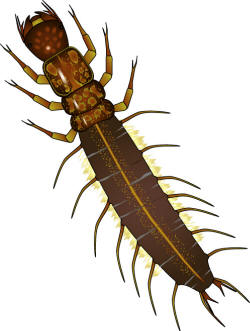
Responses of benthic invertebrates to imidacloprid in outdoor stream mesocosms
Structural and functional responses of a benthic macroinvertebrate assemblage to pulses of the insecticide imidacloprid were assessed in outdoor stream mesocosms. Imidacloprid pulses reduced invertebrate abundance and community diversity in imidacloprid-dosed streams compared to control streams. These results correlated well with effects of imidacloprid on leaf litter decomposition and feeding rates of Pteronarcys comstocki, a stonefly, in artificial streams. Reductions in oxygen consumption of stoneflies exposed to imidacloprid were also observed in laboratory experiments. Our findings suggest that leaf litter degradation and single species responses can be sensitive ecotoxicological endpoints that can be used as early warning indicators and biomonitoring tools for pesticide contamination. The data generated illustrates the value of mesocosm experiments in environmental assessment and how the consideration of functional and structural endpoints of natural communities together with in situ single species bioassays can improve the evaluation and prediction of pesticide effects on stream ecosystems.
Benthic invertebrate communities are often used as indicators of aquatic ecosystem health because many species are sensitive to pollution and sudden changes in their environment. Community characteristics—such as abundance, richness, diversity, evenness, and community composition—can be monitored to determine whether the community is changing over time due to natural or human-caused impacts.
The orders Ephemoptera (mayflies), Plectoptera (stoneflies), and Trichoptera (caddisflies) are pollution sensitive taxa. The EPT index is the proportion of the benthic invertebrate community belonging to these taxa. Chironomids are generally considered to be pollution-tolerant; therefore, determining the ratio of chironomids to EPT species can be a good indicator of pollution levels.
Sources:
J.L.T. Pestana et al. (2009) Environmental Pollution157: 2328–2334
http://www.sciencedirect.com/science/article/pii/S0269749109001663
RAMP (Regional Aquatics Monitoring Program) Alberta
http://www.ramp-alberta.org/river/ecology/life/invertebrates/using+benthic+invertebrates+as+bioindicators.aspx -
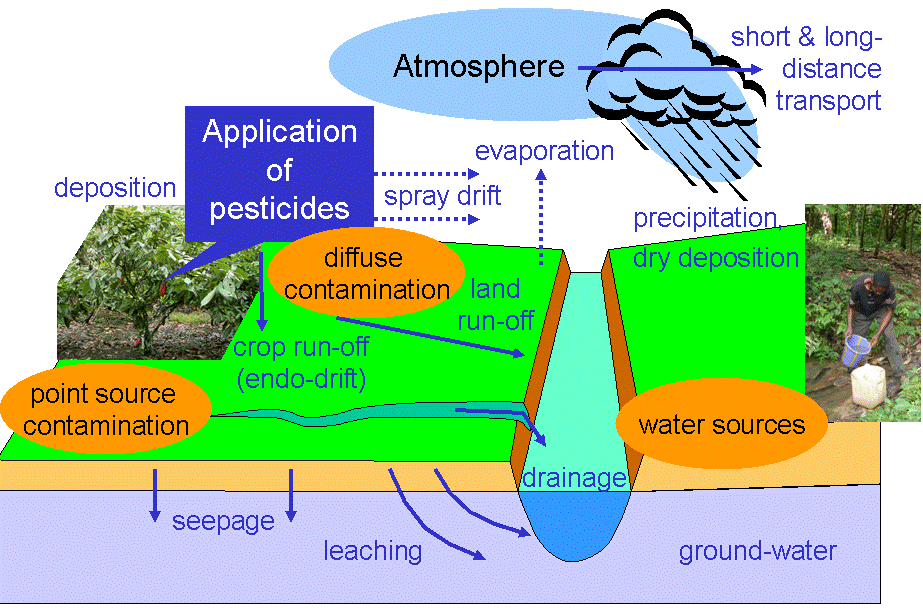
Pesticides can travel great distances
Everyone knows not to eat yellow snow. But what about the seemingly harmless, white fluffy stuff? According to research by Claudia Sheedy of the Lethbridge Research Centre, and others, snow is full of pesticides. Sheedy, a research scientist with Agriculture and Agri-Food Canada, was one of several experts who shared their findings from a variety of studies, including the investigation of pesticides in the snowpack. Sheedy said scientists have been studying and finding pesticides in surface water since about 2006, including pesticides that aren’t even used in Canada. That suggests atmospheric transportation. In other words, pesticides become airborne and are carried from one location to another before returning to the ground when it rains and snows. The issue is a global one, Sheedy said, and evidence shows that some pesticides found in the Rocky Mountain snowpack may have come from as far away as Eastern Asia. Likewise, it’s possible pesticides southern Alberta farmers put on their land can become airborne and carried as far away as Eastern Canada.
Source: Lethbridge Herald, July 26, 2016
http://lethbridgeherald.com/news/local-news/2016/07/26/pesticides-can-travel-great-distances/ -
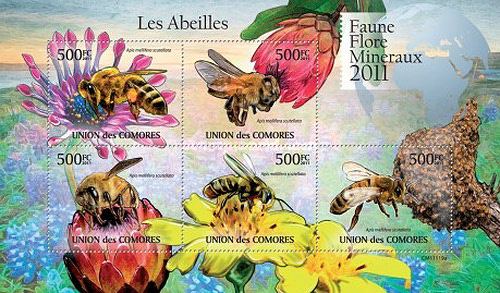
Neonicotinoid insecticides can serve as inadvertent insect contraceptives
There is clear evidence for sublethal effects of neonicotinoid insecticides on non-target ecosystem service-providing insects. However, their possible impact on male insect reproduction is currently unknown, despite the key role of sex. Here, we show that two neonicotinoids (4.5 ppb thiamethoxam and 1.5 ppb clothianidin) significantly reduce the reproductive capacity of male honeybees (drones), Apis mellifera. Drones were obtained from colonies exposed to the neonicotinoid insecticides or controls, and subsequently maintained in laboratory cages until they reached sexual maturity. While no significant effects were observed for male teneral (newly emerged adult) body mass and sperm quantity, the data clearly showed reduced drone lifespan, as well as reduced sperm viability (percentage living versus dead) and living sperm quantity by 39%. Our results demonstrate for the first time that neonicotinoid insecticides can negatively affect male insect reproductive capacity, and provide a possible mechanistic explanation for managed honeybee queen failure and wild insect pollinator decline. The widespread prophylactic use of neonicotinoids may have previously overlooked inadvertent contraceptive effects on non-target insects, thereby limiting conservation efforts.
Source: Straub L et al. 2016 Neonicotinoid insecticides can serve as inadvertent insect contraceptives. Proc. R. Soc. B 283:20160506.
http://dx.doi.org/10.1098/rspb.2016.0506 -
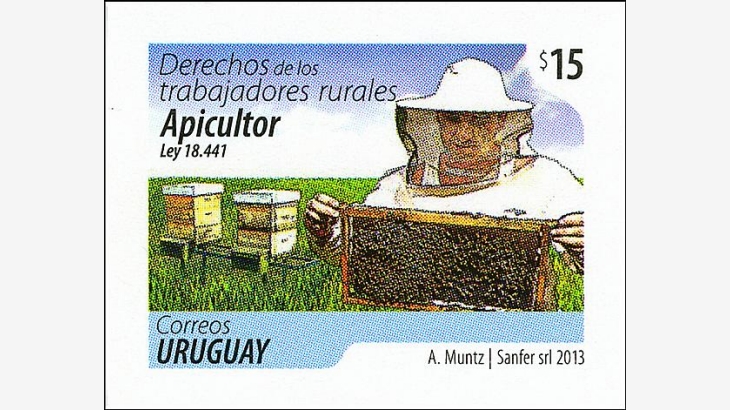
Neonicotinoide Beizen ab jetzt dauerhaft verboten in Deutschland
Nun ist es endgültig: Der Handel und die Aussaat von Wintergetreidesaatgut mit neonikotinoiden Beizen ist nun in Deutschland ausnahmslos verboten. Damit wird die EU-Regelung verschärft. Für einen besseren Bienenschutz hat das Ministerium nun Saatgut von Wintergetreide, das mit den Neonicotinoiden Clothianidin, Imidacloprid oder Thiamethoxam behandelt wurde, in Deutschland ausnahmslos verboten. In Deutschland selbst war eine Saatgutbehandlung mit diesen Insektiziden bereits untersagt. Mit der Neuregelung wird nun auch die Einfuhr von solchem Saatgut und dessen Aussaat verboten. Bundeslandwirtschaftsminister Christian Schmidt unterzeichnete am vergangenen Freitag die entsprechende „Verordnung über das Inverkehrbringen und die Aussaat von mit bestimmten Pflanzenschutzmitteln behandeltem Saatgut“. Damit stärke er den Bienenschutz, betonte der Ressortchef.
Wie das Bundeslandwirtschaftsministerium erläuterte, werden die Bienen mit der neuen Verordnung dauerhaft vor neonikotinoidhaltigem Staub geschützt, der bei der Aussaat von mit Neonikotinoiden behandeltem Wintergetreide entstehen könne. Die Verordnung entspreche der Eilverordnung des Ministers aus dem Sommer 2015 und verschärfe die EU-Regeln langfristig.
„Der Schutz der Bienen liegt mir besonders am Herzen, denn ihr Wert für die Natur und die Menschen ist enorm“, sagte Schmidt. Rund 80 % der heimischen Pflanzenmüssten bestäubt werden, „damit wir Obst und Gemüse ernten können“. Deshalb kämpfe er schon lange für den Bienenschutz, so der Minister.
Quelle: Agrar heute, 25.07.16
http://www.agrarheute.com/news/neonicotinoide-beizen-ab-dauerhaft-verboten -
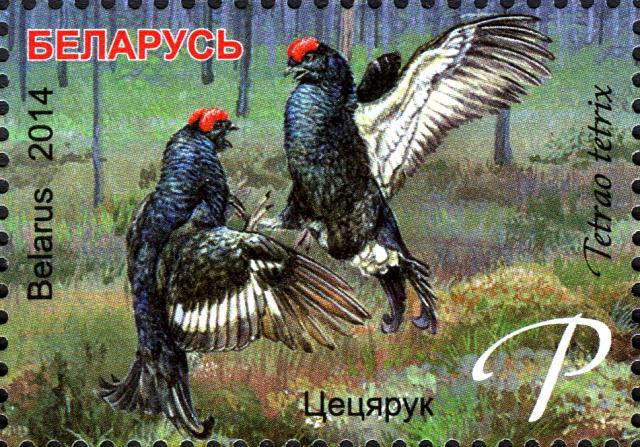
New black grouse plan for southern Scotland is bound to fail in the absence of insect food for chicks
A NEW strategic conservation plan to stop the decline of black grouse (Tetrao tetrix) in southern Scotland has been launched. The new plan has been funded by project partners the Game and Wildlife Conservation Trust, Forestry Commission Scotland, Scottish Natural Heritage, the Lammermuirs Moorland Group, Scottish Borders Council and RSPB Scotland. The long term decline of black grouse in the region has accelerated in recent decades, with numbers falling by 49% and 69% in south west and south east Scotland respectively between 1995/6 and 2005, to an estimated 807 and 257 males.
Cabinet Secretary for Rural Economy Fergus Ewing said: “Black grouse are among Scotland’s most iconic and impressive species but I am aware numbers in southern Scotland have fallen in recent decades. To halt this decline, it is therefore vital that we work together to take the right conservation action in the right places. That is what this plan aims to do. By collaborating across many sectors – on work such as enhancing habitats, restructuring forests and maintaining our heathland network – we can contribute to efforts to conserve this magnificent woodland bird. I am very pleased to launch this plan and that the Scottish Government is able to support it through the Scottish Rural Development Programme.”
In Perthshire (Scotland), Black Grouse Tetrao tetrix broods less than 3 weeks old preferred herb-rich grassy flushes with Bog Myrtle Myrica gale, whereas in the northern Pennines (England), all broods were found on grass-dominated moorland or enclosed rough grazing habitats chiefly of grass and rushes. In both areas, broods used habitats with taller vegetation that had more invertebrates, particularly moth caterpillars and sawfly larvae (Sym-phyta, Hymenoptera). Within preferred habitats, broods were found in vegetation containing more flies (Diptera), plant bugs (Hemiptera) and ichneumon flies (Hymenoptera) than at randomly chosen sites. The main hatch of Black Grouse chicks in Perthshire coincided with the peak availability of moth caterpillars preferred by chicks. Broods in the Pennines hatched 1 week later than those in Scotland, and this later breeding in the south may be an adaptation to utilize the later peak biomass of sawfly larvae, the chief insect prey there. Data collected for Capercaillie Tetrao urogallus suggest a similar degree of synchronization between their peak hatch and the availability of moth caterpillars on Bilberry Vaccinium myrtillus.
Sources:
The Scottish Farmer, 22 July 2016
http://www.thescottishfarmer.co.uk/news/14636033.New_black_grouse_plan_for_southern_Scotland
D. BAINES, I. A. WILSON and G. BEELEY (1996). Timing of breeding in Black Grouse Tetrao tetrix and Capercaillie Tetrao urogallus and distribution of insect food for the chicks. Ibis 138:181–187 -
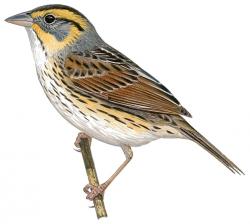
Extinction Predicted Within 50 Years for Saltmarsh Sparrow
Saltmarsh sparrows (Ammodramus caudacutus) are the only species of breeding bird found nowhere else but the East Coast of the United States, where they live exclusively in coastal marshes, including several sites in Rhode Island. But the birds are predicted to go extinct within the next 50 years. That’s the unfortunate news reported by University of Connecticut researchers Chris Elphick and Chris Fields earlier this month. Their data shows that the sparrows, which Elphick describes as small songbirds similar to the sparrows that visit many bird feeders in winter, have been declining at a rate of about 9 percent annually since the late 1990s. They mainly eat insects, aquatic invertebrates and seeds.
Source:
Eco Rhode Island News, July 20, 2016
http://www.ecori.org/natural-resources/2016/7/18/extinction-predicted-within-50-years-for-local-sparrow
Wikipedia
https://en.wikipedia.org/wiki/Saltmarsh_sparrow -
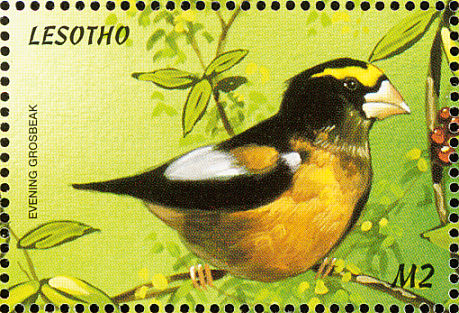
The beautiful but elusive evening grosbeak
Evening grosbeaks (Coccothraustes vespertinus) are Western birds and were once rare east of the Rocky Mountains. But during the late 1800s, each successive winter found them a little farther east. By 1910 they had reached Rhode Island. For many years evening grosbeaks enjoyed prosperity in the East. However, over the past 50 years evening grosbeak numbers have declined. Scientists have documented a 97 percent decline in Eastern populations. They mostly forage at the tops of tall coniferous trees looking for insects. They are particularly fond of spruce budworm, and the presence of many evening grosbeaks is often a harbinger of a spruce budworm outbreak. Grosbeaks are members of the finch family but are far heavier-bodied than most finches. The male is the more colorful of the sexes, with a dark head, yellow eye stripe, yellow chest and white wing patches on black wings. Females and juveniles are mostly gray with black and white wings. They also have a greenish bill, while the male’s bill is lighter colored.
Source:TERRY THOMAS For the Post Register, July 23, 2016
http://magicvalley.com/lifestyles/recreation/thomas-the-beautiful-but-elusive-evening-grosbeak/article_9a0dc70e-3717-55e9-96a0-c6e9687bd808.html -

Review of Sub-lethal Effects of Neonicotinoid Insecticides on Pollinators
We have identified 30 papers from a literature search on PubMed and Google Scholar using the following combined key words of “pollinators”, “honeybee”, “bees”, “pesticides”, or “neonicotinoids”, as of September 30, 2014, and from a cross-reference check of a report made available by European Parliament in preparation to fulfill their regulatory mandate on the issue of protecting pollinators among their membership nations. Those paper are relevant to examine the effects of sub-lethal pesticide exposures on the health of honeybees (Apis mellifera), bumblebees (Bombus terrestris), and other bees. The weight-of-evidence of this review clearly demonstrated bees’ susceptibility to insecticides, in particular to neonicotinoids, and the synergistic effects to diseases that are commonly present in bee colonies. One important aspect of assessing and managing the risks posed by neonicotinoids to bees is the chronic effects induced by exposures at the sub-lethal levels. More than 90% of literature published after 2009 directly or indirectly demonstrated the adverse health effects associated with sub-lethal exposure to neonicotinoids, including abnormal foraging activities, impaired brood development, neurological or cognitive effects, and colony collapse disorder.
Source (Author):
Chensheng Lu, PhD
Department of Environmental Health
Harvard T.H.Chan School of Public Health
401 Park Drive, Landmark Center West
Boston, MA 02215
Dr Lu’s study was supported financially by the Department of Energy and Environmental Protection, State of Connecticut -
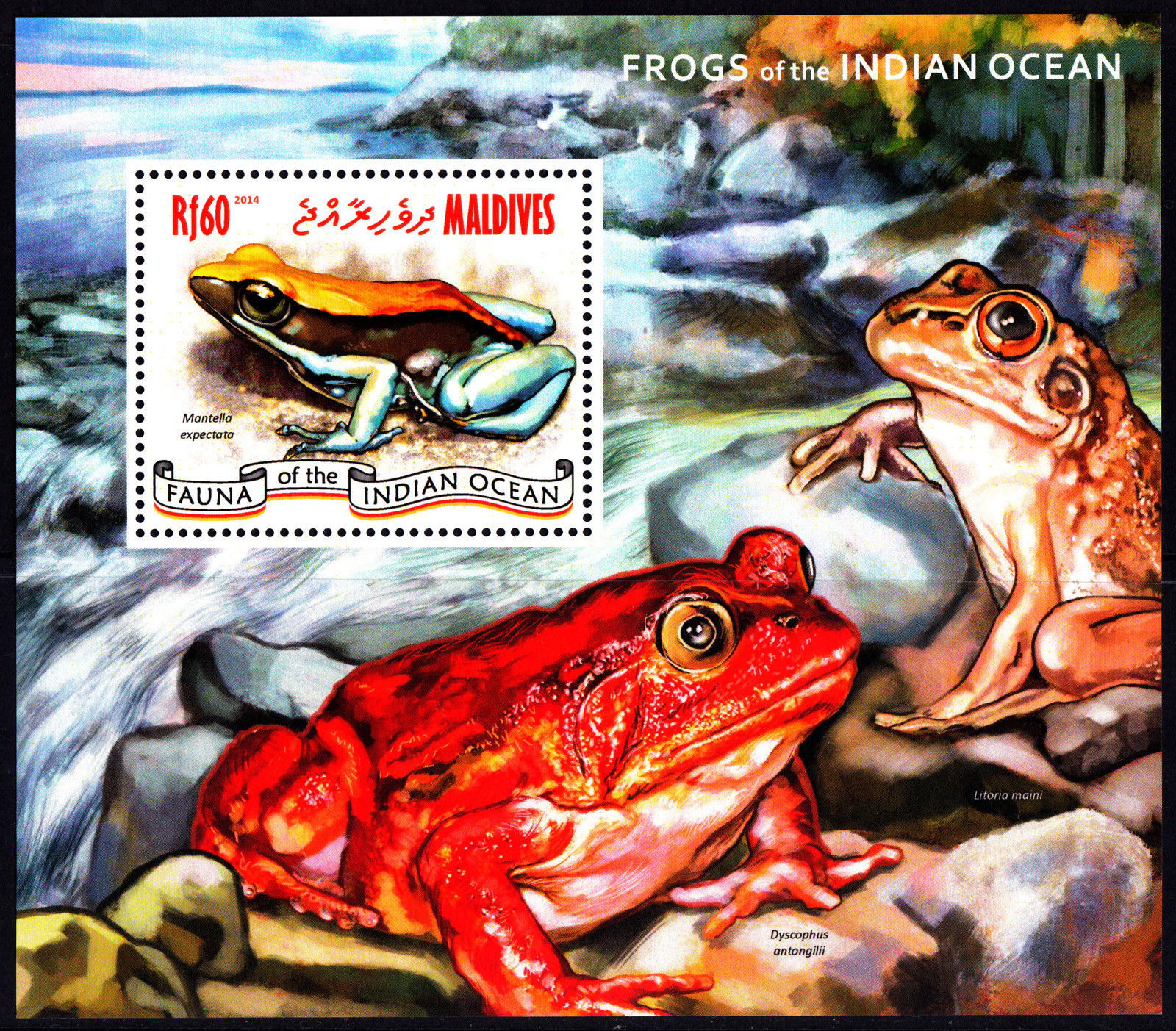
Dying Frogs Are Sign Of A Biodiversity Crisis
Devastating declines of amphibian species around the world are a sign of a biodiversity disaster larger than just frogs, salamanders and their ilk, according to researchers from the University of California, Berkeley. In a new article published online in the journal Proceedings of the National Academy of Sciences, the researchers argue that substantial die-offs of amphibians and other plant and animal species add up to a new mass extinction facing the planet. “There’s no question that we are in a mass extinction spasm right now,” said David Wake, professor of integrative biology at UC Berkeley. “Amphibians have been around for about 250 million years. They made it through when the dinosaurs didn’t. The fact that they’re cutting out now should be a lesson for us.” The study, co-authored by Wake and Vance Vredenburg, research associate at the Museum of Vertebrate Zoology at UC Berkeley and assistant professor of biology at San Francisco State University, will appear in a special supplement to the journal featuring papers based on presentations from the December 2007 Arthur M. Sackler Colloquium of the National Academy of Sciences, “In the Light of Evolution II: Biodiversity and Extinction.”
New species arise and old species die off all the time, but sometimes the extinction numbers far outweigh the emergence of new species. Extreme cases of this are called mass extinction events, and there have been only five in our planet’s history, until now.
The sixth mass extinction event, which Wake and others argue is happening currently, is different from the past events. “My feeling is that behind all this lies the heavy hand of Homo sapiens,” Wake said.
There is no consensus among the scientific community about when the current mass extinction started, Wake said. It may have been 10,000 years ago, when humans first came from Asia to the Americas and hunted many of the large mammals to extinction. It may have started after the Industrial Revolution, when the human population exploded. Or, we might be seeing the start of it right now, Wake said.
But no matter what the start date, empirical data clearly show that extinction rates have dramatically increased over the last few decades, Wake said.
The global amphibian extinction is a particularly bleak example of this drastic decline. In 2004, researchers found that nearly one-third of amphibian species are threatened, and many of the non-threatened species are on the wane.
Our own backyard provides a striking example, Wake said. He and his colleagues study amphibians in the Sierra Nevada, and the picture is grim there, as well.
“We have these great national parks here that are about as close as you can get to absolute preserves, and there have been really startling drops in amphibian populations there, too,” Wake said.
Of the seven amphibian species that inhabit the peaks of the Sierra Nevada, five are threatened. Wake and his colleagues observed that, for two of these species, the Sierra Nevada Yellow-legged Frog and the Southern Yellow-legged Frog, populations over the last few years declined by 95 to 98 percent, even in highly protected areas such as Yosemite National Park. This means that each local frog population has dwindled to 2 to 5 percent of its former size. Originally, frogs living atop the highest, most remote peaks seemed to thrive, but recently, they also succumbed.
There are several frog killers in the Sierra Nevada, Wake said. The first hint of frog decline in this area came in the 1990s, and researchers originally thought that rainbow trout introduced to this area were the culprits – they like to snack on tadpoles and frog eggs. The UC Berkeley team did experiments in which it physically removed trout from some areas, and the result was that frog populations started to recover.
“But then they disappeared again, and this time there were carcasses,” Wake said.
The culprit is a nasty pathogenic fungus that causes the disease chytridiomycosis. Researchers discovered the fungus in Sierra Nevada frogs in 2001. Scientists have documented over the last five years mass die-offs and population collapses due to the fungus in the mountain range.
But the fungus is not unique to California. It has been wiping out amphibians around the world, including in the tropics, where amphibian biodiversity is particularly high.
“It’s been called the most devastating wildlife disease ever recorded,” Wake said
Source:
University of California – Berkeley. “Dying Frogs Sign Of A Biodiversity Crisis.” ScienceDaily. ScienceDaily, 17 August 2008..