Pflanzenschutzmittel aus der Gruppe der Neonicotinoide können nicht nur Honigbienen, sondern auch Wildbienen und Schmetterlinge gefährden. Das zeigen einmal mehr aktuelle Forschungsergebnisse britischer, US-amerikanischer und deutscher Wissenschafter. Für ihre Untersuchung analysierten Forscher um den Entomologen Ben Woodcock, wie sich der großflächige Einsatz von Neonicotinoiden auf 62 Wildbienen-Arten in Großbritannien von 1994 bis 2011 auswirkte. 2002 waren die Pestizide dort erstmals zugelassen worden. Sie konnten dabei auf die Daten der “The Bees, Wasps and Ants Recording Society” zurückgreifen, eines Verbandes von Naturfreunden, die seit Mitte des 19. Jahrhunderts akribisch Informationen über Bienen, Wespen und Ameisen in Großbritannien sammeln.
Das Ergebnis der im Fachblatt “Nature Communications” veröffentlichten Analyse: Bei Wildbienen-Arten, die sich vorrangig von mit Neonicotinoiden behandeltem Raps ernähren, schrumpften die Populationen drei Mal stärker als bei jenen Arten, die andere, nicht behandelte Pflanzen bevorzugen. Bei fünf der untersuchten Wildbienen-Arten könne man sogar davon ausgehen, dass der Einsatz der Mittel 20 Prozent der lokalen Populationen vernichtet habe. “Als blühendes Getreide ist Raps sehr nützlich für bestäubende Insekten”, so Woodcock in einer Aussendung. “Dieser Nutzen scheint aber durch die Effekte der Neonicotinoid-Behandlung für eine ganze Reihe von Wildbienen-Arten mehr als aufgehoben.” Für Randolf Menzel (Frei Universität Berlin), der zu den führenden Bienenforschern Deutschlands zählt, zeigt die Studie, wie groß der Einfluss der Neonicotinoide wirklich ist – und das über einen verhältnismäßig kurzen Zeitraum. “Bei experimentellen Studien wird oft bezweifelt, wie aussagekräftig diese für das gesamte Ökosystem sind”, so Menzel. Jene Zweifel würden nun widerlegt. Er sieht sich in seiner Grundannahme über die Wirkungsweise bestätigt. Der Neurobiologe Menzel hatte in seiner eigenen Forschung belegt, dass Bienen schon nach kleinsten Dosen der Insektizide ihre Orientierung und ihr Gedächtnis verlieren. Für die britische Studie hätte er sich eine genauere Aufschlüsselung der verwendeten Neonicotinoide gewünscht: So seien etwa Clothianidin, Imidacloprid und Thiamethoxam in Großbritannien seit vergangenem Jahr wieder zugelassen. “Bei eben jenen ist sehr wahrscheinlich, dass sie großen Schaden anrichten”, sagte Menzel. Andere Experten betonen, dass weitere Gründe für den Rückgang von Bienen-Populationen gibt, darunter die Varroamilbe. Gestörte Brutentwicklung Mainzer und Frankfurter Wissenschafter hatten kürzlich entdeckt, dass Neonicotinoide selbst in geringen Konzentrationen den im Futtersaft von Ammenbienen enthaltenen Botenstoff Acetylcholin vermindern. Das Signalmolekül ist für die Larvenaufzucht von Honigbienen wichtig. “Unsere Forschungsergebnisse bestätigen das von Neonicotinoiden ausgehende Risiko für die Brutentwicklung von Honigbienen”, sagte Ignatz Wessler von der Universität Mainz. Die Ergebnisse ihrer Forschung veröffentlichten die Wissenschafter aus Mainz und Frankfurt in der Fachzeitschrift “Plos One”. Aber nicht nur Bienen scheinen unter den Mitteln zu leiden: Eine Studie aus den USA legt nahe, dass der Bestand von Schmetterlingen mindestens ebenso durch die Pestizide bedroht ist wie durch die fortschreitende Vernichtung ihres Lebensraums. Die Forscher um den Biologen Matthew Forister von der Universität von Nevada untersuchten das Vorkommen von 67 Schmetterlingsarten in Nordkalifornien anhand von Daten aus den vergangenen 40 Jahren. Das Ergebnis: Die Zahl der Schmetterlingsarten geht dramatisch zurück – und das vor allem seit 1995, als Neonicotinoide in der Region erstmals eingesetzt wurden. (APA, red, 17. 8. 2016)
Quelle: derstandard.at/2000042911377/Neonicotinoide-Neue-Studien-bestaetigen-Bedrohungslage-fuer-Bienen
Auteur: Henk Tennekes
-

Pestizideinsatz ließ Bienenbestände in Großbritannien seit 2002 massiv schrumpfen
-
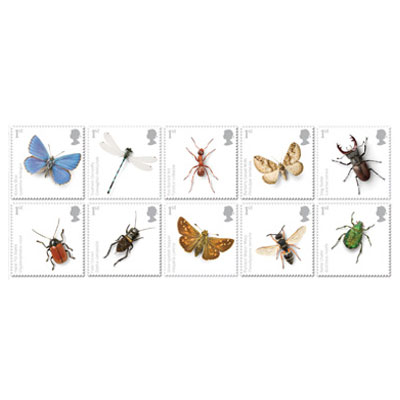
California’s butterflies and all its insects for that matter are exterminated by neonics
The link has been established before. When we reduce pests with most insecticides, they discriminate too little between friend and foe. We cant always see butterflies as friends because of the function of their caterpillars. However, as birds, reptiles and mammals rely on these insects and their relatives for food, what happens is simply Silent Spring, all over again.
Prof. Matthew L. Forister of the University of Nevada and many colleagues from British Columbia and Toronto in Canada and several more southwestern US universities researched the data in “Increasing neonicotinoid use and the declining butterfly fauna of lowland California”. This paper is published by the Royal Society in its Biology Letters today. The rich butterfly populations of Northern California made it a biodiversity hot-spot. Low altitude populations have been in decline since the late 1990s, with no correlation with either recent temperature changes or the alteration in the use of land. Neonicotinoid use however, began in 1995.Butterfly species with a negative association with the pesticide experienced the most severe declines, but were also smaller bodied and had fewer generations each year. If this were extended to other insects, the whole production of (natural) biomass for a year could be very much lowered by neonicotinoids. The European situation mirrored this in a previous paper, while moth species that are agricultural pests have also been recorded having such negative responses.
The biggest worry is bats and birds, that feed extensively on these insects, but we must also consider where that run-off is going. Every fish in the water, every marine species liable to be affected, they all must be considered before we have yet another great pollution scandal- or we lose our fruit orchard crop – or butterflies simply disappear. So much for that biodiversity hot-spot!
Read more at http://www.earthtimes.org/pollution/california-butterflies-neonicotinoids/2960/#AK3w0XVxy1Ur00WD.99
-

Impacts of neonicotinoid use on long-term population changes in wild bees in England
Wild bee declines have been ascribed in part to neonicotinoid insecticides. While short-term laboratory studies on commercially bred species (principally honeybees and bumblebees) have identified sub-lethal effects, there is no strong evidence linking these insecticides to losses of the majority of wild bee species. We relate 18 years of UK national wild bee distribution data for 62 species to amounts of neonicotinoid use in oilseed rape. Using a multi-species dynamic Bayesian occupancy analysis, we find evidence of increased population extinction rates in response to neonicotinoid seed treatment use on oilseed rape. Species foraging on oilseed rape benefit from the cover of this crop, but were on average three times more negatively affected by exposure to neonicotinoids than non-crop foragers. Our results suggest that sub-lethal effects of neonicotinoids could scale up to cause losses of bee biodiversity. Restrictions on neonicotinoid use may reduce population declines.
Source:
Ben A. Woodcock, Nicholas J. B. Isaac, James M. Bullock, David B. Roy, David G. Garthwaite, Andrew Crowe & Richard F. Pywell. Nature Communications 7, Article number: 12459 (2016)
doi:10.1038/ncomms12459 -
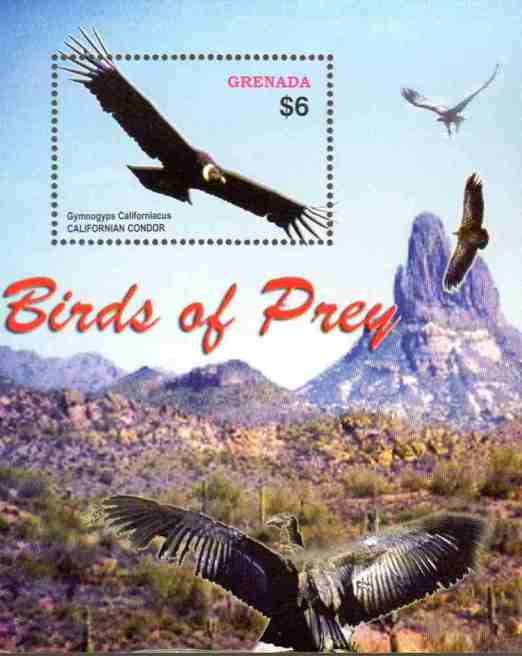
California Condors In Danger
Biologists have spent 30 years painstakingly nurturing the California condor (Gymnogyps californianus) back from the brink of extinction. They are America’s largest land bird, with a wing span reaching up to 9 feet. Due to lead poisoning, the majestic birds’ population had dropped to just 22 nationwide by 1982. In a desperate gamble to save the birds, federal biologists captured all the remaining wild condors in 1987 and began a breeding program in zoos. The birds’ young have been gradually released back into the wild.
There are now 82 condors living free in the Big Sur area. Kelly Sorenson is the executive director of the Ventana Wildlife Society, a nonprofit group that helps lead condor recovery efforts in Big Sur. He told Paul Rogers at the Mercury News that biologists are hoping they won’t need to go in and rescue the young birds from the nests. The chicks are 3- to 4-months-old and won’t be able to fly on their own for another two or three months
“At this point it wouldn’t make sense to pull the chicks out of the nests because we’d have to figure out how to raise them,” Sorenson said. “We might do it as a last resort. We are going to be watching day by day.” The chicks are still being fed by their parents.
Experts say that lead poisoning remains the main threat of condor deaths. Condors are scavengers and they eat deer, wild pigs, ground squirrels and other animals that hunters or ranchers may have shot, ingesting lead fragments from the ammunition.
Source: Santa Monica Observer, August 13, 2016
http://www.smobserved.com/story/2016/08/13/science/california-condors-in-danger-due-to-soberanes-fire/1735.html -
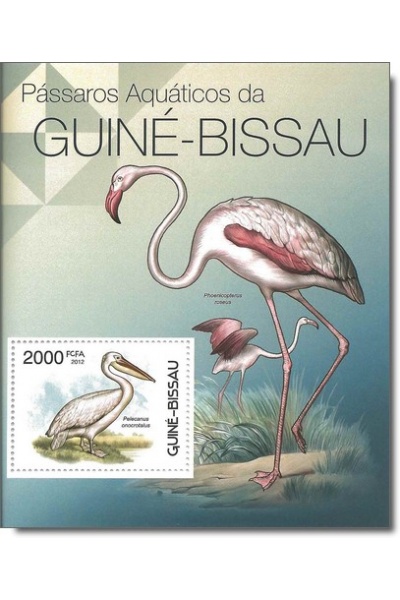
Time is running out for fish-eating birds in the Salton Sea
At first the biologists noticed something unusual about the dead fish washing up on the shore of the Salton Sea: All of them were fully grown, at least 7 inches long. There were no smaller fish among the carcasses pushed ashore by the lapping waves. Then the biologists started seeing other clues in the birds. Western grebes, which normally arrive by the thousands to forage, were nowhere to be found. Thousands of Caspian terns would normally stop off to nest, but they were also missing. And only small numbers of eared grebes, with their distinctive black heads and yellowish tufts behind their eyes, bobbed in the water. Hundreds of other eared grebes washed ashore dead earlier this year, their emaciated bodies indicating they starved.
The lack of small fish and the sudden declines of some bird species at the Sonny Bono Salton Sea National Wildlife Refuge could be signs that the lake’s overburdened ecosystem is starting to unravel and deteriorate. Scientists have been predicting for years that rising salinity will eventually render California’s largest lake inhospitable for even hardy tilapia, a fish introduced decades ago that has become a vital food source for birds.
The abrupt changes observed by biologists Chris Schoneman and Tom Anderson at the wildlife refuge suggest time might be running out for fish-eating birds such as pelicans that depend on the lake as a critical sanctuary. They acknowledge their concerns are based on speculation because comprehensive surveys of birds and fish haven’t been carried out in years. But Schoneman said in his 12 years working at the wildlife refuge, he has never before witnessed symptoms like those that have appeared this year.
“Maybe we’re at the point where salinity is limiting fish reproduction,” said Schoneman, the refuge’s manager. “The impact on birds from having a repressed or eliminated fish reproduction capability out here is devastating. That means the productivity of the Salton Sea is drastically reduced.”
The lake, which lies 234 feet below sea level and is much saltier than the Pacific, is going through what scientists call a natural “aging process.” Because it has no outlet, the lake has been growing saltier with each passing year.
A decade ago in 2006, the Salton Sea’s salinity stood at 47 parts per thousand. Water samples this year show salinity levels of between 58 and 59 parts per thousand – near the estimated threshold of 60 parts per thousand at which experts have predicted the remaining fish might stop breeding.
The lake is also showing other symptoms of decay. It’s burdened by an increasing load of detritus and nutrients that have accumulated for years as farm runoff has flowed in and evaporation has taken its toll.
When windstorms sweep across the desert and churn up the water, the sea regularly burps out hydrogen sulfide, which smells like rotten eggs. Fish die-offs have left the shoreline littered with skeletons.
Anderson, the assistant manager of the wildlife refuge, said he used to see small juvenile fish among the dead tilapia washing ashore. But he hasn’t seen any small fish for quite a while. And birds such as western grebes and Caspian terns, which depend on small fish, have been largely absent.
This spring, Anderson noticed eared grebes weren’t out in the sea where he expected to find them. Instead, the few birds he saw were congregating around drains and pools of freshwater alongside the shore. He said the birds appeared unhealthy and their feathers looked wet, suggesting they had stopped preening themselves.
“Then I started seeing dead ones in a lot of different areas, and looking at them, they were very emaciated,” Anderson said. “So we suspected they just weren’t getting the food resources they needed in the Salton Sea.”
Anderson saw a couple hundred birds dead on the shore. Extrapolating to the entire sea, he estimated a total of 1,000 to 2,000 eared grebes may have died.
The biologists sent some of the carcasses to a laboratory to determine the cause of death. The lab analysis turned up no signs of disease, poisoning or parasites, and concluded the birds starved to death.
Eared grebes normally feed on pile worms, diving down to the bottom to dig the worms out of the mud. Anderson said he thinks the die-off suggests the numbers of worms have probably dropped.
“Biologists who talk about the Salton Sea, they talk about a tipping point in the salinity, and these might be indications that we’re just about there, where the tilapia will disappear, pile worms will disappear,” Anderson said, “and both of those are big food resources at the Salton Sea.”
If they’re unable to find food, many more birds could abandon the Salton Sea and be forced to search for habitats elsewhere. Some of those fish-eating birds range from American white pelicans to herons, black skimmers and double-crested cormorants.
The drops in some bird populations appear significant and point to an urgent need to start creating habitat by building wetlands along the receding shores, said Andrea Jones, director of bird conservation for Audubon California. She said the changes observed by the staff at the national wildlife refuge suggest “conditions that we didn’t expect for a couple years are happening now.”
State officials plan to start building several thousand acres of artificial wetlands using canals to carry water from the New River and the Alamo River to areas of dry shoreline. The wetlands have a dual purpose: controlling hazardous dust as the lake shrinks and creating environments where fish and birds can survive. After years of inaction, California has budgeted $80.5 million for the Salton Sea projects this year.
Audubon California’s bird experts are developing a habitat plan for the state with recommendations of various habitat types, such as deep-water areas, shallow wetlands and marshes with reeds, and acreages that different groups of bird species will need. Jones said state officials should start building those wetlands right away because without intervention, the deterioration of the Salton Sea will add to the pressures on birds that are already struggling elsewhere.
The Salton Sea lies in a basin that over millennia has at times been a dry lake bed and at others has been a lake filled with water from the Colorado River. The sea was created in its current form between 1905 and 1907, when Colorado River water broke through irrigation canals in the Imperial Valley and flooded into the basin.
Since then, the lake has been sustained largely by runoff from farms. But the amounts of water flowing into the lake have been decreasing for years. And the Salton Sea’s decline is set to accelerate starting in 2018, when more water will be transferred from the Imperial Valley to San Diego County and the Coachella Valley under a water transfer deal.
During the past century, the Salton Sea has become a critical inland stop-off point for many birds along the Pacific Flyway. Some birds flock to the lake to nest. Others feed and refuel for their long migrations.
At the Sonny Bono Salton Sea National Wildlife Refuge, Schoneman said a total of 424 bird species have been spotted over the years.
If some of those birds eventually can’t survive at the Salton Sea, Jones said, it’s not clear where else they might go.
“That’s hard to think about because there aren’t many alternatives,” Jones said. “The fish-eating birds, we really don’t want to lose them because where are all these white pelicans going to go if they don’t have the Salton Sea to spend the winter in?”
Jones acknowledged that some people question whether it makes sense to intervene.
“An argument we hear even from some of our members is, ‘Why do you want to save any portion of the sea? It’s artificial. Those birds will go somewhere else,’” she said. “And our argument is that it doesn’t matter whether you think it was artificially created or not because a lot of the places in California these water birds used to use – like Tulare Lake – are gone.”
Wetlands that birds once relied on have been drained and left dry in places from the Central Valley to the Colorado River Delta.
“So the Salton Sea is their choice now. It’s their option,” Jones said. She said Audubon aims to organize sea-wide bird surveys in December and in the spring.
A comprehensive bird count for the entire Salton Sea hasn’t been done since 1999. A report on those surveys in 2000 estimated the total population of all waterbirds at between 434,000 and 583,000 in November and December. The surveys also found colonies with more 14,000 pairs of breeding waterbirds.
Jones said it’s now especially important to organize a new round of surveys to confirm the trends in bird populations.
As for fish, small tilapia can still be found in at least some parts of the lake. At the Salton Sea State Recreation Area on the north shore, tilapia have been successfully breeding in the harbor, said Kathy Dice, the superintendent of Anza-Borrego Desert State Park. Due to the small tilapia in the harbor, she said, people aren’t allowed to fish there.
“That particular harbor actually has some freshwater flowing into it,” said Tim Bradley, an ecology professor and director of the Salton Sea Initiative at the University of California, Irvine. “I have seen young fish there in abundance, but I think that could be an unusual habitat because of that freshwater input.”
Researchers haven’t carried out routine surveys of fish, pile worms or other invertebrates at the sea in recent years. Bradley and other scientists say they think it’s important for more surveys to be carried out now to better understand how the ecosystem is changing.
Doug Barnum, who heads the U.S. Geological Survey’s Salton Sea Science Office, said without routine monitoring, “the best anyone can provide at this point is speculation.”
“There have been previous episodes of large declines in the fish population, all of which have proved to be ‘false alarms,’” Barnum said in an email. He said the lack of small fish among the dead fish seen at the wildlife refuge isn’t surprising given scientists’ longstanding estimates of declines in fish when the salinity reaches about 60 parts per thousand.
“But unless some sort of monitoring of the live fish population is implemented,” Barnum said, “there is no way to ascertain the status of fish reproduction at the Salton Sea.”
As the Salton Sea grows saltier, scientists agree that sooner or later the collapse of the fish population is inevitable.
Decades ago, people fished for corvina in the lake. Then the corvina disappeared as the salinity kept increasing. Tilapia were introduced into agricultural drains near the sea a half-century ago to help control aquatic vegetation. Now the tilapia are headed the way of the corvina. What isn’t clear is how much longer some fish might hold on, and whether they’re hitting their limits now.
The declines in birds at the national wildlife refuge could be occurring due to dwindling populations of fish or other prey, or could be caused by other unrelated issues elsewhere on the Pacific Flyway, said Bruce Wilcox, assistant secretary for Salton Sea policy at the California Natural Resources Agency. He said the concerns raised by Schoneman and Anderson are valid, but the changes they’ve observed don’t necessarily mean the fish are disappearing just yet.
“We’re on borrowed time. If this isn’t the tipping point, it’s coming soon,” Wilcox said. “I think we need to move forward as fast as we possibly can to develop habitat.”
A task forced created by Gov. Jerry Brown last year has ordered state agencies to develop a plan for the sea and meet a short-term goal of carrying out projects to suppress dust and create habitat on 9,000 to 12,000 acres.
Wilcox said the funding in this year’s budget will help the state begin to move toward that goal, building a “backbone” of canals and several thousand acres of wetlands. He said the levels of salinity and nutrients will be managed to make the wetlands better habitat than what birds now find at the sea.
Not everyone is pleased with the idea of creating wetlands in the desert. John Rasmussen, a retired physician who lives in Palm Desert, said he’s concerned that flooding thousands of acres will create a perfect breeding ground for disease-carrying mosquitoes.
“To me, it represents a potential public health hazard,” Rasmussen said, noting that mosquitoes in the area have tested positive for West Nile virus and St. Louis encephalitis.
Source: The Desert Sun, August 9, 2016
http://www.desertsun.com/story/news/environment/2016/08/09/salton-sea-biologists-find-some-birds-dead-missing/88118480/ -
The population of bats in the Kathmandu Valley was halved within a decade
Bats, generally known as a natural seed dispersers, are on the verge of extinction in the Kathmandu Valley. Keshar Mahal and Narayanhiti palace premises in Kathmandu and Sallaghari in Bhaktapur are the prime habitats of bats in the Valley. Dr Pushparaj Acharya, a research fellow at National Academy of Science and Technology, said just around 700 bats had been recorded on Keshar Mahal and Narayanhiti palace premises in the 2015. At least 1,300 bats were recorded in the previous count in 2006. Conservation of bats is not taken seriously in Nepal as the government has not listed it as a protected species.
Source: The Himalayan Times, 10 August 2016
https://thehimalayantimes.com/kathmandu/time-ticking-for-bats-in-kathmandu-valley/ -
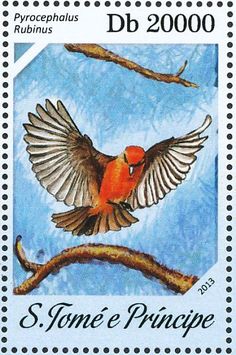
Galápagos faces first-ever extinction of an insectivorous bird
Scientists have discovered a new species of colorful songbird in the Galápagos Islands, with one catch: it’s extinct. Researchers from the California Academy of Sciences, San Francisco State University (SFSU), the University of New Mexico (UNM), and the San Francisco Bay Bird Observatory (SFBBO) used molecular data from samples of museum specimens to determine that two subspecies of Vermilion Flycatchers, both found only in the Galápagos, should be elevated from subspecies to full species status. One of these newly recognized species — the characteristically smaller San Cristóbal Island Vermilion Flycatcher — hasn’t been seen since 1987 and is considered to be the first modern extinction of a Galápagos bird species. The findings were published online earlier this May in the journal Molecular Phylogenetics and Evolution.
“A species of bird that may be extinct in the Galápagos is a big deal,” says Jack Dumbacher, co-author and Academy curator of ornithology and mammalogy. “This marks an important landmark for conservation in the Galápagos, and a call to arms to understand why these birds have declined.”
The study examined the complex evolutionary history of Vermilion Flycatchers by using advanced genetic techniques. In the absence of living tissue, the team turned to the California Academy of Sciences, which houses the largest collection of Galápagos bird specimens in the world. Specimens collected and preserved over 100 years ago allowed the team to carry out DNA sequencing and piece together an evolutionary history of the species.
Vermilion Flycatchers exhibit a complex evolutionary history having branched from an ancestral population into twelve recognized subspecies with ranges that span across the Americas and the Galápagos Islands. This study compares their evolutionary history against the way scientific authorities currently classify the species (and subspecies) to look for any inconsistencies.
“Access to museum collections such as the Academy’s for pursuing these types of studies is invaluable,” says Christopher Witt, study co-author and associate professor of biology at the University of New Mexico. “Preserved specimens can provide the crucial links needed to better understand how life on Earth evolved.”
Two subspecies of the Vermilion Flycatcher, both found only in the Galápagos, were determined to be so genetically distinct that the team elevated them to full species status: Pyrocephalus nanus (throughout most of the Galápagos) and Pyrocephalus dubius (only on the island of San Cristóbal). The latter — significantly smaller and subtly different in color from the other species — is commonly known as the San Cristóbal Vermilion Flycatcher and hasn’t been seen since 1987.
“Wouldn’t it be great if the San Cristóbal Vermilion Flycatcher weren’t extinct? No one is looking, I’m pretty sure of that,” says Alvaro Jaramillo, study co-author and biologist at the San Francisco Bay Bird Observatory. Searches for the San Cristóbal Vermilion Flycatcher have turned up no evidence so far of its existence on the easternmost island of the archipelago, the only place on Earth it is known to have existed. But Jaramillo claims we shouldn’t be so quick to give up on future sightings. “At the very least, this discovery should motivate people to survey and see if there are any remaining individuals of the species hanging on that we don’t know about.”
The Galápagos have been renowned for their species diversity since Charles Darwin — an honorary Academy member inducted in 1872 — described the islands’ biodiversity in vivid detail through his writings. Despite the lasting connection between Darwin’s landmark work on evolutionary biology and the iconic islands, conserving Galápagos biodiversity remains a challenge.
“Sadly, we appear to have lost the San Cristóbal Vermilion Flycatcher,” says Dumbacher, “but we hope that one positive outcome of this research is that we can redouble our efforts to understand its decline and highlight the plight of the remaining species before they follow the same fate.”
Sources:
Ore Carmi, Christopher C. Witt, Alvaro Jaramillo, John P. Dumbacher. Phylogeography of the Vermilion Flycatcher species complex: Multiple speciation events, shifts in migratory behavior, and an apparent extinction of a Galápagos-endemic bird species. Molecular Phylogenetics and Evolution, 2016; 102: 152 DOI: 10.1016/j.ympev.2016.05.029
California Academy of Sciences. “Galápagos faces first-ever bird extinction: Study uses scientific collections to elevate the San Cristóbal Island Vermilion Flycatcher to full species status, but no one has seen it since 1987.” ScienceDaily. 10 August 2016.
https://www.sciencedaily.com/releases/2016/08/160810104013.htm -

Kalifornien: Wo kommen all die autistischen Kinder her?
Von 2001 bis 2015 hat sich die Zahl der autistischen Kinder an den öffentlichen Schulen des US-Bundesstaats Kalifornien versechseinhalbfacht. Woran liegt das? Impfgegner sagen: Es liegt an den Impfungen. Eine Studie verweist auf zusätzliche Umwelteinflüsse. Mehr als 90.000 Schüler in Kalifornien waren im Jahr 2015 Autisten. Noch im Jahr 2001 waren es lediglich rund 14.000. Dies zeigen die Daten des kalifornischen Bildungsministeriums (California Department of Education). Der beängstigende Anstieg von jährlich sieben Prozent und mehr wirft viele Fragen auf. Inzwischen leide bereits jedes 75. Kind in den Kindergärten an Autismus.
Inzwischen versucht man, den Ursachen dieses starken Anstiegs an Autismusfällen auf die Spur zu kommen. Eine der Ursachen dafür, so erste Ergebnisse, könnte die steigende Anzahl an Impfungen darstellen. Ein weiterer wichtiger Faktor, so eine Studie der University of California, liege in Umwelteinflüssen wie Viren (also auch jene “inaktivierte”, die in Impfungen verabreicht werden), Pestizide, Chemikalien und anderen Substanzen.
Während Impfgegner vor allem auf den möglichen Zusammenhang zwischen der steigenden Anzahl an verschiedenen Impfungen und der enormen Zunahme an Autismusfällen hinweisen, sagt die Amerikanische Akademie der Kinderärzte (American Academy of Pediatrics), dass es keinen Beweis für den direkten Zusammenhang zwischen Impfungen und Autismus gebe. Vielmehr müsse man hierfür mehrere Faktoren in Betracht ziehen, da ein alleiniger Zusammenhang nicht gegeben sei.
Quelle: Contra-Magazin, 09.08.16
https://www.contra-magazin.com/2016/08/kalifornien-wo-kommen-all-die-autistischen-kinder-her/ -

Feldhamster im Norden so gut wie ausgestorben
Schwarze Knopfaugen und dicke Bäckchen: Der Feldhamster sieht niedlich aus. Doch zu Gesicht bekommt den Nager im Norden kaum noch jemand, denn der Feldhamster (Cricetus cricetus) ist so gut wie ausgestorben. In Schleswig-Holstein und Mecklenburg-Vorpommern lebt nach Angaben der Deutschen Wildtier Stiftung kein einziger Feldhamster mehr. Und auch für Niedersachsen sieht es schlecht aus: Dort gibt es noch wenige Tiere rund um die die Hildesheimer Börde und Peine, aber auch hier schrumpft der Bestand. “Es ist fünf vor zwölf”, sagt Biologe Peer Cyriacks von der Deutschen Wildtier Stiftung. Früher – in den 1970er- und 1980er-Jahren – sei der Feldhamster aktiv von Bauern bekämpft worden. Heute sehen die Landwirte in dem Nager keine Bedrohung mehr. Doch die Art Felder zu bewirtschaften, macht dem Hamster zu schaffen. “Die zunehmend intensive Nutzung von Feldern ist das Todesurteil für den Hamster”, sagt Cyriacks. Weil Weizen heute früher geerntet wird, verlieren die Hamster schon im August ihre Deckung. Fressfeinden wie Fuchs und Bussard seien die Tiere schutzlos ausgeliefert. Auch brauchen sie die Feldkörner und Samen für ihr Winterlager. Ohne diesen unterirdischen Nahrungsvorrat stünden ihre Überlebenschancen sehr schlecht. Außerdem setzten den Hamstern Pestizide zu.
Quelle: NDR, 09.08.2016
https://www.ndr.de/nachrichten/Feldhamster-im-Norden-so-gut-wie-ausgestorben,feldhamster124.html -
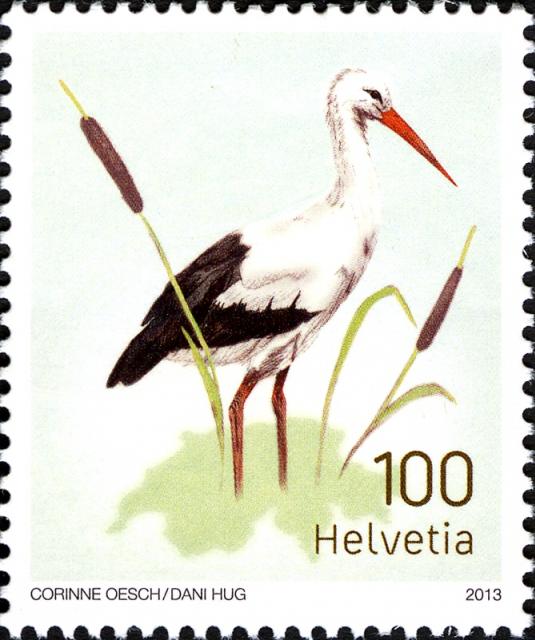
Brandenburger Störche finden kaum noch Futter
Ein schwieriges Jahr für Störche? Bernd Elsner schüttelt den Kopf. “Schlimmer. Es läuft miserabel”, sagt der Leiter des Weißstorch-Informationszentrums vom Naturschutzbund Deutschland (Nabu) in der Spreewaldgemeinde Vetschau. Schon seit dem Frühjahr. Zwar machte der 53-Jährige im April und Mai rund 100 Storchenpaare auf den Horsten in der Region aus. Doch viele “Oststörche”, die über den Bosporus fliegen, seien verspätet aus ihrem Winterquartier zurückgekehrt. “Und haben gar nicht erst gebrütet”, klagt Elsner. Eine Entwicklung, die auch Manfred Pohl kritisiert. Seit 2003 kümmert sich der 62-Jährige im Landesumweltamt in Potsdam ehrenamtlich um das Wohlergehen der Störche (Ciconia ciconia) , seit Februar ist er Vizechef des Potsdamer Nabu-Kreisverbandes. Die Förderpolitik von Landwirtschaftsminister Jörg Vogelsänger (SPD) kritisiert er offen. “Grünland wird umgebrochen, aus Wiesen Ackerland gemacht, der Anbau von Mais, Sonnenblumen oder Raps unterstützt.” Für ihn ein fatales Signal. “In der Politik finden Naturschützer leider nur schwer Gehör.” Die Landwirtschaftslobby habe es da leichter in Brandenburg. “Die Bauern denken an ihren Gewinn.” Um den zu maximieren, würden sie viele Pestizide einsetzen. “Das schadet nicht nur unseren Störchen. Der Kreislauf der Natur wird gestört.” 75 Prozent der Wildkräuter würden wegen des Gifteinsatzes dezimiert. “Damit verschwinden 75 Prozent der Insekten, den Vögeln wird ihre Nahrungsquelle genommen.”
Quelle: Berliner Morgenpost, 12.08.2016
http://www.morgenpost.de/berlin/article208045697/Brandenburger-Stoerche-finden-kaum-noch-Futter.html