Auteur: Henk Tennekes

  • The official symbol of Burma’s last kings is on the way to extinction

    The official symbol of Burma’s last kings is on the way to extinction

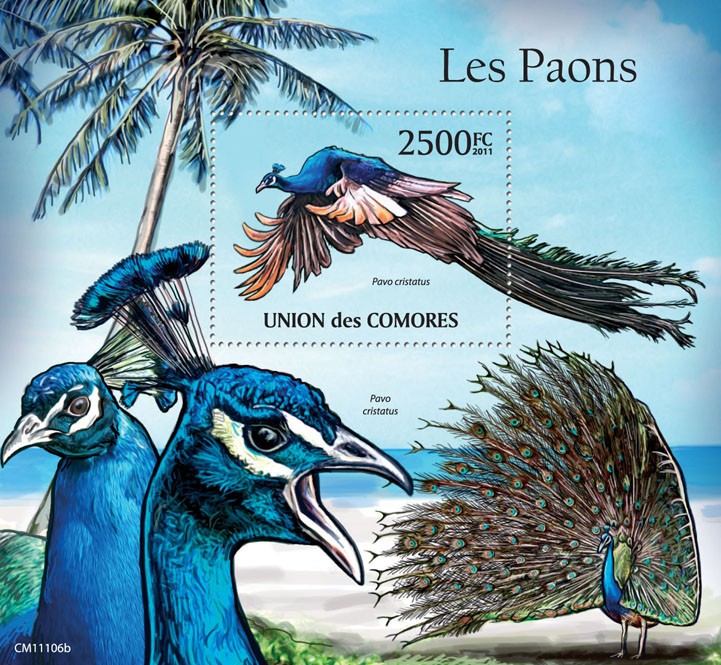
    Embraced by kings and freedom fighters alike, Myanmar’s peacocks have long been a national symbol of pride and resistance—but they are becoming ever harder to spot in the wild. Ornithologist Thet Zaw Naing is worried. Every year that goes by, Myanmar’s national bird becomes a less familiar sight.
    “They always walk on the ground and they sleep in trees at night,” he tells AFP. “And before they go to sleep, they always cry ‘Oway Oway’. That’s why people can know easily where they are and easily capture them.” Decades ago the birds, with their bright green plumage and famously ostentatious male tail feathers, were ubiquitous. For decades it was the official symbol of Burma’s last kings, the Konbaung dynasty. Their monarchs wore peacock insignia on their robes and famously sat atop the Peacock Throne until their rule was toppled by British colonialists. Peafowl are omnivores and eat most plant parts, flower petals, seed heads, insects and other arthropods, reptiles, and amphibians.

    Read more at: http://phys.org/news/2016-08-myanmar-peacock-national-dying-wild.html#jCp
    https://en.wikipedia.org/wiki/Peafowl#Diet

  • Die Nahrungszufuhr der Fledermäuse ist gefährdet, da der Insektenbestand abnimmt

    Die Nahrungszufuhr der Fledermäuse ist gefährdet, da der Insektenbestand abnimmt

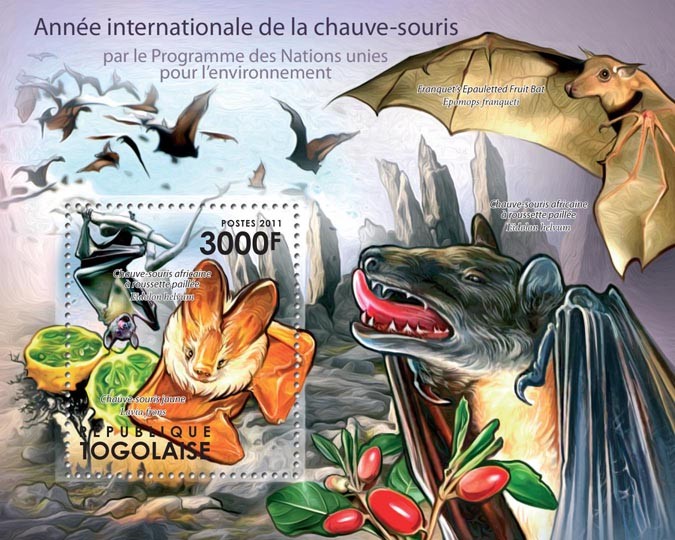
    Sie sind lautlose Jäger, aber inzwischen selbst in Gefahr: 16 verschiedene Fledermausarten leben in Niedersachsen – und alle stehen unter gesetzlichem Schutz. Fledermäuse leiden zunehmend unter Nahrungsmangel und der Vernichtung ihrer Lebensräume. Der Naturschutzbund (Nabu) bringt bei Fledermausnächten, sogenannten Batnights, Licht ins Leben der nachtaktiven Insektenfresser.

    Bundesweit gibt es bis Ende August bei Batnights überall im Land Exkursionen, Vorträge und Veranstaltungen. „Die Fledermäuse sind vielfach unter Druck geraten, insbesondere durch die Veränderungen in der Landwirtschaft und früher auch in der Forstwirtschaft”, sagt Rüdiger Wohlers, der Geschäftsführer des Nabu im Oldenburger Land ist. Besonders die Nahrungszufuhr der Fledermäuse ist gefährdet, da der Insektenbestand abnimmt – pro Nacht nehmen die Tiere etwa ein Drittel ihres Körpergewichts an Insekten zu sich. „Pestizide sind eine enorme Belastung unserer Umwelt insgesamt und tragen auch dazu bei, dass die gesamte Anzahl der Insekten ganz stark abgenommen hat”, sagt Wohlers.

    Quelle: Kreiszeitung, 24.08.16
    http://www.kreiszeitung.de/lokales/niedersachsen/nabu-klaert-batnights-ueber-leben-nachtaktiven-fledermaeuse-niedersachsen-6688121.html

  • Artensterben im Landkreis Ebersberg

    Artensterben im Landkreis Ebersberg

    Eidechsen, Mauersegler, Schwalben, Fledermäuse und verschiedene Schmetterlingsarten sind nur ein Teil der Tiere, die im Landkreis Ebersberg immer seltener anzutreffen sind und irgendwann, wenn nichts dagegen unternommen wird, vielleicht gar nicht mehr. Inzwischen ist es etwas Besonderes, wenn Tagpfauenaugen und Distelfalter durch den Garten flattern. Der Sommerflieder, auf den sich in den letzten Jahren immer mehrere Exemplare niederließen, lockt nach heutigen Zählungen höchstens einen Schmetterling am Tag an. Auch Hummeln werden immer seltenere Gäste.

    Die Kreisgruppe Ebersberg des Bund Naturschutzes hat für dieses Artensterben verschiedene Ursachen gefunden. Das in letzter Zeit viel diskutierte und umstrittene Pflanzenvernichtungsmittel Glyphosat und andere „chemische Keulen“ hätten unter anderem dazu beigetragen, dass die Insekten- und Amphibienpopulation im Landkreis Ebersberg geringer werde.

    Quelle: Merkur, 23.08.16
    http://www.merkur.de/lokales/ebersberg/landkreis/naturschuetzer-sind-alarmiert-artenschwund-landkreis-ebersberg-6669734.html

  • De inzet van neonics in koolzaad gaat ten koste van wilde bijensoorten

    De inzet van neonics in koolzaad gaat ten koste van wilde bijensoorten

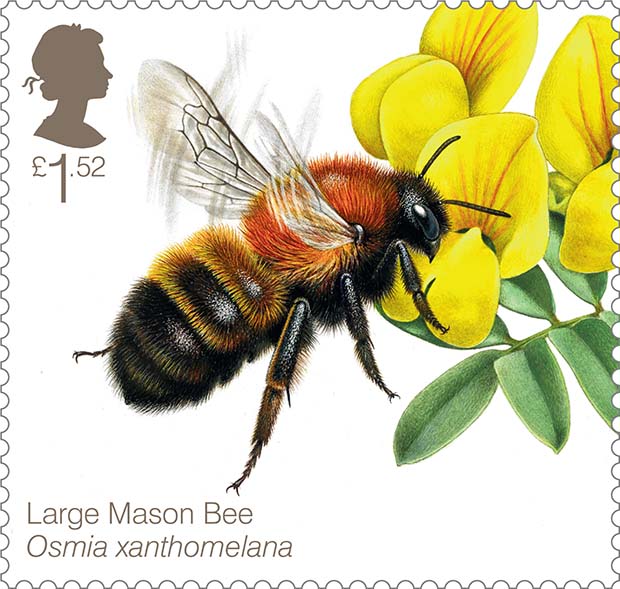
    Wilde bijen verdwijnen waar boeren hun gewassen behandelen met neonicotinoïden. Dat maakten Britse ecologen dinsdag bekend in wetenschappelijk tijdschrift Nature Communications. Het is voor het eerst dat de lange-termijnschade van dit landbouwgif in kaart is gebracht. In kortdurende veldproeven was al aangetoond dat de neonicotinoïden schadelijk waren voor bijen. De Britse ecologen bestudeerden koolzaadvelden die al dan niet met neonicotinoïden waren behandeld. Die gegevens correleerden ze met bijentellingen van vrijwilligers die tussen 1994 en 2011 zijn uitgevoerd. Zij turfden 62 wilde bijensoorten.

    Lokaal namen de aantallen wilde bijen af bij velden waar neonicotinoïoden werden gebruikt. Dat gold vooral voor bijen die deels afhankelijk zijn van het stuifmeel van koolzaad. Zes soorten verdwenen zelfs helemaal, uit meer dan 20 procent van de onderzochte gebieden. Dat waren bijvoorbeeld de slanke groefbij en de slakkenhuisbij. De wilde bijen gingen het hardst achteruit in de buurt van velden waar het koolzaad al als zaad met pesticiden was behandeld. Als de stof op het blad werd aangebracht, waren de gevolgen minder ernstig.

    Bron: NRC, 17-08-16
    https://www.nrc.nl/nieuws/2016/08/17/bijen-verband-aangetoond-tussen-landbouwgif-en-verdwijnen-bijen-3813674-a1516689

  • Britain’s wildlife is in dire straits

    Britain’s wildlife is in dire straits

    Britain’s wildlife is facing a “crisis” with more than 120 species at risk of extinction due to intensive farming, a report will warn. Hundreds of the country’s best-known animals – including types of woodpecker and butterfly – will have an uncertain future with some disappearing completely as their numbers decline rapidly, the State of Nature 2016 report will say. Sir David Attenborough, writing in a foreword for the report, is expected to label the drastic changes a “crisis”. The report, which will be published on September 14 and includes research from experts across 53 wildlife organisations, will point to agricultural policy as one of the aggravating factors. It comes after an initial report into the state of the country’s wildlife was published three years ago. The new document is expected to provide an update as well as further information following an assessment into the status of 4,000 species. Richard Gregory, the Royal Society for the Protection of Birds’s head of species monitoring, who is leading the project, told The Sunday Times the biggest threat “by far” was the “steady intensification of farming, which leaves no room for wildlife and is driving many species towards extinction”. He added: “We assessed 1,118 farmland species, including birds, mammals and plants, finding that 123 are facing extinction in the UK, which is a terrible statistic.”
    Source: The Telegraph, 21 August 2016
    http://www.telegraph.co.uk/news/2016/08/21/britains-wildlife-crisis-with-more-than-120-species-at-risk-of-e/

  • Wo sind die Wespen?

    Wo sind die Wespen?

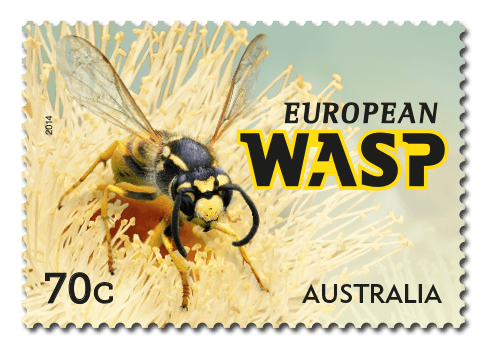
    Ob beim Frühstück im Garten oder beim Eis essen auf dem Balkon: zumindest gefühlt stören dabei deutlich seltener Wespen. Aber stimmt das – gibt es in diesem Jahr wirklich weniger von den gelb-schwarzen Insekten? Oder sind sie nur spät dran? Das Gefühl trügt nicht, denn in diesem Jahr gibt es tatsächlich weniger Wespen. Das bestätigt auch die Hornissenbeauftragte Wega Kling vom Naturschutzbund (NABU) Saarland. Der Rückgang wird übrigens nicht nur am Kaffeetisch sichtbar, bisher gingen bei Wega Kling nur drei Beratungsanrufe von Bürgern ein. Diese melden sich gewöhnlich, um Hilfe beim Entfernen von Hornissen- und Wespennestern sowie Tipps im Umgang mit den Insekten zu bekommen. Im vergangenen Jahr seien es nach Angaben der Hornissenbeauftragten des NABU mindestens 50 gewesen. Allerdings hat der NABU eine Studie durchgeführt, bei der „insgesamt ein dramatischer Rückgang von Fluginsekten zu beobachten ist.“ So gebe es über die letzten 15 Jahre in einigen Gebieten bis zu 80 Prozent weniger Fluginsekten. Und das wiederum sorgt auch bei den Wespen insgesamt für eine kleinere Population. Denn diese ernähren sich unter anderem von Fliegen oder Mücken.

    Und auch wenn das für einige Grund zur Freude ist, weil sie gerne ungestört frühstücken – gut für die Umwelt ist das nicht. Denn Wespen leisten zum einen auch “Bestäubungsarbeit, die nicht ohne Bedeutung ist”, so Kling. Zum anderen seien sie selbst Nahrung für Vögel wie zum Beispiel Schwalben oder Mauersegler. Gibt es weniger Wespen, beeinflusst das auch den Vogelbestand. Deshalb gibt Kling zu bedenken: “Weniger Insekten bedeutet generell auch gleichzeitig weniger Vögel.”

    Quelle: SR, 17.08.16
    http://www.sr.de/sr/home/nachrichten/panorama/wespen_rueckgang_wetter100.html

  • There is the danger that we will only really take notice of insect decline when it is too late

    There is the danger that we will only really take notice of insect decline when it is too late

    There has been a lot of discussion about the decline in bee populations and its dire consequences for agriculture. We have also talked about the efforts to save the monarch butterfly, whose numbers have been dropping dramatically over the years. But the rest of the insect world does not get much attention. For the most part, we think of insects as a nuisance or as potential pests. A number of studies in recent years in Germany, Great Britain, and in the United States have concluded that many insect populations worldwide are in severe decline, and this is not a good thing. While some insect species, such as the European corn borer or mosquitoes responsible for spreading the Zika virus, cause damage and diseases, there is tremendous ecological importance associated with diverse and abundant insect populations.

    Insects perform a long list of ecosystem services that include pollination and being a major food source for birds, bats and amphibians. Other insects prey upon pest species and keep their numbers in check.

    There are multiple reasons for the overall decline in insect populations. These include the ubiquitous use of pesticides, the spread of monoculture crops such as corn and soybeans, urbanization, and habitat destruction.

    The decline in insect populations is a gradual process and there is the danger that we will only really take notice when it is too late. A significant drop in insect population could have far-reaching consequences for the entire natural world, and that includes our own species. The real question is whether governments view preserving biodiversity as an existentially important topic, or just one of a long list of things to consider on their to-do lists.

    “Earth Wise” is heard on WAMC Northeast Public Radio and is supported by the Cary Institute.
    Source: Poughkeepsie Journal, 18 August 2016
    http://www.poughkeepsiejournal.com/story/life/2016/08/18/earth-wise-insect-population-decline/88945348/

  • Johnson’s Mills shorebird reserve sees sharp drop in birds

    Johnson’s Mills shorebird reserve sees sharp drop in birds

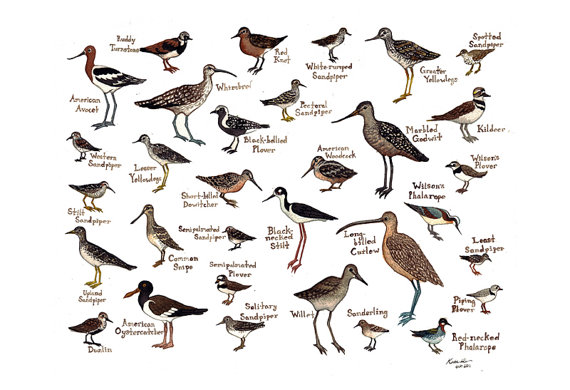
    At a time when the bird population should be peaking, the Johnson’s Mills Shorebird Reserve has seen a sharp decline in numbers, according to the Nature Conservancy of Canada. Some flocks of shorebirds that normally visit the reserve, which is near Dorchester in southeastern New Brunswick, are down by half. “This time of year we typically see flocks of 140,000 birds, 100,000 at least. [Tuesday] there was 70,000,” said Andrew Holland, the national spokesperson for the Nature Conservancy of Canada. It’s not only the number of birds that have been reduced at the reserve this year, it’s also the variety of birds. Holland said he finds this troubling. “Obviously all these birds are integral to the ecosystem and they all have important roles for population levels around the world,” said Holland.

    Sightings of the rare black-bellied plover have plummeted and that’s after taking into account the small numbers that have stopped to feed on the mud flats in recent years.

    “This time of year we usually see about 30 of those, so far it’s only been half a dozen,” said Holland

    The birds that stop to rest and feed at Johnson’s Mills are generally flying from the Arctic.
    Source:
    CBC News, 17 August 2016
    http://www.cbc.ca/news/canada/new-brunswick/shorebirds-decline-johnsons-mills-1.3724219

  • Trois fois plus d’abeilles sauvages meurent à cause des pesticides

    Trois fois plus d’abeilles sauvages meurent à cause des pesticides

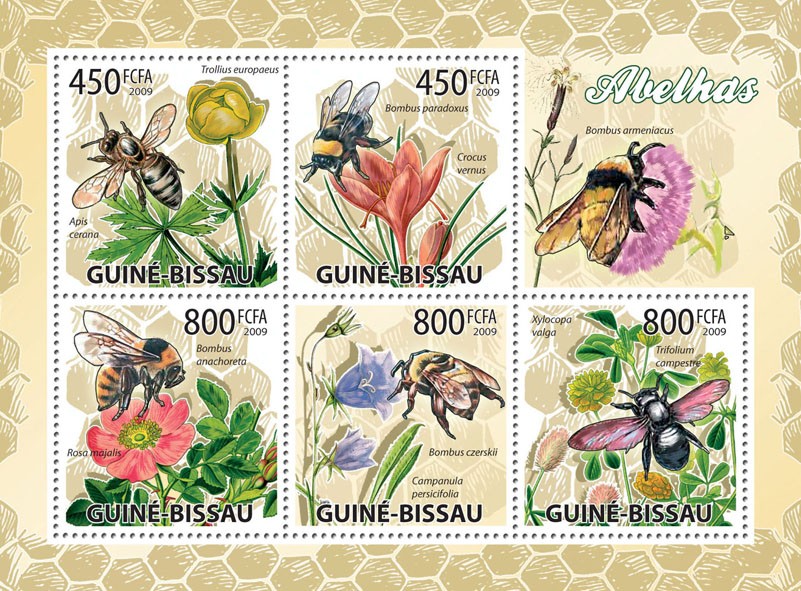
    D’après une étude britannique publiée mardi 16 août, le taux de mortalité des abeilles sauvages aurait triplé à cause des pesticides. Les pesticides néonicotinoïdes auraient multiplié par trois la mortalité des abeilles sauvages. Voilà le constat d’une étude britannique parue mardi 16 août dans la revue Nature Communications. Les apiculteurs alertent depuis plusieurs années sur le lien entre l’usage de ces puissants pesticides et l’effondrement du nombre de colonies d’abeilles sauvages. La Commission européenne avait d’ailleurs interdit l’utilisation de trois insecticides dès avril 2013. Pourtant, les études scientifiques sur le sujet n’avaient pu apporter de preuves irréfutables quant à l’impact de ces pesticides sur la disparition de certains insectes. À partir de la situation britannique, les sept signataires de cette nouvelle étude affirment avoir établi ce lien.

    Une étude sur 18 ans et 62 espèces. Les chercheurs se sont appuyés sur les relevés de la société britannique Bees, Wasps and Ants Recording Society effectués de 1994 et 2011. Parmi ces données, ils ont retenues celles qui concernent les abeilles sauvages repérées au moins cinq cent fois sur des parcelles d’un kilomètre carré de champs de colza ayant été traités aux néonicotinoïdes. Cette plante a été choisie comme référence parce qu’elle est désormais la principale culture traitée avec ce type de pesticide. L’échantillon étudié comporte plus de 31.800 relevés.

    Une augmentation de 10 à 20% de la mortalité des abeilles sauvages. La conclusion de cette étude est sans appel : l’utilisation des néonicotinoïdes triplerait la mortalité des abeilles sauvages. “Nous estimons que, depuis 2002 [année à laquelle cette famille de pesticides s’est largement répandue en Grande-Bretagne], l’usage des néonicotinoïdes est responsable à lui seul d’une perte de plus de 20% pour cinq espèces”, écrivent les scientifiques. Ils précisent qu’elle provoque également un déclin de près de 10% pour 24 espèces et 15% pour 11 d’entre elles. Ces insecticides, qui agissent sur le système nerveux des insectes, seraient également responsables d’une altération du sperme des abeilles.

    Des néonicotinoïdes bientôt interdits en France. Dans le cadre de la loi pour la reconquête de la biodiversité, votée le 20 juillet dernier, la France a interdit tous les produits pesticides comprenant des néonicotinoïdes sur le territoire à partir du 1er septembre 2018, avec des dérogations possibles jusqu’en 2020. Un délai prévu pour donner aux industriels le temps de trouver des substituts.
    Source: Europe 1
    http://www.europe1.fr/sciences/trois-fois-plus-dabeilles-sauvages-meurent-a-cause-des-pesticides-2823034

  • The evidence that neonics are damaging our ecosystem is growing – and so is the case for organic food

    The evidence that neonics are damaging our ecosystem is growing – and so is the case for organic food

    Traditional farming and gardening has long taken a straightforward approach: if an unwanted plant or animal interferes, it is to be killed. We even developed a special vocabulary to help justify our actions: the animals were “vermin” and the plants were “weeds”. And, in the case of one hen-house plunderer, we came up with the elaborate ritual that is fox hunting, complete with a special ‘language of avoidance’ that anthropologists have found in cultures around the world (the fox is a “dog”, its face is a “mask”, its tail is a “brush”, the dogs are “hounds”). Unfortunately for us, some human classifications of wildlife have little to do with reality. Over millennia, nature has created a complex eco-system in which most things have their place in a slowly shifting balance. It is a delicate situation that is easily upset.

    Introduce an alien species and it can become a rampant ‘pest’ that causes all sorts of problems. Just ask our plucky white claw crayfish about the arrival of their bigger, nastier signal crayfish cousins from the US – thanks to transportation provided by us humans.
    If you are farmer you don’t really want this to be true. After all, these chemicals help you keep your oilseed rape crop safe from the cabbage stem flea beetle, by all accounts a pest with a deservedly fearsome reputation. So agriculture’s reaction to the latest research, which found the use of neonics was associated with “large-scale population extinctions” of nearby wild bees, was perhaps predictable.

    It was an “interesting piece to an unsolved puzzle” about neonics effects on bees, said Dr Chris Hartfield, the National Farmers Union’s bee health specialist. But he added there were “still major gaps in our knowledge and a limited evidence base to guide policymakers”.

    His unusual job title is possibly an indication of the importance of bees (and, cynics might suggest, the pesticides) to agriculture. They are a significant pollinator to important food crops and, if they were to disappear, farmers would have a big problem. In some parts of the world, crops have had to be pollinated by people with special sticks due to the lack of insects available to do the job.

    Environmental campaigners are not the only ones starting to get a bit frustrated by farmers’ reluctance to accept the direction in which the evidence is pointing. Scientists staring at the hard facts are, too. It is a debate that raises broader questions about our use of pesticides in general. The belief that pouring poisons onto the ground in large quantities is a good idea is increasingly being called into question.

    Our approach to pest control represents another significant intervention that can have unintended consequences. Evidence has been growing steadily that neonicotinoid insecticides (also known as neonics) cause a problem for bees.
    The popular weedkiller, glyphosate, the active ingredient in Roundup, is so commonly used that it has been detected in small levels in bread, human urine and breast milk. Experts appear divided on whether it does, or does not, pose a significant cancer risk, but if it and others were to be banned farmers would soon start running out of options.

    The use of pesticides is a deliberate attempt to alter the natural state of things for our own benefit – specifically to produce large amounts of food at a price that people can afford. And that is clearly important, particularly given there are people in the UK, one of the world’s richest countries, who rely on food banks to get by. But if killing off pests is damaging our health and wildlife like bees that provide important ‘eco-system services’ then a comprehensive cost-benefit analysis may point to the need to change to a different system.

    The supporters of organic farming at the Soil Association believe they have the answer. According to Emma Hockridge, the association’s head of policy for farming and land use, the results of the neonic study were “horrifying”. There was, she said, “overwhelming scientific evidence” of the harmful effect on pollinating insects.

    Organic produce can be pricey at the moment, but it is unarguably grown in ways more in tune with the natural world than traditional techniques.

    Some have a tendency to sneer, to view organic farming as a bit namby-pamby, a cause for champagne socialists who have moved to the countryside. But Nature with a capital N is a force to be recognised, shaped in the cauldron of Darwin’s “survival of the fittest”. Forcing it to conform to our way of thinking smacks a bit of the Soviet Union’s Communist command economy, eventually brought to its knees by the build-up of pressure from market forces. Eventually, the build-up of unintended consequences from our use of chemicals just might produce a similar result in modern agriculture.

    Source: The Independent, 17 August 2016
    http://www.independent.co.uk/voices/neonics-neonictenoids-pesticides-damaging-bees-ecosystem-organic-food-a7195156.html