Auteur: Henk Tennekes

  • Journalist Michael McCarthy has chronicled the global loss of wildlife

    Journalist Michael McCarthy has chronicled the global loss of wildlife

    It is the blizzard of moths that Michael McCarthy remembers most vividly. As a boy growing up in post-World II England, his family would take summer nighttime drives to the coast for holidays, and the car headlights and windshield would soon be so splattered with moths that they would have to stop to clean them off. “That phenomenon has gone. It’s disappeared,” says McCarthy. “It’s disappeared because there has been a horrendous crash in moth numbers in the U.K.”

    McCarthy calls the thick clouds of moths that would appear in the English countryside in those days the “moth snowstorm,” which he uses as a metaphor for the loss of nature throughout the world. His recent book, The Moth Snowstorm: Nature and Joy, offers a defense of the natural world that is rooted in the elemental joy and spiritual nourishment it provides to humans.

    In an interview with Yale Environment 360, McCarthy, the former environment editor of The Independent, talks about the staggering loss of wildlife globally (his native Britain has lost half its farmland birds since 1970); how the decline in species abundance, as opposed to extinctions, is too often overlooked; and why he thinks the concept of putting a monetary value on so-called ecosystem services is too limited as a conservation approach. “You can say mangrove swamps are worth so many billion dollars,” he says. “But what about birdsong? How much is birdsong worth?”

    Yale Environment 360: In your book, you write about the joy and wonder that people find in nature, how it’s a connection that runs very deep in the human psyche, and you postulate that this goes all the way back to humans’ hunter-gatherer past. How so?

    Michael McCarthy: If there is an idea at the heart of the book, it is that I believe – and I’m saying this just as a lay person, not as a scientist – that we have a very deep instinctive bond with the natural world, which is not just a spiritual phenomenon, but it’s real. It’s actually in our genes. It empirically exists. And I think that this comes from the fact that we have been operators of computers for one generation, and we’ve been workers in electrically-lit offices for three generations, and we were farmers for 500 generations – but even before that, we were hunter-gatherers for 50,000 generations or more. One of the great discoveries of evolutionary biology in the last 20 or 30 years, although it is to some extent still contentious and might be challenged by some, is the realization that the 50,000 generations we spent as hunter-gatherers, as an organic part of the natural world living as wildlife, are more important to our psyche even now at the very deepest level than the 500 generations we spent as farmers.

    At the profoundest level, we are still the children of the Pleistocene. We are still the children of the ice ages, and we have a very powerful link to the natural world, There would be so many moths in the headlight beams that they would seem like snowflakes.’ which is in, I think, every one of us. It’s not always visible. But it is an organic part of us, and, if we destroy it, we’re destroying a part of ourselves.

    e360: The title of the book is The Moth Snowstorm. Explain why you chose that title.

    McCarthy: What I’m calling the moth snowstorm was a curious phenomenon that made vividly manifest the abundance and riches of nature. On hot, muggy summer nights in England 50 years ago, if you were driving down a country lane in a car, there would be so many moths in the headlight beams that they would seem like snowflakes. And if you drove faster, there would seem like more and more, until they almost seemed like a blizzard. And eventually they would cover your windscreen, and they would cover your headlights, and you would have to stop and wipe the windscreen clear and wipe the headlights clear, because the simple abundance of life was stopping you from continuing.

    Many people over 50 or 60 remember this phenomenon in England – it was quite common. Well, that phenomenon has gone. It’s disappeared. It’s disappeared because there has been a horrendous crash in moth numbers in the UK, and indeed in insect numbers and in invertebrate numbers overall. There was an article in Yale Environment 360 a few months ago that talked about the desperate decline of invertebrates worldwide and the fact that people are not really paying any attention to it. Everybody’s upset, and rightly so, about the loss of charismatic megafauna like the African elephant. But if we look at the declines in what [Harvard biologist] E.O. Wilson called “the little things that run the world,” nobody seems to be very bothered. Yet these declines are terrible, and the moth snowstorm is a metaphor for that.

    e360: It’s not just moths. In your lifetime, Britain has lost half its wildlife.

    McCarthy: Britain has lost more than half its wildlife in my 69 years. This is a ghastly truth, which in the last four or five years has become appreciated by conservation scientists in the United Kingdom, even though it is still not really appreciated by the public at large. There have been catastrophic losses and declines of birds, of insects, of wildflowers, almost certainly because of the intensification of agriculture. This was not a disappearance of a species – it was a disappearance of abundance, which is very subtly different.’ The government’s farmland bird index number showed a 56 percent decline since 1970 – so just since the Beatles broke up, by the British government’s own admission, Britain has lost more than half of the birds that delighted people when they walked in the countryside. And because intensive farming started nearly 25 years earlier than that, the real loss is probably very much greater.

    e360: Intensive farming? What changed in agriculture in Britain?

    McCarthy: Britain had a traumatic experience in the Second World War. Britain could not feed itself, and our food supplies from places such as America were nearly cut off because of the German U-boats. So after the war, the Labor government decided that we would never again be in this position and that we would try and become self-sufficient in food, so they sought to maximize agricultural production. They passed the Agriculture Act of 1947, which for the first time in Britain gave farmers subsidies to plow up unprofitable pieces of land and to get rid of features that really weren’t crop-worthy.

    In the past, what made Britain’s countryside so beautiful and so charming was that the cornfields had butterflies above them and wildflowers in them. But with the modernization of farming that took place gradually after 1947, the farmers were given grants to do away with “nonproductive” parts of their estates. So they got rid of hedges, they bulldozed hundreds if not thousands of miles of hedges, and they got rid of hay meadows, they got rid of ponds. These were all very wildlife-rich features of the land.

    The intensification of farming in the United Kingdom has taken such a toll on the wildlife of the country that I believe it has fundamentally changed the nature of the country just as much as our social changes have changed it over the last 50 years.

    e360: This was a dramatic change, which you point out was not really noticed when it was happening. Why, do you think?

    McCarthy: It was gradual. There is a metric that the general public uses to work out when the natural world is in trouble and that metric is extinction. If a species goes extinct globally, it will be on every front page in the world if it’s a big species. If the African elephant, God forbid, goes extinct, it’ll be on every front page. But this was not a disappearance of a species – it was a disappearance of abundance, which is something very subtly different. Nature is a part of us. It’s not just a luxury. It’s an organic piece of who we are.” It was a shrinking, a shrinking in numbers, all across the land.

    e360: You talk about the importance of the natural world for people. Some at the United Nations and elsewhere have been promoting the idea of ecosystem services as a way of putting a monetary value on nature or aspects of nature. Is that a useful approach?

    McCarthy: Yes, it is. It is enormously useful, but it is flawed. That’s the problem. There’s no doubt it’s a wonderful step forward to see that nature is not just there as something we can look at and like, but recognizing that it actually does things for us practically. This is a realization that has only really come about the last two or three decades. The problem is it only values, it only seeks to preserve in its essence, those features of the natural world on which a monetary value can be placed.

    You can say that coral reefs are worth so many billion dollars, and you can say rainforests are worth so many billion dollars, and you can say mangrove swamps are worth so many billion dollars. But what about birdsong? How much is birdsong worth? If you can’t put a value on birdsong, do we discount it? How much are butterflies worth? How much is the rising of trout worth? How much is the unfolding of ferns worth, or the appearance of spring flowers or autumn mushrooms? How much are these worth?

    If you cannot put a monetary value on them, if the environmental economists can’t do that, does that mean that they are worthless? That’s the problem. It’s selectivity. It means that half of nature is not going to have environmental economists running after it and telling national finance ministers that they must preserve it.

    e360: You’re calling for a different way of looking at nature.

    McCarthy: Yes, one that focuses on what it means to our souls, rather than what it means to our corporeal needs.

    Vanishing Insects Insect populations are declining dramatically in many parts of the world, recent studies show. Researchers say various factors, from monoculture farming to habitat loss, are to blame for the plight of insects, which are essential to agriculture and ecosystems.

    e360: That’s where you get into the subtitle of your book, “Nature and Joy.”

    McCarthy: Nature and joy, yes. It’s based on my belief that there is a very deep link between us and the natural world. Nature’s not an option extra. It’s a part of us. It’s not just a luxury. It’s an organic piece of who we are, and if we destroy it, we’re destroying part of ourselves.

    Most people love the natural world, but they tend to love it in what you might call an unengaged way. I think that if you add to people’s casual love for the natural world the realization and knowledge that actually it’s a core part of us, it’s really the only place where we can find peace, I think that’s an idea, were it to become more widely appreciated, that could have great power in defending nature against the mortal threats it now faces.

    Roger Cohn, who conducted this interview, is the editor of Yale Environment 360.
    Source:
    Yale Environment 360, October 20, 2016
    http://e360.yale.edu/feature/the_moth_snowstorm_species_loss_michael_mccarthy/3045/
  • The amphibian Armageddon – immune suppression by neonicotinoids is the culprit

    The amphibian Armageddon – immune suppression by neonicotinoids is the culprit

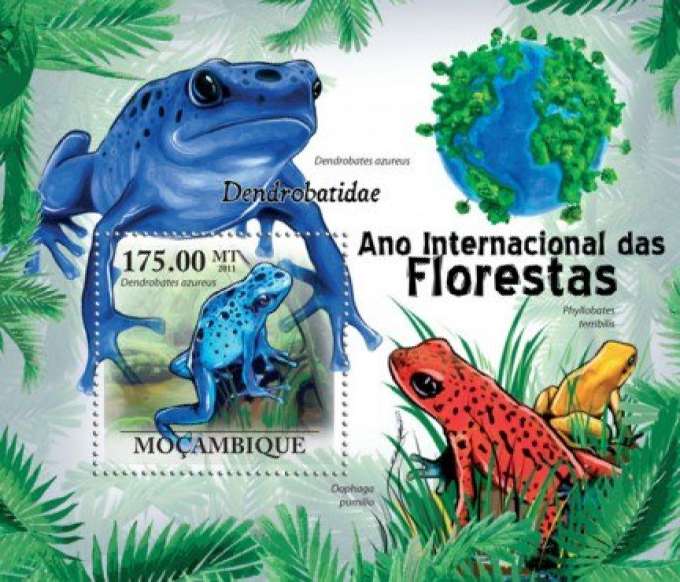
    Last month, a frog died in an Atlanta botanical garden. With it went an entire species never to hop along the Earth again. Biologists at Zoo Atlanta who’d looked after the frog for the past 12 years called him “Toughie.” He was a charismatic, glossy-eyed specimen and the very last Rabbs’ fringe-limbed tree frog in the world. Joseph Mendelson, the director of research at Zoo Atlanta, had been prepared for this. When the Rabbs’ frog was discovered in Panama in 2005, some 80 percent of the population had already been lost to disease. A few were removed in hope of a revival. Alas, the last female died in 2009. In 2012, when another male died, Toughie became the sole survivor of his kind.
    Still, his death hurts, in part because of one of his beautiful biological quirks: The Rabbs’ were the only species in the world where the fathers let the babies eat the skin off their backs.
    “THE WORLD HAS GOTTEN SO BAD NOW THAT EVEN THE AMPHIBIANS CAN’T TOLERATE IT.”
    “Allowing tadpoles to eat a [father’s] flesh, that’s never been documented in any animal in the world,” says Mendelson. “And we lost that.”

    Frog like the Rabbs’ and other amphibians are dying off at an alarming rate. It’s estimated that 200 species of frogs have gone extinct since the 1970s, and many fear it’s a harbinger of greater biodiversity loss that will come for birds, fish, and mammals too.

    Ecologists fear that the planet is in the midst of a mass extinction — the sixth in the long history of life on Earth. And it’s looking like amphibians are the most at-risk class of vertebrates.

    This is particularly disturbing because amphibians — which include frogs, salamanders, and caecilians (they look like worms crossed with snakes) — have been around for hundreds of millions of years.

    “During the great extinctions of the dinosaurs in the Pleistocene, amphibians made it through with no appreciable effect,” Mendelson says. “So they’re not the most delicate creatures in the world. But the world has gotten so bad now that even the amphibians can’t tolerate it.”

    Broadly, that’s how it looks. But as with most stories of biology, this one is not so simple.

    Some amphibians are revealing resilience even under significant threat. These amphibians are teaching humans critical lessons about what we need to do to protect and save more of them from extinction. To put it another way: As one frog dies, another one (the Sierra Nevada yellow-legged frog) is making a surprising comeback, offering a glimmer of hope for the amphibian Armageddon.
    A great percent of the losses are due to one disease: Batrachochytrium dendrobatidis, sometimes called BD or the chytrid fungus, which is one of the biggest threats to amphibians worldwide.

    “The chytrid is know to infect pretty much every species of amphibian,” says Reid Harris, a biologist and director of international disease mitigation at the Amphibian Survival Alliance. Not all species succumb to it, but the ones that do die off in horrifying fashion. It’s thought that BD is the main culprit behind the 200 frog species extinctions seen in the past several decades. That’s “the greatest disease-driven loss of biodiversity ever documented,” the journal Nature reported in 2012.
    Source: VOX, October 14, 2016
    http://www.vox.com/science-and-health/2016/10/14/13147056/amphibian-extinction-frog-bd

  • Canada’s lost aerial insectivores – neonicotinoids are the culprit

    Canada’s lost aerial insectivores – neonicotinoids are the culprit

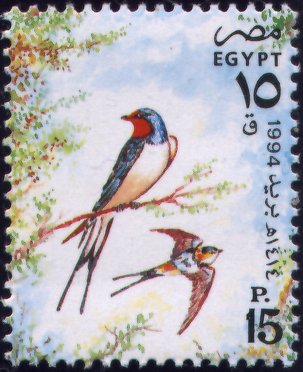
    Forty years ago, swallows were a common sight in the summer, darting between the beams of old barns or swooping low over the waters of a creek. These swift aerial acrobats seemed to be everywhere — perched on telephone lines by the dozen awaiting the fall migration, or whirling and diving around old wooden bridges in pursuit of airborne insects. Now, these birds have seemingly disappeared from midair, entirely abandoning large swathes of their former Canadian range. Some, like the bank swallow, have seen their numbers plummet by 98 per cent since 1970. They’ve become the centre of one of Canada’s greatest biological mysteries, and scientists are scrambling to discover why. The swallows’ disappearance is part of a larger trend affecting birds known as aerial insectivores, which spend much of their lives on the wing in a constant search for airborne insects to dine on. This group, which includes chimney swifts, purple martins, and whippoorwills, has plunged by 70 per cent in population in Canada, according to a 2012 report by the North American Bird Conservation Initiative. Many birds in this category are now listed as threatened in Canada.
    Myles Falconer is a biologist at Bird Studies Canada, a not-for-profit organization dedicated to the study of Canadian bird populations. He’s studied bank swallows since 2010, and penned a 2014 report on the birds for the federal Committee on the Status of Endangered Wildlife in Canada. Forty years ago, these tenacious burrowing birds numbered over 70 million individuals. Now, a scant 1.4 million remain — a survival rate of two per cent. Despite this decades-long decline, they were only designated as threatened in 2013, after COSEWIC researchers watched a third of the population disappear in under a decade.
    Falconer says this is the case for many aerial insectivores, which have been neglected in most scientific studies because of how large their colonies appear.
    “They’re widespread and common still, and they’re so widespread and common that nobody has done any really intensive work on them, he says.
    “There’s still thousands of bank swallows, so it’s difficult to see a difference between thousands and hundreds of thousands.”
    Despite this apparent abundance, another 3.65 per cent of the population is lost each year. And although a federal bank swallow recovery strategy is in the works, Falconer says it will only attempt to halt the population decline. It’s unlikely the bank swallows will ever be able to rebound to their 1970 numbers.
    There’s one factor that ties all aerial insectivores together — their food source.
    “There’s a lot of biomass in the sky at certain times of the year, and they all feed on it,”says Falconer. “It’s kind of an underreported ecosystem in a way; the sky is definitely full of life.”
    Though a relatively new concept, change in this airborne ecosystem has become one of the dominant theories as to the birds’ disappearance.
    Chris Grooms, a paleoecologist at Queen’s University, tested the possible correlation between changing insect populations and the disappearance of aerial insectivores using chimney swifts, whose numbers have plummeted by 96 percent in the last 45 years.
    “The only thing that links them all is food,” Grooms says. “They catch insects on the wing. They do it differently, with different habitats, but they’re catching them all on the wing.”
    To assess dietary changes in swift populations, Grooms and his team excavated two meters of the birds’ droppings — representing about 50 years’ worth of dietary information — from inside an old chimney at Queen’s University’s Flemming Hall.
    He found the chimney swifts switched their diet from nutritious beetles to less-substantial flying insects like mosquitoes when the use of DDT, a once-popular insecticide that was banned in Canada in 1972, was at its peak. It targeted the crop-hungry beetles, and forced a switch to less-nutritional food that coincided with the birds’ decline. Grooms says the forced change in diet likely depleted the birds’ energy and limited their ability to breed.
    Carl Savignac, a terrestrial wildlife biologist from Chelsea, Que., penned a 2011 COSEWIC report on the national status of barn swallows. He says the birds’ decline stems from a combination of factors, but that changes in agricultural practices have likely had a profound impact.
    “Along the St. Lawrence River in Quebec and through Ontario we see mainly a corn and soy culture, and most of the pasture land has disappeared or really decreased,” he says. “If you replace pasture land with intensive agriculture like corn and soy, you lose most of the insect diversity.”
    This is because pasture land is typically free of pesticides, and the abundance of herd animals attracts insects in droves.
    If changes in insect populations really are the problem, it will make stopping the decline of aerial insectivores even more difficult.
    “We don’t know a lot about insects,” says Grooms. “There are lots of ideas and theories, but we don’t have great data on insects. The chimney swifts are the only ones who have really left a record of what insects have been in the environment over longer time periods.”
    Though insect populations are now a recognized area of study, Grooms says that like aerial insectivores, they have largely been ignored in the past. The absence of historic data and the difficulty in assessing insect populations across the birds’ vast range present significant challenges in establishing a solid link between the two groups.
    Source: Rabble.ca, 25 March, 2016
    http://rabble.ca/blogs/bloggers/jenhalsall/2016/03/hard-to-swallow-mysterious-disappearance-canadas-aerial-insect-eat

  • Butterfly populations collapse in Cumbria

    Butterfly populations collapse in Cumbria

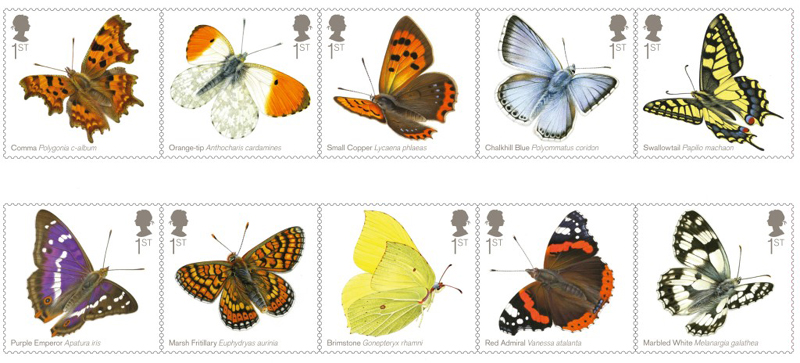
    COMMON butterflies saw a collapse in their population numbers in Cumbria over the summer despite the UK experiencing weather conditions that usually help them to thrive. Results from the three-week Big Butterfly Count survey reveal a decline in the insect across the length and breadth of the country. The majority of butterfly species studied as part of the survey saw their populations fall with some producing their worst numbers since the Big Butterfly Count began. Widespread species such as the Gatekeeper, Comma and Small Copper experienced their worst summers in the project’s history and were down 40 per cent, 46 per cent and 30 per cent respectively, compared to last year. The Small Tortoiseshell saw a 47 per cent drop in numbers and Peacock slumped by 42 per cent with both species recording their second worst years. Numbers of the colourful Peacock have now dropped from an average of 3.6 individuals per count in 2013 to just 0.5 per count in 2016, a six-fold decrease over three years. The reasons why butterflies have struggled despite favourable summer weather conditions are as yet unclear.

    Butterfly Conservation’s Head of Recording, Richard Fox, said: “The drop in butterfly numbers this summer has been a shock and is a bit of a mystery. When we have cold, wet summers, as in 2012, we expect butterfly populations to plummet, but that wasn’t the case this year.
    Source: Westmorland Gazette, 17 October 2016
    http://www.thewestmorlandgazette.co.uk/news/14805577.Butterfly_numbers_fall_in_Cumbria/

  • Bayer verklaart een neonicotinoide zonder drempelwaarde van giftigheid voor insecten veilig voor bijen

    Bayer verklaart een neonicotinoide zonder drempelwaarde van giftigheid voor insecten veilig voor bijen

    De zaadbehandeling met clothianidin (een neonicotinoïde) op koolzaad heeft geen aanwijsbaar effect op bijen. Dat concluderen onderzoekers in wetenschappelijke publicaties in het tijdschrift Ecotoxicology. De onderzoeken zijn gefinancierd door Bayer Crop Sciences. Voor het onderzoek zijn in het najaar van 2014 in de Duitse deelstaat Meckelenburg Voorpommeren in twee gebieden van 65 vierkante kilometer, grootscheepse velden ingezaaid met koolzaad. In het ene gebied ging het om 800 hectare behandeld koolzaad en in het andere om 600 hectare onbehandeld koolzaad. Vervolgens is bij verschillende bijen- en hommelsoorten gekeken naar de effecten. Daarbij werd onder meer gekeken naar de omvang van het bijenvolk en de ontwikkeling daarvan, de aangetroffen residuen van insecticiden en de aanwezigheid van plagen (parasieten en ziekten). Bij het behandelde koolzaad werden wel sporen van de insectenbestrijder teruggevonden in pollen, nectar en honing. Maar bij de insecten werden geen nadelige effecten opgemerkt. De gevonden gehalten clothianidin bleven binnen de normen en waarden die gelden voor de neonicotinoïde. De onderzoekers hebben onafhankelijk van Bayer kunnen werken, al was een van de auteurs in dienst van de gewasbeschermingsmiddelenfabrikant. De vergaring van de onderzoeksresultaten en de interpretatie daarvan, is buiten het bedrijf om gegaan. Dit melden de onderzoekers in de wetenschappelijke publicatie.
    Bron: Groente en Fruit, 17 oktober 2016
    http://www.gfactueel.nl/Vollegrond/Nieuws/2016/10/Duits-veldonderzoek-neonicotinoide-geen-effect-op-bij-2898067W/

  • Assessing risks to migratory honey bees from in-hive pesticide contamination in the Eastern United States

    Assessing risks to migratory honey bees from in-hive pesticide contamination in the Eastern United States

    This study measured part of the in-hive pesticide exposome by analyzing residues from live in-hive bees, stored pollen, and wax in migratory colonies over time and compared exposure to colony health. We summarized the pesticide burden using three different additive methods: (1) the hazard quotient (HQ), an estimate of pesticide exposure risk, (2) the total number of pesticide residues, and (3) the number of relevant residues. Despite being simplistic, these models attempt to summarize potential risk from multiple contaminations in real-world contexts. Colonies performing pollination services were subject to increased pesticide exposure compared to honey-production and holding yards. We found clear links between an increase in the total number of products in wax and colony mortality. In particular, we found that fungicides with particular modes of action increased disproportionally in wax within colonies that died. The occurrence of queen events, a significant risk factor for colony health and productivity, was positively associated with all three proxies of pesticide exposure. While our exposome summation models do not fully capture the complexities of pesticide exposure, they nonetheless help elucidate their risks to colony health. Implementing and improving such models can help identify potential pesticide risks, permitting preventative actions to improve pollinator health
    Source:
    Traynor, K. S. et al. In-hive Pesticide Exposome: Assessing risks to migratory honey bees from in-hive pesticide contamination in the Eastern United States. Sci. Rep. 6, 33207;
    doi: 10.1038/srep33207 (2016).

  • Insecticides are key drivers of a global freshwater biodiversity crisis

    Insecticides are key drivers of a global freshwater biodiversity crisis

    This thesis by Sebastian Stehle analyses the agriculture–environment linkages for pesticides at the global scale and it thereby contributes to a new research frontier in global ecotoxicology. The overall findings substantiate that agricultural insecticides are potential key drivers for the global freshwater biodiversity crisis and that the current regulatory risk assessment approaches for highly toxic anthropogenic chemicals fail to protect the global environment. This thesis provides an integrated view on the environmental side effects of global high-intensity agriculture and alerts that beside worldwide improvements to current pesticide regulations and agricultural pesticide application practices, the fundamental reformation of conventional agricultural systems is urgently needed to meet the twin challenges of providing sufficient food for a growing human population without destroying the ecological integrity of global ecosystems essential to human existence.
    Source: Sebastian Stehle (2015) A META- AND RISK-ANALYSIS OF GLOBAL INSECTICIDE CONTAMINATION OF AGRICULTURAL SURFACE WATERS. Accepted Dissertation thesis for the partial fulfilment of the requirements for a Doctor of Natural Sciences. Fachbereich 7: Natur- und Umweltwissenschaften Universität Koblenz-Landau.
    Thesis examiners:
    Referee: Prof. Dr Ralf Schulz, Landau
    Co-referee: Prof. Dr. Ralf B. Schäfer, Landau
    Co-referee: Adjunct Professor Dr. Pierre Mineau, Ottawa

    Date of oral examination: 04.12.2015

  • Secondary biomarkers of insecticide-induced stress of honey bee colonies

    Secondary biomarkers of insecticide-induced stress of honey bee colonies

    The evaluation of pesticide side-effects on honeybees is hampered by a lack of colony-level bioassays that not only are sensitive to physiological changes, but also allow predictions about the consequences of exposure for longer-term colony productivity and survival. Here we measured 28 biometrical, biochemical and behavioural indicators in a field study with 63 colonies and 3 apiaries. Colonies were stressed in early summer by feeding them for five days with either the carbamate growth regulator fenoxycarb or the neurotoxic neonicotinoid imidacloprid, or left untreated. Candidate stress indicators were measured 8–64 days later. We determined which of the indicators were influenced by the treatments, and which could be used as predictors in regression analyses of overwintering strength. Among the indicators influenced by fenoxycarb were the amount of brood in colonies as well as the learning performance and 24 h-memory of bees, and the concentration of the brood food component 10HDA in head extracts. Imidacloprid significantly affected honey production, total number of bees and activity of the immune-related enzyme phenoloxidase in forager bee extracts. Indicators predictive of overwintering strength but unrelated to insecticide feeding included vitellogenin titer and glucose oxidase activity in haemolymph/whole body-extracts of hive bees. Apart from variables that were themselves components of colony strength (numbers of bees/brood cells), the only indicator that was both influenced by an insecticide and predictive of overwintering strength was the concentration of 10HDA in worker bee heads. Our results show that physiological and biochemical bioassays can be used to study effects of insecticides at the colony level and assess the vitality of bee colonies. At the same time, most bioassays evaluated here appear of limited use for predicting pesticide effects on colony overwintering strength, because those that were sensitive to the insecticides were not identical with those that were predictive of colony overwintering. Our study therefore illustrates the difficulties involved in evaluating the economic/ecological significance of pesticide-induced stress in honey bee field studies.
    Source: Wegener J et al. Ecotoxicology and Environmental Safety 132 (2016) 379–389

  • Crested Crane – Uganda’s Symbolic Bird Now Faces Threat of Extinction

    Crested Crane – Uganda’s Symbolic Bird Now Faces Threat of Extinction

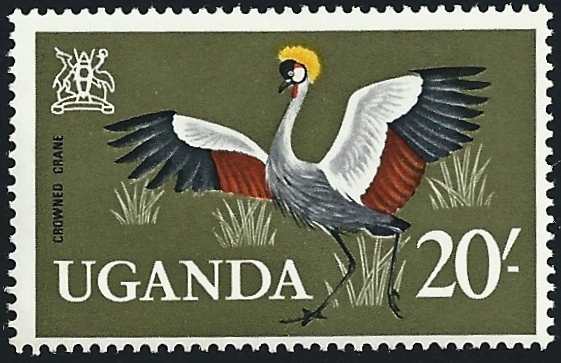
    With a crown of stiff gold-coloured feathers on its head, a bright red gular sac and body made of gray, brown, gold and white patches, the grey crowned crane stands out for its striking features. Commonly called the crested crane (Balearica regulorum), it is a bird of national significance to Uganda, occupying a prime position on the country’s national flag and coat of arms. Yet despite its serenity, beauty and popularity, the crested crane is facing the threat of extinction. “Records show that the population of the cranes has crushed in the past four decades — by over 80 per cent,” said Achilles Byaruhanga, the executive director of Nature Uganda. Once widespread, only about 10,000 to 20,000 gray crowned cranes are left in Uganda, compared with an estimated 100,000 four decades ago, according to statistics from Nature Uganda and the Ministry of Tourism and Wildlife. These cranes are omnivores, eating plants, seeds, grain, insects, frogs, worms, snakes, small fish and the eggs of aquatic animals. Stamping their feet as they walk, they flush out insects which are quickly caught and eaten. The birds also associate with grazing herbivores, benefiting from the ability to grab prey items disturbed by antelopes and gazelles. They spend their entire day looking for food. At night, the crowned crane spends its time in the trees sleeping and resting.
    Sources: All Africa, 10 October 2016
    http://allafrica.com/stories/201610100952.html
    Wikipedia
    https://en.wikipedia.org/wiki/Grey_crowned_crane

  • 20 Arten in Sachsen-Anhalt gefährdet

    20 Arten in Sachsen-Anhalt gefährdet

    In Sachsen-Anhalt sind 18 regelmäßig im Land brütende Vogelarten derzeit vom Aussterben bedroht. Dazu gehören unter anderem die Moorente, die Sumpfohreule, die Uferschnepfe und der Steinkauz, wie das Landesamt für Umweltschutz in Halle mitteilte. Von einigen Arten gebe es nur noch ein Brutpaar im Land – wie etwa vom Schreiadler. Beim Auerhuhn gebe es derzeit kein einziges Pärchen mehr. Vogelexperten sind alarmiert, doch die Lösungen sind begrenzt. “Das ist eine Katastrophe”, sagte Christoph Kaatz von der Vogelschutzwarte Storchenhof Loburg. Der Ornithologe sieht die Schuld vor allem in der Landwirtschaft. Immer größer werdende Ackerflächen, Pestizideinsätze und geringe Kulturvielfalt seien fatal für Vögel, die auf Feldern brüten oder ihre Nahrung dort suchen.

    An den Rändern der Ackerflächen fehlen oft Grünstreifen und schützende Gehölze, wie der Vogelexperte erklärte. Zudem töteten die auf den Feldern eingesetzten Pestizide Insekten, von denen sich die Vögel normalerweise ernährten. Auch Streuobstwiesen, die für einige Vogelarten notwendig seien, seien zurückgegangen.

    Neben den vom Aussterben bedrohten Vogelarten gibt es nach Angaben des Landesamtes für Umweltschutz eine Reihe von gefährdeten Tieren. Davon seien neun Arten stark gefährdet, sagte ein Sprecher der Behörde. Dazu zählten das Rebhuhn, der Kiebitz und die Turteltaube. Nur noch wenige Hundert Brutpaare der Tiere gebe es jeweils. Nicht viel besser stehe es um die 19 gefährdeten Vogelarten wie den Baumfalken, den Kuckuck oder die Dohle. Auch die geringe Zahl der Wanderfalken mit rund 29 bis 33 Brutpaare alarmiert Vogelexperten.

    Und einen Trost gibt es: “Sachsen-Anhalt hat einen sehr langen Elbeverlauf”, betonte Kaatz. Vögel, die Feuchtgebiete bevorzugten, lebten in den Schutzgebiete entlang des Flusses unter guten Bedingungen. Für ackerliebende Vögel wie etwa die Feldlerche, deren Bestand ebenfalls drastisch gesunken sei, gebe es sogenannte Lerchenfenster. Das seien Flächen im Acker, die die Landwirte bewusst nicht bewirtschaften, so der Ornithologe. Die Tiere fänden dort gute Lande- und Brutmöglichkeiten vor.

    Quelle: Volksstimme, 10.10.16
    http://www.volksstimme.de/sachsen-anhalt/wildvoegel-20-arten-in-sachsen-anhalt-gefaehrdet