A new report from the New Zealand government found that 90 percent of the country’s 92 seabird species—the highest concentration of seabirds on the planet—are threatened with extinction. Among the most threatened species are the Antipodean albatross (Diomedea antipodensis), the eastern rockhopper penguin (Eudyptes chrysocome filholi), the Pitt Island shag (Phalacrocorax featherstoni), and the New Zealand fairy tern (Sternula nereis davisae). Despite being legally protected in New Zealand, many of these species have falling populations. Seabirds are especially vulnerable to population disruptions because of their slow reproductive rates and because they usually lay only one egg at a time, said Hannah Nevins, seabird program director for the American Bird Conservancy, who was not involved in the report. The report also found that a quarter of New Zealand’s marine mammals are threatened, including the Maui dolphin, the New Zealand sea lion, and the southern elephant seal.
Source: Take Part, November 7, 2016
http://www.takepart.com/article/2016/11/07/90-percent-new-zealand-seabirds-risk-extinction
Auteur: Henk Tennekes
-
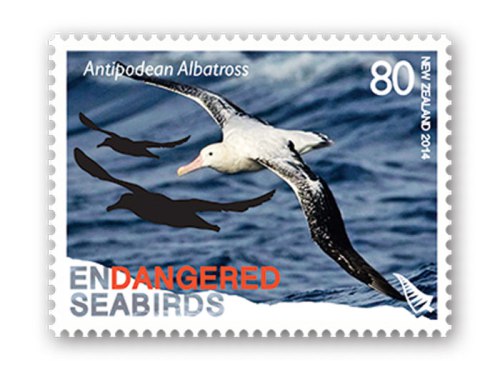
New Zealand Has the Most Seabirds on the Planet, and 90 Percent Are at Risk
-
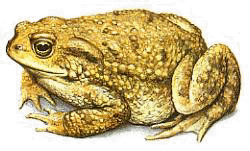
Glyphosat schadet Kaulquappen
Landet das Herbizid Glyphosat in Gewässern, verändert sich laut Wiener Forschern die Algenzusammensetzung. Bei niedrigen Wassertemperaturen kann es zudem zu Fehlbildungen beim Erdkröten-Nachwuchs kommen. Obwohl der Wirkstoff speziell auf Pflanzen abzielt, wurden in der Vergangenheit auch Nebenwirkungen auf sogenannte Nicht-Zielorganismen beschrieben. So hat beispielsweise die Forschungsgruppe um Johann Zaller vom Institut für Zoologie der Universität für Bodenkultur (Boku) in Wien im Fachjournal „Scientific Reports“ über reduzierten Nachwuchs bei Regenwürmern berichtet. In ihren aktuellen Untersuchungen widmete sich Zallers Gruppe den Auswirkungen auf die Erdkröte, die in der Agrarlandschaft lebt und dort mit Pestiziden in Kontakt kommt. Dazu haben die Wissenschaftler Eier aus natürlichen Laichgewässern der Tiere entnommen. Diese verteilte das Team um Studien-Erstautor Fabian Baier dann gleichmäßig in Wassergefäße mit realistisch geringen Konzentrationen von Glyphosat und stellten sie in Klimakammern bei 15 und 20 Grad Celsius auf. Die Entwicklung der Kaulquappen wurde nur bei 15 Grad gestört. Unter diesen Umständen zeigten die Tiere vermehrt Schwanz-Fehlbildungen. Was es ihnen vermutlich erschwere, Fressfeinden zu entkommen, so der Ökologe. Wie genau das zustande kommt, sei noch unklar: „Unsere Annahme ist aber, dass die Kaulquappen unter kühleren Bedingungen langsamer wachsen und deshalb länger dem Gift ausgesetzt sind. Bei höheren Temperaturen könnten sie dem Gift einfach ‚davonwachsen‘“, sagte Zaller.
Quelle: ORF, im November 2016
http://science.orf.at/stories/2807604/ -
Schlechte Bilanz nach 20 Jahre ökologischem Leistungsnachweis
Vor 20 Jahren hat das Stimmvolk den aktuell gültigen Bundesverfassungsartikel 104 Landwirtschaft an der Urne angenommen. Darin verankert ist bis heute der ökologische Leistungsnachweis (ÖLN). Dieser ist Grundlage für den Erhalt von Direktzahlungen des Bundes. Ohne ÖLN keine Bundesgelder. Doch trotz ÖLN ist die Schweizer Landwirtschaft in entscheidenden Bereichen in den letzten 20 Jahren nicht ökologischer geworden, meldet pro Natura. Drei Schlaglichter dokumentieren die Diskrepanz zwischen Versprechen und Realität:
Die Landwirtschaft hat den Auftrag, die Biodiversität auf der landwirtschaftlich genutzten Fläche zu sichern und zu fördern. Zum Beispiel, indem geeignete Lebensräume auf ausreichender Fläche und in der nötigen Qualität und räumlichen Verteilung zur Verfügung gestellt werden. Die Entwicklung der Brutvogelbestände im Kulturland zeigt: Dieser Auftrag wird nicht erfüllt. Die Zahl der für das Kulturland typischen Brutvögel nimmt weiter ab.
Sowohl die Stickstoff- als auch die Phosphoremissionen haben seit der Einführung des ÖLN nur unwesentlich abgenommen. Schuld daran sind die viel zu hohen Tierbestände, die steigenden Kraftfutterimporte und die ungenügenden Berechnungsmethoden in der Düngerbilanz. Das Problem verschärft sich aktuell sogar: Ein wahrer Bauboom für neue Geflügel- und Schweineställe (naturschutz.ch berichtet) droht die Zielerreichung in noch weitere Ferne zu rücken.
Die Verkaufszahlen für Pestizide sind auf unverändert hohem Niveau: Über 2000 Tonnen werden jährlich versprüht. Nicht ohne Folgen: kaum ein untersuchtes Gewässer, in dem kein Pestizidcocktail nachgewiesen werden kann. Bis zu 40 verschiedene Pestizide, vornehmlich aus der Landwirtschaft, belasten das Wasser (naturschutz.ch berichtet). Hinzu kommt, dass die Giftstärke der neueren Stoffe wie Neonicotinoide bis zu 5000 Mal höher ist als diejenige von älteren Produkten.
Der Leistungsausweis des heutigen ÖLN-Systems ist ungenügend. Die Schweizer Bevölkerung bekommt von der Landwirtschaft im Bereiclh Umwelt nicht geliefert, was sie per Verfassung bestellt hat und wofür sie jährlich einen guten Teil der drei Milliarden Franken via Bundeskasse bereitstellt. Pro Natura fordert eine Anpassung des Instruments, damit es in den nächsten 20 Jahren die gewünschte Wirkung erzielt.
Quelle: Naturschutz.ch, 10.11.16
http://naturschutz.ch/news/schlechte-bilanz-nach-20-jahre-oekologischer-leistungsnachweis/110007 -
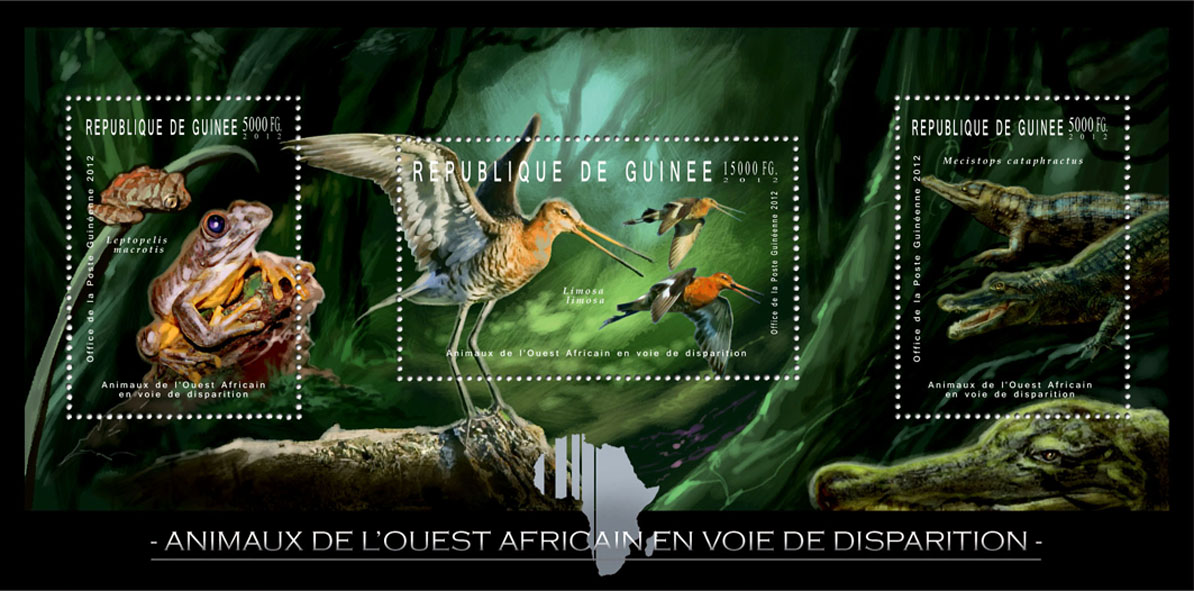
The Future is Bleak for Dutch Farmland Birds
The Black-tailed Godwit was once a common sight in Dutch meadows. The bird used to flourish in the peat soil habitats in the western part of the Netherlands. Invertebrates profited from enrichment of the soil with manure and fertilisers and earthworms (Lumbricidae), leatherjackets (Tipulidae), snails and other species were abundant. The combination of abundant food, at least for adult birds, and the soft peat soil (which is easily penetrated by the long bill of the Black-tailed Godwit) made the western part of the Netherlands a prime breeding habitat for the Black-tailed Godwit. Nearly 80% of the western Europe population of the Black-tailed Godwit used to breed in the Netherlands. However, the key Dutch breeding population underwent a large decline from 120,000-135,000 in 1969, 85,000-100,000 in 1989-1991, 62,000 in 2004, to 30,000 now. Other common farmland birds, such as Skylark and Oystercatcher, are also in freefall. While the Dutch Nature Conservation Act allows for legally binding programmes to promote active species protection, the government has not put any such programme for farmland birds in place. This comes after years of warnings from scientists, NGOs and farmers alike. Today, BirdLife Holland (Vogelbescherming Nederland) filed a formal complaint at the European Commission charging the Dutch government with breach of the EU Birds Directive, which requires EU Member States to safeguard farmland birds by conserving or restoring habitats and by designating protected areas.
Used source: Birdlife International, 8 November 2016
http://www.birdlife.org/europe-and-central-asia/news/justice-dutch-farmland-birds -
Some of Ireland’s favourite birds are on brink of extinction – report
Large parts of Ireland’s environment is in a worse state today than 20 years ago, a major report from the Environmental Protection Agency (EPA) says. Bird species, including the corncrake and the curlew, are almost extinct. There has been a “dramatic reduction” in the number of pristine rivers with high water quality. Report co-editor Dr Jonathan Dernham said there was a need for integrated policies to protect the environment. “We have not done well on nature protection, and we have lost some of our highest quality waters while at the same time reducing the number of seriously polluted waters,” he said. “If it was a school report card, it would be ‘could do better’. We’re winning and losing at the same time. The real challenge for the State is we’re seeing that improvement is inconsistent and sporadic, as the joined-up policies are not there.” Water quality in lakes is deteriorating, and there has been “no improvement” in river water quality in six years. EPA said that raised bogs and species-rich grasslands were under threat, and that the range of birds – including the curlew, lapwing, common sandpiper, golden plover, merlin, ring ouzel, snipe and teal – has reduced. The distribution of several farmland birds – including the corncrake, grey partridge and yellowhammer – is also “restricted”. Some 43 species of Irish moths are threatened, and 37 of the 185 bird species which breed for winter in Ireland are considered endangered.
Source: Irish Independent, 8 November 2016
http://www.independent.ie/irish-news/some-of-irelands-favourite-birds-are-on-brink-of-extinction-report-35196934.html -
WWF-Studie: Äcker im Rheintal zu nahe an Gewässern
In einer Untersuchung des Wasserforschungsinstituts der ETH (EAWAG) seien in Schweizer Gewässern über 100 Pestizide gefunden worden, heisst es in einer Mitteilung des WWF vom Dienstag. Der intensive Einsatz von Dünger und Pestiziden in der Landwirtschaft gefährde die Wasserqualität. Im Sommer und Herbst 2015 hat nun der WFF die Sicherheitsabstände von 121 Äckern im St. Galler Rheintal zwischen Au und Sevelen untersucht. Das Resultat: In 43 Prozent der Fälle seien die gesetzlich festgelegten Abstände zwischen Ackerflächen und Gewässern zu schmal gewesen. Bei 11 Prozent der Fälle handle es sich um “schwere Verstösse”. Es gebe Hinweise, dass auch im Rest der Schweiz die Sicherheitsabstände nicht eingehalten würden. Die Umweltorganisation fordert nun eine strikte Einhaltung der Gesetzgebung und eine kompromisslose Bestrafung fehlbarer Landwirte.
Quelle: Bluewin, 08.11.16
https://www.bluewin.ch/de/news/regional/region-east/2016/11/8/wwf-studie–aecker-im-rheintal-zu-nahe-an-gewaessern.html -
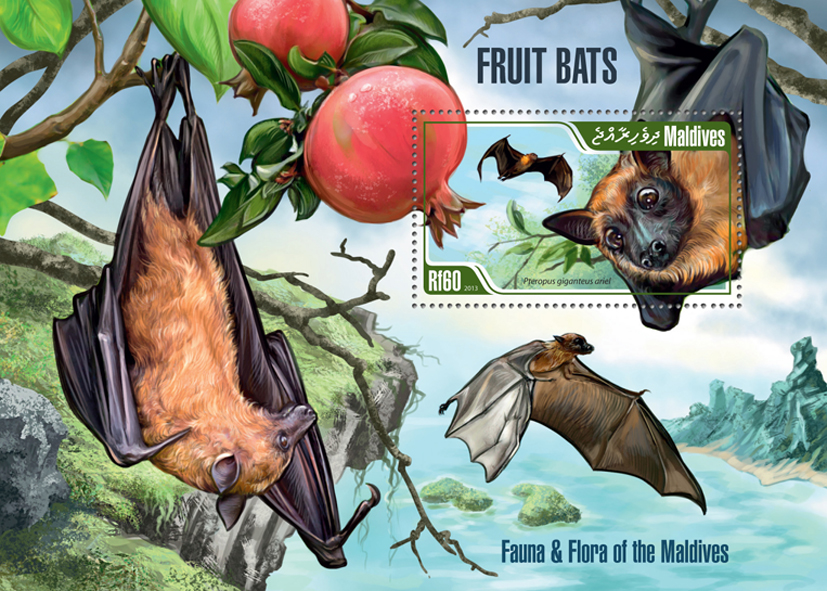
Nevada bats may be at risk as a deadly fungus spreads
Scientists call them critical to our environment. They’re a natural form of pest control, consuming millions of insects every night. But across the country, bats are now fighting for survival, as a fungus threatens to cut their numbers. White Nose Syndrome is a fungus that attaches to bats during hibernation. In the past 4 years, it’s killed millions of bats in the eastern and central parts of the country. This year, for the first time, the disease was found on the west coast. “It hasn’t been detected in Nevada. It’s been detected in Washington state this past April. And so were managing it such that we anticipate finding it this winter,” said Jason Williams with the Nevada Department of Wildlife.
Source: 3 News Las Vegas, October 29, 2016
http://news3lv.com/news/special-reports/monday-at-11-flying-into-extinction -
It’s only the environment, stupid ! De dubbele standaarden voor economische belangen en voor het milieu
Het Verdrag van Aarhus uit 1998 werd in 2005 met de nodige pomp and circumstance door de EU geratificeerd. Dit baanbrekende internationale akkoord verleent aan burgers en milieuverenigingen bijzondere inspraak- en procedurerechten in milieuzaken. Ondanks de duidelijke verbintenissen weigert Europa echter koppig deze rechten expliciet te erkennen in haar eigen besluitvormingsprocessen. Multinationals hebben wel toegang tot bijzondere procedures voor aparte arbitragetribunalen, het leefmilieu krijgt heel wat minder krediet. In de voorbije twintig jaar is geen enkele milieuorganisatie erin geslaagd een milieubesluit van een EU-instelling met succes aan te vechten bij de Europese rechter. Greenpeace, WWF en andere ngo’s kregen telkens nul op het rekest. Zelfs geen inhoudelijke afwijzing. Of het nu ging om een beslissing om een nieuwe schadelijke pesticide toe te laten binnen de EU of een visserijbesluit, het deed er niet toe. De deur bleef gesloten. Onontvankelijk, steeds weer. U leest het goed, waar voor bedrijven specifieke tribunalen worden ingericht, moeten milieuverenigingen zich tevreden stellen met een herzieningsprocedure bij een instantie die manifest ‘biased’ is. Want hoe groot is de kans dat de Europese Commissie zijn eigen beslissingen gaat herroepen op vraag van een milieuvereniging? Nihil zo blijkt. Want alle verzoeken tot herziening van EU-milieubesluiten die zijn ingediend, werden tot nu toe verworpen. Waarvan het overgrote deel op basis van ontvankelijkheidsbezwaren. Net omdat zij betrekking hebben op algemene belangen, zoals de bescherming van het milieu, en niet op individuele belangen. En wanneer er dan eens een Europese rechter bereid wordt gevonden om deze inconsistentie aan de kaak te stellen, zoals gebeurde in 2012, dan haasten de Europese Commissie en andere EU-instellingen zich om elke beperkte vooruitgang af te blokken. Net omdat men van oordeel is dat internationale milieuakkoorden, in tegenstelling tot handelsverdragen, géén direct afdwingbare rechten bevatten. Zelfs niet wanneer zo’n milieuverdragen er expliciet op gericht zijn om burgers meer inspraakrechten te verlenen. O, ironie.
Hoe goed beschermd zou ons leefmilieu eigenlijk niet zijn wanneer internationale milieuverdragen met dezelfde strengheid worden gehandhaafd als vrijhandelsakkoorden? Wat als het leefmilieu binnen de EU ook beroep zou kunnen doen op bijzondere arbitragetribunalen uitgerust met rechters getraind in milieurecht? Is het denkbaar dat milieuverenigingen met schadeclaims van miljoenen dollars zwaaien wanneer EU-instellingen onvoldoende rekening houden met het leefmilieu bij hun besluitvorming?Het blijven vooralsnog retorische vragen. En dat is jammer want de discussie is niet minder fundamenteel. Het gaat immers over onze milieustandaarden, onze gezondheid en ons klimaat.
Bron: Apache, 03-11-16
Lees meer: https://www.apache.be/gastbijdragen/2016/11/03/voorbij-ceta-its-only-the-environment-stupid -

Glyphosate: German Toxicologist Accuses EFSA of Scientific Fraud
The German toxicologist Dr Peter Clausing has accused the German Federal Institute for Risk Assessment (BfR) and the European Food Safety Authority (EFSA) of committing scientific fraud by twisting scientific facts and distorting the truth, with the aim of concluding that glyphosate is not a carcinogen. EFSA and BfR thereby accepted and reinforced the conclusion proposed by the Monsanto-led Glyphosate Task Force (GTF). Clausing made this accusation in front of five judges at the Monsanto Tribunal, held in The Hague from 14–16 October. The background to this latest allegation of foul play by the EU authorities over glyphosate is the high-level dispute over whether or not the pesticide causes cancer.
In March 2015 the World Health Organization’s cancer agency IARC concluded that glyphosate was a probable human carcinogen.[1]
BfR did not agree, stating that a classification for carcinogenicity is not “warranted” for glyphosate.[2] EFSA sided with BfR, saying that “glyphosate is unlikely to pose a carcinogenic hazard to humans and the evidence does not support classification with regard to its carcinogenic potential”.[3]
But Clausing told the Monsanto Tribunal that BfR’s and EFSA’s statements are contradicted by evidence contained in BfR’s own reports on glyphosate and the draft report submitted to the European Chemicals Agency (ECHA) by the German Federal Institute for Occupational Safety and Health.[4]
Authorities twisted and distorted the truth
Clausing, a former industry toxicologist who now works for Pesticide Action Network Germany, said there is “ample evidence” that “European authorities twisted or ignored scientific facts and distorted the truth to enable the conclusion that glyphosate is not to be considered a carcinogen. The German Federal Institute for Risk Assessment (BfR) and the European Food Safety Authority (EFSA) committed scientific fraud.”[4]
Clausing explained that the males of all five mouse carcinogenicity studies considered by these authorities to be of an acceptable quality showed a statistically significant increase in the incidence of one or several tumour types.
Three of the five mouse studies exhibited a significant increase in one specific type of cancer, malignant lymphoma, emphasizing the reproducibility of the finding.[4]
Clausing pointed out that these findings alone exceed the criterion for the classification of glyphosate as a 1B carcinogen (substances presumed to have carcinogenic potential for humans, largely based on animal evidence[5]) under European legislation.[6]
Europe’s pesticide regulation has a “hazard-based cut-off” clause regarding carcinogenicity,[7] meaning that a 1B carcinogen classification for glyphosate would lead to an automatic ban unless exposure was proven to be “negligible”. The law does not allow industry and regulators to argue that the doses we are exposed to are below permitted levels and therefore safe.
Human cancer results reflect animal findings
IARC’s verdict that glyphosate is probably carcinogenic was partly prompted by what it called “limited evidence” in epidemiological studies for a link between exposure to glyphosate herbicides and non-Hodgkin’s lymphoma (NHL) in humans.
Commenting on the epidemiological studies, Clausing told GMWatch: “NHL in humans reflects the findings of malignant lymphoma in animal studies.”
Further confirmation of glyphosate’s carcinogenicity, Clausing said, comes from epidemiological studies and mechanistic evidence showing that glyphosate damages DNA and causes oxidative stress, mechanisms that can lead to cancer.[4]
Arguments used by authorities are false or distortions
In his evidence to the Tribunal, Clausing systematically demolished arguments that the EU authorities used to dismiss the significant findings of glyphosate-induced malignant lymphoma in mouse carcinogenicity studies.
For example, EFSA claimed, “No evidence of carcinogenicity was observed in rats and mice”.[3] But Clausing responded, “The incidence of malignant lymphoma was higher in males of all glyphosate-treated groups of all five mouse studies. In addition, a statistically significant increase occurred in three of the studies, with a clear dose-dependence in two of them.”
In another example, the German Federal Institute for Occupational Safety and Health, which based its arguments on BfR’s report, claimed that the evidence for glyphosate-induced malignant lymphoma in the animal studies was “equivocal” because of “of “lack of statistical significance in pair-wise comparison tests” or “partly contradictory study outcomes, depending on the statistical method applied”.[8]
But Clausing showed this argument to be invalid. In assessing cancer results in animal studies, the OECD, which sets guidelines for industry testing of chemicals, recommends the use of two methods of statistical analysis: trend tests and pair-wise comparisons. It prefers trend tests as the “more powerful” method. In addition, and most importantly, the OECD clearly states, “Significance in either kind of test is sufficient to reject the hypothesis that chance accounts for the result.”
Clausing showed that the Federal Institute abused OECD guidelines in two ways:
1. It attempted to play off one statistical method against another, dismissing the significant cancer increase revealed by one method on the grounds that the other method did not show a significant increase – even though the OECD says that a significant finding from either method is enough to rule out chance as the cause.
2. In an example of bias, it chose to believe the results of the weaker method, which did not find a significant cancer increase.The Federal Institute appears to have done this in order to hide the finding that glyphosate caused increased cancer in the rats.
Why did IARC disagree with the German authorities?
Interestingly, the IARC reviewed the available animal studies and concluded, like Clausing, that they showed that glyphosate caused an increase in cancer. Why the difference of opinion between IARC and the German authorities?
The answer is given in BfR’s own report on IARC’s findings.[10] Unlike the German authorities, IARC applied the superior statistical analysis – the trend test. Also unlike the German authorities, IARC did not violate OECD guidelines by claiming that a second type of statistical analysis cancelled out the findings of the first.
BfR accused of intentionally falsifying science on German TV
The statistical dodge employed by the German authorities to defend glyphosate was the subject of an explosive in-depth news report that aired on German TV last October,[11] in the midst of deliberations by EU authorities on whether to re-authorize the chemical.
The news report was broadcast by MDR, which is part of ARD, the main public national TV network in Germany. The report says that BfR stands “accused of endangering the population” and shows BfR director Prof Andreas Hensel facing questions from experts before the German Parliamentary committee for food and agriculture.
One of the experts, Prof Dr Eberhard Greiser, a retired epidemiologist at the University of Bremen, says of BfR’s actions, “I’d say this is an intentional falsification of the content of scientific studies.”
The MDR film notes that BfR, in its initial report to the EU authorities, claimed that there were no signs of cancer in the animal studies: “They took the position that even though one of the five studies on mice did show a significant increase in malignant lymphoma, they dismissed it as irrelevant, because, the BfR asserted, the other four studies did not indicate any cancer risk.”
But then, says the film, the “bombshell” hit, in the form of IARC’s report stating that glyphosate was a probable human carcinogen.
The IARC experts had seen something different from BfR in the animal studies they looked at. In one lifetime study in mice they saw significant increases in kidney tumours, and in another, increases in blood vessel cancer. They also noted increases in malignant lymphoma in glyphosate-treated animals in a further three studies in mice.
However, these three studies were only mentioned in the IARC report; they were not included in the final evaluation and classification of glyphosate because the IARC experts did not have access to the full dataset. That is because these were industry studies, the details of which are kept hidden from the public and independent scientists under commercial confidentiality agreements with regulators. It is a fundamental principle of IARC to confine its evaluations to evidence that is in the public domain and where it has access to the full dataset.
Under pressure from the IARC report, BfR produced an “Addendum”[2] to its initial report, in which it defended its conclusion against the IARC findings. BfR now admitted that all of the tumour findings mentioned by IARC – and in additional studies – were significant, but explained them away by using the statistical dodge described above, along with other scientifically questionable practices described by Clausing in his evidence to the Tribunal.
MDR’s report featured Green politician Harald Ebner expressing surprise that the BfR still stood by its overall conclusion that there is no cancer risk from glyphosate, despite the new evaluation of the studies.
Ebner says, “I’m kind of stunned. Yes the studies are not new, they are a few years old. Then I ask myself, ‘How can they overlook them until now? Why did the BfR previously conclude that they were not significant, no carcinogenic effects?’”
Shockingly, the MDR investigation revealed that BfR did not perform its own statistical analysis of the industry test results: “The BfR literally said that they relied on the manufacturers’ reports. Does this mean that they accepted those reports at face value?”
This is the conclusion of Peter Clausing, who was interviewed by the MDR film makers after a painstaking evaluation of the BfR reports. Clausing says in the film: “The German Federal Institute for Risk Assessment has confirmed several times in writing that it performed an independent evaluation of the studies and materials it had. That should include the statistical evaluation of cancer studies. And the fact that the results of the industrial studies were so blindly trusted is scandalous.”
Taken together, Clausing’s evidence to the Tribunal and the MDR film raise serious questions about BfR’s and EFSA’s scientific integrity and competence. It’s no surprise that EU member states have so far failed to agree to re-authorize glyphosate. In response to the impasse, the Commission has granted a temporary 18-month re-licensing of glyphosate rather than the usual 15 years to give the “competent” agencies time to deliberate and pass a final judgment. It will be interesting to see how BfR’s growing credibility crisis affects the verdict.
Notes
1. IARC (2015). IARC Monographs Volume 112: Evaluation of five organophosphate insecticides and herbicides. http://monographs.iarc.fr/ENG/Monographs/vol112/
2. RMS Germany (2015): Renewal Assessment Report Glyphosate. Addendum 1 to RAR, Assessment of IARC Monographs Volume 112 (2015): Glyphosate, 31 August 2015. http://bit.ly/2eMJ8KG
3. EFSA (2015): Conclusion on the peer review of the pesticide risk assessment of the active substance glyphosate. EFSA Journal 2015;13(11):4302.
4. Clausing, P. Regulatory agencies (BfR, EFSA) used biased arguments to deny the carcinogenicity of glyphosate: Memorandum by Dr Peter Clausing, PAN Germany, as a witness to the Monsanto Tribunal. The Hague, Netherlands, 15-16 October 2016. http://www.pan-germany.org/download/Memo_Monsanto-Tribunal_Peter_Clausing_10_2016.pdf
5. CNRS Chemical Risk Prevention Unit (PRC) (2011). Carcinogens, mutagens, reproductive toxicants: European regulatory classification criteria, hazard communication elements. CNRS. http://www.prc.cnrs-gif.fr/IMG/pdf/cmr-criteria-clp.pdf
6. Regulation EC 1272/2008.
7. Regulation EC No 1107/2009.
8. German Federal Institute for Occupational Safety and Health (2016). Proposal for Harmonised Classification and Labelling. Based on Regulation (EC) No 1272/2008 (CLP Regulation), Annex VI, Part 2. Substance Name: N-(phosphonomethyl)glycine; Glyphosate (ISO). ECHA. http://echa.europa.eu/documents/10162/13626/clh_report_glyphosate_en.pdf
9. OECD (2012). Guidance Document 116 on the Conduct and Design of Chronic Toxicity and Carcinogenicity Studies, Supporting Test Guidelines 451, 452 and 453, 2nd Edition Series on Testing and Assessment No. 116. ENV/JM/MONO(2011)47, Paris. http://www.oecd.org/officialdocuments/displaydocument/?cote=ENV/JM/MONO(2011)47&doclanguage=en
10. RMS Germany (2015). Renewal Assessment Report Glyphosate. Addendum 1 to RAR, Assessment of IARC Monographs Volume 112 (2015): Glyphosate, 31 August 2015. p. 37. http://bit.ly/2eMJ8KG
11. Investigative reporter Andreas Rummel’s film was broadcast in Germany by Mitteldeutscher Rundfunk (MDR) in October 2015. The film (in German) is included in Rummel’s glyphosate herbicides dossier on MDR’s website: http://www.mdr.de/fakt/glyphosat156.html
Direct link to the film: http://www.mdr.de/fakt/video-57628.htmlSource: Centre for Research on Globalization, 6 November 2016. The original source of this article is GMWATCH
http://www.globalresearch.ca/eu-denies-glyphosate-link-to-cancer-german-toxicologist-accuses-eu-food-safety-authority-efsa-of-scientific-fraud/5555267 -
De wereldvoedselvoorziening dreigt in handen te komen van een paar multinationals
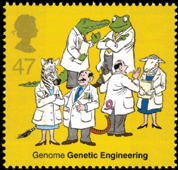
Het is een veelbesproken overname: die van Monsanto door Bayer. Het Duitse chemieconcern koopt de Amerikaanse zaadveredelaar voor 66 miljard dollar. Dat roept het nodige verzet op: Monsanto is een van de meest omstreden bedrijven ter wereld. Monsanto produceert genetisch gemanipuleerde zaden en bestrijdingsmiddelen voor de landbouw. Ook vraagt het biotechbedrijf veel patenten aan op natuurlijke eigenschappen van groenten. Volgens activisten schaadt het bedrijf het milieu en de gezondheid, onder meer met zijn pesticide Roundup en door de ontwikkeling van genetisch gemodificeerde gewassen. Zij willen dat dit als misdrijf wordt opgenomen in het internationaal strafrecht. Monsanto verdient veel geld met gemodificeerde groenten en fruit. Tegenstanders noemen het ook wel ‘Frankensteinvoedsel’, ze vinden het tegennatuurlijke manipulatie van van voedsel. Ook zijn ze bang dat er monoculturen van supergewassen zullen ontstaan. Monsanto stelt dat genetisch modificatie hard nodig is om genoeg voedsel te kunnen blijven produceren voor de almaar groeiende wereldbevolking. Die zal naar verwachting in 2050 bestaan uit 9 miljard mensen.
Een ander groot punt van kritiek heeft te maken met het patenteren van groentevarianten. Dat staat het Europees Octrooibureau sinds 2014 toe. Multinationals als Monsanto hebben er sindsdien met succes gebruik van gemaakt. Het patent doorkruist het bestaande kwekersrecht, waarbij kwekers en veredelaars groenten steeds verder door kunnen ontwikkelen. Bij een patent mogen concurrenten het zaad namelijk niet meer vrij gebruiken. En zo komt het monopolie op een planteneigenschap die in de natuur voorkomt, in handen van één bedrijf. Monsanto heeft bijvoorbeeld het patent op een broccoli met een langere steel, die het oogsten makkelijker maakt. Anderen die de zaden willen gebruiken, moeten betalen voor een licentie. Volgens Monsanto zijn de patenten nodig om de hoge ontwikkelingskosten van de innovaties terug te verdienen. Tegenstanders vinden het zorgelijk dat de wereldvoedselvoorziening op deze manier in handen lijkt te komen van een paar multinationals. Nu Monsanto opgaat in Bayer ontstaat er een supermacht op een veel groter gebied dan alleen die van zaden en bestrijdingsmiddelen. In de bijlage vat de Europarlementariër Martin Häusling uit Duitsland zijn bezwaren tegen de megafusie samen.
Bron: NOS, 6 november 2016
http://nos.nl/nieuwsuur/artikel/2141661-monsanto-een-omstreden-grootmacht.html?title=monsanto-een-omstreden-grootmacht