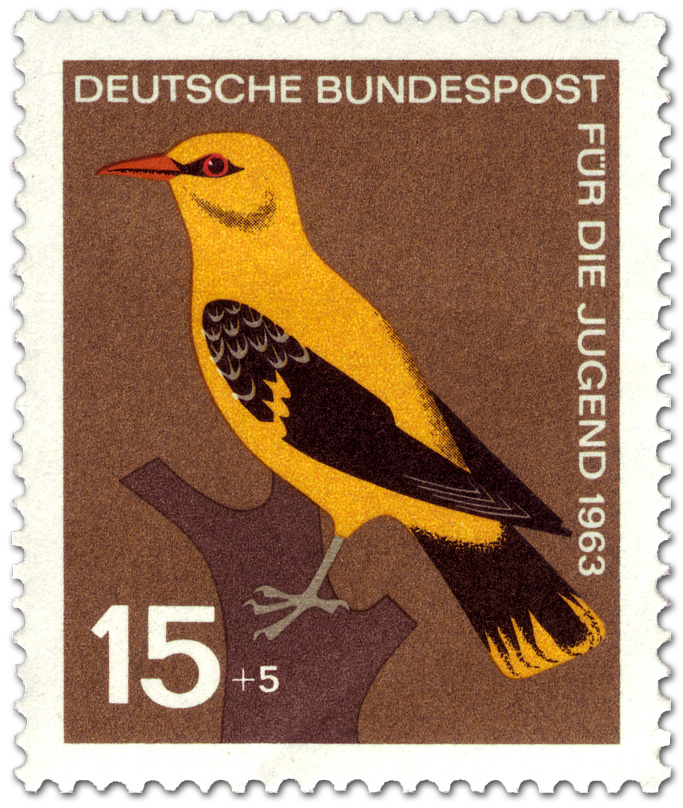
Die Entwicklung der Vogelwelt in den letzten 20 bis 25 Jahren ist besorgniserregend. Darauf ging Hartwig Brönner, Vorsitzender des Landesbunds für Vogelschutz (LBV) Main-Spessart, in seinem Vortrag »Verstummen die Vögel?« am Donnerstag in der Küferstube in Lohr ein. Für Blaukehlchen und Bekassine gibt es keine Brutnachweise mehr, der Gartenrotschwanz ist gefährdet und der Wendehals vom Aussterben bedroht. Selbst die häufige Goldammer ist nur noch selten zu sehen. Erwähnt werden müssten in dieser Aufzählung noch viele, leider zu viele Arten, so Brönner.
Wo liegen die Gründe für den Rückgang und das Aussterben der Vogelarten? Ökosysteme werden stark beeinflusst durch Landwirtschaft, Straßenbau, Industrie, Tourismus, Schädlingsbekämpfung, Begradigung von Flüssen und Bächen. Aber auch Energiewende und Klimawandel tragen zur Veränderung bei.
Dadurch haben viele Arten ihre Lebensgrundlage verloren und das sei gleichbedeutend mit Artenverlust. Indikator für den Zustand der Natur sei die Vogelwelt. Gehe es den Vögeln schlecht, gehe es auch der Natur schlecht.
Brönner forderte ein Umdenken mit dem Ziel, die Artenvielfalt zu erhalten. Dafür müsse man Ökosysteme sichern oder neu schaffen. Brach- und Blühflächen, Hecken, Streuobstwiesen und vieles mehr seien nötig. Biotop- und Brutpflege, Renaturierungen, Anlage von Teichflächen und andere Maßnahmen dienen dazu, die Ökoleistung der Natur zu sichern.
Im Tierreich gibt es ausgeprägte Spezialisten (etwa Hummeln und Bienen), die auf bestimmte Pflanzen oder Lebensräume angewiesen sind. Das Aussterben der Pflanzen oder Vernichtung von Lebensräumen gingen immer einher mit dem Aussterben der Spezialisten.
Mit der Erhaltung des Artenreichtums in den Wäldern sehe es nicht ganz so schlecht aus, doch sei es auch hier unerlässlich, dem Lebensraumverlust entgegen zu treten. Zum Beispiel, wenn mit Rodungen artenreiche Eichen- und Buchenflächen in weniger artenreiche Douglasienbestände umwandelt werden.
Brönner setzt sich leidenschaftlich für die Errichtung des Nationalparks im Spessart ein, weil dieser ein Gewinn für Mensch und Natur wäre. Der Spessart sei das waldreichste deutsche Mittelgebirge, sei auf der Welterbeliste der Unesco eines der bedeutenden Buchenwaldgebiete, habe eine außergewöhnliche Artenvielfalt mit bedeutenden Brutvorkommen von Halsbandschnäpper, Mittelspecht und Mauersegler.
Aber auch Arbeitsplätze würden durch einen Nationalpark geschaffen. Die Öffentlichkeit müsse zeigen, dass eine Umkehr zwingend nötig sei. »Es soll später einmal nicht die Frage gestellt werden müssen: Was habt ihr mit unserer Welt gemacht?«
Walter Malkmus dankte Hartwig Brönner für den informativen Abend und für seinen unerschütterlichen Einsatz in Sachen Nationalpark.
Quelle: Main-Echo, 25.11.2016
http://www.main-echo.de/regional/kreis-main-spessart/art4016,4323547
Auteur: Henk Tennekes
-
»Es soll später einmal nicht die Frage gestellt werden müssen: Was habt ihr mit unserer Welt gemacht?«
-
Seasonal hawk count over Greenwich shows declines
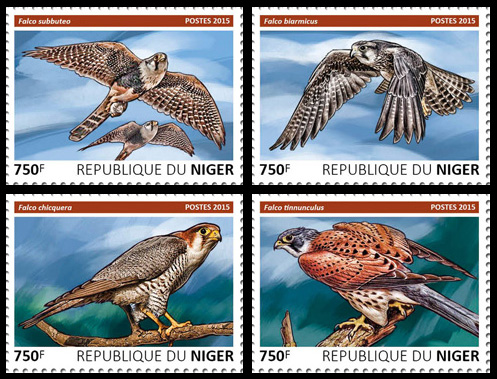
Researchers at Audubon Greenwich’s Quaker Ridge hawk watch site are alarmed that they’ve seen only 8,025 hawks over the fall migration season this year, the second lowest total in more than three decades of collecting data. In years past, they have seen as many as 30,000 hawks in a single day, said Ryan MacLean, the official hawk counter at the site. “We have 31 years of data, and unfortunately out of 31 years, this is our second lowest on record,” MacLean said. Each year, observers post up on Quaker Ridge, the steep hill on Audubon Greenwich property that sits right next to their headquarters, and count different species of hawks and eagles as they make their way south. The migration season generally runs from the beginning of September until the beginning of December. In 2015, 12,076 birds were counted at Quaker Ridge. In 2014, there were 16,139, about twice as many as the 2016 total. The historical low was in 2003, when 4,562 birds were counted.
Source: Greenwich Time, December 5, 2016
http://www.greenwichtime.com/local/article/Seasonal-hawk-count-over-Greenwich-shows-declines-10695798.php -

Time to revisit the Paracelsus principle of “the dose makes the poison”
Environmental risk assessment approaches used by regulatory agencies around the world were developed on the basis of a methodology published by the National Academy of Sciences. For the hazard characterization step, it is generally accepted that once detectable, a response of an organism to a toxicant increases proportionally with the level of exposure until reaching an upper-limit or maximal-effect level (Emax) beyond which increasing toxicant dose will not increase the response (known as a monotonic dose-response). To assess the dose-response relationship of a chemical, several doses are typically tested to define the no observed adverse effect level (NOAEL) and/or the lowest observed adverse effect level (LOAEL). The NOAEL is considered a conservative default threshold below which a chemical is not expected to induce adverse effects, irrespective of the dose.
Non-monotonic dose-response (NMDR) relationships are more frequently reported today in experimental studies than they were 10 years ago. The endocrine disrupting chemicals (EDCs) are regularly associated with NMDR relationships. Until recently, NMDR relationships were not considered plausible, and thus they were not published, reported, or interpreted as relevant biological phenomena. An increasing number of scientists think that NMDR relationships represent a toxicological reality, but supplementary effort is required to revisit the Paracelsus principle of “the dose makes the poison”.
The assumption that a threshold, or “safe” exposure level exists for chemicals except for carcinogens may be invalid. There are examples of non-carcinogens without an apparent threshold (neonicotinoids, dioxin, dieldrin, endocrine disruptors, and sulfhydryl-reactive metals). It is also clear by now that the threshold model for non-carcinogens may seriously underestimate actual risk. Risk assessments can no longer assume thresholds for non-carcinogens when the shape of the dose-response curve is linear at low concentrations. Risk management of such chemicals should be based on the ALARA principle (“as low as reasonably achievable”).
Citations:
Tennekes HA (2016) A Critical Appraisal of the Threshold of Toxicity Model for Non-Carcinogens. J Environ Anal Toxicol 6:408. doi: 10.4172/2161- 0525.1000408
Lagarde F, Beausoleil C, Belcher SM et al (2015) Non-monotonic dose-response relationships and endocrine disruptors: a qualitative method of assessment. Environ Health. 14: 13. doi: 10.1186/1476-069X-14-13 -
Neonicotinoids are responsible for butterfly collapse
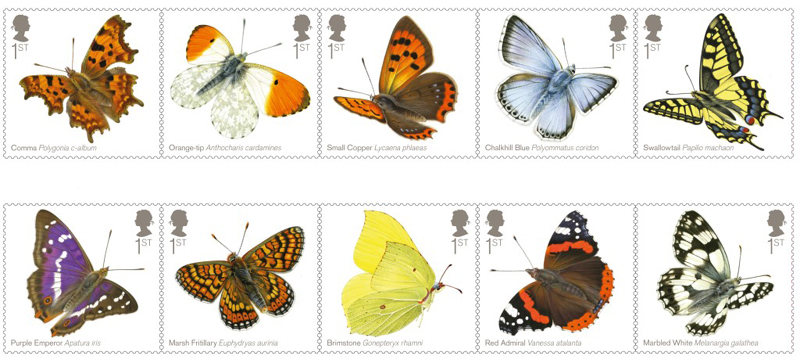
Butterfly numbers are suffering a “shock collapse”, a study shows today as conservationists raise concern farm pesticides are causing the worst population fall in six years. Despite a warm summer that would normally help them thrive, the majority of species studied in the annual Big Butterfly Count saw populations fall. Some saw their worst numbers since the citizen science project began in 2010. The results were even lower than the cold washout summer of 2012 which proved a disaster for butterflies, despite 2016 being warmer than average and relatively dry, wildlife charity Butterfly Conservation said. Experts at the charity admitted the reason for butterflies struggling this year was “a bit of a mystery”, but the insects could be affected by the mild winter or cold spring, or the impacts of modern farming may be hitting common species now.
Gatekeeper, comma and small copper butterflies all experienced their worst summers seen in the count, in which members of the public count common butterfly species to help the experts chart their fortunes. Numbers of comma butterflies fell 46 per cent compared to last year, while gatekeeper populations were down 40 per cent and small coppers dropped 30 per cent compared to 2015.
The small tortoiseshell saw a 47 per cent drop in numbers counted, recording its second worst set of numbers. Peacock butterflies also slumped to their second worst year on record, with a drop of 42 per cent on 2015 numbers. The average number of the striking peacock butterfly seen has dropped from an average of 3.6 individuals per count in 2013 to just 0.5 per count this summer.
And people taking part in the count saw the lowest number of butterflies each since the scheme began, with an average of just 12 butterflies spotted per survey. Richard Fox, Butterfly Conservation’s head of recording, said: “The drop in butterfly numbers this summer has been a shock and is a bit of a mystery. “When we have cold, wet summers, as in 2012, we expect butterfly populations to plummet, but that wasn’t the case this year. “The summer months were warmer than usual, yet most Big Butterfly Count participants saw fewer butterflies. “Perhaps the very mild winter had a negative effect, or the cold spring, or perhaps the impacts of intensive farming and pesticides are really hitting these common species now.”
Source: Telegraph, 10 October 2016
http://www.telegraph.co.uk/news/2016/10/10/final-warning-decline-in-butterflies-raises-fears-over-pesticide/ -
What’s Happening to the Bees and Butterflies? Verlyn Klinkenborg reviews The Moth Snowstorm: Nature and Joy by Michael McCarthy
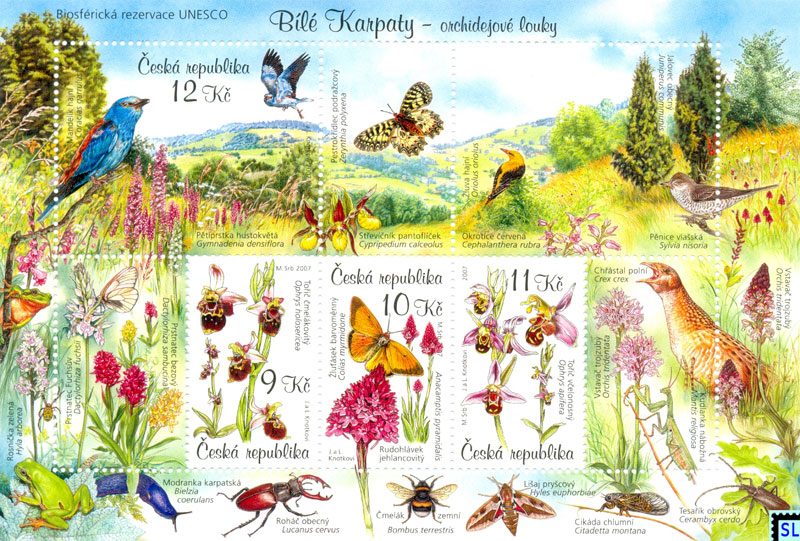
Michael McCarthy has published a powerful, sensitive new book, The Moth Snowstorm: Nature and Joy, a book about the wonders of the natural world and about its decline. In a chapter called “The Great Thinning,” McCarthy, a highly regarded British environmental journalist, notes the difference between extinction at the national level and extinction at the local level. He observes that among birds “there were only two national extinctions in Britain in the post-war period,” the red-backed shrike and the wryneck. “But the number of birds which have declined so much as to be locally extinct, over great swathes of the land, is hugely higher.”
The same is true of wildflowers and butterflies, especially butterflies, which are dear to McCarthy’s heart. In the postwar years, there have been three national extinctions, he writes, “but since the butterfly recording schemes first started, nearly three-quarters of our fifty-eight remaining species have declined and disappeared over much of the country.” In other words, counting the number of species lost doesn’t even begin to reflect the number of individuals lost. Between 1970 and 2013, “the combined population of nineteen farmland bird species” in Great Britain dropped by 56 percent. And since they were declining well before that, “the real figure is obviously much larger; and so with the insects; and so with the flowers.”The picture is no different in North America. According to a new report from Partners in Flight, a coalition of organizations including the National Audubon Society and the Cornell Lab of Ornithology, forty-six common land-bird species have lost “half or more of their populations—a net loss of 1.5 billion breeding birds” since 1970. (This is to say nothing of waterfowl, shorebirds, seabirds, and rare or threatened species.) Twenty-four of those species have lost between 50 and 90 percent of their 1970 populations. These are astonishing numbers and, like most astonishing numbers, it’s hard to know how to feel their weight. We’ve grown sadly accustomed to the tragedy of the few—to seeing a rare species on the cusp of disappearance, like the black rhino or the lowland gorilla. But this is the tragedy of the common.
As species crash and vanish, the world loses diversity, something it’s been doing for centuries. But the loss of abundance is even more startling. Nature is simply not as full as it once was. Consider the creatures in my own fields. Bobolinks have declined in the US by 74 percent since 1966. Chimney swifts have declined by 72 percent in the same period. As for the solitary monarch butterfly I saw making its way over the goldenrod a couple of weeks ago, that species is declining as well, especially its western population. Something similar has happened to many species: they continue to exist but in greatly diminished numbers, which means that the species itself has a far more tenuous hold on existence. But it also means that the numerical robustness, the plenitude within nature, has dwindled. It’s like looking into the sky and discovering that thunderheads are no longer dark and towering but only faint wisps of themselves.
Source: The New York Review of Books, 22 December 2016 issue
http://www.nybooks.com/articles/2016/12/22/whats-happening-to-the-bees-and-butterflies/ -
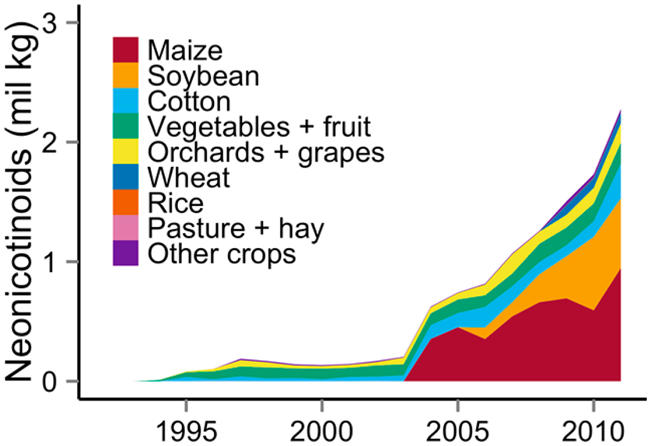
Seed Treatments Have Driven the Rapid Increase of Neonicotinoids in US Pest Management
Neonicotinoids are the most widely used class of insecticides worldwide, but patterns of their use in the U.S. are poorly documented, constraining attempts to understand their role in pest management and potential nontarget effects. We synthesized publicly available data to estimate and interpret trends in neonicotinoid use since their introduction in 1994, with a special focus on seed treatments, a major use not captured by the national pesticide-use survey. Neonicotinoid use increased rapidly between 2003 and 2011, as seed-applied products were introduced in field crops, marking an unprecedented shift toward large-scale, preemptive insecticide use: 34−44% of soybeans and 79−100% of maize hectares were treated in 2011. This finding contradicts recent analyses, which concluded that insecticides are used today on fewer maize hectares than a decade or two ago. If current trends continue, neonicotinoid use will increase further through application to more hectares of soybean and other crop species and escalation of per-seed rates. Alternatively, our results, and other recent analyses, suggest that carefully targeted efforts could considerably reduce neonicotinoid use in field crops without yield declines or economic harm to farmers, reducing the potential for pest resistance, nontarget pest outbreaks, environmental contamination, and harm to wildlife, including pollinator species.
Source:
Margaret R. Douglas and John F. Tooker (2015) Environ. Sci. Technol. DOI: 10.1021/es506141g -
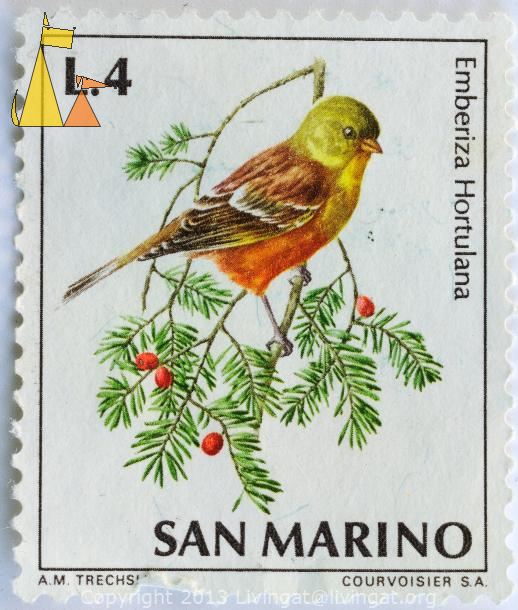
The European population size of the ortolan bunting was halved in a decade
Following recent updates proposed by BirdLife International and further updates across Europe gathered in the context of a continent-wide study of the migration strategy of the species, we propose here an update of national population sizes and associated recent trends of the Ortolan Bunting (Emberiza hortulana). Previous estimates for the period 1999-2002 reported 5,200,000 to 16,000,000 breeding pairs, for an area extending east to European Russia, and south to the Caucasus and Turkey. The countries holding the largest populations were Turkey (3-10 million pairs) and Russia (1.5-5.0 million pairs). The updated results give approximately 3,319,000 to 7,057,000 pairs in Europe (for the period 2012-2014), representing a c. 50% decrease in numbers over the last decade. This decrease is partly due to overestimates proposed in previous reports for the key country, Turkey, which is now considered to support only 500,000 to 1,000,000 pairs. Russia still holds 2.0-4.3 million pairs, although with an estimated decline of c. 15-30% since 2000. Overall, within the 39 European countries assessed here, recent decadal trends (on average 2000-2012) in population size are reported as unknown in 15 countries, increasing in 2 countries (Germany and Serbia), stable or fluctuating in 6 countries, and decreasing in 16 countries including recent extinctions in Belgium, Hungary, Slovakia and the Netherlands. Overall, declining populations are mostly located in northern Europe, and fourteen of the 15 northern European countries with a known national trend have declining breeding populations, suggesting that northern breeders are of particular conservation concern.
Source: Ornis Fennica . 2016, Vol. 93 Issue 3, p186-196. 11p.
Author(s): Jiguct, Frédéric; Arlettaz, Raphaël; Bauer, Hans-Günther; Belik, Viktor; Copete, José Luis; Couzi, Laurent; Czajkowski, Michel Alexandre; Dale, Svein; Dombrovski, Valery; Elts, Jaanus; Ferrand, Yves; Hargucs, Régis; Kirwan, Guy M.; Minkevicius, Simonas; Piha, Markus; Sclstam, Gunnar; Skicrczyński, Michał; Siblet, Jean-Philippe; Sokolov, Alcksandr -
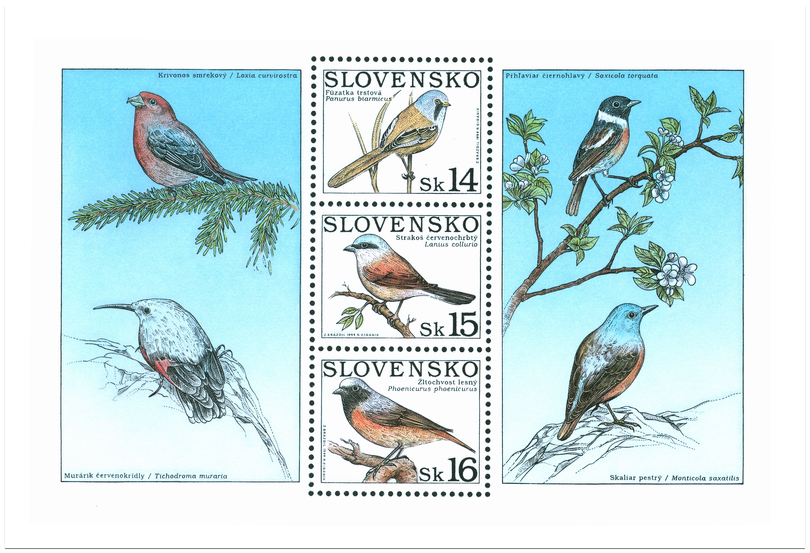
Dramatic decline of the bearded reedling in Spanish Mediterranean wetlands
The apparent stability of the bearded reedling (Panurus biarmicus) in Spanish inland wetlands contrasts with its threatened status in Spanish coastal wetlands. The species has already disappeared from some coastal areas in Catalonia and its situation is critical in the region of Valencia. In 2013 we studied the breeding populations in three wetlands in Valencia using two methods: census by exhaustive search of individuals (territory mapping) and distance sampling using line transects. We estimated the trend of these populations from data obtained in previous censuses (2005 and 2006), and assessed their viability in the medium and short term using count–based population viability analysis (PVA). Results were alarming in the three studied wetlands, especially in the Albufera de Valencia, where only one breeding pair was found. The percentage of decrease of estimated pairs was similar in all wetlands: ca. 90% between 2005 and 2013. Results from the PVAs predicted a 90% probability of reaching the quasi–extinction threshold before 2024 or 2028 for the largest population of bearded reedling in the Valencia region, El Hondo, while for the Santa Pola population this threshold would be reached before 2016 or 2017. The parallel trend and generalized decline in the Spanish coastal wetlands suggests that these Mediterranean wetlands probably share some specific factors that have adversely affected their populations. Given that all these natural spaces are surrounded by intensively irrigated crops that are subjected to the intense use of pesticides, we hypothesize that these products could have had a detrimental effect on the bearded reedling. This hypothesis is supported by the fact that the healthiest populations are situated in Iberian inland wetlands that are surrounded by dry crops where the use of pesticides is less intense.
Source:
Belenguer Barrionuevo, R., López–Iborra, G. M., Dies, J. I. & Castany i Alvaro, J., 2016. Dramatic decline of the bearded reedling, Panurus biarmicus, in Spanish Mediterranean wetlands. Animal Biodiversity and Conservation, 39.1: 17–27. -

L’EFSA: I PESTICIDI KILLER DELLE API DEVONO ESSERE BANDITI
Un anno dopo la scadenza della moratoria biennale sui tre pesticidi neonicotinoidi, l’Efsa, Autorità europea per la sicurezza alimentare, ha emesso un parere sfavorevole su due dei tre prodotti chimici. Clothianidin, imidacloprid (entrambi della Bayer) pongono gravi rischi per le api. Sul terzo, il thiamethoxam (Syngenta), si è ancora in attesa della relazione che dovrebbe però confermare anche in questo caso lo “sconsiglio”. Rispetto alla moratoria, durata fino a dicembre 2015, l’Efsa ha spiegato che i rischi imporrebbero anche il bando del trattamento dei cereali invernali (esclusi dal provvedimento restrittivo biennale). La moratoria europea è in fase di revisione, e il parere dell’EFSA sembrerebbe indicare l’inevitabilità di un bando totale.
Source: Test Magazine, 29 Novembre 2016
https://www.testmagazine.it/2016/11/29/lefsa-i-pesticidi-killer-delle-api-devono-essere-banditi/15900/ -
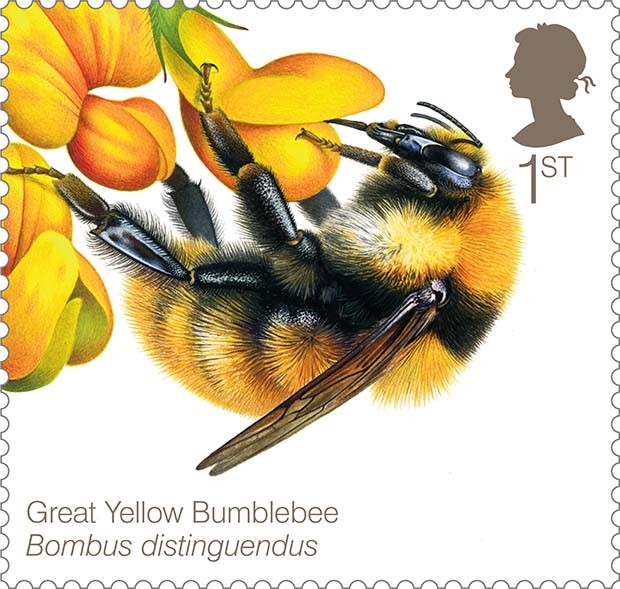
Per la moria di api sotto accusa l’imidacloprid
Uno studio dell’Università di Trento (CIMeC e Dipartimento di Fisica), pubblicato oggi sulla rivista Scientific Reports indaga gli effetti che l’insetticida più usato al mondo (Imidacloprid) anche se presente nell’ambiente in concentrazioni ben al di sotto dei limiti letali, ha un effetto dannoso nel cervello degli insetti. Le ripercussioni rilevate nel cervello delle api riguardano l’ambito della memoria, dell’orientamento e, per la prima volta viene dimostrata anche una connessione con la perdita dell’olfatto.
L’impiego di questo insetticida, derivante dalla nicotina e introdotto a partire dagli anni Ottanta come alternativa sicura al DDT, è stato regolamentato più volte negli ultimi anni da direttive nazionali e comunitarie ma il dibattito attorno alla pericolosità di queste sostanze soprattutto per gli invertebrati terrestri e gli insetti impollinatori è ancora aperto e acceso. Ad alte concentrazioni questo insetticida provoca nelle api convulsioni e morte.
Ma i problemi – come si rileva nello studio – si registrano anche a concentrazioni più basse. Si è osservato che, nonostante le restrizioni imposte dalle normative (ad esempio il divieto di irrorazione durante la fioritura in Trentino Alto Adige), l’assimilazione di questo pesticida da parte delle api rimane alta, come dimostrano le concentrazione rilevate nel cervello.
Un problema che potrebbe derivare dal mancato rispetto delle regole, dall’esposizione tramite altri canali (polvere o guttazione, traspirazione di acqua dalle foglie) oppure dalla persistenza di questa sostanza nell’ambiente nell’arco di vari mesi.
“I principi attivi di questo tipo di pesticidi – spiega Albrecht Haase del CIMeC – sono altamente neurotossici: si legano ai recettori della nicotina nelle sinapsi e bloccano il trasporto delle informazioni a livello cerebrale. Il nostro studio dimostra che i danni si rilevano non soltanto nelle funzioni avanzate, più sofisticate, del cervello delle api, ma anche in quelle di base, fondamentali, come l’olfatto. Un canale di comunicazione importante tra le api avviene infatti per via chimica, attraverso i feromoni. Cambiamenti anche molto piccoli legati alla riduzione dell’olfatto possono compromettere seriamente la vita di un alveare perché si riflettono sulla sua organizzazione sociale e sulla capacità riproduttiva della colonia. Ad esempio, se l’informazione sulla malattia dell’ape regina non arriva correttamente alla colonia, le api non avvieranno i meccanismi che stanno alla base della produzione di nuove regine e l’alveare sarà destinato al collasso”.
di R. T.
pubblicato il 02 dicembre 2016 in Strettamente Tecnico > Bio e Natura
http://www.teatronaturale.it/strettamente-tecnico/bio-e-natura/23733-per-la-moria-di-api-sotto-accusa-l-imidacloprid.htm