Auteur: Henk Tennekes

  • Ornithologen und Vereine beobachten Rückgang von Vögeln / Experten sehen Gründe in Landwirtschaft und Wetter

    Ornithologen und Vereine beobachten Rückgang von Vögeln / Experten sehen Gründe in Landwirtschaft und Wetter

    Viele Futtersäckchen für Vögel bleiben in diesem Winter unberührt im Garten hängen. Es ist ein Thema, das Franz Stalla merklich berührt. “Es ist doch schon seit zehn bis 15 Jahren zu beobachten, dass die Vogelwelt immer kleiner wird”, sagt der Vogelexperte aus Ludwigshafen. “Seltene Arten verschwinden zum Teil ganz von der Bildfläche und nun werden auch noch Allerweltsvögel wie Amseln, Stare und Meisen immer weniger”, sagt er aufgebracht. Gründe für den rasanten Rückgang hat der 85-Jährige schnell parat. “Das passiert nur durch den Einfluss des Menschen”, ist er überzeugt. Insektenbekämpfung, Naherholung, industrialisierte Landwirtschaft und erhöhtes Verkehrsaufkommen – das alles spiele eine große Rolle beim Schwund der Vögel. “Man sieht es doch, wenn man mit dem Auto über Land fährt. Früher war die Kühlerhaube voll mit toten Insekten”, sagt der Ornithologe. “Heute sieht man da kaum noch etwas.” Mit Schutzmitteln vernichteten die Menschen die Nahrung der Vögel. Landwirtschaftliche Flächen raubten Amsel, Meise und Co. zudem nach und nach ihre Brutstätten. “Das sieht böse aus”, findet Stalla.

    Quelle: Morgenweb, 28.12.2016
    http://www.morgenweb.de/region/mannheimer-morgen/metropolregion/verwaiste-futterstellen-passiert-nur-durch-menschen-1.3096279

  • Agricultural land in Vietnam has been overexploited because of inappropriate cultivation methods, scientists say

    Agricultural land in Vietnam has been overexploited because of inappropriate cultivation methods, scientists say

    The great achievements of Vietnam’s agriculture in the last decades are undeniable: Vietnam has turned from a country with food shortages into a big farm produce exporter. However, Vietnamese farmers, after a long period of trying to increase productivity and race after export growth, have seen the agricultural development slow down. Scientists have warned about pollution caused by inappropriate cultivation methods, warning that this is the reason behind unsustainable development.

    In Mekong Delta, farmers now have three rice crops a year instead of two, a controversial issue, especially in the context of climate change and salinity. The experts, who oppose the 3-crop method, said that intensive farming would dry them out because it doesn’t have time to rest. Meanwhile, the additional rice output created by the third crop cannot compensate for the damage it causes to the soil. In other countries, farmers only have two crops a year and let the land ‘relax’ in the remaining time to create high-quality farm produce. Land needs to recover, be protected against insects, and have balanced pH. In the Mekong Delta, with the three-crop model, farmers rely on fertilizer and pesticides to obtain the highest possible yields. A recent survey in the delta showed that households spend VND20-25 million each on fertilizer and pesticides for each hectare of rice field.

    The abuse of chemical fertilizer and pesticides not only is seen on rice fields, but also on vegetables and industrial crops. Scientific research has found waste in using fertilizer in coffee, rubber and pepper cultivation in the central region, Central Highlands and southeastern region. It is estimated that farmers have to spend VND30-40 million on fertilizer and pesticides for every hectare of coffee and rubber.

    The unreasonable use of fertilizer and pesticide, plus uncontrolled deforestation in the Central Highlands and southeastern region have contaminated the once fertile land. Scientists have repeatedly warned about the sulfur poisoning of the land in the Central Highlands. Prior to 1996, the land suffered from the lack of sulfur with the sulfur concentration of 15-30 ppm, because of which coffee gardens had low yield.
    Source: Vietnam Net, 28/12/2016
    http://english.vietnamnet.vn/fms/environment/169873/scientists-alarmed-over-soil-degradation.html

    However, there are clear signs of sulfur abundance. 17.6 percent of land samples out of 114 tested samples were found as having the sulfur concentration of 30 ppm, while 23.5 percent 32-100 ppm and 59 percent over 100 ppm.

  • It is raining dead birds from the sky in South Jersey

    It is raining dead birds from the sky in South Jersey

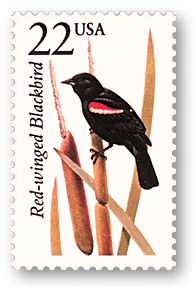
    Weather-wise, it had been a fairly typical November day, two days before Thanksgiving, in the western Cumberland County agricultural community of Stow Creek Township – mostly sunny, with a bit of a nip in the air. Then, all of a sudden, it was raining dead birds. And by the time the brief “shower” was over, as many as 200 red-winged blackbirds (Agelaius phoeniceus) littered the ground in a small housing development off Frank Davis Road surrounded by vast farm fields. “They just fell from the sky,” said Larry Hajna, a spokesman for the New Jersey Department of Environmental Protection. It was the second time in less than three weeks that a die-off of blackbirds had occurred in the same rural neighborhood; the first time, a couple of dozen dead birds were found. A similar incident had happened in a North Jersey farming area earlier in the year, Hajna said. After county agricultural agents had been notified by homeowners, the DEP’s Division of Fish and Wildlife arrived in Stow Creek and removed the birds, collecting some of them to be sent to a state lab for necropsy, toxicology, and histopathology tests. But the results of all the tests were inconclusive, Hajna said last week. “We did ascertain that the birds suffered trauma and internal bleeding from hitting the ground,” Hajna said. “But what made them fall from the sky in the first place . . . we can’t say for certain.”
    The red-winged blackbird is omnivorous. It feeds on plant materials, including seeds from weeds and waste grain such as corn and rice, but about a quarter of its diet consists of insects and other small animals, and considerably more so during breeding season. It prefers insects, such as dragonflies, damselflies, butterflies, moths, and flies, but also consumes snails, frogs, eggs, carrion, worms, spiders, mollusks. The red-winged blackbird forages for insects by picking them from plants, or by catching them in flight. In season, it eats blueberries, blackberries, and other fruit. These birds can be lured to backyard bird feeders by bread and seed mixtures and suet. In late summer and in autumn, the red-winged blackbird will feed in open fields, mixed with grackles, cowbirds, and starlings in flocks which can number in the thousands.

    Sources:
    Philly.com, December 27, 2016
    http://www.philly.com/philly/news/new_jersey/20161227_Why_are_birds_falling_from_the_sky_in_South_Jersey_.html
    Wikipedia
    https://en.wikipedia.org/wiki/Red-winged_blackbird

  • Het ongelijk van Aalt Dijkhuizen

    Het ongelijk van Aalt Dijkhuizen

    Voorzitter Aalt Dijkhuizen van de topsector Agri & Food predikt het evangelie van de ambitieuze productiviteitsverbetering in Nederland om daarmee de wereldvoedselvoorziening te dienen. Volgens biologisch boer Sjoerd de Hoop werkt deze bewering op wereldschaal averechts. Zijn stelling: Beter drie koeien met 3300 kilo melk in Afrika dan één koe met 10.000 kilo in Nederland. Aalt Dijkhuizen, voormalig voorzitter van Wageningen Universiteit en tegenwoordig boegbeeld van de topsector Agri & Food, trok een bomvolle zaal in het WTC Expo in Leeuwarden, op de jaarlijkse ledendag van LTO Noord Fryslan. Zijn betoog dat de Nederlandse landbouw altijd ambitieus moet blijven, en voortdurend moet streven naar verdere verbetering van de productiviteit sprak een groot deel van de aanwezigen zeer aan.
    Ambitie is prima en duurzame landbouw al helemaal. Er liggen ook voor biologische boeren nog grote uitdagingen om met gebruik van de natuurlijke bodemvruchtbaarheid de opbrengsten te verhogen. Er valt nog veel te innoveren. De toonzetting van Aalt Dijkhuizen valt bij ons een beetje verkeerd.
    Het is duidelijk dat Dijkhuizen alleen kijkt als landbouweconoom. Hij heeft vooral oog voor verhoging van productie per hectare en meer export. Hij denkt in concurrentiepositie, export en handelsbelangen, met een draai naar wereldvoedselproductie en milieu. Eén koe van 10.000 kilo melk is voor de boer, het milieu en Nederland veel beter dan twee koeien die 5000 liter melk geven, stelt hij. Dat lijkt voor Nederland een reële bewering omdat wij hier hoge grondprijzen hebben, veel krachtvoer beschikbaar en een mestoverschot hebben. Maar ook in Nederland hangt het helemaal van de bedrijfsomstandigheden af waar het optimum ligt. Onze zuivelindustrie wil graag exporteren maar uiteindelijk gaat het om de melkprijs en het inkomen dat de boer krijgt. Op Europese en wereldschaal gaat de vlieger van 10.000 liter per koe slechts op voor een heel beperkt deel (10%?) van de miljoenen hectares.

    Het gaat om de bredere context van de ‘sociale-economie’ . Boeren moeten naast voldoende kennis ook risico’s beheersen en niet te veel afhankelijk worden van externe inputs en (internationaal) transport en de waardeoordelen omtrent veehouderij van de consument. Dijkhuizen legt in zijn betoog niet de verbinding tussen agrarische productie en bodemvruchtbaarheid, voedselzekerheid en armoedebestrijding, energiebesparing en klimaatverandering. Dijkhuizen heeft geen oog voor de achteruitgang van de bodemvruchtbaarheid in de moderne westerse wereld. Hij is geen bodemkundige. De hoogte van de productie per koe of per ha is geen doel op zich. Het gaat om een sector die voldoende produceert en waarin boeren op duurzame wijze een optimaal inkomen kunnen verdienen.

    Om ook de armen te bereiken die nu maar 1 dollar per dag hebben te besteden vereist internationale voedselzekerheid heel andere impulsen. Eén daarvan is het vooruit helpen van de plattelandsbevolking met ‘Low External Input landbouw’ die ondersteund wordt met sociaaleconomisch beleid. Het is beter en duurzamer om in Afrika er voor te zorgen dat drie koeien 3300 kilo melk produceren dan te streven naar een koe in Nederland met een jaarproductie van 10.000 liter. In Afrika voeren ze de koeien alleen gras en resten van bijvoorbeeld maïs of rijstplanten. Als die melk met kleine coöperaties wordt verwerkt en in de regio verkocht dan draagt dat bij tot plattelandsontwikkeling en welvaart voor de kleine boeren en boerinnen die daardoor hun landbouwbedrijven verder kunnen ontwikkelen. Bovendien doe je met meer koeien ook meer aan risicospreiding. Het allerbelangrijkste is dat drie koeien meer mest opleveren en daar is in Afrika grote behoefte aan om de bodem weer vruchtbaar te maken. Projecten als Farm Friends (www.farm-friends.nl) zijn goede voorbeelden hoe het ook kan.

    Mondiale voedselzekerheid stellen we niet veilig door in Nederland de productie al maar meer op te voeren. In Afrika en Zuid Amerika kun je meerdere thema’s tegelijk aanpakken zoals: Armoedebestrijding, toegang tot grondgebruik en microkrediet voor vrouwen, gezondheid, milieu en klimaatverandering. We kunnen aansluiten bij de landbouwpraktijk in diverse landen van de wereld en dat verbinden met de ervaringen van onze instituties, boerenorganisaties en coöperaties in Nederland. Daarnaast rekening houden met handelspolitieke realiteit en infrastructuur van die landen. Het exporteren van goede kennis uit Nederland is beter dan het verspreiden van onze melk over de wereld.
    Auteur: Sjoerd de Hoop
    De documentaire over het werk van Sjoerd de Hoop (Fryslân DOK):
    http://www.npo.nl/fryslan-dok-boer-zonder-grenzen-4/17-10-2010/POW_00259996
    Aalt Dijkhuizen over biologische landbouw:

  • Es gibt weniger Meisen in Dortmund

    Es gibt weniger Meisen in Dortmund

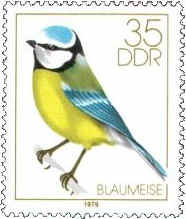
    Viele Dortmunder halten vergeblich in ihren Gärten Ausschau nach den kleinen gelb-blau gefiederten Tieren, für die sie Knödel gekauft haben. Dr. Erich Kretzschmar vom Naturschutzbund bestätigt das und spricht von “gefühlt weniger” Meisen. Eine Katastrophe sei das aber nicht. “Das Thema wird immer mehr diskutiert, denn Tatsache ist: An den Futterstellen sind weniger Meisen zu sehen. Ich führe das auf die schlechten Bruterfolge im Frühjahr 2016 zurück”, erklärt Dr. Erich Kretzschmar auf Anfrage unserer Redaktion. Anlass war die schlechte Nachfrage an den fetthaltigen Meisenknödeln, die vor Fenstern, auf Terrassen und Balkonen oder in Gärten hängen, ohne dabei an Substanz zu verlieren.

    Der Mai 2016 – ein nasser und kalter Monat, der den Speiseplan der Meisen mit weitreichenden Folgen durcheinander gebracht hat. Denn das schlechte Wetter hatte Folgen auch für den Raupen-Bestand im Stadtgebiet. Die Altvögel beliefern ihre Brut im Minutentakt mit den energiereichen Raupen. Wenn sie denn da sind. “Dazu kommt der allgemein zu beobachtende Rückgang bei den Insekten”, sagt Erich Kretzschmar über das immer ärmer werdende Nahrungsangebot in der Natur. Fehlende Nahrung, Nässe und Kälte bildeten im Frühjahr 2016 also eine für die Aufzucht in Nestern und Nistkästen ungünstige Kombination. “Tatsächlich haben unsere Nistkästen-Betreuer viele tote Jungvögel und nicht ausgebrütete Eier entdeckt. Die Jungvögel sind erfroren oder verhungert. Die meisten haben Ernährungsprobleme bei kalter Witterung”, sagt der beim Naturschutzbund für die Brutvogelkartierung zuständige Biologe.

    Mutter Natur weiß allerdings um die Sensibilität der Meisen – und hat ihr deshalb drei Brutzeiten ins Stammbuch geschrieben. Pro Jahr könne ein Paar bis zu 30 Eier ausbrüten. Bei guten Bedingungen können sich die Meisen-Populationen schnell wieder erholen. Schlecht sei allerdings, wenn Nässe und Kälte zwei bis drei Jahre aufeinanderfolgten.

    Normal sei, dass viele Meisen das erste Lebensjahr nicht überstehen würden. Statistisch werden Meisen nur 0,8 Jahre alt. Vogel-Beobachter haben in England schon eine zwölf Jahre alte Meise gesichtet. In der Ruhrgebietsstadt Essen wurde eine siebenjährige Meise wiedererkannt. Die Tiere waren als Jungvögel beringt worden.

    Quelle: WAZ, 25.12.16
    http://www.waz.de/staedte/dortmund/naturschutzbund-weniger-meisen-in-dortmund-id209084563.html

  • Dramatic decline of Puerto Rico’s shorebirds

    Dramatic decline of Puerto Rico’s shorebirds

    North American shorebirds have declined significantly over the past several decades. As a result, ornithologists have carried out numerous studies to identify key habitat for preservation and develop conservation strategies. Most of this research has been conducted on northern breeding grounds or on wintering grounds in South America, but there have been few studies in the Caribbean. However, a significant number of migrating shorebirds stop at the salt flats at Cabo Rojo National Wildlife Refuge, in southeastern Puerto Rico, the most important shorebird site on the island and one of the most important in the Caribbean. During fall migration, daily counts of up to 10,000 shorebirds have been recorded. As a result, Cabo Rojo has been designated an Important Bird Area and a site of the Western Hemisphere Shorebird Reserve Network.

    The Cabo Rojo salt flats consist of two lagoons, parts of which are used for commercial salt production pursuant to a special permit from the U.S. Fish and Wildlife Service (FWS). The activities are conducted in accordance with the needs of shorebirds and have been ongoing for more than a century. FWS believes that the salt production is helpful to birds, as it prevents salt buildup in lagoon beds.

    Nearly 30 species of shorebirds have been observed at Cabo Rojo. Small calidrid sandpipers (Least, Western, Semipalmated, and White-rumped), Stilt Sandpiper, and Lesser Yellowlegs are the most abundant migratory species, though approximately 20 others have been seen. Led by Jaime Collazo, of the U.S. Geological Survey and North Carolina State University, researchers including Morgan A. Parks have conducted shorebird surveys at the salt flats during three multi-year periods (1985-1992, 1999-2007, and 2013-2014), allowing them to compare population numbers over a nearly 30-year period. They have also comprehensively studied the wintering ecology of the Semipalmated Sandpiper.

    Their results, which were published in a recent paper, are alarming though consistent with larger scale trends. Virtually all species declined more than 70 percent between 1985-1992 and 2013-2014. For example, both small calidrid sandpipers (grouped together due to difficulty of identification at a distance) and Lesser Yellowlegs declined by 81 percent. Stilt Sandpiper declined by 57 percent. Moreover, eight rarer species observed in the earlier periods were not even seen in the later period.

    Researchers also conducted surveys in nearby wetlands to determine if some birds had simply shifted to other sites, but even when these neighboring areas were considered, the declines were significant.

    It is unclear whether the declines are due to conditions at Cabo Rojo or factors elsewhere, including during migration. However, research on Semipalmated Sandpipers found that they stayed at Cabo Rojo for an average of 110 days in the fall and average body condition improved during that time. Survival rates were also comparable to other sites.

    Although researchers found that certain prey items have become less common, the studies of Semipalmated Sandpipers suggest that habitat quality at Cabo Rojo remains high. However, other shorebird species may have been adversely impacted by the declines of the prey items.

    The studies at Cabo Rojo add to the mounting evidence that many shorebird species are experiencing broad, significant, and ongoing declines, including at the most important U.S. shorebird site in the Caribbean.

    Source: Bird Watching, 19 December 2016
    http://www.birdwatchingdaily.com/blog/2016/12/19/decline-puerto-ricos-shorebirds/

  • Agrarisch natuurbeheer leidt niet tot meer weidevogels

    Agrarisch natuurbeheer leidt niet tot meer weidevogels

    Het collectieve agrarisch natuurbeheer in Friesland leidt niet tot een betere stand van de weidevogels. Dat meldt het Kollektivenberied Fryslan, een collectief van zeven agrarische natuurverenigingen en LTO Noord Friesland. “Het voortbestaan van de weidevogelpopulatie staat ondanks de inzet van ruim 800 boeren nog steeds onder druk”, concludeert KBF. In 2016 bleef de stand van de tureluur stabiel, het aantal grutto’s daalde licht en het aantal scholeksters en kieviten daalde fors. De deelnemende boeren passen hun bedrijfsvoering aan op de weidevogels door later te maaien, kruidenrijk grasland te creëren en natte percelen aan te leggen. De ruim 15.000 hectare weidevogelbeheer die de zeven collectieven in uitvoer hebben, voldoet ruimschoots aan de minimale eisen van een weidevogelbiotoop.

    Bron: Boerderij, 23-12-16
    http://www.boerderij.nl/Home/Nieuws/2016/12/Collectieve-aanpak-agrarisch-natuurbeheer-leidt-nog-niet-tot-meer-weidevogels-74632E/?cmpid=NLC|boerderij_vandaag|2016-12-23|Niet_meer_weid

  • 450 Millionen Vögel weniger in Europa als noch vor drei Jahrzehnten

    450 Millionen Vögel weniger in Europa als noch vor drei Jahrzehnten

    In Europa leben heute nach Schätzungen des Naturschutzbundes Deutschland (NABU) rund 450 Millionen Vögel weniger als noch vor drei Jahrzehnten. „Die Roten Listen werden immer länger“, beklagte Heinz Kowalski vom NABU-Landesverband Nordrhein-Westfalen mit Blick auf die „Stunde der Wintervögel“, die vom 6. bis 8. Januar 2017 stattfindet. Um den qualitativen und quantitativen Verlust der Vögel aufzuhalten oder gar wieder umzukehren, reichten die bisherigen Anstrengungen der Politik zum Schutz der Biodiversität und insbesondere der Vögel nicht aus, erklärte Kowalski. Vogelschützer beobachteten seit Jahren ein generelles Problem für den Vogelbestand. Eine ernste Gefahr stellten die Landschaftsveränderung sowie der zunehmende Einsatz von Pflanzenschutzmitteln dar. Darin werde auch eine der Ursachen für den besorgniserregenden Rückgang von Fluginsekten gesehen. Für einige Standorte sei von Insektologen hier eine Abnahme um bis zu 80 % in den letzten Jahrzehnten festzustellen.

    Topagrar.com – Lesen Sie mehr auf: https://www.topagrar.com/news/Home-top-News-Rund-450-Millionen-Voegel-weniger-in-Europa-6639777.html

  • Canadian Prairies are disappearing faster than the Amazon rainforest and the Great Barrier Reef

    Canadian Prairies are disappearing faster than the Amazon rainforest and the Great Barrier Reef

    A group of conservationists says it’s time to act to save the Canadian Prairies, which they say are disappearing off the face of the Earth faster than the Amazon rainforest and the Great Barrier Reef. Nature Conservancy Canada says more than 70 per cent of Canada’s prairie grasslands have been converted for other uses such as agriculture and industry. By comparison, just 20 per cent of the Amazon has been converted for other uses. The environmental group says some of the world’s most significant remaining grasslands are in Canada, but could soon disappear unless more is done to save them. Dan Kraus, a scientist with the conservancy, tells CTV News the biggest risk is lost biodiversity. He says most people think of the Prairies as flat wheat fields, but they were once home to huge herds of bison, which used to be among the largest populations of large mammals in the world. “There’s a wild side to the Canadian Prairies, and that’s the part that’s slipping away from us,” he says. Millions of migratory birds spend time in the Prairies each year, and more than 60 rare species call the habitat their home. Some bird species have lost more than 70 per cent of their population in the last 40 years, and that decline will continue if unchecked, Kraus says. “It’s still a place where you can have this incredible spectacle of migratory birds,” he says. “We’re trying to protect some of those remnants that we have left.”

    Source: Edmonton Journal, December 16, 2016
    http://www.edmontonjournal.com/news/national/canadian+prairies+vanishing+faster+than+amazon+rainforest+great/12533201/story.html

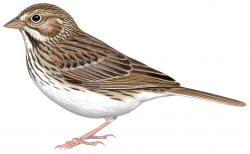
  • Current population of the Oregon Vesper Sparrow is fewer than 3,000 birds

    Current population of the Oregon Vesper Sparrow is fewer than 3,000 birds

    American Bird Conservancy has petitioned the U.S. Fish & Wildlife Service to list the Oregon Vesper Sparrow as a threatened or endangered species under the Endangered Species Act (ESA). In a letter sent to Sally Jewell, Secretary of the Interior, ABC describes this subspecies of the Vesper Sparrow as highly imperiled and threatened with extinction throughout its range. The petition makes the case that the species warrants listing because it lacks adequate protection under existing regulatory mechanisms. Without ESA listing, the sparrows’ future looks grim. The current estimated population of the Oregon Vesper Sparrow is fewer than 3,000 birds, and Breeding Bird Survey data indicates a statistically significant population decline of more than five percent every year over the last 45 years.

    This migratory species has a restricted breeding range that historically included southwestern British Columbia, western Washington and Oregon, and northwestern California. Now, breeding populations have disappeared from British Columbia and California, along with numerous local breeding populations throughout the range.

    The species overwinters in California west of the Sierra Nevada Mountains and south of San Francisco Bay, and historically it ranged into northwestern Baja California, Mexico. But wintering populations in Baja and southern parts of California have now disappeared.

    “We are deeply concerned about the future of this bird,” said Bob Altman, ABC’s Pacific Northwest Conservation Officer. “With so few birds remaining, many in small and isolated populations, the Oregon Vesper Sparrow (Pooecetes gramineus affinins) needs the immediate protection and conservation focus made possible through ESA listing.”

    The bird primarily feeds on insects during the summer, along with spiders and other small invertebrates, and feeds heavily on seeds in the winter.
    Sources: Chattanoogan, 22 December 2016
    http://www.chattanoogan.com/2016/12/22/338489/Conservation-Group-Seeks-Protection.aspx
    SDakota Birds
    http://sdakotabirds.com/species/vesper_sparrow_info.htm