Auteur: Henk Tennekes

  • Gemeente Ommen wil geen lelieteelt in grondwaterbeschermingsgebieden

    Gemeente Ommen wil geen lelieteelt in grondwaterbeschermingsgebieden

    Lelieteelt op grond in drinkwaterwinningen in Ommen blijft verboden als het aan het gemeentebestuur van Ommen ligt. De Raad van State heeft de gemeente opgedragen een nieuw besluit te nemen over het verbod op bollenteelt in grondwaterbeschermingsgebieden. Het eerder door de gemeente vastgelegd verbod werd door LTO Noord bestreden tot aan het hoogste rechtscollege. Deze oordeelde juni vorig jaar dat er onvoldoende onderzoek aan het besluit ten grondslag lag. Daarom moet de gemeente een nieuwe afweging maken over nut en noodzaak van het teeltverbod. De gemeente heeft hiervoor overleg gevoerd met Vitens en de KAVB (branchevereniging van de bloembollensector). Het verbod geld voor de grondwaterbeschermingsgebieden Hammerflier en Witharen. Ommen heeft Waterbedrijf Vitens gevraagd te onderbouwen of de specifieke omstandigheden in de gemeente Ommen nog steeds een teeltverbod voor bollen en sierbloemen rechtvaardigen. Het waterbedrijf heeft schriftelijk onderbouwd dat het teeltverbod wat het bedrijf betreft in stand gehouden moet worden. Onder meer is duidelijk geworden dat de drinkwaterwinningen in Ommen kwetsbaar zijn omdat er geen slecht doorlatende kleilagen in de grond zitten die voorkomen dat chemische stoffen het grondwater bereiken. De zuiveringsinstallaties van Vitens zijn niet ontworpen om micro-verontreinigingen uit het gewonnen water te halen.

    De KAVB stelt dat de bollensector niet kan worden aangewezen als grootste vervuiler omdat de in het grondwater aangetroffen stoffen in meerdere teelten worden gebruikt. In de lelieteelt zijn alleen middelen toegestaan die ook in andere teelten zijn toegestaan. Bij de toelating van gewasbeschermingsmiddelen wordt al rekening gehouden met de bescherming van de kwaliteit van het grondwater, daarom is een teeltverbod overbodig. Ook spant de sector zich al volop in om het middelengebruik terug te dringen.

    In de afgelopen jaren heeft de gemeente twee keer moeten optreden tegen teelt in de grondwaterbeschermingsgebieden. Verder komt er geen bollenteelt voor in deze gebieden. Er worden dus ook geen telers benadeeld door handhaving van het teeltverbod. De gemeenteraad beslist op 2 maart over het voorstel.

    Bron: De Stentor, 26-1-17
    http://www.destentor.nl/regio/vechtdal/ommen-houdt-vast-aan-verbod-bollenteelt-1.6858379
  • Imidacloprid impairs sexual behavior and secondary sexual characters in red munia

    Imidacloprid impairs sexual behavior and secondary sexual characters in red munia

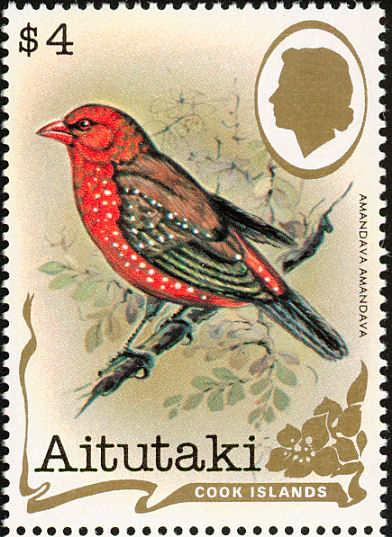
    The exposure effects of two endocrine disrupting pesticides (EDPs), mancozeb/MCZ and imidacloprid/IMI of the group dithiocarbamate and neonicotinoid respectively, on reproductive behaviors and secondary sexual characters have been studied in a seasonally breeding wildlife bird, red munia (Amandava amandava). Adult male birds were exposed to both the pesticides individually (0.25% LD50 of each) as well as co-exposed (MIX-I: 0.25% LD50 of each and MIX-II: 0.5% LD50 of each) through food for 30 d in preparatory (July–August) and breeding (September–October) phase of reproductive cycle. Singing and pairing patterns started decreasing from 2nd week to complete disappearance during 4th week of pesticides exposures at both the phases of reproductive cycles. Similar trend was observed in the disappearance of spots on the plumage as well as color of both plumage and beak which turned black/gray from red. Pesticides caused impairment of the lactotropic as well as hypothalamic-pituitary-testicular (HPT) axes as there was increased plasma PRL and decreased LH, FSH and testosterone levels. Testicular expressions of GnRH and androgen receptor/AR were significantly decreased but that of GnIH significantly increased as compared to control. Significant differences among individually- and co-exposed groups were also present. Abnormalities in sexual behaviors and secondary sexual characteristics could be linked to inhibition of HPT axis and/or direct toxicity at the level of hypothalamus, pituitary and testis. In addition, pesticide-induced hyperprolactinemia as well as impaired thyroid hormones might have also affected maintenance of reproductive behaviors. On co-exposures, the more distinct impairments might be due to cumulative toxicity of pesticides.
    Source:
    Surya Prakash Pandey, Kazuyoshi Tsutsui, Banalata Mohanty (2017) Physiology & Behavior 173, 15–22
    http://dx.doi.org/10.1016/j.physbeh.2017.01.030
    http://www.sciencedirect.com/science/article/pii/S0031938416307697

  • Multigeneration toxicity of imidacloprid and thiacloprid to the springtail Folsomia candida

    Multigeneration toxicity of imidacloprid and thiacloprid to the springtail Folsomia candida

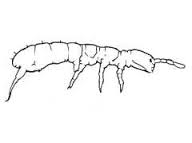
    In a recent study, we showed that the springtail Folsomia candida was quite sensitive the neonicotinoid insecticides imidacloprid and thiacloprid. This study aimed at determining the toxicity of both compounds to F. candida following exposure over three generations, in natural LUFA 2.2 standard soil. In the first generation, imidacloprid was more toxic than thiacloprid, with LC50s of 0.44 and 9.0 mg/kg dry soil, respectively and EC50s of 0.29 and 1.5 mg/kg dry soil, respectively. The higher LC50/EC50 ratio suggests that thiacloprid has more effects on reproduction, while imidacloprid shows lethal toxicity to the springtails. In the multigeneration tests, using soil spiked at the start of the first generation exposures, imidacloprid had a consistent effect on survival and reproduction in all three generations, with LC50s and EC50s of 0.21–0.44 and 0.12–0.29 mg/kg dry soil, respectively, while thiacloprid-exposed animals showed clear recovery in the second and third generations (LC50 and EC50 > 3.33 mg/kg dry soil). The latter finding is in agreement with the persistence of imidacloprid and the fast degradation of thiacloprid in the test soil.
    Source:
    van Gestel, C.A., de Lima e Silva, C., Lam, T. et al. Ecotoxicology (2017). doi:10.1007/s10646-017-1765-8
    http://link.springer.com/article/10.1007/s10646-017-1765-8

  • Kiebitze und Unken verschwinden im Rhein-Main-Gebiet

    Kiebitze und Unken verschwinden im Rhein-Main-Gebiet

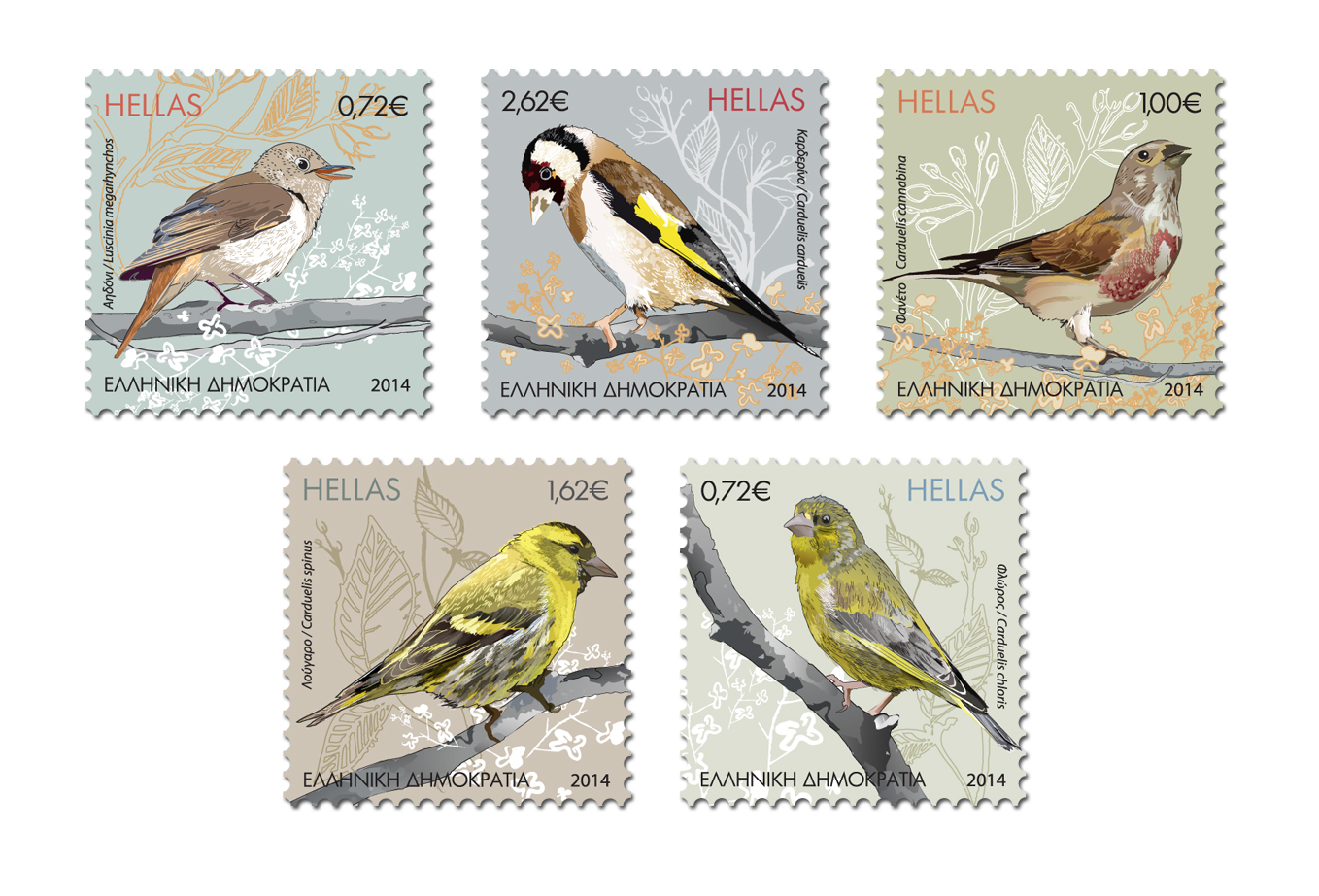
    Als besonders bedrohlich erweist sich die immer intensivere Landwirtschaft. „Auf den Äckern und Wiesen stellen wir einen massiven Artenrückgang fest“, sagt NABU-Mitarbeiter Mark Harthun. Acker-Bodenbrüter wie Feldlerche (Alauda arvensis) und Kiebitz (Vanellus vanellus) gebe es in Hessen immer seltener. Auf den Äckern nisten die Tiere nicht, weil Jahr für Jahr in riesigen Mengen Pestizide gesprüht werden. Nicht nur wegen der Giftstoffe selbst, sondern auch weil die Getreide- und Grashalme durch das Düngen immer dichter wachsen, brüten dort kein Vögel mehr, wie es heißt. Sie könnten nicht mehr beobachten, ob sich Feinde, etwa Füchse, näherten, und scheuten deshalb Wiesen und Felder. Typisches Opfer der modernen Landwirtschaft ist das Braunkehlchen (Saxicola rubetra), das jahrhundertelang auf Zaunpfählen saß, um einen guten Überblick zu haben. Jetzt gebe es kaum noch Pfähle auf den Feldern, sagt Harthun. Verschwunden sind auch Auen und Auwälder, die es früher an allen Flüssen gab und die ursprünglich zu den artenreichsten Lebensräumen zählten. Dort fühlte sich einst die Nachtigall (Luscinia megarhynchos) wohl, die man mittlerweile fast nur noch aus Frühlingsliedern kennt. Auch Amphibien wie Gelbbauchunke (Bombina variegata) und Kreuzkröte (Epidalea calamita, Synonym: Bufo calamita), laut EU streng geschützte Arten, können ohne feuchte Wiesen und Tümpel, die durch regelmäßiges Hochwasser entstehen, nicht überleben.

    Selbst ganz normale Wiesen sind kaum noch zu finden. Entweder werden die Flächen zu Ackerland gemacht, oder aber sie werden so stark gedüngt, dass sich nur noch Gras, Löwenzahn und Butterblume durchsetzen. „Es fehlen die blütenreichen Wiesen“, sagen Experten. Das bedeute nicht nur Monotonie in der Pflanzenwelt. Auch die Vielfalt der Insekten, etwa unter den Schmetterlingen, nehme ab.

    In diesem Frühjahr haben die Ergebnisse einer Erhebung von Nabu und Krefelder Insektenkundlern für Aufregung gesorgt. Sie stellen seit Jahren Insektenfallen auf und vergleichen die Mengen. Dabei registrierten sie nun, dass innerhalb von 20 Jahren die Zahl der Insekten um bis zu 80 Prozent gesunken ist. „Wissen Sie noch, wie viele tote Insekten früher nach einer langen Autofahrt an der Windschutzscheibe klebten?“, fragt Harthun. Mittlerweile bleibe sie fast sauber.

    Quelle: Frankfurter Allgemeine, 25.05.2016
    http://www.faz.net/aktuell/rhein-main/rueckgang-der-artenvielfalt-in-rhein-main-14247571.html

  • Chlorpyrifos vermindert bei Bienen Lern- und Gedächtnisleistung

    Chlorpyrifos vermindert bei Bienen Lern- und Gedächtnisleistung

    Honigbienen leiden unter einem Defizit beim Lernen und Abrufen von Informationen aus dem Gedächtnis, sofern sie mit geringen Dosen des Insektizids Chlorpyrifos in Berührung kommen. Für die in der Zeitschrift Ecology publizierte Studie wurden Honigbienen auf ihren Gehalt an Chlorpyrifos untersucht. Dafür wurden Bienen an 17 unterschiedlichen Standorten im neuseeländischen Otago gesammelt. Für die Anwendung von Chlorpyrifos existieren zwar Richtlinien, um Nützlinge vor einer Belastung zu schützen, doch das Pestizid ist eines von vielen, das regelmäßig in Honigbienen nachgewiesen wird. Laut einer Studie aus dem Jahr 2015, die vom U.S. Geological Survey (USGS) durchgeführt wurde, konnten bei 72 % der untersuchten Bienen Pestizide nachgewiesen werden. 46 % der untersuchten Proben enthielten Thiamethoxam. Chlorpyrifos lag mit 17 % schon auf einem der hinteren Ränge.

    Zurück zur Studie aus Neuseeland: Es war demnach naheliegend, dass Honigbienen (und andere Nützlinge) weiterhin durch die Ausbringung von Chlorpyrifos oder durch die Rückstände zurückliegender Behandlungen noch immer belastet werden. Das Pestizid wurde an 17 % der neuseeländischen Standorte und in 12 % der Bienenvölker nachgewiesen. Die Belastung war dabei sehr unterschiedlich, aber immer unterhalb der LD 50-Grenze.

    Nach der Probennahme im Freien haben die Wissenschaftler in Laborversuchen Bienen denselben Dosen, wie sie die freilebenden Arbeiterinnen aufwiesen, um Auswirkungen auf das Lernverhalten untersuchen zu können. Die Wissenschaftler konnten unter Chlorpyrifos keine Beeinträchtigung bei aversivem Lernen feststellen, aber die Entwicklung und der Wiederabruf von Informationen aus dem Geruchsspeicher waren mehrfach betroffen. Chlorpyrifos, das in den Bienen unterhalb der LD 50-Grenze und ebenso unterhalb der Werte, die in den freilebenden Bienen nachgewiesen wurden, hat die Entwicklung und den Wiederabruf aus dem Geruchsspeicher herabgesetzt. Da aber dieses Wissen eine zentrale Rolle im Verhalten und der Kommunikation bei der Futtersuche zukommt, ist anzunehmen, dass Chlorpyrifos bereits in subletalen Dosen den Erfolg und das Überleben der Honigbiene beeinträchtigt.

    Literaturstelle:
    Urlacher, E., Monchanin, C., Rivière, C. et al. J Chem Ecol (2016) 42: 127. doi:10.1007/s10886-016-0672-4
    Quelle: Bienen-Nachrichten.de, 30.01.17
    https://bienen-nachrichten.de/2017/chlorpyrifos-vermindert-bei-bienen-lern-und-ged%C3%A4chtnisleistung/122

  • Chronic exposure to low levels of organophosphate insecticide may cause diabetes

    Chronic exposure to low levels of organophosphate insecticide may cause diabetes

    A study by scientists at Madurai Kamaraj University, Tamil Nadu, has found evidence that chronic exposure to organophosphate insecticides induces diabetes and impaired glucose tolerance in both humans and mice. The researchers found that organophosphate-induced diabetes was mediated by gut bacteria. The results were published in the journal Genome Biology. A survey of around 3,000 people in villages in and around the university found that the prevalence of diabetes in people who were directly exposed to the insecticides was three-fold higher than in people who were not directly exposed to the insecticide. Serum analysis for four organophosphate insecticides revealed a direct correlation between pesticide level and HbA1c. “We saw a linear trend — for every unit increase in insecticide residue there was a corresponding increase in HbA1c level,” says Dr. Ganesan Velmurugan from the Department of Molecular Biology, School of Biological Sciences, Madurai Kamaraj University and the first author of the paper. Hemoglobin A1c, often abbreviated HbA1c, is a form of hemoglobin (a blood pigment that carries oxygen) that is bound to glucose. High HbA1c levels indicate poorer control of diabetes than levels in the normal range. To ascertain that chronic exposure to organophosphates led to diabetes, the researchers treated mice (2.9 microgram per kg bodyweight) with organophosphate for 180 days, which is equivalent to 12-15 years of human life. “We saw an increase in blood sugar level from day 60 in mice treated with the insecticide,” he says. “But we didn’t see any correlation between insecticide and neurotransmitter (acetylcholine esterase) level in mice treated with the pesticide.” The neurotransmitter is the main target of the pesticide.

    So the researchers were confident that the pesticide was inducing diabetes through a new route of action. Studies have already shown that the pesticide is degraded by bacteria present in the gut. To ascertain this, the researchers collected faecal material from mice exposed to the pesticide for 180 days and transplanted it to a new set of mice.

    “The mice that received the faecal material developed diabetes in just one week, while the control mice did not. We repeated the experiment thrice and got the same result,” Dr. Velmurugan says. “We concluded that organophosphate-induced diabetes was mediated by gut bacteria.”

    To understand the molecular mechanism, the researchers did a complete gene profiling of gut bacteria present in mice that were exposed to the pesticide for 180 days. “We found the genes linked to organophosphate degradation were highly expressed,” he says. So they focussed on finding the pathway involved in the degradation of the pesticide.

    The gluconeogenesis pathway — where glucose is generated from non-carbohydrate sources such as fat and proteins — was highly expressed. “The pesticide is degraded into short-chain fatty acid, particularly acetic acid. It is well known than acetic acid produces glucose, elevated blood sugar levels and glucose intolerance,” Dr. Velmurugan says.

    They ascertained the role of acetic acid in elevating blood sugar level in mice by administering sodium acetate orally and through rectal route; the rectal route led to more blood sugar increase than the oral route.

    The role of gut bacteria in mediating pesticide-induced diabetes was confirmed in humans by studying the faeces of diabetics. “The acetate level was higher in people with diabetes,” he says.

    “The study clearly shows the prevalence of diabetic conditions mediated by microbial degradation of the pesticide in humans,” says Subbiah Ramasamy from the Department of Molecular Biology, School of Biological Sciences, MKU and the corresponding author of the paper. “So the usage of this pesticide should be seriously reconsidered.”

    Sources:
    The Hindu, 30 January 2017
    http://www.thehindu.com/todays-paper/tp-features/tp-educationplus/Chronic-exposure-to-commonly-used-insecticide-causes-diabetes/article17115160.ece
    Emedicine Health
    http://www.emedicinehealth.com/hemoglobin_a1c_hba1c/article_em.htm#facts_and_definition_of_hba1c_hemoglobin_a1c

  • Ctgb maakt biologische fruitteelt vrijwel onmogelijk

    Ctgb maakt biologische fruitteelt vrijwel onmogelijk

    De Nederlandse Fruittelersorganisatie NFO en telersvereniging Prisma luiden de noodklok over duurzame fruitteelt. Deze week werd bekend dat de toelating van Thiovit-Jet (spuitzwavel) vervalt in alle houtig kleinfruit gewassen. In grootfruit zijn maximaal 1 of 2 toepassingen per jaar toegestaan in de maanden maart tot en met mei. Met dit besluit verdwijnt de toekomst van de biologische fruitteelt in Nederland, stellen beide organisaties. Het gewasbeschermingsmiddelenpakket voor de schimmelbestrijding in de biologische appel en perenteelt was al onvoldoende. Maar ook voor geïntegreerde fruitteelt is spuitzwavel een onmisbaar onderdeel van hun gewasbeschermingsaanpak.

    Nederland is met dit het besluit strenger dan andere landen, stellen beide partijen in een eerste reactie. De inperking is volgens het Ctgb nodig ter bescherming van natuurlijke vijanden. De praktijk leert echter al tientallen jaren dat natuurlijk evenwicht in biologische boomgaarden goed is, stellen NFO en Prisma.

    De NFO en Prisma roepen de politiek op te zorgen voor een duurzame gewasbescherming en een toekomst voor de (biologische) fruitteelt. Dit Ctgb-besluit is volgens NFO en Prisma in strijd met de motie Dijkgraaf van 24 november 2016 in de Tweede Kamer. Deze motie roept het kabinet op een voldoende breed middelenpakket voor de fruitteelt overeind te houden.

    Dit Ctgb-besluit is volgens NFO en Prisma in strijd met de motie Dijkgraaf van 24 november 2016 in de Tweede Kamer. Deze motie roept het kabinet op een voldoende breed middelenpakket voor de fruitteelt overeind te houden.

    Bron: Groenten en Fruit, 27-1-17
    http://www.gfactueel.nl/Fruit/Nieuws/2017/1/Biologische-fruitteelt-lukt-niet-na-zwavelbesluit-Ctgb-87416E/

  • Comment la France perd ses abeilles (et leur miel)

    Comment la France perd ses abeilles (et leur miel)

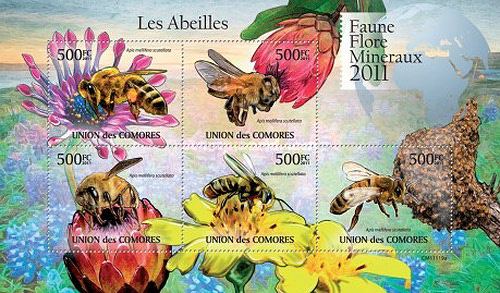
    Le 21ème congrès national de l’apiculture française s’ouvre ce jeudi à Clermont-Ferrand, alors que le nombre d’abeilles et la production de miel sont en chute libre. Selon le programme de surveillance Epilobee, la mortalité des abeilles en France et en Europe est en hausse constante. Un constat partagé par Henri Clément, le porte-parole de l’UNAF, l’Union nationale de l’apiculture française :La situation de l’abeille et de l’apiculture est actuellement extrêmement préoccupante. “Nous avons des taux de mortalité dans les colonies considérables : nous sommes passés de 5% par an à plus de 30%. Aucune filière agricole n’accepterait de perdre chaque année 30% de son cheptel.” Les conséquences sont terribles pour la production française de miel. En 1989, elle dépassait les 20 000 tonnes. En 2014, elle est descendue sous la barre des 10 000 tonnes. La production de miel a donc été divisée par deux en 15 ans. La situation ne s’arrange pas selon Henri Clément : “2016 est la pire année pour l’apiculture française”.En 26 ans, la production récoltée en France est passé de 20 444 022 kg en 1989 à 14 492 858 kg en 2015. Soit une baisse de 29,11%.

    Source France culture,:26.10.2016
    https://www.franceculture.fr/economie/comment-la-france-perd-ses-abeilles-et-leur-miel

  • Amphibians in continued global decline

    Amphibians in continued global decline

    A new study led by scientists with the U.S. Geological Survey confirms the ongoing decline of amphibians around the world. While every part of the United States continues to experience a decline in amphibian populations, the major threats vary from region to region. The negative effects of pesticide use are especially pronounced east of the Colorado River, while human development and disease are driving the decline east of the Mississippi River. The latest analysis suggests amphibian populations are declining at a rate of 3.79 percent per year. That’s roughly in line with previous USGS findings. Should such a decline continue, many amphibian species will become extinct across large portions of the U.S. “Losing 3 or 4 percent of amphibian populations might not sound like a big deal but small losses year in and year out quickly lead to dramatic and consequential declines,” added study co-author Michael Adams, lead scientist with the USGS Amphibian Research and Monitoring Initiative.

    Source: UPI, May 23, 2016
    http://www.upi.com/Science_News/2016/05/23/Amphibians-in-continued-global-decline/8341464025350/

  • WHO vraagt om waakzaamheid over vogelgriep

    WHO vraagt om waakzaamheid over vogelgriep

    Internationaal is grote waakzaamheid voor de vogelgriep geboden. Gevallen waarbij het virus overslaat op mensen, moeten zo snel mogelijk worden gerapporteerd. Die oproep heeft de Wereldgezondheidsorganisatie WHO maandag gedaan. De afgelopen maanden hebben meer dan veertig landen in Europa en Azië gevallen van vogelgriep gemeld, zowel bij wilde vogels als op pluimveebedrijven. Het gaat om verschillende varianten, die in China ook enkele menselijke slachtoffers hebben geëist. De WHO vreest dat meer besmettingen bij mensen het begin kan zijn van een pandemie, zo meldt het persbureau Reuters. Het feit dat het vogelgriepvirus zich over een steeds groter gebied verspreidt plus het gegeven dat meerdere varianten naast elkaar voorkomen, ‘heeft de WHO in opperste staat van waakzaamheid gebracht’, aldus Margaret Chan van de VN-organisatie.
    In Nederland is vooral in december bij bijna tien bedrijven het vogelgriepvirus aangetroffen. Alle dieren op deze bedrijven zijn gedood en vernietigd, of ‘geruimd’ zoals de officiële term luidt, soms ook bij nabijgelegen bedrijven. De laatste melding van een besmetting in Nederland dateert van 25 december, in Zoeterwoude.
    Bron: FD, 23-1-17
    https://fd.nl/ondernemen/1184250/who-vraagt-om-waakzaamheid-over-vogelgriep