Auteur: Henk Tennekes

  • Staggering global population decline in the Rustic Bunting over last 30 years

    Staggering global population decline in the Rustic Bunting over last 30 years

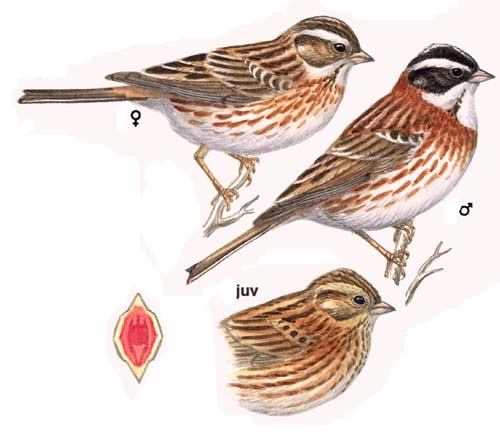
    Populations of several long-distance migratory songbirds in Eurasia are in peril, drastically illustrated by the recent range-wide population collapse in the Yellow-breasted Bunting Emberiza aureola. There are signals of a strong decline also in the Rustic Bunting (Emberiza rustica), but no range-wide assessment of population trends in this superabundant and widespread bunting species has yet been undertaken. The conservation status of Rustic Bunting is ‘Least Concern’ on the global IUCN Red List, but it has recently been upgraded to ‘Vulnerable’ on the European Red List. To assess the Rustic Bunting’s global conservation status we compiled, for the first time, population data across its breeding and wintering ranges. The analysis reveals a 75–87% decline in overall population size over the last 30 years and a 32–91% decline over the last 10 years. The trend estimates indicate that the long-term (30-year) range-wide population decline in the Rustic Bunting is of similar magnitude to two well-known examples of declining species within the same genus, the Yellow-breasted Bunting and the Ortolan Bunting E. hortulana. The magnitude of the range-wide population decline over the last 10 years suggests that the Rustic Bunting could be upgraded from ‘Least Concern’ to ‘Vulnerable’ or ‘Endangered’ on the IUCN global Red List. Agricultural intensification in the wintering range and intensified levels of disturbance, including logging and fire, in the breeding range could be important drivers of the range-wide population decline, and persecution could also contribute. Its natural food consists of seeds, and when feeding young, insects.

    Sources:
    LARS EDENIUS, CHANG-YONG CHOI, WIELAND HEIM, TUOMO JAAKKONEN
    Bird Conservation International DOI: https://doi.org/10.1017/S0959270916000046
    Published online: 18 April 2016
    Wikipedia
    https://en.wikipedia.org/wiki/Rustic_bunting

  • Agricultural intensification caused steep population decline of the Great Bustard in Iran

    Agricultural intensification caused steep population decline of the Great Bustard in Iran

    The current distribution and recent population trends of the Great Bustard ( Otis tarda ) in Iran were investigated based on a literature review and unpublished data (1995–2008) followed by three years of census (2009–2011) in areas where the species is still breeding. Results suggest that Great Bustards have disappeared from a large part of their former distribution in the country, including East Azarbayjan, Hamedan and Kurdistan provinces. The surviving groups are concentrated in West Azarbayjan where numbers are rapidly declining. The present population is estimated at about 43–48 birds in 2011, confirming a marked decline compared to the 200–300 birds estimated in the early 1990s. About 80–90% of the extant birds are concentrated in the plains of Boukan. The apparent reason for the population decline is agricultural intensification in recent decades. Many areas formerly farmed in a traditional way, and thus suitable for the species, are now under intensive cultivation and often irrigated. The only region where conditions remain suitable for the species in Iran is West Azarbayjan. Great Bustards are found there in Sootav, Yengija-Albolaq and Se Kanian, all around Boukan city. The main crops include wheat, barley, chickpeas, sunflower and alfalfa, and the area has been subjected to a lower degree of agricultural intensification.

    This species is omnivorous, taking different foods in differing seasons. In northwestern Spain in August, 48.4% of the diet of adult birds was comprised by green plant material, 40.9% was invertebrates and 10.6% was seeds. In the same population during winter, seeds and green plant material comprised almost the entirety of the diet. Alfalfa is seemingly preferred in the diet of birds from Spain. Other favoured plant life in the diet can including legumes, crucifers, common dandelion and grapes and the dry seeds of wheat and barley. Among animal prey, insects are generally eaten and are the main food for young bustards in their first summer, though they then switch to the seasonal herbivorous preferences of adults by winter. Coleoptera (including beetles), Hymenoptera (including bees, wasps and ants) and Orthoptera (including crickets, grasshoppers and locusts) are mainly taken, largely based on availability and abundance. Small vertebrates, including small rodents, frogs, lizards and chicks of other birds, may supplement the diet when the opportunity arises.
    Sources:
    AHMAD BARATI, RAHIM ABDULKARIMI and JUAN CARLOS ALONSO Recent status and
    population decline of the Great Bustard Otis tarda in Iran. Bird Conservation International,
    Available on CJO 2015 doi:10.1017/S0959270914000409
    Wikipedia
    https://en.wikipedia.org/wiki/Great_bustard

  • Seed Treatment Has Driven Rapid Increase in Use of Neonicotinoid Insecticides and Preemptive Pest Management in U.S. Field Crops

    Seed Treatment Has Driven Rapid Increase in Use of Neonicotinoid Insecticides and Preemptive Pest Management in U.S. Field Crops

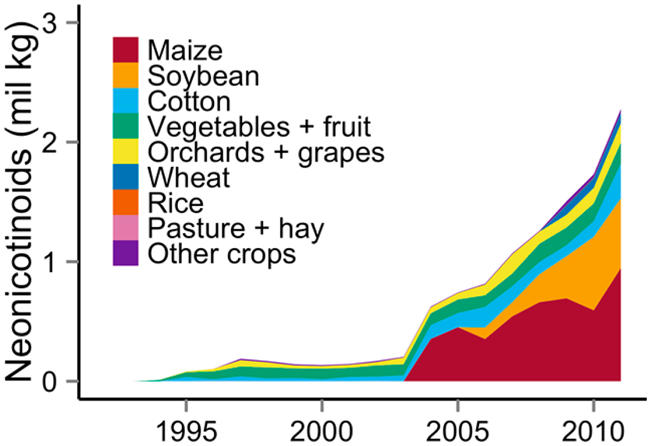
    Neonicotinoids are the most widely used class of insecticides worldwide, but patterns of their use in the U.S. are poorly documented, constraining attempts to understand their role in pest management and potential nontarget effects. We synthesized publicly available data to estimate and interpret trends in neonicotinoid use since their introduction in 1994, with a special focus on seed treatments, a major use not captured by the national pesticide-use survey. Neonicotinoid use increased rapidly between 2003 and 2011, as seed-applied products were introduced in field crops, marking an unprecedented shift toward large-scale, preemptive insecticide use: 34−44% of soybeans and 79−100% of maize hectares were treated in 2011. This finding contradicts recent analyses, which concluded that insecticides are used today on fewer maize hectares than a decade or two ago. If current trends continue, neonicotinoid use will increase further through application to more hectares of soybean and other crop species and escalation of per-seed rates. Alternatively, our results, and other recent analyses, suggest that carefully targeted efforts could considerably reduce neonicotinoid use in field crops without yield declines or economic harm to farmers, reducing the potential for pest resistance, nontarget pest outbreaks, environmental contamination, and harm to wildlife, including
    pollinator species.
    Source: Margaret R. Douglas and John F. Tooker (2015) Environmental Science & Technology
    DOI: 10.1021/es506141g

  • House sparrow population decline is caused by shortage of insect prey

    House sparrow population decline is caused by shortage of insect prey

    Birds are the common denizens of the ecosystem and are considered as indicator species of ecosystem health. Various studies depicted the reduced teemingness of several bird species in most parts of the world. Among these birds, the house sparrow (Passer domesticus indicus) is the most familiar species which are co-evolved with man. The disappearance of sparrows has been widely reported from all over the world, including India too. Among Indian states, Kerala is also not an exception. Indiscriminate use of chemical pesticides, decline in insect prey population, change in building construction pattern, well maintained modern gardens in houses instead of weedy gardens which provide feeding grounds for sparrows and electromagnetic waves from cell phone towers
    are the major drivers of decline. Sparrows are highly sensitive to local environmental parameters which also have contributions in its decline. This paper, inter alia examines the major causes for the decline in the population of sparrows in recent years. An ecological balancing is an urgent necessity to save the sparrows from extinction.
    Source: Manu Rani Paul, 2015. Asia Pacific Journal of Research 1:38-40

  • The Last of Guernsey’s Meadow Pipits

    The Last of Guernsey’s Meadow Pipits

    Guernsey Post have annouced plans to issue a new stamp celebrating an endangered Bailiwick bird. The Meadow Pipit (Anthus pratensis), now classified as endangered in the Bailiwick of Guernsey, will feature on stamps as part of a collaboration with the WWF. Islanders may notice the new stamp on the front of their letters and parcels from the 15th February 2017. An attractive creature, the Meadow Pipit is a small, streaky, yellow-brown bird with pale legs, a long hind claw and white outer tail feather. It’s high, piping call – a common upland sound – gives it its common name. But research shows there may be less than 100 breeding pairs of the attractive Meadow Pipit left in Guernsey and Herm, with neighbouring Alderney experiencing a similar decline. In the UK, numbers have been declining since the mid-1970s, resulting in the species being placed on the amber list of conservation concern. Agricultural intensification is thought to be responsible for declining numbers. There are less grazing areas and fewer places for the birds to live and eat in winter.
    Source: ITV News, 23 January 2017
    http://www.itv.com/news/channel/2017-01-23/new-stamp-will-celebrate-endangered-bailiwick-bird/

  • New Documents Detail Extensive Use of Neonic Seed Coatings in the US

    New Documents Detail Extensive Use of Neonic Seed Coatings in the US

    New EPA documents have finally put hard numbers to the use of neonicotinoid insecticides, which have quietly grown to dominate corn and soybean acreage in the U.S. over the past five to six years. Data on the usage of clothianidin (Poncho, from Bayer), thiamethoxam (Cruiser, from Syngenta) and imidacloprid (Gaucho, from Bayer and Valent USA) has been scarce in the past, in part because the EPA does not regulate seed treatments in the same way it does foliar or soil applications of the same chemicals. Now pollinator and aquatic risk assessments on three neonicotinoids released on Jan. 12 revealed what many have long suspected: the chemicals are everywhere.

    EPA estimated that 42 million to 61 million acres of corn are treated with clothianidin annually (45% to 65% of all U.S. corn acres), and 24 million to 42 million acres of corn are treated with thiamethoxam (26% to 45% of all U.S. corn acres). That means, in any given year, nearly 100% of U.S. corn acres are likely treated with one of two insecticides.

    In soybeans, 13 million to 21 million soybean acres are treated with thiamethoxam (16% to 25% of all U.S. soybean acres), and 2.1 million acres are treated with clothianidin each year (3% of all U.S. soybean acres). The number of imidacloprid-treated soybean acres is likely substantial, although EPA did not report that number. However, the agency did estimate that 880,000 pounds of imidacloprid were applied to soybeans in 2014. For comparison, that is nearly three times the amount of thiamethoxam applied to soybeans each year, which accounted for 13 million to 21 million acres.

    These numbers represent a major shift in the traditional understanding of agricultural pesticide usage, where herbicides reigned. In 2014, USDA reported that while 97% of corn acres had herbicides applied to them, insecticides were used on only 13%. Likewise, in 2015, USDA estimated that 96% of soybean acres received herbicides, compared to insecticide applications on just 22%.

    The new numbers on neonicotinoid seed treatments confirm that insecticide and herbicide use are not actually so far apart. Insecticides have merely gone underground — in the form of seed treatments. Heavy dependence and repeated use of certain herbicides, insecticides and genetic traits have led to resistant-pest problems in the past.

    Source: DTN Progressive Farmer, January 17, 2017
    https://www.dtnpf.com/agriculture/web/ag/news/farm-life/article/2017/01/17/new-documents-detail-extensive-use

  • NABU zählt beunruhigend wenig Fledermäuse

    NABU zählt beunruhigend wenig Fledermäuse

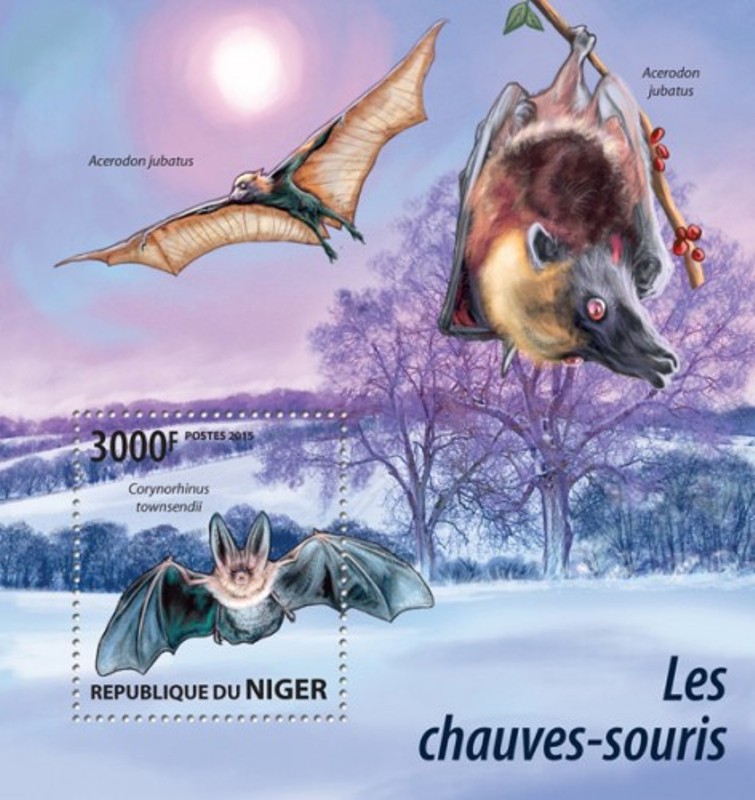
    In den vergangenen Tagen waren Naturschützer des Naturschutzbundes (NABU), Kreisverband Vogelsberg , in der Region unterwegs, um die bekannten Winterschlafquartiere von Fledermäusen zu kontrollieren. Seit vielen Jahren werden diese Kontrollen jeden Winter durchgeführt, um ein Bild von der Entwicklung der Fledermausbestände zu erhalten und bessere Informationen über das Verhalten der Tiere zu bekommen. Im Jahr 2017 sind nun besorgniserregend geringe Zahlen an Fledermäusen registriert worden. Manche altbekannten Quartiere, in denen immer Fledermäuse angetroffen worden waren, waren in diesem Winter nicht belegt, in anderen gab es deutlich weniger Tiere. Woran dies liegt, können die Aktiven vom NABU nicht definitiv wissen. Ein Zusammenhang mit dem in vielen wissenschaftlichen Untersuchungen festgestellten, massivem Rückgang an Insekten in ganz Deutschland erscheint zumindest wahrscheinlich. Auch in Nachbarkreisen, wie etwas im Kreis Hersfeld-Rothenburg, waren die Zahlen rückläufig.

    Quelle: Ost-Hessen News, 09.02.17
    http://osthessen-news.de/n11551494/nabu-z%C3%A4hlt-beunruhigend-wenig-flederm%C3%A4use-im-kreis.html

  • Half of South Africa’s 57 forest-dwelling bird species are vanishing

    Half of South Africa’s 57 forest-dwelling bird species are vanishing

    Birds are vanishing from indigenous forests, especially in the Eastern Cape, and mopane worms – a key part of life in Limpopo – are in significant decline. Separate academic studies have revealed the new threats to biodiversity caused by environmental changes and loss of habitat. A team from Stellenbosch University and the Department of Environmental Affairs, which analysed 25 years of citizen science data collected by the Southern African Bird Atlas Project, found that half the country’s 57 forest-dwelling bird species are vanishing. Stellenbosch behavioural ecologist Michael Cherry said indigenous forests in the former homelands of the Ciskei and Transkei were the main worry.

    “Some bird species have disappeared from these forests. But we do not know whether this implies a decline in population or whether they are simply moving somewhere else,” he said. Nearby plantations of pines and gums were a threat to some birds. The study, published in Bird Conservation International, said indigenous forests make up less than 1% of South Africa’s landscape but are home to about 14% of terrestrial birds. The Limpopo study, by University of Cape Town Masters graduate James Sekonya, found mopane worms were in decline in communities where they are an important food source, a trading commodity and an intrinsic part of cultural practices.

    Source: Times Live, 8 February, 2017
    http://www.timeslive.co.za/thetimes/2017/02/09/Where-are-early-birds-and-their-worms

  • Number of Monarchs Overwintering in California Remains Low

    Number of Monarchs Overwintering in California Remains Low

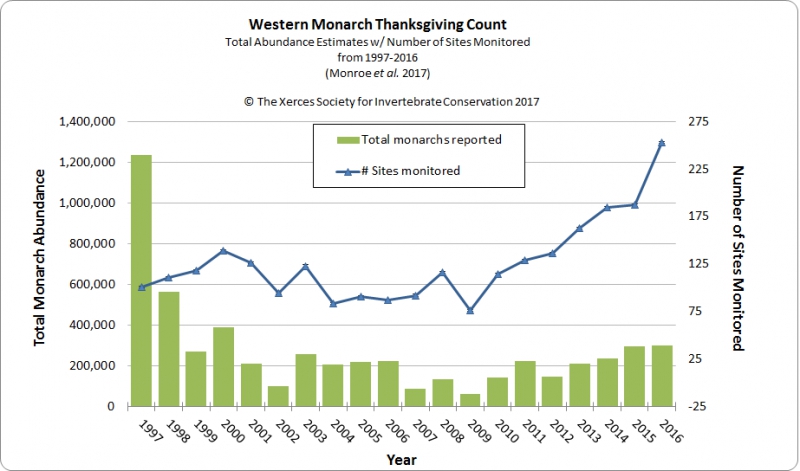
    A survey of monarch butterflies overwintering in California shows that the population has not rebounded. Although the total number of monarchs counted this year was greater than last, the difference is due to a large increase in volunteer effort. Counts at major sites were down when compared to recent years. Volunteers with the Xerces Society’s Western Monarch Thanksgiving Count visited 253 sites and tallied a total of 298,464 monarchs—a fraction of the 1.2 million monarchs recorded in the late 1990s. Key sites such as Pismo Beach and Natural Bridges saw lower populations this year, and all but one of the 15 sites which have been continuously monitored since 1997 had lower counts than in the prior year. There are a few positive findings from this year’s results. Four new sites were documented in Southern California and a private site in Monterey County hosted over 39,000 butterflies—the largest aggregation observed in the last 10 years on the California coast.

    Monarchs from as far away as Idaho, Utah and Arizona converge to spend the winter in tree groves along the Pacific coast from Mendocino County, California, to northern Baja, Mexico. This gathering of monarchs provides a unique opportunity to gauge the health of the monarch population from the western United States.

    Data gathered each year by WMTC participants was recently used in an analysis which documented a 74% decline in California overwintering population since the late 1990s—mirroring the steep decline observed at the monarch overwintering sites in the state of Michoacán, Mexico and where a subset of western monarchs migrate to.

    This year marks the 20th anniversary of the Western Monarch Thanksgiving Count, the longest running and most comprehensive effort to monitor overwintering monarchs in California. The count happens during a three-week period centered on Thanksgiving. Biologists, land managers, and citizen scientists visit overwintering sites year after year to monitor the butterflies. Volunteer participation continues to grow and this year, over 100 volunteers monitored a record 253 sites, the single greatest effort since the count began in 1997. This big uptick in effort is also the results of a major effort in Santa Barbara County being led by WMTC regional coordinators Jessica Griffiths & Charis van der Heide and researchers Prof. Francis Villablanca of Cal Poly and Dan Meade who are revisiting a similar survey completed by Meade in the 1990s.

    Source: Xerces Society, Feb 8, 2017
    https://www.indybay.org/newsitems/2017/02/08/18796294.php

  • De schaduwkant van de tulpen uit Holland

    De schaduwkant van de tulpen uit Holland

    Elk voorjaar staan de bollen in bloei en genieten we van de kleuren. Maar achter die kleuren gaat een taboe schuil: het gebruik van giftige bestrijdingsmiddelen. Daar hebben we het niet graag over. Toch is het gif slecht voor het milieu en slecht voor mens en dier. De vraag is: valt er te leven met het risico van gezondheidsschade? Of dat de economie mag prevaleren boven de volksgezondheid. Kunnen we vergelijkingen maken met de Q-koorts in Brabant? Het zal wel loslopen, zei men daar, totdat er doden vielen. Daar waren het de geiten, hier de bloembollen of beter gezegd de bestrijdingsmiddelen om de bollen exportgeschikt te maken. Sinds de uitzending van Zembla in 2011 weten we meer. Er werd gewaarschuwd voor de gevolgen van bestrijdingsmiddelen voor de gezondheid van omwonenden, maar sindsdien is er weinig gebeurd. Zoals het in Nederland gaat wordt besloten tot het doen van een onderzoek. Het RIVM krijgt de opdracht om het uit te zoeken. Het eindrapport komt niet eerder dan in 2020. Tot die tijd gaat men door met het rondblazen van toxische stoffen en lopen heel veel mensen het risico ernstig ziek te worden. Toxicologen zeggen al lang dat de huidige normen achterhaald zijn en dat het probleem vooral het stapeleffect is; gevolg van het combineren van bestrijdingsmiddelen. Voelt niet goed als dit gezegd wordt. De vergunningen worden afgegeven voor de afzonderlijke gewasbeschermingsmiddelen, maar er wordt noch gekeken naar de combinatie van de middelen, noch naar de cumulerende effecten van veelvuldige blootstelling, zo meldde het NHD onlangs in een groot artikel. Inmiddels zijn we na Zembla zes jaar verder en nog steeds staan heel veel mensen, die wonen in de buurt van de bollenvelden, bloot aan giftige stoffen die ook in het slootwater terecht komen. Uit buitenlands onderzoek zijn aanwijzingen gevonden dat omwonenden risico lopen op kinderleukemie en aandoeningen van het zenuwstelsel. Ook zou Parkinson vaker voorkomen onder agrariërs. Je zou verwachten dat de bollengemeenten op advies van de GGD, meteen hadden ingegrepen op basis van het voorzorgprincipe en de vergunningen zouden hebben aangescherpt. Niets van dit alles. Als je aan bloembollen komt, kom je aan de economie. De bollenteelt is big business. De exportwaarde bedraagt 1,4 miljard euro per jaar. In Nederland wonen ongeveer 90.000 mensen binnen 50 meter van een bloembollen- of fruitperceel. In welke mate zij worden blootgesteld aan bestrijdingsmiddelen, is nooit eerder onderzocht. De vraag is wat telt zwaarder de economie van de regio of de gezondheid van mensen die er wonen? Het Ctgb (College voor toelating van gewasbeschermingsmiddelen en biociden) is verantwoordelijk voor het afgeven van de vergunningen. Ctgb-directeur Luuk van Duijn liet in een krant weten dat de veiligheidsgrenzen zodanig robuust zijn dat de kans dat er iets mis gaat heel klein is. Maar dit is niet de kwestie meneer van Duijn. De kwestie is de gezondheid van omwonenden en daarnaar heeft het Ctgb nooit een onderzoek laten uitvoeren. Daarom is het goed dat en in Europa en in ons land nu echt onderzoek wordt gedaan naar het gevaar van bestrijdingsmiddelen die gebruikt worden voor bolgewassen. De vraag is waarom moet dit allemaal zo lang duren? Het waterschap treft al jaren regelmatig te hoge concentraties gewasbeschermingsmiddelen aan in het slootwater. Alle seinen staan op rood maar desondanks blijft de sector in de wachtstand staan. Hebben de gemeenten ooit van het voorzorgprincipe gehoord? Of is het toch waar dat de economie prevaleert boven het belang van de inwoners?
    Bron: Eugeen Hoekstra in Schagen FM, 08-02-17
    http://www.schagenfm.nl/nw-28464-7-3647262/nieuws/hoe_slecht_zijn_de_pesticiden.html