Bravecto mit dem Wirkstoff Fluralaner der Firma Intervet Deutschland GmbH, einem Unternehmen der MSD Tiergesundheit, tötet Flöhe (Ctenocephalides felis) und Zecken (Ixodes ricinus, Dermacentor reticulatus, D. variabilis) sofort und anhaltend über 12 Wochen; die braune Hundezecke (Rhipicephalus sanguineus) sofort und anhaltend über 8 Wochen. Zwecks optimaler Flohkontrolle sollte die Behandlung daher alle 3 Monate erfolgen. Fluralaner besitzt eine Affinität zu sogenannten GABA(γ-Aminobuttersäure)- und Glutamat-Rezeptoren. Durch „Ansteuern“ dieser Rezeptoren öffnen sich die Chlorid-Kanäle in den Zellmembranen von Nerven- und Muskelzellen. Der Chlorid-Einstrom in die Zelle erhöht sich und die Hyperpolarisation der Zellmembran verhindert eine Erregungsweiterleitung. Dieser Vorgang umfasst alle Körperteile und Organe (Gliedmaßen, Atmungsorgane etc.). Die genannten Rezeptoren existieren jedoch genauso im Gehirn des Hundes (und aller anderen Säugetiere). GABA-Rezeptoren sind weit verbreitet im ZNS (Gehirn und Rückenmark), der Nervenbotenstoff GABA macht hier ca. 30% der Neurotransmittermenge aus! Er ist der wichtigste inhibitorische (hemmende) Nervenbotenstoff beim Menschen. Eine intakte Blut-Hirn-Schranke schützt das ZNS – und damit auch die GABA-Rezeptoren – vor toxischen Substanzen bzw. Verbindungen. Ob Fluralaner die Blut-Hirn-Schranke wirklich nicht überwinden kann, ist jedoch nicht eindeutig geklärt.
Quelle: Dr. Frauke Garbers, Biologin
http://www.artgerecht-tier.de/kategorie/hunde/beitrag/bravecto.html
Auteur: Henk Tennekes
-

Kautablette für Hunde gegen Flöhe und Zecken – dauerhafte Giftbelastung des Hundes garantiert!
-
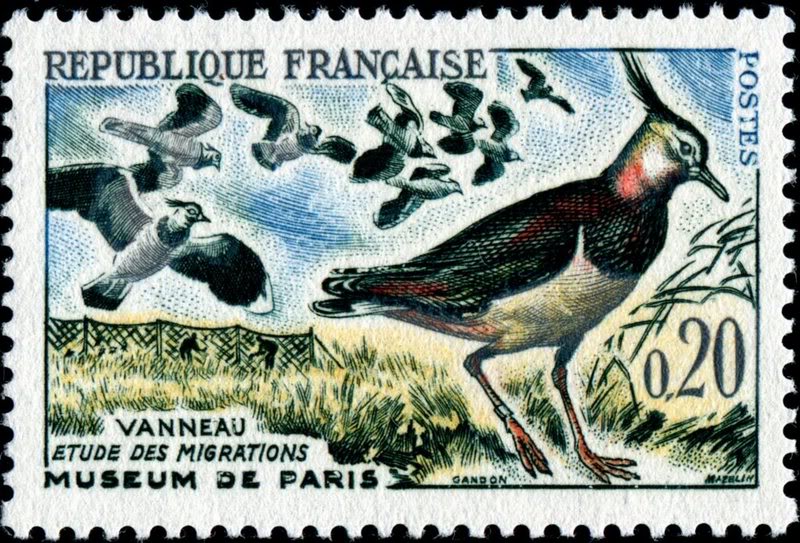
Trends in the Lapwing population of North-Rhine – Westphalia 1850-2014
The population of Lapwing (Vanellus vanellus) in North-Rhine – Westphalia (NRW) has declined severely. Since the 1960s the species has lost an estimated 80% of its population, and from 2009-2014 the population has decreased by 40% resulting in a current population of a merely c. 12,000 pairs. Areas above 150m asl have been abandoned almost completely. The main reason for the severe declines lies in the agricultural intensification. This led to the loss of the original breeding sites until 1900. The secondary breeding sites, i.e. wet grassland, were abandoned increasingly in the 1970s resulting in 90% of nesting attempts these days taking place on arable fields, the tertiary breeding sites. Here, however, most clutches are lost due to agricultural works, and Lapwing chicks face a shortage of food due to pesticide application and lack of vegetation structure. The key requirement for a change in the Lapwing’s fortunes is a massive improvement in breeding success.
Source: Stefan R. Sudmann, Ralf Joest, Birgit Beckers, Kristian Mantel & Joachim Weiss. Charadrius 50, 2014: 23-31 -
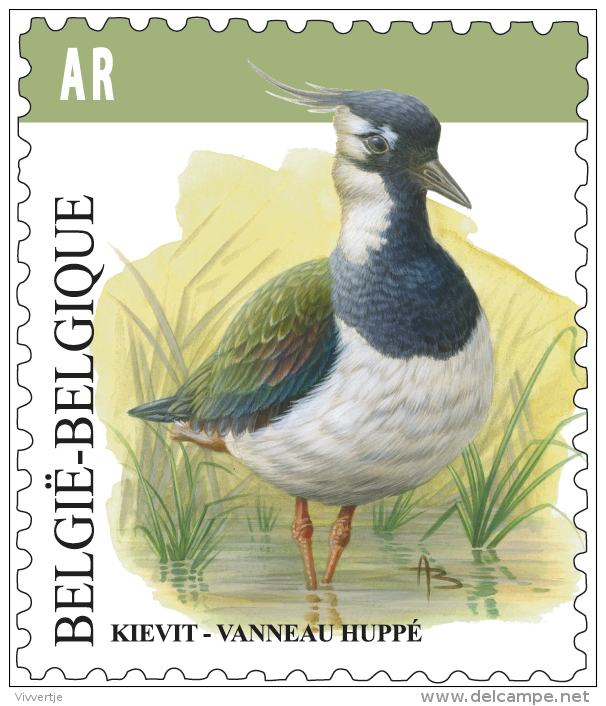
Entwicklung der Kiebitzbestände in Nordrhein-Westfalen von 1850 bis 2014
Die Bestandsentwicklung des Kiebitzes ist in Nordrhein-Westfalen stark rückläufig. Schätzungsweise hat der Kiebitz (Vanellus vanellus) seit den 1960er Jahren 80 % des Bestandes eingebüßt, gesichert sind Verluste von 40 % zwischen 2009 und 2014, so dass der aktuelle Brutbestand nur noch ca. 12.000 Paare umfasst. Regionen in Höhen von mehr als 150 m ü. NN sind mittlerweile fast vollständig vom Kiebitz geräumt worden. Der Hauptgrund für die starken Rückgänge ist in der Intensivierung der landwirtschaftlichen Produktion zu sehen. Dadurch gingen bis etwa 1900 zunächst die ursprünglichen Brutgebiete verloren. In den 1970er Jahren wurden dann auch zunehmend die Sekundärstandorte auf Feuchtwiesen aufgegeben, so dass derzeit fast 90 % der Bruten auf Ackerflächen (Tertiärstandort) stattfinden. Hier kommt es zu massiven Gelegeverlusten durch die Bodenbearbeitung und gleichzeitig zu Nahrungsmangel für die Küken wegen fehlender Strukturen und Insektizidanwendungen.
Quelle:
Stefan R. Sudmann, Ralf Joest, Birgit Beckers, Kristian Mantel & Joachim Weiss. Charadrius 50, Heft 1, 2014: 23-31 -
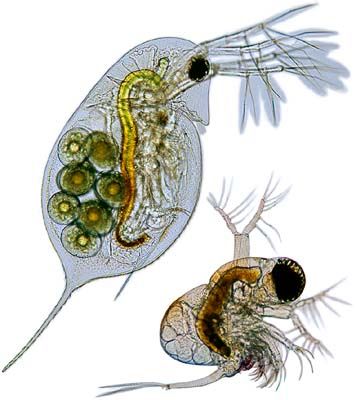
Biozide wirken im Wasser giftiger als vermutet
Bakterienbasierte Produkte gehören weltweit zu den bedeutendsten Bioziden. Eines dieser in Europa sowie in den USA weit verbreiteten Produkte ist Dipel ES (Bodenbakterium Bacillus thuringiensis). Als Fraßgift entfaltet es seine toxische Wirkung im Darm der Schädlinge. In Deutschland wird es vor allem zur Bekämpfung von Schmetterlingsraupen wie dem Eichenprozessionsspinner auf Wald- und Parkflächen eingesetzt. Zugelassen ist es auch im ökologischen Obst-, Gemüse- und Ackerbau. Forscher und Umweltschützer warnen jedoch vor negativen Effekten auf Wildtiere, für die das Gift nicht bestimmt ist. Auch wenn Mindestabstände zu Gewässern eingehalten werden, können Biozide in den Wasserkreislauf gelangen. In Laborversuchen untersuchten Wissenschaftler deshalb, wie sich Dipel ES auf Wasserflöhe (Daphnia magna) auswirkt. Wasserflöhe sind im aquatischen Nahrungsnetz von zentraler Bedeutung und eigentlich kein Zielorganismus des Pestizids. “Wir setzten neugeschlüpfte als auch ausgewachsene Tiere einem weiten Bereich an unterschiedlichen Dipel ES-Konzentrationen aus”, erklärt Dr. Anderson Abel de Souza Machado, Gastwissenschaftler am IGB und Erstautor der Studie. “Anhand der Mortalität, Unbeweglichkeit und anderer Reaktionen wie Körperzusammensetzung und Entgiftungsenzyme beurteilten wir anschließend ihren allgemeinen Fitness-Zustand.” Die Forscher fanden heraus, dass Dipel ES bei Wasserflöhen ein unerwartetes Toxizitätsmuster verursacht: Die Unbeweglichkeit, d.h. der Verlust der Schwimmfähigkeit, und die Sterblichkeit stiegen nicht proportional über den gesamten getesteten Konzentrationsbereich an. Während bei hohen Konzentrationen keine Auswirkungen auf die Organismen beobachtet werden konnten, führten bereits geringe Dosen zu deutlichen Effekten. “Das Biopestizid könnte damit zehntausendmal toxischer sein als vom Hersteller angegeben”, vermuten sie. Das ungewöhnliche Toxizitätsmuster lässt Zweifel an einer weiteren Annahme aufkommen: In der Regulationstoxikologie wird normalerweise davon ausgegangen, dass die negativen Auswirkungen von Toxinen mit deren Dosis steigen. “Den Effekt, dass sich die Toxizität mit steigender Menge des Giftstoffs erhöht, nennen wir Monotonie”, erläutert Anderson Abel de Souza Machado. “Den Wirkungen von Dipel ES liegen offensichtlich andere Mechanismen zugrunde. Höhere Konzentrationen waren ungiftig, was in der Toxikologie als nicht-monotone Wirkung oder Effekt mit umgekehrter (inverser) U-Kurve bezeichnet wird”, sagt er. Die vorläufigen Analysen deuten darauf hin, dass diese ungewöhnlichen Effekte durch die Lösung des Biozids in Wasser hervorgerufen werden könnten. Es seien jedoch weitere Untersuchungen notwendig, um zu untersuchen, ob solche nicht-monotone Effekte wie bei Dipel ES auch außerhalb des Labors unter Freilandbedingungen auftreten können.
Quelle: Leibniz-Institut für Gewässerökologie und Binnenfischerei (IGB), 14.02.17
https://www.analytik-news.de/Presse/2017/92.html -
Gut ein Drittel der rund 350 Ackerwildkräuterarten sind gefährdet
Das zeigt die jetzt vorgelegte Analyse des Leibnitz-Zentrums für Agrarlandschaftsforschung. Fast überall, wo konventionell beackert wurde, waren kaum Wildkräuter zu finden. Auf ökologisch bewirtschafteten Flächen hingegen gab es neunmal mehr Arten. Biobauern verzichten auf Pestizide und mineralische Stickstoffdünger. Die Ackerwildkräuter sind für Bienen, Hummeln und Insekten eine wichtige Pollen- und Nektarquellen. Für Feldvögel und Hasen liefern sie Futter. Der Umweltverband WWF sagt angesichts des Mangels an Ackerwildkräutern: “Wir stehen kurz vor einem Arten-Kollaps auf unseren Feldern und Wiesen.” Der WWF plädiert dafür, möglichst zügig den Anteil der Biolandwirtschaft auszuweiten.
Autorin: Alice Thiel-Sonnen, SWR-Umweltredaktion, 14.02.17
http://www.swr.de/swraktuell/neue-studie-zu-ackerwildkraeutern-arten-kollaps-befuerchtet/-/id=396/did=19009942/nid=396/aq0ap2/ -
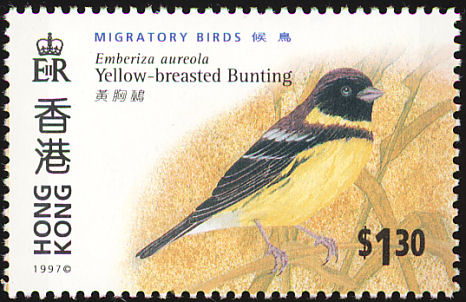
Drastic Declines in Brown Shrike and Yellow-Breasted Bunting at the Lake Utonai Bird Sanctuary, Hokkaido
Daily records of bird observations were obtained from the Wild Bird Society of Japan bird sanctuary at Lake Utonai, Hokkaido, from 1982 to 2002. We analysed the daily records of four species thought to be experiencing declines: Brown Shrike Lanius cristatus, Black-browed Reed Warbler Acrocephalus bistrigiceps, Chestnut-eared Bunting Emberiza fucata and Yellow-breasted Bunting E. aureola. The detection rates of Brown Shrike and Yellow-breasted Bunting declined drastically during the two decades, whereas the detection rates of Black-browed Reed Warbler and Chestnut-eared Bunting remained stable. In 2002 and 2003 we conducted line transect censuses, and detected very few Yellow-breasted Buntings and no Brown Shrikes, both of which had been abundant as recently as 1977. The accumulated data from annual bird watching surveys showed similar declines in the same two species. These observations suggest that whereas the Brown Shrike had been common prior to the early 1980s, it declined drastically in 1986. The Yellow-breasted Bunting remained common until 1997, but declined seriously thereafter. There were no clear trends for Black-browed Reed Warbler or Chestnut-eared Bunting from 1982 to 2002, although the latter appeared to decline from 2011 onwards.
Source: Tamada K et al. Ornithological Science 16(1):51-57. 2017
http://www.bioone.org/doi/abs/10.2326/osj.16.51 -

Sublethal pesticide doses negatively affect survival and cellular responses in American foulbrood-infected honeybee larvae
Disclosing interactions between pesticides and bee infections is of most interest to understand challenges that pollinators are facing and to which extent bee health is compromised. Here, we address the individual and combined effect that three different pesticides (dimethoate, clothianidin and fluvalinate) and an American foulbrood (AFB) infection have on mortality and the cellular immune response of honeybee larvae. We demonstrate for the first time a synergistic interaction when larvae are exposed to sublethal doses of dimethoate or clothianidin in combination with Paenibacillus larvae, the causative agent of AFB. A significantly higher mortality than the expected sum of the effects of each individual stressor was observed in co-exposed larvae, which was in parallel with a drastic reduction of the total and differential hemocyte counts. Our results underline that characterizing the cellular response of larvae to individual and combined stressors allows unmasking previously undetected sublethal effects of pesticides in colony health.
Source:
Javier Hernández López, Sophie Krainer, Antonia Engert, Wolfgang Schuehly, Ulrike Riessberger-Gallé & Karl Crailsheim. Scientific Reports 7, Article number: 40853 (2017)
doi:10.1038/srep40853 -

The Terminator ( Homo exterminans )
While many people will be little moved by the loss of ‘creepy crawlies’, a massive extirpation of insects spills over to affect the numbers of birds, frogs, reptiles and fish that rely on insects as food, and the decline of these in turn affects larger animals. It impairs the successful pollination of plants which provide up to a third of the world’s food supply, as well as the renewal of landscapes and forests. Modern plants have evolved largely to depend on insects to fertilise them: lose insects and the whole web of life attenuates and, in some cases, collapses. Like a string of tumbling dominoes, the fall of ecosystems in turn reaches all the way to humans, undermining our own wellbeing through the loss of the services which natural systems provide—clean water, air, food, waste recycling, pollination of crops and seed dispersal of plants, building and furnishing materials, medical drugs, health and recreation.
Here is a bird’s eye view of what’s happening to the world’s wildlife, summarised by the California-based Centre for Biological Diversity :
• FROGS: about 2100 of the world’s 6300 known frogs, toads and salamanders are in danger, with an extinction rate 25–45,000 times above ‘normal’.
• BIRDS: 12 % of the world’s 10,000 known bird species are classified as endangered, and 200 of these are on the brink of extinction.
• FISH: Worldwide 1851 species of fish—21 % of all fish species evaluated — were deemed at risk of extinction by the IUCN in 2010
INSECTS: Of the 1.3 million known insect and invertebrate species, the IUCN has evaluated about 10,000 species: about 30 % of these are deemed at risk of extinction.
• MAMMALS: Half the globe’s 5491 known mammals are declining in population and a fifth are clearly at risk of disappearing forever. 1131 mammals across the globe are classified as endangered, threatened, or vulnerable.
• PLANTS: Of the world’s 300,000 known species of plants, the IUCN has evaluated 13,000 and found more than two thirds of these are threatened with extinction.
• REPTILES: Globally, 21 % (or 600) of the total evaluated reptiles in the world are deemed endangered or vulnerable to extinction (Centre for Biodiversity 2016 ).Source: J. Cribb, Surviving the 21st Century, DOI 10.1007/978-3-319-41270-2_2
-

Pesticide concentrations in frog tissue and wetland habitats in a landscape dominated by agriculture
We examined the presence of pesticides and nutrients in water and sediment as indicators of habitat quality and assessed the bioaccumulation of pesticides in the tissue of two native amphibian species Pseudacris maculata (chorus frogs) and Lithobates pipiens (leopard frogs) at six wetlands (3 restored and 3 reference) in Iowa, USA. Restored wetlands are positioned on the landscape to receive subsurface tile drainage water while reference wetlands receive water from overland run-off and shallow groundwater sources. Concentrations of the pesticides frequently detected in water and sediment samples were not different between wetland types. The median concentration of atrazine in surface water was 0.2 μg/L. Reproductive abnormalities in leopard frogs have been observed in other studies at these concentrations. Nutrient concentrations were higher in the restored wetlands but lower than concentrations thought lethal to frogs. Complex mixtures of pesticides including up to 8 fungicides, some previously unreported in tissue, were detected with concentrations ranging from 0.08 to 1500 μg/kg wet weight. No significant differences in pesticide concentrations were observed between species, although concentrations tended to be higher in leopard frogs compared to chorus frogs, possibly because of differences in life histories.
Source: Kelly L. Smalling et al. Science of the Total Environment 502 (2015) 80–90 -
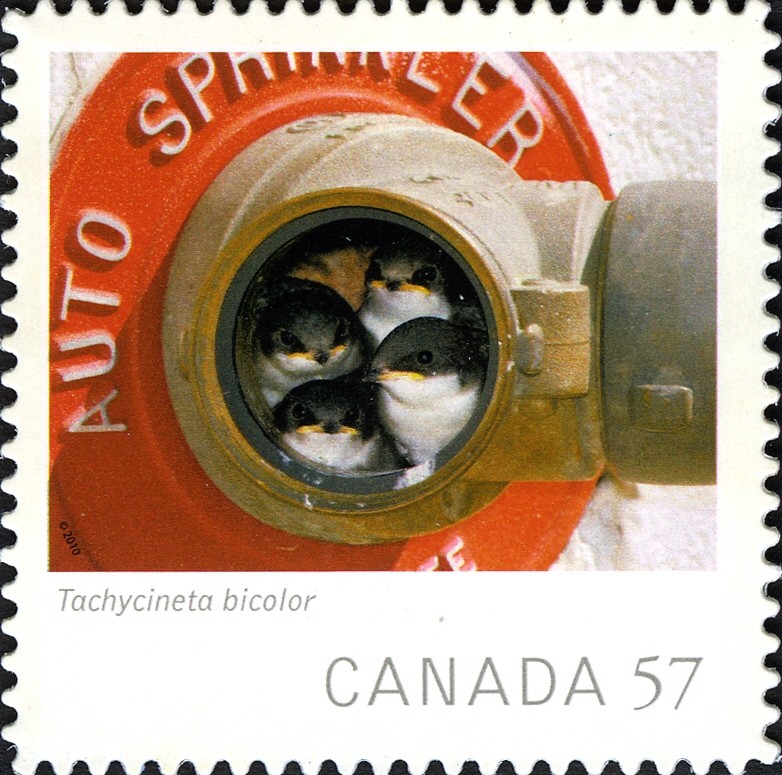
Severe recent decrease of adult body mass in a declining insectivorous bird population
Migratory bird species that feed on air-borne insects are experiencing widespread regional declines. Agricultural intensification in the breeding range is often regarded as one of the main drivers of these declines. Here, we tested the hypothesis that body mass in breeding individuals should reflect habitat quality in an aerial insectivore, the tree swallow (Tachycineta bicolor), along a gradient of agricultural intensity. Our dataset was collected over 7 years (2005–2011) and included 2918 swallow captures and 1483 broods. Analyses revealed a substantial decline of the population over the course of the study (−19% occupancy rate), mirrored by decreasing body mass. This trend was especially severe in females, representing a total loss of 8% of their mass. Reproductive success was negatively influenced by intensive agriculture.
Source:
Sébastien Rioux Paquette, Fanie Pelletier, Dany Garant, Marc Bélisle. Proc Royal Society B Published 21 May 2014. DOI: 10.1098/rspb.2014.0649