Amfibie: Algemeen

  • Rondetafelgesprek in de gemeente Westerveld over lelieteelt en pesticiden

    Rondetafelgesprek in de gemeente Westerveld over lelieteelt en pesticiden

    Omwonenden van leliepercelen in Westerveld voelen zich niet serieus genomen. Dat bleek op donderdagavond 6 maart 2014 tijdens een bijeenkomst over de lelieteelt in het gemeentehuis in Diever. Verschillende partijen konden hun standpunten toelichten over de effecten van gewasbeschermingsmiddelen. Het ging er fel aan toe in het bomvolle gemeentehuis. Omwonenden vrezen voor hun gezondheid als bollenboeren gebruik maken van middelen zoals metam-natrium om bijvoorbeeld grond te ontsmetten. De stoffen waaien uit over hun tuinen en onduidelijk is wat de effecten daarvan zijn op de volksgezondheid. Bijgevoegd een documentatie over dit thema van de hand van de toxicoloog Henk Tennekes. Naar het oordeel van Tennekes laat het Ctgb middelen toe die in de landbouw niets te zoeken hebben: het gebruik van metam-natrium verhoogt het risico op longziekten en het gebruik van imidacloprid roeit de insecten uit en daarmee ook alle soorten die van insecten afhankelijk zijn, zoals veel vogels van het boerenland. De gespreksleider in Westerveld deed pogingen de mensen met elkaar in gesprek te brengen. Tennekes, die deelnam aan de discussie, vroeg zich af waar je het in godsnaam over moet hebben als het cultuurlandschap door de boeren mag worden bezoedeld met uiterst giftige pesticiden.

    Omwonenden van leliepercelen in Westerveld voelen zich niet serieus genomen. Dat bleek op donderdagavond 6 maart 2014 tijdens een bijeenkomst over de lelieteelt in het gemeentehuis in Diever. Verschillende partijen konden hun standpunten toelichten over de effecten van gewasbeschermingsmiddelen. Het ging er fel aan toe in het bomvolle gemeentehuis. Omwonenden vrezen voor hun gezondheid als bollenboeren gebruik maken van middelen zoals metam-natrium om bijvoorbeeld grond te ontsmetten. De stoffen waaien uit over hun tuinen en onduidelijk is wat de effecten daarvan zijn op de volksgezondheid. Bijgevoegd een documentatie over dit thema van de hand van de toxicoloog Henk Tennekes. Naar het oordeel van Tennekes laat het Ctgb middelen toe die in de landbouw niets te zoeken hebben: het gebruik van metam-natrium verhoogt het risico op longziekten en het gebruik van imidacloprid roeit de insecten uit en daarmee ook alle soorten die van insecten afhankelijk zijn, zoals veel vogels van het boerenland. De gespreksleider in Westerveld deed pogingen de mensen met elkaar in gesprek te brengen. Tennekes, die deelnam aan de discussie, vroeg zich af waar je het in godsnaam over moet hebben als het cultuurlandschap door de boeren mag worden bezoedeld met uiterst giftige pesticiden.

    Bron: RTV Drenthe, 7 maart 2014
    http://www.rtvdrenthe.nl/nieuws/fel-debat-over-lelieteelt-westerveld#.UxnLUeT7Bko.twitter

  • Biologische boerderijen dragen aanzienlijk meer bij aan de algemene biodiversiteit dan gangbare landbouwbedrijven

    Biologische boerderijen dragen aanzienlijk meer bij aan de algemene biodiversiteit dan gangbare landbouwbedrijven

    Dat blijkt uit een omvangrijk onderzoek van de Universiteit van Oxford, dat de meetresultaten van meer dan 94 studies uit de afgelopen dertig jaar bundelt. Het Vlaams Infocentrum voor Land- en Tuinbouw (VILT) schrijft erover. Onderzoekers van de Universiteit van Oxford hebben een grootschalig biodiversiteitsonderzoek afgerond en gepubliceerd. Ze verzamelden 184 observatierapporten en 94 studies die de laatste dertig jaar gemaakt zijn en kwamen tot de volgende conclusie: de biodiversiteit op biologische landbouwbedrijven ligt gemiddeld 30 procent hoger dan op gangbare landbouwbedrijven.

    Dat blijkt uit een omvangrijk onderzoek van de Universiteit van Oxford, dat de meetresultaten van meer dan 94 studies uit de afgelopen dertig jaar bundelt. Het Vlaams Infocentrum voor Land- en Tuinbouw (VILT) schrijft erover. Onderzoekers van de Universiteit van Oxford hebben een grootschalig biodiversiteitsonderzoek afgerond en gepubliceerd. Ze verzamelden 184 observatierapporten en 94 studies die de laatste dertig jaar gemaakt zijn en kwamen tot de volgende conclusie: de biodiversiteit op biologische landbouwbedrijven ligt gemiddeld 30 procent hoger dan op gangbare landbouwbedrijven.

    ‘Gemiddeld zorgt een biologische teelttechniek voor een stijging van de biodiversiteit met 30 procent’, aldus de onderzoekers in het rapport. ‘Dit cijfer bleef volgens de studies uit de voorbije dertig jaar constant en lijkt in de toekomst ook niet af te nemen.’

    Bioboeren hebben een grotere impact op de biodiversiteit op plaatsen waar ook in de directe omgeving van de percelen het land wordt bewerkt – dus in landelijk gebied waar veel landbouw wordt bedreven.

    De onderzoekers merken op dat de resultaten vooral gebaseerd zijn op meetresultaten uit West-Europa en Noord-Amerika, aangezien in andere gebieden de biolandbouw nog niet voldoende werd onderzocht. Alle gebundelde studies werden gescreend op meetresultaten, representativiteit, betrouwbaarheid en mogelijke vooringenomenheid.

    Biologische landbouwgrond bevat meer micro-organismen en regenwormen dan ‘gangbare’ bodems. In de biologische landbouw groeien ook meer wilde planten en is de soortenrijkdom aan wilde planten aanzienlijk groter dan in de gangbare landbouw.

    Op biologische bedrijven komen meer kevers, spinnen en bloembezoekende insecten als (honing)bijen en vlinders voor dan op gangbare bedrijven. Ook vogelsoorten komen er in grotere aantallen voor en planten zich succesvoller voort dan op gangbare bedrijven.
    Bron: Friesch Dagblad, 18-02-14
    http://www.frieschdagblad.nl/index.asp?artID=66717

  • On average, organic farms support 34% more plant, insect and animal species than conventional farms, say Oxford University scientists

    On average, organic farms support 34% more plant, insect and animal species than conventional farms, say Oxford University scientists

    Researchers looked at data going back thirty years and found that this effect has remained stable over time and shows no signs of decreasing. ‘Our study has shown that organic farming, as an alternative to conventional farming, can yield significant long-term benefits for biodiversity,’ said Sean Tuck of Oxford University’s Department of Plant Sciences, lead author of the study. ‘Organic methods could go some way towards halting the continued loss of diversity in industrialised nations.’ For pollinators such as bees, the number of different species was 50% higher on organic farms, although it is important to note that the study only looked at ‘species richness’. ‘Species richness tells us how many different species there are but does not say anything about the total number of organisms,’ said Mr Tuck. ‘There are many ways to study biodiversity and species richness is easy to measure, providing a useful starting point. Broadly speaking, high species richness usually indicates a variety of species with different functions. Taking the example of bees, species richness would tell us how many different species of bee were on each farm but not the total number of bees.’

    Researchers looked at data going back thirty years and found that this effect has remained stable over time and shows no signs of decreasing. ‘Our study has shown that organic farming, as an alternative to conventional farming, can yield significant long-term benefits for biodiversity,’ said Sean Tuck of Oxford University’s Department of Plant Sciences, lead author of the study. ‘Organic methods could go some way towards halting the continued loss of diversity in industrialised nations.’ For pollinators such as bees, the number of different species was 50% higher on organic farms, although it is important to note that the study only looked at ‘species richness’. ‘Species richness tells us how many different species there are but does not say anything about the total number of organisms,’ said Mr Tuck. ‘There are many ways to study biodiversity and species richness is easy to measure, providing a useful starting point. Broadly speaking, high species richness usually indicates a variety of species with different functions. Taking the example of bees, species richness would tell us how many different species of bee were on each farm but not the total number of bees.’

    The study, published this week in the Journal of Applied Ecology, looked at data from 94 previous studies covering 184 farm sites dating back to 1989. The researchers re-analysed the data using satellite imagery to estimate the land use in the landscape surrounding each farm site to see if this had an impact on species richness. The study was carried out by scientists at Oxford University and the Swedish University of Agricultural Science, and partly funded by the Natural Environment Research Council (NERC).

    Organic farms had a bigger impact on species richness when the land around them was more intensively farmed, particularly when it contained large tracts of arable land. Arable land is defined as land occupied by crops that are sown and harvested in the same agricultural year, such as wheat or barley.

    ‘We found that the impacts of organic farms on species richness were more pronounced when they were located in intensively-farmed regions,’ said Dr Lindsay Turnbull of Oxford University’s Department of Plant Sciences, senior author of the study. ‘This makes sense because the biodiversity benefits of each organic farm will be diluted in clusters of organic farms compared to an organic ‘island’ providing rich habitats in a sea of pesticide-covered conventional fields. This effect was weakest in pollinators, which may be because pollinators are likely to visit neighbouring farms and could be affected by pesticides there.’

    The impact of organic farming on total species richness varied significantly across the data, with the average gain in species richness varying between 26% and 43%. This variation could be down to a number of factors relating to regional variation in farming practices and definitions of ‘organic’.

    ‘Some conventional farms will intensively spray pesticides and fertilisers whereas others will use mixed methods of crop rotation and organic fertilisers with minimal chemical pesticides,’ said Dr Turnbull. ‘There are also regional differences in farming practices, and the majority of the studies in our data were in developed nations with long histories of farming such as those in Western Europe. There, some wildlife have thrived in extensively managed farmland but are threatened by agricultural intensification. However, in developing nations there is often great pressure on the land to provide enough food for local people, resulting in the conversion of natural habitat to farmland. In such cases the benefits of organic farming are less clear, as this may require more land to achieve the same yield as conventional farming.

    ‘More research is needed on the impact of organic farming in tropical and subtropical regions. For example, there are no studies on organic bananas or cocoa beans, two of the most popular organic products found in European supermarkets. At present, we simply cannot say whether buying organic bananas or chocolate has any environmental benefit.’
    Source: GBE News, February 2014
    http://greenbuildingelements.com/2014/02/04/organic-farms-support-species/

  • Efforts afoot to save the endangered cricket frog, a historic resident of New York State

    Efforts afoot to save the endangered cricket frog, a historic resident of New York State

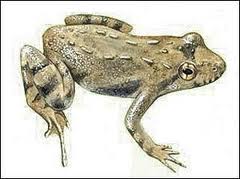
    The state Department of Environmental Conservation announced its plan to boost the population of the endangered northern cricket frog. That plan is now available for public review and comment, DEC Commissioner Joe Martens announced Wednesday. An overall goal of the recovery plan is to eventually remove the species from New York’s endangered species list. The northern cricket frog is one of the state’s two endangered amphibians and is limited to a small number of breeding populations in southeastern New York. “The northern cricket frog is a historic resident of New York State and represents an important amphibian component of wetland ecosystems,” stated Martens. “Conservation of the northern cricket frog and its habitat is important to preserving New York’s biodiversity and unique character. The plan aims to improve the frog’s geographic diversity and ultimately increase its population.”

    The state Department of Environmental Conservation announced its plan to boost the population of the endangered northern cricket frog. That plan is now available for public review and comment, DEC Commissioner Joe Martens announced Wednesday. An overall goal of the recovery plan is to eventually remove the species from New York’s endangered species list. The northern cricket frog is one of the state’s two endangered amphibians and is limited to a small number of breeding populations in southeastern New York. “The northern cricket frog is a historic resident of New York State and represents an important amphibian component of wetland ecosystems,” stated Martens. “Conservation of the northern cricket frog and its habitat is important to preserving New York’s biodiversity and unique character. The plan aims to improve the frog’s geographic diversity and ultimately increase its population.”

    The recovery plan provides a comprehensive review of the northern cricket frog and proposes a strategy for preventing the loss of this species from the state. The plan includes to: protect and manage remaining northern cricket frog populations and habitats; identify suitable and unoccupied habitats and facilitate the colonization of these sites by northern cricket frogs; research critical data gaps in the conservation biology of the northern cricket frog that will assist in an efficient recovery; and develop and support partnerships to facilitate recovery.

    For more information on northern cricket frogs, visit http://www.dec.ny.gov/animals/7120.html.

    Read more: http://www.brightonpittsfordpost.com/article/20140122/NEWS/140129822#ixzz2rEqhIYCj

  • De bedroevende stand van de biodiversiteit in Vlaanderen

    De bedroevende stand van de biodiversiteit in Vlaanderen

    Bij dit jaareinde is het interessant eens stil te staan bij de kennis over de huidige biodiversiteit in Vlaanderen. De meeste gegevens voor Vlaanderen worden bij elkaar gezocht en geïnterpreteerd door het Instituut voor Natuur- en Bosonderzoek (www.inbo.be). Van het totale geschatte soortenaantal van ongeveer 40.000 in ons gewest, heeft dit Instituut er 1996 onder de loep genomen. Het gaat om amfibieën, broedvogels, dagvlinders, hogere planten, libellen, loopkevers, reptielen, sprinkhanen, vissen en waterwantsen. Van die 1996 zijn er op dit ogenblik 960 soorten niet in gevaar, 411 bijna in gevaar, 124 kwetsbaar, 142 bedreigd, 177 ernstig bedreigd, 139 regionaal uitgestorven en van 43 soorten waren er onvoldoende gegevens bekend om een status te kunnen opmaken. Zonder in te gaan op technische details is het dus duidelijk dat ongeveer een kwart van de onderzochte soorten in gevaar is en het risico loopt om op termijn uit te sterven of minstens zwaar achteruit te gaan.

    Bij dit jaareinde is het interessant eens stil te staan bij de kennis over de huidige biodiversiteit in Vlaanderen. De meeste gegevens voor Vlaanderen worden bij elkaar gezocht en geïnterpreteerd door het Instituut voor Natuur- en Bosonderzoek (www.inbo.be). Van het totale geschatte soortenaantal van ongeveer 40.000 in ons gewest, heeft dit Instituut er 1996 onder de loep genomen. Het gaat om amfibieën, broedvogels, dagvlinders, hogere planten, libellen, loopkevers, reptielen, sprinkhanen, vissen en waterwantsen. Van die 1996 zijn er op dit ogenblik 960 soorten niet in gevaar, 411 bijna in gevaar, 124 kwetsbaar, 142 bedreigd, 177 ernstig bedreigd, 139 regionaal uitgestorven en van 43 soorten waren er onvoldoende gegevens bekend om een status te kunnen opmaken. Zonder in te gaan op technische details is het dus duidelijk dat ongeveer een kwart van de onderzochte soorten in gevaar is en het risico loopt om op termijn uit te sterven of minstens zwaar achteruit te gaan.

    De zwaarste achteruitgang wordt vastgesteld in landbouwgebied en in oppervlaktewateren als beken en poelen, en in (natte) heidegebieden. Het pleidooi van de wetenschappelijke wereld om de biodiversiteit vooruit te helpen is al jaren hetzelfde: meer en grotere natuurgebieden maken (want daar houdt de soortenrijkdom min of meer stand), meer inspanningen doen om de versnippering en verdwijning van goede leefgebieden tegen te gaan, de landbouw vergroenen, het oppervlaktewater beter beschermen en de luchtkwaliteit verbeteren.
    Bron: Natuurstek, eind december 2013
    http://www.natuurstek.be/?q=achtergrondartikel/balans-van-de-biodiversiteit-vlaanderen

  • Impacts of Neonicotinoid Insecticides on Biodiversity Need Urgent Attention

    Impacts of Neonicotinoid Insecticides on Biodiversity Need Urgent Attention

    Neonicotinoid insecticides are a relatively new, but widely-used, class of systemic, water-soluble nerve poisons. They are readily incorporated into all plant cells, as well as pollen and nectar. They act by binding to acetylcholine receptors of plant-feeding insects, inducing depolarization of motor neurons, tetanic contractions, neuromuscular destruction and death. Non-target plant-feeding insect groups (e.g., bees, certain moths and butterflies) exposed to these insecticides are at risk. Declines in these insect groups are well documented, while noting that these declines can be attributed to habitat loss and invasive species as well as to pollution from neonicotinoid insecticides and other agricultural chemicals. In many agricultural areas, populations of animals that rely on plant-feeding insects as food sources (e.g., birds, bats, amphibians, predatory insects) are also declining.

    Neonicotinoid insecticides are a relatively new, but widely-used, class of systemic, water-soluble nerve poisons. They are readily incorporated into all plant cells, as well as pollen and nectar. They act by binding to acetylcholine receptors of plant-feeding insects, inducing depolarization of motor neurons, tetanic contractions, neuromuscular destruction and death. Non-target plant-feeding insect groups (e.g., bees, certain moths and butterflies) exposed to these insecticides are at risk. Declines in these insect groups are well documented, while noting that these declines can be attributed to habitat loss and invasive species as well as to pollution from neonicotinoid insecticides and other agricultural chemicals. In many agricultural areas, populations of animals that rely on plant-feeding insects as food sources (e.g., birds, bats, amphibians, predatory insects) are also declining.

    Neonicotinoid insecticides also bind to vertebrate acetylcholine receptors, posing direct risks to vertebrate herbivores such as birds that may consume neonicotinoid-coated seeds.

    Many studies have documented deaths of honeybees and other plant pollinators exposed to neonicotinoid insecticides during agricultural operations. This creates threats to food security, placing at risk the global supply of the ~60% of crop plant species that are pollinator dependent. Adverse impacts of these insecticides on insect predators (rove beetles, carabid beetles, lady beetles, spiders)
    and potential losses of natural pest control services have also been addressed in a number of studies.

    When neonicotinoid insecticides are applied repeatedly their rate of degradation of is not always sufficiently rapid to avoid build-up in soils. At levels well below those that are directly toxic, neonicotinoid insecticides decrease activity (burrowing, feeding) of decomposer organisms such as earthworms. Similar adverse impacts have been observed on the activity of aquatic organisms that feed on plant residues. The water-soluble nature of neonicotinoid insecticides makes them susceptible to transport into aquatic habitats. When they are applied to rice crops, the normal suite of organisms found in rice paddies is drastically altered and may not recover over the duration of crop growth.

    Exposure to neonicotinoid insecticides stresses the immune systems of animals and increases their vulnerability to other drivers of biodiversity loss, such as invasive pests and diseases. It has been suggested that the introduction of these chemicals coincides with, and is linked to, the explosion of emerging infectious diseases of wildlife in a wide variety of taxa, including honeybees, fish, amphibians, bats and birds (Mason, R. et al. 2012. Immune suppression by neonicotinoid insecticides at the root of global wildlife declines. J. Environ. Immunol Toxicol 1(1): 3-12).

    Recent assessments by regulatory authorities have documented negative impacts of neonicotinoid insecticides on plant pollinators, and in particular honeybees. There has been limited regulatory attention to their impacts on biodiversity more generally, particularly on the many species that occur in agricultural areas. Many species groups found in agricultural areas (farmland birds, bats, butterflies, moths, fish and amphibians in watercourses receiving agricultural pollution, etc.) are declining, often at a faster rate than overall biodiversity. Various individual species within these groups have been assigned threatened status.

    Work already under way by organizations addressing the issue:
    Following a request by the European Commission, the European Food Safety Authority (EFSA) conducted assessments of three neonicotinoid insecticides – clothianidin, imidacloprid, and thiamethoxam – as regards their risks to bees. The EFSA has now placed a 2-year moratorium on selected uses (e.g., seed treatments) of these three neonicotinoid insecticides.

    Other relevant government agencies (e.g., the Environmental Protection Agency in the United States) are reviewing their decisions regarding registrations of neonicotinoid insecticides.

    Credible sources of information, preferably from peer-reviewed articles:
    Buglife –The Invertebrate Conservation Trust prepared a 2009 report on The impact of neonicotinoid
    insecticides on bumblebees, honey bees and other nontarget invertebrates with over 100 references (http://www.buglife.org.uk/Resources/Buglife/revised%20neonics%20report.pdf). In 2012, Buglife reviewed 41 articles that had appeared since their 2009 report. They concluded that 31 of the papers “contained evidence that neonicotinoids would or could have significant environmental impacts above and beyond what was previously known” – see
    (http://www.buglife.org.uk/Resources/Buglife/A%20review%20of%20recent%20research%20relating%20to%20the%20impact%20of%20neonicotinoids%20on%20the%20environment.pdf).

    The Xerces Society for Invertebrate Conservation prepared a comprehensive review of the literature relating to neonicotinoid insecticides and pollinators in 2012, Are Neonicotinoids Killing Bees? (http://www.xerces.org/neonicotinoids-and-bees/)

    The American Bird Conservancy prepared an analysis of the scientific literature on neonicotinoid insecticides and birds in 2013, The Impact of the Nation’s Most Widely Used Insecticides on Birds.
    (http://www.abcbirds.org/abcprograms/policy/toxins/Neonic_FINAL.pdf)

    New evidence of unexpected and significant impacts on biodiversity:
    The magnitude of impacts of neonicotinoid insecticides on biodiversity and non-target organisms was not foreseen when these chemicals were registered. An early study of imidacloprid (Pflüger, W. W., & Schmuck, R. R. 1991. Ecotoxicological profile of imidacloprid. Pflanzenschutz-Nachrichten Bayer 44(2): 145-158) examined “beneficial arthropods and other beneficial species; birds and mammals; and aquatic biocoenoses.” The authors concluded that “exhaustive tests for possible ecological effects demonstrate that although this compound is highly effective against a broad spectrum of pests, it is unusually safe in environmental terms.” Similarly, an early study of clothianidin (Schmuck, R. R., & Keppler, J. J. 2003. Clothianidin – ecotoxicological profile and risk assessment. Pflanzenschutz-Nachrichten Bayer 56(1): 26-58) concluded, based on “worst-case exposure and toxicity data for birds, mammals, and fish… that the use of clothianidin will pose only a negligible risk to these nontarget organisms under conditions of practical use.” The authors added that “the use of the compound as a seed dressing agent does not pose long-term risks to either terrestrial or aquatic nontarget arthropod species, as demonstrated in tests with simulated field exposure conditions.”

    A possible explanation for the unexpected and significant impacts on biodiversity shown in more recent studies of neonicotinoid insecticides is that risk assessments for new chemicals (e.g., as described in the OECD Manual for Assessment of Chemicals) focus largely on acute toxicity. Chronic toxicity is only considered based on the physical and chemical (not biological) properties of a chemical proposed for registration. However, in the case of neonicotinoid insecticides, repeated exposures can cause chronic, cumulative neurological damage in non-target organisms (as well as in target pests). There is very strong experimental evidence of impacts at sub-lethal levels. Also, conventional risk assessments do not generally consider ecosystem-level impacts, e.g., on terrestrial and aquatic food chains.
    Urgency of addressing the issue/imminence of the risk/magnitude of actual and potential impact on biodiversity:
    Many groups of organisms found in agricultural areas are experiencing catastrophic declines, including:

    • birds (e.g., Nebel, S. et al. 2010. Declines of aerial insectivores in North America follow a geographic gradient. Avian Conserv. Ecol. 5(2): 1. [online]);
    • bats (e.g., Wickramasinghe, L.P. et al. 2004. Abundance and species richness of nocturnal insects on organic and conventional farms: effects of agricultural intensification on bat foraging. Conserv. Biol. 18: 1283–1292);
    • amphibians (e.g., Blaustein, A.R. 2011. The complexity of amphibian population declines: understanding the role of cofactors in driving amphibian losses. Ann. N. Y. Acad. Sci. 1223: 108-119);
    • bumblebees (e.g., Cameron, S.A. et al. 2011. Patterns of widespread decline in North American bumble bees. Proc. Nat. Acad. Sci. 108(2): 662-667);
    • butterflies (e.g., Van Dyck, H. et al. 2009. Declines in common, widespread butterflies in a landscape under intense human use. Conserv. Biol. 23(4): 957-965);
    • moths (e.g., Conrad, K.F. et al. 2006. Rapid declines of common, widespread British moths provide evidence of an insect biodiversity crisis. Biol. Conserv. 132(3): 271-291); and
    • carabid beetles (Brooks, D. R. et al. 2012. Large carabid beetle declines in a United Kingdom monitoring network increases evidence for a widespread loss in insect biodiversity. J. Appl. Ecol. 49(5): 1009-1019).

    There is an urgent need for greater understanding of the degree to which exposure to neonicotinoid insecticides may be contributing to these declines, and how exposure to these chemicals may be interacting with other negative pressures on biodiversity in agricultural areas.

    Actual geographic coverage and potential spread, including rate of spread:
    Neonicotinoids are now the now the most widely used crop insecticides in the world. They are marketed in over 120 countries to protect more than 140 crops.

    Evidence of the absence or limited availability of tools to limit or mitigate the negative impacts of the issue on conservation and sustainable use:
    With older classes of pesticides whose mode of action is based on acute toxicity, farmers could practice integrated pest management – using tools such as regular surveys of crop fields for pest outbreaks, and spraying only when outbreaks occur. These integrated pest management tools resulted in reduced chemical use and thereby mitigated negative impacts on non-target organisms, at least to a degree.

    In contrast, systemic pesticides (such as neonicotinoid insecticides) are continuously present during the entire period of crop growth. This makes it difficult to avoid exposure of non-target organisms to these pesticides. The limited availability of integrated pest management tools specifically applicable to systemic pesticides poses unique challenges for conservation and sustainable use of biodiversity.

    Magnitude of actual and potential impact on human well-being:
    To date, concern about impacts of neonicotinoid insecticides on human well-being have largely focused on their unintended negative effects on pollinating insects (and to a lesser extent, predatory arthropods) and consequent effects on agricultural crop production. There is already evidence that over the period 1961-2008, food crops with greater pollinator dependence had lower mean and stability in relative yield and yield growth, despite global yield increases for most crops (Garibaldi, L.A. et al. 2011. Global growth and stability of agricultural yield decrease with pollinator dependence. Proc . Natl. Acad. Sci. 108(14): 5909-5914). Relatively poor yields of pollinator-dependent food crops are worrisome from a nutritional standpoint, because these are mainly fruits, nuts and vegetables rich in vitamins and mineral nutrients.

    Concern has also arisen about impacts of neonicotinoid insecticides on the ecosystem service of crop residue decomposition/nutrient cycling, in light of the evidence that these chemicals have negative impacts on earthworms and other decomposer organisms. This also could, at least in the longer term, reduce crop yields, or compel farmers to increase their use of chemical fertilizers.

    Neonicotinoid insecticides have documented negative impacts on aquatic food webs, thereby raising concerns about loss of productivity in freshwater fisheries and aquaculture systems.

    A recent study (Kimura-Kuroda, J. et al. 2012. Nicotine-like effects of the neonicotinoid insecticides acetamiprid and imidacloprid on cerebellar neurons from neonatal rats. PLoS ONE 7(2): e32432.) indicates that the neonicotinoid insecticides acetamiprid and imidacloprid exert excitatory effects on mammalian acetylcholine receptors similar to nicotine, a neurotoxin of brain development and a known risk factor for sudden infant death syndrome, low-birth-weight infants, and attention deficit/hyperactivity disorder. This raises concerns that neonicotinoid insecticides may adversely affect human health, especially the developing brain.

    Actual and potential impact on productive sectors and economic well-being:
    The strongest evidence for actual adverse impacts of neonicotinoid insecticides on productive sectors relates to yield of pollinator-dependent crops. For example, almond producers in California, USA, are highly dependent on pollination services provided by honeybees that are trucked into orchards during the period when trees are flowering. Losses of honeybee colonies during the winter of 2012-2013 were so great that there were fears that some trees would go unpollinated. Beekeepers brought in hives at the last minute from around the country. With good weather and a prolonged period of flowering, the crisis was mostly averted in 2013. However, such heroic measures are costly and unsustainable.

    Potential impacts of continued use of neonicotinoid insecticides must be examined in the context of a broader suite of factors affecting agricultural productivity and sustainability. Long-term economic well- being of the agriculture sector will require greater efforts to reduce its reliance on external chemical inputs and fossil fuels, so as to maintain food security and avoid unpredictable spikes in food prices.

    Source:
    Ottawa River Institute
    Ontario, Canada
    30 June 2013
  • Die Intensivierung der Landwirtschaft in den vergangenen Jahrzehnten hat zu einem hohen Verlust der Artenvielfalt in den Kulturlandschaften in Nord- und Mitteldeutschland geführt

    Die Intensivierung der Landwirtschaft in den vergangenen Jahrzehnten hat zu einem hohen Verlust der Artenvielfalt in den Kulturlandschaften in Nord- und Mitteldeutschland geführt

    Das haben Wissenschaftler der Universität Göttingen in Zusammenarbeit mit dem Senckenberg Museum für Naturkunde in Görlitz herausgefunden. Auf rund 1.000 Untersuchungsflächen – Ackerland, Grünland und Fließgewässer – wiederholten die Forscher Vegetationsaufnahmen aus den 1950er- und 1960er-Jahren, um den Wandel zu analysieren. Dabei stellten sie unter anderem fest, dass die Fläche artenreichen Grünlands auf frischen bis feuchten Böden in den vergangenen 50 Jahren um rund 85 Prozent abgenommen hat – heute dominieren artenarme intensiv gedüngte Grünländer. Ackerwildkräuter, die in den Fünfzigerjahren noch fast die gesamte Ackerfläche bedeckten, wachsen heute aufgrund von Düngung und Pestiziden nur noch auf knapp fünf Prozent der Ackerfläche. Die Zahl der Pflanzenarten ging im Grünland um 30 Prozent zurück, im Ackerland im Inneren der Felder um 71 Prozent und in Fließgewässern um 19 Prozent; die Häufigkeit der einzelnen Pflanzenarten ist in ähnlichem Ausmaß rückläufig. Zunahmen registrierten die Forscher lediglich bei sieben anpassungsfähigen Arten im Grünland, bei 18 Arten im Ackerland und bei zwei Arten in Fließgewässern.

    Das haben Wissenschaftler der Universität Göttingen in Zusammenarbeit mit dem Senckenberg Museum für Naturkunde in Görlitz herausgefunden. Auf rund 1.000 Untersuchungsflächen – Ackerland, Grünland und Fließgewässer – wiederholten die Forscher Vegetationsaufnahmen aus den 1950er- und 1960er-Jahren, um den Wandel zu analysieren. Dabei stellten sie unter anderem fest, dass die Fläche artenreichen Grünlands auf frischen bis feuchten Böden in den vergangenen 50 Jahren um rund 85 Prozent abgenommen hat – heute dominieren artenarme intensiv gedüngte Grünländer. Ackerwildkräuter, die in den Fünfzigerjahren noch fast die gesamte Ackerfläche bedeckten, wachsen heute aufgrund von Düngung und Pestiziden nur noch auf knapp fünf Prozent der Ackerfläche. Die Zahl der Pflanzenarten ging im Grünland um 30 Prozent zurück, im Ackerland im Inneren der Felder um 71 Prozent und in Fließgewässern um 19 Prozent; die Häufigkeit der einzelnen Pflanzenarten ist in ähnlichem Ausmaß rückläufig. Zunahmen registrierten die Forscher lediglich bei sieben anpassungsfähigen Arten im Grünland, bei 18 Arten im Ackerland und bei zwei Arten in Fließgewässern.

    Auch an konkreten Beispielen fehlt es in den Studien nicht: Vor rund 50 Jahren standen Grünland-Pflanzen wie das Wiesen-Schaumkraut und die Kuckucks-Lichtnelke auf fast jeder Wiese. Heute sind nur noch Restbestände von weniger als fünf Prozent im Vergleich zu damals vorhanden, vielerorts sind die Pflanzen ausgestorben. Auch im Ackerland betragen die Bestandsverluste vielfach zwischen 95 und 99 Prozent – ehemals weit verbreitete Arten wie der Acker-Rittersporn, die Knollen-Platterbse und das Sommer-Adonisröschen sind heute floristische Seltenheiten. Frühere Studien haben vergleichbare Verluste auch für Vögel im Acker- und Grünland gezeigt. Die Entwicklung bei anderen Organismengruppen wie beispielsweise Insekten ist bislang weniger bekannt.

    „Unsere Studien zeigen, dass die bisherigen Maßnahmen des Biodiversitätsschutzes in der Agrarlandschaft bei weitem nicht ausreichend waren und in vielen Regionen den Zusammenbruch der Agrar-Lebensgemeinschaften nicht verhindern konnten“, sagt der Pflanzenökologe Prof. Dr. Christoph Leuschner von der Universität Göttingen. „Da sich Deutschland im Rahmen der Nationalen Biodiversitätsstrategie zum Erhalt der Artenvielfalt in der Agrarlandschaft verpflichtet hat, müssen die politischen Entscheidungsträger dringend handeln.“

    Originalveröffentlichungen:
    Stefan Meyer et al (2013). Dramatic impoverishment of arable plant communities since the 1950s/60s – a large scale analysis across geological substrate groups. Diversity & Distributions 19: 1175-1187.

    Karsten Wesche et al (2012). Fifty years of change in Central European grassland vegetation: Large losses in species richness and animal-pollinated plants. Biological Conservation 150: 76-85.

    Kristina Steffen et al (2013). Diversity loss in the macrophyte vegetation of northwest German streams and rivers between the 1950s and 2010. Hydrobiologia 713: 1-17.

    Kontaktadresse:
    Prof. Dr. Christoph Leuschner
    Georg-August-Universität Göttingen
    Fakultät für Biologie und Psychologie
    Abteilung Pflanzenökologie und Ökosystemforschung
    Untere Karspüle 2, 37073 Göttingen, Telefon (0551) 39-5722
    E-Mail: cleusch@gwdg.de

    Thomas Richter | Quelle: Informationsdienst Wissenschaft
    Weitere Informationen:
    www.uni-goettingen.de/de/71395.html

  • De neonicotinoiden veroorzaken met de uitroeiing van de geleedpotigen een breuk in de voedselketen en vernietigen de ‘web of life’

    De neonicotinoiden veroorzaken met de uitroeiing van de geleedpotigen een breuk in de voedselketen en vernietigen de ‘web of life’

    In minder dan 20 jaar zijn de neonicotinoiden wereldwijd uitgegroeid tot de meest gebruikte insecticiden met een marktaandeel van meer dan 25%. Dat deze stoffen ook de meest gevaarlijke insecticiden zijn die ooit op de markt zijn gekomen, begint velen zo langzamerhand te dagen. Neonicotinoiden verontreinigen het milieu overal daar waar ze gebruikt worden, zoals bijvoorbeeld is aangetoond in het Westen van Nederland, op de Southern High Plains van Texas, in de Central Valley van Californië, en op de uitgestrekte Canadese prairies. De stoffen worden maar langzaam afgebroken, en hebben halfwaardetijden die op sommige bodems kunnen oplopen tot bijna 20 jaar, en ze zijn bovendien uitzonderlijk giftig voor geleedpotige dieren, vooral op langere termijn. Zo is een scenario voor een milieu catastrofe ontstaan zoals de Amerikaanse biologe Rachel Carson heeft beschreven in haar boek Silent Spring (‘dode lente’). Sinds 2009 verzamelt de toxicoloog Henk Tennekes op deze website gegevens over geleedpotigen (bijen, hommels, vlinders, en vele andere soorten) en dieren die van geleedpotigen afhankelijk zijn (vogels, vissen, amfibieën, reptielen en zoogdieren). Na vijf jaar verzamelen van gegevens maakt de website het overduidelijk dat het bar slecht gaat met deze soorten en ze met uitsterven worden bedreigd. Als niet op korte termijn wordt ingegrepen met een verbod op alle toepassingen van de neonicotinoiden, zal een ineenstorting van het ecosysteem onvermijdelijk worden, waardoor vrijwel alle levensvormen met uitsterven worden bedreigd.

    In minder dan 20 jaar zijn de neonicotinoiden wereldwijd uitgegroeid tot de meest gebruikte insecticiden met een marktaandeel van meer dan 25%. Dat deze stoffen ook de meest gevaarlijke insecticiden zijn die ooit op de markt zijn gekomen, begint velen zo langzamerhand te dagen. Neonicotinoiden verontreinigen het milieu overal daar waar ze gebruikt worden, zoals bijvoorbeeld is aangetoond in het Westen van Nederland, op de Southern High Plains van Texas, in de Central Valley van Californië, en op de uitgestrekte Canadese prairies. De stoffen worden maar langzaam afgebroken, en hebben halfwaardetijden die op sommige bodems kunnen oplopen tot bijna 20 jaar, en ze zijn bovendien uitzonderlijk giftig voor geleedpotige dieren, vooral op langere termijn. Zo is een scenario voor een milieu catastrofe ontstaan zoals de Amerikaanse biologe Rachel Carson heeft beschreven in haar boek Silent Spring (‘dode lente’). Sinds 2009 verzamelt de toxicoloog Henk Tennekes op deze website gegevens over geleedpotigen (bijen, hommels, vlinders, en vele andere soorten) en dieren die van geleedpotigen afhankelijk zijn (vogels, vissen, amfibieën, reptielen en zoogdieren). Na vijf jaar verzamelen van gegevens maakt de website het overduidelijk dat het bar slecht gaat met deze soorten en ze met uitsterven worden bedreigd. Als niet op korte termijn wordt ingegrepen met een verbod op alle toepassingen van de neonicotinoiden, zal een ineenstorting van het ecosysteem onvermijdelijk worden, waardoor vrijwel alle levensvormen met uitsterven worden bedreigd.

  • U.S. Fish and Wildlife agrees to look at the effects of the pesticides to settle a lawsuit filed three years ago by the Center for Biological Diversity

    U.S. Fish and Wildlife agrees to look at the effects of the pesticides to settle a lawsuit filed three years ago by the Center for Biological Diversity

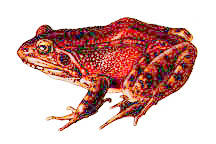
    Six widely used pesticides will be evaluated by the U.S. Fish and Wildlife Service over the next two years to determine whether they are being properly regulated to avoid having them contribute to the extinction of the California red-legged frog.The pesticides that will be evaluated are glyphosate, malathion, simazine, pendimethalin, permethrin, methomyl and myclobutanil. Glyphosate, an herbicide, is known by the brand name RoundUp and is among the world’s most widely used pesticides. The agency agreed to look at the effects of the pesticides to settle a lawsuit filed three years ago by the Center for Biological Diversity.

    Six widely used pesticides will be evaluated by the U.S. Fish and Wildlife Service over the next two years to determine whether they are being properly regulated to avoid having them contribute to the extinction of the California red-legged frog.The pesticides that will be evaluated are glyphosate, malathion, simazine, pendimethalin, permethrin, methomyl and myclobutanil. Glyphosate, an herbicide, is known by the brand name RoundUp and is among the world’s most widely used pesticides. The agency agreed to look at the effects of the pesticides to settle a lawsuit filed three years ago by the Center for Biological Diversity.

    The review of the effects of the pesticides, formally called a “consultation” by federal officials, will be one of the first under a recently reformed system for pesticide evaluation by federal agencies that takes effect in 2014.

    The National Academy of Sciences Research Committee in a report published at the end of April had recommended reforms to eliminate conflicting risk assessment methods by different agencies. Now, federal evaluations of pesticide risks to species listed under the Endangered Species Act will follow a unified protocol under which they will use recommended scientific “best practices” to evaluate issues, including indirect effects such as whether a pesticide is reducing a listed species’ food supply, sub-lethal effects of chemicals that may weaken the species without directly killing it and the effects of combining pesticides with other compounds.

    In the case of red-legged frogs, which live in the Sierra foothills including in Calaveras County, the analysis will include issues such as whether pesticides drifting into the foothills from farms miles away in the Central Valley are harming the frogs.

    “You can impact these species without being right next to them,” said Justin Augustine, an attorney for the Center for Biological Diversity. “That isn’t a minor issue,” he said. “Drift is a major issue. We definitely expect that to be a central aspect of a biological opinion.”

    If federal biologists conclude that pesticides drifting from farms near Lodi and Stockton are harming frogs, that, in turn, could mean new restrictions on using the chemicals. Currently, requirements are that pesticide applications must be at least 60 feet from frog habitats.

    Source: Recordnet.com, 2 January 2014
    http://www.recordnet.com/apps/pbcs.dll/article?AID=/20140102/A_NEWS/401020320

  • The Hellbender, one of the largest species of salamander in the world, has struggled for decades to survive in Ohio’s streams

    The Hellbender, one of the largest species of salamander in the world, has struggled for decades to survive in Ohio’s streams

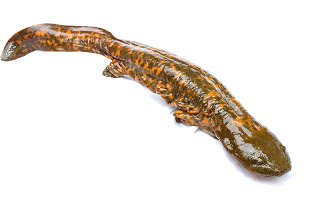
    Now a group of conservationists is giving the eastern hellbender a hand in the hopes of saving the wily creatures from extinction here. The hellbender (Cryptobranchus alleganiensis), Ohio’s largest amphibian, can grow to two feet long, weigh nearly three pounds and live for up to 29 years. And the males, who guard their nests, aren’t afraid to throw that heft around when confronted near their under-rock dens during breeding season, in late summer. “They can be rather intimidating,” says hellbender expert Gregory Lipps, who has scoured Ohio River streams since 2006 in search of the few remaining hellbenders. After Lipps’ research showed that hellbenders still breed here but most of the young fail to survive likely due to runoff from farm fields, several organizations began raising hellbenders to release them to the wild.

    Now a group of conservationists is giving the eastern hellbender a hand in the hopes of saving the wily creatures from extinction here. The hellbender (Cryptobranchus alleganiensis), Ohio’s largest amphibian, can grow to two feet long, weigh nearly three pounds and live for up to 29 years. And the males, who guard their nests, aren’t afraid to throw that heft around when confronted near their under-rock dens during breeding season, in late summer. “They can be rather intimidating,” says hellbender expert Gregory Lipps, who has scoured Ohio River streams since 2006 in search of the few remaining hellbenders. After Lipps’ research showed that hellbenders still breed here but most of the young fail to survive likely due to runoff from farm fields, several organizations began raising hellbenders to release them to the wild.

    The Columbus Zoo and Aquarium, the Toledo Zoo, the Wilds in Muskingum County and inmates at the Marion Correctional Institute are raising hellbenders from eggs collected in eastern Ohio.

    “We’ve learned to collect the eggs — one female can lay 250 of them — after the males have tended to them for two weeks,” Lipps said. “The males fan them and eat the bad eggs, then we have more success with hatching healthy hellbenders a month or so later.”

    Greg Lipps, Ohio’s expert on hellbenders, is leading the charge to reintroduce them to the streams they inhabited before pollution nearly wiped them out.

    The Toledo Zoo has more than 700 young hellbenders, while the Columbus Zoo has 45 and the prison has a dozen, Lipps said, noting that the prison’s holding facility could be expanded.

    Two dozen 3- and 4-year-old hellbenders have been released into two eastern Ohio streams, where hellbenders were found in the 1980s then vanished with a rise in pollution. The streams have recovered to become some of the highest quality waterways in the state, according to the Department of Natural Resources.

    The captive-born hellbenders are implanted with radio transmitters so biologists can track them as they feed on crayfish, fish, snails, worms and tadpoles in the spring and fall. They don’t eat much, if at all, the rest of the year, and so far, 55 percent have survived, Lipps said.

    Funding for the hellbender project comes from the U.S. Fish and Wildlife Service and donations to the Division of Wildlife’s Diversity Program, the Toledo Zoo and the Columbus Zoo.

    Source: Cleveland.com, 12 December 2013
    http://www.cleveland.com/metro/index.ssf/2013/12/efforts_underway_to_bring_gian.html