Amfibie: Algemeen

  • Alarmierender Rückgang von Fauna und Flora in Europa

    Alarmierender Rückgang von Fauna und Flora in Europa

    Eine Untersuchung eines erheblichen Teils der in Europa heimischen Fauna und Flora im Rahmen der Europäischen Rote Liste, die Teil der Roten Liste gefährdeter Arten der Weltnaturschutzunion (IUCN)™ ist, hat ergeben, dass ein großer Anteil Weichtiere, Süßwasserfische und Gefäßpflanzen jetzt als gefährdet einzustufen ist. Die Untersuchung von etwa 6000 Arten zeigt, dass 44 % aller Süßwasserweichtiere, 37 % der Süßwasserfische, 23 % der Amphibien, 20 % einer Auswahl von terrestrischen Weichtieren, 19 % der Reptilien, 15 % der Säugetiere und Libellen, 13 % der Vögel, 11 % einer Auswahl von xylobionten Käfern, 9 % der Schmetterlinge und 467 Arten von Gefäßpflanzen vom Aussterben bedroht sind.

    Eine Untersuchung eines erheblichen Teils der in Europa heimischen Fauna und Flora im Rahmen der Europäischen Rote Liste, die Teil der Roten Liste gefährdeter Arten der Weltnaturschutzunion (IUCN)™ ist, hat ergeben, dass ein großer Anteil Weichtiere, Süßwasserfische und Gefäßpflanzen jetzt als gefährdet einzustufen ist. Die Untersuchung von etwa 6000 Arten zeigt, dass 44 % aller Süßwasserweichtiere, 37 % der Süßwasserfische, 23 % der Amphibien, 20 % einer Auswahl von terrestrischen Weichtieren, 19 % der Reptilien, 15 % der Säugetiere und Libellen, 13 % der Vögel, 11 % einer Auswahl von xylobionten Käfern, 9 % der Schmetterlinge und 467 Arten von Gefäßpflanzen vom Aussterben bedroht sind.

    Süßwasserweichtiere sind die am stärksten gefährdete Gruppe aller bisher untersuchten Gruppen. Die einst weit verbreitete Riesenflussperlmuschel (Margaritifera auricularia) kommt heute nur noch in wenigen Flüssen Frankreichs und Spaniens vor. Süßwasserfische sind ebenfalls stark gefährdet. Zu den stark gefährdeten Gefäßpflanzen zählen die Wildarten von Kulturpflanzen. Die vom Aussterben bedrohte Rübenart Beta patula ist mit den Kulturrüben eng verwandt und eine wichtige Genquelle für die Verbesserung der Virusresistenz. Andere wirtschaftlich bedeutende europäische Kulturpflanzen mit beunruhigenden Gefährdungs-anzeichen sind die Zuckerrübe, der Weizen, der Hafer und der Kopfsalat.

    Quelle: Naturschutz.at, 29.11.2011
    http://www.naturschutz.at/index.php?id=4404
  • Our gardens become feeding stations for bees, butterflies, bats, hedgehogs, birds and other wildlife provided you don’t use pesticides

    Our gardens become feeding stations for bees, butterflies, bats, hedgehogs, birds and other wildlife provided you don’t use pesticides

    We grow flowers in our gardens for our own enjoyment. But colour and perfume are really the plants’ way of advertising themselves to insects. Sweet nectar and protein-rich pollen are bait to encourage insects to visit. In return, pollen is carried from one flower to another on their bodies so the flowers are fertilised. Bees are among the most beneficial insects for a garden. The best way to attract them to your garden is to provide them with some of their favourite plants such as lavender, foxgloves, rosemary, sunflowers and bluebells. Flowers with long narrow petal tubes, such as evening primrose and honeysuckle, are visited by moths and butterflies. Only their long tongues can reach deep down to the hidden nectar. Short-tongued insects include many families of flies and some moths. They can only reach nectar in flowers with short florets. Hoverflies, wasps, ladybirds, lacewings, ground beetles and centipedes are the gardener’s friends and will help control garden pests such as aphids and caterpillars. Insects such as spiders, mites, millipedes, sow bugs, ants, springtails and beetles inhabit the soil food web in the uppermost 2 to 8 inches of soil. They participate in decomposing plant and animal residue, cycling nutrients, creating soil structure and controlling the populations of other soil organisms, including harmful crop pests. Decaying organic matter in soil is the source of energy and nutrients for garden vegetables and ornamental plants. By growing flowers attractive to a range of insects, our gardens can also become important feeding stations for bats, hedgehogs, birds and other wildlife. The most important factor when encouraging wildlife into your garden is not to use insecticides.

    We grow flowers in our gardens for our own enjoyment. But colour and perfume are really the plants’ way of advertising themselves to insects. Sweet nectar and protein-rich pollen are bait to encourage insects to visit. In return, pollen is carried from one flower to another on their bodies so the flowers are fertilised. Bees are among the most beneficial insects for a garden. The best way to attract them to your garden is to provide them with some of their favourite plants such as lavender, foxgloves, rosemary, sunflowers and bluebells. Flowers with long narrow petal tubes, such as evening primrose and honeysuckle, are visited by moths and butterflies. Only their long tongues can reach deep down to the hidden nectar. Short-tongued insects include many families of flies and some moths. They can only reach nectar in flowers with short florets. Hoverflies, wasps, ladybirds, lacewings, ground beetles and centipedes are the gardener’s friends and will help control garden pests such as aphids and caterpillars. Insects such as spiders, mites, millipedes, sow bugs, ants, springtails and beetles inhabit the soil food web in the uppermost 2 to 8 inches of soil. They participate in decomposing plant and animal residue, cycling nutrients, creating soil structure and controlling the populations of other soil organisms, including harmful crop pests. Decaying organic matter in soil is the source of energy and nutrients for garden vegetables and ornamental plants. By growing flowers attractive to a range of insects, our gardens can also become important feeding stations for bats, hedgehogs, birds and other wildlife. The most important factor when encouraging wildlife into your garden is not to use insecticides.

    Most bats rely more heavily on flies as food than any other insect group. Pipistrelles, the bats most likely to visit your garden, depend on catching very large numbers of tiny insects. Hedgehogs are among the most beneficial of creatures to have in your garden as well as being a joy to encounter. They eat loads of pests including slugs, snails, caterpillars, beetles and other insects. The Cheshire Wildlife Trust’s tips for creating a hedgehog friendly garden include having dense shrub boarders, which offer shelter, and letting an area of bramble in quiet corner overflow, which slightly mimics hedgerows, naturally the perfect habitat for hedgehogs. Creating a small hole of around 15cm in fences and walls will allow hedgehogs access.
    If you want to encourage frogs and toads into your garden you will need to provide some kind of pond. Frogs and toads both eat slugs, snails, insects and worms.
    The most important factor when encouraging wildlife into your garden is not to use insecticides. Not only do they kill horticultural pests, but also those insects beneficial to the garden such as the lace wings, honey bees, hoverflies, and lady birds. This is terribly foolish as these insects are the natural predators of aphids, which after slugs are considered to be the most problematic of all the garden pests. The relatively recent and increased use of persistent neonicotinoid pesticides, known to be highly toxic to bees, may pose an increased threat. These and other pesticides may be translocated through plants into the nectar or pollen. In addition to insecticides, broad-spectrum herbicides used to control weeds can indirectly harm bees by removing the flowers that would otherwise provide the bees with pollen and nectar. Bumble bees require consistent sources of nectar, pollen, and nesting material during the adult activity period, and reduction of these resources by herbicides can cause a decline in bumble bee reproductive success and/or survival rates.

    Sources:
    Soil Insect Killers | eHow.com, 17 May 2011
    http://www.ehow.com/info_8435820_soil-insect-killers.html#ixzz1hSegS2US
    GARDENING FOR BATS, The Bat Conservation Trust, 15 Cloisters House
    8 Battersea Park Road, London SW8 4BG (attached)
    Some Useful Tips On Encouraging Wildlife Into Your Garden, 14 November 2011
    http://www.wildlife-nannies.com/some-useful-tips-on-encouraging-wildlife-into-your-garden.html
    The Garden of Eaden. 13 November 2008
    http://gardenofeaden.blogspot.com/2008/11/decline-of-eating-insect-birds.html
    The New World Order Report
    http://newworldorderreport.com/News/tabid/266/ID/6588/US-Bumble-bee-Population-Drops-96.aspx
    The Runcorn and Widnes Weekly, June 23, 2011
    http://www.runcornandwidnesweeklynews.co.uk/environment/runcorn-widnes-environment-news/2011/06/23/halton-residents-urged-to-create-hedgehog-friendly-gardens-55368-28922009/

  • Differences in susceptibility of five cladoceran species to two systemic insecticides

    Differences in susceptibility of five cladoceran species to two systemic insecticides

    Differences in susceptibility of five cladocerans to the neonicotinoid imidacloprid and the phenyl-pyrazole fipronil, which have been dominantly used in rice fields of Japan in recent years, were examined based on short-term (48-h), semi-static acute immobilization exposure tests. Additionally, we compared the species sensitivity distribution (SSD) patterns of both insecticides between two sets of species: the five tested cladocerans and all other aquatic organisms tested so far, using data from the ECOTOX database of U.S. Environmental Protection Agency (USEPA).

    Differences in susceptibility of five cladocerans to the neonicotinoid imidacloprid and the phenyl-pyrazole fipronil, which have been dominantly used in rice fields of Japan in recent years, were examined based on short-term (48-h), semi-static acute immobilization exposure tests. Additionally, we compared the species sensitivity distribution (SSD) patterns of both insecticides between two sets of species: the five tested cladocerans and all other aquatic organisms tested so far, using data from the ECOTOX database of U.S. Environmental Protection Agency (USEPA).

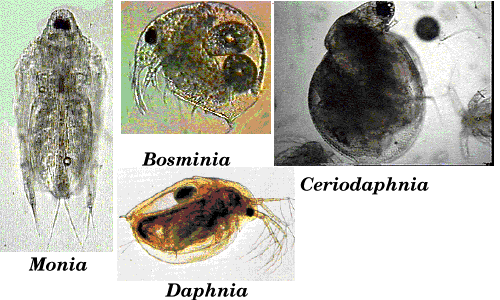
    The sensitivity of the test species to either imidacloprid or fipronil was consistent, spanning similar orders of magnitude (100 times). At the genus level, sensitivities to both insecticides were in the following descending order: Ceriodaphnia[Moina[Daphnia. A positive relationship was found between body lengths of each species and the acute toxicity (EC50) of the insecticides, in particular fipronil. Differences in SSD patterns of imidacloprid were found between the species groups compared, indicating that test cladocerans are much less susceptible than other aquatic species including amphibians,
    crustaceans, fish, insects, mollusks and worms. However, the SSD patterns for fipronil indicate no difference in sensitivity between cladocerans tested and other aquatic organisms despite the greater exposure, which overestimates the results, of our semi-static tests. From these results, Ceriodaphnia sp. should be considered as more sensitive bioindicators (instead of the standard Daphnia magna) for ecotoxicological assessments of aquatic ecosystems.
    In addition, we propose that ecotoxicity data associated with differences in susceptibility among species should be investigated whenever pesticides have different physicochemical properties and mode of action.

    Source:
    Daisuke Hayasaka • Tomoko Korenaga • Kazutaka Suzuki • Francisco Sanchez-Bayo • Koichi Goka (2011)
    Ecotoxicology DOI 10.1007/s10646-011-0802-2, published online 5 October 2011 (attached)

  • Massive decline in Himalayan butterfly numbers

    Massive decline in Himalayan butterfly numbers

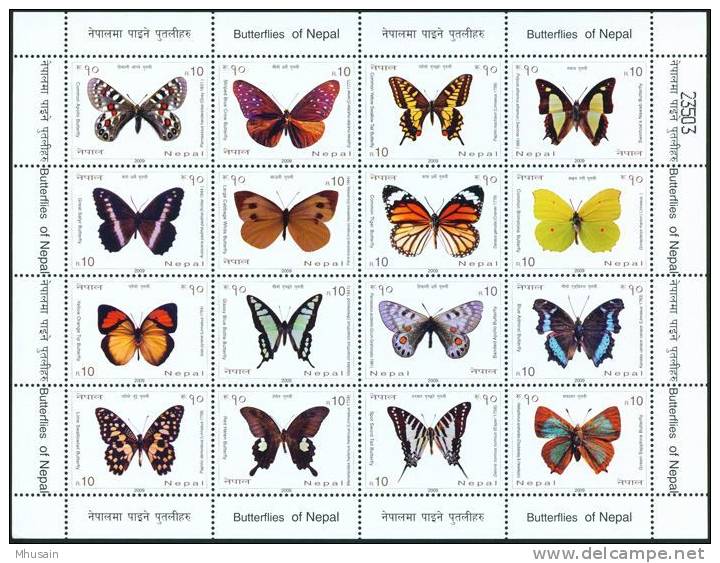
    The lofty western Himalayas are being slowly robbed of their butterflies, with at least 50% of species showing a massive decline in less than a decade. Studies conducted by the high-altitude zoology field station of the Zoological Survey of India (ZSI) based in Solan, Himachal Pradesh, have recorded a drastic drop in butterfly numbers in the western Himalayas, famous for its biodiversity. “The population of 50% of the 288 species recorded in the western Himalayas, comprising areas of Himachal Pradesh and Jammu and Kashmir, have declined more than half in just 10 years,” Avtar Kaur Sidhu, a scientist with the field station, said.

    The lofty western Himalayas are being slowly robbed of their butterflies, with at least 50% of species showing a massive decline in less than a decade. Studies conducted by the high-altitude zoology field station of the Zoological Survey of India (ZSI) based in Solan, Himachal Pradesh, have recorded a drastic drop in butterfly numbers in the western Himalayas, famous for its biodiversity. “The population of 50% of the 288 species recorded in the western Himalayas, comprising areas of Himachal Pradesh and Jammu and Kashmir, have declined more than half in just 10 years,” Avtar Kaur Sidhu, a scientist with the field station, said.

    “We noticed a large number of dead butterflies on Khardung La (the world’s highest motorable road in Ladakh) during one of our visits” she added.

    “We found a massive decline in the population of the common snow Apollo in Ladakh. This is a high-altitude butterfly” Sidhu said, adding, “the same is the fate of the high brown silver species.”

    The lofty bath, a medium-sized white butterfly with black streaks, once common in alpine regions, is now sighted only in pockets of Ladakh.

    Other species like the large green underwing, the dusky green underwing, common meadow blue, white blue linen and violet meadow blue, which are typical high-altitude butterflies, also need to be conserved, Sidhu said.

    “Such a decline is quite alarming and will affect the survival of other fauna,” she added.

    In Pangi valley, Chamba district, only 27 species of butterfly have been recorded. In the Churdhar ranges of Sirmaur district, 39 species have been recorded. In both places, the survey was conducted between 2007 and 2010 under a fauna biodiversity project of the Himalayas.

    Of the 1,439 species of butterfly that have been reported in India, 300 have been recorded by the ZSI in Himachal Pradesh alone, in its report ‘Fauna of Western Himalayas’.

    India is one of the world’s 12 mega-biodiversity centres. The faunal diversity comprises inter alia 2,500 fish species, 150 amphibians, 450 reptiles, 1,200 birds, 850 mammals and 68,000 insects.

    Although India is designated a mega-biodiversity area, it also has two of the world’s most threatened ‘hotspots’ — the eastern Himalayan region and the Western Ghats. To quote Professor M S Swaminathan, both are paradises of valuable genes but are inching towards ‘Paradise Lost’ status.
    Source:
    IANS, June 4, 2010
    http://sify.com, June 2010
    The Hindu, May 27, 2010
    http://infochangeindia.org/environment/news/massive-decline-in-himalayan-butterfly-numbers.html

  • Depletion of arthropod fauna and in particular the decline of large arthropods on intensively used meadows

    Depletion of arthropod fauna and in particular the decline of large arthropods on intensively used meadows

    We studied arthropod occurrence in fallow land, extensively used pastures, extensively used meadows (cut twice or three times a year) and intensively used meadows (cut more than three times ayear) in Upper Bavaria.

    Medium-sized arthropods (5-15mm) were encountered much less frequently on intensively used and fallow land than on pastures and extensively used meadows. Large individuals (>15mm) were observed most frequently on pastures but were hardly found on intensively used meadows. In autumn they occurred almost exclusively on pastures and fallow land. Species richness was the highest on pastures and the lowest on intensively used meadows. The study underscores the depletion of arthropod fauna and in particular the decline of large arthropods on intensively used meadows. It indicates that extensively used meadows and extensively used pastures in particular are the most favourable sources of nutrition for insectivores such as reptiles, amphibians, birds or bats.

    We studied arthropod occurrence in fallow land, extensively used pastures, extensively used meadows (cut twice or three times a year) and intensively used meadows (cut more than three times ayear) in Upper Bavaria.

    Medium-sized arthropods (5-15mm) were encountered much less frequently on intensively used and fallow land than on pastures and extensively used meadows. Large individuals (>15mm) were observed most frequently on pastures but were hardly found on intensively used meadows. In autumn they occurred almost exclusively on pastures and fallow land. Species richness was the highest on pastures and the lowest on intensively used meadows. The study underscores the depletion of arthropod fauna and in particular the decline of large arthropods on intensively used meadows. It indicates that extensively used meadows and extensively used pastures in particular are the most favourable sources of nutrition for insectivores such as reptiles, amphibians, birds or bats.

    Source:
    Zahn et al. (2010): Food availability for insectivores in grasslands – arthropod abundance in pastures, meadows and fallow land. APPLIED ECOLOGY AND ENVIRONMENTAL RESEARCH 8(2): 87-100
    http://74.125.127.132/scholar?q=cache:u2bU4Ysmx84J:scholar.google.com/+insectivores+decline&hl=nl&as_sdt=0&as_ylo=2010

  • Immunosuppression by Neonicotinoids? – Infectious Diseases in Amphibians

    Immunosuppression by Neonicotinoids? – Infectious Diseases in Amphibians

    We have been pondering on the significance of the laboratory evidence from Bee Researchers in France and the US that the administration of tiny amounts of a systemic neonicotinoid, imidacloprid, to bees was associated with a weakening of bee immunity, such that they became more susceptible to bee diseases. and decided to look more closely at the patterns of recent deaths/epidemics in the UK, Europe and the US, involving a variety of other wildlife. In 2006, in localised areas of the UK, the ranavirus caused infected frogs either to bleed to death or to develop skin ulceration [1]. By 2007, a similar condition was found in toads and laboratory experiments showed that transmission could occur by inoculation from an infected frog to a toad [2].

    We have been pondering on the significance of the laboratory evidence from Bee Researchers in France and the US that the administration of tiny amounts of a systemic neonicotinoid, imidacloprid, to bees was associated with a weakening of bee immunity, such that they became more susceptible to bee diseases. and decided to look more closely at the patterns of recent deaths/epidemics in the UK, Europe and the US, involving a variety of other wildlife. In 2006, in localised areas of the UK, the ranavirus caused infected frogs either to bleed to death or to develop skin ulceration [1]. By 2007, a similar condition was found in toads and laboratory experiments showed that transmission could occur by inoculation from an infected frog to a toad [2].

    Scientists from Natural England suggested that it could have been present for years, but something had changed to turn a commensal organism into a pathogen. By July 2008, the ZSL and Froglife reported that the ranavirus and chytrid fungus were starting to affect amphibian populations over a wider area and appealed to the public to report outbreaks to the Zoological Society of London ZSL [3]. Dr Andrew Cunningham said: “Amphibians are being devastated by disease on a global scale, but we have an extremely limited picture of what is going on in our own back yard”. At a ZSL meeting in 2008 it was predicted that more than half of Europe‟s amphibians faced extinctions by 2050 [4]. By October 2010, the devastation that had earlier ravaged US populations had hit the UK as well. In Animal Conservation, researchers reported that the rapidly spreading ranavirus “is killing common frogs in the UK in areas where it has never been seen before”. [5] Population declines of 81% had occurred over a period of 12 years.

    References:
    [1] Institute of Zoology (IoZ); Zoological Society of London website. www.zsl.org/science
    [2] Cunningham, A.A., Hyatt, A.D., Russell, P., Bennett, P.M. (2007) Experimental transmission of a ranavirus disease of common toads (Bufo bufo) to common frogs (Rana temporaria). Epidemiology and Infection 135: 1213-1216.
    [3] Wildlife Extra July 2008. Appeal by ZSL and Froglife for help from the public to report amphibian deaths (by Dr Andrew Cunningham).
    [4] Symposium held at the ZSL: 20/21 November 2008. Halting the global decline in amphibians: Research & Practice.
    [5] Teacher, A.G.F., Cunningham A.A., Garner, T.W.J. (2010) Assessing the long-term impact of Ranavirus infection in wild common frog populations. Animal Conservation 13: 514-522.

    Authors:

    Dr Rosemary Mason, MB, ChB (Hons), D.Obst. RCOG, FRCA. She worked in the UK National Health Service for about 35 years in: General Hospital Medicine and Obstetrics 3 years; Training in Anaesthetics and Intensive Care 8 years; Consultant Anaesthetist (Anesthesiologist) 25 years. Author of Anaesthesia Databook; A perioperative and peripartum manual (600 pages) as a practical resource for trained anaesthetists. 1st edn. 1989, 2nd edn. 1994, 3rd edn. 2001; reprinted in 2009. Assistant Editor of Anaesthesia, Journal of the Association of Anaesthetists of Great Britain and Ireland, 1990 – 2000.

    Palle Uhd Jepsen, former Senior Adviser in Wildlife Management and Nature Conservation for the Danish Forest and Nature Agency, Ministry of the Environment. Research on the feeding ecology of goldeneye. Before his retirement he was a member of the Danish Delegation on the Ramsar Convention on Wetlands, International Whaling Commission, Bonn Convention on Migratory Species, ASCOBANS (Agreement on Conservation of Small Cetaceans in the Baltic and North Sea) and Wetlands International. Adviser on Site Management for International Projects in Thailand, Malaysia, Belarus, Northern Ireland and Estonia. Author of several books on natural and cultural history in Denmark; also natural history in the Arctic.

    27th May 2011

  • EFSA identifies the toxicity of neonicotinoids to bees (and other non-target organisms such as amphibians) as a critical area of concern

    EFSA identifies the toxicity of neonicotinoids to bees (and other non-target organisms such as amphibians) as a critical area of concern

    The European Food Safety Authority (EFSA), which carries out risk assessment on plant protection products, is currently reviewing recent scientific literature with regard to the effects of pesticides, and in particular of neonicotinoids, on bees. In its conclusions on imidacloprid and fipronil, EFSA has identified the toxicity to bees (and other non-target organisms) as a critical area of concern.

    The European Food Safety Authority (EFSA), which carries out risk assessment on plant protection products, is currently reviewing recent scientific literature with regard to the effects of pesticides, and in particular of neonicotinoids, on bees. In its conclusions on imidacloprid and fipronil, EFSA has identified the toxicity to bees (and other non-target organisms) as a critical area of concern.

    The inclusion of active substances in Annex I of Directive 91/414/EEC is decided by the European Commission and the initiative of reviewing the Annex I inclusion can only be taken by the Commission. In 2010, the Commission has amended the inclusion conditions for clothianidin, thiamethoxam, fipronil and imidacloprid by adding some mandatory measures for the use of these substances as seed treatment (Directive 2010/21/EU). These measures are specifically intended to better protect bees. The European Commission is currently finalising a significant revision of the data requirements under Directive 91/414/EEC , in order to incorporate new science. The chapter on ecotoxicological effects, including effects on bees, will be significantly extended (with new groups of non-target organisms to be considered, such as amphibians). These revised data requirements will be adopted under Regulation (EC) No 1107/2009, which is replacing Directive 91/414/EEC and will become fully applicable on 14 June 2011. Annex II to that Regulation contains criteria for the approval of active substances. With regard to bees, the Annex II prescribes that an active substance can only be approved where the use of plant protection products containing the substance will result in negligible exposure of bees, or has no unacceptable acute or chronic effects on colony survival and development, taking into account effects on larvae and behaviour.

    Source: Nick Griffin MEP, 18 March 2011
    http://www.nickgriffinmep.eu/content/response-efsa-insecticide-threat-bees

  • Behind Mass Die-Offs, Pesticides Lurk as Culprit

    Behind Mass Die-Offs, Pesticides Lurk as Culprit

    BY SONIA SHAH

    For decades, toxicologists have accrued a range of evidence showing that low-level pesticide exposure impairs immune function in wildlife, and have correlated this immune damage to outbreaks of disease. In the past dozen years, three new diseases have decimated populations of amphibians, honeybees, and — most recently — bats. Increasingly, scientists suspect that low-level exposure to pesticides could be contributing to this rash of epidemics. The recent spate of widespread die-offs began in amphibians. Scientists discovered the culprit — an aquatic fungus called Batrachochytrium dendrobatidis, of a class of fungi called “chytrids” — in 1998. Its devastation, says amphibian expert Kevin Zippel, is “unlike anything we’ve seen since the extinction of the dinosaurs.” Over 1,800 species of amphibians currently face extinction. There is a strong correlation between pesticide use and declining amphibian populations. Six years after scientists discovered the fungal assault on amphibians, a mysterious plague began decimating honeybees.

    BY SONIA SHAH

    For decades, toxicologists have accrued a range of evidence showing that low-level pesticide exposure impairs immune function in wildlife, and have correlated this immune damage to outbreaks of disease. In the past dozen years, three new diseases have decimated populations of amphibians, honeybees, and — most recently — bats. Increasingly, scientists suspect that low-level exposure to pesticides could be contributing to this rash of epidemics. The recent spate of widespread die-offs began in amphibians. Scientists discovered the culprit — an aquatic fungus called Batrachochytrium dendrobatidis, of a class of fungi called “chytrids” — in 1998. Its devastation, says amphibian expert Kevin Zippel, is “unlike anything we’ve seen since the extinction of the dinosaurs.” Over 1,800 species of amphibians currently face extinction. There is a strong correlation between pesticide use and declining amphibian populations. Six years after scientists discovered the fungal assault on amphibians, a mysterious plague began decimating honeybees.

    Foraging honeybees first started vanishing from their hives, abandoning their broods and queens to certain death by starvation, in 2004. Alarmed beekeepers dubbed the devastating malady “colony collapse disorder.” Between 2006 and 2009, colony collapse disorder and other ills destroyed 35 percent of the U.S. honeybee population. Some experts believe colony collapse disorder is the result of a “perfect storm” of honeybee-debilitating factors: poor nutrition, immune dysfunction from decades of industrial beekeeping practices, and the opportunism of multiple pathogens, acting in malevolent concert. But many beekeepers believe that a new class of chemicals based on nicotine, called neonicotinoids, may be to blame. Two years after the honeybees started disappearing, so, too, did bats. The corpses of hibernating bats were first found blanketing caves in the northeastern United States in 2006. The disease that killed them, caused by a cold-loving fungus called Geomyces destructans — and dubbed White-nose Syndrome for the tell-tale white fuzz it leaves on bats’ ears and noses — has since destroyed at least one million bats. University of Florida wildlife ecologist John Hayes calls it “the most precipitous wildlife decline in the past century in North America.”

    Like the mysterious Batrachochytrium dendrobatidis fungus infesting amphibians, Geomyces could be a novel pathogen, newly preying upon defenseless bat species. But scientists have also started to investigate whether pesticide exposure might be playing a role.

    Read the article:
    http://www.e360.yale.edu/content/feature.msp?id=2228

  • Minder vogels en vlinders op hei

    Minder vogels en vlinders op hei

    De heidegebieden in Nederland staan onder druk. De populaties van enkele diersoorten op de hei namen sinds 1990 af met ongeveer 65 procent. Vooral vogels en dagvlinders op open, droge heidegebieden komen minder vaak voor. De duinpieper Anthus campestris en de klapekster Lanius excubitor zijn helemaal verdwenen, terwijl broedvogels als de korhoen Tetrao tetrix in aantal afnamen. De afname van het aantal vlinders daalde relatief het sterkst. Het vals heideblauwtje Plebejus idas en de kleine heivlinder zijn inmiddels bijna of helemaal verdwenen.

    De heidegebieden in Nederland staan onder druk. De populaties van enkele diersoorten op de hei namen sinds 1990 af met ongeveer 65 procent. Vooral vogels en dagvlinders op open, droge heidegebieden komen minder vaak voor. De duinpieper Anthus campestris en de klapekster Lanius excubitor zijn helemaal verdwenen, terwijl broedvogels als de korhoen Tetrao tetrix in aantal afnamen. De afname van het aantal vlinders daalde relatief het sterkst. Het vals heideblauwtje Plebejus idas en de kleine heivlinder zijn inmiddels bijna of helemaal verdwenen.

    Karakteristieke diersoorten verdwijnen doordat de gebieden steeds droger worden en er meer bos en gras staat. Dat meldde het Centraal Bureau voor de Statistiek vandaag op basis van gegevens van het Milieu- en Natuurcompendium.

    De populaties van enkele diersoorten op de hei namen sinds 1990 af met ongeveer 65 procent. Vooral vogels en dagvlinders op open, droge heidegebieden komen minder vaak voor. De duinpieper en de klapekster zijn helemaal verdwenen, terwijl broedvogels als de korhoen in aantal afnamen.

    De afname van het aantal vlinders daalde relatief het sterkst. Het vals heideblauwtje en de kleine heivlinder Hipparchia statilinus zijn inmiddels bijna of helemaal verdwenen.

    Tegenover de afname van het aantal vogel- en vlindersoorten staat een toename of stabiel blijvend aantal libellen, reptielen en amfibieën. Adders, gladde slangen en zandhagedissen duiken steeds vaker op op de hei. De heikikker en de poelkikker komen nog ongeveer evenveel voor als begin jaren negentig.

    Voor libellen is het beeld diffuus. Libellensoorten die rond vennen leven, profiteren volgens het CBS mogelijk van het warmer wordende klimaat. Vier soorten, waaronder de koraaljuffer en de tengere pantserjuffer, nemen in aantal toe. Vier andere soorten, waaronder de speerwaterjuffer, komen juist minder vaak voor.

    Bron: Agrarisch Dagblad, 22 oktober 2007
    http://www.agd.nl/1038278/Nieuws/Artikel/Minder-vogels-en-vlinders-op-hei.htm