Amfibie: Algemeen

  • Viren raffen Frösche und Salamander dahin

    Viren raffen Frösche und Salamander dahin

    In Nordspanien tötet eine Gruppe nah verwandter Viren unzählige Amphibien. Die zu den Ranaviren gehörenden Erreger befallen unter anderem Frösche, Kröten und Salamander. Sie verursachen regelrechte Massensterben. Am schlimmsten betroffen seien die Geburtshelferkröte, die Erdkröte sowie der Bergmolch, berichten Wissenschaftler im Fachblatt „Current Biology“. Besorgniserregend sei, dass einzelne Virentypen aus der Gruppe mehrere unterschiedliche Arten von Amphibien befallen. Dies könne katastrophale Folgen für die Amphibien-Gemeinschaften und ihre Ökosysteme haben. Zur Gattung Ranavirus gehören mehrere Arten von Viren. Sie infizieren Fische und Reptilien, sind aber vor allem als tödliche Gefahr für Amphibien in Amerika, Europa, Asien und Australien bekannt. Die Forscher um Stephen Price von der Zoological Society of London hatten die Entwicklung der Amphibien-Populationen vor allem im Picos de Europa-Nationalpark in Nordspanien verfolgt. Nachdem sie im Jahr 2005 erstmals ein Massensterben aufgrund einer Ranavirus-Infektion festgestellt hatten, begannen sie den Bestand von sechs Arten von Amphibien einmal jährlich an unterschiedlichen Orten im Nationalpark zu überwachen.

    In Nordspanien tötet eine Gruppe nah verwandter Viren unzählige Amphibien. Die zu den Ranaviren gehörenden Erreger befallen unter anderem Frösche, Kröten und Salamander. Sie verursachen regelrechte Massensterben. Am schlimmsten betroffen seien die Geburtshelferkröte, die Erdkröte sowie der Bergmolch, berichten Wissenschaftler im Fachblatt „Current Biology“. Besorgniserregend sei, dass einzelne Virentypen aus der Gruppe mehrere unterschiedliche Arten von Amphibien befallen. Dies könne katastrophale Folgen für die Amphibien-Gemeinschaften und ihre Ökosysteme haben. Zur Gattung Ranavirus gehören mehrere Arten von Viren. Sie infizieren Fische und Reptilien, sind aber vor allem als tödliche Gefahr für Amphibien in Amerika, Europa, Asien und Australien bekannt. Die Forscher um Stephen Price von der Zoological Society of London hatten die Entwicklung der Amphibien-Populationen vor allem im Picos de Europa-Nationalpark in Nordspanien verfolgt. Nachdem sie im Jahr 2005 erstmals ein Massensterben aufgrund einer Ranavirus-Infektion festgestellt hatten, begannen sie den Bestand von sechs Arten von Amphibien einmal jährlich an unterschiedlichen Orten im Nationalpark zu überwachen.

    Die Wissenschaftler fanden bei ihren Expeditionen regelmäßig kranke und verstorbene Tiere aller Altersklassen und von allen sechs untersuchten Arten. Genetische Analysen ergaben, dass alle betroffenen Tiere mit einem Ranavirus infiziert waren, meist mit dem „Common midwife toad virus“, kurz CMTV. Die Forscher glauben, dass dieses Virus ein einziges Mal in den Park gelangte – womöglich im Gefolge des Menschen – und sich dann ausbreitete.
    In Galizien, 200 Kilometer weiter westlich, fanden die Forscher ein weiteres, sehr nah verwandtes Ranavirus, genannt Bosca’s newt virus (BNV). Es befiel dort unter anderem zwei Arten von Schwanzlurchen. Ein drittes festgestelltes Virus aus der Gruppe der Ranaviren zeigte sich weniger aggressiv.
    Einige infizierte Arten könnten aussterben
    „Die Fähigkeit dieser Viren, verschiedene Arten zu infizieren, beinhaltet die Möglichkeit, dass einige dieser Arten infolge der Infektion aussterben“, wird der Erstautor Stephen Price in einer Mitteilung zur Studie zitiert. „Krankheitserreger, die mehr als einen Wirt befallen können, sind in der Lage, sich zu erhalten, selbst wenn die Zahl eines ihrer Wirte abnimmt oder dieser ganz verschwindet. Denn es gibt ja noch weitere empfängliche Wirte.“
    Amphibien sind in vielen Regionen der Welt bedroht, seit einigen Jahrzehnten wird ein regelrechtes Amphibiensterben festgestellt. Die Ursache hierfür ist vermutlich unter anderem die Ausbreitung des sogenannten Chytridpilzes (Batrachochytrium dendrobatidis), der die Amphibien befällt und die Schutzfunktion ihrer Haut beeinträchtigt.
    Amphibien sind weltweit gefährdet
    Vermutlich tragen aber noch andere Faktoren dazu bei, wie die Verkleinerung und Zerstörung der Lebensräume von Amphibien, Pestizide aus der Landwirtschaft und der Klimawandel. In Deutschland steht laut Umweltbundesamt (UBA) mehr als die Hälfte der Frösche, Kröten und Molche auf der Roten Liste gefährdeter Tierarten. Amphibien gelten als weltweit am stärksten gefährdete Wirbeltiere.
    Quelle: Focus, 18.10.2014
    http://www.focus.de/wissen/videos/infektion-mit-katastrophalen-folgen-viren-raffen-froesche-und-salamander-dahin_id_4211186.html

    Textquelle: dpa

  • Vanishing Species: Local Communities Count their Losses

    Vanishing Species: Local Communities Count their Losses

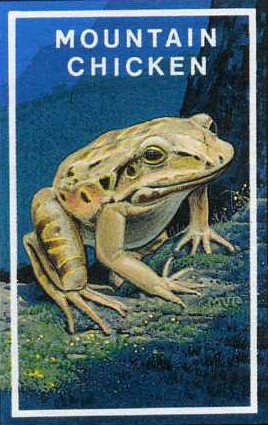
    The Mountain Chicken isn’t a fowl, as its name suggests, but a frog. Kimisha Thomas, hailing from the Caribbean island nation of Dominica, remembers a time when she could find these amphibians or ‘crapaud’ as locals call them “just in the backyard”. Known also as the Giant Ditch Frog, these creatures form a crucial part of Dominica’s national identity, with locals consuming them on special occasions like Independence Day. Today, hunting mountain chicken is banned, as the frogs are fighting for their survival. In fact, scientists estimate that their numbers have dwindled down to just 8,000 individuals. Locals first started noticing that the frogs were behaving abnormally about a decade ago, showing signs of lethargy as well as abrasions on their skin. “Then they began to die,” explained Thomas, an officer with Dominica’s environment ministry. “People also started to get scared, fearing that eating crapauds would make them ill,” she adds. In fact, this fear was not far from the truth; preliminary research has found that Chytridiomycosis, an infectious disease that affects amphibians, was the culprit for the wave of deaths. Besides the mountain chicken, there has been a sharp decline in the population of the sisserou parrot, which is found only in Dominica, primarily in the country’s mountainous rainforests. Thomas says large-scale destruction of the bird’s habitat is responsible for its gradual disappearance from the island. Dominica is not alone in grappling with such a rapid loss of species. According to the Red List of Threatened Species, one of the most comprehensive inventories on the conservation status of various creatures, some 2,599 of 71,576 species recently studied are thought to be endangered.

    The Mountain Chicken isn’t a fowl, as its name suggests, but a frog. Kimisha Thomas, hailing from the Caribbean island nation of Dominica, remembers a time when she could find these amphibians or ‘crapaud’ as locals call them “just in the backyard”. Known also as the Giant Ditch Frog, these creatures form a crucial part of Dominica’s national identity, with locals consuming them on special occasions like Independence Day. Today, hunting mountain chicken is banned, as the frogs are fighting for their survival. In fact, scientists estimate that their numbers have dwindled down to just 8,000 individuals. Locals first started noticing that the frogs were behaving abnormally about a decade ago, showing signs of lethargy as well as abrasions on their skin. “Then they began to die,” explained Thomas, an officer with Dominica’s environment ministry. “People also started to get scared, fearing that eating crapauds would make them ill,” she adds. In fact, this fear was not far from the truth; preliminary research has found that Chytridiomycosis, an infectious disease that affects amphibians, was the culprit for the wave of deaths. Besides the mountain chicken, there has been a sharp decline in the population of the sisserou parrot, which is found only in Dominica, primarily in the country’s mountainous rainforests. Thomas says large-scale destruction of the bird’s habitat is responsible for its gradual disappearance from the island. Dominica is not alone in grappling with such a rapid loss of species. According to the Red List of Threatened Species, one of the most comprehensive inventories on the conservation status of various creatures, some 2,599 of 71,576 species recently studied are thought to be endangered.

    Compiled by the International Union for the Conservation of Nature (IUCN), the Red List aims to increase the number of species assessed to 160,000 by 2020. But even with only half the world’s biological species included in the index, the forecast is bleak.

    While the extinction or threat of extinction of thousands of species poses huge challenges across the board, tribal and indigenous communities are generally first to feel the impacts, and will likely bear the economic and cultural brunt of such losses.

    As Thomas points out, “The crapaud was our national dish. The sisserou parrot [also known as the Imperial Amazon] sits right in the middle of our national flag. Their loss means the loss of our very cultural identity.”

    A similar refrain can be heard among the Parsi community of India, whose culture dictates that the dead be placed in high structures, called ‘towers of silence’, that they may be consumed by birds of prey: kites, vultures and crows. The unique funeral rites are an integral part of the Zoroastrian faith, which stipulates that bodies be returned to nature.

    But over the past two decades, 99 percent of India’s vultures have disappeared, making it impossibly difficult for the Parsi community to keep up with a centuries-old tradition.

    Rising economic burden

    Besides severely affecting ancient cultural and spiritual practices, the disappearance of various species is also taking an economic toll on indigenous communities according to 65-year-old Anil Kumar Singh, who was born and raised in the village of Chirakuti in India’s northeastern hill districts.

    Singh says that as a child, he never saw a doctor for minor ailments like the common cold or an upset stomach.
    We used Vishalyakarni [a herb] for pains and cuts. We drank the juice of basak leaves (adhatoda vasica) for a cough and used the extract from lotus flowers for dysentery,” he tells IPS.
    “But today, these plants don’t grow here anymore. Even when we try, they die out soon and we don’t know the reason. We now have to buy medicines from a chemist’s shop for everything,” he asserts.

    Sometimes, the cost is much higher. Northern Indian states like Haryana and Uttar Pradesh have experienced an explosion in the population of stray dogs, giving rise to health risks among locals.

    By way of explanation, Neha Sinha, advocacy and policy officer of the Bombay Natural History Society in India (BNHS), a Mumbai-based conservation charity, tells IPS that the phenomenon of increasingly feral dogs can be traced to Indian farmers’ practice of leaving dead cattle out in the open to be consumed by birds of prey.

    With no vultures to pick the beasts clean, dogs are now getting to the carcasses, growing more and more vicious and resorting to attacks on humans. BNHS is currently breeding vultures in captivity in order to prevent their complete extinction, but it is unlikely the birds will regain their numbers from 20 years ago.

    Meanwhile, according to a study by Birdlife International, the population of feral dogs in India has grown by 5.5 million due to the disappearance of vultures.

    The report says there have been “roughly 38.5 million additional dog bites and more than 47,300 extra deaths from rabies, [which] may have cost the Indian economy an additional 34 billion dollars.”

    Legal and knowledge gaps

    The near extinction of vultures in India is attributed to diclofenac, a painkiller that is often given to cows and buffalos to which vultures are allergic. Intense campaigning against use of the drug led to a government ban in 2004, but implementation of the law has been poor, and diclofenac is still widely used, according to Singh of BNHS.

    “The farmers know [the drug] is banned but they continue to use it because the law is not being enforced,” she said.

    In several other cases, communities are left confused as to the reasons behind species loss, making it increasingly hard to settle on a solution. For instance, even after a decade of seeing their unique creatures vanish, Dominica still does not know what brought the Chytridiomycosis fungus to their soil, or how to deal with it.

    This knowledge gap is a double whammy for indigenous communities, whose lives and livelihoods depend heavily on the species they have lived side by side with for millennia.

    Lucy Mulenekei, executive director of the Indigenous Information Network (IIN), tells IPS on the sidelines of the 12th meeting of the Conference of the Parties to the Convention on Biological Diversity (COP 12), currently underway in Pyeongchang, South Korea, that the decline in the livestock population in Kenya has affected the Maasai people, a pastoral tribe that has always relied on their herds for sustenance.

    Now forced to live off the land, the tribe is faltering.

    “The Maasai people don’t know what kind of farming tools they need, or how to use them. They don’t know what seeds to use and how to access them. There is a huge gap in knowledge and technology,” explains Mulenekei, who is Maasai herself.

    In response to the growing crisis, governments and U.N. agencies are pushing out initiatives to tackle the problem at its root.

    Carlos Potiara Castro, a technical advisor with the Brazilian environment ministry, is leading one such project in the Bailique Archipelago, 160 km from the Macapa municipality in northern Brazil, where local fisher communities are taught to conserve biodiversity. Already, community members have learned the properties of 154 medicinal plants.

    The annual cost of the project is about 50,000 dollars, but Potiara says a lot more funding will be needed in order to scale up the work and replicate such efforts around the country.

    This might soon be possible under a new initiative launched by the government of Germany together with the United Nations Development Programme (UNDP) and the Global Environment Facility (GEF), which offers 12.3 million euros over a period of five years to indigenous communities in over 130 countries to help them conserve protected areas.

    Yoko Watanabe, a senior biodiversity specialist at the natural resources team of the GEF Secretariat, tells IPS the grants will also cover the cost of trainings, to pass on necessary skills to indigenous communities who are recognised as “indispensable to biodiversity conservation.”

    Source: IPS, 16 October 2014

    Vanishing Species: Local Communities Count their Losses
  • Tussen 1970 en 2010 zijn de zoogdier-, vogel-, amfibie-, reptiel- en vispopulaties wereldwijd met 52 procent gekrompen

    Tussen 1970 en 2010 zijn de zoogdier-, vogel-, amfibie-, reptiel- en vispopulaties wereldwijd met 52 procent gekrompen

    Met name in arme landen is de biodiversiteit sterk afgenomen. Dat blijkt uit onderzoek van het Wereldnatuurfonds. Het Wereldnatuurfonds presenteert de onderzoeksresultaten in het ‘2014 Living Planet Report‘. Het rapport – dat elke twee jaar verschijnt – richt zich op drie gebieden: de populaties van meer dan tienduizend gewervelde soorten, de menselijke ecologische voetafdruk (consumptie van goederen, productie van broeikasgassen) en de bestaande biocapaciteit (de natuurlijke bronnen die we gebruiken om onder meer drinkwater en voedsel te produceren). “Er is heel veel data te vinden in dit rapport en dat kan overweldigend en complex lijken,” erkent Jon Hoekstra, werkzaam bij WWF. “Wat niet gecompliceerd is, zijn de duidelijke trends die we zien: 39 procent van de wilde dieren op het land is verdween, 39 procent van de wilde dieren in het water is verdwenen, 76 procent van de wilde dieren in zoet water is verdwenen en dat allemaal in de afgelopen veertig jaar.”

    Met name in arme landen is de biodiversiteit sterk afgenomen. Dat blijkt uit onderzoek van het Wereldnatuurfonds. Het Wereldnatuurfonds presenteert de onderzoeksresultaten in het ‘2014 Living Planet Report‘. Het rapport – dat elke twee jaar verschijnt – richt zich op drie gebieden: de populaties van meer dan tienduizend gewervelde soorten, de menselijke ecologische voetafdruk (consumptie van goederen, productie van broeikasgassen) en de bestaande biocapaciteit (de natuurlijke bronnen die we gebruiken om onder meer drinkwater en voedsel te produceren). “Er is heel veel data te vinden in dit rapport en dat kan overweldigend en complex lijken,” erkent Jon Hoekstra, werkzaam bij WWF. “Wat niet gecompliceerd is, zijn de duidelijke trends die we zien: 39 procent van de wilde dieren op het land is verdween, 39 procent van de wilde dieren in het water is verdwenen, 76 procent van de wilde dieren in zoet water is verdwenen en dat allemaal in de afgelopen veertig jaar.”

    Koolstof
    Naast de afname van het aantal organismen wereldwijd wijst het rapport ook uit dat de hoeveelheid koolstof in de atmosfeer gestegen is naar een niveau dat in ieder geval in de afgelopen één miljoen jaar zijn weerga niet kent. Het leidt tot klimaatverandering die reeds wankelende ecosystemen een extra duwtje geeft. Ook de toenemende waterschaarste komt aan bod.

    Rijk versus arm
    Wat opvalt in het rapport is dat de mensen in rijke landen in toenemende mate meer consumeren dan de aarde per hoofd te bieden heeft. In landen met gemiddelde of lage inkomens is de ecologische voetafdruk per hoofd amper groter geworden. Ironisch genoeg gaat het met de dieren in de rijke landen beter dan met de dieren in de arme landen. Gemiddeld is de biodiversiteit in rijke landen met zo’n tien procent toegenomen, terwijl deze in arme landen – waar dus per hoofd minder geconsumeerd wordt – afneemt. “Rijke landen gebruiken vijf keer meer natuurlijke hulpbronnen dan arme landen, maar de arme landen zien de meeste ecosystemen verloren gaan,” stelt onderzoeker Keya Chatterjee. “Eigenlijk besteden de rijke landen het uitputten van de natuurlijke hulpbronnen uit.”

    Hoewel de trends volgens WWF duidelijk zijn, wil dat niet zeggen dat er geen weg terug meer is. Het is nog niet te laat, zo stelt men in het rapport. Maar dan moeten er wel snel maatregelen worden genomen. Zo is het zaak dat we versneld overstappen op een slimmere en en duurzamere vorm van voedsel- en energieproductie. Ook moeten we onze ecologische voetafdruk verkleinen.
    Bron: Scientias,30-09-14

    Aarde is in 40 jaar tijd de helft van haar wilde dieren kwijtgeraakt

  • The world’s largest frog and Chile’s largest amphibian faces extinction

    The world’s largest frog and Chile’s largest amphibian faces extinction

    Calyptocephalella gayi, or the Chilean helmeted bull is the world’s largest frog and Chile’s largest amphibian. It measures around twenty centimeters in length and weighing over one kilo (roughly 2..2 lbs). It can only be found in this country and in 2008 it was listed on the Red List of Threatened Species compiled by the International Union for Conservation of Nature (IUCN). Experts now believe it could take as little as two decades for the species, which has been in existence since before the American continent was formed, to be wiped out completely.The frog was referred to under a different name until experts recently noted the strong similarity between a fossil genus of a Calyptocephalella gayi, which they believed to be extinct, and the twenty centimeter frog which can be found today in Chile. This observation brought the species out of extinction, with experts referring to the creature as a “living fossil,”yet is has swiftly become categorized as a “vulnerable” species, which is Chile’s penultimate category before extinction.

    Calyptocephalella gayi, or the Chilean helmeted bull is the world’s largest frog and Chile’s largest amphibian. It measures around twenty centimeters in length and weighing over one kilo (roughly 2..2 lbs). It can only be found in this country and in 2008 it was listed on the Red List of Threatened Species compiled by the International Union for Conservation of Nature (IUCN). Experts now believe it could take as little as two decades for the species, which has been in existence since before the American continent was formed, to be wiped out completely.The frog was referred to under a different name until experts recently noted the strong similarity between a fossil genus of a Calyptocephalella gayi, which they believed to be extinct, and the twenty centimeter frog which can be found today in Chile. This observation brought the species out of extinction, with experts referring to the creature as a “living fossil,”yet is has swiftly become categorized as a “vulnerable” species, which is Chile’s penultimate category before extinction.

    Human interference in the frog’s natural habitat has drastically reduced the species’ numbers in recent years, with activities such as felling, cultivation of land and the rearing of livestock causing fatal ecosystem degradation.

    The frog’s size has also aided its own downfall, as it proffers enough flesh to be sold as a delicacy in regions across Chile. The introduction of foreign species such as Xenopus laevis has also contributed to the decline in numbers, as they bear a fungus fatal to the Super Frog.

    Few measures are currently being taken by the Chilean authorities to prevent the crisis the species is facing. Whilst hunting is prohibited by law, farmers are known to evade prosecution by claiming to rear the frogs in order to sell them rather than to slaughter them. Strategic attempts to disseminate colonies into Argentina have also proved unsuccessful.

    Experts say that the survival of the species would prove beneficial for the whole ecosystem. The wide-mouthed toad is a great source of pest control, without which farmers could find themselves confronting plagues of insects, such as mosquitos, and/or parasites.

    The species’ disappearance would further affect agriculture as the frog’s song has become a useful tool for farmers, who recognise that their song anticipates rainfall.

    Experts recommend that educating and disseminating information about the Calyptocephalella gayi, and how to preserve their habitat is the only way to prevent the impending extinction.

    Source: I Love Chile News, 17 September 2014
    http://www.ilovechile.cl/2014/09/17/chiles-largest-amphibian-face-extinction/119905

  • The dramatic decline of amphibians – an alarm call for us that something is drastically wrong with the environment

    The dramatic decline of amphibians – an alarm call for us that something is drastically wrong with the environment

    Since the 1980s, there has been a worldwide decline in the population of amphibians – frogs, toads and salamanders. For a while, biologists were skeptical that these declines were anything more than natural variations. However, study after study has revealed that the amphibian decline is a real and severe threat to biodiversity. Roughly half of amphibian species have decreasing populations, a third are globally threatened, and almost 500 species are critically endangered. The causes for this dramatic die-off appear to be varied. Some studies have concluded that farm pesticides are a major culprit. Other studies have identified a type of chytrid fungus that causes skin infections as a major contributor to the worldwide decline.

    Since the 1980s, there has been a worldwide decline in the population of amphibians – frogs, toads and salamanders. For a while, biologists were skeptical that these declines were anything more than natural variations. However, study after study has revealed that the amphibian decline is a real and severe threat to biodiversity. Roughly half of amphibian species have decreasing populations, a third are globally threatened, and almost 500 species are critically endangered. The causes for this dramatic die-off appear to be varied. Some studies have concluded that farm pesticides are a major culprit. Other studies have identified a type of chytrid fungus that causes skin infections as a major contributor to the worldwide decline.

    The global decline in bee populations has attracted enormous attention in no small part because bees play a critical role in the agricultural economy. Frogs are in fact important in medical research, but nevertheless don’t have the economic impact of bees.

    Still, there are two important reasons that we should all be concerned about the decline in amphibian populations. One is that they play an integral role in many ecosystems around the world keeping them in balance both as predator and as prey. In our own gardens, a single toad eats about 10,000 insects over the course of a summer.

    More critically, amphibians are a key bioindicator. They have been around for 250 million years and have survived everything the Earth has subjected them to. Their sudden precipitous decline should serve as an alarm call for us that something is drastically wrong with the environment.

    Source: Poughkeepsie Journal, 24 August 2014
    http://www.poughkeepsiejournal.com/story/tech/science/environment/2014/08/24/earth-wise-save-amphibians/14396219

  • Massive tadpole die-off caused by ranavirus infection

    Massive tadpole die-off caused by ranavirus infection

    More than 200,000 wood frog tadpoles died within 21 hours last year at a pond in Nat Wheelwright’s backyard in Brunswick, in what may be the largest and fastest mass death of tadpoles ever reported. The Bowdoin College biology professor is trying to find out why. This year, the wood frogs came back to Nat Wheelwright’s pond, but there were no 1-year-old frogs breeding and the number of tadpoles was lower than previous years. “It was something I had never seen before,” said Wheelwright, who has studied the frogs in his yard for 28 years. “It was like a nuclear bomb went off.” The tadpoles were covered with red hemorrhages and tested positive for ranavirus, which likely caused the die-off, said Wheelwright.

    More than 200,000 wood frog tadpoles died within 21 hours last year at a pond in Nat Wheelwright’s backyard in Brunswick, in what may be the largest and fastest mass death of tadpoles ever reported. The Bowdoin College biology professor is trying to find out why. This year, the wood frogs came back to Nat Wheelwright’s pond, but there were no 1-year-old frogs breeding and the number of tadpoles was lower than previous years. “It was something I had never seen before,” said Wheelwright, who has studied the frogs in his yard for 28 years. “It was like a nuclear bomb went off.” The tadpoles were covered with red hemorrhages and tested positive for ranavirus, which likely caused the die-off, said Wheelwright.

    Ranavirus infects cold-blooded animals and is transmitted through groups, not just individuals. Besides the hemorrhages and slight bloating, the virus causes tadpoles to become lethargic and spend more time on the surface, making them more vulnerable to predators.The infection has been linked to the decline of amphibians worldwide, including in the United Kingdom and Canada. Wheelwright and ranavirus researchers at the University of Tennessee, who helped diagnose the infection, published a report of the case in a recent issue of “Herpetological Review.”

    Wheelwright discovered the dying tadpoles in June 2013 during a morning swim in the pond. His wife had noted the day before that it had more wood frog tadpoles than usual.

    “This happened lightning fast, I don’t think it spread one-by-one,” Wheelwright said. “There must have been a low level of the infection in the tadpoles already.”

    Despite the large die-off, Wheelwright said, the species is not in danger of extinction.

    “It’s an abundant species so it’s not an immediate concern,” he said, while noting that regional populations can be hurt if there are continuous die-offs.

    “The die-off is significant; however, in warm weather, we do see mass mortalities of wood frogs from ranavirus in some years,” Dr. Aram Calhoun, a professor of wetlands ecology at the University of Maine at Orono, said in an email. “We don’t know enough about the synergistic effects of all the stressors in a frog’s environment.”

    Calhoun said that researchers are concerned about these issues and UMaine is using a four-year National Science Foundation research grant to study the effects of urbanizing landscapes on pool-breeding amphibians.

    “Dr. Wheelright is correct in saying we need more vigilance and should encourage our citizen science base to monitor pools,” Calhoun said.

    “However, these events happen quickly and in our experience, the carcasses are scavenged in less than 24 hours so people could easily miss die-off events.”

    In a video, Wheelwright said to think about the significance of the die-off as “200,000 people, the size of Hartford, Connecticut, going belly up overnight.”

    This year, Wheelwright said that the wood frogs came back to the pond, but there were no one-year-old frogs breeding and the number of tadpoles was lower than previous years.

    “It’s definitely something that we should be monitoring,” he said.

    Dr. Phillip deMaynadier, a Maine Department of Inland Fisheries & Wildlife amphibian specialist, could not be reached for comment.

    Source: Portland Press Herald, 31 July 2014

    Bowdoin biologist investigates tadpole die-off

  • Invertebrate numbers have fallen by nearly half over the last 35 years

    Invertebrate numbers have fallen by nearly half over the last 35 years

    The world’s soaring human population has slashed the numbers of creepy crawlies a study has found. However, researchers say the demise of slugs, spiders and worms is not good news for us humans and could spark an explosion in pests. The study, published in the journal Science, revealed that as the human population has doubled over the last 35 years to now stand at more than seven billion, invertebrate numbers have fallen by nearly half over the same period. Experts fear this could have an effect on ecosystems as insects, spiders, crustaceans slug and worms play an important role in pollinating crops, pest control, decomposition and ensuring soil remains packed with nutrients, as well as water filtration. In the UK these two factors caused a massive reduction in the number of beetles, butterflies, bees and wasps, a 30-60 percent fall over 40 years, according to the study.

    The world’s soaring human population has slashed the numbers of creepy crawlies a study has found. However, researchers say the demise of slugs, spiders and worms is not good news for us humans and could spark an explosion in pests. The study, published in the journal Science, revealed that as the human population has doubled over the last 35 years to now stand at more than seven billion, invertebrate numbers have fallen by nearly half over the same period. Experts fear this could have an effect on ecosystems as insects, spiders, crustaceans slug and worms play an important role in pollinating crops, pest control, decomposition and ensuring soil remains packed with nutrients, as well as water filtration. In the UK these two factors caused a massive reduction in the number of beetles, butterflies, bees and wasps, a 30-60 percent fall over 40 years, according to the study.

    Experts warned that fewer insects would have a huge effect on crop production as up to 75 per are pollinated by insects, amounting to around 10 per cent of the world’s food supply.
    And the cost of pest control without natural predators could be more than £2.6 billion pounds in the United States alone.
    Scientists also fear the consequences of a world with fewer birds and insects to recycle and move nutrients, and say it would result in a less reliable food supply.
    With fewer amphibians it is also feared that we could end up with more algae clogging up our water supply.
    Decreasing invertebrate numbers are also known to compromise food production due to reduced pollination, seed dispersal and insect predation but the impact the continuing loss of animals, including invertebrates, has on the spread of human disease needs to be better understood as a priority.
    Dr Ben Collen, from University College London’s Biosciences Department, said: “We were shocked to find similar losses in invertebrates as with larger animals, as we previously thought invertebrates to be more resilient.
    “While we don’t fully understand what the long-term impact of these declining numbers will be, currently we are in the potentially dangerous position of losing integral parts of ecosystems without knowing what roles they play within it.
    “Prevention of further declines will require us to better understand what species are winning and losing in the fight for survival and from studying the winners, apply what we learn to improve conservation projects.
    “We also need to develop predictive tools for modelling the impact of changes to the ecosystem so we can prioritise conservation efforts, working with governments globally to create supportive policy to reverse the worrying trends we are seeing.”
    Lead author Prof Rodolfo Dirzo, of Stanford Woods Institute for the Environment in the US, added: “Where human density is high, you get high rates of defaunation, high incidence of rodents, and thus high levels of pathogens, which increases the risks of disease transmission.
    “Who would have thought that just defaunation would have all these dramatic consequences, but it can be a vicious circle.
    “We tend to think about extinction as loss of a species from the face of Earth, and that’s very important, but there’s a loss of critical ecosystem functioning in which animals play a central role that we need to pay attention to as well.
    “Ironically, we have long considered that defaunation is a cryptic phenomenon, but I think we will end up with a situation that is non-cryptic because of the increasingly obvious consequences to the planet and to human well-being.”

    Source: Telegraph, 25 July 2014
    http://www.telegraph.co.uk/earth/wildlife/10989198/Creepy-crawlies-decline-as-human-population-soars.html

  • US-Behörde verbietet bienengefährliche Neonicotinoide

    US-Behörde verbietet bienengefährliche Neonicotinoide

    Der US Government Fish and Wildlife Service hat soeben für alle Naturschutzgebiete im Zuständigkeitsbereich der Behörde ein Verbot von GV-Pflanzen und Neonicotinoide ausgesprochen. Es ist die erste derartige Entscheidung einer staatlichen Behörde der USA. Die im Jahr 1940 ins Leben gerufene Behörde ist für über 560 Naturschutzgebiete und Tausende anderer besonders geschützter Gebiete mit einer Gesamtfläche von rund 60 Millionen Hektar in den USA zuständig. Außerdem betreibt sie 70 Fischbrutbetriebe und unterhält 65 Büros für Fischereiressourcen. »Wir haben entschieden, dass der prophylaktische Einsatz, beispielsweise die Behandlung des Saatguts mit Neonicotinoiden, die sich systemisch in der Pflanze verteilen und ein breites Spektrum von Nicht-Zielarten beeinträchtigen können, mit der Politik des Service nicht vereinbar ist«, schrieb James Kurth, der Chef des National Wildlife Refuge System, am 17. Juli in einem Memorandum. Das landesweite Verbot der Neonicotinoide folgt auf Verbote der Behörde in den Bundesstaaten Washington, Oregon, Idaho, Hawaii und den Pazifikinseln.

    Der US Government Fish and Wildlife Service hat soeben für alle Naturschutzgebiete im Zuständigkeitsbereich der Behörde ein Verbot von GV-Pflanzen und Neonicotinoide ausgesprochen. Es ist die erste derartige Entscheidung einer staatlichen Behörde der USA. Die im Jahr 1940 ins Leben gerufene Behörde ist für über 560 Naturschutzgebiete und Tausende anderer besonders geschützter Gebiete mit einer Gesamtfläche von rund 60 Millionen Hektar in den USA zuständig. Außerdem betreibt sie 70 Fischbrutbetriebe und unterhält 65 Büros für Fischereiressourcen. »Wir haben entschieden, dass der prophylaktische Einsatz, beispielsweise die Behandlung des Saatguts mit Neonicotinoiden, die sich systemisch in der Pflanze verteilen und ein breites Spektrum von Nicht-Zielarten beeinträchtigen können, mit der Politik des Service nicht vereinbar ist«, schrieb James Kurth, der Chef des National Wildlife Refuge System, am 17. Juli in einem Memorandum. Das landesweite Verbot der Neonicotinoide folgt auf Verbote der Behörde in den Bundesstaaten Washington, Oregon, Idaho, Hawaii und den Pazifikinseln.

    Laut Dr. Henk Tennekes, einem niederländischen Toxikologen und Experten über die Auswirkungen der Neonicotinoide, sind »die derzeit verwendeten Neonicotinoid-Insektizide wasserlöslich (hydrophil), sie gelangen in die gesamte Pflanze. Ihr scheinbarer Vorteil besteht darin, dass die angewendeten Konzentrationen viel geringer sind als bei traditionell angewendeten Insektiziden. Doch Nicht-Ziel-Insekten wie Honigbienen oder Schmetterlinge, die kontaminierte Pollen oder den Nektar der Pflanzen einsammeln, werden vergiftet. Darüber hinaus können Neonicotinoide vom Boden ins Grundwasser gelangen und ganz allgemein eine Gefahr für Nicht-Ziel wirbellose Tiere darstellen.« Das ist noch nicht alles; denn die Wirkung erstreckt sich auf die gesamte Nahrungskette. Wie Tennekes erklärt, reduziert die Schädigung oder das Töten von Nicht-Ziel-Insekten und anderen Gliederfüßern die »Nahrung für höhere Organismen. Wird ein Glied in der Nahrungskette gebrochen, können alle Organismen oberhalb der Bruchstelle vom Aussterben bedroht sein.«

    Am 31. Januar 2013 empfahl die EU-Kommission, drei Neonicotinoid-Pestizide ab dem 1. Juli 2013 bis spätestens zum Juli 2015 vom Markt zu nehmen. Dabei handelte es sich um Clothianidin und Imidacloprid von Bayer und Thiamethoxam von Syngenta. Die Kommission fällte diese Entscheidung damals gegen den Widerstand der deutschen und der britischen Regierung.

    Im Juni 2014 veröffentlichte die Task Force on Systemic Pesticides [eine 2009 gegründete Arbeitsgruppe von Wissenschaftlern] ihr sogenanntes »Worldwide Integrated Assessment« (WIA, weltweite integrierte Beurteilung), in dem signifikante Schäden an Bienen und Umwelt durch die verbreitete Anwendung von Neonicotinoiden (Neonics) dokumentiert werden. Wie im Bericht betont wird, sind Neonics und deren Abbauprodukte schon in sehr niedrigen Konzentrationen dauerhaft schädlich.

    Die Wissenschaftler verwiesen auf erhebliche Schlupflöcher, insbesondere in den Verordnungen der US-Umweltbehörde, mit deren Hilfe die Neonicotinoide Anfang der 1990er Jahre auf den Markt gebracht werden konnten. Für die Studie wurden mehr als 800 expertenbegutachtete wissenschaftliche Veröffentlichungen konsultiert.

    Der Bericht der Task Force bestätigt Tennekes Warnung. Abschließend heißt es dort: »Die Studie zeigt, dass Neonicotinoide und Fipronil ein breites Spektrum lebender Organismen beeinträchtigen. Landbewohnende Nicht-Wirbeltiere, wie beispielsweise Regenwürmer, und Bestäuber, wie Bienen und Schmetterlinge, sind am stärksten betroffen. Die genannten Pestizide zeigen auch Wirkung auf wasserbewohnende Nicht-Wirbeltiere, Vögel, Fische, Amphibien und Mikroben. Gegenwärtig vorliegende Daten reichen zur Beurteilung der Wirkung auf Säugetiere oder Reptilien nicht aus … Neonicotinoide und Fipronil sind hochgradig nervenschädigende Substanzen. Sie sind hartnäckig und akkumulieren in Böden, Sedimenten, Wasser sowie behandelten und nicht behandelten Vegetationen.«

    Quelle: F. William Engdahl im Kopp Verlag, 11.08.14
    http://info.kopp-verlag.de/medizin-und-gesundheit/gesundes-leben/f-william-engdahl/us-behoerde-verbietet-bienengefaehrliche-neonicotinoide.html

  • Michiel van Geelen (Greenpeace): Imidacloprid debacle toont symptomen van falend beleid

    Michiel van Geelen (Greenpeace): Imidacloprid debacle toont symptomen van falend beleid

    Onlangs verscheen de zoveelste studie waaruit blijkt dat het gebruik van toegelaten, en dus veilig bevonden, bestrijdingsmiddelen toch schadelijke effecten heeft. Al in 2010 ontdekte de Nederlandse toxicoloog Henk Tennekes dat neonicotinoïden zoals het veel gebruikte imidacloprid bij langere blootstelling letale effecten kunnen veroorzaken bij lage concentraties. Hij waarschuwt sindsdien voor de ernstige achteruitgang van vele soorten insecten en andere ongewervelden en de indirecte effecten hiervan op andere diersoorten. De voorspellingen van Tennekes werden bevestigd door een mei vorig jaar verschenen studie van de Universiteit van Utrecht, waaruit een sterk verband bleek tussen de normoverschrijding van imidacloprid in het oppervlaktewater en de verminderde aanwezigheid van aquatische insecten zoals libellen, waterjuffers en eendagsvliegen. Het meest recente onderzoek werd uitgevoerd door de Radboud universiteit en gepubliceerd in het wetenschappelijke tijdschrift Nature, en liet een sterke correlatie zien tussen de concentratie imidacloprid in oppervlaktewater en de achteruitgang van de vogelstand. Volgens Greenpeace gaat het hierbij niet om incidenten maar om symptomen van een falend toelatingsbeleid. Keer op keer blijkt men de risico’s van pesticiden voor mens en natuur te onderschatten, terwijl het risicobeperkende effect van steeds complexere gebruiksvoorschriften juist wordt overschat. Dit wijst op structurele tekortkomingen van de huidige procedures voor risicoanalyse en toelating van bestrijdingsmiddelen.

    Onlangs verscheen de zoveelste studie waaruit blijkt dat het gebruik van toegelaten, en dus veilig bevonden, bestrijdingsmiddelen toch schadelijke effecten heeft. Al in 2010 ontdekte de Nederlandse toxicoloog Henk Tennekes dat neonicotinoïden zoals het veel gebruikte imidacloprid bij langere blootstelling letale effecten kunnen veroorzaken bij lage concentraties. Hij waarschuwt sindsdien voor de ernstige achteruitgang van vele soorten insecten en andere ongewervelden en de indirecte effecten hiervan op andere diersoorten. De voorspellingen van Tennekes werden bevestigd door een mei vorig jaar verschenen studie van de Universiteit van Utrecht, waaruit een sterk verband bleek tussen de normoverschrijding van imidacloprid in het oppervlaktewater en de verminderde aanwezigheid van aquatische insecten zoals libellen, waterjuffers en eendagsvliegen. Het meest recente onderzoek werd uitgevoerd door de Radboud universiteit en gepubliceerd in het wetenschappelijke tijdschrift Nature, en liet een sterke correlatie zien tussen de concentratie imidacloprid in oppervlaktewater en de achteruitgang van de vogelstand. Volgens Greenpeace gaat het hierbij niet om incidenten maar om symptomen van een falend toelatingsbeleid. Keer op keer blijkt men de risico’s van pesticiden voor mens en natuur te onderschatten, terwijl het risicobeperkende effect van steeds complexere gebruiksvoorschriften juist wordt overschat. Dit wijst op structurele tekortkomingen van de huidige procedures voor risicoanalyse en toelating van bestrijdingsmiddelen.

    Vorige maand nog concludeerde de ‘taskforce on systemic pesticides’ op basis van een analyse van ruim 800 wetenschappelijke artikelen, dat systemische insecticiden zoals imidacloprid nadelige effecten hebben op een breed scala aan organismen: van zoogdieren en vogels tot amfibieën en reptielen.

    Het onderzoek van de Radbouduniversiteit liet zien dat de negatieve effecten op vogels al optreden vanaf een, relatief lage, concentratie van 20 nanogram per liter water (ng/L). Ter vergelijking: van de 375 keer dat de waterschappen in 2012 een toetsbare concentratie imidacloprid hebben gemeten, was de concentratie in meer dan een derde van de gevallen hoger dan deze waarde. Imidacloprid is al lange tijd een problematische stof voor de waterkwaliteit. Jaar na jaar scoort de stof hoog in de top 10-lijstjes van probleemstoffen voor de waterkwaliteit. In Nederland kwam imidacloprid in meetbare hoeveelheden voor in 
30 procent van de 4.852 watermonsters die door waterschappen werden verzameld tussen 1998 en 2007.

    Sinds de toelating van deze stof in 1994, is sprake geweest van herhaaldelijke en forse onderschattingen van zowel de toxiciteit als de verspreiding van deze stof in het milieu. Zo heeft het College voor de toelating van gewasbeschermingsmiddelen en biociden (Ctgb) de toelatingsnorm naar aanleiding van ‘voortschrijdend inzicht’ menigmaal aan moeten passen. De eerste toelatingsnorm werd pas in 1997 
(3 jaar na de toelating!) vastgesteld op 830.000 nanogram per liter. Daarna is deze norm in de afgelopen jaren herhaaldelijk aangescherpt. De laatste keer was vorig jaar toen men op een maximale concentratie van 27 ng/L uitkwam. In totaal is de toelatingsnorm dus ruim 31.500 keer lager geworden!

    Het Ctgb negeert bovendien al jaren de laatste stand van de wetenschap met betrekking tot de verschillende manieren waarop bestrijdingsmiddelen in het oppervlaktewater terechtkomen. Deze informatie is al lange tijd bekend, maar nog steeds wordt bij risicobeoordelingen uitgegaan van drift als enig mogelijke emissieroute bij open teelten. De tegenstelling tussen aannames van het Ctgb en de overweldigende hoeveelheid onderzoeksinformatie die het tegenovergestelde aantoont, is schrikbarend.

    Uit de vele onderzoeken blijkt dat de beoordelingssystematiek niet toereikend is voor het in beeld brengen van alle risico’s. Dit vraagt om een grondige herziening van de procedures voor risicobeoordeling en toelating van middelen. Tot die tijd is een verbod op het gebruik en de verkoop van deze systemische insecticiden noodzakelijk, zoals ook al tot twee maal toe is gevraagd door een meerderheid van de Tweede Kamer.

    Greenpeace Nederland maakt zich onder meer hard voor de slimme inzet van biodiversiteit als alternatief voor het gebruik van chemische bestrijdingsmiddelen/kunstmest etcetera. Het gebruik van zeer toxische middelen zoals imidacloprid zijn fundamenteel onverenigbaar met dit streven. Deze stoffen zijn namelijk zeer schadelijk voor nuttige biodiversiteit zoals natuurlijke vijanden van landbouwplagen en bestuivende insecten (onder andere wilde bijen). Daarom roepen we overheden op zo snel mogelijk deze stoffen van de markt te halen en te investeren in de verdere ontwikkeling van gifvrije methoden.

    Geschreven door Michiel van Geelen, campagneleider Landbouw en Voedsel

    Geplaatst in Boerderij Vandaag op 25 juli 2014
    http://www.greenpeace.nl/2014/Opiniestukken/Imidaclopriddebacle-toont-symptomen-van-falend-beleid/

  • Während der letzten Jahrzehnte ist die Zahl der wirbellosen Tiere stark zurückgegangen. Das hat auch Folgen für die Menschheit

    Während der letzten Jahrzehnte ist die Zahl der wirbellosen Tiere stark zurückgegangen. Das hat auch Folgen für die Menschheit

    Während der letzten 35 Jahre ging nicht nur die Zahl großer Wirbeltiere zurück, auch Insekten und andere Wirbellose mussten vielfach Bestandseinbrüche hinnehmen: Mehr als zwei Drittel der von Biologen beobachteten Bestände an Käfern, Bienen, Muscheln oder Spinnen schrumpften durchschnittlich um knapp die Hälfte. Deutlich mehr Insektenarten in so wichtigen Gruppen wie den Bestäubern zeigten Einbußen, nur wenige Populationen würden wachsen, warnen Biologen um Ben Collen vom University College in London. Allein in Großbritannien beispielsweise – wo ein ausführliches Monitoring auch mit Bürgerbeteiligung abläuft – verschwanden 30 bis 60 Prozent aller Käfer-, Bienen-, Wespen- und Schmetterlingsbestände; dagegen verzeichnen oft so genannte landwirtschaftliche Schädlingen Zuwächse.

    Während der letzten 35 Jahre ging nicht nur die Zahl großer Wirbeltiere zurück, auch Insekten und andere Wirbellose mussten vielfach Bestandseinbrüche hinnehmen: Mehr als zwei Drittel der von Biologen beobachteten Bestände an Käfern, Bienen, Muscheln oder Spinnen schrumpften durchschnittlich um knapp die Hälfte. Deutlich mehr Insektenarten in so wichtigen Gruppen wie den Bestäubern zeigten Einbußen, nur wenige Populationen würden wachsen, warnen Biologen um Ben Collen vom University College in London. Allein in Großbritannien beispielsweise – wo ein ausführliches Monitoring auch mit Bürgerbeteiligung abläuft – verschwanden 30 bis 60 Prozent aller Käfer-, Bienen-, Wespen- und Schmetterlingsbestände; dagegen verzeichnen oft so genannte landwirtschaftliche Schädlingen Zuwächse.

    Der Verlust bei Insekten und anderen Wirbellosen wirke sich jedoch direkt negativ auf das Funktionieren von Ökosystemen oder die Ökonomie aus, so die Forscher weiter. 75 Prozent aller Nutzpflanzen sind demnach auf Insektenbestäubung angewiesen, natürliche Schädlingskontrolle durch Spinnen und andere Tiere habe einen Wert von 4,5 Milliarden US-Dollar nur in den Vereinigten Staaten – Geld, das ansonsten für Pestizide und ähnliches ausgegeben werden müsste. Viele Wirbellose sind entscheidend an Nährstoffkreisläufen beteiligt, die Böden oder die Wasserqualität erhalten und verbessern. All dies stehe auf dem Spiel, wenn die Zahl der Wirbellosen weiter zurückgehe, so die eindringliche Mahnung der Wissenschaftler.

    Quelle: Spektrum, 25.07.14
    http://www.spektrum.de/news/zahl-der-wirbellosen-halbiert/1302405