Amfibie: Algemeen

  • Pesticide Regulation amid the Influence of Industry

    Pesticide Regulation amid the Influence of Industry

    Pesticide use results in the widespread distribution of chemical contaminants, which necessites regulatory agencies to assess the risks to environmental and human health. However, risk assessment is compromised when relatively few studies are used to determine impacts, particularly if most of the data used in an assessment are produced by a pesticide’s manufacturer, which constitutes a conflict of interest. Here, we present the shortcomings of the US Environmental Protection Agency’s pesticide risk assessment process, using the recent reassessment of atrazine’s impacts on amphibians as an example. We then offer solutions to improve the risk assessment process, which would reduce the potential for and perception of bias in a process that is crucial for environmental and human health.

    Pesticide use results in the widespread distribution of chemical contaminants, which necessites regulatory agencies to assess the risks to environmental and human health. However, risk assessment is compromised when relatively few studies are used to determine impacts, particularly if most of the data used in an assessment are produced by a pesticide’s manufacturer, which constitutes a conflict of interest. Here, we present the shortcomings of the US Environmental Protection Agency’s pesticide risk assessment process, using the recent reassessment of atrazine’s impacts on amphibians as an example. We then offer solutions to improve the risk assessment process, which would reduce the potential for and perception of bias in a process that is crucial for environmental and human health.

    Source:
    MICHELLE D. BOONE, CHRISTINE A. BISHOP, LEIGH A. BOSWELL, ROBERT D. BRODMAN, JOANNA BURGER, CARLOS DAVIDSON, MICHAEL GOCHFELD, JASON T. HOVERMAN, LORIN A. NEUMAN-LEE, RICK A. RELYEA, JASON R. ROHR, CHRISTOPHER SALICE, RAYMOND D. SEMLITSCH, DONALD SPARLING, AND SCOTT WEIR
    BioScience Advance Access published September 3, 2014

  • China’s domestic population of reptiles and amphibians has dropped by a staggering 97% in the past four decades

    China’s domestic population of reptiles and amphibians has dropped by a staggering 97% in the past four decades

    China’s wildlife is vanishing at an alarming clip, a new report has found. The Middle Kingdom’s population of terrestrial vertebrates – including mammals, amphibians, birds, reptiles – has fallen by nearly one half over the past four decades, according to the World Wildlife Fund. That gloomy stat is in keeping with trends around the globe, which saw the number of vertebrates drop by 52% between 1970 and 2010, WWF said. Reptiles and amphibians took the biggest hit during the 1970-2010 period, with their numbers dropping by a staggering 97%. Likewise, numbers of forest mammals—such as musk deer and snub-nosed monkeys—fell by 78%.

    China’s wildlife is vanishing at an alarming clip, a new report has found. The Middle Kingdom’s population of terrestrial vertebrates – including mammals, amphibians, birds, reptiles – has fallen by nearly one half over the past four decades, according to the World Wildlife Fund. That gloomy stat is in keeping with trends around the globe, which saw the number of vertebrates drop by 52% between 1970 and 2010, WWF said. Reptiles and amphibians took the biggest hit during the 1970-2010 period, with their numbers dropping by a staggering 97%. Likewise, numbers of forest mammals—such as musk deer and snub-nosed monkeys—fell by 78%.

    Source: The Wall Street Journal, November 13, 2015
    http://blogs.wsj.com/chinarealtime/2015/11/13/chinas-wildlife-disappearing-new-report-says/

  • World-wide decline in amphibian populations perceived as one of the most critical threats to global biodiversity

    World-wide decline in amphibian populations perceived as one of the most critical threats to global biodiversity

    In the past three decades, declines in populations of amphibians (the class of organisms that includes frogs, toads, salamanders, newts, and caecilians) have occurred worldwide. In 2004, the results were published of the first worldwide assessment of amphibian populations, the Global Amphibian Assessment. This found that 32% of species were globally threatened, at least 43% were experiencing some form of population decrease, and that between 9 and 122 species have become extinct since 1980. As of 2010, the IUCN Red List, which incorporates the Global Amphibian Assessment and subsequent updates, lists 486 amphibian species as “Critically Endangered”. Experimental studies have shown that exposure to commonly used herbicides such as glyphosate (Tradename Roundup) or insecticides such as malathion or carbaryl greatly increase mortality of tadpoles. Additional studies have indicated that terrestrial adult stages of amphibians are also susceptible to non-active ingredients in Roundup, particularly POEA, which is a surfactant. Atrazine has been shown to cause male tadpoles of African clawed frogs to become hermaphroditic with development of both male and female organs. Such feminization has been reported in many parts of the world. While most pesticide effects are likely to be local and restricted to areas near agriculture, there is evidence from the Sierra Nevada mountains of the western United States that pesticides are traveling long distances into pristine areas, including Yosemite National Park in California.

    In the past three decades, declines in populations of amphibians (the class of organisms that includes frogs, toads, salamanders, newts, and caecilians) have occurred worldwide. In 2004, the results were published of the first worldwide assessment of amphibian populations, the Global Amphibian Assessment. This found that 32% of species were globally threatened, at least 43% were experiencing some form of population decrease, and that between 9 and 122 species have become extinct since 1980. As of 2010, the IUCN Red List, which incorporates the Global Amphibian Assessment and subsequent updates, lists 486 amphibian species as “Critically Endangered”. Experimental studies have shown that exposure to commonly used herbicides such as glyphosate (Tradename Roundup) or insecticides such as malathion or carbaryl greatly increase mortality of tadpoles. Additional studies have indicated that terrestrial adult stages of amphibians are also susceptible to non-active ingredients in Roundup, particularly POEA, which is a surfactant. Atrazine has been shown to cause male tadpoles of African clawed frogs to become hermaphroditic with development of both male and female organs. Such feminization has been reported in many parts of the world. While most pesticide effects are likely to be local and restricted to areas near agriculture, there is evidence from the Sierra Nevada mountains of the western United States that pesticides are traveling long distances into pristine areas, including Yosemite National Park in California.

    Source: Wikipedia
    https://en.wikipedia.org/wiki/Decline_in_amphibian_populations#cite_note-21

  • Tut der Freistaat Bayern nichts für den Schutz von Fischotter, Wendehals und Vergissmeinnicht, werden sie verschwinden

    Tut der Freistaat Bayern nichts für den Schutz von Fischotter, Wendehals und Vergissmeinnicht, werden sie verschwinden

    Kröte, Natter, Käfer – besonders attraktiv wirken diese Tiere auf viele Menschen nicht. Aber nach Ansicht von Naturschützern sollten diese Arten im Freistaat besonders geschützt werden. Das gilt laut Experten des Landesbundes für Vogelschutz (LBV) vor allem für das Bodensee-Vergissmeinnicht, das weltweit nur noch an Boden- und Starnberger See vorkommt. Die Fachleute fordern: Für diese Arten müsse sich Bayern besonders einsetzen.

    Kröte, Natter, Käfer – besonders attraktiv wirken diese Tiere auf viele Menschen nicht. Aber nach Ansicht von Naturschützern sollten diese Arten im Freistaat besonders geschützt werden. Das gilt laut Experten des Landesbundes für Vogelschutz (LBV) vor allem für das Bodensee-Vergissmeinnicht, das weltweit nur noch an Boden- und Starnberger See vorkommt. Die Fachleute fordern: Für diese Arten müsse sich Bayern besonders einsetzen.

    Fischotter (Lutra lutra)
    Dieses wasserliebende und wendige Tier gilt in Bayern als vom Aussterben bedroht. Dies geht zum Teil auf seine frühere Verfolgung zurück, ist aber auch die Folge einer großflächigen Zerstörung der Lebensräume des scheuen Säugers. Außerdem schaden ihm die Begradigung und der Ausbau vieler Gewässer sowie massive Eingriffe in deren Randbereiche.

    Große Hufeisennase (Rhinolophus ferrumequinum)
    Im Freistaat gibt es nur noch weniger als 150 Große Hufeisennasen. Die Fledermausart ist auf Großinsekten angewiesen und reagiert sehr empfindlich auf Pestizide in der Nahrung. Möglicherweise deshalb liegt das letzte deutsche Nest der Großen Hufeisennase am Rande eines Truppenübungsplatzes mit großen, landwirtschaftlich nicht genützten Offenlandbereichen.

    Äskulapnatter (Zamenis longissimus)
    Die größte Schlange Deutschlands ist als Symbol in der Humanmedizin bekannt: Die Natter wickelt sich um den Stab des griechischen Gottes Äskulap. In Bayern gibt es aber nur noch vier kleine, isolierte Vorkommen. Vor allem Siedlungserweiterungen in ihrem Lebensraum und Nutzungsintensivierung im Umfeld tragen zum Rückgang dieses wechselwarmen Tieres bei.

    Wechselkröte (Bufotes viridis)
    Fast zwei Drittel der „bayerischen“ Wechselkröten leben im Münchner Raum. Selbst dort gelten sie inzwischen als vom Aussterben bedroht. Vor allem große Straßenbauprojekte zerschneiden ihren Lebensraum und trennen die Populationen unüberbrückbar voneinander. Hilfreich für diese wanderfreudigen Arten sind wenig bewachsene Bahndämme oder Wege, auf denen die Wechselkröte über Nacht gut einen Kilometer zurücklegen kann.

    Wendehals (Jynx torquilla)
    Der Baumhöhlenbrüter ist ein typischer Bewohner alter Streuobstbestände. Dass diese zunehmend gerodet und durch kurzlebige Plantagenbestände ersetzt werden, macht ihm ebenso zu schaffen wie der Rückgang von Insekten und das Verschwinden magerer, kurzrasiger Jagdflächen in einer immer intensiver genutzten Agrarlandschaft.

    Blauschillernder Feuerfalter (Lycaena helle)
    Dieser Tagfalter ist in Nordbayern bereits von der Bildfläche verschwunden. Die Bedrohung geht wie so oft vom Lebensraumverlust aus: Der Blauschillernde Feuerfalter besiedelt moorige Standorte und ist an Vorkommen des Wiesenknöterichs als Raupenfraßpflanze gebunden. Die vielerorts erfolgte Entwässerung von Moor- und Feuchtgebieten und heute auch deren fortschreitende Verbuschung durch die Aufgabe der nicht mehr rentablen Nutzung verdrängt den Blauschillernden Feuerfalter.

    Bodensee-Vergissmeinnicht (Myosotis rehsteineri)
    Auch diese weltweit nur noch an Bodensee und Starnberger See vorkommende Art ist vom Aussterben bedroht. Die kleine Pflanze braucht Wasserstandsschwankungen durch die Frühjahrshochwasser, um sich am kiesigen Ufer gegen konkurrenzstärkere Pflanzen durchzusetzen. Bedroht ist sie vor allem durch Uferverbauung und die Anschwemmung von großen Treibholzmengen an den verbleibenden natürlichen Uferbereichen.

    Breitrand-Käfer (Dytiscus latissimus)
    Der Breitrand-Käfer ist der größte Vertreter der Schwimmkäfer in Europa und bevorzugt nährstoffarme Stillgewässer. Deutschlandweit wurde der Käfer an nur acht Fundorten entdeckt und gilt daher als vom Aussterben bedroht. Häufigste Ursache hierfür ist die Nährstoffanreicherung der Gewässer und die intensive Fischhaltung, mit dem damit verbundenen Wasserablassen, Kalken und Entkrauten.

    Strömer (Telestes souffia)
    Dieser karpfenartige Fisch benötigt schnellfließende, sauerstoffreiche und reich strukturierte Gewässer. Die großflächige Verbauung der Gewässer zerstört deren natürliche Dynamik, lässt die Laichplätze auf Kiesbänken verschlammen und verhindert Wanderungen. Erhalt oder Wiederherstellung der Durchgängigkeit der Gewässer ist daher entscheidend für den Schutz des Strömers, der im Donausystem vorkommt.

    Quelle: Abendzeitung, 17.05.15
    http://www.abendzeitung-muenchen.de/inhalt.vom-aussterben-bedroht-die-letzten-ihrer-art.1c8cfe8d-0220-4c52-a726-a2cdbc206791.html

  • Lethal and immunesuppressive effects of pesticides on amphibians

    Lethal and immunesuppressive effects of pesticides on amphibians

    Amphibians are sensitive to most classes of pesticides including insecticides, fungicides, and herbicides. Adult and juvenile amphibians are exposed to pesticides on land through aerial sprays for mosquitoes, forestry and agricultural pests, drift, and dermal absorption from soil and plants. Because the EPA does not require amphibian toxicity tests for pesticide registration, there are large data gaps. These data gaps are being closed by independent scientists. One experiment tested label spray rates of 7 pesticides on adults of the common frog species, Rana temporaria. Mortality ranged from 40-100%. Perhaps most surprising was the lethal effects of fungicides. Two fungicides caused 100% mortality within one hour, others showed 40-60% mortality. Three products caused 40% mortality after 7 days after 10% label rate exposure (Bruhl et al. 2013). Direct oversprayingof terrestrial life stages of several frog species with Roundup at label rates resulted in an average 79% mortality. Van Meter et al. (2014) tested pesticide absorption from soil with 5 pesticides and 7 adult frog species. Atrazine showed highest absorption and bioaccumulation, although skins were generally more permeable to fipronil. Water solubility and soil partition coefficients were good predictors of dermal absorption. Maximum label rates were applied to soil, and resulting tissue concentrations ranged from 0.019 to 14.6 µg/g (ppm) over an 8 hour period. Immune suppression can occur at tissue concentrations 300-7300 times lower.

    Amphibians are sensitive to most classes of pesticides including insecticides, fungicides, and herbicides. Adult and juvenile amphibians are exposed to pesticides on land through aerial sprays for mosquitoes, forestry and agricultural pests, drift, and dermal absorption from soil and plants. Because the EPA does not require amphibian toxicity tests for pesticide registration, there are large data gaps. These data gaps are being closed by independent scientists. One experiment tested label spray rates of 7 pesticides on adults of the common frog species, Rana temporaria. Mortality ranged from 40-100%. Perhaps most surprising was the lethal effects of fungicides. Two fungicides caused 100% mortality within one hour, others showed 40-60% mortality. Three products caused 40% mortality after 7 days after 10% label rate exposure (Bruhl et al. 2013). Direct oversprayingof terrestrial life stages of several frog species with Roundup at label rates resulted in an average 79% mortality. Van Meter et al. (2014) tested pesticide absorption from soil with 5 pesticides and 7 adult frog species. Atrazine showed highest absorption and bioaccumulation, although skins were generally more permeable to fipronil. Water solubility and soil partition coefficients were good predictors of dermal absorption. Maximum label rates were applied to soil, and resulting tissue concentrations ranged from 0.019 to 14.6 µg/g (ppm) over an 8 hour period. Immune suppression can occur at tissue concentrations 300-7300 times lower.

    Source:
    William Quarles. Common Sense Pest Control XXIX(1-4) Special Issue 2015. Box 7414, Berkeley, CA 94707

  • Frogs Are on the Verge of Mass Extinction

    Frogs Are on the Verge of Mass Extinction

    Things aren’t looking good for reptiles and amphibians lately, especially frogs. John Alroy at Macquarie University in Australia published a study last month examining recent extinctions for the two groups of animals, and the results are alarming. “About 200 frog extinctions have occurred and hundreds more [frog species] will be lost over the next century, so we are on pace to create a mass extinction,” according to the study. Alroy chose to study reptiles and amphibians partly because “there was a large amount of global data available for these groups, and partly because of a growing concern in the scientific community over the health of frog populations, which are thought to be in a state of decline in many places,” says the Washington Post. Alroy also looked at salamanders, snakes and lizards, but “he found that frogs seemed to be the most vulnerable to extinction—the results suggested that more than 3 percent of all frog species have disappeared, largely since the 1970s,” according to the Washington Post. The findings are especially alarming because the research method known as a Bayesian approach is “highly conservative,” meaning that the estimated number of past and future frog extinctions could, in fact, be even higher.

    Things aren’t looking good for reptiles and amphibians lately, especially frogs. John Alroy at Macquarie University in Australia published a study last month examining recent extinctions for the two groups of animals, and the results are alarming. “About 200 frog extinctions have occurred and hundreds more [frog species] will be lost over the next century, so we are on pace to create a mass extinction,” according to the study. Alroy chose to study reptiles and amphibians partly because “there was a large amount of global data available for these groups, and partly because of a growing concern in the scientific community over the health of frog populations, which are thought to be in a state of decline in many places,” says the Washington Post. Alroy also looked at salamanders, snakes and lizards, but “he found that frogs seemed to be the most vulnerable to extinction—the results suggested that more than 3 percent of all frog species have disappeared, largely since the 1970s,” according to the Washington Post. The findings are especially alarming because the research method known as a Bayesian approach is “highly conservative,” meaning that the estimated number of past and future frog extinctions could, in fact, be even higher.

    “Consistent with previous results, frog losses are heavy in Latin America, which has been greatly affected by the pathogenic chytrid fungus Batrachochytrium dendrobatidis,” says the paper. “Extinction rates are now four orders-of-magnitude higher than background, and at least another 6.9 percent of all frog species may be lost within the next century, even if there is no acceleration in the growth of environmental threats.” That means that reptiles and amphibians are going extinct at 10,000 times the rate of other organisms.

    “Thus, the data suggest that a runaway train of extinction is now likely to produce what would be seen as a global mass extinction on the ultimately more important landscape of geological time,” Alroy writes in the paper. It’s not surprising that frogs are especially vulnerable, though. “They’re seen as a ‘canary in the coal mine’ group because they seem to suffer large population losses more easily than other groups,” Alroy said. “What was surprising was the geographic pattern of frog extinctions.”

    Many have documented the frog losses in Central America, but Alroy found large losses in places such as Brazil, Madagascar and New Guinea—“places where there are not well-documented population losses due to anything,” Alroy said. “I think there are mass extinctions happening in the tropics that are largely undocumented.”

    As for what’s causing the mass extinctions, Alroy cautions against pointing the finger solely at climate change. “There’s a tendency in the literature to focus very strongly on the potential future impacts of climate change, specifically,” Alroy said. And while climate change is likely to be an important factor in the coming years, “this paper suggests that in the absence of really severe climate change we’ve already seen the beginning of a major mass extinction.”

    “I’m not saying we should stop looking at climate change,” he added. “I’m saying there should be additional focus on other causal factors like habitat destruction and invasive species in particular. So I’m hoping this paper will encourage more research of that kind.”

    Source: Ecowatch, October 7, 2015
    http://ecowatch.com/2015/10/07/frog-mass-extinction/

  • Current extinction rates of reptiles and amphibians

    Current extinction rates of reptiles and amphibians

    There is broad concern that a mass extinction of amphibians and reptiles is now underway. Here I apply an extremely conservative Bayesian method to estimate the number of recent amphibian and squamate extinctions in nine important tropical and subtropical regions. The data stem from a combination of museum collection databases and published site surveys. The method computes an extinction probability for each species by considering its sighting frequency and last sighting date. It infers hardly any extinction when collection dates are randomized and it provides underestimates when artificial extinction events are imposed. The method also appears to be insensitive to trends in sampling; therefore, the counts it provides are absolute minimums. Extinctions or severe population crashes have accumulated steadily since the 1970s and 1980s, and at least 3.1% of frog species have already disappeared. Based on these data and this conservative method, the best estimate of the global grand total is roughly 200 extinctions. Consistent with previous results, frog losses are heavy in Latin America, which has been greatly affected by the pathogenic chytrid fungus Batrachochytrium dendrobatidis. Extinction rates are now four orders-of-magnitude higher than background, and at least another 6.9% of all frog species may be lost within the next century, even if there is no acceleration in the growth of environmental threats.


    Source:
    John Alroy, 13003–13008, doi: 10.1073/pnas.1508681112
    http://www.pnas.org/content/112/42/13003.abstract?tab=author-info

  • Gelbbauchunke und Wechselkröte sind in Niedersachsen vom Aussterben bedroht, gut die Hälfte der 19 Amphibienarten sowie fünf von sieben Reptilien sind gefährdet

    Gelbbauchunke und Wechselkröte sind in Niedersachsen vom Aussterben bedroht, gut die Hälfte der 19 Amphibienarten sowie fünf von sieben Reptilien sind gefährdet

    Dieses verheerende Bild zeichnet die „Rote Liste“, die der NLWKN (Niedersächsischer Landesbetrieb für Wasserwirtschaft, Küsten- und Naturschutz) jetzt veröffentlicht hat. Auch in und um Lüneburg beklagen Naturschützer einen zunehmenden Rückgang der Artenvielfalt. Die Zerstörung der Lebensräume, die intensive Flächennutzung und der Klimawandel machen Laubfrosch, Zauneidechse und Co. schwer zu schaffen. Rote Listen sind Verzeichnisse ausgestorbener, verschollener und gefährdeter Tier- und Pflanzenarten. Sie werden regelmäßig aktualisiert und sind ein wichtiges Instrument des Naturschutzes. Zwar haben sie keine Rechtsverbindlichkeit, aber sie zeigen auf, wo Handlungsbedarf besteht. Die Definitionen der verschiedenen Gefährdungskategorien sind immer auch mit Handlungsaufrufen für verstärkte Schutz- und Hilfsmaßnahmen verbunden.

    Dieses verheerende Bild zeichnet die „Rote Liste“, die der NLWKN (Niedersächsischer Landesbetrieb für Wasserwirtschaft, Küsten- und Naturschutz) jetzt veröffentlicht hat. Auch in und um Lüneburg beklagen Naturschützer einen zunehmenden Rückgang der Artenvielfalt. Die Zerstörung der Lebensräume, die intensive Flächennutzung und der Klimawandel machen Laubfrosch, Zauneidechse und Co. schwer zu schaffen. Rote Listen sind Verzeichnisse ausgestorbener, verschollener und gefährdeter Tier- und Pflanzenarten. Sie werden regelmäßig aktualisiert und sind ein wichtiges Instrument des Naturschutzes. Zwar haben sie keine Rechtsverbindlichkeit, aber sie zeigen auf, wo Handlungsbedarf besteht. Die Definitionen der verschiedenen Gefährdungskategorien sind immer auch mit Handlungsaufrufen für verstärkte Schutz- und Hilfsmaßnahmen verbunden.

    „Ich möchte wirklich nicht immer nur negative Nachrichten verbreiten“, sagt Thomas Mitschke vom Nabu Lüneburg. „Aber die Situation ist dramatisch.“ Besonders gefährdet im Raum Lüneburg seien Rot- und Gelbbauchunke, Laub- und Moorfrosch. Wann sich die Lebensumstände der Amphibien so stark verschlechtert haben, kann Mitschke nicht sagen. Er selbst sei in den 60er- und 70er-Jahren in Sachsen noch mit Feuersalamandern aufgewachsen. „Die gab es damals wie Ameisen.“ Wenn sich Mitschke heute im Kreis Lüneburg an Teichen, auf Feldern und Wiesen umblickt, wimmelt häufig nichts. Das beunruhigt auch Gudrun Bardowicks, Biotop-Expertin beim Nabu Lüneburg.

    Als Grund dafür nennt sie die Zerstörung der Lebensräume: Das Leben von Salamander, Molch, Unke, Kröte und Frosch ist eng an das Wasser gebunden. Zum Ablegen ihrer Eier, auch Laich genannt, suchen die Amphibien im Frühjahr ihre Laichgewässer auf. „Sie bevorzugen warme Flachgewässer“, sagt Bardowicks. „Aber gerade die fallen durch die zunehmend heißen Sommer und mangelnde Teichpflege schnell trocken.“

    Ein weiteres großes Problem sei die intensive Landwirtschaft und der damit verbundene, großflächige Dünger- und Gifteinsatz. Dazu kommt: „Es gibt zu wenig ökologische Trittsteine.“ Oftmals befänden sich zwischen zwei Teichen riesige Feldflächen, die der intensiven Landwirtschaft ausgesetzt seien. „Nehmen wir etwa den Laubfrosch“, veranschaulicht Gudrun Bardowicks. „Der wandert während der Paarungszeit mehrere Kilometer von Teich zu Teich. Wenn die Abstände dazwischen zu groß sind, findet er keine Partner zum Ablaichen. So kann kein Genaustausch für die gesunde Arterhaltung stattfinden.“

    Neben all diesen Faktoren spielt auch die Zerstörung der Nahrungskette eine Rolle. Amphibien ernähren sich hauptsächlich von Würmern, Schnecken, Insekten und anderen Gliedertieren. Thomas Mitschke hat vor allem bei den Insekten einen spürbaren Rückgang beobachtet. Das bedeutet weniger Nahrung für Frosch und Kröte, die ihrerseits ein wichtiges Glied in der Nahrungskette darstellen. Sie stehen etwa auf dem Speiseplan des Storchs.

    Die Naturschützer beobachten diese Entwicklung mit Sorge. Eine schnelle Lösung für das Problem haben sie nicht. Aber Thomas Mitschke appelliert: „Wir brauchen mehr Naturbegeisterte, die bereit sind, sich in ihrer Freizeit für die Tiere zu engagieren.“

    Die Sensibilisierung für das Thema müsse schon in der Kindheit beginnen.
    Quelle: LZ online, 25.10.14
    http://www.landeszeitung.de/blog/lokales/196740-kroete-und-schlange-in-gefahr

  • Frogs Are on the Verge of Mass Extinction, Scientists Say

    Frogs Are on the Verge of Mass Extinction, Scientists Say

    Things aren’t looking good for reptiles and amphibians lately, especially frogs. John Alroy at Macquarie University in Australia published a study last month examining recent extinctions for the two groups of animals, and the results are alarming. “About 200 frog extinctions have occurred and hundreds more [frog species] will be lost over the next century, so we are on pace to create a mass extinction,” according to the study. “It is hard to know how many species have gone extinct so far because it is difficult to prove that something not seen recently is really gone forever,” says the paper’s summary. Alroy was inspired to conduct the study because he couldn’t find any research on the total number of species that have gone extinct. But by using what he calls a “new, highly conservative statistical method,” he was able to infer the number of extinct amphibian and reptile species across the world. Alroy chose to study reptiles and amphibians partly because “there was a large amount of global data available for these groups, and partly because of a growing concern in the scientific community over the health of frog populations, which are thought to be in a state of decline in many places,” says the Washington Post. Alroy also looked at salamanders, snakes and lizards, but “he found that frogs seemed to be the most vulnerable to extinction—the results suggested that more than 3 percent of all frog species have disappeared, largely since the 1970s,” according to the Washington Post. The findings are especially alarming because the research method known as a Bayesian approach is “highly conservative,” meaning that the estimated number of past and future frog extinctions could, in fact, be even higher.

    Things aren’t looking good for reptiles and amphibians lately, especially frogs. John Alroy at Macquarie University in Australia published a study last month examining recent extinctions for the two groups of animals, and the results are alarming. “About 200 frog extinctions have occurred and hundreds more [frog species] will be lost over the next century, so we are on pace to create a mass extinction,” according to the study. “It is hard to know how many species have gone extinct so far because it is difficult to prove that something not seen recently is really gone forever,” says the paper’s summary. Alroy was inspired to conduct the study because he couldn’t find any research on the total number of species that have gone extinct. But by using what he calls a “new, highly conservative statistical method,” he was able to infer the number of extinct amphibian and reptile species across the world. Alroy chose to study reptiles and amphibians partly because “there was a large amount of global data available for these groups, and partly because of a growing concern in the scientific community over the health of frog populations, which are thought to be in a state of decline in many places,” says the Washington Post. Alroy also looked at salamanders, snakes and lizards, but “he found that frogs seemed to be the most vulnerable to extinction—the results suggested that more than 3 percent of all frog species have disappeared, largely since the 1970s,” according to the Washington Post. The findings are especially alarming because the research method known as a Bayesian approach is “highly conservative,” meaning that the estimated number of past and future frog extinctions could, in fact, be even higher.

    “Consistent with previous results, frog losses are heavy in Latin America, which has been greatly affected by the pathogenic chytrid fungus Batrachochytrium dendrobatidis,” says the paper. “Extinction rates are now four orders-of-magnitude higher than background, and at least another 6.9 percent of all frog species may be lost within the next century, even if there is no acceleration in the growth of environmental threats.” That means that reptiles and amphibians are going extinct at 10,000 times the rate of other organisms.

    “Thus, the data suggest that a runaway train of extinction is now likely to produce what would be seen as a global mass extinction on the ultimately more important landscape of geological time,” Alroy writes in the paper. It’s not surprising that frogs are especially vulnerable, though. “They’re seen as a ‘canary in the coal mine’ group because they seem to suffer large population losses more easily than other groups,” Alroy said. “What was surprising was the geographic pattern of frog extinctions.”

    Many have documented the frog losses in Central America, but Alroy found large losses in places such as Brazil, Madagascar and New Guinea—“places where there are not well-documented population losses due to anything,” Alroy said. “I think there are mass extinctions happening in the tropics that are largely undocumented.”

    As for what’s causing the mass extinctions, Alroy cautions against pointing the finger solely at climate change. “There’s a tendency in the literature to focus very strongly on the potential future impacts of climate change, specifically,” Alroy said. And while climate change is likely to be an important factor in the coming years, “this paper suggests that in the absence of really severe climate change we’ve already seen the beginning of a major mass extinction.”

    “I’m not saying we should stop looking at climate change,” he added. “I’m saying there should be additional focus on other causal factors like habitat destruction and invasive species in particular. So I’m hoping this paper will encourage more research of that kind.”

    Source: Ecowatch, October 7, 2015
    https://ecowatch.com/2015/10/07/frog-mass-extinction/
  • Pacific Northwest tree octopus might soon disappear

    Pacific Northwest tree octopus might soon disappear

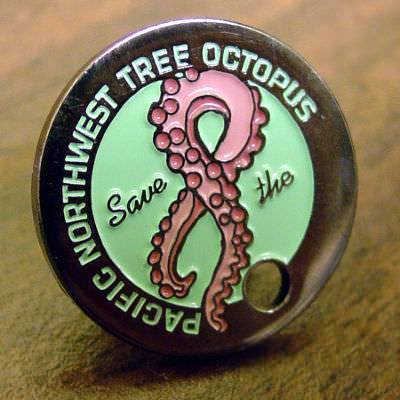
    The list of endangered or extinct species grows faster now than ever before on Earth, scientists say. Last week, another animal popular in the northwestern corner of the United States faces a similar fate. The Pacific Northwest Tree Octopus will be the newest animal added to the rapidly growing list of endangered animals. The Pacific Northwest Tree Octopus (Octopus paxarbolis) measures 30-33 centimeters as an adult and is similar in many ways to other cephalopods. Cephalopods are marine animals with a prominent head and arms or tentacles. The birth and first months of life of the Octopus paxarbolis is like every other species of octopus in that it spends all of its time in an aquatic environment. However, over millions of years of evolution, the Octopus paxarbolis has developed an amphibian-like skin that minimizes water loss. In addition, similar to how a human baby adapts to a world in air, the Octopus paxarbolis has adapted to breathing oxygen. Their lungs are not as developed as a human’s lungs. This allowed this species of octopus to live the majority of its life in trees. The lungs of an Octopus paxarbolis must maintain a flow of very moist air to be most fit. For this reason, the habitat of the Pacific Northwest Tree Octopus is limited to a small northwest corner of the United States where rainfall and humidity are abundant.

    The list of endangered or extinct species grows faster now than ever before on Earth, scientists say. Last week, another animal popular in the northwestern corner of the United States faces a similar fate. The Pacific Northwest Tree Octopus will be the newest animal added to the rapidly growing list of endangered animals. The Pacific Northwest Tree Octopus (Octopus paxarbolis) measures 30-33 centimeters as an adult and is similar in many ways to other cephalopods. Cephalopods are marine animals with a prominent head and arms or tentacles. The birth and first months of life of the Octopus paxarbolis is like every other species of octopus in that it spends all of its time in an aquatic environment. However, over millions of years of evolution, the Octopus paxarbolis has developed an amphibian-like skin that minimizes water loss. In addition, similar to how a human baby adapts to a world in air, the Octopus paxarbolis has adapted to breathing oxygen. Their lungs are not as developed as a human’s lungs. This allowed this species of octopus to live the majority of its life in trees. The lungs of an Octopus paxarbolis must maintain a flow of very moist air to be most fit. For this reason, the habitat of the Pacific Northwest Tree Octopus is limited to a small northwest corner of the United States where rainfall and humidity are abundant.

    Source: Columbia Tribune, August 26, 2015
    http://www.columbiatribune.com/arts_life/family_life/endangered-pacific-northwest-tree-octopus-might-soon-disappear/article_1c5d9e44-f3c6-5326-be8e-d6047f3663a6.html