To investigate interactions among disease, pesticides, water quality, and adjacent land cover, we collected samples of water, sediment, and frog tissue from 21 sites in 7 States in the United States (US) representing a variety of amphibian habitats. All samples were analyzed for >90 pesticides and pesticide degradates, and water and frogs were screened for the amphibian chytrid fungus Batrachochytrium dendrobatidis (Bd) using molecular methods. Pesticides and pesticide degradates were detected frequently in frog breeding habitats (water and sediment) as well as in frog tissue. Fungicides occurred more frequently in water, sediment, and tissue than was expected based upon their limited use relative to herbicides or insecticides. Pesticide occurrence in water or sediment was not a strong predictor of occurrence in tissue, but pesticide concentrations in tissue were correlated positively to agricultural and urban land, and negatively to forested land in 2-km buffers around the sites. Bd was detected in water at 45% of sites, and on 34% of swabbed frogs. Bd detections in water were not associated with differences in land use around sites, but sites with detections had colder water. Frogs that tested positive for Bd were associated with sites that had higher total fungicide concentrations in water and sediment, but lower insecticide concentrations in sediments relative to frogs that were Bd negative. Bd concentrations on frog swabs were positively correlated to dissolved organic carbon, and total nitrogen and phosphorus, and negatively correlated to pH and water temperature. Data were collected from a range of locations and amphibian habitats and represent some of the first field-collected information aimed at understanding the interactions between pesticides, land use, and amphibian disease. These interactions are of particular interest to conservation efforts as many amphibians live in altered habitats and may depend on wetlands embedded in these landscapes to survive.
Source: W.A. Battaglin et al. Science of the Total Environment 566–567 (2016) 320–332
Amfibie: Algemeen
-
Potential interactions among disease, pesticides, water quality and adjacent land cover in amphibian habitats in the US
-
The amphibian Armageddon – immune suppression by neonicotinoids is the culprit
Last month, a frog died in an Atlanta botanical garden. With it went an entire species never to hop along the Earth again. Biologists at Zoo Atlanta who’d looked after the frog for the past 12 years called him “Toughie.” He was a charismatic, glossy-eyed specimen and the very last Rabbs’ fringe-limbed tree frog in the world. Joseph Mendelson, the director of research at Zoo Atlanta, had been prepared for this. When the Rabbs’ frog was discovered in Panama in 2005, some 80 percent of the population had already been lost to disease. A few were removed in hope of a revival. Alas, the last female died in 2009. In 2012, when another male died, Toughie became the sole survivor of his kind.
Still, his death hurts, in part because of one of his beautiful biological quirks: The Rabbs’ were the only species in the world where the fathers let the babies eat the skin off their backs.
“THE WORLD HAS GOTTEN SO BAD NOW THAT EVEN THE AMPHIBIANS CAN’T TOLERATE IT.”
“Allowing tadpoles to eat a [father’s] flesh, that’s never been documented in any animal in the world,” says Mendelson. “And we lost that.”Frog like the Rabbs’ and other amphibians are dying off at an alarming rate. It’s estimated that 200 species of frogs have gone extinct since the 1970s, and many fear it’s a harbinger of greater biodiversity loss that will come for birds, fish, and mammals too.
Ecologists fear that the planet is in the midst of a mass extinction — the sixth in the long history of life on Earth. And it’s looking like amphibians are the most at-risk class of vertebrates.
This is particularly disturbing because amphibians — which include frogs, salamanders, and caecilians (they look like worms crossed with snakes) — have been around for hundreds of millions of years.
“During the great extinctions of the dinosaurs in the Pleistocene, amphibians made it through with no appreciable effect,” Mendelson says. “So they’re not the most delicate creatures in the world. But the world has gotten so bad now that even the amphibians can’t tolerate it.”
Broadly, that’s how it looks. But as with most stories of biology, this one is not so simple.
Some amphibians are revealing resilience even under significant threat. These amphibians are teaching humans critical lessons about what we need to do to protect and save more of them from extinction. To put it another way: As one frog dies, another one (the Sierra Nevada yellow-legged frog) is making a surprising comeback, offering a glimmer of hope for the amphibian Armageddon.
A great percent of the losses are due to one disease: Batrachochytrium dendrobatidis, sometimes called BD or the chytrid fungus, which is one of the biggest threats to amphibians worldwide.“The chytrid is know to infect pretty much every species of amphibian,” says Reid Harris, a biologist and director of international disease mitigation at the Amphibian Survival Alliance. Not all species succumb to it, but the ones that do die off in horrifying fashion. It’s thought that BD is the main culprit behind the 200 frog species extinctions seen in the past several decades. That’s “the greatest disease-driven loss of biodiversity ever documented,” the journal Nature reported in 2012.
Source: VOX, October 14, 2016
http://www.vox.com/science-and-health/2016/10/14/13147056/amphibian-extinction-frog-bd -
Long-term decline in common toads
Benedikt Schmidt from the University of Zurich and Silviu Petrovan from Froglife used citizen science data from the U.K. and Switzerland to assess long-term national and regional trends for one of Europe’s most abundant amphibian species, the common toad. Their findings, published in PLOS ONE, show a surprisingly severe and long-term decline in both Swiss and U.K. populations, with implications for amphibian conservation. To learn more about the study and the significance of its results, I interviewed Dr. Schmidt via email.
When did you become interested in conservation biology, and what led you to study amphibians?
BS: Even as a boy I was interested in critters, and amphibians in particular – I feel lucky to have become a professional amphibian biologist. Witnessing amphibian habitat loss and local population extinctions and reading about the global amphibian decline led me to research the conservation biology of amphibians.
Why did you decide to study the common toad instead of a more endangered species?
BS: There is already a lot of research on rare species. This is good. However, we should also make sure that common species remain common as they have an important role in ecosystems. Therefore, it makes sense to study one of Europe’s commonest amphibian species. The many volunteers involved in toad patrols also show that this species has widespread public support.
Your study relied on data from toad patrol volunteers. Could you tell us about this conservation project? What, in your opinion, are the benefits of such citizen science?
BS: Toad patrols have been in place for decades in parts of Europe, and thousands of very dedicated volunteers go out during toad migration season every spring rescuing amphibians from road traffic. This action of removing amphibians from the danger of crossing roads is probably the first large-scale amphibian conservation measure undertaken by volunteers anywhere in the world. Saving the lives of amphibians in this way is probably the beginning of large-scale amphibian conservation action, at least in Western Europe. Our study shows that the data the toad patrollers provide can be used to identify robust long-term trends over decades and across large areas. This data simply does not exist from professional surveys; for this reason, citizen-led efforts are invaluable.
One key finding was that the common toad population has declined continuously and rapidly in the U.K. and Switzerland every decade since the 1980s. Were you surprised by this finding? Why do you think the decline has occurred?
BS: There have been suggestions in the past that toads are in trouble, but this is the first time we could use such massive datasets and demonstrate large-scale declines. We were surprised at the severity of the declines and also at the fact that Swiss and British declines seemed to start at the same time, around the mid-1980s. Our data cannot explain the declines, but we suspect there are multiple factors, including increased road traffic, habitat loss and degradation in farmland and the wider countryside, and potentially climate change and amphibian diseases.
What do you see as the next steps in conservation of amphibians like the common toad? What impact do you hope your study might have?
BS: We want to draw attention to the fact that conservation should not only focus on rare species: common species deserve more attention as they can be extremely important members of ecosystems. Now that we know toads are in serious decline, we can work to identify the exact causes and find realistic measures to protect them. For example, large populations should be recognized as important for biodiversity and should get protection in the U.K. planning system as they have in Switzerland. At popular road crossing sites we would promote measures such as road tunnels to protect migrating toads. Nature-friendly schemes, such as reduced pesticide use and agri-environment farming schemes, already include certain bird species, and should now also consider toads.
Research Article: Petrovan SO, Schmidt BR (2016) Volunteer Conservation Action Data Reveals Large-Scale and Long-Term Negative Population Trends of a Widespread Amphibian, the Common Toad (Bufo bufo). PLoS ONE 11(10): e0161943. doi:10.1371/journal.pone.0161943
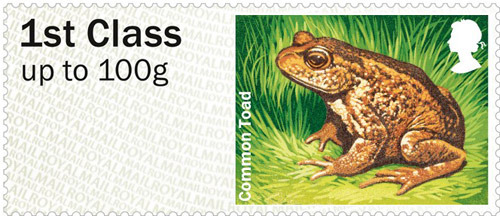
Common Toads eat invertebrates such as insects, larvae, spiders, slugs and worms, which they catch on their sticky, prehensile tongues. Larger toads may also take slow worms, small grass snakes and harvest mice, which are swallowed alive. Toads generally hunt at night and are most active in wet weather
Sources: PLOS Research News, 5 October 2016
http://researchnews.plos.org/2016/10/05/unhoppy-news-long-term-decline-in-common-toads/
Animal Corner
https://animalcorner.co.uk/animals/common-toad/ -
In Deutschland gibt es immer weniger Insekten
In Deutschland gibt es immer weniger Bienen, immer weniger Hummeln, immer weniger Schmetterlinge. Überhaupt gibt es immer weniger Insekten! Das haben Forscher aus Krefeld herausgefunden. Das ist eine Stadt im Bundesland Nordrhein-Westfalen. 25 Jahre lang haben die Forscher an bestimmten Orten Insekten gesammelt, ihre Art bestimmt und die Tiere gewogen. Das Ergebnis der Forscher: In dieser Zeit stellten sie einen Rückgang an Insekten von bis zu 80 Prozent fest. Gesammelt haben die Forscher vor allem in Nordrhein-Westfalen. Aber ihre Messungen lassen sich wohl auf ganz Deutschland übertragen, sagen Fachleute.
Insekten sind für uns Menschen wichtig. Gibt es keine Insekten mehr, ist es schwieriger, dass Äpfel wachsen, Kirschen, Erdbeeren und Gemüse. Denn in der Natur werden viele Nutzpflanzen von Insekten bestäubt, zum Beispiel von Schmetterlingen, Bienen und Schwebfliegen.
Das funktioniert so: Die Tiere ernähren sich von einer zuckrigen Flüssigkeit am Boden der Blüte, dem Nektar. Sammeln sie diesen ein, kommen sie auch mit dem Staubbeutel der Blüten in Berührung. Dort befinden sich Pollen. Diese bleiben an den Insekten haften – und düsen mit ihnen zur nächsten Blüte. Dort landet der Pollen dann auf einem bestimmten Pflanzenteil, dem Stempel. So wird die Blüte bestäubt. Es kann eine Frucht entstehen, etwa eine Erdbeere. Gleichzeitig sind Insekten auch eine Nahrungsquelle für andere Tiere.
Doch warum werden die Insekten immer weniger? Die Forscher vermuten, dass es mehrere Gründe gibt. “Eines der größten Probleme ist der Verlust des Lebensraums”, erklärt die Expertin Elisabeth Kühn. Ackerflächen werden zum Beispiel immer größer. Andererseits wachsen dort aber oft keine Pflanzen, von denen sich die Insekten ernähren könnten – zum Beispiel Wildblumen oder blühende Kräuter. “Viele Insekten leben zudem viel isolierter als früher”, sagt die Fachfrau. Das bedeutet, man findet die Tiere etwa nur noch in abgegrenzten Naturschutzgebieten. Gibt es dort dann ein Problem, kann das die ganze Art betreffen. “Zum Beispiel, wenn eine Krankheit auftritt”, erklärt Elisabeth Kühn.
Andererseits machen wohl auch bestimmte Giftstoffe den Insekten zu schaffen. Man nennt sie Insektizide. Diese werden auch auf die Pflanzen gesprüht, um Schädlinge abzuhalten.
Forscher in ganz Deutschland machen sich darüber Gedanken, wie man den Insekten helfen kann.Es werden nicht nur weniger Insekten. Es gibt auch immer weniger Arten, sagen Fachleute. Das hat unter anderem etwas mit der Landwirtschaft zu tun. Auf vielen Feldern werden Monokulturen angebaut. Das bedeutet: Auf einer Bodenfläche wird immer die gleiche Pflanzenart angebaut. Es wächst dort zum Beispiel nur noch Mais. Dann finden etwa Bienen und Schmetterlinge keinen Nektar mehr.
Bei Rapsfeldern dagegen gibt es zwar Nektar-Angebote. Allerdings bräuchten viele Insekten auch Orte in der Nähe, in denen sie ihre Eier ablegen können, sagt der Experte Josef Tumbrinck. Viele Wildbienen legen ihre Eier im Boden ab, erklärt er. Diese Flächen müssten unbewachsen sein und von der Sonne beschienen. Solche Flächen gebe es bei Monokulturen seltener.
Zudem werden viele Wiesen und Felder zusätzlich gedüngt. Man streut also besondere Stoffe aus. Sie sollen die Pflanzen schnell wachsen lassen. Denn die Bauern wollen viel Futter für ihre Tiere.
Aber nicht alle Pflanzen mögen den Dünger, etwa viele Wildblumen. Sie können auf so einer Wiese nicht mehr wachsen. Das ist schlecht für die Insekten: Viele ernähren sich von speziellen Pflanzen. Gibt es diese nicht mehr, haben die Insekten nichts mehr zu futtern.
Der Rückgang der Insekten hat auch Folgen für andere Tiere wie Frösche, Fische und Spinnen. Besonders aber für viele Vögel. Bei den Rebhühnern zum Beispiel bekommen vor allem die Jungen ein Problem: In den ersten Wochen nach dem Schlüpfen ernähren sie sich beispielsweise von Käfern und von Raupen von Schmetterlingen. Erst als Erwachsene fressen sie Körner, Samen und Pflanzenteile.
Quelle: TLZ, 05.10.16
http://www.tlz.de/kinder/detail/-/specific/Weniger-Lebensraum-und-Gifte-Insekten-fehlt-es-an-Nahrung-865840270 -
Amphibiensterben: Pestizide im Visier der Forscher
Zwei Drittel aller Amphibienarten gelten bei uns als gefährdet. Und trotz der vielfältigen Bemühungen von Naturschützern gehen die Populationen weiter zurück. Woran liegt das? Umweltwissenschaftler von der Universität Koblenz-Landau haben einen Verdacht: den Pestizideinsatz in der Landwirtschaft: Das Team um den Biologen Carsten Brühl hat sieben der gängigsten Spritzmittel an jungen Grasfröschen im Labor getestet, darunter vier Mittel gegen Pilzbefall, ein Insektizid und zwei Unkrautvernichtungsmittel. Die Substanzen wurden auf das anwendungsübliche Maß verdünnt und die Tiere damit besprüht – mit fatalen Folgen: Bei sechs von sieben Pestiziden starben 40 bis 100 Prozent der Frösche binnen einer Woche. Da die Spritzmittel extrem unterschiedliche Wirkstoffe enthalten, glauben die Forscher, dass sogenannte Beistoffe für die hohe Sterberaten verantwortlich sind. Diese Stoffe sorgen dafür, dass die Pestizide besser an den Pflanzen haften bleiben und sie besser durchdringen. Für Amphibien ist genau das gefährlich, denn ihre Haut ist extrem durchlässig, ja sie atmen sogar durch die Haut.
Das Forscherteam würde gerne die Beistoffe näher analysieren. Doch das ist nicht möglich. Sie müssen von den Herstellern der Spritzmittel nicht angegeben werden, denn sie unterliegen dem Patentschutz und somit der Geheimhaltung. Die Hersteller weisen auch die Forschungsergebnisse zurück, mit dem Argument, Laborversuche ließen sich nicht auf die Bedingungen im Freiland übertragen.
Carsten Brühl hat daher in diesem Frühjahr drei ausgewachsene Erdkröten in einem Weinberg eingefangen und mit Sendern versehen. So konnte er bereits nachweisen, dass sich die Amphibien durchaus zu den Zeiten im Weinberg aufhalten, in denen gespritzt wird. Was wenig bekannt ist: Viele Amphibien verbringen einen Großteil ihres Lebens auf landwirtschaftlichen Flächen. Und auf den meisten Flächen wird gespritzt. Auf Getreidefeldern im Durchschnitt vier Mal pro Jahr, im Weinberg 17 Mal. Spitzenreiter aber sind die Obstplantagen mit bis zu 30 Anwendungen pro Jahr.
Können die am Boden lebenden Amphibien diesem Giftregen überhaupt noch entkommen? Diese Frage stellt sich auch Carsten Brühls Teamkollegin Kathrin Theißinger. Sie ist Molekularbiologin und hat die Gene von Grasfröschen aus einem Weinberg analysiert. Das Ergebnis: Im Vergleich zu Fröschen, die in einem Naturpark leben, ist das Erbgut der Weinberg-Grasfrösche extrem verarmt. Offenbar können sich die Tiere nicht mehr mit ihren Artgenossen aus den benachbarten Teichen paaren, weil sie den Weg dorthin nicht überleben.
Die Hinweise, dass Spritzmittel Amphibien gefährden, verdichten sich also. Deshalb pocht auch das Bundesumweltamt unter Berufung auf die Studienergebnisse auf eine Nachbesserung der Richtlinien für die Zulassung von Spritzmitteln. Ohnehin ist es ein Skandal, dass sie bislang bei den Umweltverträglichkeitsprüfungen nicht berücksichtigt wurden. Somit ist es auch kein Wunder mehr, dass ihre Bestände massiv schrumpfen.Kontakt:
Universität Koblenz-Landau
Dr. Carsten Brühl
Fortstraße 7, 76829 Landau
Tel. (06341) 28 03 10
E-Mail: bruehl@uni-landau.de
Quelle: ARD, 03.09.16
http://www.daserste.de/information/wissen-kultur/w-wie-wissen/artensterben-100.html -
Beunruhigendes über Schwalben, Fledermäuse und Schmetterlinge
Sie alle sind selten geworden, im Landkreis Ebersberg. Schmetterlinge in Kirchseeons Gärten sind rar geworden. Vor einigen Jahren noch zählten Tagpfauenauge, Distelfalter, Taubenschwänzchen oder der kleinen Fuchs zu den täglichen Gartenbesuchern, heute sind sie eine Besonderheit geworden. Der Sommerflieder, auf den sich in den letzten Jahren immer wieder mehrere Exemplar niederließen, lockt nach heutigen Zählungen höchsten ein Exemplar am Tag an. Noch flattern Zitronenfalter und Kohlweißlinge in der Mehrzahl statt in der Einzahl durch die Gärten, noch.
Eidechsen sind wie alle Amphibien eine Besonderheit geworden und selbst Nachtfalter oder Mücken, die früher die Windschutzscheiben verklebten, fehlen in der Zwischenzeit. Abgesehen von den diesjährigen Überschwemmungs-gebieten haben sie sich still und leise von uns verabschiedet. Ebenso die Fledermäuse, die vor zehn Jahren noch die Nisthilfen in den Gärten annahmen. »Selbst das Gekreisch der jungen Mauersegler ist Vergangenheit geworden« stellt Klaus Schöffel vom Bund Naturschutz fest.
Warum? Jochen Carl, ebenfalls Bund Naturschutz, sieht den Grund »ganz klar in den chemischen Keulen.« Sie haben unter anderem den Rückgang der Insektenpopulation verursacht. Pflanzenvernichtungsmittel wie Glyphosat sind ebenso Amphibienvernichtungsmittel. Ihm ist zudem unerklärlich, »warum an vielen Laichplätzen so gut wie keine Reproduktion erfolgt.«
Im Umfeld von Glonn, speziell um Adling, sind erschreckend wenig Schwalben zu sehen. Carl führt dies zum anderen auf die immer mehr verloren gehenden Brutplätze zurück. Er regt eine Aktion an, Nisthilfen für Mauersegler und künstliche Schwalbennester. Künstliche Schwalbennester im ländlichen Gebiet um Ebersberg? Wir haben uns daran gewöhnt, die Natur künstlich zu unterstützen. Andere Möglichkeiten wären, den verlorenen Lebensraum durch den Rückgang von Monokulturen zu kompensieren. Maisfelder an Maisfelder, in der Zwischenzeit nicht nur eine Gefahr für die Artenvielfalt, sondern auch für überschwemmte Siedlungsgebiete geworden, wie im neuen Wohngebiet Doktorbankerl in Ebersberg.
In den privaten Gärten müsste viel mehr Wildnis zuzulassen werden, Hecken mit einem Nahrungsangebot für Vögel gepflanzt werden, Wildblumenwiesen in den Städten und Gemeinden angelegt werden. Statt Geranien vor den Rathäusern sollten die Kommunen lernen, dass auch in Siedlungsgebieten eine Vielfalt von heimischen Pflanzen und Tieren beherbergt werden könnte. Margariten, Baldrian und Wiesenschaumkraut erwecken bei den Bürgern schon rein optisch wesentlich mehr Aufmerksamkeit und lassen auch die Population von Kleintieren wieder steigen.
Nicht nur die spektakulären Berichte von Delphinen, Eisbären, Orang-Utans oder den Dodo von Mauritius, die alle vom Aussterben bedroht sind, sollten uns Sorgen bereiten. Allein die Situation unseres Pummelchens Hummel, eng verwandt mit den Bienen, ist dramatisch geworden. Auch ihnen fehlt die Vielfalt der Wiesen und Felder, Mäuselöcher, Maulwurfshügel und Spalten auf ungepflügten Feldern, um darin ihre Nester zu bauen. Ganz einfache Dinge, die es plötzlich nicht mehr gibt.
Quelle: Münchner Wochenanzeiger, 29.08.2016
http://www.wochenanzeiger.de/article/180534.html -
Artensterben im Landkreis Ebersberg
Eidechsen, Mauersegler, Schwalben, Fledermäuse und verschiedene Schmetterlingsarten sind nur ein Teil der Tiere, die im Landkreis Ebersberg immer seltener anzutreffen sind und irgendwann, wenn nichts dagegen unternommen wird, vielleicht gar nicht mehr. Inzwischen ist es etwas Besonderes, wenn Tagpfauenaugen und Distelfalter durch den Garten flattern. Der Sommerflieder, auf den sich in den letzten Jahren immer mehrere Exemplare niederließen, lockt nach heutigen Zählungen höchstens einen Schmetterling am Tag an. Auch Hummeln werden immer seltenere Gäste.
Die Kreisgruppe Ebersberg des Bund Naturschutzes hat für dieses Artensterben verschiedene Ursachen gefunden. Das in letzter Zeit viel diskutierte und umstrittene Pflanzenvernichtungsmittel Glyphosat und andere „chemische Keulen“ hätten unter anderem dazu beigetragen, dass die Insekten- und Amphibienpopulation im Landkreis Ebersberg geringer werde.
Quelle: Merkur, 23.08.16
http://www.merkur.de/lokales/ebersberg/landkreis/naturschuetzer-sind-alarmiert-artenschwund-landkreis-ebersberg-6669734.html -
Britain’s wildlife is in dire straits
Britain’s wildlife is facing a “crisis” with more than 120 species at risk of extinction due to intensive farming, a report will warn. Hundreds of the country’s best-known animals – including types of woodpecker and butterfly – will have an uncertain future with some disappearing completely as their numbers decline rapidly, the State of Nature 2016 report will say. Sir David Attenborough, writing in a foreword for the report, is expected to label the drastic changes a “crisis”. The report, which will be published on September 14 and includes research from experts across 53 wildlife organisations, will point to agricultural policy as one of the aggravating factors. It comes after an initial report into the state of the country’s wildlife was published three years ago. The new document is expected to provide an update as well as further information following an assessment into the status of 4,000 species. Richard Gregory, the Royal Society for the Protection of Birds’s head of species monitoring, who is leading the project, told The Sunday Times the biggest threat “by far” was the “steady intensification of farming, which leaves no room for wildlife and is driving many species towards extinction”. He added: “We assessed 1,118 farmland species, including birds, mammals and plants, finding that 123 are facing extinction in the UK, which is a terrible statistic.”
Source: The Telegraph, 21 August 2016
http://www.telegraph.co.uk/news/2016/08/21/britains-wildlife-crisis-with-more-than-120-species-at-risk-of-e/ -
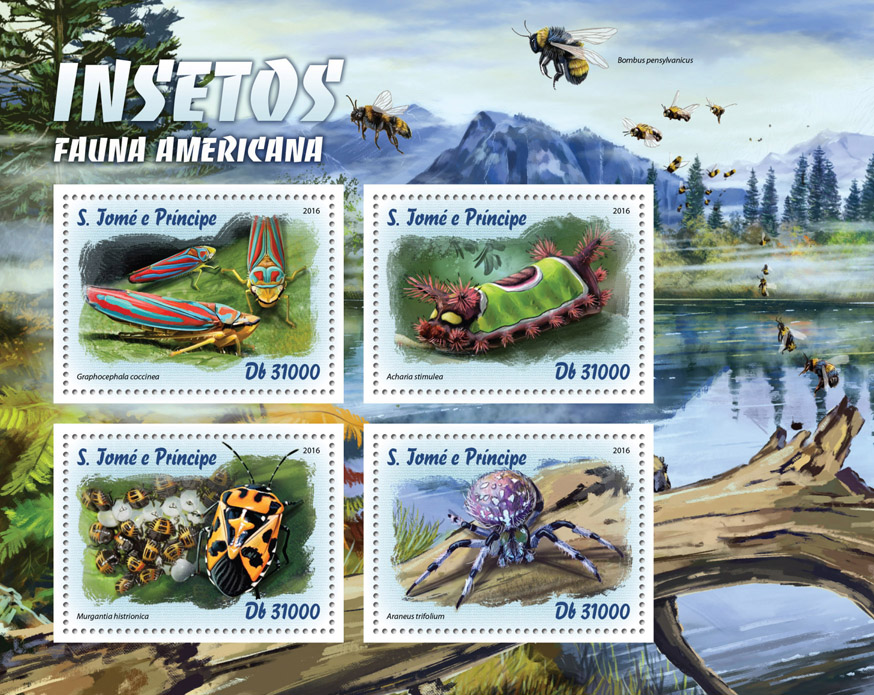
There is the danger that we will only really take notice of insect decline when it is too late
There has been a lot of discussion about the decline in bee populations and its dire consequences for agriculture. We have also talked about the efforts to save the monarch butterfly, whose numbers have been dropping dramatically over the years. But the rest of the insect world does not get much attention. For the most part, we think of insects as a nuisance or as potential pests. A number of studies in recent years in Germany, Great Britain, and in the United States have concluded that many insect populations worldwide are in severe decline, and this is not a good thing. While some insect species, such as the European corn borer or mosquitoes responsible for spreading the Zika virus, cause damage and diseases, there is tremendous ecological importance associated with diverse and abundant insect populations.
Insects perform a long list of ecosystem services that include pollination and being a major food source for birds, bats and amphibians. Other insects prey upon pest species and keep their numbers in check.
There are multiple reasons for the overall decline in insect populations. These include the ubiquitous use of pesticides, the spread of monoculture crops such as corn and soybeans, urbanization, and habitat destruction.
The decline in insect populations is a gradual process and there is the danger that we will only really take notice when it is too late. A significant drop in insect population could have far-reaching consequences for the entire natural world, and that includes our own species. The real question is whether governments view preserving biodiversity as an existentially important topic, or just one of a long list of things to consider on their to-do lists.
“Earth Wise” is heard on WAMC Northeast Public Radio and is supported by the Cary Institute.
Source: Poughkeepsie Journal, 18 August 2016
http://www.poughkeepsiejournal.com/story/life/2016/08/18/earth-wise-insect-population-decline/88945348/ -
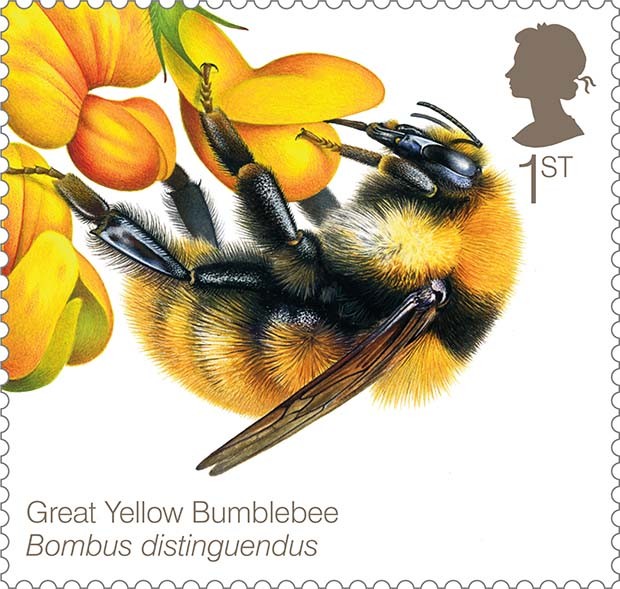
The evidence that neonics are damaging our ecosystem is growing – and so is the case for organic food
Traditional farming and gardening has long taken a straightforward approach: if an unwanted plant or animal interferes, it is to be killed. We even developed a special vocabulary to help justify our actions: the animals were “vermin” and the plants were “weeds”. And, in the case of one hen-house plunderer, we came up with the elaborate ritual that is fox hunting, complete with a special ‘language of avoidance’ that anthropologists have found in cultures around the world (the fox is a “dog”, its face is a “mask”, its tail is a “brush”, the dogs are “hounds”). Unfortunately for us, some human classifications of wildlife have little to do with reality. Over millennia, nature has created a complex eco-system in which most things have their place in a slowly shifting balance. It is a delicate situation that is easily upset.
Introduce an alien species and it can become a rampant ‘pest’ that causes all sorts of problems. Just ask our plucky white claw crayfish about the arrival of their bigger, nastier signal crayfish cousins from the US – thanks to transportation provided by us humans.
If you are farmer you don’t really want this to be true. After all, these chemicals help you keep your oilseed rape crop safe from the cabbage stem flea beetle, by all accounts a pest with a deservedly fearsome reputation. So agriculture’s reaction to the latest research, which found the use of neonics was associated with “large-scale population extinctions” of nearby wild bees, was perhaps predictable.It was an “interesting piece to an unsolved puzzle” about neonics effects on bees, said Dr Chris Hartfield, the National Farmers Union’s bee health specialist. But he added there were “still major gaps in our knowledge and a limited evidence base to guide policymakers”.
His unusual job title is possibly an indication of the importance of bees (and, cynics might suggest, the pesticides) to agriculture. They are a significant pollinator to important food crops and, if they were to disappear, farmers would have a big problem. In some parts of the world, crops have had to be pollinated by people with special sticks due to the lack of insects available to do the job.
Environmental campaigners are not the only ones starting to get a bit frustrated by farmers’ reluctance to accept the direction in which the evidence is pointing. Scientists staring at the hard facts are, too. It is a debate that raises broader questions about our use of pesticides in general. The belief that pouring poisons onto the ground in large quantities is a good idea is increasingly being called into question.
Our approach to pest control represents another significant intervention that can have unintended consequences. Evidence has been growing steadily that neonicotinoid insecticides (also known as neonics) cause a problem for bees.
The popular weedkiller, glyphosate, the active ingredient in Roundup, is so commonly used that it has been detected in small levels in bread, human urine and breast milk. Experts appear divided on whether it does, or does not, pose a significant cancer risk, but if it and others were to be banned farmers would soon start running out of options.The use of pesticides is a deliberate attempt to alter the natural state of things for our own benefit – specifically to produce large amounts of food at a price that people can afford. And that is clearly important, particularly given there are people in the UK, one of the world’s richest countries, who rely on food banks to get by. But if killing off pests is damaging our health and wildlife like bees that provide important ‘eco-system services’ then a comprehensive cost-benefit analysis may point to the need to change to a different system.
The supporters of organic farming at the Soil Association believe they have the answer. According to Emma Hockridge, the association’s head of policy for farming and land use, the results of the neonic study were “horrifying”. There was, she said, “overwhelming scientific evidence” of the harmful effect on pollinating insects.
Organic produce can be pricey at the moment, but it is unarguably grown in ways more in tune with the natural world than traditional techniques.
Some have a tendency to sneer, to view organic farming as a bit namby-pamby, a cause for champagne socialists who have moved to the countryside. But Nature with a capital N is a force to be recognised, shaped in the cauldron of Darwin’s “survival of the fittest”. Forcing it to conform to our way of thinking smacks a bit of the Soviet Union’s Communist command economy, eventually brought to its knees by the build-up of pressure from market forces. Eventually, the build-up of unintended consequences from our use of chemicals just might produce a similar result in modern agriculture.
Source: The Independent, 17 August 2016
http://www.independent.co.uk/voices/neonics-neonictenoids-pesticides-damaging-bees-ecosystem-organic-food-a7195156.html