Auteur: Henk Tennekes

  • De overheid moet de neonicotinoïden verbieden, zegt ecoloog Chiel Jacobusse van Het Zeeuwse Landschap

    De overheid moet de neonicotinoïden verbieden, zegt ecoloog Chiel Jacobusse van Het Zeeuwse Landschap

    De overheid moet de nieuwste generatie landbouwbestrijdingsmiddelen – neonicotinoïden – verbieden. Want die zijn de hoofdoorzaak van het verdwijnen van insecten. Dat zegt ecoloog Chiel Jacobusse van Het Zeeuwse Landschap. Hij is een deskundige op het gebied van insecten en schreef daar al verschillende boeken over.

    In Duitse natuurgebieden vliegen ruim driekwart minder insecten rond dan dertig jaar geleden, zo blijkt uit een recent Duits onderzoek. Volgens ecologen van de Radboud Universiteit in Nijmegen is dit een verontrustende ontwikkeling. Er is volgens hen geen enkele reden om aan te nemen dat het in Nederland beter gaat met de insecten dan in het Duitse onderzoeksgebied. Chiel Jacobusse is het daar mee eens. “Het is nog erger dan ik al dacht, het gaat dramatisch slecht met de insecten.”

    De moderne bestrijdingsmiddelen – neonicotinoïden – zijn volgens Jacobusse de oorzaak van de teruggang. “Daarmee worden de zaden van landbouwgewassen gecoat, zodat de hele plant giftig wordt voor alle insecten. Een rups of een bijtje heeft daar helemaal niets meer te zoeken, en dat leidt tot dramatische gevolgen.”

    Jacobusse vergelijkt de huidige generatie bestrijdingsmiddelen met DDT. “Een gif dat er in de jaren ’60 voor zorgde dat bijna alle roofvogels verdwenen. Gelukkig werd het net op tijd verboden. Voordat het te laat is moeten we ook de neonicotinoïden verboden zien te krijgen. Die zijn funest voor insecten.”

    Jacobusse erkent dat deze middelen nu toegestaan worden. “Spijkerhard aantonen dat ze funest zijn voor de insecten is moeilijk, ook al zijn er wereldwijd honderden onderzoeken die die kant op gaan. Je kan de boeren op dit gebied niets verwijten, het is gewoon zo dat iedereen goedkoop voedsel wil hebben. Zij gebruiken toegestane middelen, het is de overheid die in gebreke blijft. De overheid zou veel kritischer moeten zijn op het gebruik van dit soort middelen. ”

    Bron: Omroep Zeeland, 31-10-2017
    http://www.omroepzeeland.nl/nieuws/101767/Overheid-moet-dramatische-terugloop-insecten-stoppen

  • Krefelder Paul Nothers warnt seit langem vor Einsatz von Pestiziden

    Krefelder Paul Nothers warnt seit langem vor Einsatz von Pestiziden

    Die Insekten-Population ist in den vergangenen 27 Jahren um knapp 80 Prozent zurückgegangen. Paul Nothers, diplomierter Landwirt, passionierter Jäger und Bundesverdienstkreuzträger, hat schon vor drei Jahren lautstark vor dem Insektensterben und den Folgen für ganze Ökosysteme durch den Einsatz von Herbiziden und Pestiziden, allen voran Neonikotinoide und Glyphosat, gewarnt. Auf Grundstücken von Paul Nothers haben Heinz Schwan, Martin Sorg, Werner Stenmans und Andreas Müller im Orbroicher Bruch eine Prozedur wiederholt, wie sie 1989 an gleicher Stelle, in gleicher Form und von den gleichen Personen durchgeführt wurde. Die Insektenforscher von Krefelds Entomologischem Verein haben bei einer Messung zum Bestand an Insekten nach einem Standardverfahren eine bestürzende Entdeckung gemacht: Seit 1989 ist demnach die Menge an Insekten an zwei Stellen im Orbroicher Bruch um drei Viertel eingebrochen. “Mehr als 75 Prozent der flugaktiven Insekten sind einfach weg”, sagt Heinz Schwan vom Entomologischen Verein.

    Seit vielen Jahren beobachtet der 84-jährige Orbroicher mit großer Sorge die Abnahme der Insekten. Sie sind nicht nur Bestäuber im Obst- und Gemüseanbau, sondern sie beseitigten auch Schädlinge, zersetzten Aas, Totholz oder Kot. Nothers appelliert, nicht den Landwirten alleinig dafür die Schuld zu geben: „Für die ist es schwierig, ohne neue Produkte der großen Chemiefirmen den Einsatz von Pestiziden und Herbizden zu reduzieren. Deren frühere Monopolstellung, wie beispielsweise bei Glyphosat, ist eine große Geldeinnahmequelle.“

    Ein weiteres Problem sei, dass es für die neuen Chemikalien noch keine Grenzwerte gebe. „Dabei werden sie schon in ganz geringen Mengen wirksam.“ Die geringste Dosis sorge bereits dafür, dass Bienen ihren eigenen Stock nicht mehr finden und langsam, aber sicher deshalb sterben. Neben entsprechenden neuen Grenzwerten und Verboten werde deshalb das Greening in der Landwirtschaft umso notwendiger. Bei Thomas Vennekel in Hüls und bei Nothers in Orbroich sind viele neue Blühstreifen an Acker- und Straßenrändern angesetzt worden. Die helfen zumindest dabei, dass Insekten den kahlen Winter überleben.

    Quelle: Westdeutsche Zeitung, 19.10.17
    http://www.wz.de/lokales/krefeld/krefelder-beweisen-dramatisches-insektensterben-1.2539453

  • UK is 30-40 years away from ‘eradication of soil fertility’, warns environment secretary Michael Gove

    UK is 30-40 years away from ‘eradication of soil fertility’, warns environment secretary Michael Gove

    The UK is 30 to 40 years away from “the fundamental eradication of soil fertility” in parts of the country, the environment secretary Michael Gove has warned. “We have encouraged a type of farming which has damaged the earth,” Gove told the parliamentary launch of the Sustainable Soils Alliance (SSA). “Countries can withstand coups d’état, wars and conflict, even leaving the EU, but no country can withstand the loss of its soil and fertility. “If you have heavy machines churning the soil and impacting it, if you drench it in chemicals that improve yields but in the long term undercut the future fertility of that soil, you can increase yields year on year but ultimately you really are cutting the ground away from beneath your own feet. Farmers know that.”

    There has been a spike in awareness of the impact that intensive farming techniques are having on the world’s soils and its biodiversity. In 2014 Sheffield University researchers said that UK farm soils only had 100 harvests left in them, and a year later a UN spokesperson warned that at current rates of degradation, the world’s topsoil could be gone within 60 years. “It feels as if soil is now a hot topic,” said Helen Browning, head of the Soil Association. Meanwhile a new German study has revealed that numbers of flying insects have fallen by up to three quarters. Intensive farming techniques that encourage the heavy use of fertilisers, herbicides and pesticides are believed to be major factors in these problems.

    The UK has a poor record in this area. The government has not been conducting regular soil monitoring since the last Countryside Survey in 2007, and in 2012 UK ministers helped block a critical EU soil health directive. Even a year ago, experts such as Peter Stevenson at Compassion in World Farming felt there was no real appetite for reform of intensive farming.

    But environmentalists are now increasingly hopeful that, unlike his predecessors at Defra, Gove will take this issue seriously. In July he said that the UK would not move towards “US-style farming” and would prioritise “high environmental and animal welfare standards”. “There’s been quite a dramatic shift in understanding around what we’re doing to our soils,” said Browning. “Everyone is quite bowled over by some of the comments that Michael Gove is making.”

    Source: The Guardian, 24 October, 2017
    https://www.theguardian.com/environment/2017/oct/24/uk-30-40-years-away-eradication-soil-fertility-warns-michael-gove

  • Pestizideinsatz auf dem Prüfstand – Verbot aller Neonicotinoide gefordert

    Pestizideinsatz auf dem Prüfstand – Verbot aller Neonicotinoide gefordert

    “Das dramatische Insektensterben ist eine Katastrophe für unser Ökosy­stem”, stellt Verena Föttinger, Mitglied des Bundesvorstands der Ökologisch-Demokratischen Partei (ÖDP), fest. Die Politikerin aus Fluorn-Winzeln fordert die Behandlung dieses Themas laut Mitteilung in den Koalitionsverhandlungen auf Bundesebene. “Für eine Rücksichtnahme auf pestizidbasierte Landwirtschaft und die dahinterstehenden Interessen der Agrochemie bleibt keine Zeit und kein Raum mehr angesichts der neusten wissenschaftlichen Erkenntnisse zum Insektenschwund”, so Verena Föttinger. Lange hätten es Naturliebhaber bereits subjektiv wahrgenommen. Nun sei es wissenschaftlich erwiesen: In Deutschland sinke die Zahl der heimischen Insekten in einem dramatischen Ausmaß.
    In den vergangenen 27 Jahren habe die Gesamtmasse in Deutschland und anderen Ländern um bis zu 75 Prozent abgenommen. Zu diesem Ergebnis sei eine kürzlich in einem Fachmagazin veröffentlichte Studie gekommen. Föttinger zeigt sich schockiert über die Ergebnisse.

    “Wenn unsere Insekten aussterben, dann ist unser Ökosystem todkrank. Das Aussterben von Insektenarten und der drastische Rückgang der Populationen ist ein ökologisches Desaster und wird für die einzigartige biologische Vielfalt unwiederbringlich sein. Die ÖDP weist seit Jahrzehnten auf diese und andere ökologische Missstände hin, aber diese Studie zeigt, dass die künftig regierenden Parteien sich nun sehr dringend überlegen müssen, wie mit diesen Erkenntnissen umgegangen werden soll”, so Föttinger.

    Sterbende Insekten, durch wüstenartige Monokulturen ausgehungert oder durch Agrochemikalien getötet, gelangen unmittelbar in die weitere Nahrungskette, was in der Folge auch den Vögeln zu schaffen mache und ihre Anzahl dramatisch reduziere. Wenn diese Lebewesen sterben, bedrohe dies die gesamte ökologische Lebensgrundlage. Föttinger ruft daher die sich aktuell formierende neue Bundesregierung dazu auf, das Thema auf der höchsten Regierungsebene in den Fokus zu nehmen und glaubwürdige Problemlösungen zu erarbeiten. Sie fordert zusammen mit Umweltorganisationen ein Verbot aller Neonicotinoide. Allgemein müsse der Pestizideinsatz in der Landwirtschaft auf den Prüfstand und der Ausbau der ökologischen Landwirtschaft durch eine Agrarwende glaubhaft angegangen und staatlich gefördert werden. Auch benötige man, so Föttinger, Transparenz, wo wie viele Pestizide in der Landwirtschaft ausgebracht würden. Diese Daten müssten der Wissenschaft zugänglich gemacht werden.

    Quelle: Schwarzwälder bote, 23.10.17
    http://www.schwarzwaelder-bote.de/inhalt.fluorn-winzeln-pestizideinsatz-auf-dem-pruefstand.06ac18ca-92f9-4d78-9d75-ff3d55c9ce64.html

  • Oorzaak van insectensterfte is al bekend: chemische bestrijdingsmiddelen

    Oorzaak van insectensterfte is al bekend: chemische bestrijdingsmiddelen

    Toxicoloog Henk Tennekes is blij dat er eindelijk onrust ontstaat over de insectensterfte. Maar de belangrijkste boodschap blijft volgens hem achterwege: het zijn recente, chemische bestrijdingsmiddelen (neonicotinoïden) die de insecten doden. ‘Die moeten direct van de markt.’

    Lees verder het artikel van Petra Noordhuis in het Nederlands Dagblad, 23-10-17
    https://www.nd.nl/nieuws/nederland/oorzaak-van-insectensterfte-is-al-bekend.2827485.lynkx?s=T607Kk8LXL6o2XsTpG7yNQ==

  • The curlews are one of the most threatened bird species on the planet

    The curlews are one of the most threatened bird species on the planet

    The Numeniini — a tribe of large waders including curlews and godwits — is one of the most threatened bird groups on the planet. The once-abundant Eskimo Curlew Numenius borealis of the Americas is now considered Critically Endangered (Possibly Extinct), having last been spotted with certainty in the 1960s. Like the Eskimo Curlew, the possibility of the extinction of the Slender-billed Curlew (Numenius tenuirostris) cannot be confirmed for sure until we have scoured the entirety of its known breeding grounds in the Siberian wilderness for a remnant population. Attention must now be given to helping to protect the members of the Numeniini tribe that we know are still with us — and of this group, there is none more imperiled than the Far Eastern Curlew Numenius madagascariensis. The Far Eastern Curlew is the largest and one of the most threatened migratory shorebirds in the world. The Eurasian Curlew Numenius arquata has recently been identified as one of the UK’s most rapidly declining breeding bird species.

    Source: Birdlife, 19 October 2017
    http://www.birdlife.org/worldwide/news/curlew-crisis-deepens-vital-australian-wetlands-under-threat

  • Insect decline has resulted in massive decline of the buntings

    Insect decline has resulted in massive decline of the buntings

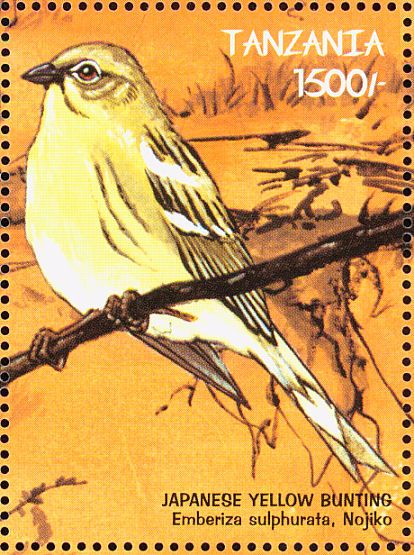
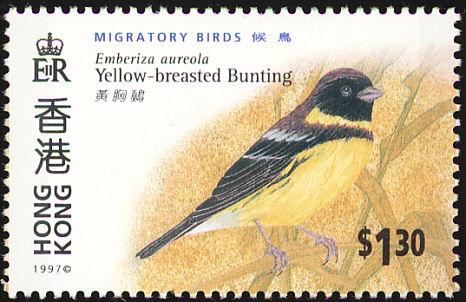
    Buntings are a group of Eurasian and African passerine birds of the family Emberizidae. Insect food sources must be available to them for reproduction. Their populations are in peril since the introduction of neonicotinoid insecticides in agriculture, which wipe out insects, drastically illustrated by the recent range-wide population collapse in the Yellow-breasted Bunting (Emberiza aureola). There are signals of a strong decline also in the Rustic Bunting (Emberiza rustica), but no range-wide assessment of population trends in this superabundant and widespread bunting species has yet been undertaken. Massive decline of Corn Buntings (Emberiza calandra) has been noted in Scotland and Ireland in the last few decades, and the species is now extinct in the Netherlands. The population size of the Ortolan Bunting (Emberiza hortulana) in Europe was halved in the last decade. Yellowhammers (Emberiza citrinella) have experienced a considerable decline over the past 25 years, and therefore have been classified on the Red List as a species of considerable conservation concern.

  • The Yellow-breasted Bunting suffered a 95 percent decline in the span of three decades

    The Yellow-breasted Bunting suffered a 95 percent decline in the span of three decades

    In the mid-1990s, the observed decline of the Yellow-breasted Bunting Emberiza aureola in Hokkaido, Japan alerted conservationists that another super-abundant species might be in trouble. Now we know it has suffered a huge decline, possibly as much as 95 percent of its population, in the span of just two to three decades. Prior to 2004 the Yellow-breasted Bunting was not regarded as of conservation concern, but since 2013 it has been listed as Endangered, and this year the discussion on BirdLife’s Globally Threatened Birds Forum concerned a potential further uplisting to Critically Endangered.

    In order to address and confront this little-known crisis, BirdLife International co-organised an international workshop on conservation of the Yellow-breasted Bunting with the Hong Kong Bird Watching Society (BirdLife in China (Hong Kong)) and the Sun Yat-sen University in Guangzhou, China in November 2016. The purpose of the workshop was to collect information and opinion for drafting an International Conservation Action Plan on the Yellow-breasted Bunting, and to form an international conservation network on this and other migratory passerines.

    More than 50 experts from almost all major range countries attended the workshop. The main recommendations from the workshop were that the Yellow-breasted Bunting should be officially protected in all range countries, that its migration patterns should be managed using colour banding and geolocators, and that its breeding, migration and wintering sites need to be identified, surveyed, protected, and managed. It is also imperative to study the effect of agrochemicals on migratory passerines that use farmlands, and promote wildlife-friendly farming practices. International cooperation on the research and conservation of this species and other migratory passerines is necessary if we are to stabilise the numbers of Asia’s vanishing migrants.

    The International Conservation Action Plan of the Yellow-breasted Bunting is expected to be published by 2019, as good consultation with different countries and stakeholders, including some regional and national workshops, are needed. However, important actions are already underway. In the breeding season of 2016, BirdLife International and Birds Russia conducted a preliminary study on the Yellow-breasted Bunting in Sakhalin, Russia. The result was alarming: it has seemingly disappeared completely from southern Sakhalin, and could only found at a few localities in northern and central parts of the island.

    Source: Birdlife, October 2017
    https://www.birdlife.org/worldwide/news/yellow-breasted-bunting-next-passenger-pigeon

  • Le sulfoxaflor, nouvelle source de risque pour les abeilles

    Le sulfoxaflor, nouvelle source de risque pour les abeilles

    L’enquête qui vient d’être rendue publique par l’UNAF dresse un bilan alarmant concernant les néonicotinoïdes. Cette année encore, plus de 6 millions d’hectares de cultures ont été traités par ces pesticides tueurs d’abeilles. Alors que cinq néonicotinoïdes doivent prochainement être interdits, une autre substance pose problème : le sulfoxaflor. Ce pesticide serait également un néonicotinoïde.

    L’ambiance est à l’orage chez les apiculteurs. L’Union nationale de l’apiculture française dénonce une récente décision de l’Anses. L’Agence nationale de sécurité sanitaire a en effet proposé en septembre dernier une alternative à l’usage des néonicotinoïdes en France. Gilles Lanio, président de l’UNAF, rappelle qu’ils seront interdits dès septembre 2018, mais des dérogations existent jusqu’en 2020. La solution proposée aux agriculteurs est de remplacer les néonicotinoïdes utilisés sur leurs cultures. Ces pesticides neurotoxiques causent chaque année la mort de 300.000 à 400.000 colonies d’abeilles selon Henri Clément, secrétaire général de l’UNAF.

    Le sulfoxaflor, une molécule très dangereuse

    L’UNAF annonce que l’Anses a autorisé, de manière confidentielle, deux nouveaux pesticides à base de sulfoxaflor. Cette substance est officiellement reconnue comme dangereuse pour le monde aquatique, mais le problème ne s’arrêterait pas là. Le sulfoxaflor serait lui-même… un néonicotinoïde ! L’annonce de l’Anses déplaît car elle indique que le sulfoxaflor pourrait remplacer les néonicotinoïdes prochainement prohibés. Ceci est «pitoyable, pathétique et irresponsable», juge Henri Clément. En effet, selon une décision pénale rendue aux États-Unis, le sulfoxaflor est lui aussi un néonicotinoïde et interdit sur le territoire américain. Échaudés par la décision de jugement américain, l’UNAF est allée demander des comptes à l’Anses. Mais le dialogue est rompu entre les deux organismes, l’Anses ne répondant plus à l’Union française des apiculteurs. Ainsi, le problème des néonicotinoïdes ne serait pas du tout solutionné et tous les efforts de l’UNAF vains. C’est pourquoi elle exige que l’Anses ajoute le sulfoxaflor à la liste des substances néonicotinoïdes à interdire.

    Si aucune interdiction n’est prise, le sulfoxaflor pourrait se retrouver épandu sur nombre de cultures. Le néonicotinoïde serait donc utilisé sur les cultures de céréales à paille (blé, orge, etc.) mais pas seulement. Le sulfoxaflor permettrait également de traiter des cultures légumières, les pommiers et les cerisiers. Et la position du ministre de l’Agriculture ne rassure pas l’UNAF. L’inquiétude vient du fait que Stéphane Travert ne semble pas favorable à l’interdiction des pesticides tueurs d’abeilles. Il avait indiqué en juin dernier qu’interdire les néonicotinoïdes «n’est pas conforme avec le droit européen». Bien que le gouvernement et le ministre de l’Écologie Nicolas Hulot aient contesté cela, l’UNAF craint les prochaines décisions. Pour Gilles Lanio, aucune tergiversation ne peut être permise de la part de la France. «Comme s’y est engagé le président Emmanuel Macron, la France doit supprimer tous les néonicotinoïdes» déclare-t-il.

    Source: Matthieu Combe, journaliste scientifique
    Techniques de l’Ingénieur. le 23 octobre 2017

    Le sulfoxaflor, nouvelle source de risque pour les abeilles

  • Het ecologische Armageddon is nabij

    Het ecologische Armageddon is nabij

    ‘We zijn op weg naar een ecologisch armageddon. Als we de insecten verliezen, zal alles in elkaar storten.’ Hier sprak de Britse hoogleraar biologie Dave Goulson. De aanleiding: een wetenschappelijke studie die uitwijst dat in ruim een kwarteeuw de hoeveelheid insecten met driekwart is gedaald. Bij het lezen van het alarmerende bericht moest ik terugdenken aan een gesprek dat ik jaren geleden had met toxicoloog Henk Tennekes. In 2010 publiceerde hij het boek Een ramp in de maak waarin hij wees op de dramatische achteruitgang van de insecten- en vogelpopulatie en die verbond met het grootschalige gebruik van neonicotinoïde insecticiden. Tennekes voelde zich destijds nogal eenzaam in zijn strijd. Maar nu zijn er steeds meer aanwijzingen dat hij het gelijk aan zijn zijde had.

    Bron: Tomas Vanheste in de Correspondent, 20-10-17
    https://decorrespondent.nl/7500/op-weg-naar-een-armageddon-wij-modderen-vrolijk-voort/199837110000-4a069659