Auteur: Henk Tennekes

  • Wild salmon populations in New Zealand show significant and alarming drops in numbers since about the mid-1990s

    Wild salmon populations in New Zealand show significant and alarming drops in numbers since about the mid-1990s

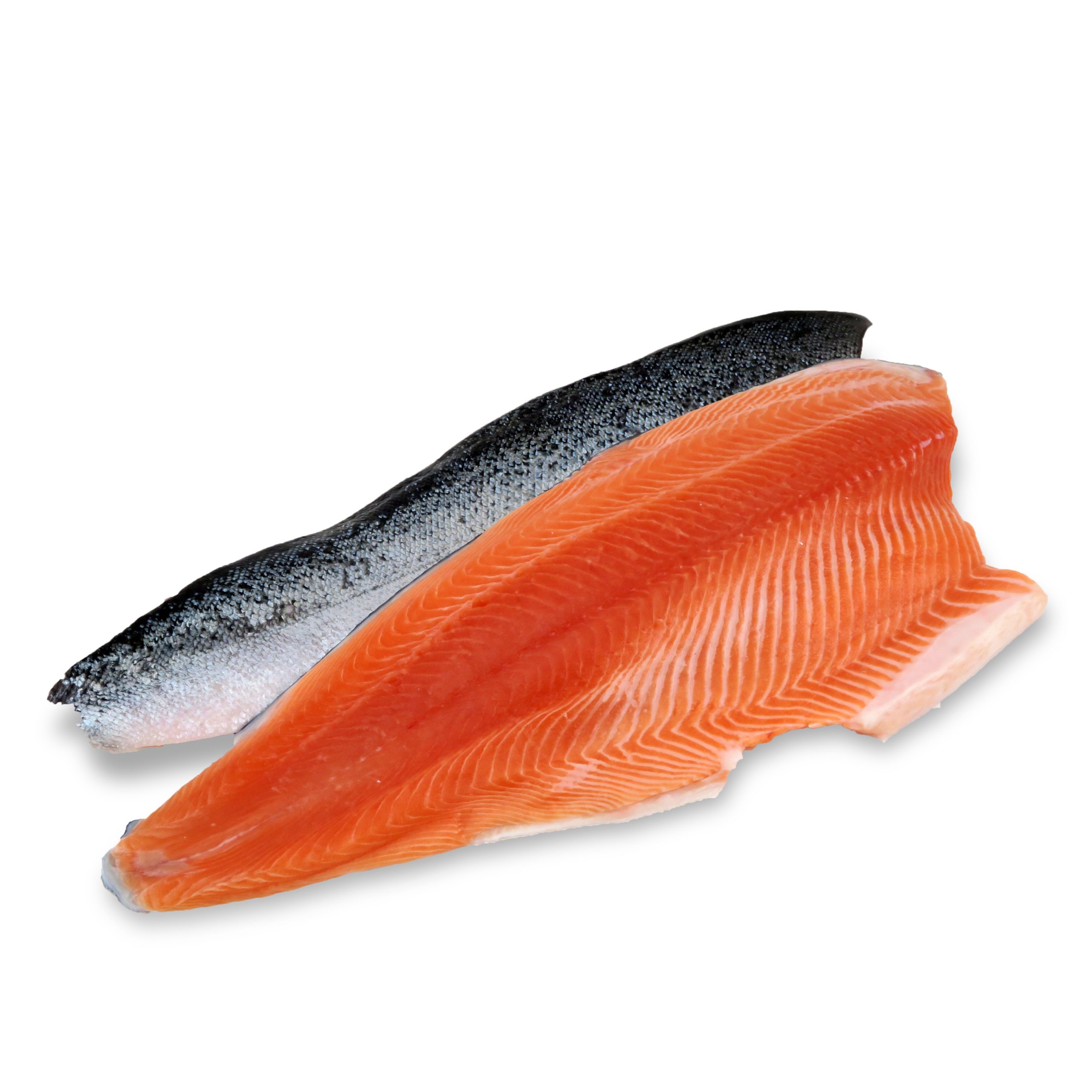
    As wild salmon populations have declined dramatically, Fish and Game New Zealand (FGNZ) is hosting a symposium to discuss the problem. FGNZ councillor Matthew Hall, of Ashburton, said population surveys carried out every year, including in Otago rivers, had shown significant and alarming drops in numbers since about the mid-1990s. ”The New Zealand population of sea salmon in the last 10 years has been the lowest since they were introduced in the 1900s,” Mr Hall said.

    ”They were introduced in the 1890s and 1910s and they had a good population in the 1930s, like a curve going up. ”They started to stall by 1995 and dropped away.” Such is the concern, FGNZ’s Central South Island and North Canterbury councils are hosting a two-day ”Turn the Tide” symposium in Ashburton on November 11 and 12.

    Mr Hall said they wanted to bring together representatives from all interested groups and had also invited a speaker from the United States to talk about the problems tthere, ”for a global perspective”.
    The first day would include speakers providing information about population trends in each of the relevant rivers, the state of the rivers, the health of the oceans and the food chain, as well as the direct and indirect impacts of climate change.

    ”We will also look at the political side, and effects of the Resource Management Act, as well as the impacts the developments of communities have had on wild salmon runs, and where hatcheries fit in.” There would also be discussion on irrigation, and guests would talk about the commercial sea fisheries and salmon by-catch, Mr Hall said. There would also be a discussion about how to solve the problem. ”The main question is where do we take the salmon species from here? ”Along the Canterbury coastline the water temperature is changing. Some species are changing as well as we get kahawhai from the north and we have even had king fish, which is another species associated with warmer waters.”

    Contact Energy’s head of hydro-generation for Clutha and Roxburgh, Boyd Brinsdon, said the company had introduced salmon smolt into the Clutha River below the Roxburgh dam for about five or six years, most recently in 2016. He said now there were questions about the efficacy of the project and it was working with FGNZ to look at other options.

    Source: Otago Daily Times, 5 Nov 2017
    https://www.odt.co.nz/business/farming/symposium-focus-salmons-sharp-decline
  • Die Insekten stehen am Anfang der Nahrungskette. Wenn sie verschwinden, verschwinden wir auch.

    Die Insekten stehen am Anfang der Nahrungskette. Wenn sie verschwinden, verschwinden wir auch.

    Der Entomologische Verein Krefeld, der seit 1905 Insekten erforscht, hat festgestellt, dass in den letzten 20 Jahren 80% unserer Fluginsekten verschwunden sind: http://80.153.81.79/~publ/mitt-evk-2013-1.pdf . Mit in 2 Malaise-Fallen gefangenen Insekten wurden dieser Verlust in einem Naturschutzgebiet ermittelt. Nicht nur eine industrialisierte Landwirtschaft und die damit verbundene Vernichtung der Lebensräume von Insekten sind dafür ursächlich. Bei einem Pestizid-Verbrauch in Deutschland von 19.469 Tonnen pro Jahr in 1970 und einem Zuwachs auf 48.611 Tonnen in 2015 dürfte der Bund Naturschutz mit der Hauptursache „Einsatz von Pflanzenschutzmitteln“ richtig liegen.

    Sicherlich muss das Fehlen von Blühflächen mit als eine der großen Ursachen gesehen werden. Denn nach der Blüte der Obstbäume und der Rapsfelder hungern unsere Bienen, aber auch alle anderen Bestäuber. Imker müssen ihre Bienen füttern. Durch den Mangel an Pollen wird die Brut jedoch geschwächt und wird anfällig für die Varroa-Milbe und Krankheiten. Pollen ist der notwendige Eiweißspender für die Insekten und die Insekten sind die Eiweißspender für die „höher“ entwickelten Wirbeltiere.

    Vögel, Reptilien, Fledermäuse sind stark rückgängig und stehen zum Teil schon auf der „Roten Liste“. In der Bayerischen Biodiversitätsstrategie von 1. April 2008 soll unter Abs. 7.1 ein Rückgang der Vielfalt bis 2020 gestoppt werden. Eine Wende zum Positiven ist für mich nicht erkennbar. Zwar reden alle vom Bienensterben, doch was wird dagegen getan. Henk Tennekes, ein holländischer Toxikologe sagt: Die Insekten stehen am Anfang der Nahrungskette. Wenn sie verschwinden, verschwinden wir auch. Wir sind aus meiner Sicht auf dem besten Weg, dies herbei zu führen. www.farmlandbirds.net.

    Quelle: Merkur, 29.08.17
    https://www.merkur.de/lokales/leserbriefe/bayern-region/insekten-sterben-8636814.html

  • UK will back total ban on bee-harming pesticides, Michael Gove reveals

    UK will back total ban on bee-harming pesticides, Michael Gove reveals

    The UK will back a total ban on insect-harming pesticides in fields across Europe, the environment secretary, Michael Gove, has revealed. The decision reverses the government’s previous position and is justified by recent new evidence showing neonicotinoids have contaminated the whole landscape and cause damage to colonies of bees. It also follows the revelation that 75% of all flying insects have disappeared in Germany and probably much further afield, a discovery Gove said had shocked him.

    Neonicotinoids are the world’s most widely used insecticide but in 2013 the European Union banned their use on flowering crops, although the UK was among the nations opposing the ban. The European commission now wants a total ban on their use outside of greenhouses, with a vote expected in December, and the UK’s new position makes it very likely to pass.

    “The weight of evidence now shows the risks neonicotinoids pose to our environment, particularly to the bees and other pollinators which play such a key part in our £100bn food industry, is greater than previously understood,” said Gove. “I believe this justifies further restrictions on their use. We cannot afford to put our pollinator populations at risk.”

    In an article for the Guardian, Gove said: “As is always the case, a deteriorating environment is ultimately bad economic news as well.” He said pollinators boost the yield and quality of UK crops by £400m-£680m every year and said, for example, gala apple growers are now having to spend £5.7m a year to do replace the work of lost natural pollinators.

    Source: The Guardian, 9 Nov 2017
    https://www.theguardian.com/environment/2017/nov/09/uk-will-back-total-ban-on-bee-harming-pesticides-michael-gove-reveals#comment-107969493

    Gove said the evidence of neonicotinoids’ harm to pollinators has grown stronger since 2013, including a landmark field trial published in July that showed neonicotinoids damage bee populations, not just individual insects, and a global analysis of honey revealing worldwide contamination by the insecticides.

  • De Zuid-Hollandse boerenlandvogels staan door jarenlange bezoedeling van het landschap met imidacloprid op de rand van uitsterven

    De Zuid-Hollandse boerenlandvogels staan door jarenlange bezoedeling van het landschap met imidacloprid op de rand van uitsterven

    De dalende trend op het gebied van biodiversiteit in Zuid-Holland blijft aanhouden. Met name de natuur in het agrarisch gebied en de meest kwetsbare soorten van de zogenaamde rode lijst hollen hard achteruit. In navolging van vorige jaren blijkt uit een recent verschenen rapport van het Kennisinstituut Alterra dat de Zuid-Hollandse biodiversiteit een dalende trend blijft vertonen.

    Zowel nationaal als internationaal is afgesproken dat de achteruitgang van de biodiversiteit moet worden gestopt omdat biodiversiteit voor de mens van levensbelang is. Ook de provincie Zuid-Holland heeft het doel om de achteruitgang van de biodiversiteit te stoppen al jaren geleden omarmd, maar dit rapport laat opnieuw zien dat dit doel nog altijd ver buiten bereik is. Alex Ouwehand, directeur van Natuur en Milieufederatie Zuid-Holland: “Als we het beleid en de uitvoering daarvan niet aanpassen, dan zal de achteruitgang met grotere gevolgen blijven aanhouden. En wat je eenmaal kwijt bent aan biodiversiteit, krijg je niet gemakkelijk meer terug.”

    De resultaten van het onderzoek liegen er niet om. Als het om alle landnatuur in heel de provincie Zuid-Holland gaat, dan is er een jarenlange constante dalende trend zichtbaar. Deze wordt met name veroorzaakt doordat het zeer slecht gaat met de agrarische natuur: de akker- en weidevogels. In twaalf jaar tijd zijn deze met meer dan 30 procent achteruit gegaan. Ook met de bedreigde soorten van de zogenaamde rode lijst is het slecht gesteld: ten opzichte van 1990 is circa 70 procent van de populatieomvang van deze soorten nu verloren gegaan. Volgens de Natuur en Milieufederatie Zuid-Holland is dit zeer verontrustend.

    Bron: Het Kontakt Alblasserwaard, 07-03-17
    https://www.hetkontakt.nl/regio/alblasserwaard/algemeen/75895/natuur-in-agrarisch-gebied-holt-achteruit

  • Sublethal doses of imidacloprid disrupt sexual communication and host finding in a parasitoid wasp

    Sublethal doses of imidacloprid disrupt sexual communication and host finding in a parasitoid wasp

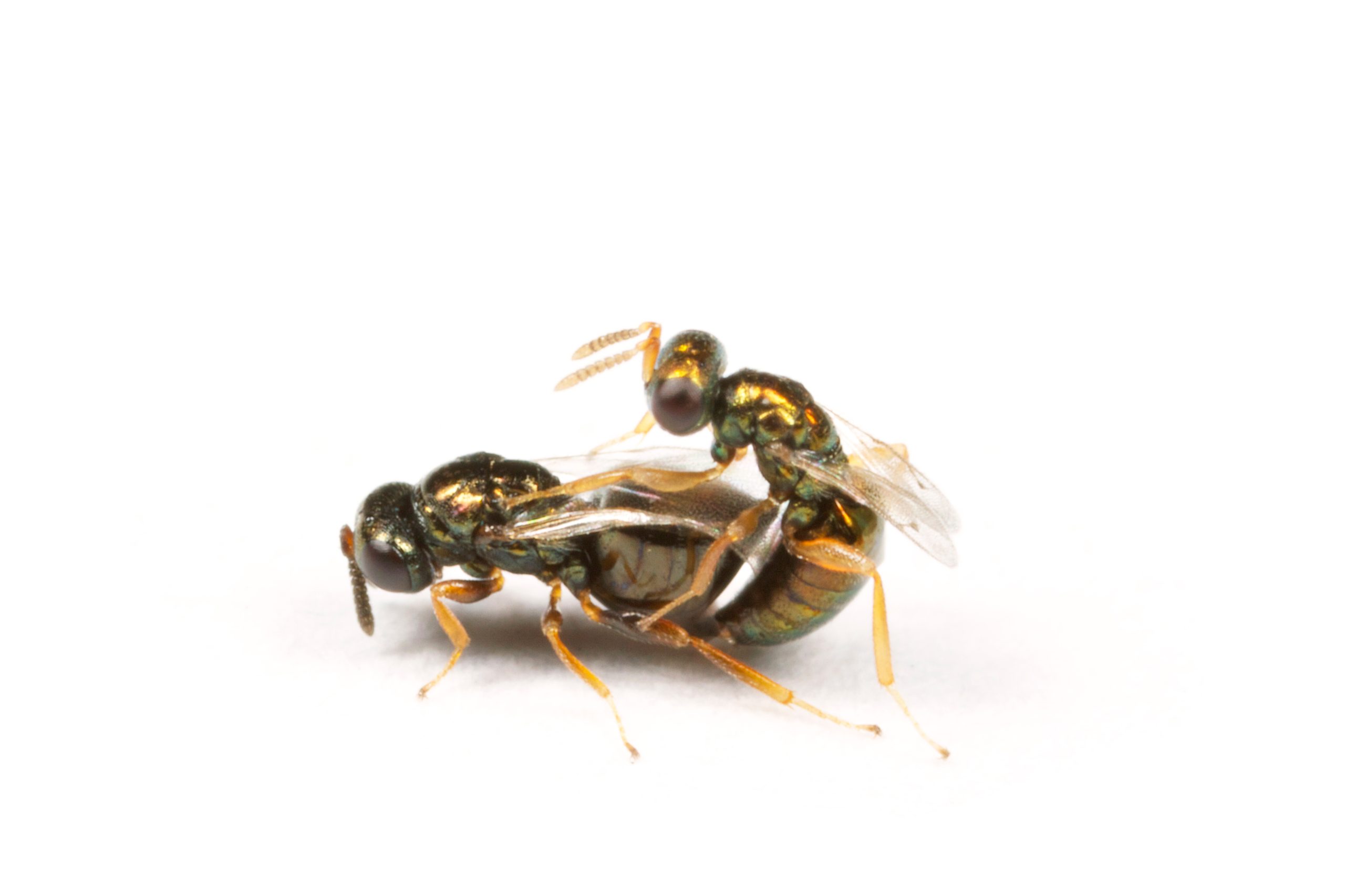
    Neonicotinoids are widely used insecticides, but their use is subject of debate because of their detrimental effects on pollinators. Little is known about the effect of neonicotinoids on other beneficial insects such as parasitoid wasps, which serve as natural enemies and are crucial for ecosystem functioning. Here we show that sublethal doses of the neonicotinoid imidacloprid impair sexual communication and host finding in the parasitoid wasp Nasonia vitripennis. Depending on the dose, treated females were less responsive to the male sex pheromone or unable to use it as a cue at all. Courtship behaviour of treated couples was also impeded resulting in a reduction of mating rates by up to 80%. Moreover, treated females were no longer able to locate hosts by using olfactory cues. Olfaction is crucial for the reproductive success of parasitoid wasps. Hence, sublethal doses of neonicotinoids might compromise the function of parasitoid wasps as natural enemies with potentially dire consequences for ecosystem services.

    Source:
    Tappert, L. et al. Sublethal doses of imidacloprid disrupt sexual communication and host finding in a parasitoid wasp. Sci. Rep. 7, 42756; doi: 10.1038/srep42756 (2017).

  • Comparative ecotoxicity of imidacloprid and dinotefuran to aquatic insects in rice mesocosms

    Comparative ecotoxicity of imidacloprid and dinotefuran to aquatic insects in rice mesocosms

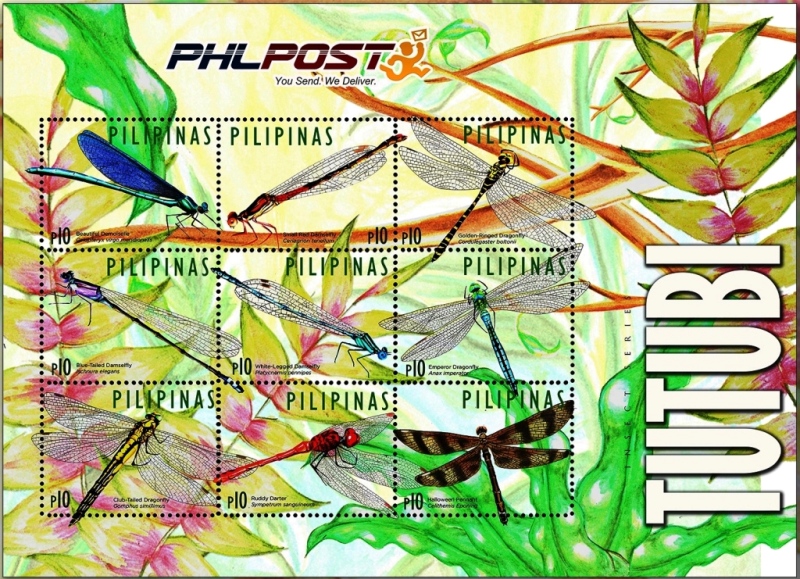
    In this study, effects of two neonicotinoid insecticides, imidacloprid and dinotefuran, on aquatic insect assemblages were evaluated in experimental rice mesocosms. During the 5-month period of the rice-growing season, residual concentrations of imidacloprid were 5–10 times higher than those of dinotefuran in both soil and water. Imidacloprid treatment (10 kg/ha) reduced significantly the populations of, Crocothemis servilia mariannae and Lyriothemis pachygastra nymphs, whereas those of Orthetrum albistylum speciosum increased slightly throughout the experimental period. However, Notonecta triguttata, which numbers were high from the start, later declined, indicating possible delayed chronic toxicity, while Guignotus japonicus disappeared. In contrast, dinotefuran (10 kg/ha) did not decrease the populations of any species, but rather increased the abundance of some insects, particularly Chironominae spp. larvae and C. servilia mariannae nymphs, with the latter being 1.7x higher than those of controls. This was an indirect effect resulting from increased prey (e.g., chironomid larvae) and lack of competition with other dragonfly species. The susceptibilities of dragonfly nymphs to neonicotinoids, particularly imidacloprid, were consistent with those reported elsewhere. In general, imidacloprid had higher impacts on aquatic insects compared to dinotefuran.

    Source:Koji Kobashi et al. (2017) Ecotoxicology and Environmental Safety 138, 122-129
    http://www.sciencedirect.com/science/article/pii/S0147651316305383

  • De milieuverontreiniging met neonicotinoïden is een bijna perfect scenario voor insectenvernietiging

    De milieuverontreiniging met neonicotinoïden is een bijna perfect scenario voor insectenvernietiging

    7 jaar geleden sprak ik me uit voor een verbod op neonicotinoïden. Dit zijn stapelingsvergiften zonder drempelwaarde die hele gebieden van het land besmetten en bovendien slechts langzaam worden afgebroken. Het is een bijna perfect scenario voor insectenvernietiging. Dit betekent ook dat als neonicotinoïden worden verboden, insectensterfte niet onmiddellijk zal stoppen, omdat het jaren zal duren voordat deze stoffen uit de omgeving worden verwijderd. Daarom hebben we ook niet veel tijd meer om het tij te keren. Elke aarzeling nu kan leiden tot de volledige ineenstorting van het ecosysteem.

  • Environmental pollution with neonicotinoids is a nearly perfect script for insect extermination

    Environmental pollution with neonicotinoids is a nearly perfect script for insect extermination

    7 years ago I spoke out in favor of a ban on neonicotinoids. These are cumulative poisons without thresholds that contaminate entire areas of the country and, moreover, are only slowly degraded. It’s a nearly perfect script for insect extermination. This also means that if neonicotinoids are banned, insect decline will not cease immediately, as it will take years for these substances to be removed from the environment. Therefore, we do not have much time left to turn the page. Any hesitation now can lead to the complete collapse of the ecosystem.

  • Die Umweltverschmutzung mit Neonikotinoiden ist ein nahezu perfektes Drehbuch für die Ausrottung der Insekten

    Die Umweltverschmutzung mit Neonikotinoiden ist ein nahezu perfektes Drehbuch für die Ausrottung der Insekten

    Ich habe mich vor 7 Jahren bereits ausgesprochen für ein Verbot der Neonikotinoide. Es handelt sich um Summationsgifte ohne Schwellenwert, die ganze Landstriche verunreinigen und ausserdem nur langsam abgebaut werden. Es ist ein nahezu perfektes Drehbuch für die Ausrottung der Insekten. Das bedeutet auch, dass bei einem Verbot der Neonikotinoide das Insektensterben nicht sofort aufhören wird, da es Jahre brauchen wird bis diese Substanzen aus der Umwelt entfernt sind. Wir haben deshalb auch nicht mehr viel Zeit das Blatt zu wenden. Jedes zögern jetzt kann zum völligen Zusammenbruch des Ökosystems führen.

  • Emerging disease further jeopardizes North American frogs

    Emerging disease further jeopardizes North American frogs

    A deadly amphibian disease called severe Perkinsea infections, or SPI, is the cause of many large-scale frog die-offs in the United States, according to a new study by the U.S. Geological Survey. Frogs and salamanders are currently among the most threatened groups of animals on the planet. The two most common frog diseases, chytridiomycosis and ranavirus infection , are linked to frog population declines worldwide. The new study suggests that that SPI is the third most common infectious disease of frogs.

    Scientists with the USGS studied 247 frog die-offs in 43 states from 1999 through 2015. The researchers found that SPI caused 21 of the mass mortalities in 10 states spanning from Alaska to Florida, all involving tadpoles. Up to 95 percent of the tadpole populations died during the SPI mortality events. “Amphibians such as frogs are valuable because they serve as pest control by eating insects like mosquitos, and they are food for larger predators,” said Marcos Isidoro Ayza, a USGS scientist, University of Wisconsin-Madison post-doctoral fellow and the lead author of the study. “They’re also exceptional indicators of ecosystem health. Like the proverbial canary in a coal mine, amphibians let us know when something in our environment is going awry.”

    The SPI die-offs occurred in tadpoles of 11 frog species, including the critically endangered dusky gopherfrog in its only remaining breeding locations in Mississippi. Most of the SPI events occurred in states bordering the Atlantic Ocean and Gulf of Mexico. However, SPI was also detected in Alaska, Oregon and Minnesota.

    Source: Science Daily, Sept 19, 2017
    https://www.sciencedaily.com/releases/2017/09/170919160206.htm