Auteur: Henk Tennekes

  • “Regelrechtes Vogelsterben” in Deutschland

    “Regelrechtes Vogelsterben” in Deutschland

    Die Zahlen, die der Naturschutzbund (Nabu) heute veröffentlichte, sind so alarmierend, dass Tierschützer bereits von einem “regelrechten Vogelsterben” sprechen. 12,7 Millionen Brutpaare gingen in nur zwölf Jahren verloren. Besorgniserregend ist vor allem der Rückgang bei verbreiteten Arten.12,7 Millionen oder 15 Prozent aller Vogelbrutpaare in Deutschland, das ist die dramatische Bilanz der heute veröffentlichten Auswertung. Diese beruht auf Vogelbestandsdaten, die die Bundesregierung 2013 an die EU gemeldet hat. Die summierte Zahl der Brutpaare aller Vogelarten ging demnach zwischen 1998 und 2009 von 97,5 auf 84,8 Millionen Paare zurück.

    Bis dato war immer nur über die Zu- oder Abnahme auf Artenebene diskutiert worden. Anhand der neuen Zahlen lässt sich belegen, dass das Vogelsterben viel mehr Arten betrifft, als bisher angenommen. Am stärksten betroffen ist der Star, eigentlich einer der häufigsten Gartenvögel. Bei ihm brach der Bestand besonders drastisch ein: 42 Prozent weniger Brutpaare. Aber auch beim Haussperling, Wintergoldhähnchen und Buchfink gingen die Bestände deutlich zurück. Dabei sind das für Ornithologen eigentlich Allerweltsvögel. Auch Feldlerche, Grünfink, Zilpzalp, Feldsperling und Goldammer gehören zu den zahlenmäßig größten Verlierern.

    Für den Nabu-Vogelexperten liegt der Zusammenhang mit dem Rückgang artenreicher Wiesen, Weiden und Brachflächen auf der Hand. Denn diese gingen in demselben Zeitraum deutlich zurück, wohingegen der intensive Anbau von Mais und Raps zunahm. Erst diese Woche hatte eine Langzeitstudie zum Insektensterben alarmierende Zahlen geliefert. Laut dieser hat die Gesamtmasse an Fluginsekten in den vergangenen 27 Jahren in Nordwestdeutschland um 76 bis 81 Prozent abgenommen. Als hauptverantwortlich für den starken Insektenrückgang gilt die intensive Landwirtschaft mit ihrem Einsatz von Insektiziden.

    Quelle: Bayerischer Rundfunk, 19.10.17
    http://www.br.de/nachrichten/beaengstigendes-vogelsterben-in-deutschland-100.html

  • Op het Dwingelderveld lopen 60% minder kevers rond dan 25 jaar geleden

    Op het Dwingelderveld lopen 60% minder kevers rond dan 25 jaar geleden

    Ook op het Dwingelderveld zijn steeds minder insecten te vinden, meent Rikjan Vermeulen. Hij doet onderzoek naar de keverpopulatie in het natuurgebied. Op het Dwingelderveld liepen in 1992 nog 100.000 kevers rond, maar in 2008 waren dat er nog maar 40.000. “Er zijn veel soorten al verdwenen en wat nog rest zijn geen grote aantallen. Als dit een algemeen beeld is van de insecten dan gaan we wel problemen krijgen”, zo stelt Vermeulen. Het uitsterven van insecten heeft namelijk gevolgen voor de beesten die insecten eten.

    Bron: RTV Drenthe, 19-10-17
    http://www.rtvdrenthe.nl/nieuws/127037/Ook-in-Drenthe-minder-insecten

    Youtube video:

  • Ook in Friesland minder insecten: ‘nog maar een fractie van wat het was’

    Ook in Friesland minder insecten: ‘nog maar een fractie van wat het was’

    Dat er steeds minder insecten rondvliegen en -fladderen ziet de Friese entomoloog (insectendeskundige) Peter de Boer al jaren om zich heen. ,,Ontzettend, hoeveel biomassa er verdwenen is.’’ Al sinds zijn twaalfde vangt De Boer verschillende soorten Syrphidae, zweefvliegen, op vaste hotspots zoals in de bossen bij Beetsterzwaag. ,,Wat is daar nu vang, is nog maar een fractie van wat het dertig jaar geleden was.’’ Een bepaald soort ‘gitje’ (kleine, donkere vliegjes) dat hij al jaren in de gaten houdt? ,,Vroeger zag ik er duizenden, ik had niet eens de behoefte om ze te vangen.” Vorig jaar trof hij op dezelfde plek nog maar een handvol aan. De Boer hekelt de Friese ‘monocultuur’ van groene vlaktes met raaigras, waar voor klein vliegend grut niets te halen valt.

    Bron: Leeuwarder Courant, 19-10-17
    http://www.lc.nl/friesland/Ook-in-Friesland-minder-insecten-%E2%80%98nog-maar-een-fractie-van-wat-het-was%E2%80%99-22593579.html

  • Krefelder Paul Nothers warnt seit langem vor Einsatz von Pestiziden

    Krefelder Paul Nothers warnt seit langem vor Einsatz von Pestiziden

    Die Insekten-Population ist in den vergangenen 27 Jahren um knapp 80 Prozent zurückgegangen. Paul Nothers, diplomierter Landwirt, passionierter Jäger und Bundesverdienstkreuzträger, hat schon vor drei Jahren lautstark vor dem Insektensterben und den Folgen für ganze Ökosysteme durch den Einsatz von Herbiziden und Pestiziden, allen voran Neonikotinoide und Glyphosat, gewarnt. Seit vielen Jahren beobachtet der 84-jährige Orbroicher mit großer Sorge die Abnahme der Insekten. Sie sind nicht nur Bestäuber im Obst- und Gemüseanbau, sondern sie beseitigten auch Schädlinge, zersetzten Aas, Totholz oder Kot.

    Die Insektenforscher von Krefelds Entomologischem Verein haben bei einer Messung zum Bestand an Insekten nach einem Standardverfahren eine bestürzende Entdeckung gemacht: Seit 1989 ist demnach die Menge an Insekten an zwei Stellen im Orbroicher Bruch um drei Viertel eingebrochen. “Mehr als 75 Prozent der flugaktiven Insekten sind einfach weg”, sagt Heinz Schwan vom Entomologischen Verein.

    Das seit “wirklich dramatisch”, sagte er. “Und dramatisch ist auch: Wir wissen nicht, woran es liegt und was es für ökologische Folgen haben kann. Wir wissen nur, dass Insekten eine eminente systemische Bedeutung in der Natur haben.” Schwan und seine Mitstreiter fordern nun dringend mehr Forschung über Ursache und Wirkung des Insektenschwundes. In der Fachwelt habe ihre Messung bereits für Unruhe gesorgt. Auf Grundstücken von Paul Nothers haben Heinz Schwan, Martin Sorg, Werner Stenmans und Andreas Müller im Orbroicher Bruch eine Prozedur wiederholt, wie sie 1989 an gleicher Stelle, in gleicher Form und von den gleichen Personen durchgeführt wurde. “Damit sind die Zahlen sehr verlässlich vergleichbar”, betonen die Entomologen.

    Nothers appelliert, nicht den Landwirten alleinig dafür die Schuld zu geben: „Für die ist es schwierig, ohne neue Produkte der großen Chemiefirmen den Einsatz von Pestiziden und Herbizden zu reduzieren. Deren frühere Monopolstellung, wie beispielsweise bei Glyphosat, ist eine große Geldeinnahmequelle.“

    Ein weiteres Problem sei, dass es für die neuen Chemikalien noch keine Grenzwerte gebe. „Dabei werden sie schon in ganz geringen Mengen wirksam.“ Die geringste Dosis sorge bereits dafür, dass Bienen ihren eigenen Stock nicht mehr finden und langsam, aber sicher deshalb sterben. Neben entsprechenden neuen Grenzwerten und Verboten werde deshalb das Greening in der Landwirtschaft umso notwendiger. Bei Thomas Vennekel in Hüls und bei Nothers in Orbroich sind viele neue Blühstreifen an Acker- und Straßenrändern angesetzt worden. Die helfen zumindest dabei, dass Insekten den kahlen Winter überleben.

    Quellen: Westdeutsche Zeitung, 19.10.17
    http://www.wz.de/lokales/krefeld/krefelder-beweisen-dramatisches-insektensterben-1.2539453
    RP Online, 30.12.13
    http://www.rp-online.de/nrw/staedte/krefeld/unruhe-ueber-dramatische-insektenverluste-aid-1.3913667

  • Is it time to reassess current safety standards for glyphosate-based herbicides?

    Is it time to reassess current safety standards for glyphosate-based herbicides?

    Use of glyphosate-based herbicides (GBHs) increased ∼100-fold from 1974 to 2014. Additional increases are expected due to widespread emergence of glyphosateresistant weeds, increased application of GBHs, and preharvest uses of GBHs as desiccants. Current safety assessments rely heavily on studies conducted over 30 years ago. We have considered information on GBH use, exposures, mechanisms of action, toxicity and epidemiology. Human exposures to glyphosate are rising, and a number of in vitro and in vivo studies challenge the basis for the current safety assessment of glyphosate and GBHs. We conclude that current safety standards for GBHs are outdated and may fail to protect public health or the environment. To improve safety standards, the following are urgently needed: (1) human biomonitoring for glyphosate and its metabolites; (2) prioritisation of glyphosate and GBHs for hazard assessments, including toxicological studies that use state-of-the-art approaches; (3) epidemiological studies, especially of occupationally exposed agricultural workers, pregnant women and their children and (4) evaluations of GBHs in commercially used formulations, recognising that herbicide mixtures likely have effects that are not predicted by studying glyphosate alone.

    Source:
    Vandenberg LN, Blumberg B, Antoniou MN, et al. J Epidemiol Community Health 2017;71:613–618.

  • Expert warns of ‘huge decline’ in Canada’s bug population

    Expert warns of ‘huge decline’ in Canada’s bug population

    Agriculture Canada scientist Jeff Skevington, who works with the Canadian National Collection of Insects, says the country has lost a significant amount of its insect biodiversity in recent years based on the results of annual collection samples. That means a lot of the insects at the bottom of our food chain are dying out, which could have an unexpected, but noticeable impact on the lives of humans. “There are hundreds, probably thousands of species that have just disappeared from the collection – things that haven’t turned up for years,” Skevington told CTV’s Your Morning on Wednesday.

    Skevington acknowledges that pest insects are the first ones that spring to mind for most people, but he says those are a minority of the overall insect population. “Most insects are benign or actually beneficial,” he said, pointing out that many will keep other pest insects, such as crop-killing aphids, in check. Without those predator insects, an out-of-control aphid population could mean major trouble for Canada’s agricultural industry. “The whole ecosystem’s going out of balance,” Skevington said. Research in other parts of the world show it’s a widespread issue, he added, citing one European study that showed an 80 per cent decline in biomass at a nature reserve over 30 years, despite there being no changes made to the reserve itself.

    Source: CTV News, 4 October, 2017
    http://www.ctvnews.ca/canada/expert-warns-of-huge-decline-in-canada-s-bug-population-1.3618579

  • Study shows alarming decline of native ladybirds

    Study shows alarming decline of native ladybirds

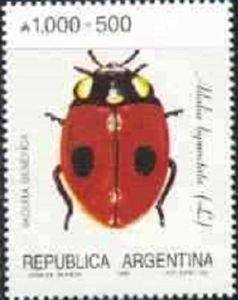
    The research, published in the journal Insect Conservation and Diversity, involved taking recordings at four sites across East Anglia, nine times a year over an 11-year period from 2006-2016. Led by Dr Peter Brown of Anglia Ruskin University, who worked alongside Dr Helen Roy of the Centre for Ecology and Hydrology, the research found that the proportion of native ladybirds recorded at the sites (two lime tree sites, one pine tree site and one nettle site) declined from 99.8% in 2006 to 30.7% in 2016.

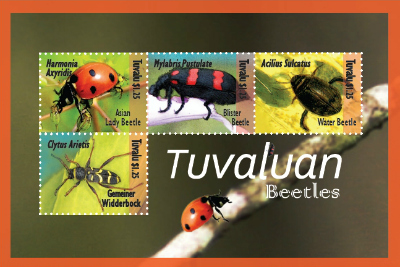
    Only one solitary harlequin ladybird (Harmonia axyridis) was recorded as part of this study in 2006. However, towards the end of the study period, harlequins accounted for up to 70% of all ladybirds. Harlequins are known to feed on native 2-spot ladybirds (Adalia bipunctata) and this predation may be an important driver of the changes observed.

    The harlequin was introduced across continental Europe to limit the population of pest insects feeding on a range of glasshouse and field crops. It was first recorded in England in 2004 and is now commonly found across most of England and Wales, spreading at a rate of approximately 60 miles per year in the early stages of its introduction.

    Dr Brown, Senior Lecturer in Zoology at Anglia Ruskin University, said: “Our study shows just how numerous harlequin ladybirds have become, and there is no indication that this will change in the short to medium term.

    “Ladybirds are sensitive to factors such as food availability and weather conditions, which means that their numbers vary substantially from one year to the next. Therefore long-term monitoring, like our 11-year study, is essential for providing a reliable picture of the changes taking place.

    “The 2-spot used to be one of our most abundant ladybird species but is now quite tricky to find. The study shows clear changes in the ladybird community as a result of the harlequin’s dominance.”

    Source: Cambridge Network, 19 October 2017
    https://www.cambridgenetwork.co.uk/news/study-shows-alarming-decline-of-native-ladybirds/

  • Insect-eating birds decline where bee-killing neonicotinoids are present

    Insect-eating birds decline where bee-killing neonicotinoids are present

    In his book, Dutch toxicologist Henk Tennekes (2010) makes the case that the contamination of surface water by neonicotinoids is so widespread in the Netherlands (and possibly elsewhere in Europe), that loss of insect biomass on a continental scale is behind many of the widespread declines that are being seen, be they of marsh birds, heath or meadow birds or even coastal species. This suggests that we should be looking at possible links between neonicotinoid insecticides and birds, not on a farm scale, but in the context of whole watersheds and regions. Impacts from the neonicotinoids may very well be further afield than the arable area on which they are used, and many of those impacts may be mediated through the aquatic environment.

    Sanchez-Bayo and Goka (2007) and Sanchez-Bayo (2009) argued, as have some before them that the conventional method of assessing toxicity at fixed exposure times makes it difficult to extrapolate to exposures of different duration – whether shorter pulse exposures or prolonged exposures resulting from compound persistence. Using imidacloprid specifically, Sanchez-Bayo showed that a 48h LC50 of 390 ug/l for the ostracod Cypridopsis dropped 100 fold to 4 ug/l after a 5-day exposure period. This time dependence is not unique to neonicotinoids. However, the more toxicity is shown to be a function of time (keeping concentration equal), the more it can be argued that the compound is having an irreversible mode of action. This argument was made by Tennekes (2010) who likened the toxicity of neonicotinoid insecticides to a ‘one hit’ model of chemical carcinogenesis. Tennekes went on to describe how neonicotinoids closely follow Haber’s rule which states that the product of exposure concentration and duration has the same biological effect. In theory, this means that an infinitesimally small dose can result in a toxic effect provided duration of exposure is sufficient. He argued that the toxicity of neonicotinoids to both bees and aquatic organisms showed this characteristic. These insecticides bind almost irreversibly to invertebrate cholinergic receptors – which incidentally makes them very powerful insecticides and helps explain why their use has increased so dramatically over time. Despite Bayer Corporation’s protestations that the mode of action of imidacloprid is not irreversible (Maus and Nauen 2011), Tennekes (2011) counterargued successfully that evidence to date shows otherwise (despite minor deviations, the insecticide is dangerously close to showing irreversible activity) and even used some of Bayer Corporations’ earlier reports on imidacloprid’s mode of action to make his point. Tennekes and Sanchez-Bayo finally collaborated in 2011 to reiterate the points made above and argued that neonicotinoids are far more dangerous than other insecticides of higher toxicity. This is a key point because the neonicotinoids have replaced insecticides (such as synthetic pyrethroids) of very high aquatic toxicity.

    A more recent study has indeed linked neonicotinoids, the best-selling insecticides in the world, to declining populations of insect-eating birds. Researchers in the Netherlands (Hallmann et al., 2014) combed through the results of years of local water-quality measurements and breeding-bird surveys and then compared concentrations of imidacloprid, the most widely used neonicotinoid, with population trends for 15 Old World songbirds that either depend on insects during the breeding season or eat nothing but insects year-round. The results, write the investigators, “suggest that the impact of neonicotinoids on the natural environment is even more substantial than has recently been reported and is reminiscent of the effects of persistent insecticides in the past.”

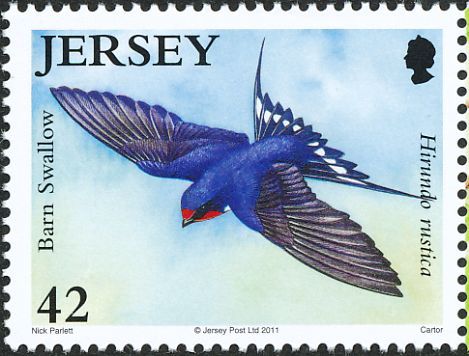
    Fourteen of the 15 species — including Eurasian Skylark (Alauda arvensis), Barn Swallow (Hirundo rustica), Yellow Wagtail (Motacilla flava), Common (European) Starling (Sturnus vulgaris), Common Whitethroat (Sylvia communis), and Mistle Thrush (Turdus viscivorus) — had a negative response to the imidacloprid concentrations. The surface-water concentration above which bird populations declined was only 19.43 nanograms per liter. In areas where measured concentrations were above this threshold, the researchers report, populations fell an average of 3.5 percent annually.

    Entomologists from Krefeld, Germany performing an inventory of insects showed that since 1989 the amount of insects in two places in the nature reserve Orbroicher Bruch have fallen by more than three-quarters. The researchers have performed the measurements in exactly the same way as performed in 1989; in the same place, according to the same method and by the same people (reports in German and English attached). “So the data can be reliably compared”, the entomologists emphasize. Two Malaise insect traps were placed in a pasture about 50 meters from each other over a period of many months to catch and weigh insects. Whereas in 1989 1.4 kg of insects were captured in this way, now less than 300 grams were recovered. This dramatic decline has serious consequences for the ecosystem: all insect-eating animals are threatened with extinction and eco-system services, including pollination, decomposition processes or soil fertility, will come under serious threat.

    The data from Krefeld are consistent with the Tennekes thesis of 2010 that the widespread use of neonicotinoid insecticides in agriculture will wipe out insects. Tennekes pointed out in his book that two-thirds of ground beetles had disappeared in less than two decades from the Dutch heathland reserve Dwingelderveld.

    Sources:
    Bird Watching Daily, 8/7/2014
    https://www.birdwatchingdaily.com/blog/2014/08/07/study-insect-eating-birds-decline-where-bee-killing-neonicotinoids-are-present/
    Dr. Pierre Mineau and Cynthia Palmer. The Impact of the Nation’s Most Widely Used Insecticides on Birds, American Bird Conservancy, March 2013

    References:
    Caspar A. Hallmann, Ruud P. B. Foppen, Chris A. M. van Turnhout, Hans de Kroon, and Eelke Jongejans (2014) Declines in insectivorous birds are associated with high neonicotinoid concentrations. Nature 511, 341–343

    Maus, C. and R. Nauen. 2011. Response to the publication: Tennekes, H.A. (2010):The significance of the Druckrey–Küpfmüller equation for risk assessment—The toxicity of neonicotinoid insecticides to arthropods is reinforced by exposure time. Toxicology 280(3): 176-177.

    Sanchez-Bayo, F. and K. Goka. 2007. Simplified models to analyse time- and dose-dependent responses of populations to toxicants Ecotoxicology 16:511–523.

    Sanchez-Bayo, F. 2009. From simple toxicological models to prediction of toxic effects in time. Ecotoxicology 18:343–354.

    Sorg M, Schwan H, Stenmans W, Müller A. Ermittlung der Biomassen flugaktiver Insekten im Naturschutzgebiet Orbroicher Bruch mit Malaise Fallen in den Jahren 1989 und 2013. Mitteilungen aus dem Entomologischen Verein Krefeld. 2013;2013(1):1–5.

    Tennekes, H.A. 2010a. The systemic insecticides: a disaster in the making. Weevers Walburg Communicatie, Zutphen, Netherlands, 72 pp.

    Tennekes, H.A. 2010b. The significance of the Druckrey–Küpfmüller equation for risk assessment —The toxicity of neonicotinoid insecticides to arthropods is reinforced by exposure time. Toxicology 276:1-4.

    Tennekes, H.A. 2011. The significance of the Druckrey–Küpfmüller equation for risk assessment —The toxicity of neonicotinoid insecticides to arthropods is reinforced by exposure time: Responding to a Letter to the Editor by Drs. C. Maus and R. Nauen of Bayer Crop Science AG. Toxicology 280(3): 173-175.

    Tennekes, H.A., F. Sanchez-Bayo. 2011. Time-dependent toxicity of neonicotinoids and other toxicants: implications for a new approach to risk assessment. J Environ Anal Toxicol . S4:001.
    http://dx.doi.org/10.4172/2161-0525.S4-001
  • Declining male offspring further imperil endangered flycatchers in southern California

    Declining male offspring further imperil endangered flycatchers in southern California

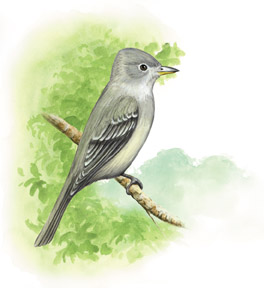
    A new study in The Condor: Ornithological Applications documents the steep decline of a population of endangered Southwestern Willow Flycatchers (Empidonax traillii extimus) over 16 years — and the change in the sex ratio that has left the birds’ future hanging on a dwindling number of males.

    Changes in sex ratios can cause problems in small, declining populations, reducing individuals’ ability to find mates and reproduce. From 2000 to 2015, Barbara Kus of the U.S. Geological Survey and her colleagues monitored federally endangered Southwestern Willow Flycatchers on Marine Corps Base Camp Pendleton in southern California, collecting data as the population declined from 40 individuals to only five. They found that the number of adult males was stable until 2004, but then began to decrease sharply until females outnumbered males at least two to one from 2012 on.

    As the number of males plummeted, more and more of them became polygynous, mating with multiple females. Kus speculates that this may have prevented even faster declines. “It was particularly amazing to watch two or three males manage 10 or so females between them,” says Kus. “They seemed to be able to increase their individual efforts such that every female was mated.”

    Sex ratios of small populations can become unbalanced through chance, but it appears that other forces were at work in this case — more female than male birds were hatched almost every year of the study. The sex ratio of birds’ offspring can be influenced by factors ranging from the parents’ size to land use practices to the threat of nest parasitism, but it’s unclear what caused the flycatchers in Kus’ study to start producing more female offspring.

    “The fact that we found a female bias not only in the adult population, but also in the nestling population and among recruits, suggests that the adult bias is not simply a random outcome of a declining population,” says Kus. “Environmental or other factors may be influencing sex ratios at multiple stages of the life cycle, and more research on these potential factors would be useful. I think our findings indicate that it’s important to track sex ratios as well as numbers in populations of species of conservation concern, in order to detect shifts that could affect population dynamics.”

    Source:
    Central Ornithology Publication Office. “Declining male offspring further imperil endangered flycatchers in southern California.” ScienceDaily. ScienceDaily, 21 December 2016. .

  • Waar zijn de wilde akkerplanten gebleven?

    Waar zijn de wilde akkerplanten gebleven?

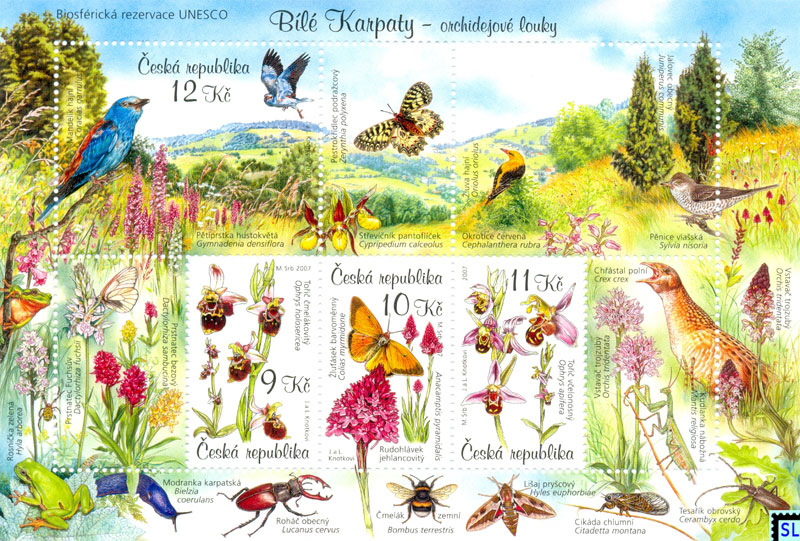
    Korenbloemen (Centaurea cyanus), in een adem genoemd met klaprozen, waren vroeger vooral op de hoge zandgronden algemeen in korenvelden. Korenbloemen vind je nog maar zelden op de akker. De wilde ridderspoor (Consolida regalis) was met zijn paarsblauwe langgespoorde bloemen een opvallende verschijning in wintergraanakkers in het oostelijke deel van het rivierengebied. Als je hem tegenwoordig tegenkomt, is hij ontsnapt uit heemtuinen, want in het wild werd de ridderspoor voor het laatst gevonden in 1981. In de negentiende eeuw ging de plant al achteruit. Buiten onze landsgrens is hij in Midden- en Zuid-Europa nog wel aan wegkanten te vinden. Als oorzaken voor zijn verdwijning worden onkruidverdelgingsmiddelen en zaadschoning genoemd. Dat geldt ook voor de akkerboterbloem, die veel voorkwam in wintergraanakkers op kalkhoudende, wat lemige grond. Sinds 1950 is de soort met meer dan tachtig procent afgenomen. In Zuid-Limburg ligt het zwaartepunt van zijn tegenwoordige verspreiding, maar ook daar neemt de soort in snel tempo af.

    De bleekgele hennepnetel kwam voor op winterroggeakkers. Tegenwoordig groeit hij nog wel in open weg- en spoorbermen op de kalkarme pleistocene zandgronden, het meest nog in Noord-Brabant. De sterke achteruitgang heeft, net als van andere rogge akkerplanten, vooral ook als oorzaak dat er vrijwel geen rogge meer wordt verbouwd. De bleekgele onderscheidt zich van andere hennepnetels door de geelwitte lipbloemen met een grote citroengele vlek op de onderlip. Hennepnetels lijken op dovenetels.

    Eironde leeuwenbek en spiesleeuwenbek beleefden hun glorietijd als het graan gemaaid was, in de stoppelvelden. Daarom heten ze tegenwoordig stoppelleeuwenbekken, al groeien ze ook op aardappel- en bietenakkers. Omdat ze pas laat in bloei komen, is zaaizaadschoning niet de oorzaak van hun achteruitgang. Eerder lijken chemische onkruidbestrijding en omzetting van akkers in grasland de reden waarom ze allebei inmiddels zo zeldzaam zijn geworden dat ze op de rode lijst van bedreigde plantensoorten staan. Het zijn allebei kruipende planten met kleine leeuwenbekbloemen, met paarsbruine bovenlip en gele onderlip. De spiesleeuwenbek, van de eironde te onderscheiden door zijn spiesvormige bladeren, kom je nog wel eens tegen langs spoorwegen in het rivierengebied.

    Dat kan je ook gebeuren met de helder rozerode akkerleeuwenbek (Misopates orontium). Vroeger kwam deze rodelijstsoort voor op lemig zandige hakvruchtakkers. Dit fraaie plantje is nog wel te vinden in Zuid-Nederland. Dat spies-, eironde en akkerleeuwenbek zo zeldzaam zijn, ligt niet alleen aan moderne akkerbouwmethoden. In ons land zitten zij aan de rand van hun verspreidingsgebied. Daar zijn planten- en diersoorten altijd kwetsbaar en verdwijnen ze al bij een geringe aanleiding.
    De gele ganzebloem (Glebionis segetum valt op door zijn grote composietbloemen en blauwgroene blad. In Noord-Brabant en Limburg en merkwaardig genoeg ook op Terschelling vind je nog ganzebloemen op kalk arme, maar voedselrijke zandige akkers.
    Het akkerviooltje is veel forser dan het verwante driekleurige viooltje, maar het heeft kleinere roomwitte, vaak wat violet aangelopen bloemen met een gele keel en een honingmerk van zwarte streepjes. Het is een van de weinige nog gewone akkerplanten, maar uit de velden verbannen naar de wegkant.

    De bolderik (Agrostemma githago) is vrijwel uit graanakkers verdwenen door zaaizaadzuivering en het gebruik van onkruidbestrijdingsmiddelen. De zwarte bittere zaden werden nogal eens met de rogge meegemalen en in het brood meegebakken. Als je dat brood at, kreeg je een acute vergiftiging. Een paar gram van het zaad verwekt al irritaties van de maag- en darmslijmvliezen. Hogere doses kunnen inwendige organen ernstig beschadigen.
    Van dit akkeronkruid is bewezen dat het al in de Romeinse tijd in graanvelden voorkwam: zaden werden in de Romeinse nederzetting in Valkenburg (Zuid-Holland) tussen resten van graan aangetroffen.
    De lichtrode bloemen met ver buiten de kroon uitstekende smalle spitse kelkbladeren zijn nog steeds te zien in wegbermen in de randstad, waar bolderik opzettelijk wordt uitgezaaid.

    Bron: Henk van Halm in Trouw, 21 juli 2001
    https://www.trouw.nl/home/waar-zijn-de-korenbloemen-gebleven-~a9825097/